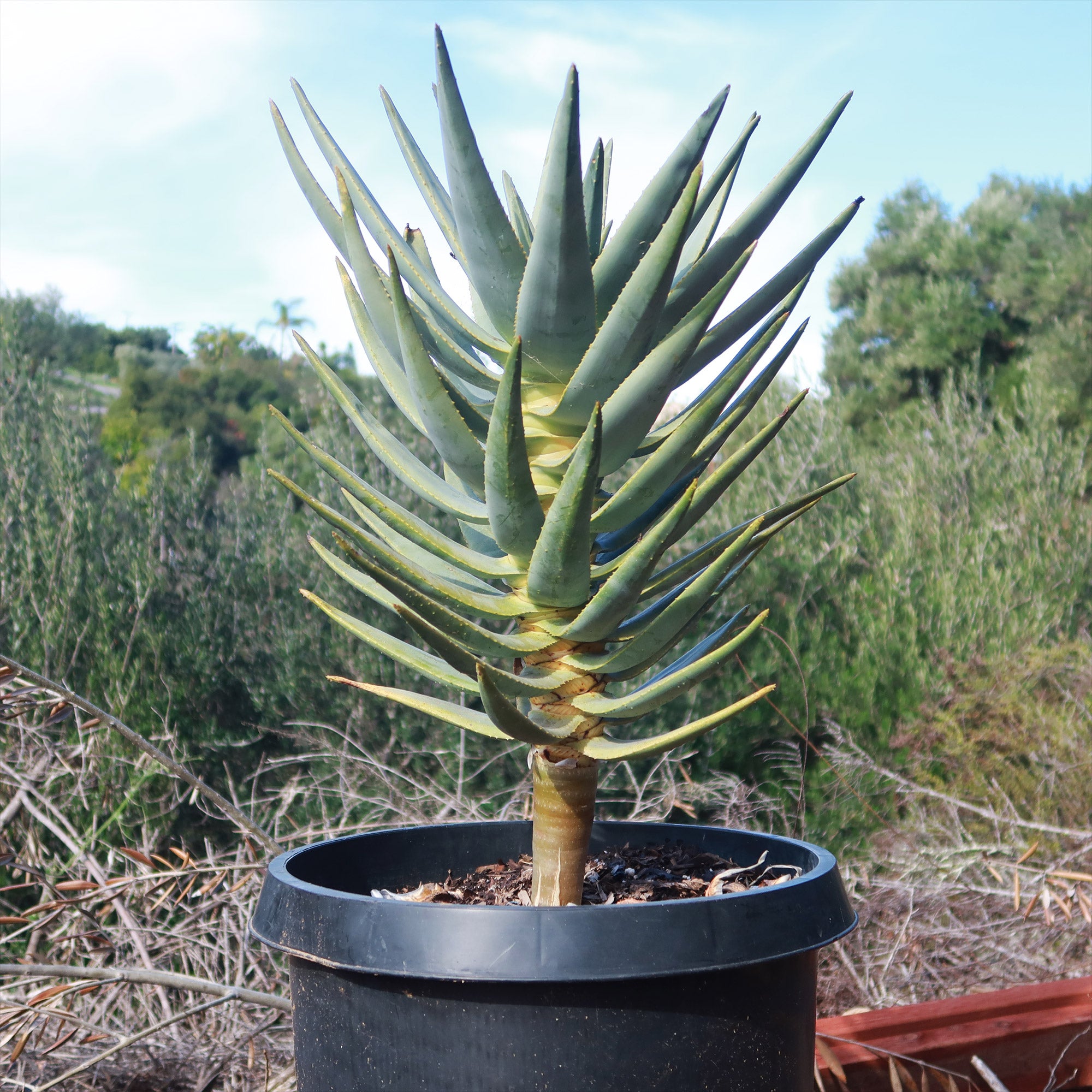



Quiver Tree is the common name given to Aloe dichotoma. This summer dormant plant is a native of Southern Africa, Namibia, and belongs to the Asphodelaceae family. This short and rounded succulent can grow about 10 meters.
Growth Rate
The quiver tree growth rate slow but once established, it is a long-lived plant and stays content in its position for years. It can increase its height by 10-20 cm every year.
Flowering
The bright yellow quiver tree flowers emerge in mid-winter. While short and rounded, they are showy and attractive.
Watering and Feeding
The key is to both water and feed the quiver tree Aloe dichotoma in the right seasons. For watering, water weekly in summer and once a month or not at all in winter. For a perfect diet in summer, use a slow-release fertilizer.
Soil
Choose a soil with a medium or slightly acidic pH level. Soil should be of top quality. It should be loamy with plenty of drainage chips at the bottom of the container. The proper aloe dichotoma care will lead to its amazing growth.
Hardiness
While it can take a few degrees of cold and frost, it prefers a hot and dry climate. Hence, it has a hardiness zone of 9a to 11b and frost tolerance of -6.7°C
Light
Indirect sunlight is preferred since it needs to be slowly hardened into the full sun. Moving it too suddenly from shade to sun can lead to it withering off or scorching.
Propagation
Plant seeds in autumn in trays of coarse river sand for propagation purposes. While you can also multiply the plant through cuttings, its success is not always guaranteed.
The hollow branches of Aloe dichotoma were used as quivers for arrows in ancient times. Its roots have been tested to treat asthma and tuberculosis.
Some of the information in this description has been found at desert-tropicals.com, llifle.com and cactus-art.biz
Bloom Season
Flower Color
Growth Rate
Hardiness Zone
Mature Size
Plant Type
Resistance
Sun Exposure
Watering Needs
| Bloom Season | Late fall early winter |
|---|---|
| Botanical Name | Aloe dichotoma |
| Common Name | Quiver tree, kokerboom |
| Dormancy | Summer |
| Family | Asphodelaceae |
| Flower Color | Bright yellow |
| Genus | Aloe |
| Growth Habit | Rosettes |
| Growth Rate | Slow |
| Hardiness Zone | 9, 10, 11 |
| Mature Size | 4 8 in. tall |
| Native Area | Southern Africa |
| Plant Type | Branched succulent |
| Propagation | By cuttings, offsets |
| Resistance | Extremely drought-tolerant, pest resistance |
| Soil PH | 6.5, Acidic, Neutral |
| Soil Type | Succulent potting mix soil |
| Special Features | Easy to grow succulent |
| Sun Exposure | Partial shade (3–6 hrs. sun) |
| Toxicity | Toxic for humans, toxic for pets |
| Watering Needs | Moderate |
Growers Quick Reference Guide - Key Features
| Bloom Season | Late fall early winter |
|---|---|
| Botanical Name | Aloe dichotoma |
| Common Name | Quiver tree, kokerboom |
| Dormancy | Summer |
| Family | Asphodelaceae |
| Flower Color | Bright yellow |
| Genus | Aloe |
| Growth Habit | Rosettes |
| Growth Rate | Slow |
| Hardiness Zone | 9, 10, 11 |
| Mature Size | 4 8 in. tall |
| Native Area | Southern Africa |
| Plant Type | Branched succulent |
| Propagation | By cuttings, offsets |
| Resistance | Extremely drought-tolerant, pest resistance |
| Soil PH | 6.5, Acidic, Neutral |
| Soil Type | Succulent potting mix soil |
| Special Features | Easy to grow succulent |
| Sun Exposure | Partial shade (3–6 hrs. sun) |
| Toxicity | Toxic for humans, toxic for pets |
| Watering Needs | Moderate |
- Description
- Key Plant Features
Quiver Tree is the common name given to Aloe dichotoma. This summer dormant plant is a native of Southern Africa, Namibia, and belongs to the Asphodelaceae family. This short and rounded succulent can grow about 10 meters.
Growth Rate
The quiver tree growth rate slow but once established, it is a long-lived plant and stays content in its position for years. It can increase its height by 10-20 cm every year.
Flowering
The bright yellow quiver tree flowers emerge in mid-winter. While short and rounded, they are showy and attractive.
Watering and Feeding
The key is to both water and feed the quiver tree Aloe dichotoma in the right seasons. For watering, water weekly in summer and once a month or not at all in winter. For a perfect diet in summer, use a slow-release fertilizer.
Soil
Choose a soil with a medium or slightly acidic pH level. Soil should be of top quality. It should be loamy with plenty of drainage chips at the bottom of the container. The proper aloe dichotoma care will lead to its amazing growth.
Hardiness
While it can take a few degrees of cold and frost, it prefers a hot and dry climate. Hence, it has a hardiness zone of 9a to 11b and frost tolerance of -6.7°C
Light
Indirect sunlight is preferred since it needs to be slowly hardened into the full sun. Moving it too suddenly from shade to sun can lead to it withering off or scorching.
Propagation
Plant seeds in autumn in trays of coarse river sand for propagation purposes. While you can also multiply the plant through cuttings, its success is not always guaranteed.
The hollow branches of Aloe dichotoma were used as quivers for arrows in ancient times. Its roots have been tested to treat asthma and tuberculosis.
Some of the information in this description has been found at desert-tropicals.com, llifle.com and cactus-art.biz
Bloom Season
Flower Color
Growth Rate
Hardiness Zone
Mature Size
Plant Type
Resistance
Sun Exposure
Watering Needs
| Bloom Season | Late fall early winter |
|---|---|
| Botanical Name | Aloe dichotoma |
| Common Name | Quiver tree, kokerboom |
| Dormancy | Summer |
| Family | Asphodelaceae |
| Flower Color | Bright yellow |
| Genus | Aloe |
| Growth Habit | Rosettes |
| Growth Rate | Slow |
| Hardiness Zone | 9, 10, 11 |
| Mature Size | 4 8 in. tall |
| Native Area | Southern Africa |
| Plant Type | Branched succulent |
| Propagation | By cuttings, offsets |
| Resistance | Extremely drought-tolerant, pest resistance |
| Soil PH | 6.5, Acidic, Neutral |
| Soil Type | Succulent potting mix soil |
| Special Features | Easy to grow succulent |
| Sun Exposure | Partial shade (3–6 hrs. sun) |
| Toxicity | Toxic for humans, toxic for pets |
| Watering Needs | Moderate |
Growers Quick Reference Guide - Key Features
| Bloom Season | Late fall early winter |
|---|---|
| Botanical Name | Aloe dichotoma |
| Common Name | Quiver tree, kokerboom |
| Dormancy | Summer |
| Family | Asphodelaceae |
| Flower Color | Bright yellow |
| Genus | Aloe |
| Growth Habit | Rosettes |
| Growth Rate | Slow |
| Hardiness Zone | 9, 10, 11 |
| Mature Size | 4 8 in. tall |
| Native Area | Southern Africa |
| Plant Type | Branched succulent |
| Propagation | By cuttings, offsets |
| Resistance | Extremely drought-tolerant, pest resistance |
| Soil PH | 6.5, Acidic, Neutral |
| Soil Type | Succulent potting mix soil |
| Special Features | Easy to grow succulent |
| Sun Exposure | Partial shade (3–6 hrs. sun) |
| Toxicity | Toxic for humans, toxic for pets |
| Watering Needs | Moderate |