


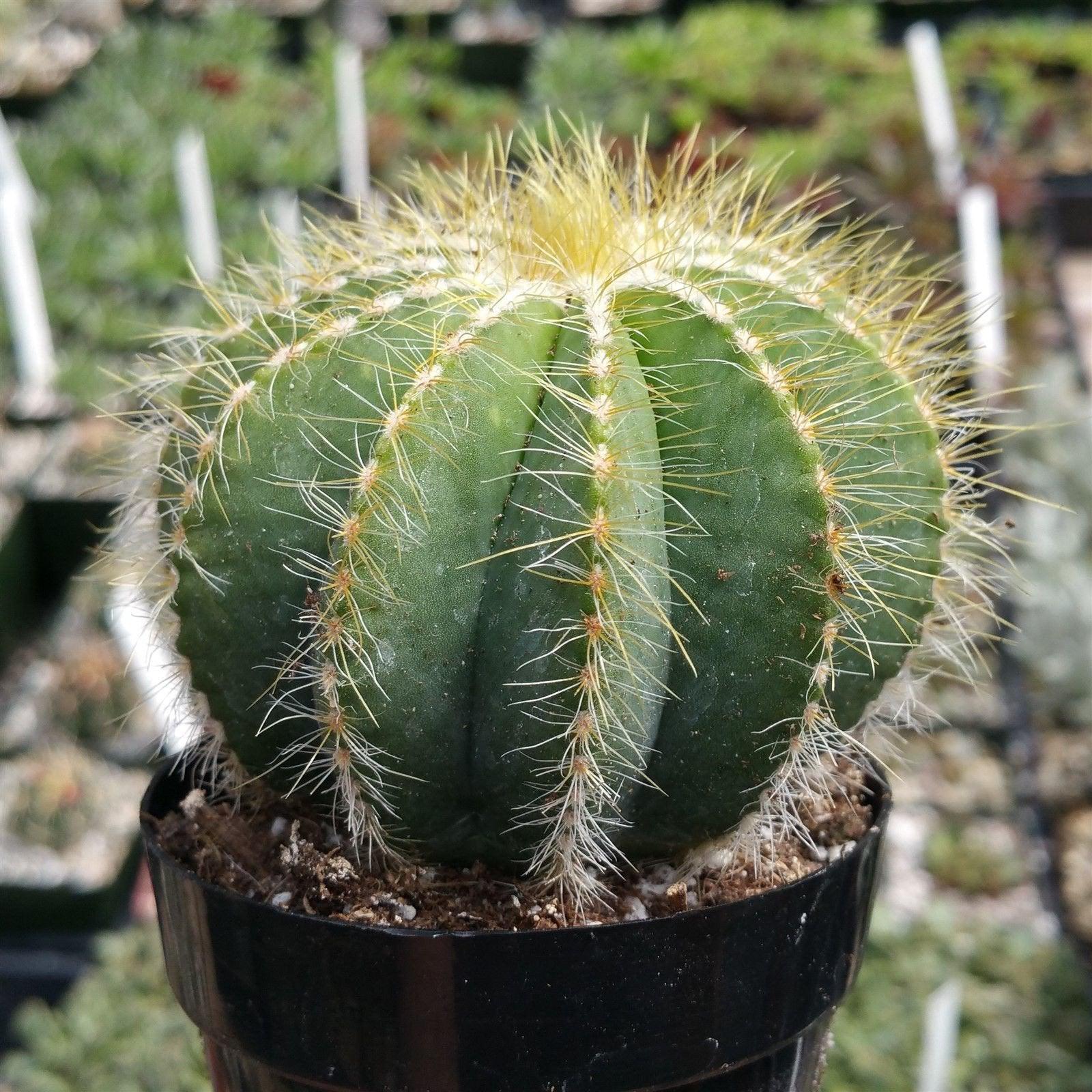
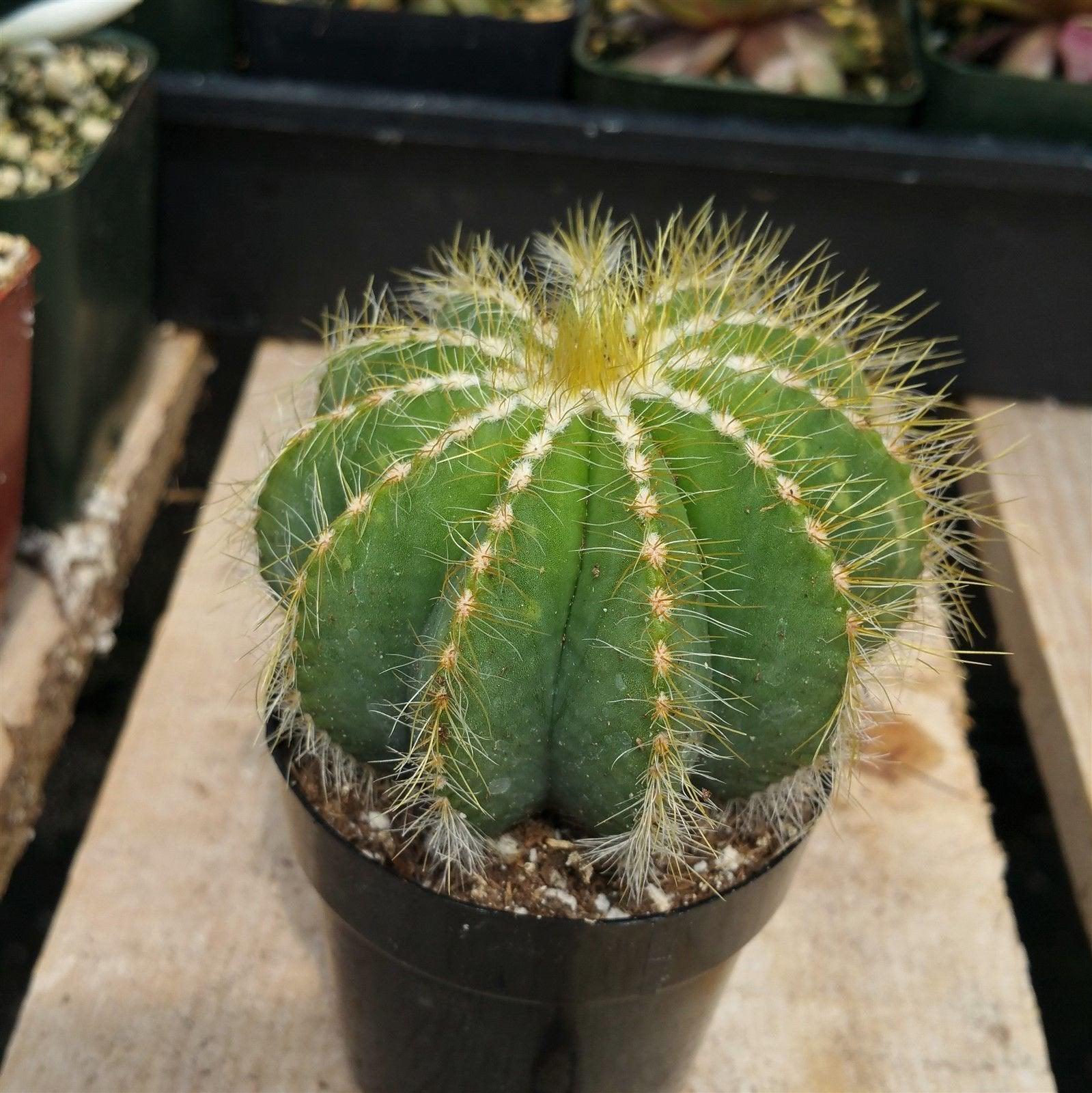
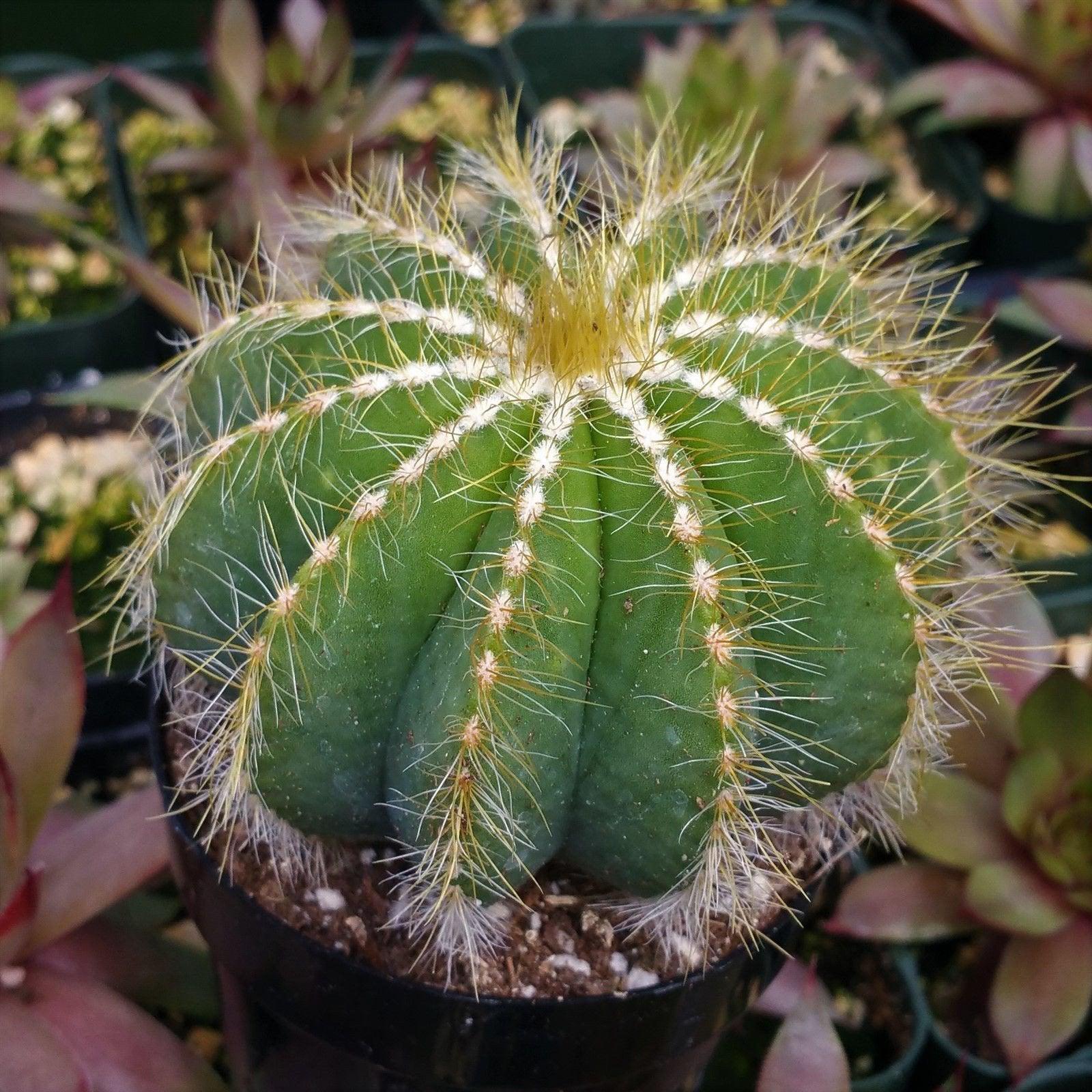
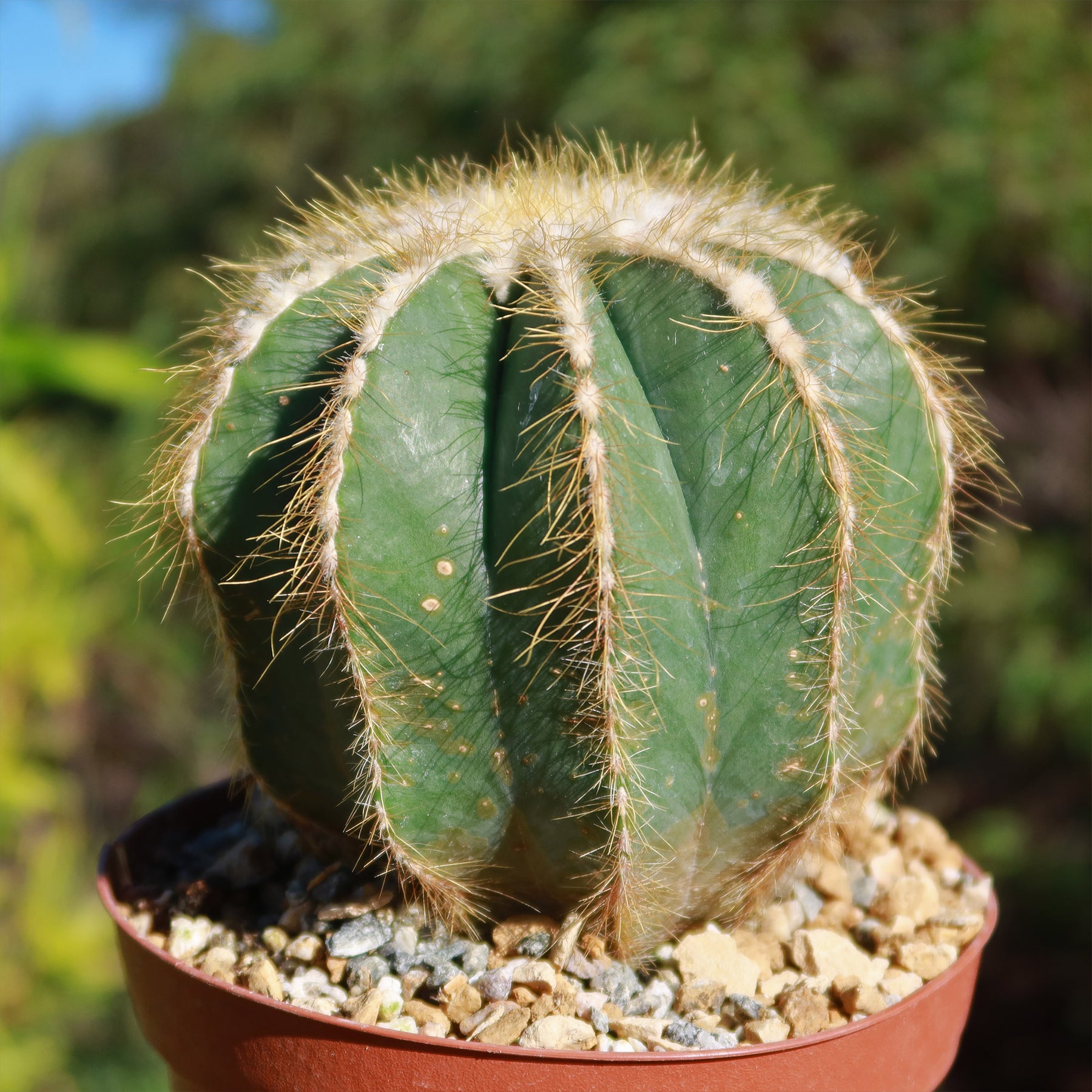
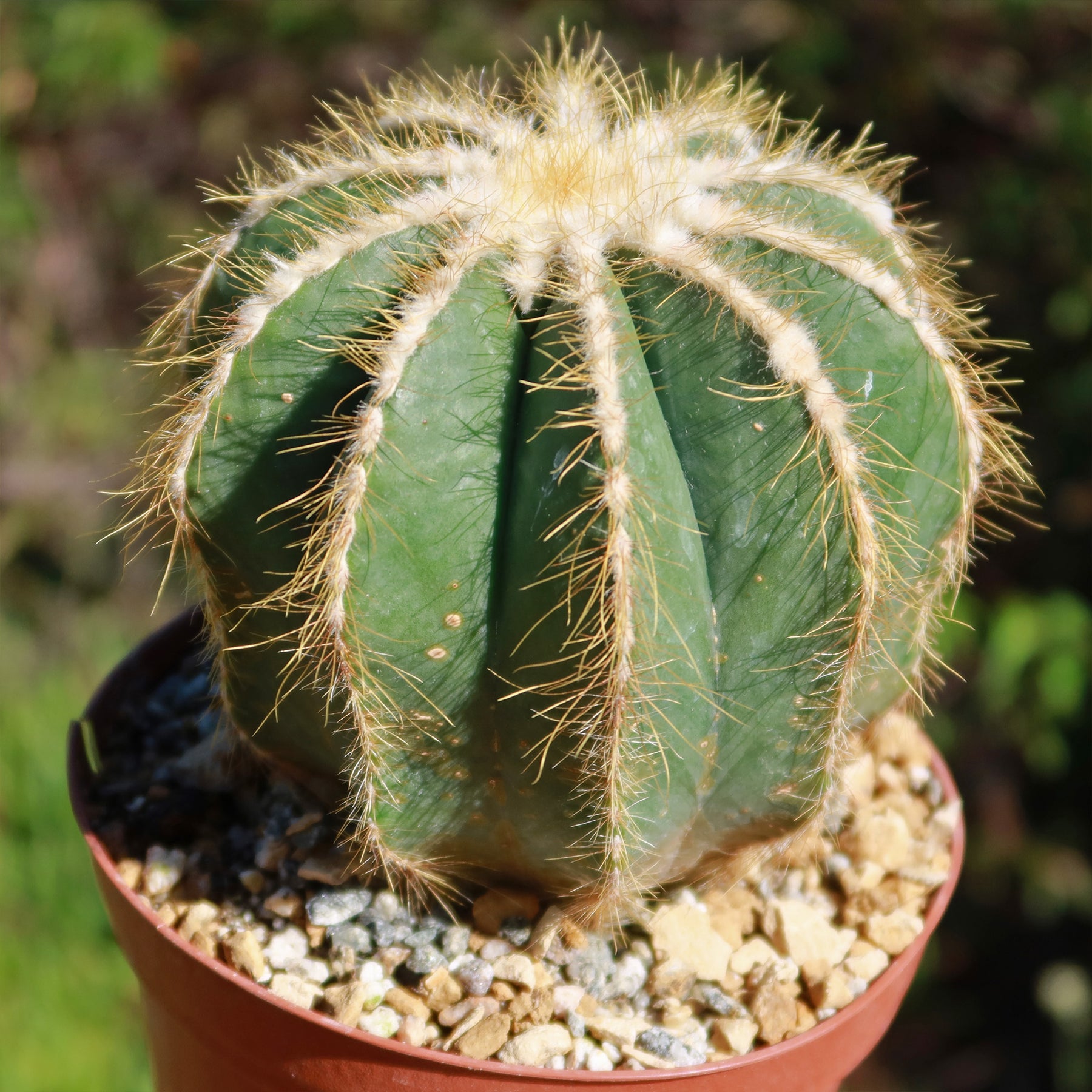
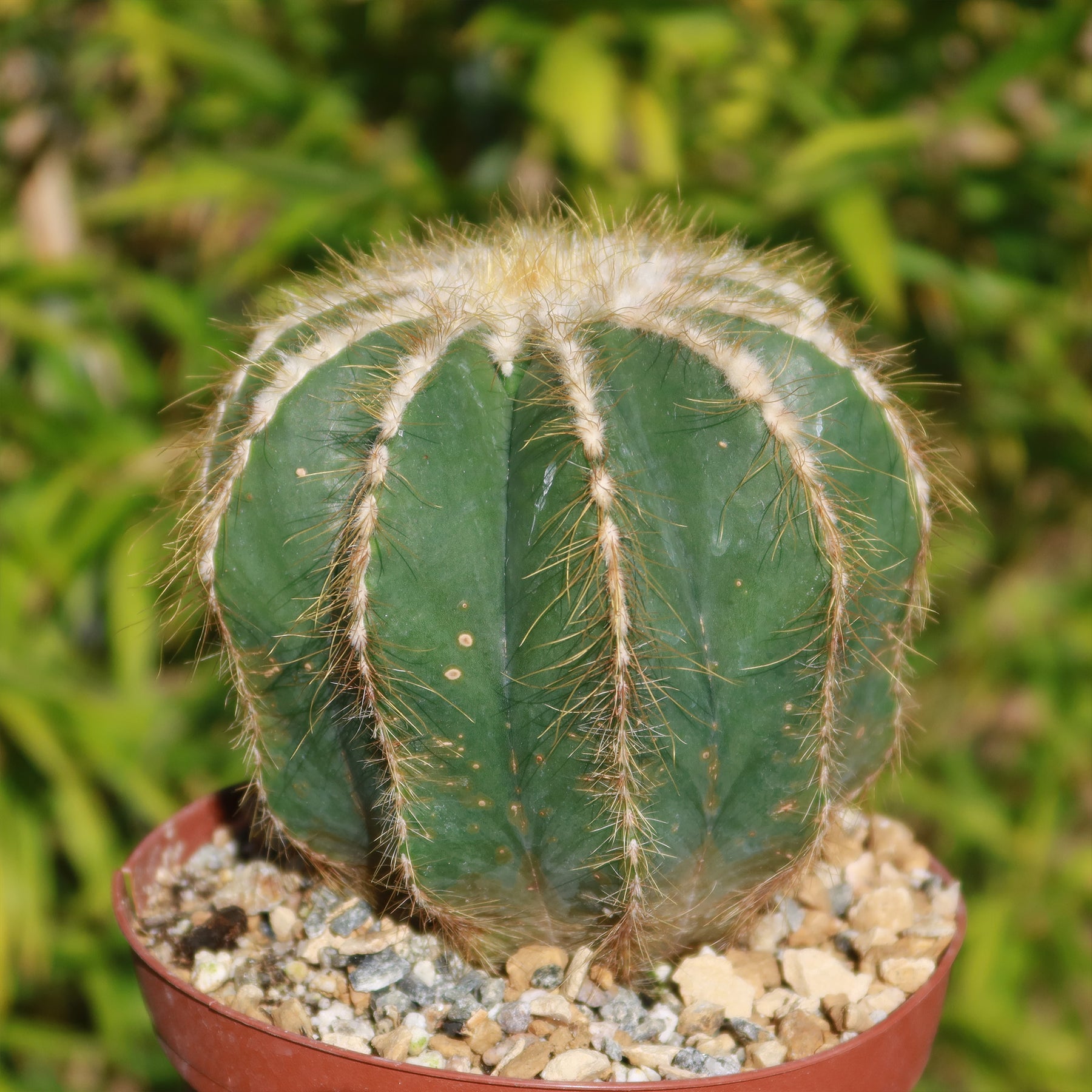
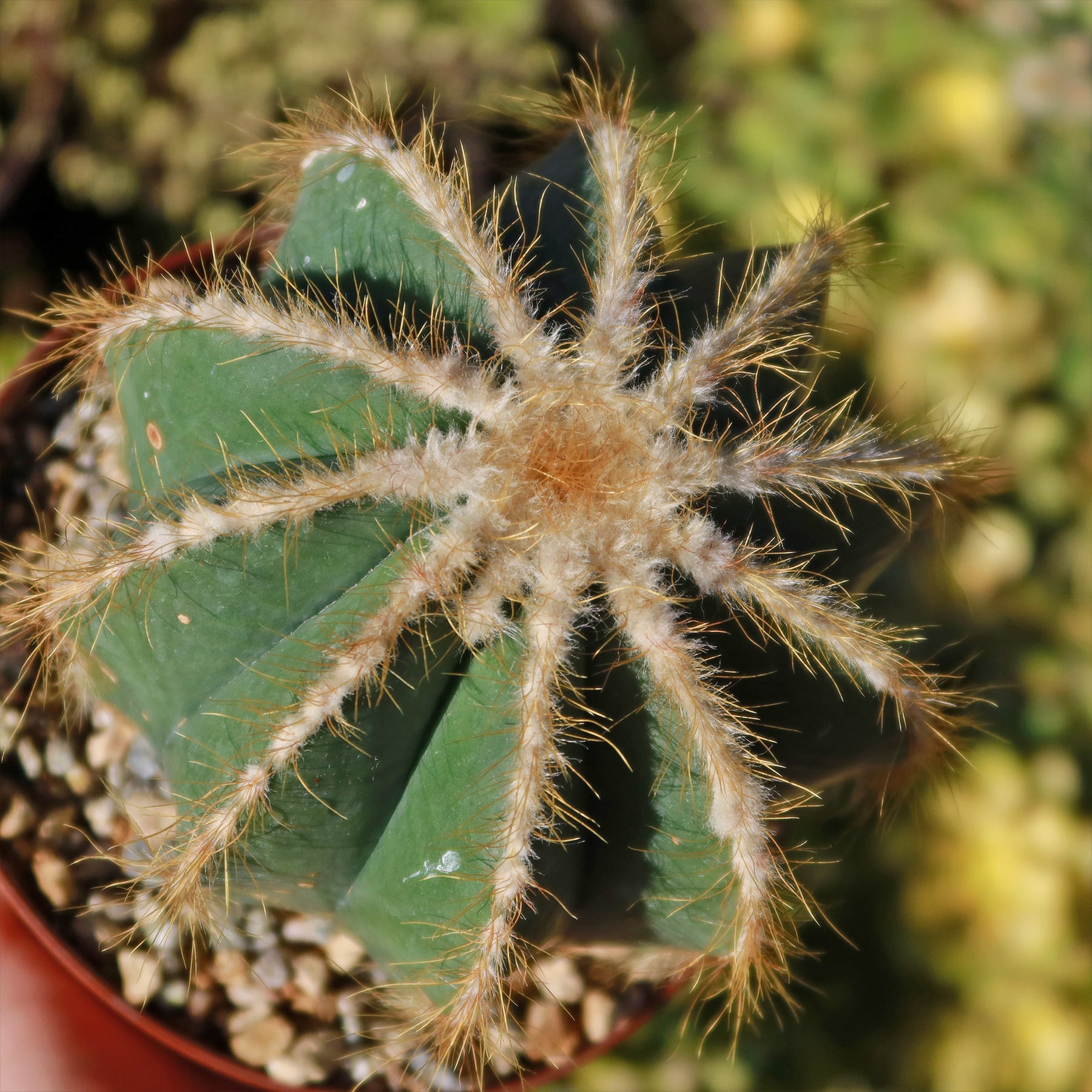
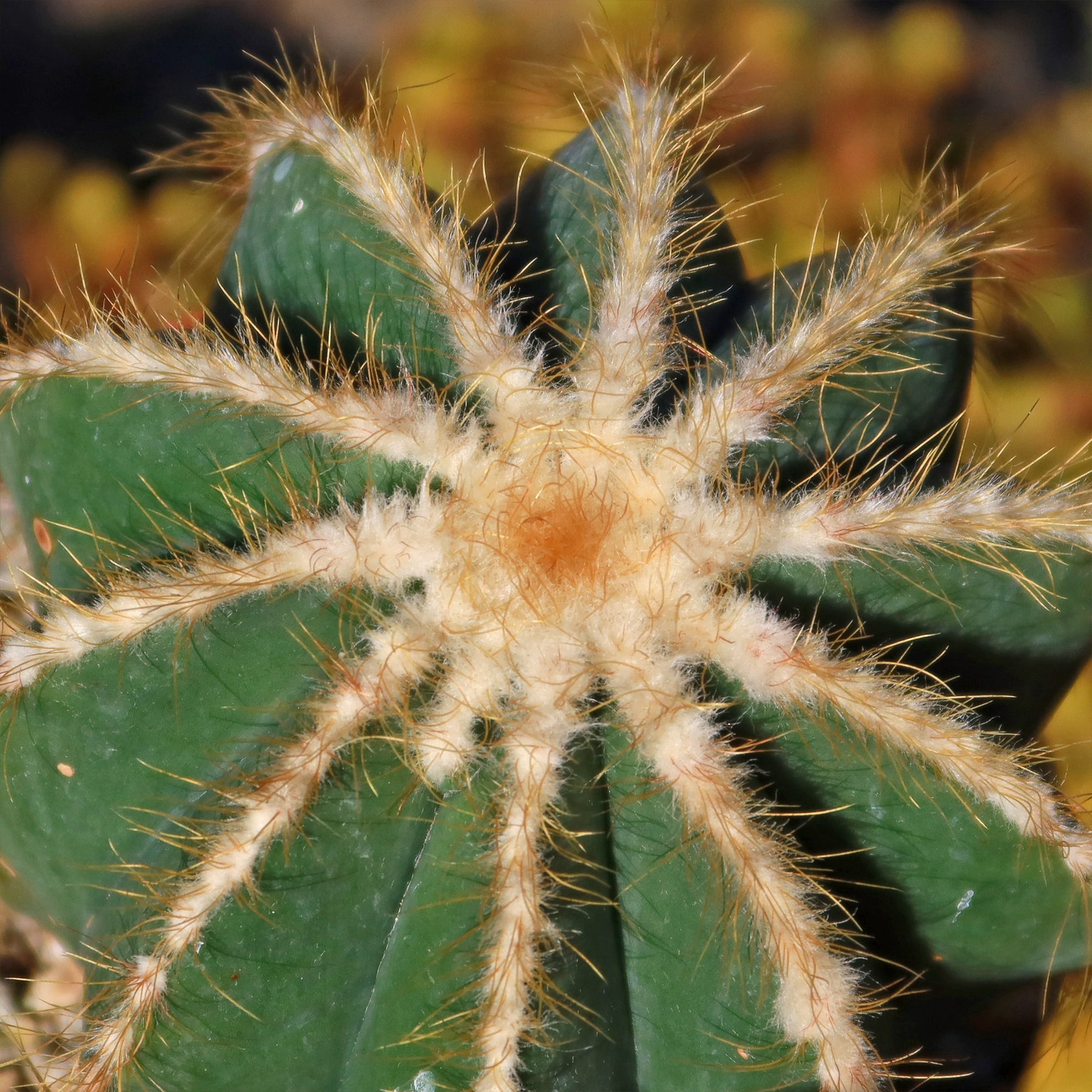
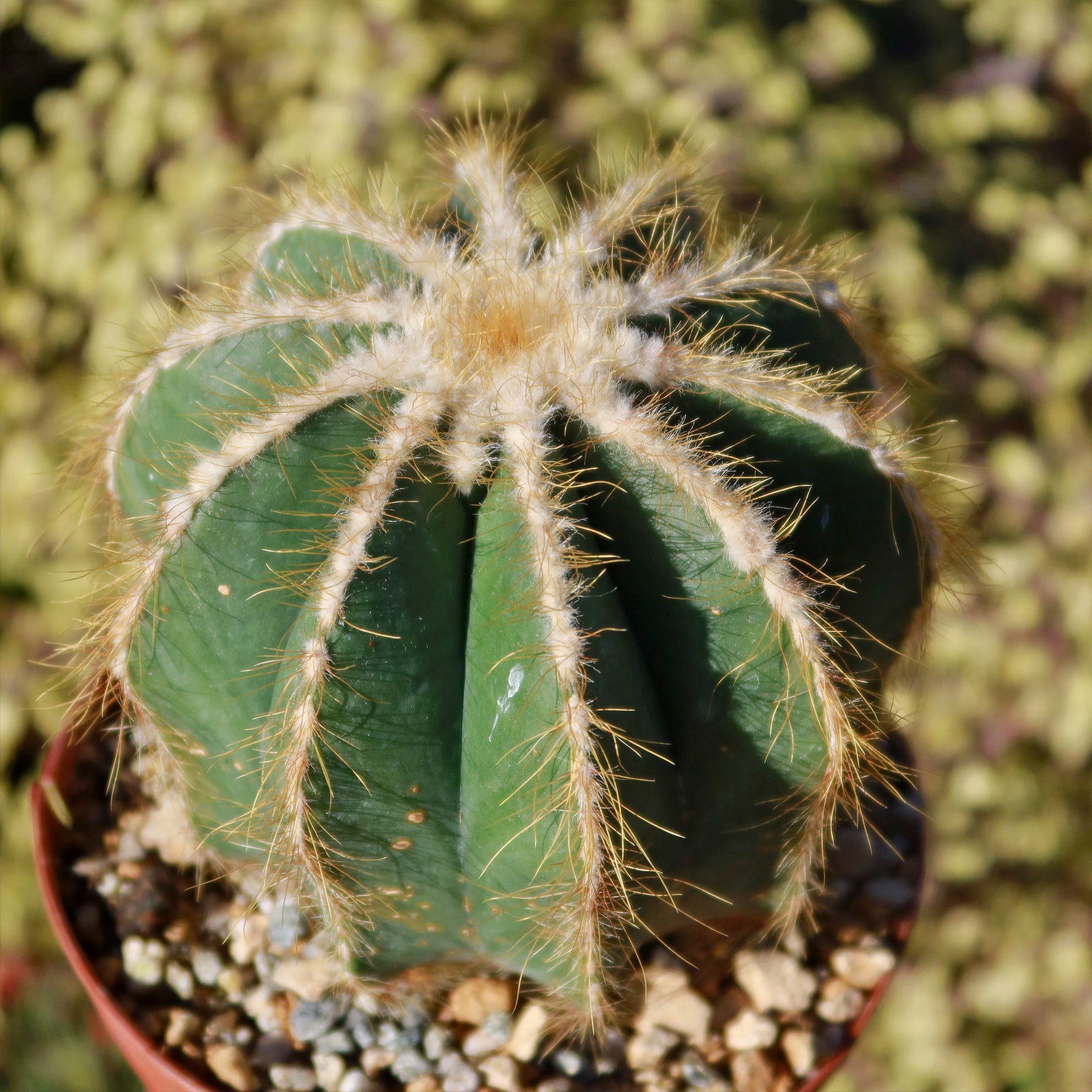
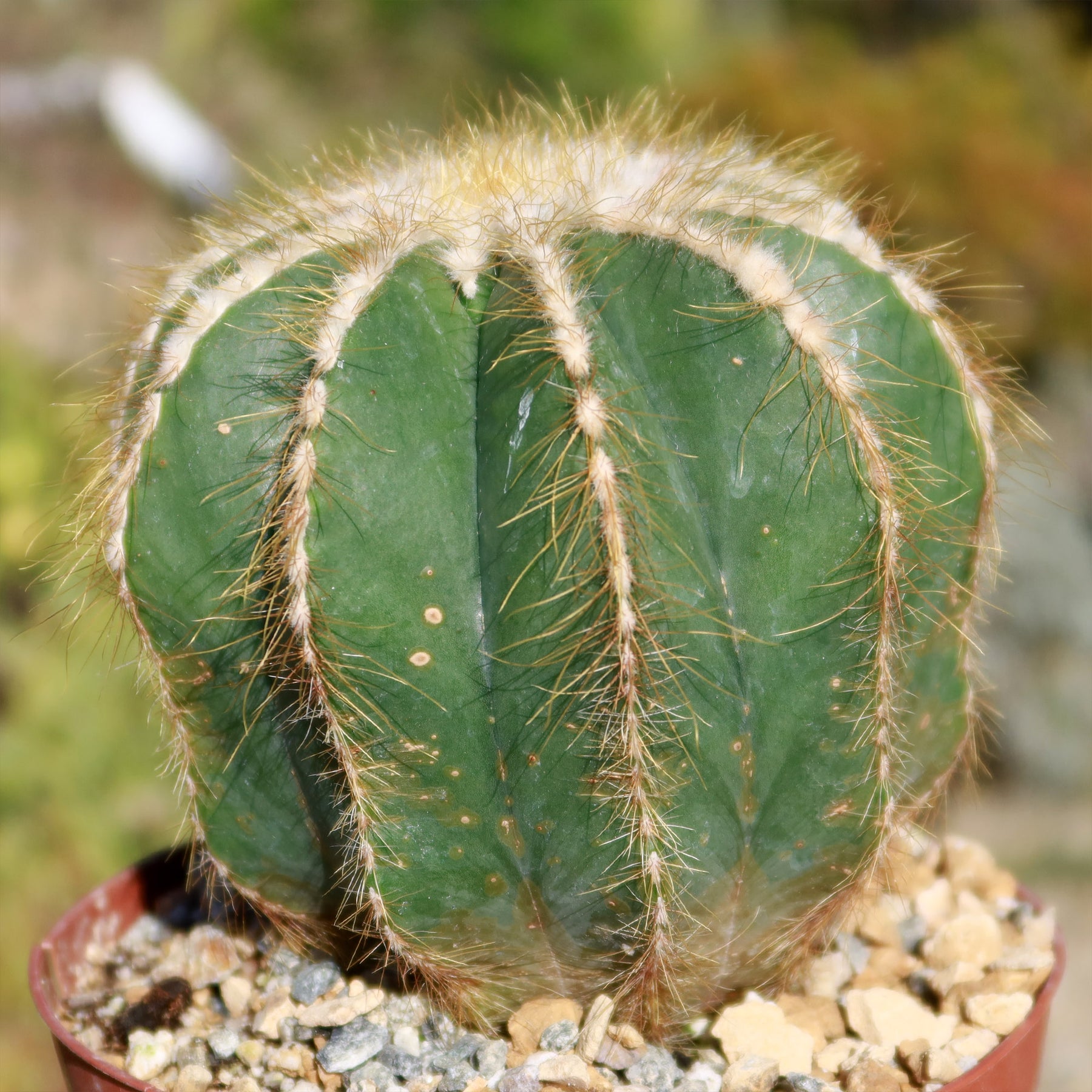
The stunning ball cactus, also known as the Parodia Magnifica, is a vibrant member of the Parodia genus. Native to Brazil and Uruguay, it has several other common names such as balloon cactus, Eriocactus magnificus, Notocactus magnificus, blue ball cactus, green ball cactus, and silver ball cactus. It has its common name, ball cactus, because of its spherical body; giving it the appearance of a little ball.
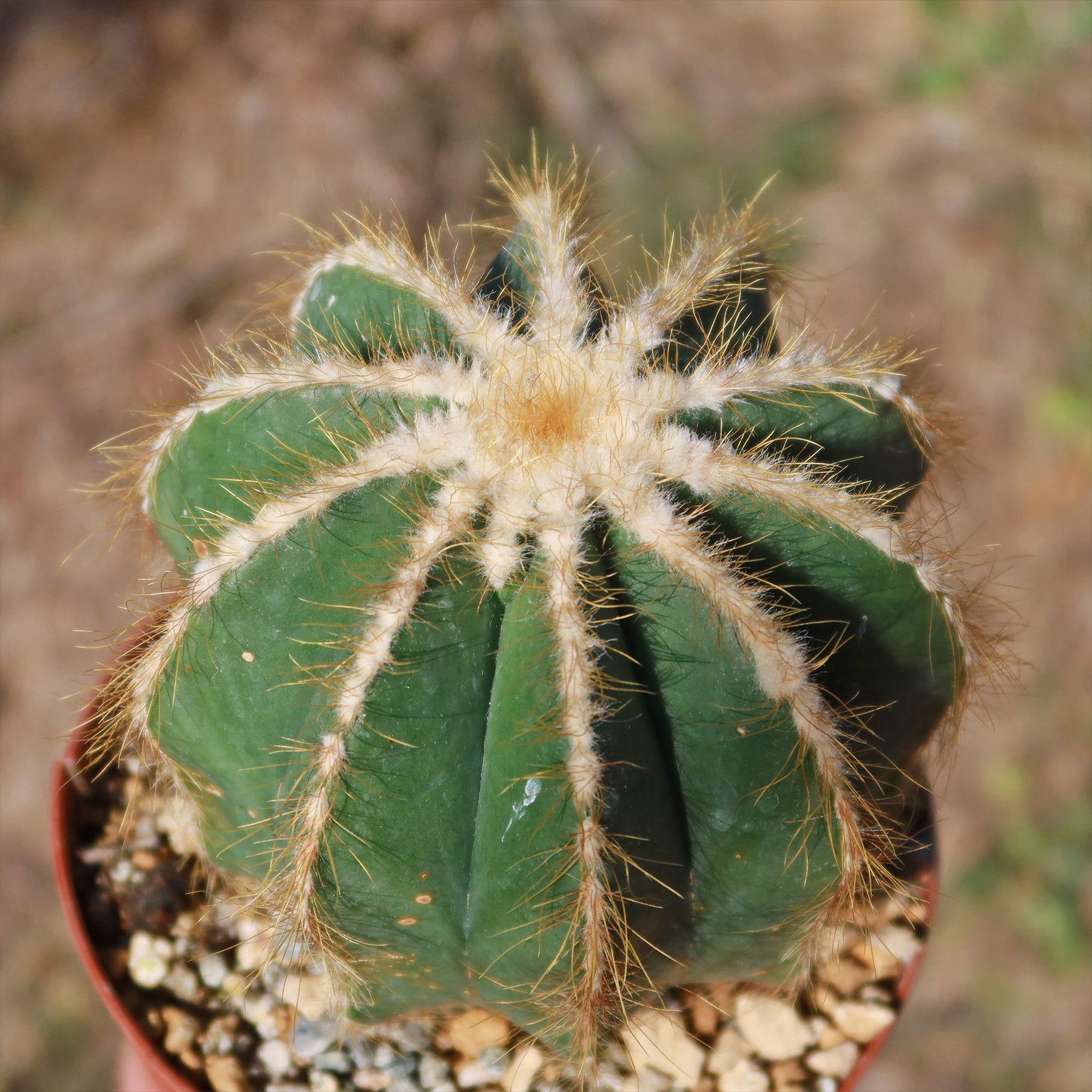
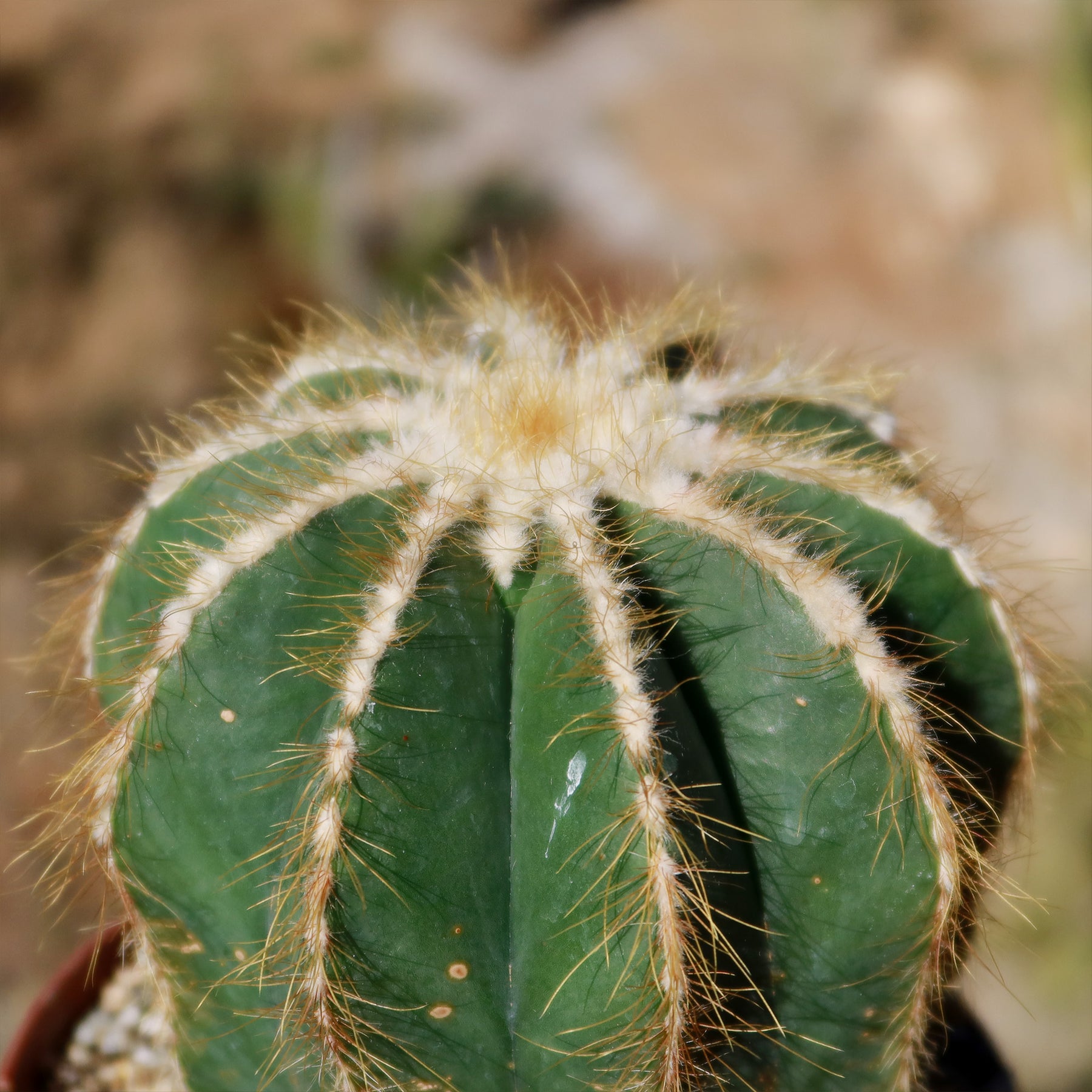
The Parodia magnifica stem contains sharp ribs that are lined with golden, bristly spines. As it matures, it develops a bluer, more glaucous tone and can sometimes offset and form a cluster. It can grow up to 12 inches tall and 18 inches wide and has a vibrant green color, which adds a pop of color to any cactus collection.

The flowers of the ball cactus bloom in late spring or early summer.
These vibrant yellow, red, orange, and pink funnel-shaped flowers are quite large compared to the size of the cactus balloon.
These flowers attract pollinators like bees and butterflies, adding a touch of life to your garden.
It is a relatively rapidly growing and better flowering species that will make clumps if given the best conditions.
One of the reasons you'll love the Ball Cactus is that it becomes more impressive as it ages.
What starts as a small, round cactus can gradually grow into a larger specimen and, under the right conditions, form attractive clusters over time.
During the blooming season, you'll be rewarded with bright flowers that beautifully contrast against its blue-green body, making it a standout feature in your home or garden. With its slow, steady growth and long lifespan, this is a plant you can enjoy for many years to come.
When and How to Water Your Ball Cactus Plant
This cactus is a drought-tolerant plant; and has specific watering requirements to thrive. It's important to remember that ball cacti are adapted to arid environments and have evolved to store water in their fleshy stems.
Water your cactus once every 2 to 3 weeks during the growing season, and cut back to once every 4 to 6 weeks during dormancy.
In the spring and summer, you can water your ball cactus plant whenever the soil has completely dried out. Water deeply until excess water drains from the pot, then wait until the soil is completely dry before watering again. Avoid overwatering, as soggy soil can quickly lead to root rot.
In the fall and winter, you'll want to reduce watering, as the cactus requires less water during this cooling period of time. Keep your plant dry in winter. However, this spurge will tolerate dryness and can even thrive in poor, dry soils, but it does better when grown in nutrient-rich dry soil with regular watering.
Like many other cacti species, it's important to avoid overwatering your ball cactus plant, as this can lead to rotted or dead roots and other issues. Remember, it's better to be underwater than overwater, as cacti are more tolerant of drought than excess moisture. No water should ever be allowed to stand around the roots.
Light Requirements - Where to Place Your Ball Cactus

When growing indoors, this cactus needs full sun but tolerates moderate shade.
A Parodia cactus that has been growing in the shade should be slowly hardened off before placing it in full sun as the cactus will be severely scorched if moved too suddenly from shade into sun.
When growing outdoors, place it near a south-facing window or in a location where it can receive at least 6 hours of direct sunlight each day.
The intense sunlight helps the cactus grow and maintain its compact, round shape.
In extremely hot climates, provide light afternoon shade to prevent sun scorch during peak summer temperatures.
If you notice signs of sunburn, such as brown or yellow patches on the cactus, you may need to provide some shade or move it to a spot with filtered sunlight.
Remember, finding the right balance of light is crucial for the health of your Parodia magnifica. So, keep an eye on it and make adjustments as needed.
Optimal Soil & Fertilizer Needs
The Parodia magnifica ball cactus favors very airy, sandy soil that drains well. Planting them in ordinary soil will result in compacted roots, stunted growth, and, most likely, root rot. Instead, make or buy a well-draining potting mix, or ideally, use our specialized cactus potting mix that contains 5 natural substrates and mycorrhizae to promote the development of a strong root system that helps your cactus to thrive.
When fertilizing your cactus, feed it once a year in spring. A balanced fertilizer with an NPK ratio such as 5-10-5 works well to support healthy growth. Be careful not to over-fertilize, as this can lead to burnt roots or excessive growth. Less is more when it comes to fertilizing your Parodia cacti.
Hardiness Zones & More

In the United States, this cactus is mostly an indoor plant, but if you live in southern Florida or Hawaii, then you can cultivate it outdoors in USDA zones 9-11.
It prefer the warm season and temperatures between 70°F-90°F during the day and slightly cooler temperatures at night.
This cactus cannot tolerate any frost, and it can be difficult to get it to look its best without a good amount of heat.
In terms of humidity, ball cacti are adapted to low-humidity environments, similar to their native desert habitats. It can tolerate dry air and doesn't require high levels of humidity. In fact, excessive moisture in the air can increase the risk of fungal diseases. So, it's best to provide them with well-ventilated areas and avoid humid conditions.
Wildlife – Ball Cactus Flowers Attract the Following Friendly Pollinators
The Ball cactus flowers attracts a variety of beneficial pollinators including bees, butteflies, ladybugs and hummingbirds. These blooms provide a valuable nectar source and help support local pollinator populations during the growing season.
 Butterflies
 Bees
Bees
 Hummingbirds
 Lady Bugs
 Multi Pollinators
 Other Birds
According to ASPCA, the Parodia magnifica is considered non-toxic to humans and pets. However its sharp spines can cause injuries if touched. Place the plant in a location where children and pets are less likely to come into contact with it.
How to Propagate Your Ball Cactus Plant
For propagation of the Parodia Magnifica, you can easily do this through offsets or seeds. Offsets are small, baby cacti that grow alongside the main plant. Simply remove a healthy offset, allow the cut end to dry and callus for a few days, then plant it in a well-draining cactus mix. Place it in bright, indirect light and water sparingly until roots form.
If you choose to propagate from seeds, sow them in a well-draining cactus mix and provide them with warmth and sunlight. Parodia magnifica is an easy-to-grow ornamental species suited for any well-drained soil in half or full sun.
Key Takeaways
- Ball Cactus features a perfectly rounded shape, striking golden spines, and vibrant yellow flowers that add year-round interest to any collection.
- Thrives in bright light and requires minimal watering, making it an excellent choice for beginners and busy plant owners.
- Its compact size makes it ideal for windowsills, patios, cactus gardens, and decorative containers.
- Mature plants produce cheerful yellow flowers that create a colorful contrast against the cactus's deep green body.
- Its symmetrical form, easy care requirements, and long lifespan make it a must-have for cactus enthusiasts and first-time growers alike.
- Its bright yellow flowers that attract bees, butterflies, and other helpful pollinators, making it a great addition to wildlife-friendly gardens.
Final Thoughts
Overall, the Ball Cactus 'Parodia magnifica' is a beautiful, low-maintenance cactus that offers year-round appeal with its striking blue-green body, golden spines, and bright yellow flowers. Its compact size, drought tolerance, and easy-care nature make it an excellent choice for both beginners and experienced plant enthusiasts. Whether displayed indoors on a sunny windowsill or outdoors in a cactus garden, this charming cactus is sure to add texture, color, and character to your collection for many years to come.
Bloom Season
Flower Color
Growth Rate
Hardiness Zone
Mature Size
Plant Type
Resistance
Sun Exposure
Watering Needs
| Attribute | Value |
|---|---|
| Bloom Season | Late spring, early Summer |
| Botanical Name | Parodia magnifica |
| Common Name | Ball cactus, balloon cactus, Silver ball cactus, Blue ball cactus |
| Dormancy | Winter |
| Family | Cactaceae |
| Flower Color | Yellow, pink, orange |
| Genus | Parodia |
| Growth Habit | Spherical |
| Growth Rate | Fast |
| Hardiness Zone | 9, 10, 11 |
| Mature Size | 12 in. tall, 18 in. wide |
| Native Area | South America |
| Plant Type | Perennial cactus |
| Propagation | By offsets, seeds |
| Resistance | Extremely drought-tolerant, deer resistant, mild frost tolerant, pest resistant |
| Soil PH | 6.5, Acidic, Neutral |
| Soil Type | specialized cactus potting mix |
| Special Features | Easy to maintain |
| Sun Exposure | Full sun (6+ hrs.), Partial shade (3–6 hrs. sun) |
| Toxicity | Safe for humans, safe for pets |
| Watering Needs | Low |
Growers Quick Reference Guide - Key Features
| Attribute | Value |
|---|---|
| Bloom Season | Late spring, early Summer |
| Botanical Name | Parodia magnifica |
| Common Name | Ball cactus, balloon cactus, Silver ball cactus, Blue ball cactus |
| Dormancy | Winter |
| Family | Cactaceae |
| Flower Color | Yellow, pink, orange |
| Genus | Parodia |
| Growth Habit | Spherical |
| Growth Rate | Fast |
| Hardiness Zone | 9, 10, 11 |
| Mature Size | 12 in. tall, 18 in. wide |
| Native Area | South America |
| Plant Type | Perennial cactus |
| Propagation | By offsets, seeds |
| Resistance | Extremely drought-tolerant, deer resistant, mild frost tolerant, pest resistant |
| Soil PH | 6.5, Acidic, Neutral |
| Soil Type | specialized cactus potting mix |
| Special Features | Easy to maintain |
| Sun Exposure | Full sun (6+ hrs.), Partial shade (3–6 hrs. sun) |
| Toxicity | Safe for humans, safe for pets |
| Watering Needs | Low |
- Description
- Key Plant Features
The stunning ball cactus, also known as the Parodia Magnifica, is a vibrant member of the Parodia genus. Native to Brazil and Uruguay, it has several other common names such as balloon cactus, Eriocactus magnificus, Notocactus magnificus, blue ball cactus, green ball cactus, and silver ball cactus. It has its common name, ball cactus, because of its spherical body; giving it the appearance of a little ball.
The Parodia magnifica stem contains sharp ribs that are lined with golden, bristly spines. As it matures, it develops a bluer, more glaucous tone and can sometimes offset and form a cluster. It can grow up to 12 inches tall and 18 inches wide and has a vibrant green color, which adds a pop of color to any cactus collection.
The flowers of the ball cactus bloom in late spring or early summer.
These vibrant yellow, red, orange, and pink funnel-shaped flowers are quite large compared to the size of the cactus balloon.
These flowers attract pollinators like bees and butterflies, adding a touch of life to your garden.
It is a relatively rapidly growing and better flowering species that will make clumps if given the best conditions.
One of the reasons you'll love the Ball Cactus is that it becomes more impressive as it ages.
What starts as a small, round cactus can gradually grow into a larger specimen and, under the right conditions, form attractive clusters over time.
During the blooming season, you'll be rewarded with bright flowers that beautifully contrast against its blue-green body, making it a standout feature in your home or garden. With its slow, steady growth and long lifespan, this is a plant you can enjoy for many years to come.
When and How to Water Your Ball Cactus Plant
This cactus is a drought-tolerant plant; and has specific watering requirements to thrive. It's important to remember that ball cacti are adapted to arid environments and have evolved to store water in their fleshy stems.
Water your cactus once every 2 to 3 weeks during the growing season, and cut back to once every 4 to 6 weeks during dormancy.
In the spring and summer, you can water your ball cactus plant whenever the soil has completely dried out. Water deeply until excess water drains from the pot, then wait until the soil is completely dry before watering again. Avoid overwatering, as soggy soil can quickly lead to root rot.
In the fall and winter, you'll want to reduce watering, as the cactus requires less water during this cooling period of time. Keep your plant dry in winter. However, this spurge will tolerate dryness and can even thrive in poor, dry soils, but it does better when grown in nutrient-rich dry soil with regular watering.
Like many other cacti species, it's important to avoid overwatering your ball cactus plant, as this can lead to rotted or dead roots and other issues. Remember, it's better to be underwater than overwater, as cacti are more tolerant of drought than excess moisture. No water should ever be allowed to stand around the roots.
Light Requirements - Where to Place Your Ball Cactus
When growing indoors, this cactus needs full sun but tolerates moderate shade.
A Parodia cactus that has been growing in the shade should be slowly hardened off before placing it in full sun as the cactus will be severely scorched if moved too suddenly from shade into sun.
When growing outdoors, place it near a south-facing window or in a location where it can receive at least 6 hours of direct sunlight each day.
The intense sunlight helps the cactus grow and maintain its compact, round shape.
In extremely hot climates, provide light afternoon shade to prevent sun scorch during peak summer temperatures.
If you notice signs of sunburn, such as brown or yellow patches on the cactus, you may need to provide some shade or move it to a spot with filtered sunlight.
Remember, finding the right balance of light is crucial for the health of your Parodia magnifica. So, keep an eye on it and make adjustments as needed.
Optimal Soil & Fertilizer Needs
The Parodia magnifica ball cactus favors very airy, sandy soil that drains well. Planting them in ordinary soil will result in compacted roots, stunted growth, and, most likely, root rot. Instead, make or buy a well-draining potting mix, or ideally, use our specialized cactus potting mix that contains 5 natural substrates and mycorrhizae to promote the development of a strong root system that helps your cactus to thrive.
When fertilizing your cactus, feed it once a year in spring. A balanced fertilizer with an NPK ratio such as 5-10-5 works well to support healthy growth. Be careful not to over-fertilize, as this can lead to burnt roots or excessive growth. Less is more when it comes to fertilizing your Parodia cacti.
Hardiness Zones & More
In the United States, this cactus is mostly an indoor plant, but if you live in southern Florida or Hawaii, then you can cultivate it outdoors in USDA zones 9-11.
It prefer the warm season and temperatures between 70°F-90°F during the day and slightly cooler temperatures at night.
This cactus cannot tolerate any frost, and it can be difficult to get it to look its best without a good amount of heat.
In terms of humidity, ball cacti are adapted to low-humidity environments, similar to their native desert habitats. It can tolerate dry air and doesn't require high levels of humidity. In fact, excessive moisture in the air can increase the risk of fungal diseases. So, it's best to provide them with well-ventilated areas and avoid humid conditions.
Wildlife – Ball Cactus Flowers Attract the Following Friendly Pollinators
The Ball cactus flowers attracts a variety of beneficial pollinators including bees, butteflies, ladybugs and hummingbirds. These blooms provide a valuable nectar source and help support local pollinator populations during the growing season.
Butterflies
Bees
Hummingbirds
Lady Bugs
Multi Pollinators
Other Birds
According to ASPCA, the Parodia magnifica is considered non-toxic to humans and pets. However its sharp spines can cause injuries if touched. Place the plant in a location where children and pets are less likely to come into contact with it.
How to Propagate Your Ball Cactus Plant
For propagation of the Parodia Magnifica, you can easily do this through offsets or seeds. Offsets are small, baby cacti that grow alongside the main plant. Simply remove a healthy offset, allow the cut end to dry and callus for a few days, then plant it in a well-draining cactus mix. Place it in bright, indirect light and water sparingly until roots form.
If you choose to propagate from seeds, sow them in a well-draining cactus mix and provide them with warmth and sunlight. Parodia magnifica is an easy-to-grow ornamental species suited for any well-drained soil in half or full sun.
Key Takeaways
- Ball Cactus features a perfectly rounded shape, striking golden spines, and vibrant yellow flowers that add year-round interest to any collection.
- Thrives in bright light and requires minimal watering, making it an excellent choice for beginners and busy plant owners.
- Its compact size makes it ideal for windowsills, patios, cactus gardens, and decorative containers.
- Mature plants produce cheerful yellow flowers that create a colorful contrast against the cactus's deep green body.
- Its symmetrical form, easy care requirements, and long lifespan make it a must-have for cactus enthusiasts and first-time growers alike.
- Its bright yellow flowers that attract bees, butterflies, and other helpful pollinators, making it a great addition to wildlife-friendly gardens.
Final Thoughts
Overall, the Ball Cactus 'Parodia magnifica' is a beautiful, low-maintenance cactus that offers year-round appeal with its striking blue-green body, golden spines, and bright yellow flowers. Its compact size, drought tolerance, and easy-care nature make it an excellent choice for both beginners and experienced plant enthusiasts. Whether displayed indoors on a sunny windowsill or outdoors in a cactus garden, this charming cactus is sure to add texture, color, and character to your collection for many years to come.
Bloom Season
Flower Color
Growth Rate
Hardiness Zone
Mature Size
Plant Type
Resistance
Sun Exposure
Watering Needs
| Attribute | Value |
|---|---|
| Bloom Season | Late spring, early Summer |
| Botanical Name | Parodia magnifica |
| Common Name | Ball cactus, balloon cactus, Silver ball cactus, Blue ball cactus |
| Dormancy | Winter |
| Family | Cactaceae |
| Flower Color | Yellow, pink, orange |
| Genus | Parodia |
| Growth Habit | Spherical |
| Growth Rate | Fast |
| Hardiness Zone | 9, 10, 11 |
| Mature Size | 12 in. tall, 18 in. wide |
| Native Area | South America |
| Plant Type | Perennial cactus |
| Propagation | By offsets, seeds |
| Resistance | Extremely drought-tolerant, deer resistant, mild frost tolerant, pest resistant |
| Soil PH | 6.5, Acidic, Neutral |
| Soil Type | specialized cactus potting mix |
| Special Features | Easy to maintain |
| Sun Exposure | Full sun (6+ hrs.), Partial shade (3–6 hrs. sun) |
| Toxicity | Safe for humans, safe for pets |
| Watering Needs | Low |
Growers Quick Reference Guide - Key Features
| Attribute | Value |
|---|---|
| Bloom Season | Late spring, early Summer |
| Botanical Name | Parodia magnifica |
| Common Name | Ball cactus, balloon cactus, Silver ball cactus, Blue ball cactus |
| Dormancy | Winter |
| Family | Cactaceae |
| Flower Color | Yellow, pink, orange |
| Genus | Parodia |
| Growth Habit | Spherical |
| Growth Rate | Fast |
| Hardiness Zone | 9, 10, 11 |
| Mature Size | 12 in. tall, 18 in. wide |
| Native Area | South America |
| Plant Type | Perennial cactus |
| Propagation | By offsets, seeds |
| Resistance | Extremely drought-tolerant, deer resistant, mild frost tolerant, pest resistant |
| Soil PH | 6.5, Acidic, Neutral |
| Soil Type | specialized cactus potting mix |
| Special Features | Easy to maintain |
| Sun Exposure | Full sun (6+ hrs.), Partial shade (3–6 hrs. sun) |
| Toxicity | Safe for humans, safe for pets |
| Watering Needs | Low |


