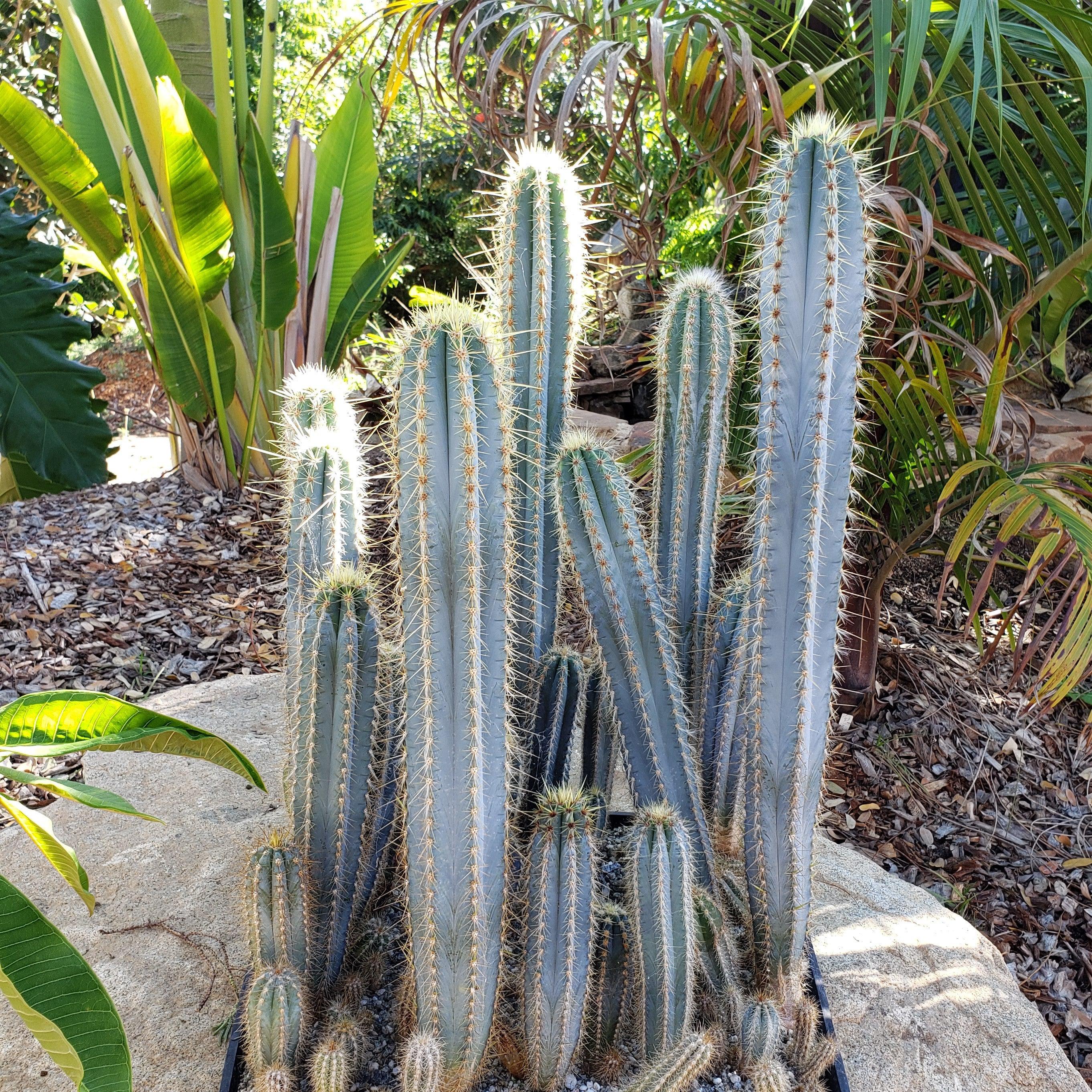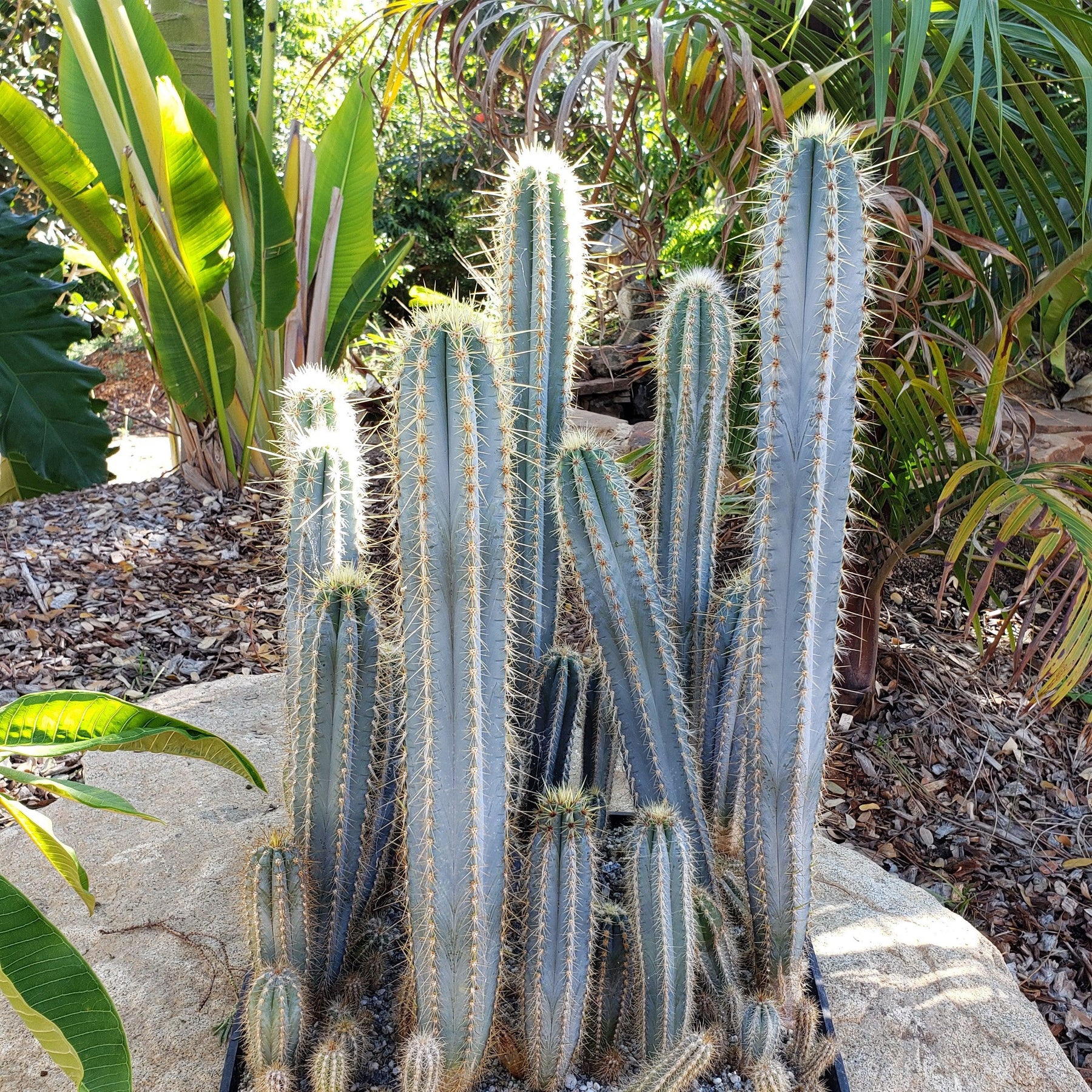


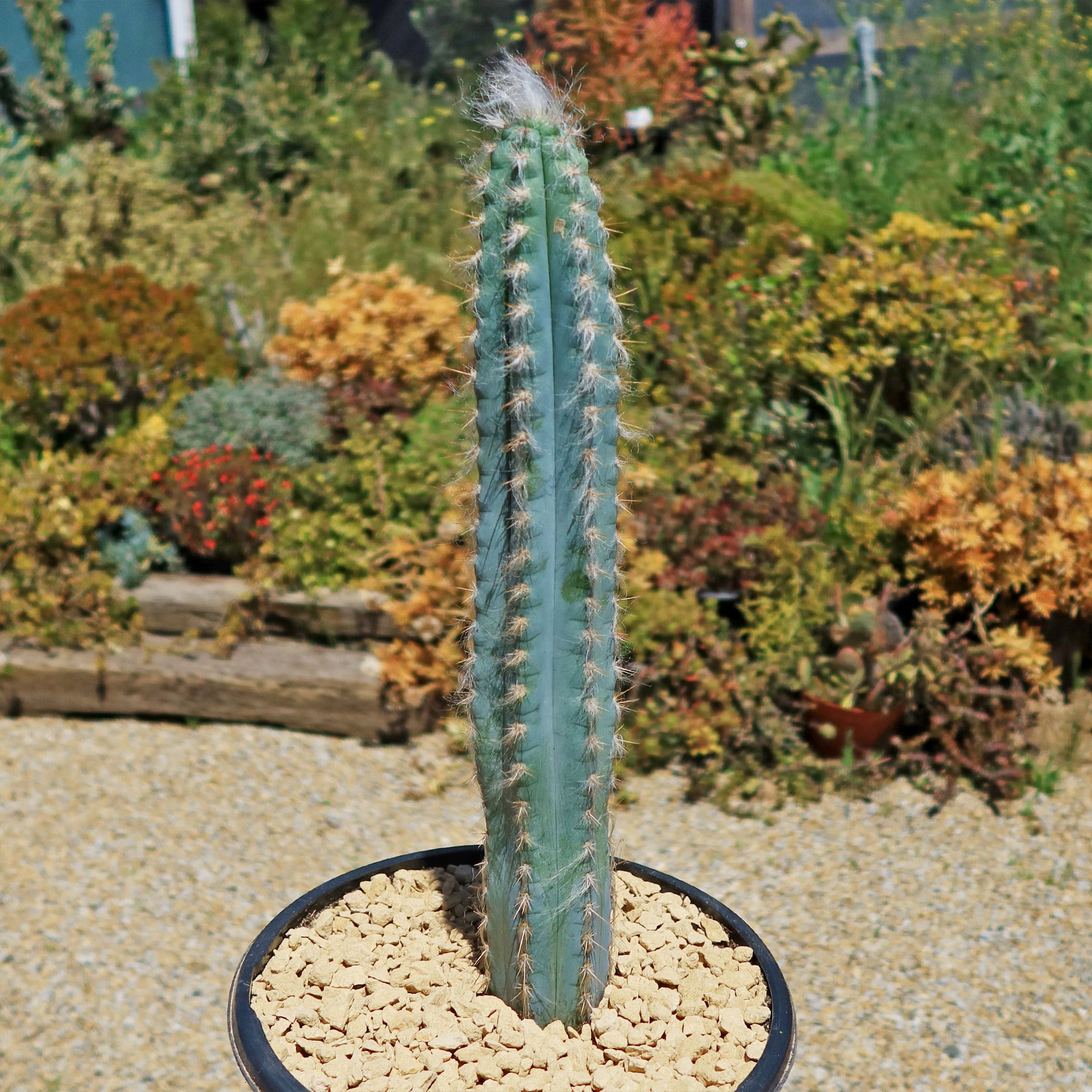
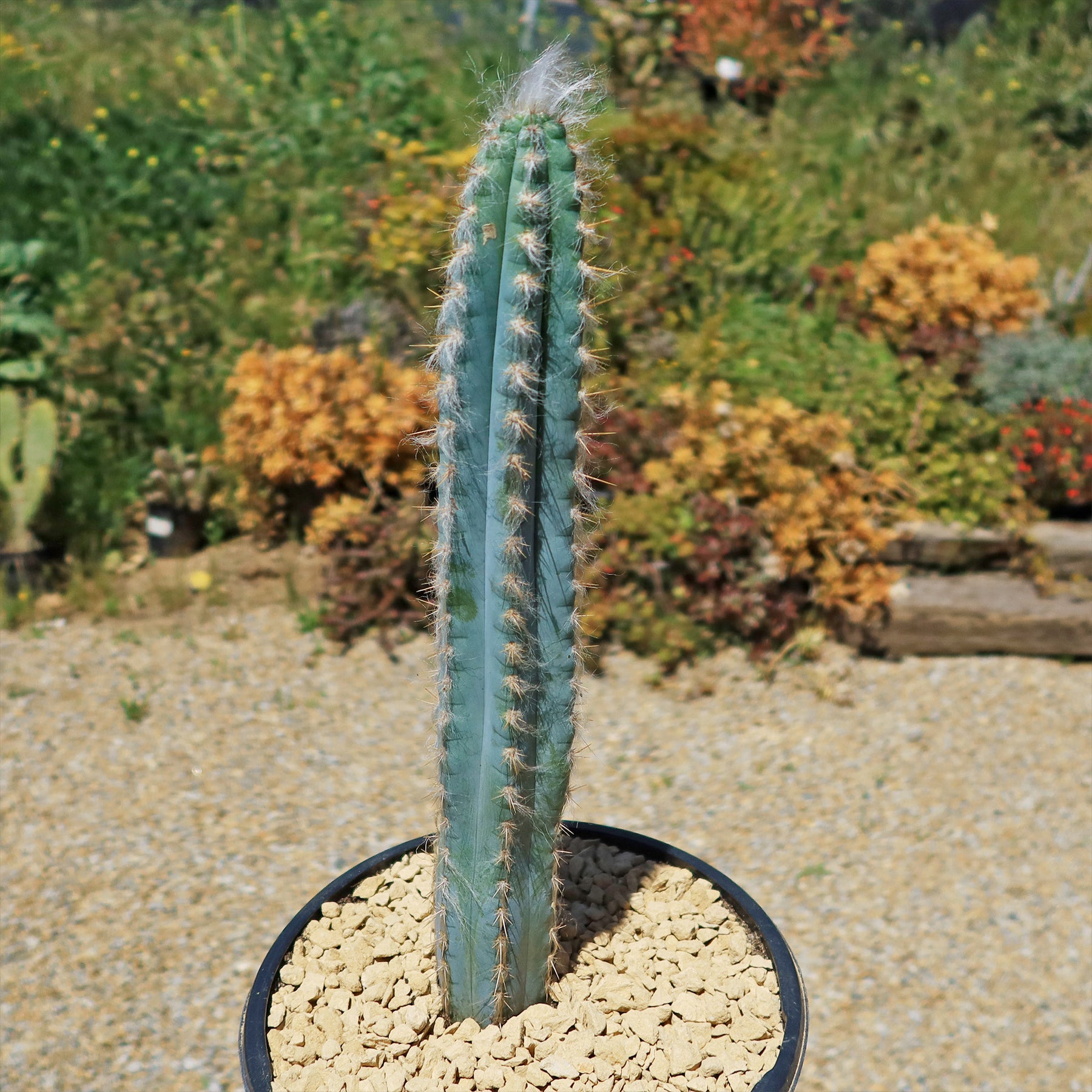
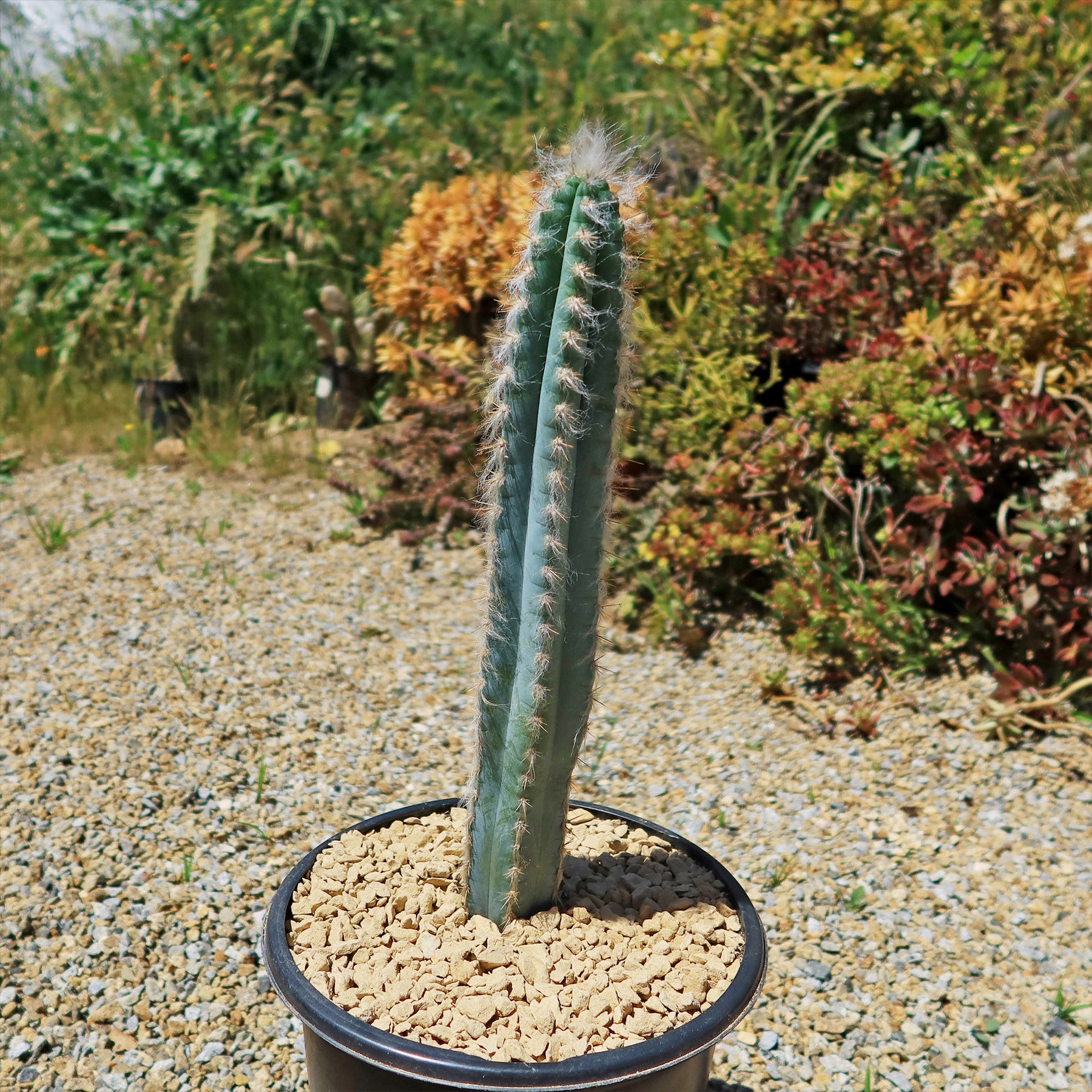
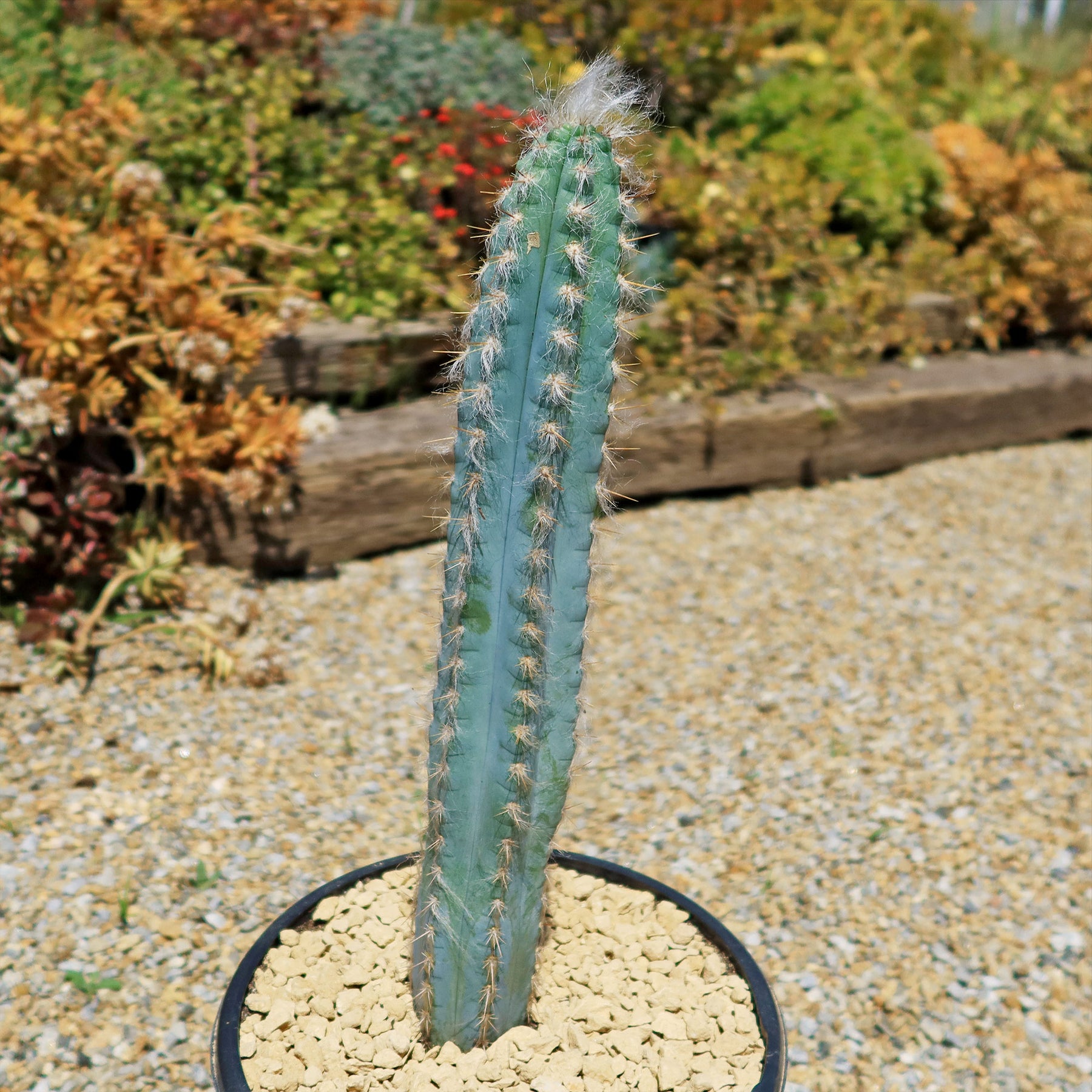
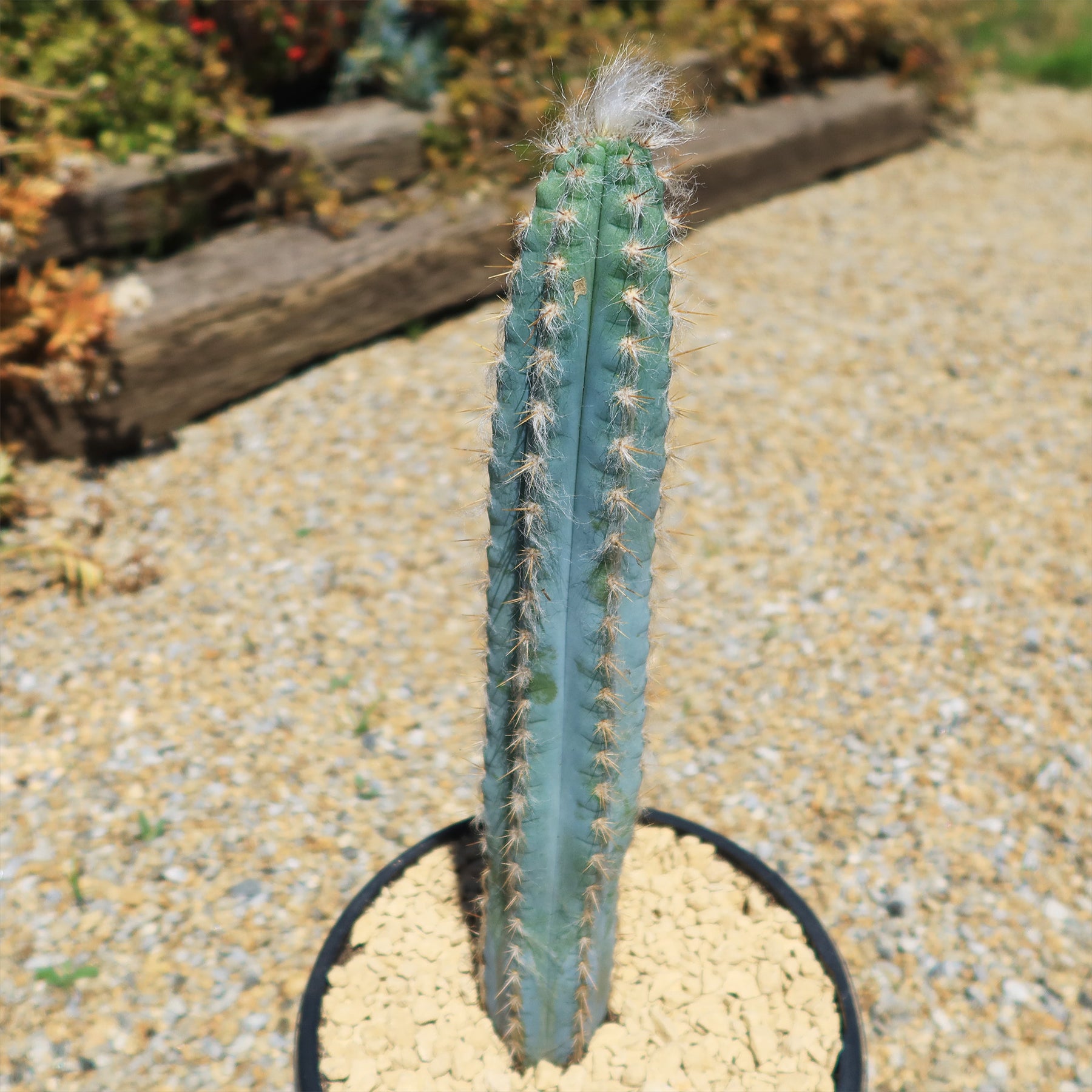
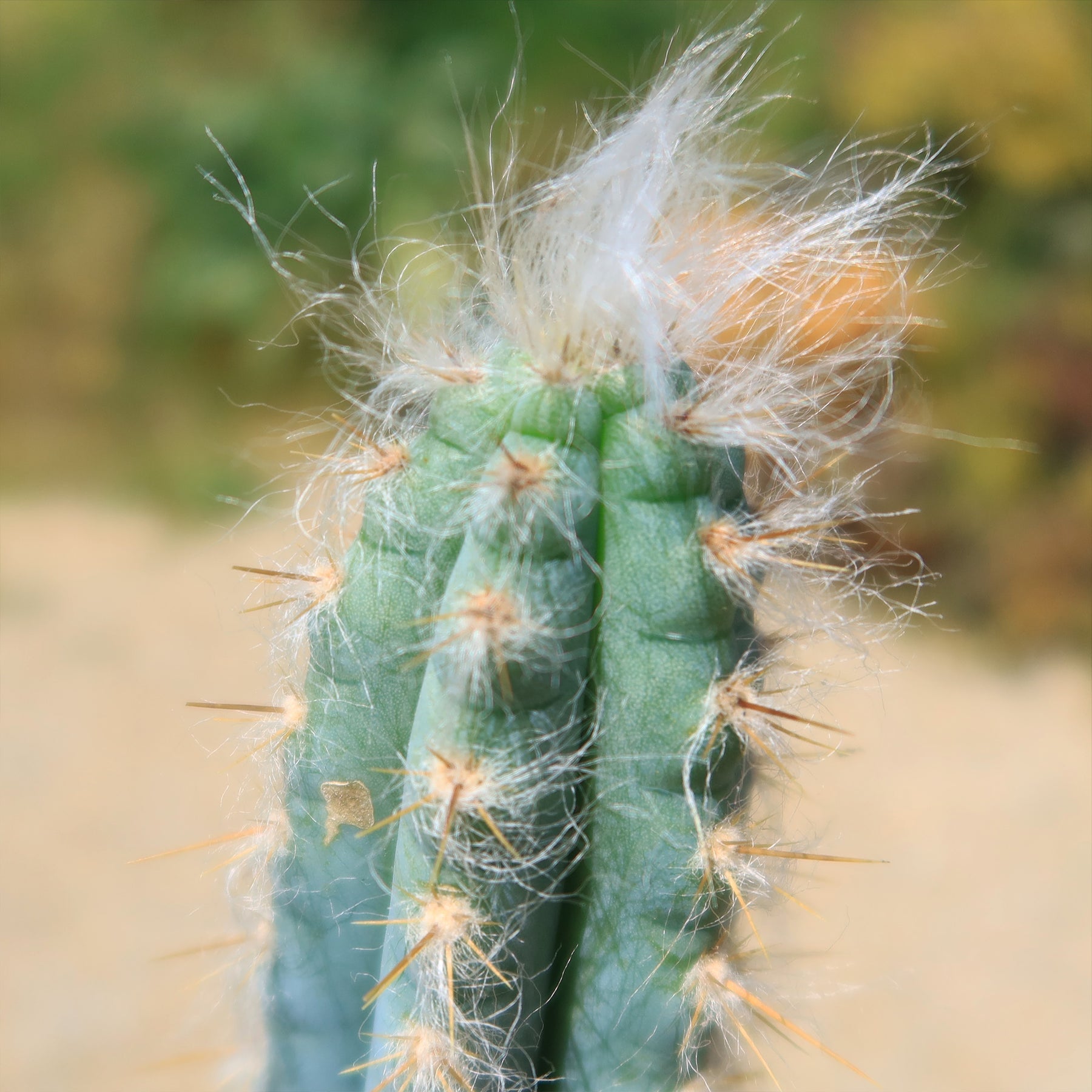
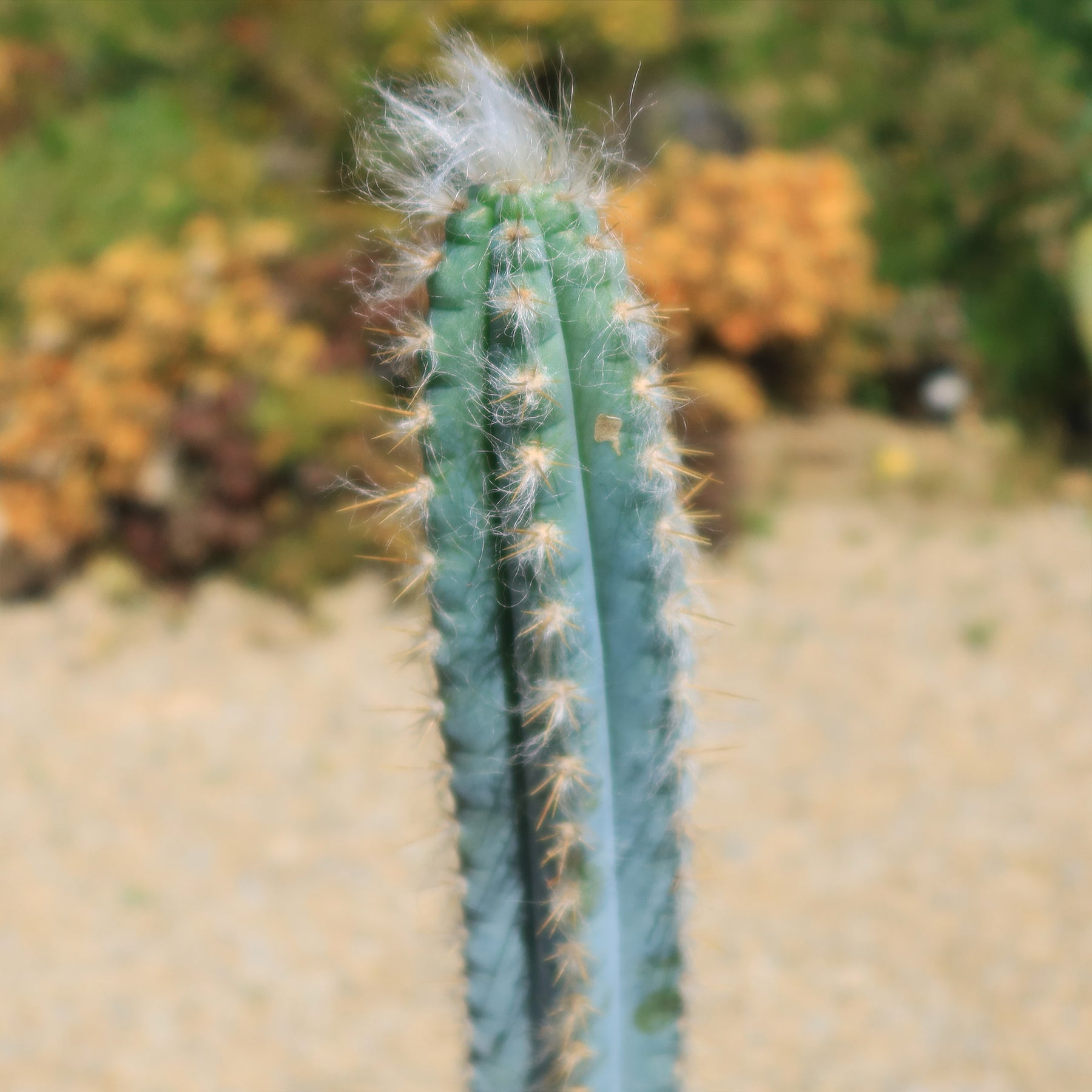
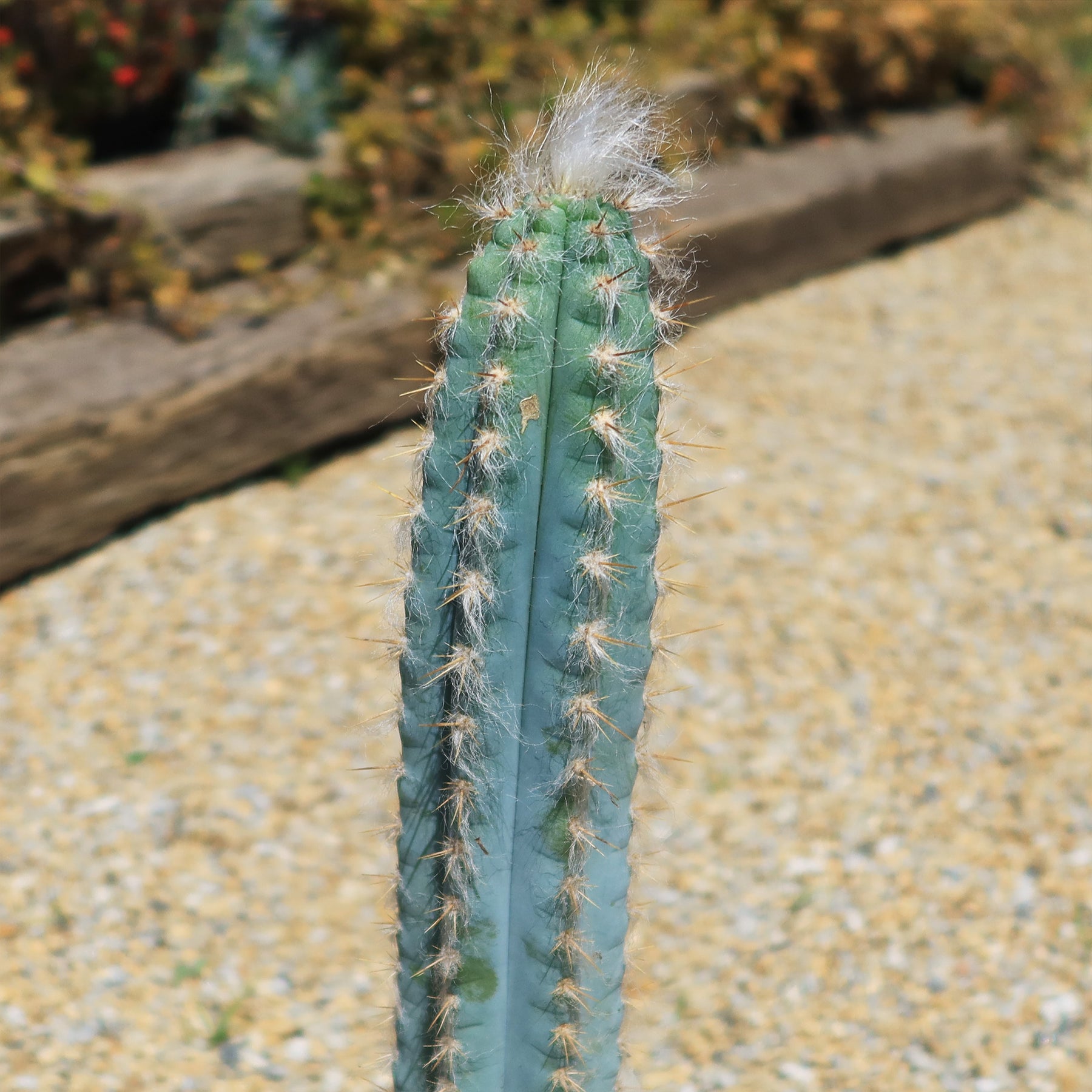
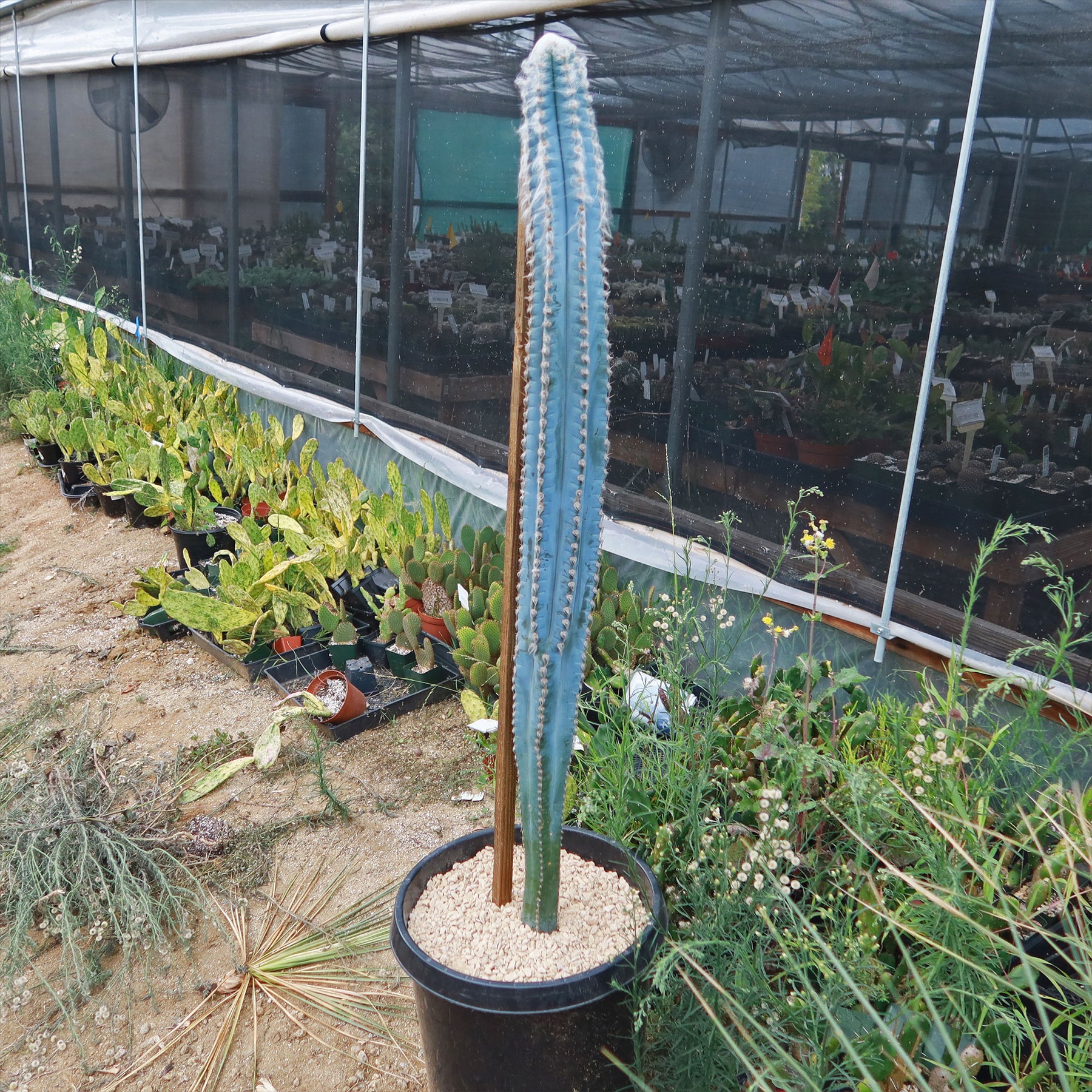
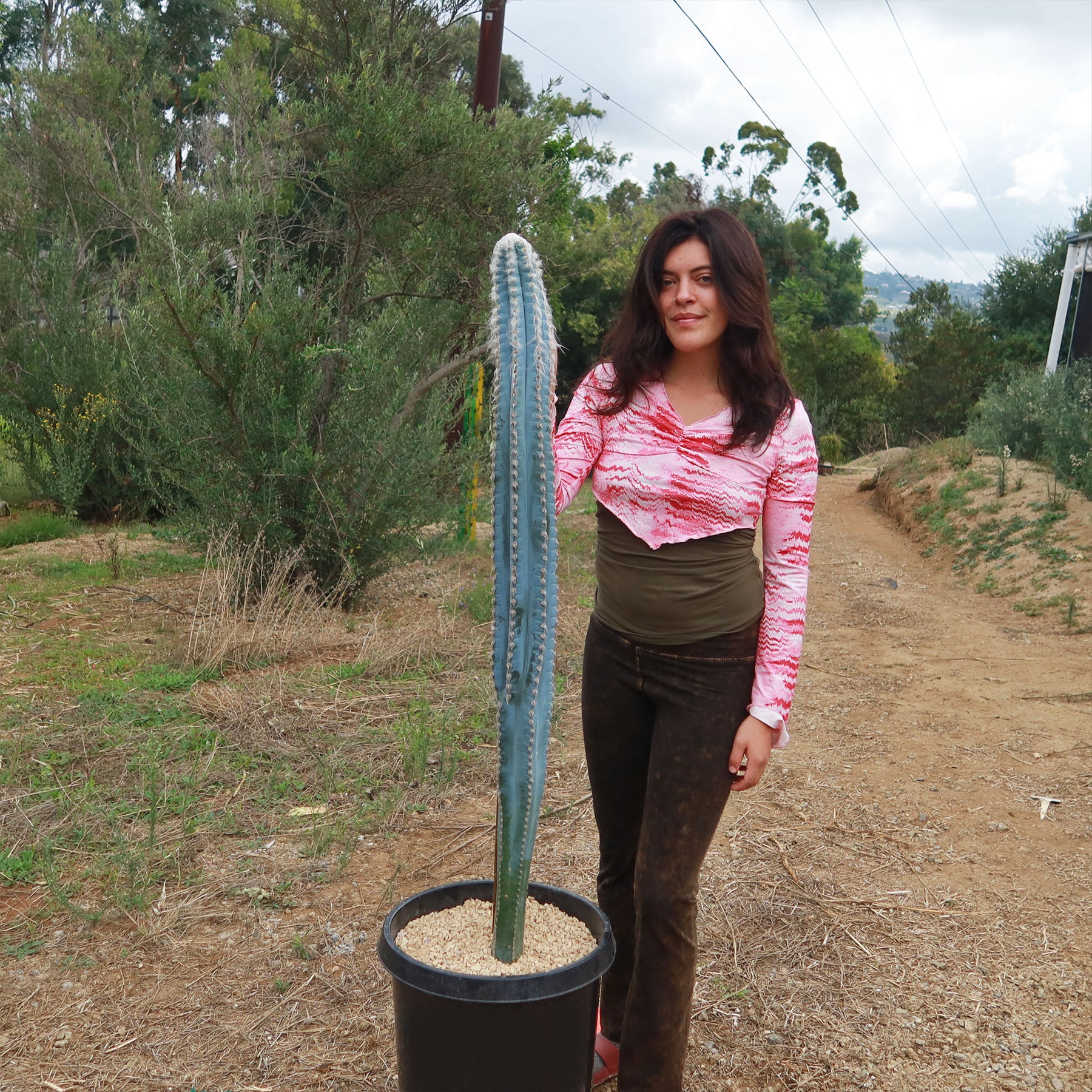
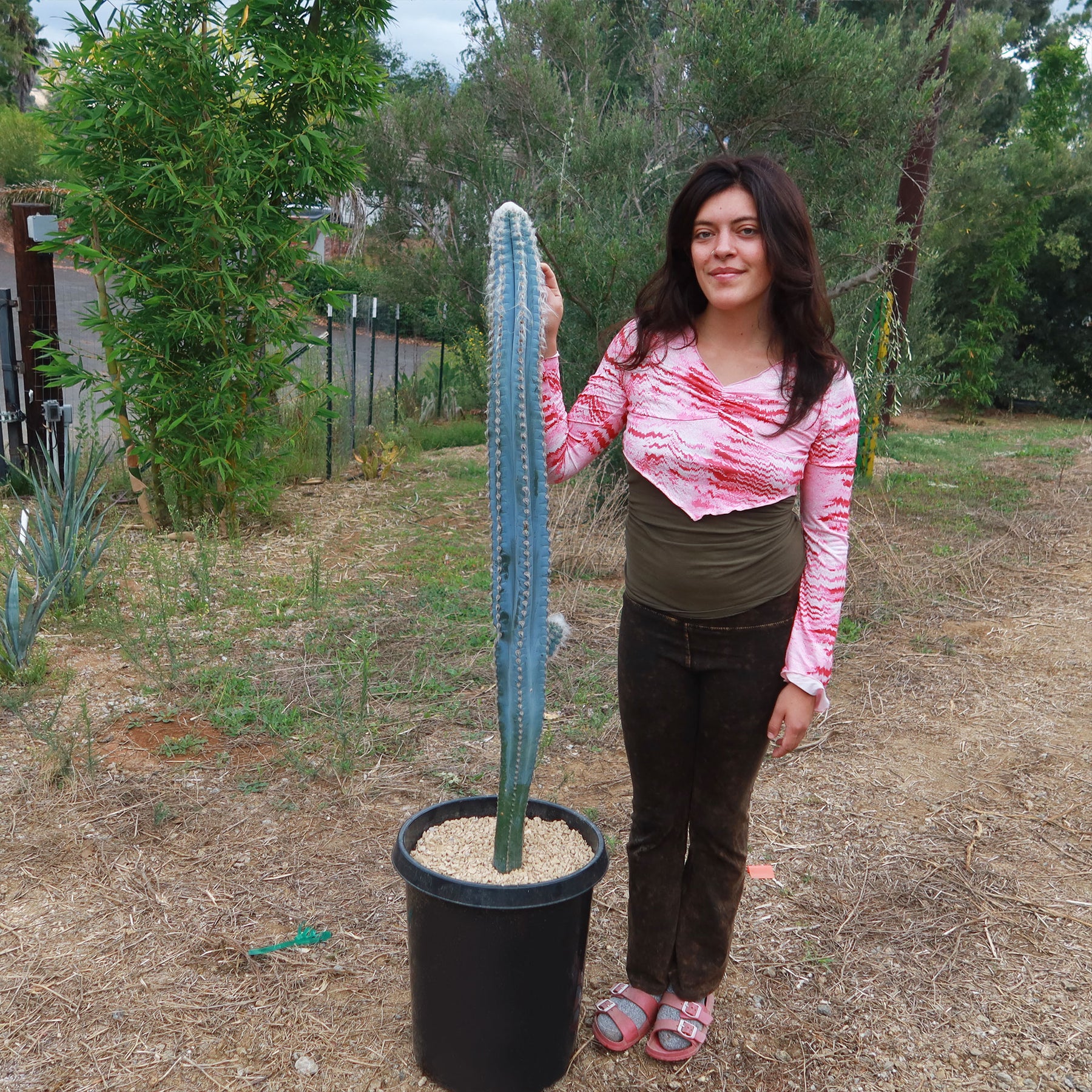
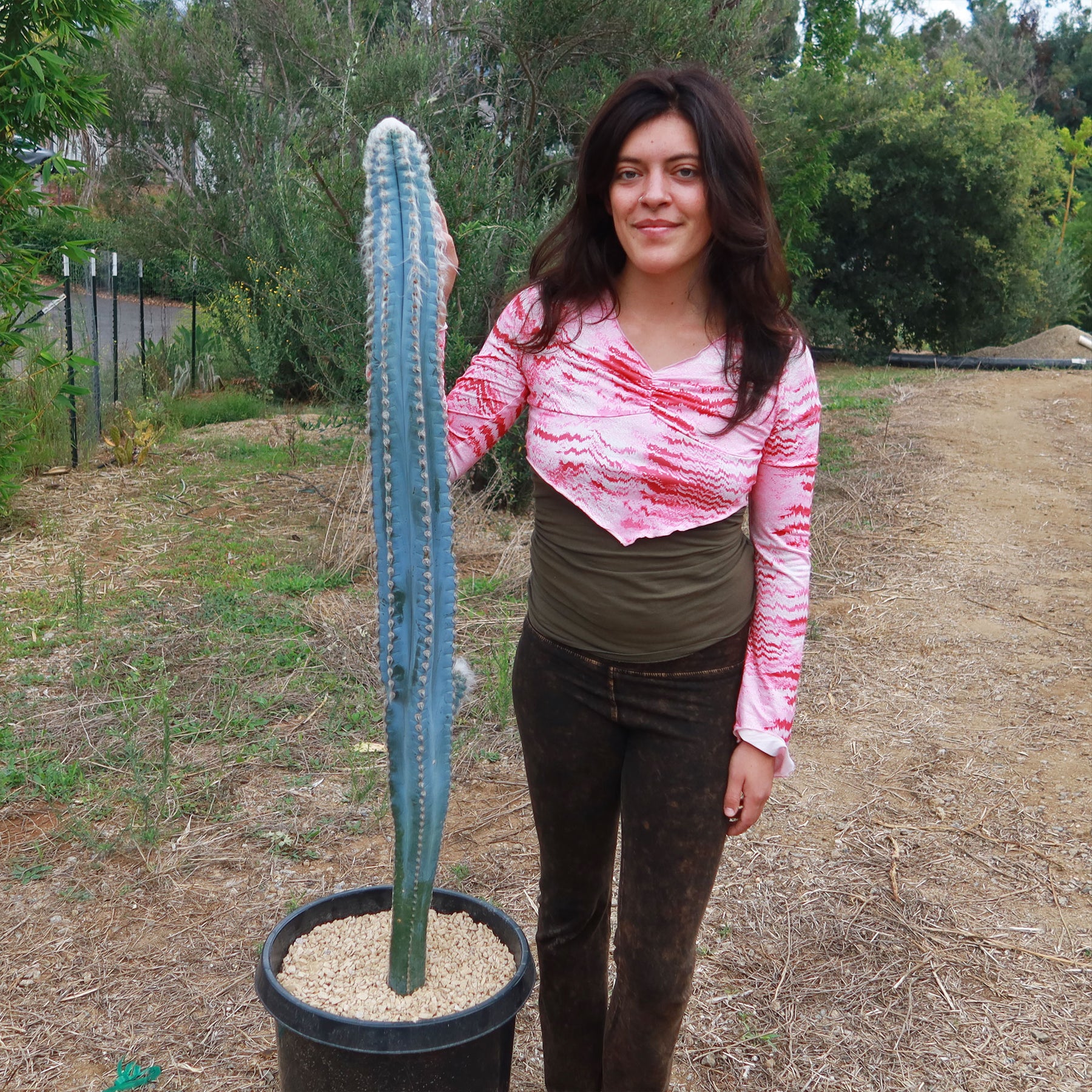
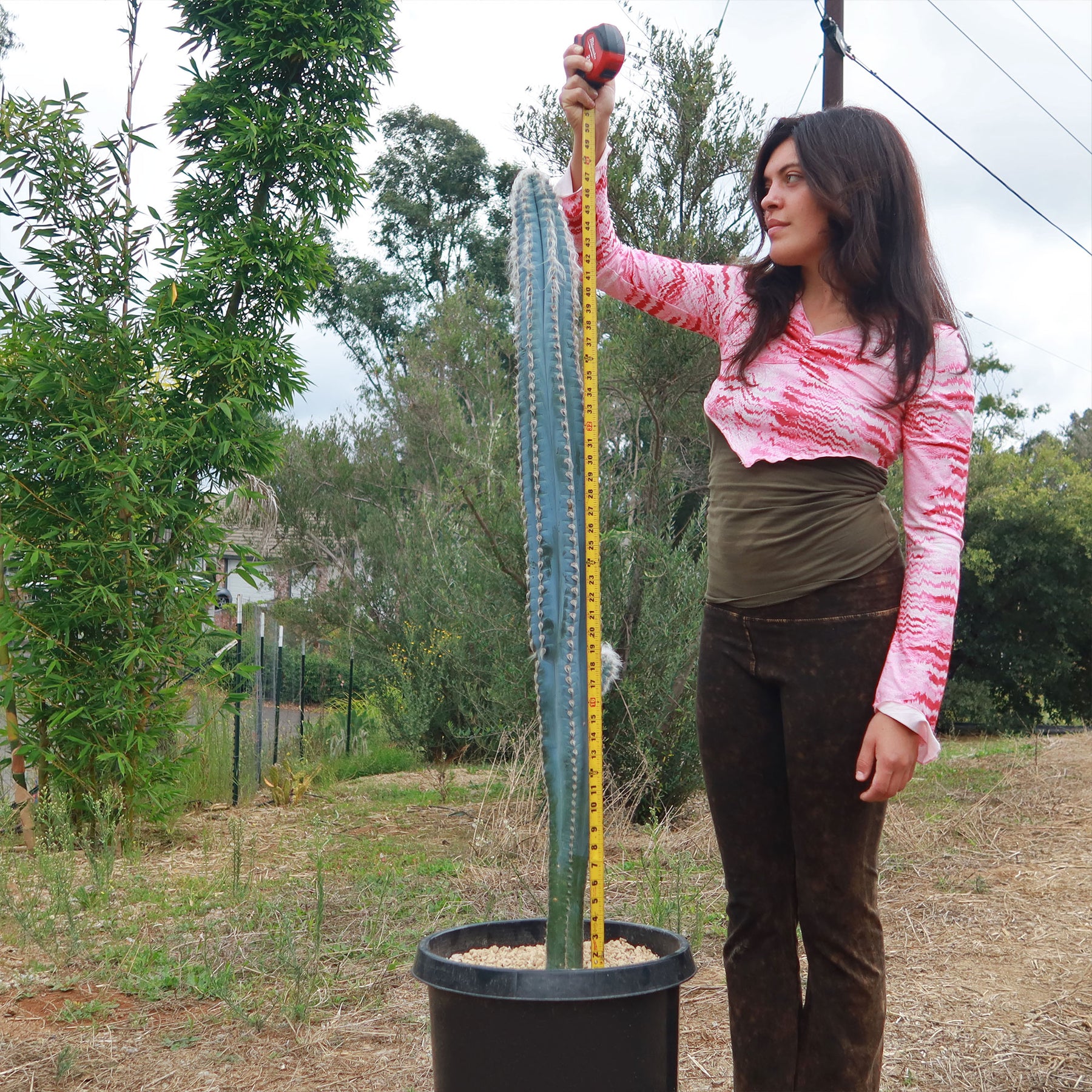
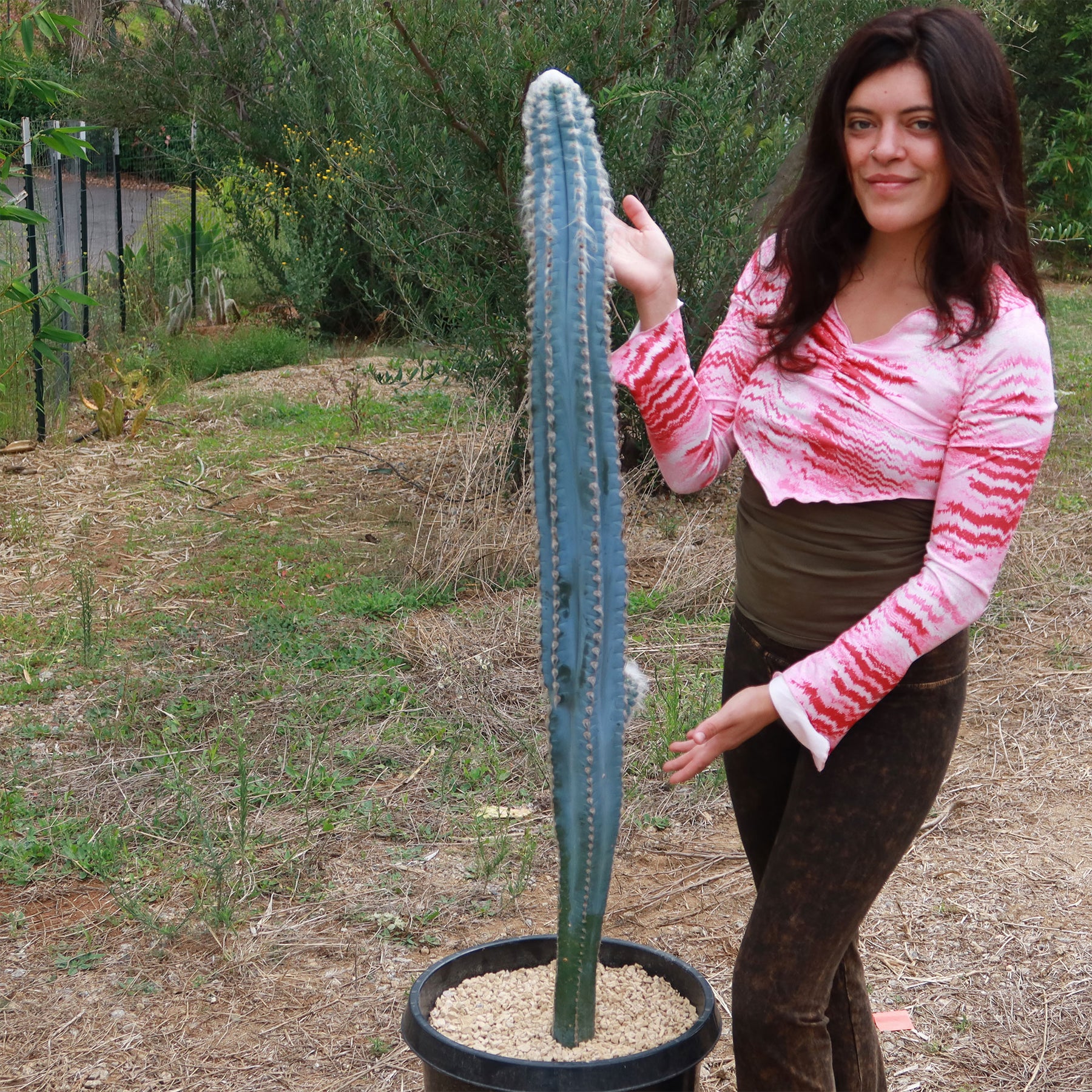
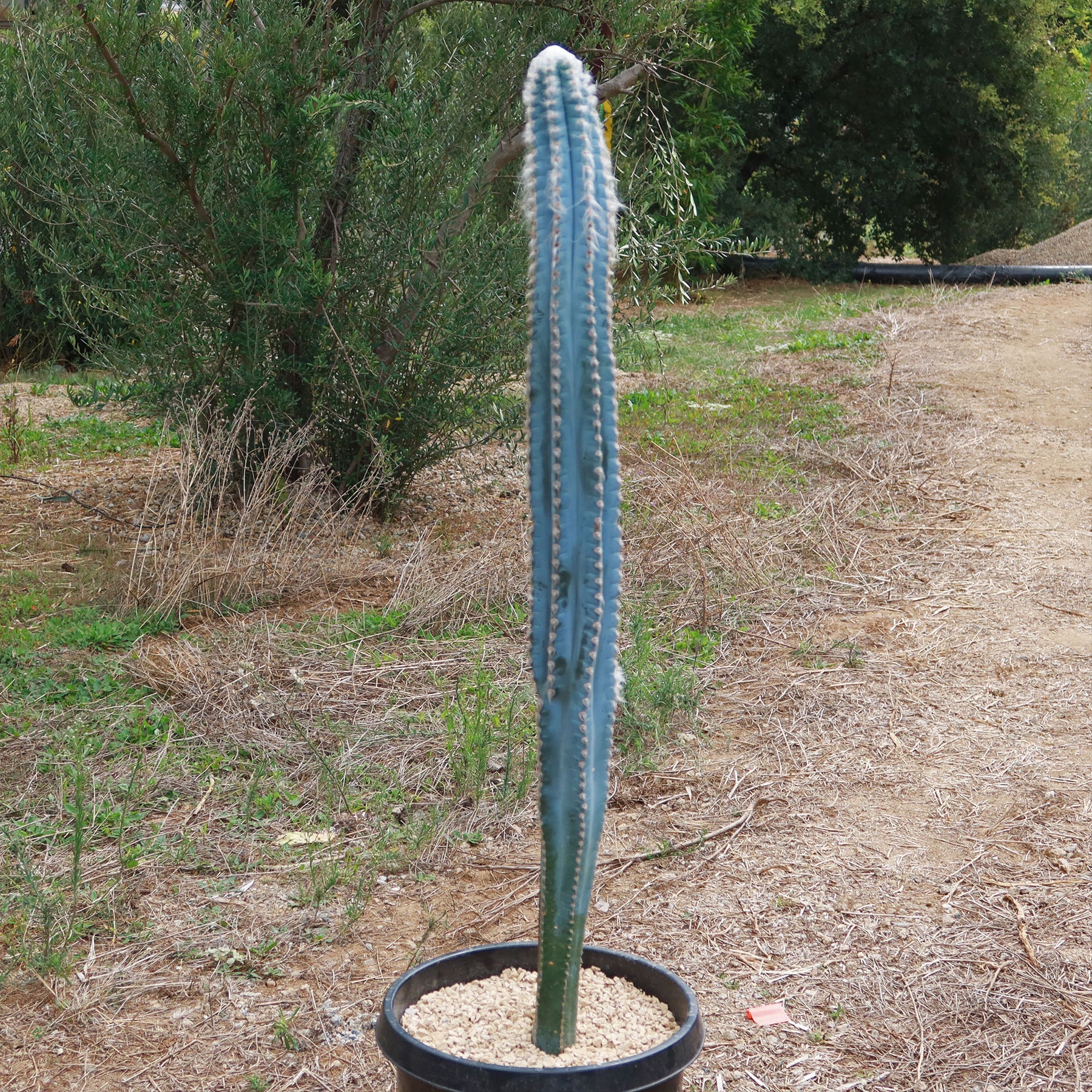
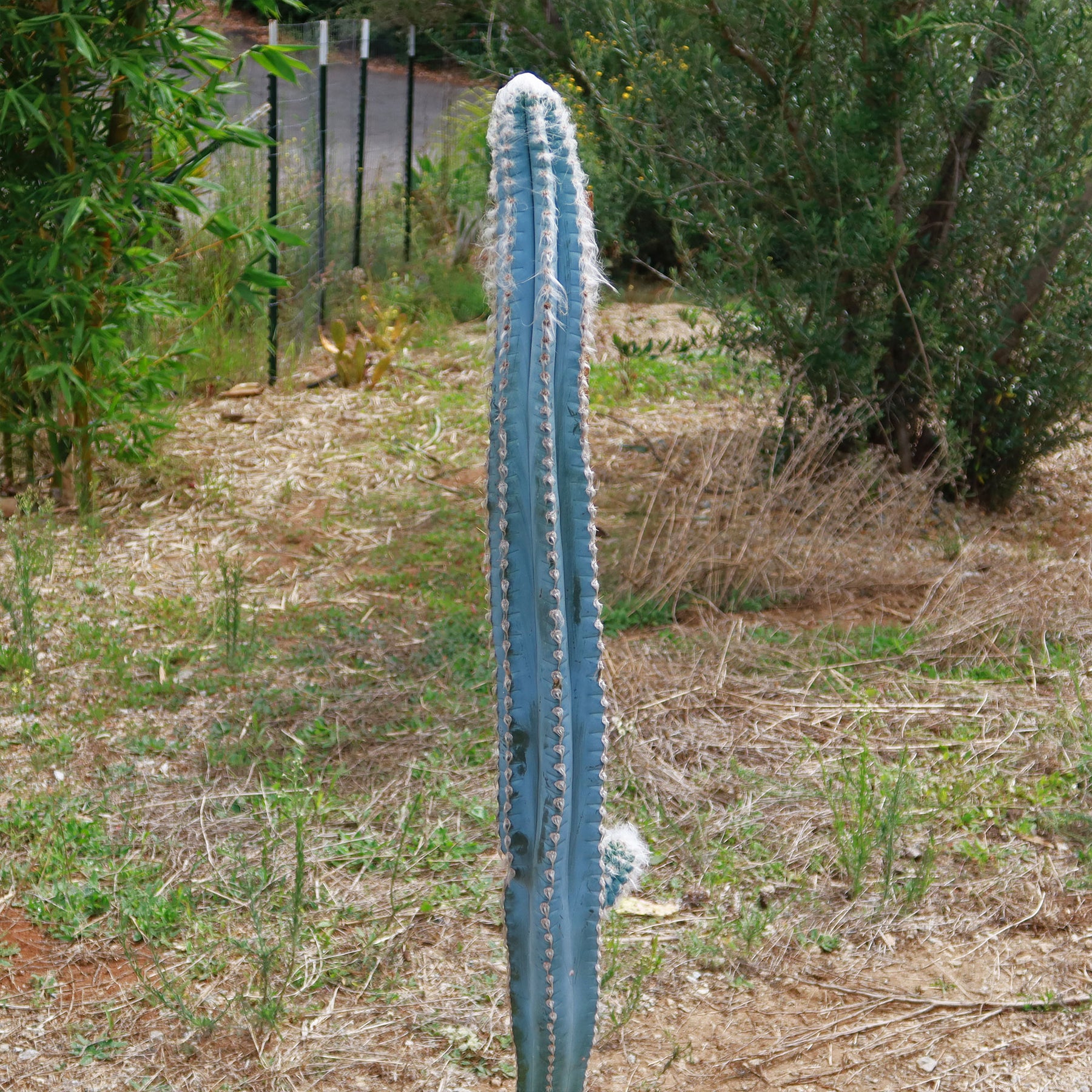
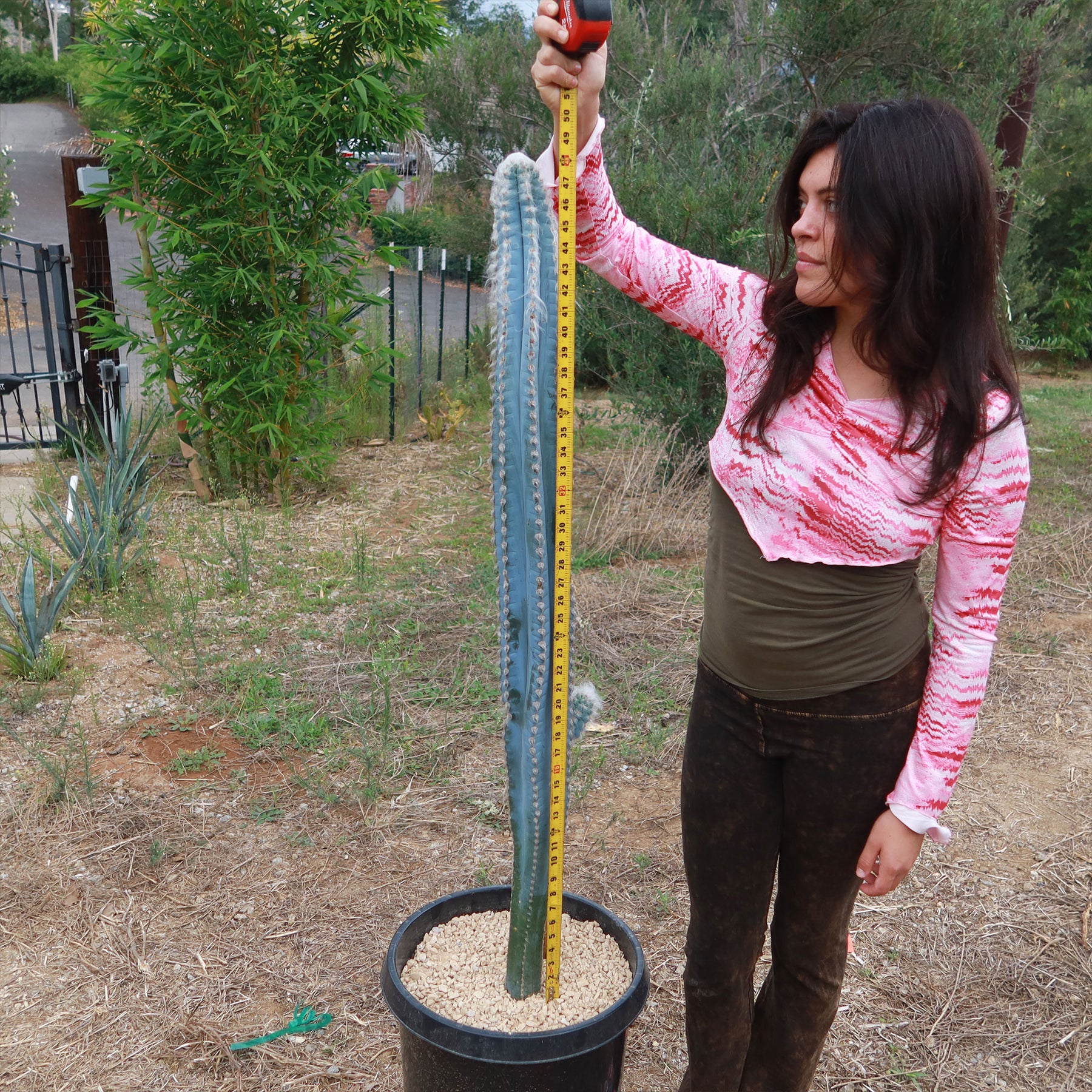
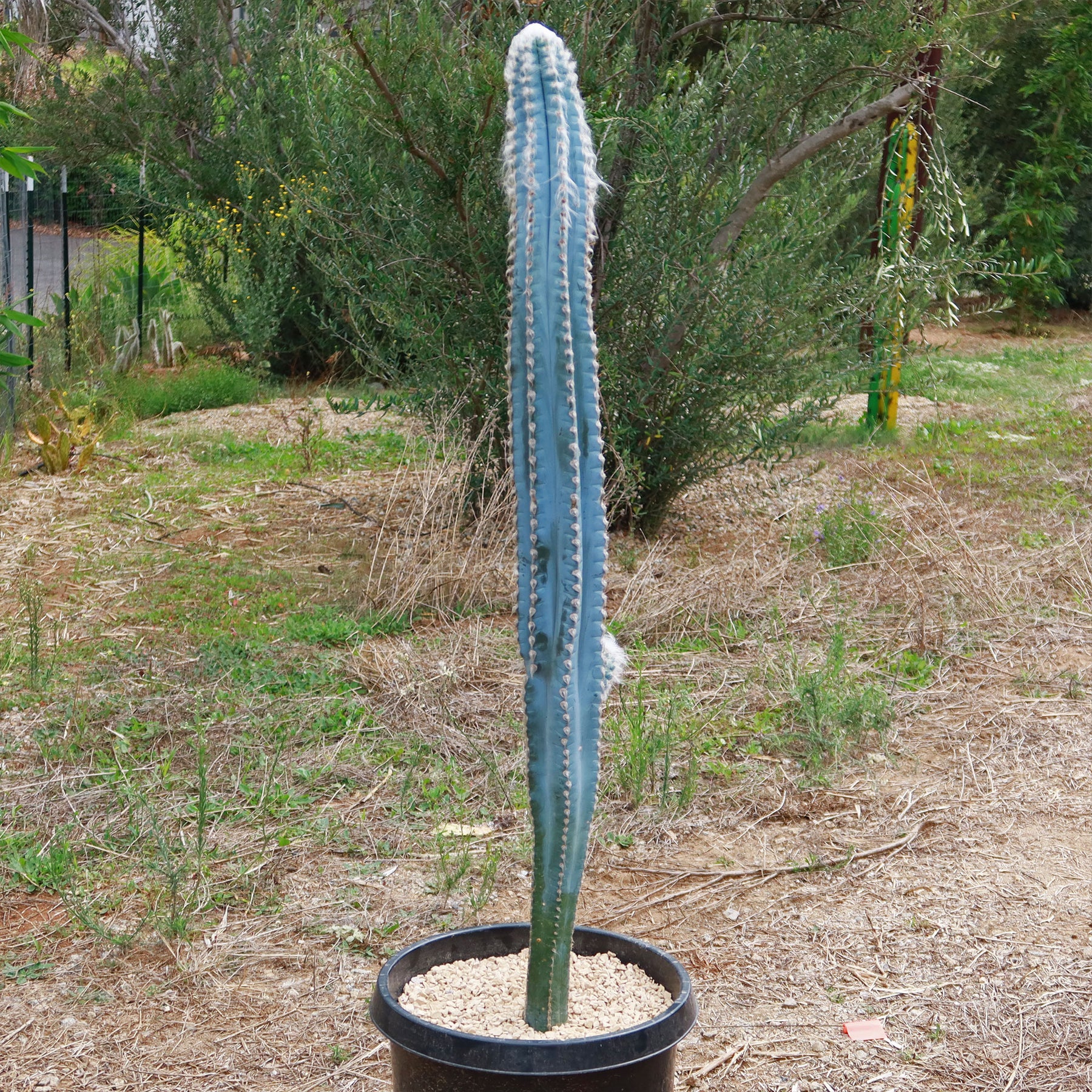
The Blue Torch Cactus, known as Pilosocereus pachycladus, is popular and a low-maintenance cactus admired for its bold color and sculptural form. With its tall, upright growth and powdery blue-green stems, it instantly brings a modern, desert-inspired aesthetic to any space. Whether used in landscaping or as a statement plant in containers, this cactus stands out as a true visual centerpiece.
This cactus is commonly known as the Blue Torch Cactus, Blue Columnar Cactus, or simply Blue Cactus. It belongs to the Pilosocereus genus, which includes several species known for their bluish tones and column-like growth. These common names reflect both its distinctive color and its upright, torch-like shape.

Native to Brazil, the Blue Torch Cactus is known for its impressive size and structure. In the wild, it can grow up to 33 feet tall, with thick, branching columns that may reach up to 4 feet wide.
When grown in containers, however, it remains more manageable while still maintaining its bold, vertical presence.
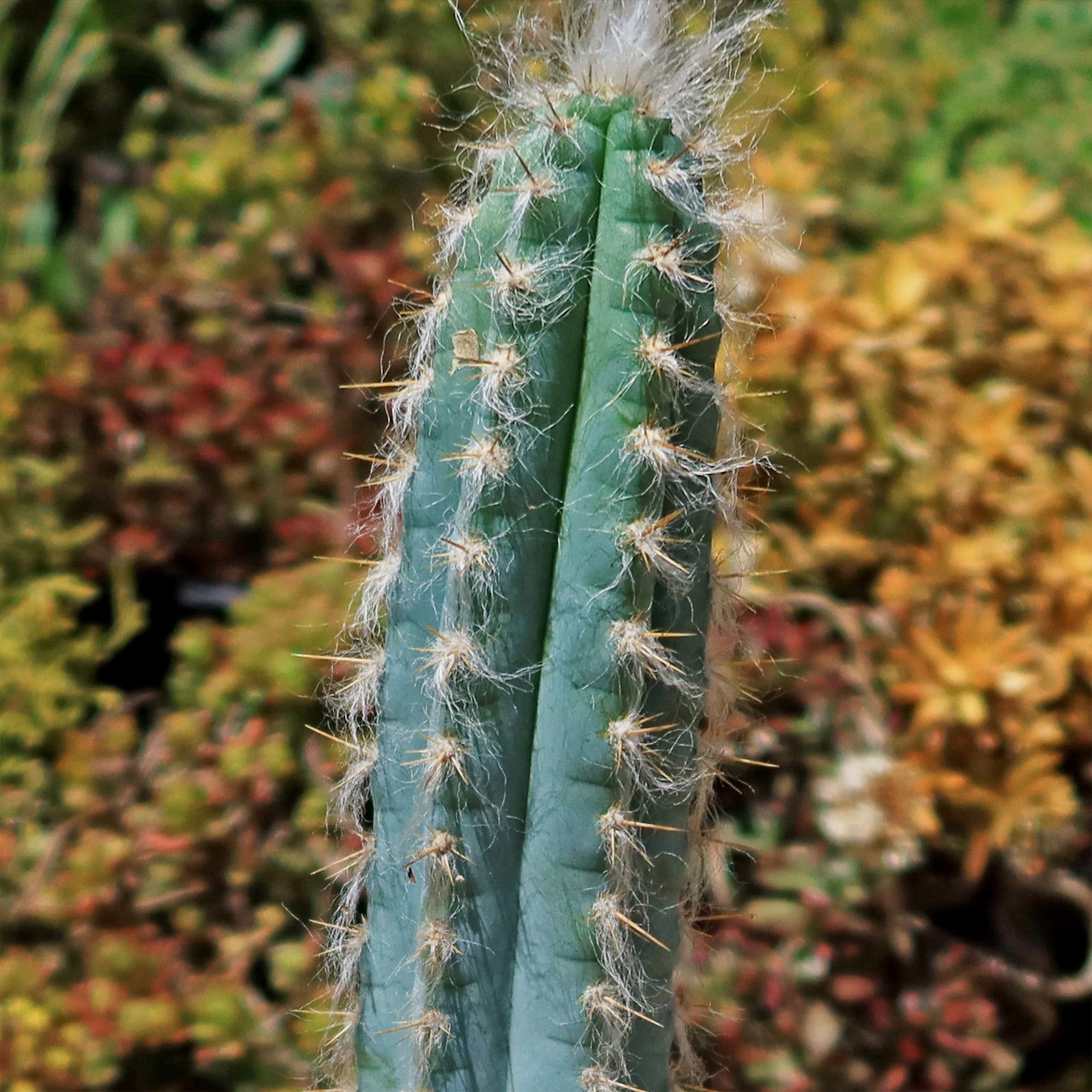
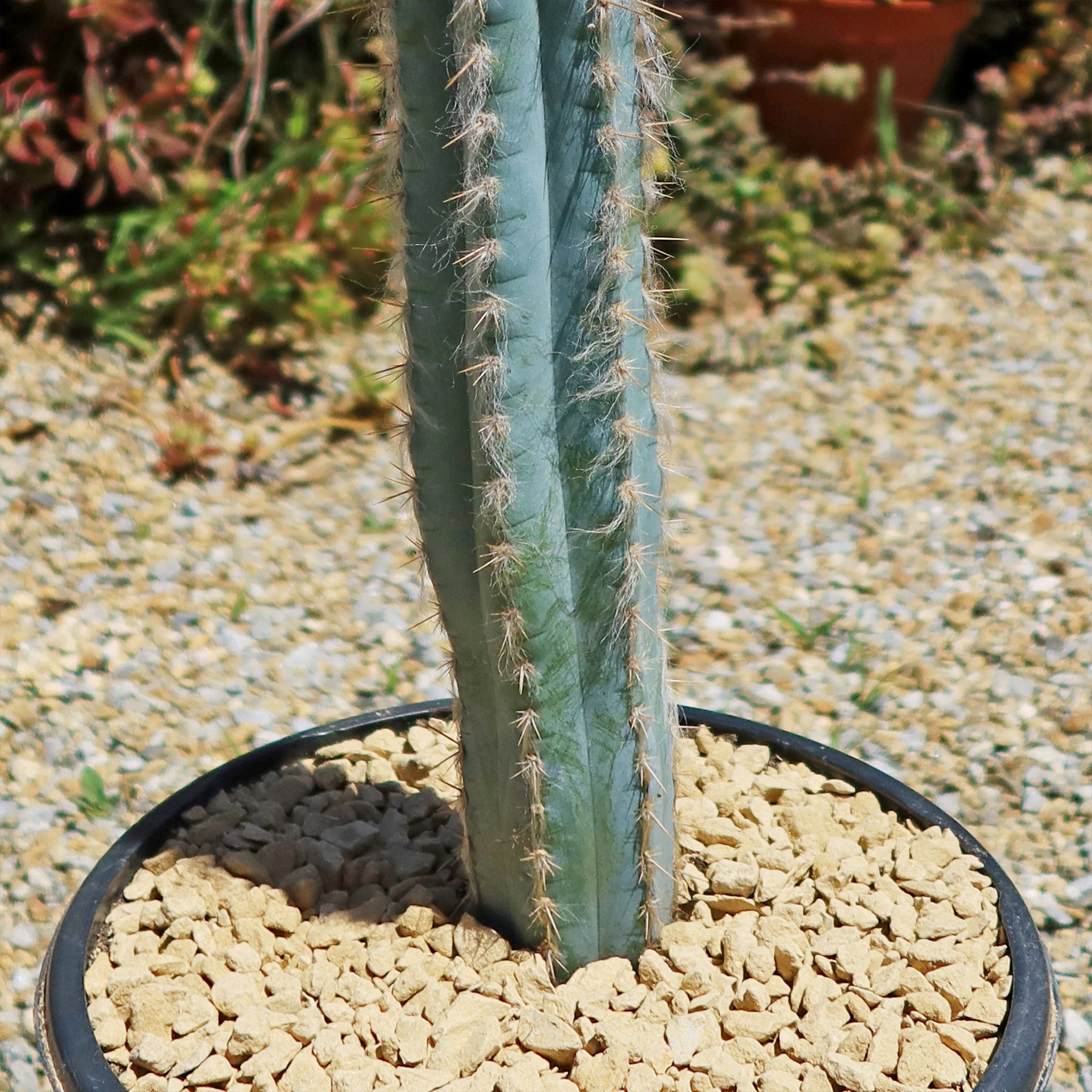
Its ribbed stems are covered in clusters of golden spines, adding texture and visual interest.
During the late spring to early summer, mature Blue Torch Cacti produce large, fragrant white flowers that open at night.
These blooms often feature subtle greenish or reddish outer tones, creating a beautiful contrast against the blue stems.
After flowering, the plant may develop small, rounded fruits that range in color from reddish to purplish, adding another layer of appeal.
What truly sets this cactus apart is its combination of color, size, and architectural form. The upright blue stems, highlighted by golden spines, create a dramatic and almost surreal look that works well in modern gardens, xeriscapes, and decorative pots.
When and How to Water Your Blue Torch Cactus
The Blue Torch cacti thrive when cared for properly by using the "soak and dry" technique. This involves giving your plant a generous watering followed by allowing it to completely dry out before watering again.
The Pilosocereus pachycladus should be watered every 2-3 weeks in spring and summer with minimal watering once a month in winter.
Make sure that you are also using porous sandy soil and make sure if it is in a pot, then make sure there is a drainage hole to avoid overwatering. It's best to withhold watering your outdoor cacti in rainy seasons or cold weather.
Light Requirements - Where to Place Your Blue Torch Cactus

When growing indoors, you can place it near a south or west facing window, where it can receive enough sunlight each day.
For the best results, position the plant less than one foot from the window so it can absorb as much natural light as possible.
To prevent the cactus from leaning toward the light, rotate the pot every few weeks so all sides are evenly exposed.
When growing outdoors, you should expose this cactus to direct sunlight every day for up to 4-6 hours.
Learn to adjust your blue torch cactus to avoid burns if the location where you have the plant is exposed to a lot of direct sunlight throughout. Gradually increase the exposure until it can handle the full sun.
During a heatwave or other short periods of extreme heat, your blue torch cactus could still sustain sun damage or get sunburned. You can protect this very low-maintenance plant in this situation by moving it indoors or to a bright, shade area.
Optimal Size & Fertilizer Needs
The blue torch plants prefer very airy, sandy soil that drains well. Planting these wildly unique house plants in regular soil will result in compacted roots, stunted growth, and, most likely, root rot. Instead, make or buy a well-draining potting mix, or ideally, use our specialized potting mix, which contains organic mycorrhizae to promote the development of a strong root system that will help your cactus thrive.
For a healthy blue torch cactus plant, use a balanced, low-strength fertilizer with an NPK ratio of 5-10-5, with slightly higher phosphorus than nitrogen. It's always best to fertilize your plant once a year in spring, during the growing season.
During winter dormancy, reduce or completely stop fertilizing your blue torch cactus, as it can lead to weak, stretched growth that is more prone to damage.
Hardiness Zones & More

In the United States, this 'Pilosocereus pachycladus' is mostly an indoor plant, but if you live in southern Florida or Hawaii, then you can cultivate it outdoors in USDA zones 9-11.
In cooler zones, it can be kept outdoors during the hot summer months and brought in as the temperature drops.
How to Grow as an Indoor Houseplant
When you're growing your blue torch cactus indoors, it thrives in low humidity and does best in dry, and arid conditions. It prefers a warm temperatures between 60°F and 75°F during the growing season. Avoid placing it in humid areas like bathrooms or near kitchens where moisture builds up.
You can place it in a very sunny spot, ideally a south-facing window, so it can get at least 6–8 hours of direct sunlight daily to maintain its blue color. If your space does not get enough sunlight, adding a grow light can keep the plant compact and vibrant. With the right light, soil, and watering routine, your blue torch cactus can grow steadily indoors and become a striking, low maintenance addition to your space. Give it a light watering to help it settle, but avoid overwatering.
Wildlife - Blue Torch Cactus Flowers Attract the Following Friendly Pollinators
Blue Torch Cactus can attract friendly pollinators such as bees, butterflies, hummingbirds, and other beneficial insects. These pollinators play a crucial role in the ecosystem by aiding in the reproduction of plants and ensuring biodiversity.
 Butterflies
 Bees
Bees
 Hummingbirds
 Lady Bugs
 Multi Pollinators
 Other Birds
According to ASPCA, the blue torch cactus is not considered toxic to humans or pets. However, it's always a good idea to practice caution and keep plants out of reach of curious pets or small children.
How to Propagate Your Blue Torch cactus
To propagate a blue torch cactus, it can be done by stem cutting. Start with a healthy stem cutting about 4 to 12 inches long, ideally taken during spring or summer. Let the cutting dry for a few days until the cut end forms a callus.
After that, plant it in well draining succulent soil, and place the callused end about an inch deep to keep the cutting upright and stable. Use a pot with drainage holes to prevent excess moisture buildup. Place it in bright, indirect light and water lightly only when the soil is completely dry to prevent rot while it develops roots.
Key Takeaways
- The Blue Torch Cactus is a striking columnar plant known for its powdery blue stems and bold upright growth that instantly adds a modern desert look to any space.
- It is a low maintenance cactus that thrives with minimal care, making it a great choice if you want something eye catching without constant attention.
- This cactus prefers bright, direct sunlight and grows best when placed near a sunny window where it can maintain its vibrant blue color.
- Like most desert plants, it is highly drought tolerant and should be watered using a soak and dry method to prevent overwatering and root rot.
- With its tall, sculptural form and slow, steady growth, the Blue Torch Cactus becomes a long lasting statement plant in both indoor and outdoor settings.
Final Thoughts
Bloom Season
Flower Color
Growth Rate
Hardiness Zone
Mature Size
Plant Type
Resistance
Sun Exposure
Watering Needs
| Bloom Season | Late spring, early summer |
|---|---|
| Botanical Name | Pilosocereus pachycladus |
| Common Name | Blue Torch Cactus |
| Dormancy | Winter |
| Family | Cactaceae |
| Flower Color | White, near white |
| Genus | Pilosocereus |
| Growth Habit | Columnar |
| Growth Rate | Slow |
| Hardiness Zone | 9, 10, 11 |
| Mature Size | 33 ft. tall, 4 ft. wide |
| Native Area | Mexico |
| Plant Type | Perennial cactus |
| Propagation | By stem cuttings |
| Resistance | Extremely drought-tolerant, pest resistance, heat resistance, disease resistance |
| Soil PH | 6.5, Acidic, Neutral |
| Soil Type | Cactus potting mix soil |
| Special Features | Unique foliage, flowers bllom at night |
| Sun Exposure | Full sun (6+ hrs.), Partial shade (3–6 hrs. sun) |
| Toxicity | Safe for humans, safe for pets (Keep away from Children) |
| Watering Needs | Low |
Growers Quick Reference Guide - Key Features
| Bloom Season | Late spring, early summer |
|---|---|
| Botanical Name | Pilosocereus pachycladus |
| Common Name | Blue Torch Cactus |
| Dormancy | Winter |
| Family | Cactaceae |
| Flower Color | White, near white |
| Genus | Pilosocereus |
| Growth Habit | Columnar |
| Growth Rate | Slow |
| Hardiness Zone | 9, 10, 11 |
| Mature Size | 33 ft. tall, 4 ft. wide |
| Native Area | Mexico |
| Plant Type | Perennial cactus |
| Propagation | By stem cuttings |
| Resistance | Extremely drought-tolerant, pest resistance, heat resistance, disease resistance |
| Soil PH | 6.5, Acidic, Neutral |
| Soil Type | Cactus potting mix soil |
| Special Features | Unique foliage, flowers bllom at night |
| Sun Exposure | Full sun (6+ hrs.), Partial shade (3–6 hrs. sun) |
| Toxicity | Safe for humans, safe for pets (Keep away from Children) |
| Watering Needs | Low |
- Description
- Key Plant Features
The Blue Torch Cactus, known as Pilosocereus pachycladus, is popular and a low-maintenance cactus admired for its bold color and sculptural form. With its tall, upright growth and powdery blue-green stems, it instantly brings a modern, desert-inspired aesthetic to any space. Whether used in landscaping or as a statement plant in containers, this cactus stands out as a true visual centerpiece.
This cactus is commonly known as the Blue Torch Cactus, Blue Columnar Cactus, or simply Blue Cactus. It belongs to the Pilosocereus genus, which includes several species known for their bluish tones and column-like growth. These common names reflect both its distinctive color and its upright, torch-like shape.
Native to Brazil, the Blue Torch Cactus is known for its impressive size and structure. In the wild, it can grow up to 33 feet tall, with thick, branching columns that may reach up to 4 feet wide.
When grown in containers, however, it remains more manageable while still maintaining its bold, vertical presence.
Its ribbed stems are covered in clusters of golden spines, adding texture and visual interest.
During the late spring to early summer, mature Blue Torch Cacti produce large, fragrant white flowers that open at night.
These blooms often feature subtle greenish or reddish outer tones, creating a beautiful contrast against the blue stems.
After flowering, the plant may develop small, rounded fruits that range in color from reddish to purplish, adding another layer of appeal.
What truly sets this cactus apart is its combination of color, size, and architectural form. The upright blue stems, highlighted by golden spines, create a dramatic and almost surreal look that works well in modern gardens, xeriscapes, and decorative pots.
When and How to Water Your Blue Torch Cactus
The Blue Torch cacti thrive when cared for properly by using the "soak and dry" technique. This involves giving your plant a generous watering followed by allowing it to completely dry out before watering again.
The Pilosocereus pachycladus should be watered every 2-3 weeks in spring and summer with minimal watering once a month in winter.
Make sure that you are also using porous sandy soil and make sure if it is in a pot, then make sure there is a drainage hole to avoid overwatering. It's best to withhold watering your outdoor cacti in rainy seasons or cold weather.
Light Requirements - Where to Place Your Blue Torch Cactus
When growing indoors, you can place it near a south or west facing window, where it can receive enough sunlight each day.
For the best results, position the plant less than one foot from the window so it can absorb as much natural light as possible.
To prevent the cactus from leaning toward the light, rotate the pot every few weeks so all sides are evenly exposed.
When growing outdoors, you should expose this cactus to direct sunlight every day for up to 4-6 hours.
Learn to adjust your blue torch cactus to avoid burns if the location where you have the plant is exposed to a lot of direct sunlight throughout. Gradually increase the exposure until it can handle the full sun.
During a heatwave or other short periods of extreme heat, your blue torch cactus could still sustain sun damage or get sunburned. You can protect this very low-maintenance plant in this situation by moving it indoors or to a bright, shade area.
Optimal Size & Fertilizer Needs
The blue torch plants prefer very airy, sandy soil that drains well. Planting these wildly unique house plants in regular soil will result in compacted roots, stunted growth, and, most likely, root rot. Instead, make or buy a well-draining potting mix, or ideally, use our specialized potting mix, which contains organic mycorrhizae to promote the development of a strong root system that will help your cactus thrive.
For a healthy blue torch cactus plant, use a balanced, low-strength fertilizer with an NPK ratio of 5-10-5, with slightly higher phosphorus than nitrogen. It's always best to fertilize your plant once a year in spring, during the growing season.
During winter dormancy, reduce or completely stop fertilizing your blue torch cactus, as it can lead to weak, stretched growth that is more prone to damage.
Hardiness Zones & More
In the United States, this 'Pilosocereus pachycladus' is mostly an indoor plant, but if you live in southern Florida or Hawaii, then you can cultivate it outdoors in USDA zones 9-11.
In cooler zones, it can be kept outdoors during the hot summer months and brought in as the temperature drops.
How to Grow as an Indoor Houseplant
When you're growing your blue torch cactus indoors, it thrives in low humidity and does best in dry, and arid conditions. It prefers a warm temperatures between 60°F and 75°F during the growing season. Avoid placing it in humid areas like bathrooms or near kitchens where moisture builds up.
You can place it in a very sunny spot, ideally a south-facing window, so it can get at least 6–8 hours of direct sunlight daily to maintain its blue color. If your space does not get enough sunlight, adding a grow light can keep the plant compact and vibrant. With the right light, soil, and watering routine, your blue torch cactus can grow steadily indoors and become a striking, low maintenance addition to your space. Give it a light watering to help it settle, but avoid overwatering.
Wildlife - Blue Torch Cactus Flowers Attract the Following Friendly Pollinators
Blue Torch Cactus can attract friendly pollinators such as bees, butterflies, hummingbirds, and other beneficial insects. These pollinators play a crucial role in the ecosystem by aiding in the reproduction of plants and ensuring biodiversity.
Butterflies
Bees
Hummingbirds
Lady Bugs
Multi Pollinators
Other Birds
According to ASPCA, the blue torch cactus is not considered toxic to humans or pets. However, it's always a good idea to practice caution and keep plants out of reach of curious pets or small children.
How to Propagate Your Blue Torch cactus
To propagate a blue torch cactus, it can be done by stem cutting. Start with a healthy stem cutting about 4 to 12 inches long, ideally taken during spring or summer. Let the cutting dry for a few days until the cut end forms a callus.
After that, plant it in well draining succulent soil, and place the callused end about an inch deep to keep the cutting upright and stable. Use a pot with drainage holes to prevent excess moisture buildup. Place it in bright, indirect light and water lightly only when the soil is completely dry to prevent rot while it develops roots.
Key Takeaways
- The Blue Torch Cactus is a striking columnar plant known for its powdery blue stems and bold upright growth that instantly adds a modern desert look to any space.
- It is a low maintenance cactus that thrives with minimal care, making it a great choice if you want something eye catching without constant attention.
- This cactus prefers bright, direct sunlight and grows best when placed near a sunny window where it can maintain its vibrant blue color.
- Like most desert plants, it is highly drought tolerant and should be watered using a soak and dry method to prevent overwatering and root rot.
- With its tall, sculptural form and slow, steady growth, the Blue Torch Cactus becomes a long lasting statement plant in both indoor and outdoor settings.
Final Thoughts
Bloom Season
Flower Color
Growth Rate
Hardiness Zone
Mature Size
Plant Type
Resistance
Sun Exposure
Watering Needs
| Bloom Season | Late spring, early summer |
|---|---|
| Botanical Name | Pilosocereus pachycladus |
| Common Name | Blue Torch Cactus |
| Dormancy | Winter |
| Family | Cactaceae |
| Flower Color | White, near white |
| Genus | Pilosocereus |
| Growth Habit | Columnar |
| Growth Rate | Slow |
| Hardiness Zone | 9, 10, 11 |
| Mature Size | 33 ft. tall, 4 ft. wide |
| Native Area | Mexico |
| Plant Type | Perennial cactus |
| Propagation | By stem cuttings |
| Resistance | Extremely drought-tolerant, pest resistance, heat resistance, disease resistance |
| Soil PH | 6.5, Acidic, Neutral |
| Soil Type | Cactus potting mix soil |
| Special Features | Unique foliage, flowers bllom at night |
| Sun Exposure | Full sun (6+ hrs.), Partial shade (3–6 hrs. sun) |
| Toxicity | Safe for humans, safe for pets (Keep away from Children) |
| Watering Needs | Low |
Growers Quick Reference Guide - Key Features
| Bloom Season | Late spring, early summer |
|---|---|
| Botanical Name | Pilosocereus pachycladus |
| Common Name | Blue Torch Cactus |
| Dormancy | Winter |
| Family | Cactaceae |
| Flower Color | White, near white |
| Genus | Pilosocereus |
| Growth Habit | Columnar |
| Growth Rate | Slow |
| Hardiness Zone | 9, 10, 11 |
| Mature Size | 33 ft. tall, 4 ft. wide |
| Native Area | Mexico |
| Plant Type | Perennial cactus |
| Propagation | By stem cuttings |
| Resistance | Extremely drought-tolerant, pest resistance, heat resistance, disease resistance |
| Soil PH | 6.5, Acidic, Neutral |
| Soil Type | Cactus potting mix soil |
| Special Features | Unique foliage, flowers bllom at night |
| Sun Exposure | Full sun (6+ hrs.), Partial shade (3–6 hrs. sun) |
| Toxicity | Safe for humans, safe for pets (Keep away from Children) |
| Watering Needs | Low |