



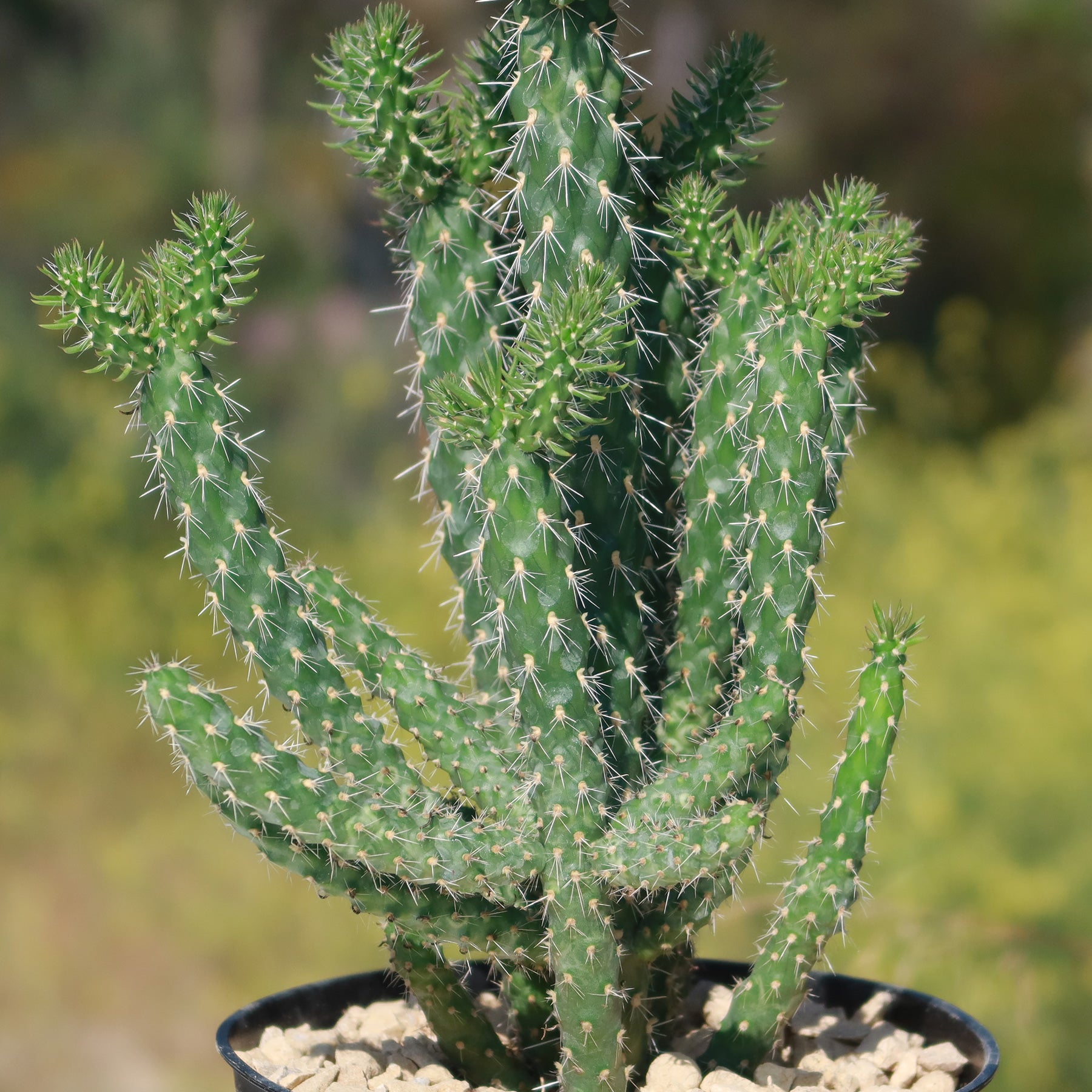
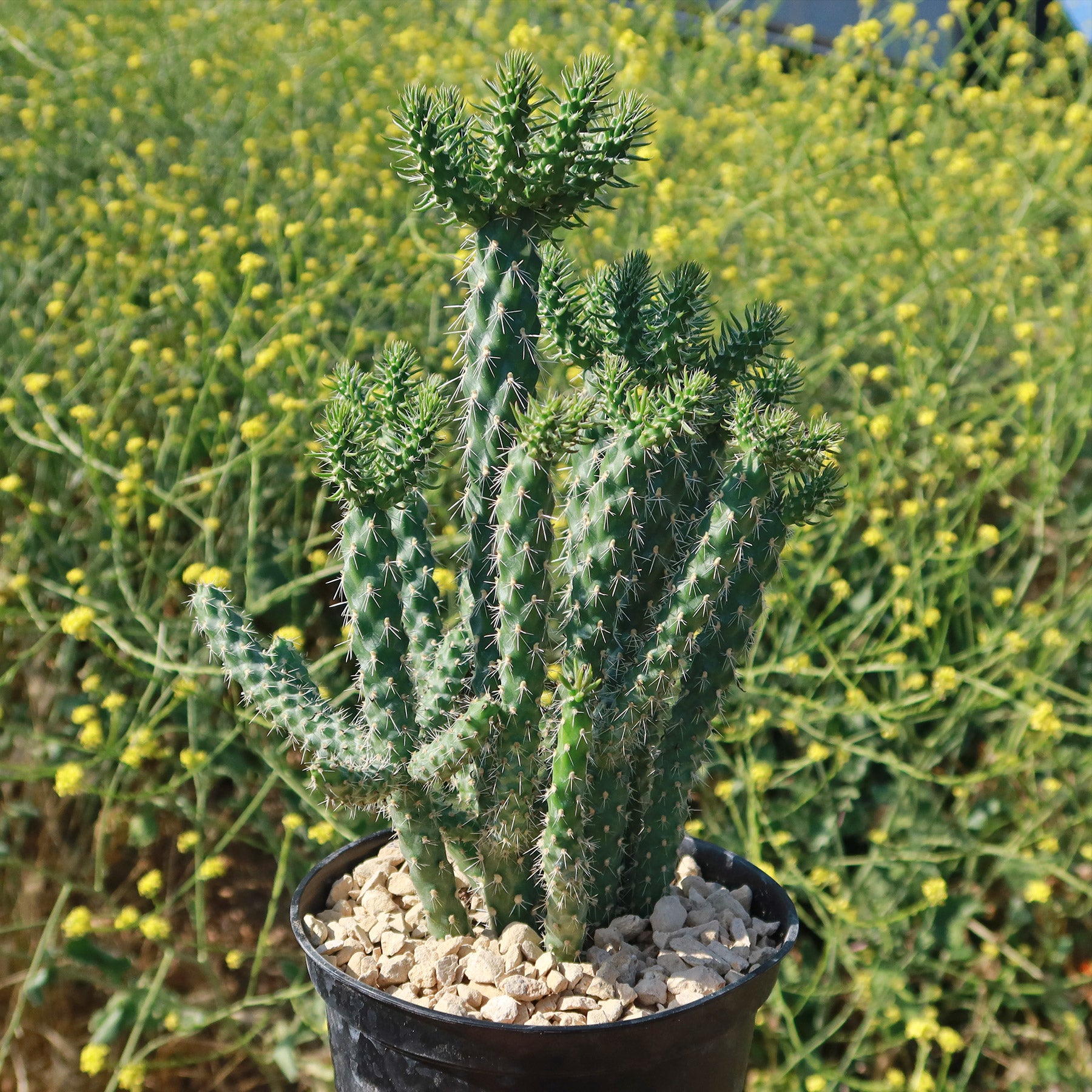
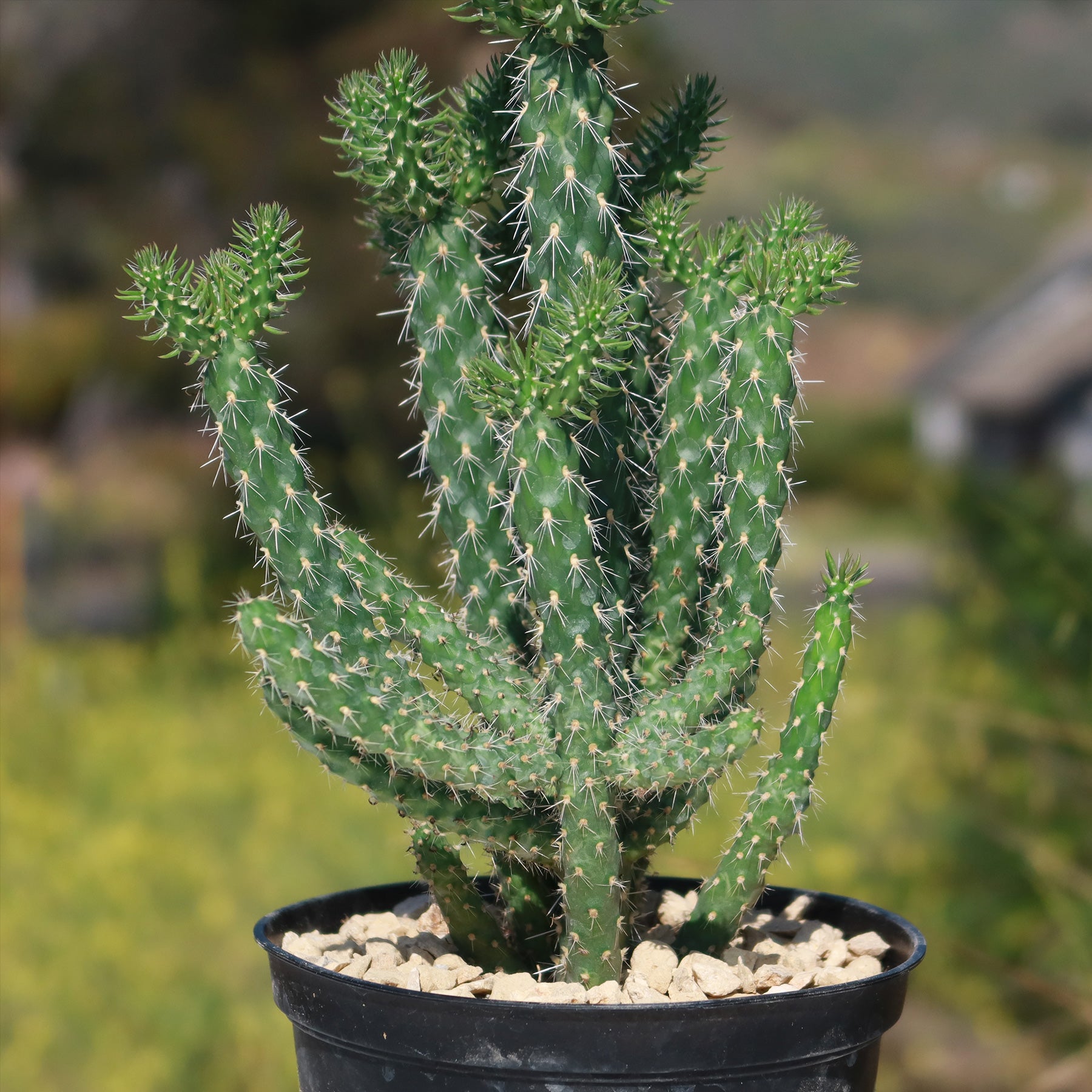
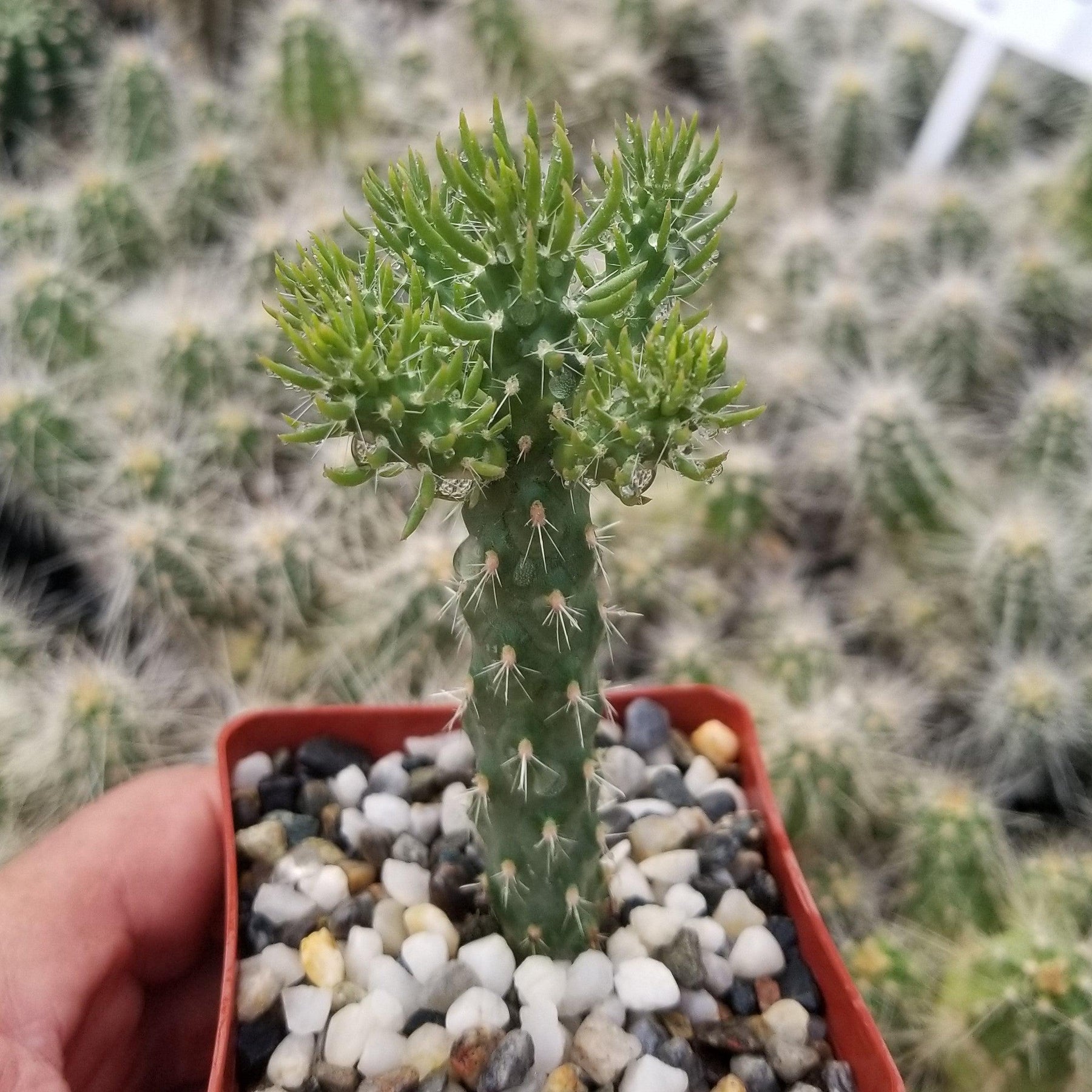
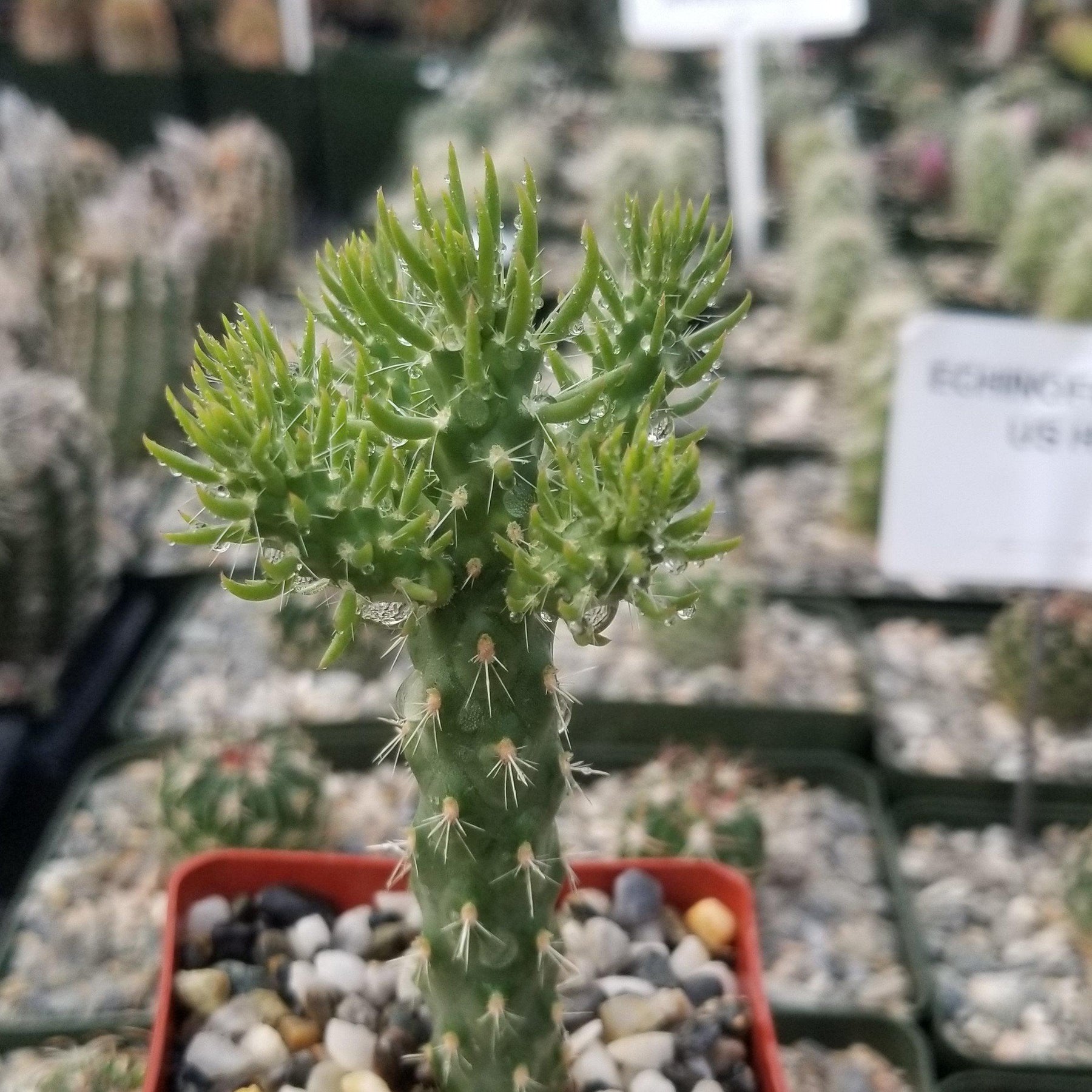
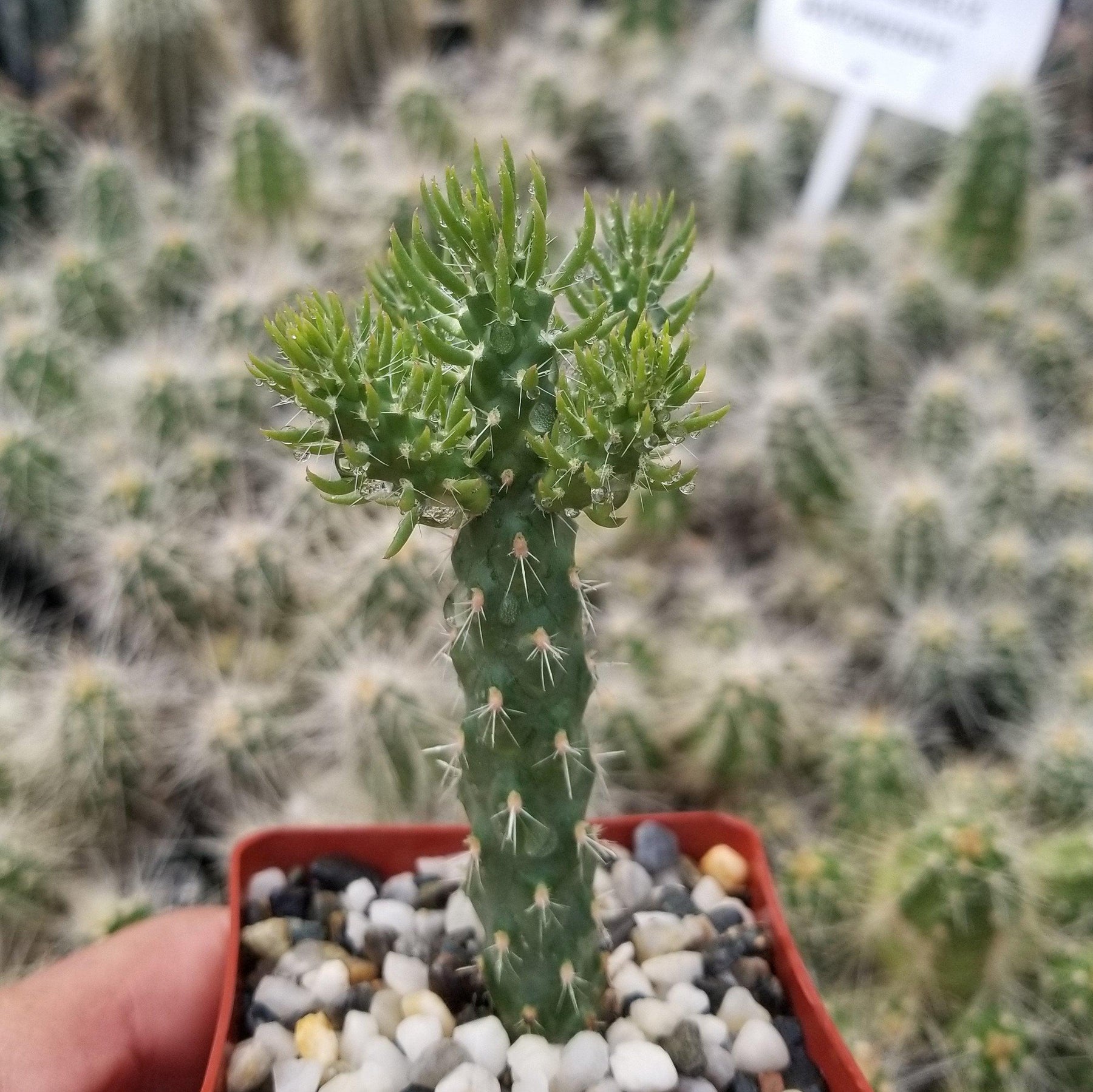
The Cholla cactus, known as Cylindropuntia imbricata, has a unique trick where its stems attach to passersby at the slightest touch, resembling a jump. Although they can't jump, caution should be exercised around them.
Native to the southwestern United States and parts of Mexico, the Cylindropuntia cholla has several other common names, such as the jumping cholla, the chain link cholla, and chollas.

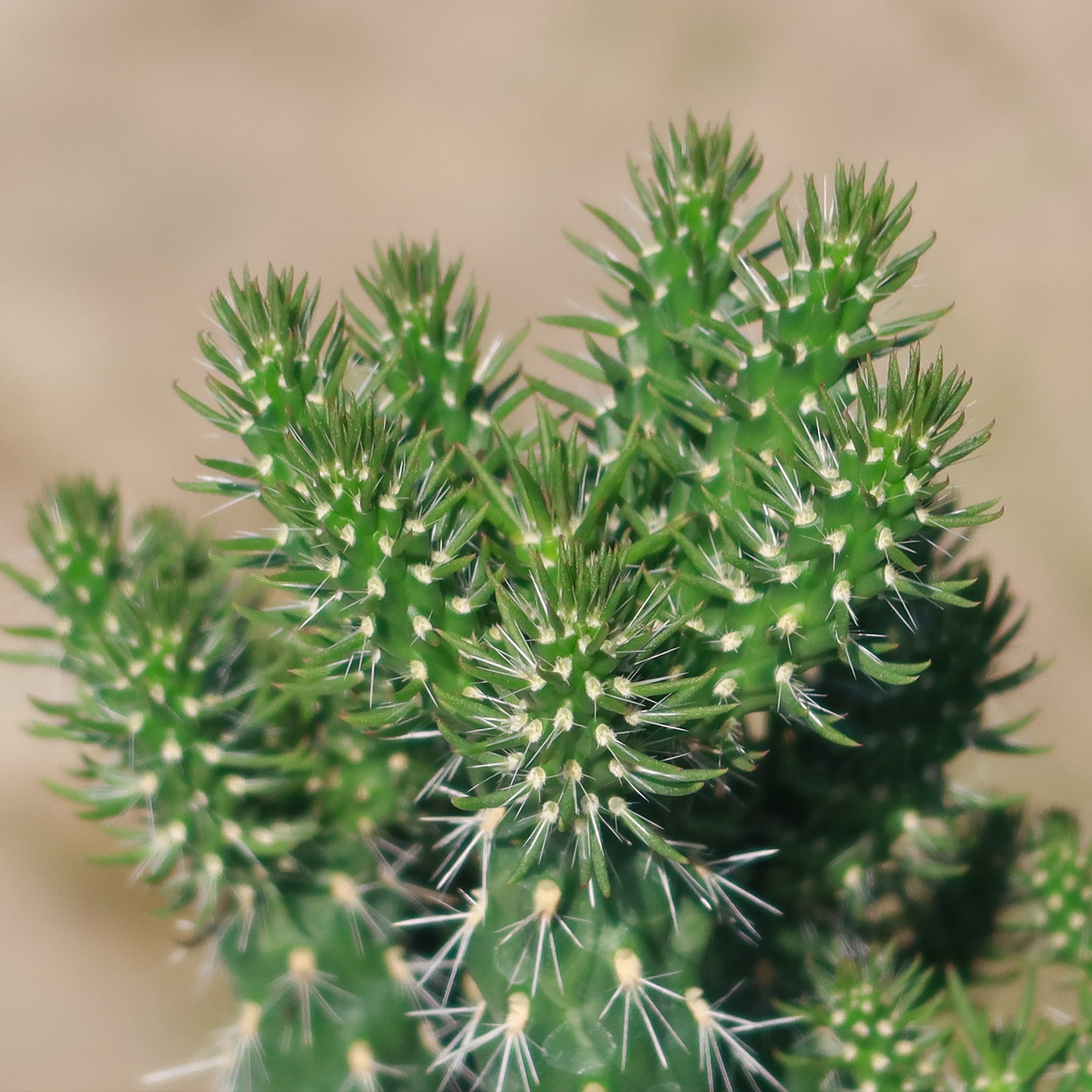
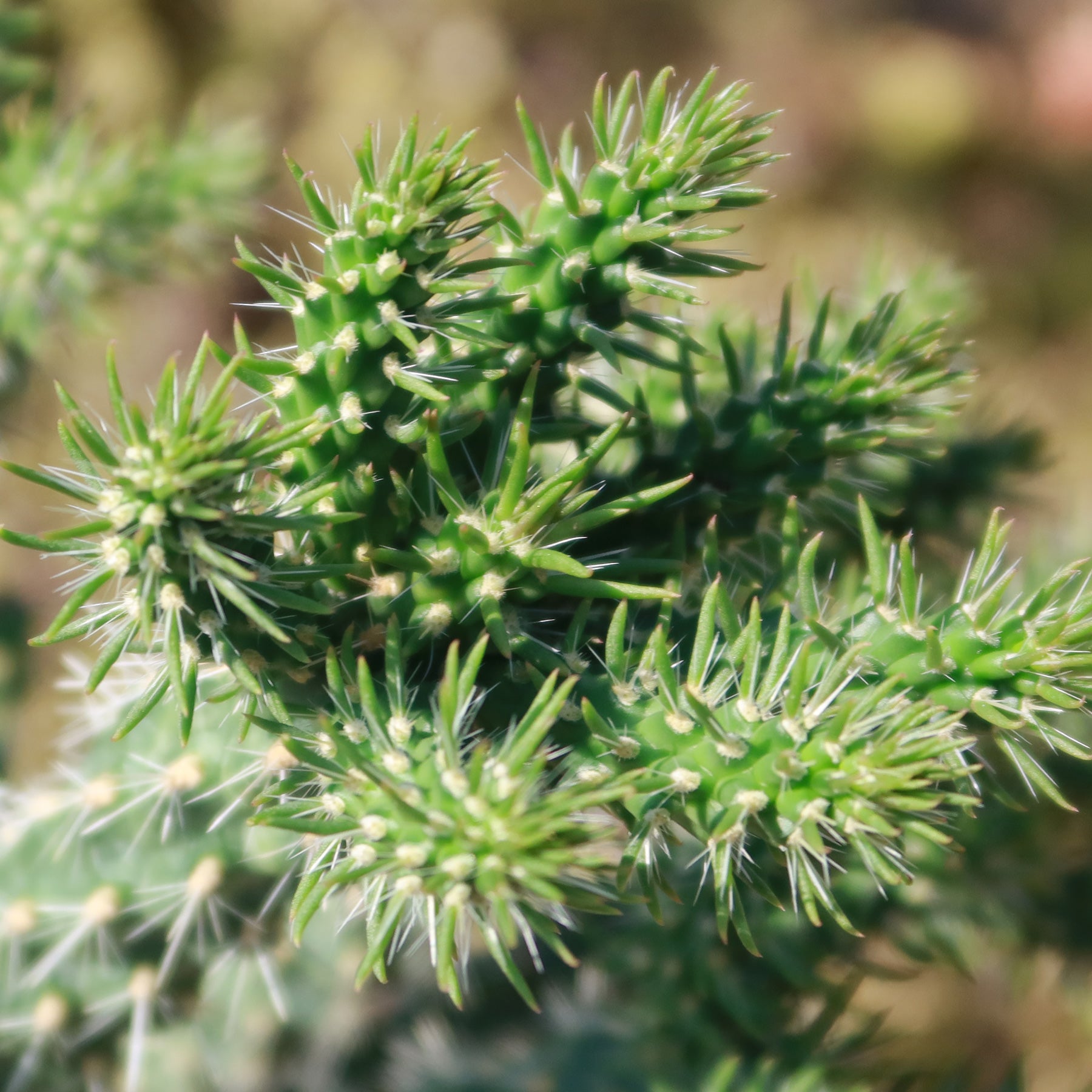
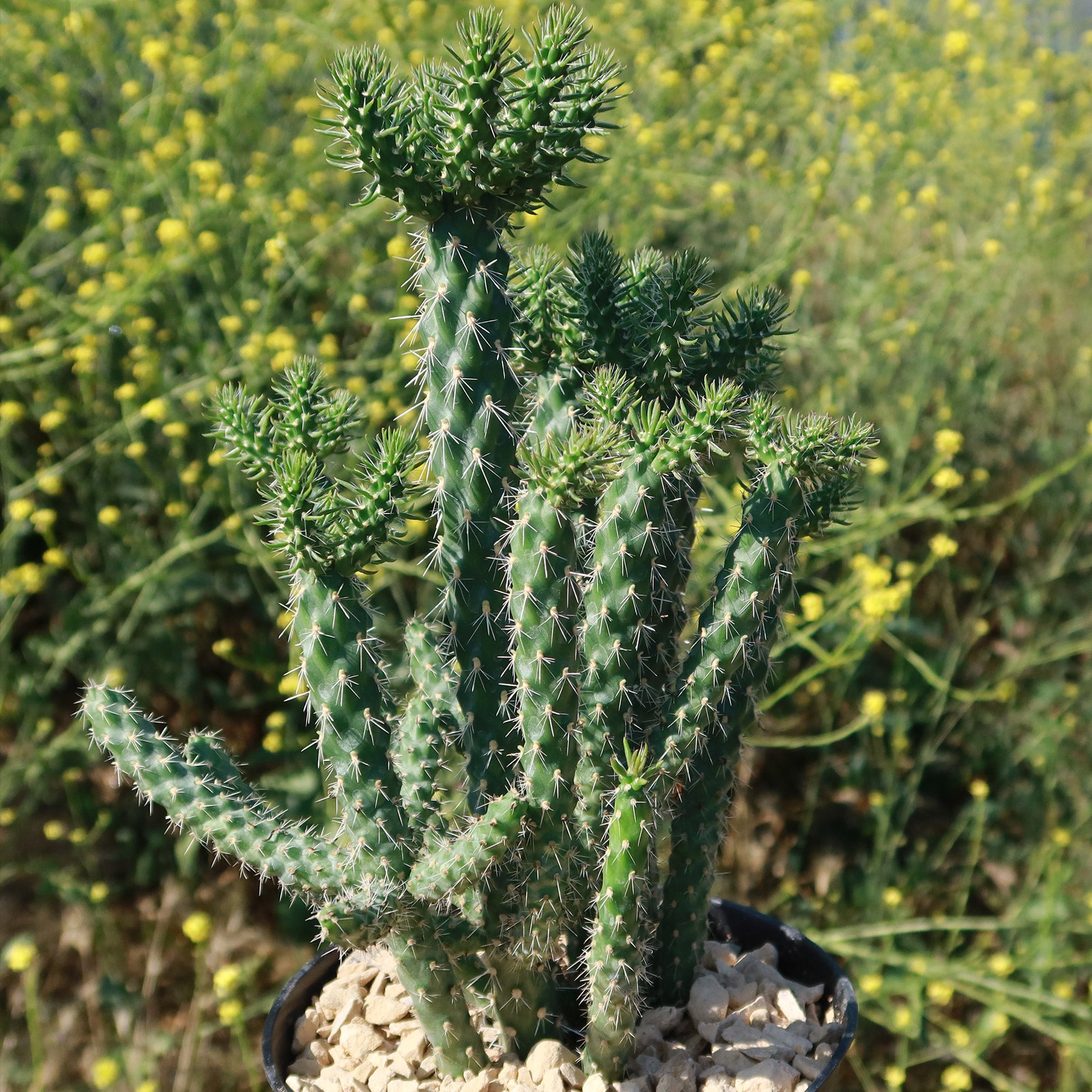
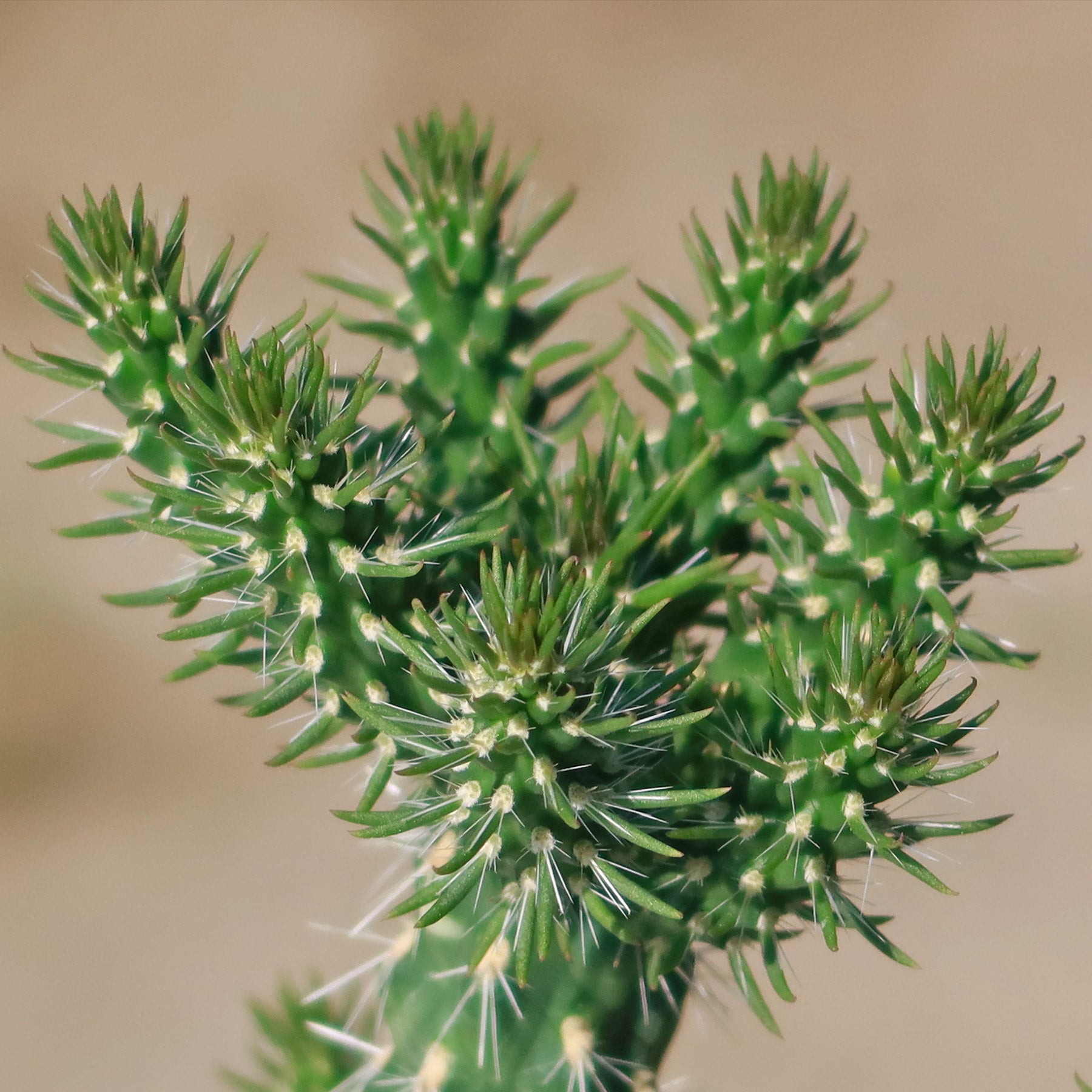
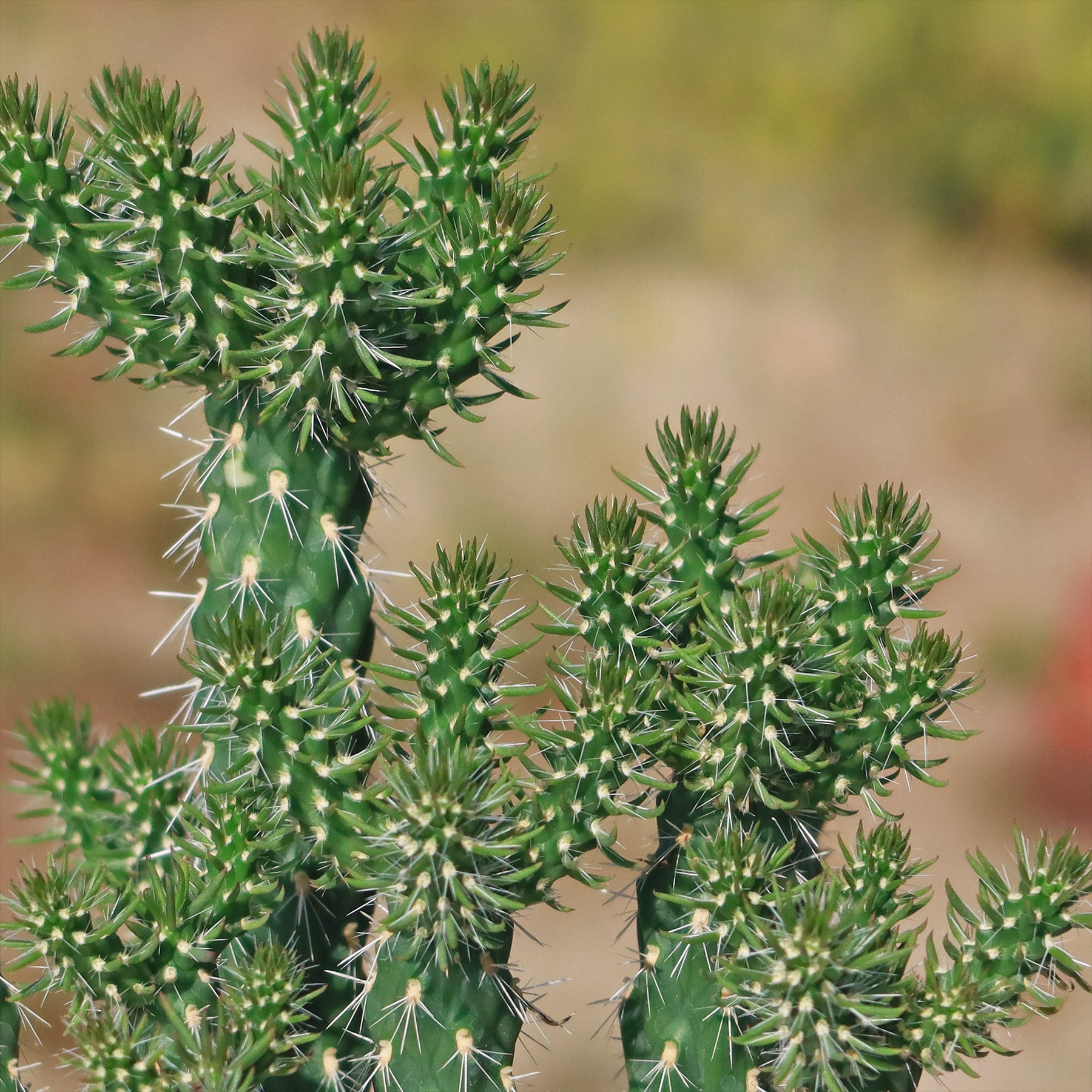
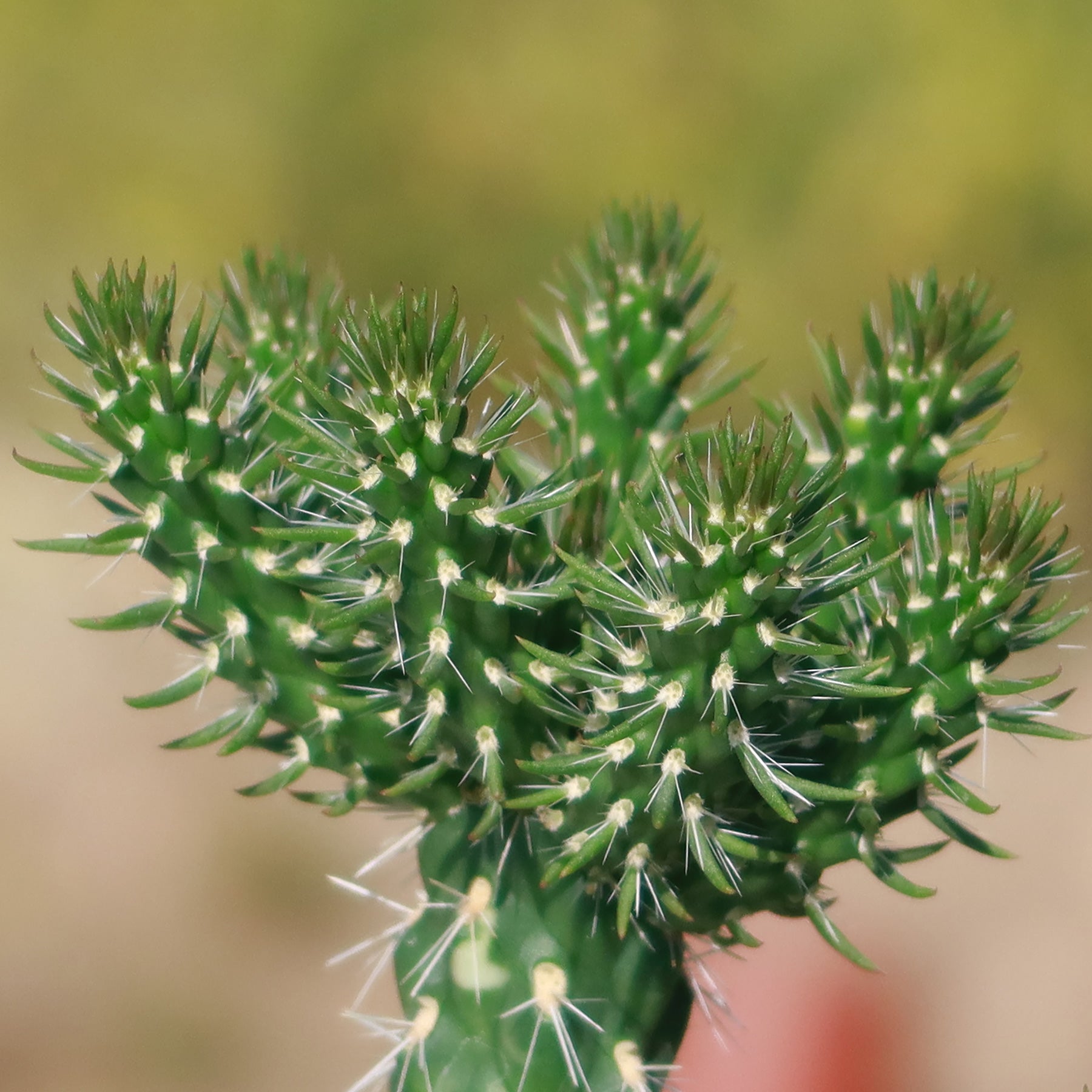
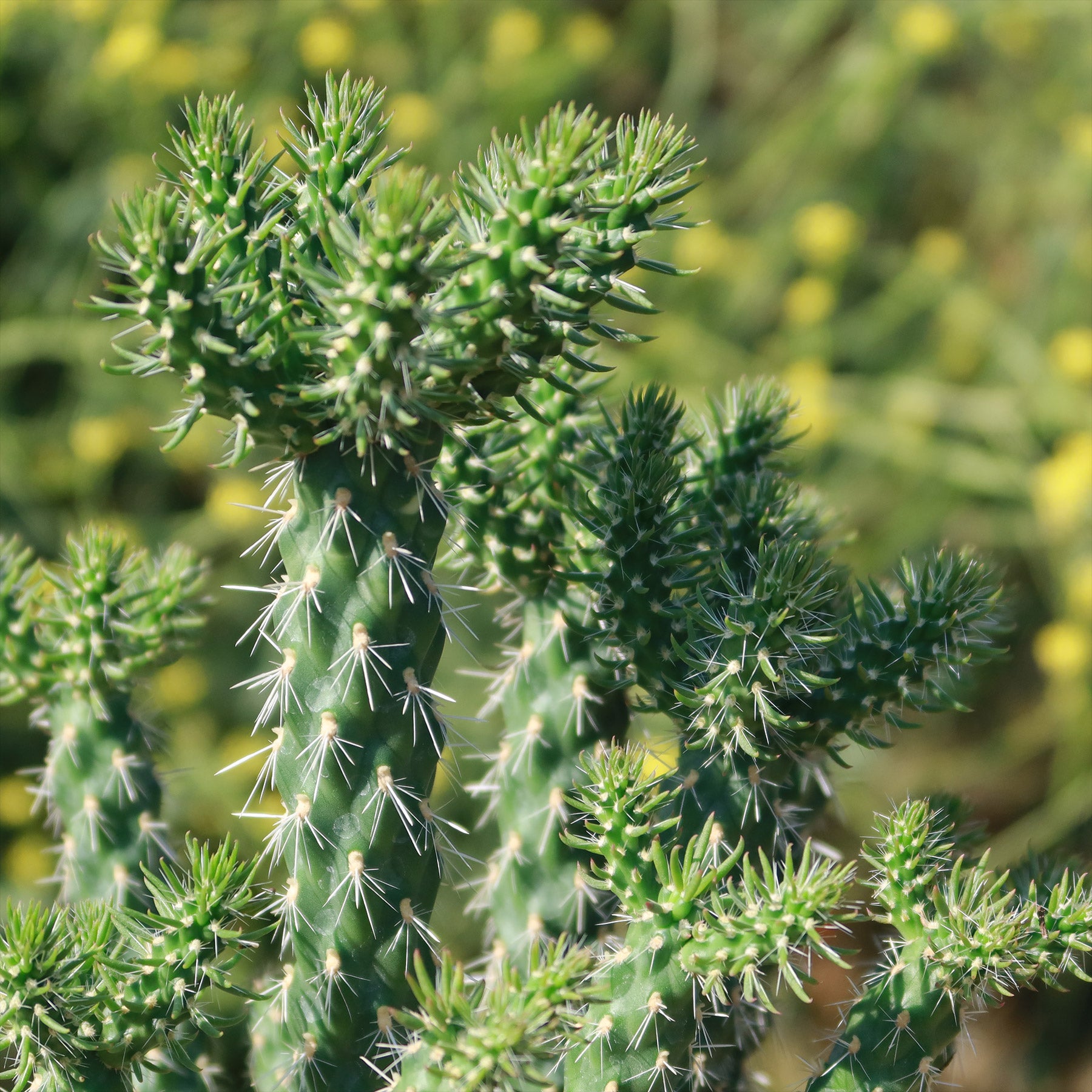
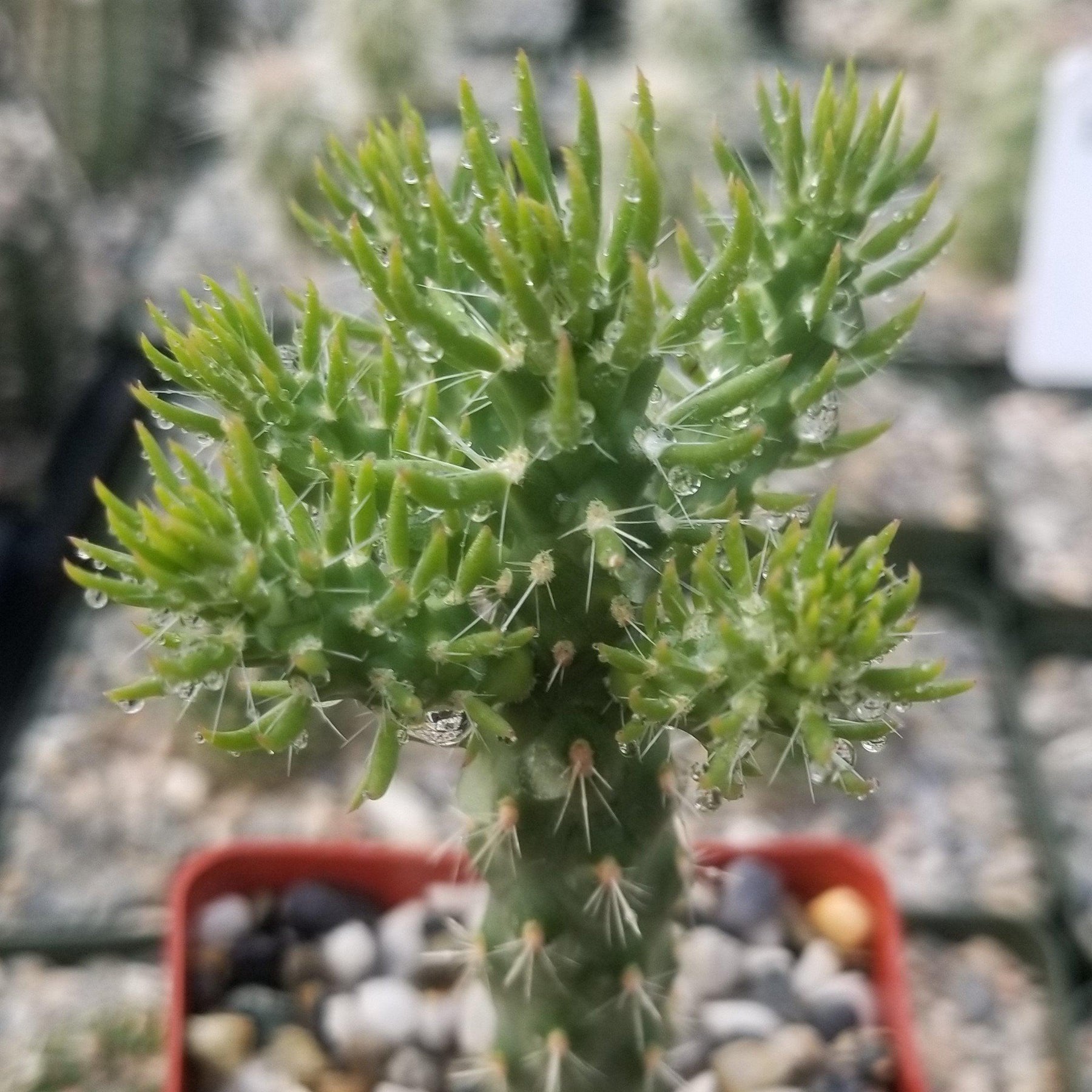
The jumping cholla cactus has unique cylindrical spiny joints or segmented-shaped stems covered in sharp spines that serve as a defense mechanism.
These spines can vary in color, ranging from golden to reddish-brown, and they add to the distinctive appearance of the cholla cactus.
As your Cholla jumping cactus matures, its stems can grow to various sizes, reaching heights of a few feet to up to 15 feet tall. The stems can also spread out, creating a bushy and visually striking plant.
The Cholla cactus flowers typically bloom during spring and summer in vibrant colors, ranging from shades of white, pink, green, red, and even yellow. These cup-shaped flowers emerge from the spiny stems of the cactus, creating a beautiful contrast between the soft petals and the sharp thorns.
The flowers often open up during the day and close at night, attracting pollinators such as bees and butterflies. It's truly a magical experience to witness the cholla cactus burst into a display of colorful blooms.
When and How to Water Your Cholla Cactus
When it comes to watering the Chollas, it's important to follow the "soak and dry" method. This means giving your Cholla cactus a good watering until water drains out of the bottom of the pot and then allowing the soil to dry out completely before watering again. The Cholla cactus prefers watering once every 1-2 weeks during the active growing period, and once every 4-6 weeks in the dormant season.
In spring and summer, during the active growing season, the cholla cactus will appreciate more frequent watering. You can water it every 1-2 weeks, depending on the temperature and humidity levels in your area.
In fall and winter, during the dormant period, it's best to reduce watering to once every 4-6 weeks, as the cactus requires less moisture during this time.
Remember, overwatering can be harmful to the Cylindropuntia imbricata cactus. Signs of overwatering include yellowing or wilting of the stems, soft and mushy roots, or the presence of mold or fungus on the soil surface. To prevent these issues, make sure to allow the soil to dry out between waterings and avoid leaving your summer grower cactus sitting in standing water.
Light Requirements - Where to Place Your Cholla Cactus

When growing your cholla cactus indoors, place it near a south-facing window where it can receive plenty of sunlight throughout the day.
If a south-facing window is not available, you can also use artificial grow lights to supplement the light requirements.
When grown outdoors, find a spot that receives at least 6-8 hours of full sunlight daily. This could be a sunny patio, balcony, or garden area.
Just make sure to protect the cholla cactus gardens from intense afternoon sun, especially during the hot summer months, as it can scorch the plant.
If you live in a region with harsh winters, it's advisable to bring the cholla cactus indoors or provide some protection during freezing temperatures.
Optimal Soil & Fertilizer
The cholla cactus prefers well-draining soil and should be fertilized once a year in the spring. You can also add some small rocks or gravel at the bottom of the pot to enhance drainage. Ideally, you want to use our specialized cactus potting mix that contains 5 natural substrates and organic mycorrhizae to promote the development of a strong root system that helps your cactus to thrive.
It's best to fertilize your cholla cactus sparingly, about once a year, during the active growing season in the spring. A balanced (5-10-5), water-soluble fertilizer with a low nitrogen content is recommended. Follow the instructions for the correct dilution ratio and apply it to the soil around the base of the Cylindropuntia cactus.
Remember, it's important not to over-fertilize the cholla cactus, as this can lead to excessive growth and weak stems. If you notice any signs of nutrient deficiency, such as pale or yellowing stems, you can increase the frequency of fertilization slightly. Always err on the side of caution and monitor the Cholla plant's response to the fertilizer.
Hardiness Zone & More

For outdoor cultivation, the cholla cactus typically thrives in USDA zones 8 to 10. These zones are characterized by mild winters and hot summers.
The Cholla cactus is not a very frost-resistant cactus, hardy to 28° F (or less if very dry). However, indoors, it is better not to expose it to temperatures lower than 32° F.
Remember, the cholla cactus is a tough and resilient plant that can adapt to various conditions, but it's always best to provide it with an environment that closely resembles its natural habitat.
How to Grow the Best Cholla Cactus Indoors
If you are growing your Cylindropuntia imbricata cactus indoors, it generally thrives in average room temperatures ranging from 65°F to 75°F. However, these jumping chollas can tolerate slightly cooler temperatures, down to 20°F during their dormant period in the fall and winter. It is one of those heat-tolerant cholla cacti and is well-suited to desert-like conditions with temperatures ranging from 80°F to 100°F.
It prefers low humidity, so normal indoor air is fine, and avoid excessive dryness from winter heating.
Wildlife - Cholla Cactus Attracts the Following Friendly Pollinators
The Cholla Cactus is known to attract a variety of pollinators, including bees, butterflies, and hummingbirds. These pollinators play a crucial role in the ecosystem by helping to fertilize plants and promote biodiversity.
 Butterflies
 Bees
Bees
 Hummingbirds
 Lady Bugs
 Multi Pollinators
 Other Birds
According to ASPCA, the Cylindropuntia imbricata, is generally not considered toxic to humans and pets. However, it's always a good idea to exercise caution when handling any cactus plant with spines or thorns. So, it's best to avoid touching or brushing against the spines to prevent any potential irritation.
How to Propagate Your Cholla Cactus
Propagating Cylindropuntia imbricata is best done with stem cuttings. Use a clean knife to remove a healthy segment, then let it dry and callus for several days to prevent rot. Plant the cutting in a well-draining cactus mix, inserting the calloused end into the soil. Place it in a warm, bright location with indirect light and water sparingly until roots form. Over time, the cutting will establish itself as a new cactus.
Key Takeaways
- The spiny segments of cholla cactus detach easily and cling to passersby, earning it the nickname “jumping cholla.”
- Native people and early settlers often planted it as a natural barrier thanks to its dense, thorny growth.
- In late spring to summer, the cholla cactus produces striking magenta to purple flowers that attract bees and other pollinators.
- Unlike many desert cacti, it can survive temperatures as low as 20°F, making it more resilient than expected.
The Bottom Line
Overall, the cholla cactus (Cylindropuntia imbricata) is a hardy and striking plant that thrives in arid conditions with minimal care. Its spiny stems, tree-like form, and vibrant magenta blooms make it a captivating choice for both indoor and outdoor settings. With well-drained soil, plenty of sunlight, and occasional watering, this resilient cactus brings desert charm and unique beauty to any plant collection.
Bloom Season
Flower Color
Growth Rate
Hardiness Zone
Mature Size
Plant Type
Resistance
Sun Exposure
Watering Needs
| Bloom Season | Spring, summer |
|---|---|
| Botanical Name | Cylindropuntia cholla |
| Common Name | Cholla cactus, Chain link cholla, Cholla |
| Dormancy | Winter |
| Family | Cactaceae |
| Flower Color | White, Pink, deep purple, yellow, orange, green, red |
| Genus | Cylindropuntia |
| Growth Habit | Columnar |
| Growth Rate | Moderate |
| Hardiness Zone | 8, 9, 10 |
| Mature Size | 15 ft. tall |
| Native Area | United states, northern Mexico |
| Plant Type | Cactus |
| Propagation | By stem cuttings |
| Resistance | Extremely drought-tolerant, deer resistance, mild frost tolerant |
| Soil PH | 6.5, Acidic, Neutral |
| Soil Type | Cactus potting mix soil |
| Special Features | Densely branched shrub |
| Sun Exposure | Full sun (6+ hrs.), partia shade |
| Sun Exposure | Full sun (6+ hrs.), Partial shade (3–6 hrs. sun) |
| Toxicity | Safe for humans, Safe for pets |
| Watering Needs | Low |
Growers Quick Reference Guide - Key Features
| Bloom Season | Spring, summer |
|---|---|
| Botanical Name | Cylindropuntia cholla |
| Common Name | Cholla cactus, Chain link cholla, Cholla |
| Dormancy | Winter |
| Family | Cactaceae |
| Flower Color | White, Pink, deep purple, yellow, orange, green, red |
| Genus | Cylindropuntia |
| Growth Habit | Columnar |
| Growth Rate | Moderate |
| Hardiness Zone | 8, 9, 10 |
| Mature Size | 15 ft. tall |
| Native Area | United states, northern Mexico |
| Plant Type | Cactus |
| Propagation | By stem cuttings |
| Resistance | Extremely drought-tolerant, deer resistance, mild frost tolerant |
| Soil PH | 6.5, Acidic, Neutral |
| Soil Type | Cactus potting mix soil |
| Special Features | Densely branched shrub |
| Sun Exposure | Full sun (6+ hrs.), partia shade |
| Sun Exposure | Full sun (6+ hrs.), Partial shade (3–6 hrs. sun) |
| Toxicity | Safe for humans, Safe for pets |
| Watering Needs | Low |
- Description
- Key Plant Features
The Cholla cactus, known as Cylindropuntia imbricata, has a unique trick where its stems attach to passersby at the slightest touch, resembling a jump. Although they can't jump, caution should be exercised around them.
Native to the southwestern United States and parts of Mexico, the Cylindropuntia cholla has several other common names, such as the jumping cholla, the chain link cholla, and chollas.
The jumping cholla cactus has unique cylindrical spiny joints or segmented-shaped stems covered in sharp spines that serve as a defense mechanism.
These spines can vary in color, ranging from golden to reddish-brown, and they add to the distinctive appearance of the cholla cactus.
As your Cholla jumping cactus matures, its stems can grow to various sizes, reaching heights of a few feet to up to 15 feet tall. The stems can also spread out, creating a bushy and visually striking plant.
The Cholla cactus flowers typically bloom during spring and summer in vibrant colors, ranging from shades of white, pink, green, red, and even yellow. These cup-shaped flowers emerge from the spiny stems of the cactus, creating a beautiful contrast between the soft petals and the sharp thorns.
The flowers often open up during the day and close at night, attracting pollinators such as bees and butterflies. It's truly a magical experience to witness the cholla cactus burst into a display of colorful blooms.
When and How to Water Your Cholla Cactus
When it comes to watering the Chollas, it's important to follow the "soak and dry" method. This means giving your Cholla cactus a good watering until water drains out of the bottom of the pot and then allowing the soil to dry out completely before watering again. The Cholla cactus prefers watering once every 1-2 weeks during the active growing period, and once every 4-6 weeks in the dormant season.
In spring and summer, during the active growing season, the cholla cactus will appreciate more frequent watering. You can water it every 1-2 weeks, depending on the temperature and humidity levels in your area.
In fall and winter, during the dormant period, it's best to reduce watering to once every 4-6 weeks, as the cactus requires less moisture during this time.
Remember, overwatering can be harmful to the Cylindropuntia imbricata cactus. Signs of overwatering include yellowing or wilting of the stems, soft and mushy roots, or the presence of mold or fungus on the soil surface. To prevent these issues, make sure to allow the soil to dry out between waterings and avoid leaving your summer grower cactus sitting in standing water.
Light Requirements - Where to Place Your Cholla Cactus
When growing your cholla cactus indoors, place it near a south-facing window where it can receive plenty of sunlight throughout the day.
If a south-facing window is not available, you can also use artificial grow lights to supplement the light requirements.
When grown outdoors, find a spot that receives at least 6-8 hours of full sunlight daily. This could be a sunny patio, balcony, or garden area.
Just make sure to protect the cholla cactus gardens from intense afternoon sun, especially during the hot summer months, as it can scorch the plant.
If you live in a region with harsh winters, it's advisable to bring the cholla cactus indoors or provide some protection during freezing temperatures.
Optimal Soil & Fertilizer
The cholla cactus prefers well-draining soil and should be fertilized once a year in the spring. You can also add some small rocks or gravel at the bottom of the pot to enhance drainage. Ideally, you want to use our specialized cactus potting mix that contains 5 natural substrates and organic mycorrhizae to promote the development of a strong root system that helps your cactus to thrive.
It's best to fertilize your cholla cactus sparingly, about once a year, during the active growing season in the spring. A balanced (5-10-5), water-soluble fertilizer with a low nitrogen content is recommended. Follow the instructions for the correct dilution ratio and apply it to the soil around the base of the Cylindropuntia cactus.
Remember, it's important not to over-fertilize the cholla cactus, as this can lead to excessive growth and weak stems. If you notice any signs of nutrient deficiency, such as pale or yellowing stems, you can increase the frequency of fertilization slightly. Always err on the side of caution and monitor the Cholla plant's response to the fertilizer.
Hardiness Zone & More
For outdoor cultivation, the cholla cactus typically thrives in USDA zones 8 to 10. These zones are characterized by mild winters and hot summers.
The Cholla cactus is not a very frost-resistant cactus, hardy to 28° F (or less if very dry). However, indoors, it is better not to expose it to temperatures lower than 32° F.
Remember, the cholla cactus is a tough and resilient plant that can adapt to various conditions, but it's always best to provide it with an environment that closely resembles its natural habitat.
How to Grow the Best Cholla Cactus Indoors
If you are growing your Cylindropuntia imbricata cactus indoors, it generally thrives in average room temperatures ranging from 65°F to 75°F. However, these jumping chollas can tolerate slightly cooler temperatures, down to 20°F during their dormant period in the fall and winter. It is one of those heat-tolerant cholla cacti and is well-suited to desert-like conditions with temperatures ranging from 80°F to 100°F.
It prefers low humidity, so normal indoor air is fine, and avoid excessive dryness from winter heating.
Wildlife - Cholla Cactus Attracts the Following Friendly Pollinators
The Cholla Cactus is known to attract a variety of pollinators, including bees, butterflies, and hummingbirds. These pollinators play a crucial role in the ecosystem by helping to fertilize plants and promote biodiversity.
Butterflies
Bees
Hummingbirds
Lady Bugs
Multi Pollinators
Other Birds
According to ASPCA, the Cylindropuntia imbricata, is generally not considered toxic to humans and pets. However, it's always a good idea to exercise caution when handling any cactus plant with spines or thorns. So, it's best to avoid touching or brushing against the spines to prevent any potential irritation.
How to Propagate Your Cholla Cactus
Propagating Cylindropuntia imbricata is best done with stem cuttings. Use a clean knife to remove a healthy segment, then let it dry and callus for several days to prevent rot. Plant the cutting in a well-draining cactus mix, inserting the calloused end into the soil. Place it in a warm, bright location with indirect light and water sparingly until roots form. Over time, the cutting will establish itself as a new cactus.
Key Takeaways
- The spiny segments of cholla cactus detach easily and cling to passersby, earning it the nickname “jumping cholla.”
- Native people and early settlers often planted it as a natural barrier thanks to its dense, thorny growth.
- In late spring to summer, the cholla cactus produces striking magenta to purple flowers that attract bees and other pollinators.
- Unlike many desert cacti, it can survive temperatures as low as 20°F, making it more resilient than expected.
The Bottom Line
Overall, the cholla cactus (Cylindropuntia imbricata) is a hardy and striking plant that thrives in arid conditions with minimal care. Its spiny stems, tree-like form, and vibrant magenta blooms make it a captivating choice for both indoor and outdoor settings. With well-drained soil, plenty of sunlight, and occasional watering, this resilient cactus brings desert charm and unique beauty to any plant collection.
Bloom Season
Flower Color
Growth Rate
Hardiness Zone
Mature Size
Plant Type
Resistance
Sun Exposure
Watering Needs
| Bloom Season | Spring, summer |
|---|---|
| Botanical Name | Cylindropuntia cholla |
| Common Name | Cholla cactus, Chain link cholla, Cholla |
| Dormancy | Winter |
| Family | Cactaceae |
| Flower Color | White, Pink, deep purple, yellow, orange, green, red |
| Genus | Cylindropuntia |
| Growth Habit | Columnar |
| Growth Rate | Moderate |
| Hardiness Zone | 8, 9, 10 |
| Mature Size | 15 ft. tall |
| Native Area | United states, northern Mexico |
| Plant Type | Cactus |
| Propagation | By stem cuttings |
| Resistance | Extremely drought-tolerant, deer resistance, mild frost tolerant |
| Soil PH | 6.5, Acidic, Neutral |
| Soil Type | Cactus potting mix soil |
| Special Features | Densely branched shrub |
| Sun Exposure | Full sun (6+ hrs.), partia shade |
| Sun Exposure | Full sun (6+ hrs.), Partial shade (3–6 hrs. sun) |
| Toxicity | Safe for humans, Safe for pets |
| Watering Needs | Low |
Growers Quick Reference Guide - Key Features
| Bloom Season | Spring, summer |
|---|---|
| Botanical Name | Cylindropuntia cholla |
| Common Name | Cholla cactus, Chain link cholla, Cholla |
| Dormancy | Winter |
| Family | Cactaceae |
| Flower Color | White, Pink, deep purple, yellow, orange, green, red |
| Genus | Cylindropuntia |
| Growth Habit | Columnar |
| Growth Rate | Moderate |
| Hardiness Zone | 8, 9, 10 |
| Mature Size | 15 ft. tall |
| Native Area | United states, northern Mexico |
| Plant Type | Cactus |
| Propagation | By stem cuttings |
| Resistance | Extremely drought-tolerant, deer resistance, mild frost tolerant |
| Soil PH | 6.5, Acidic, Neutral |
| Soil Type | Cactus potting mix soil |
| Special Features | Densely branched shrub |
| Sun Exposure | Full sun (6+ hrs.), partia shade |
| Sun Exposure | Full sun (6+ hrs.), Partial shade (3–6 hrs. sun) |
| Toxicity | Safe for humans, Safe for pets |
| Watering Needs | Low |


