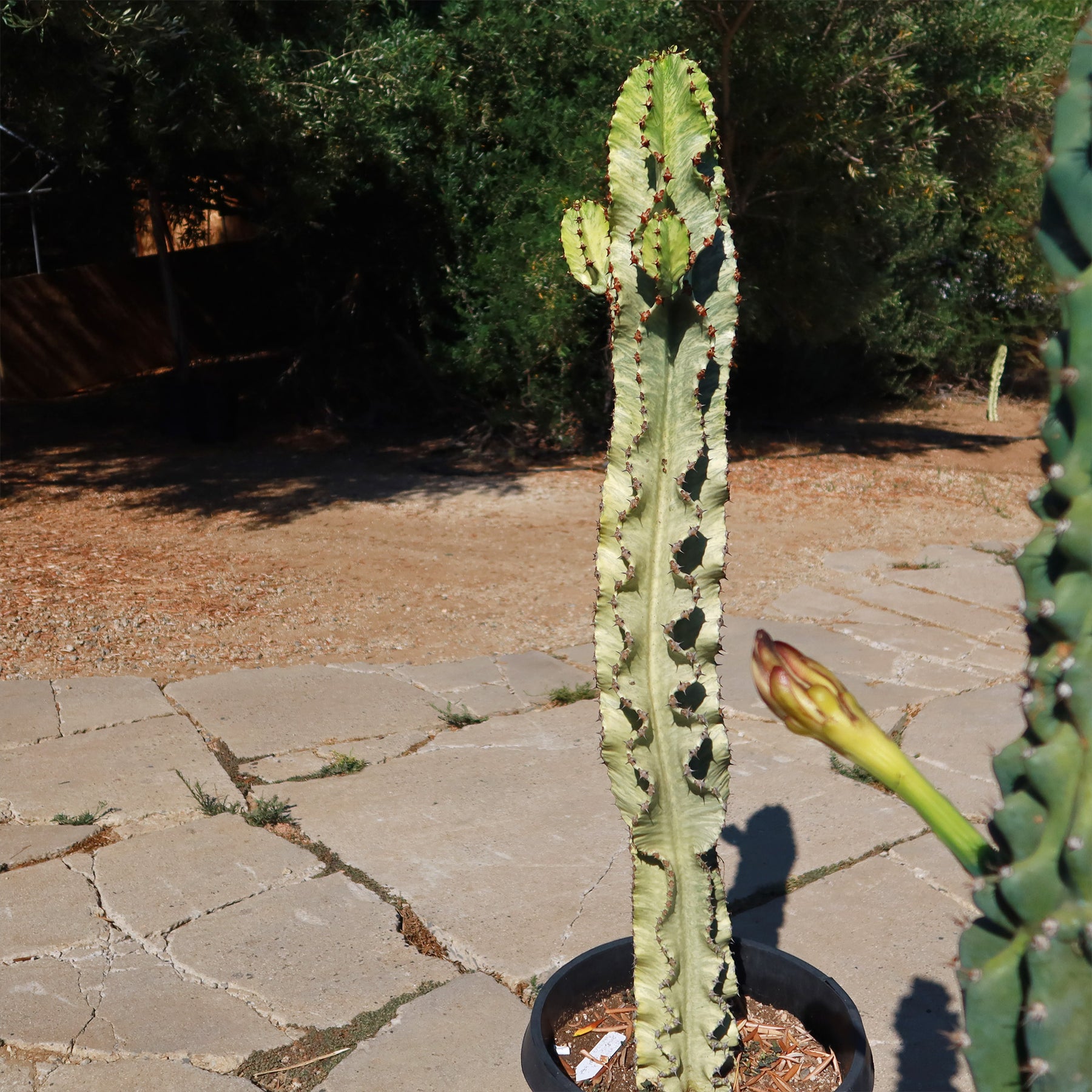
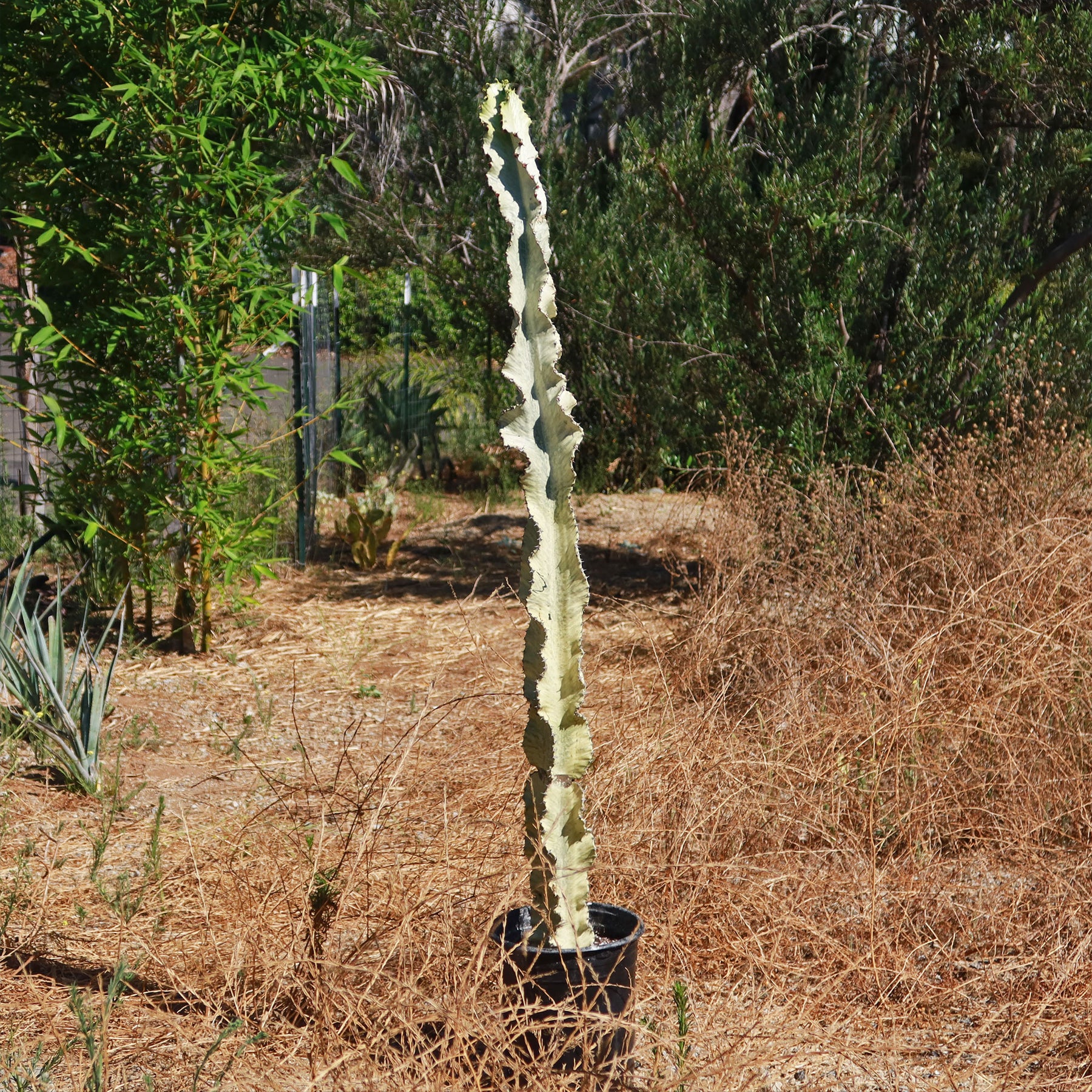


Introducing the Euphorbia ammak variegata, a variety of the African candelabra (Euphorbia ammak). Apart from the Variegated African candelabra, this desert cactus has several other common names, such as the Variegated Euphorbia, Candelabra Cactus, ghost euphorbia, variegated candelabra spurge, and African Milk Tree. These names reflect its distinctive candelabra-like growth pattern and milky white sap.
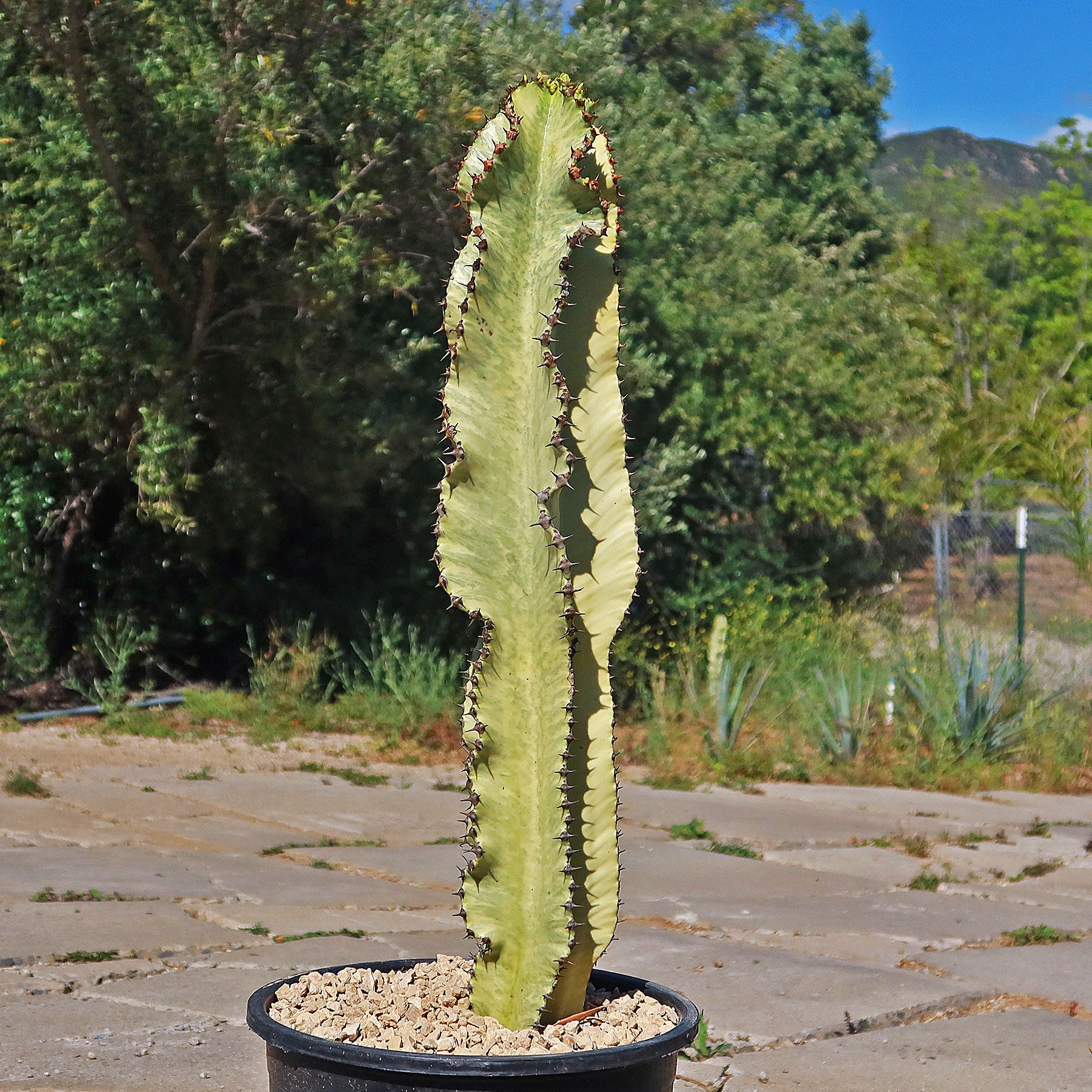
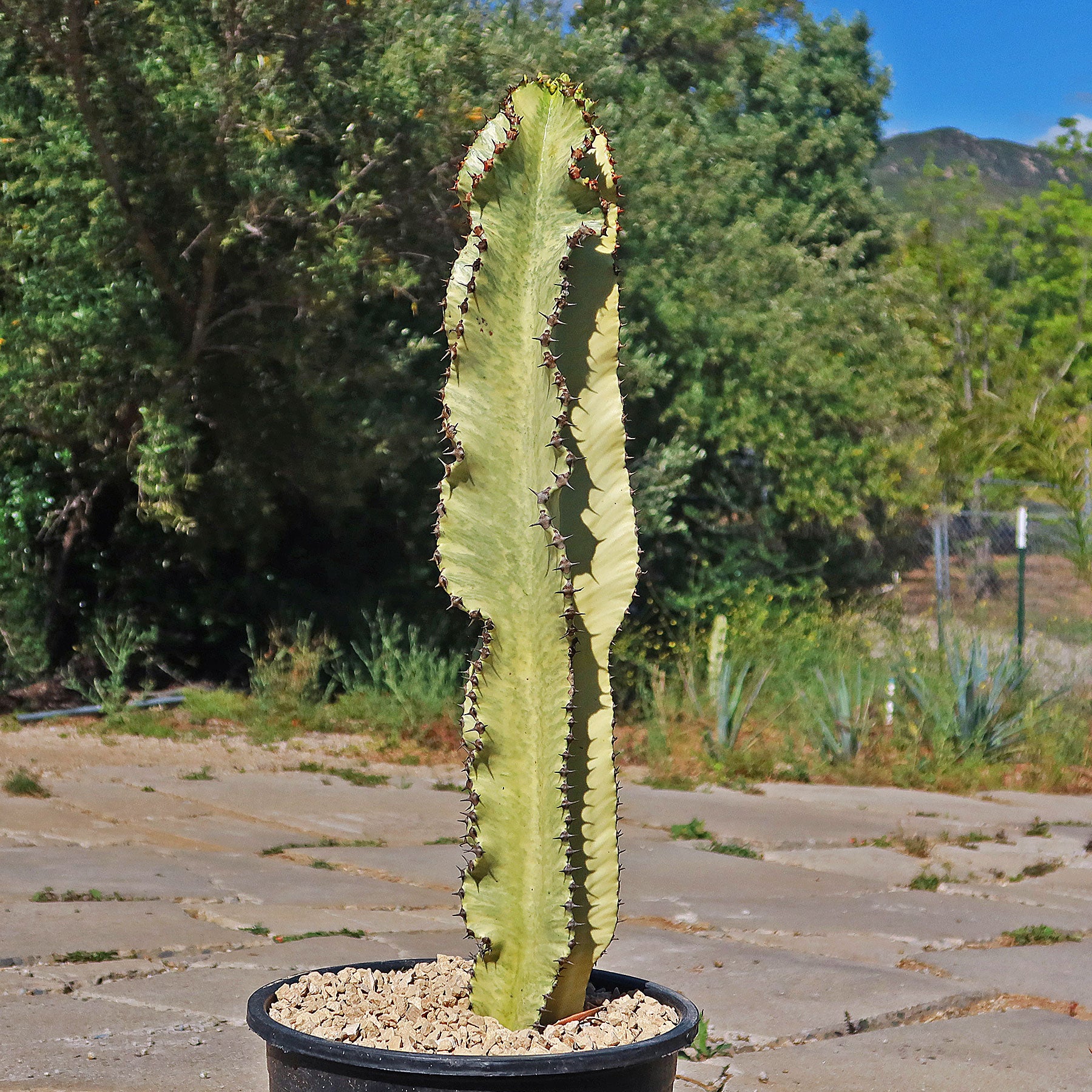
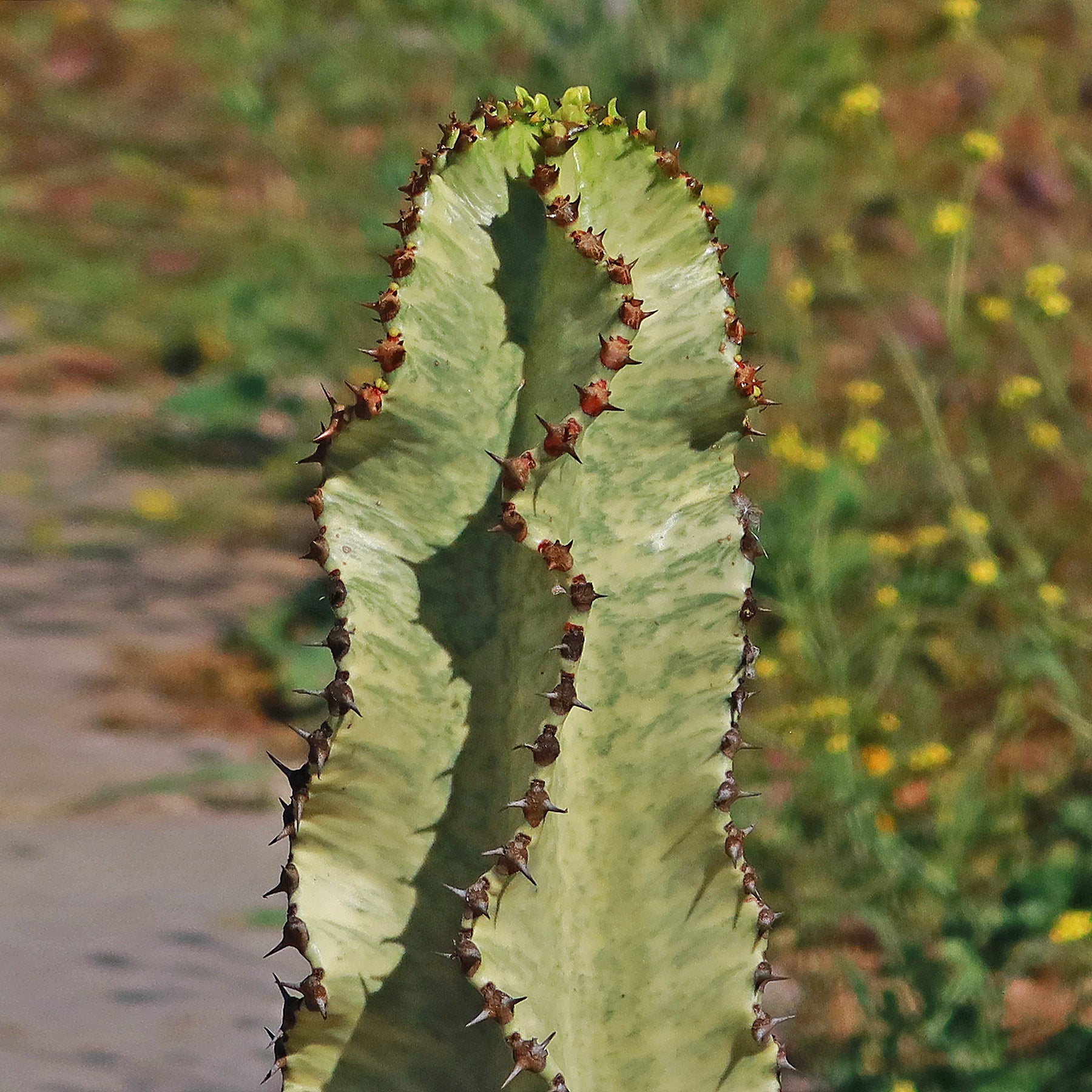
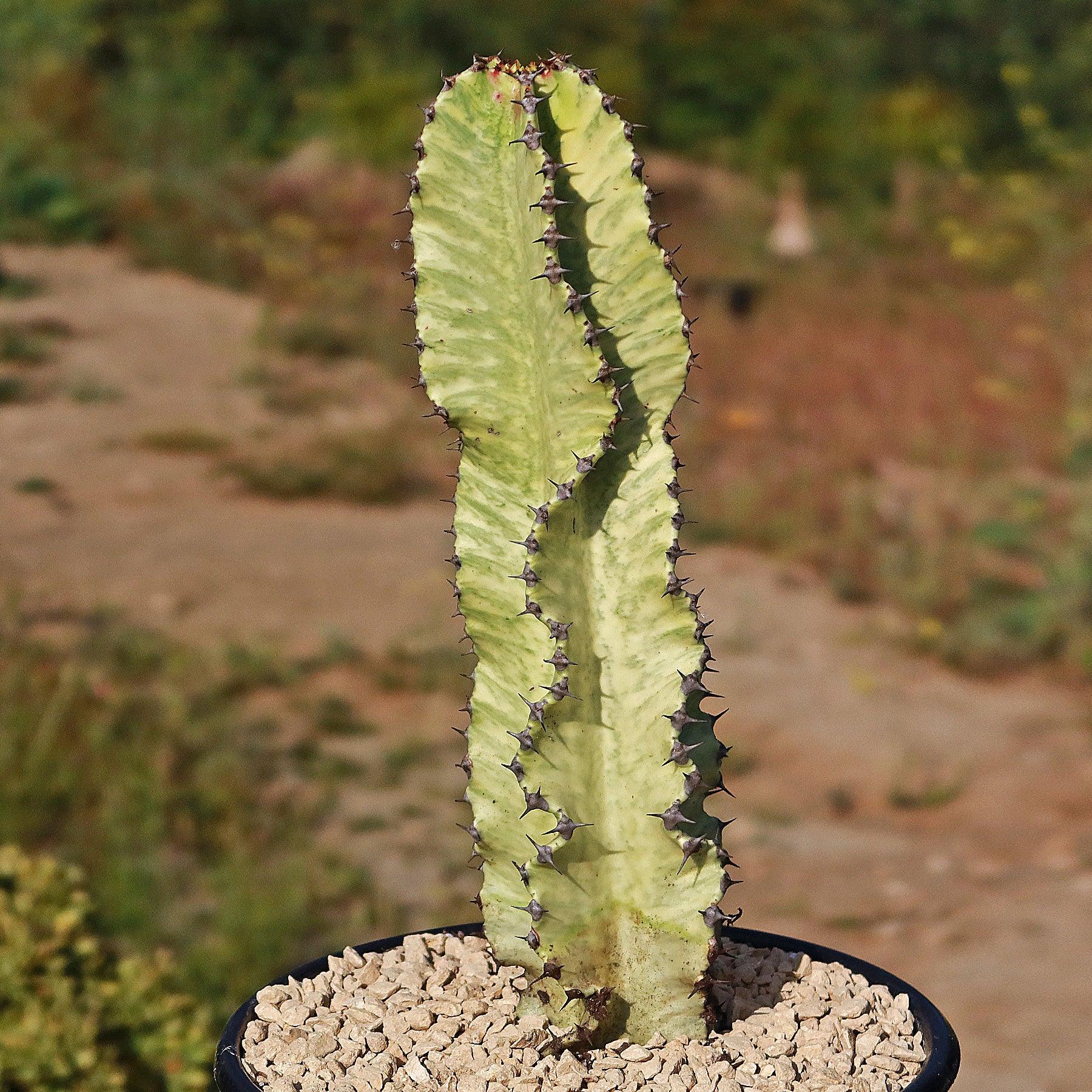
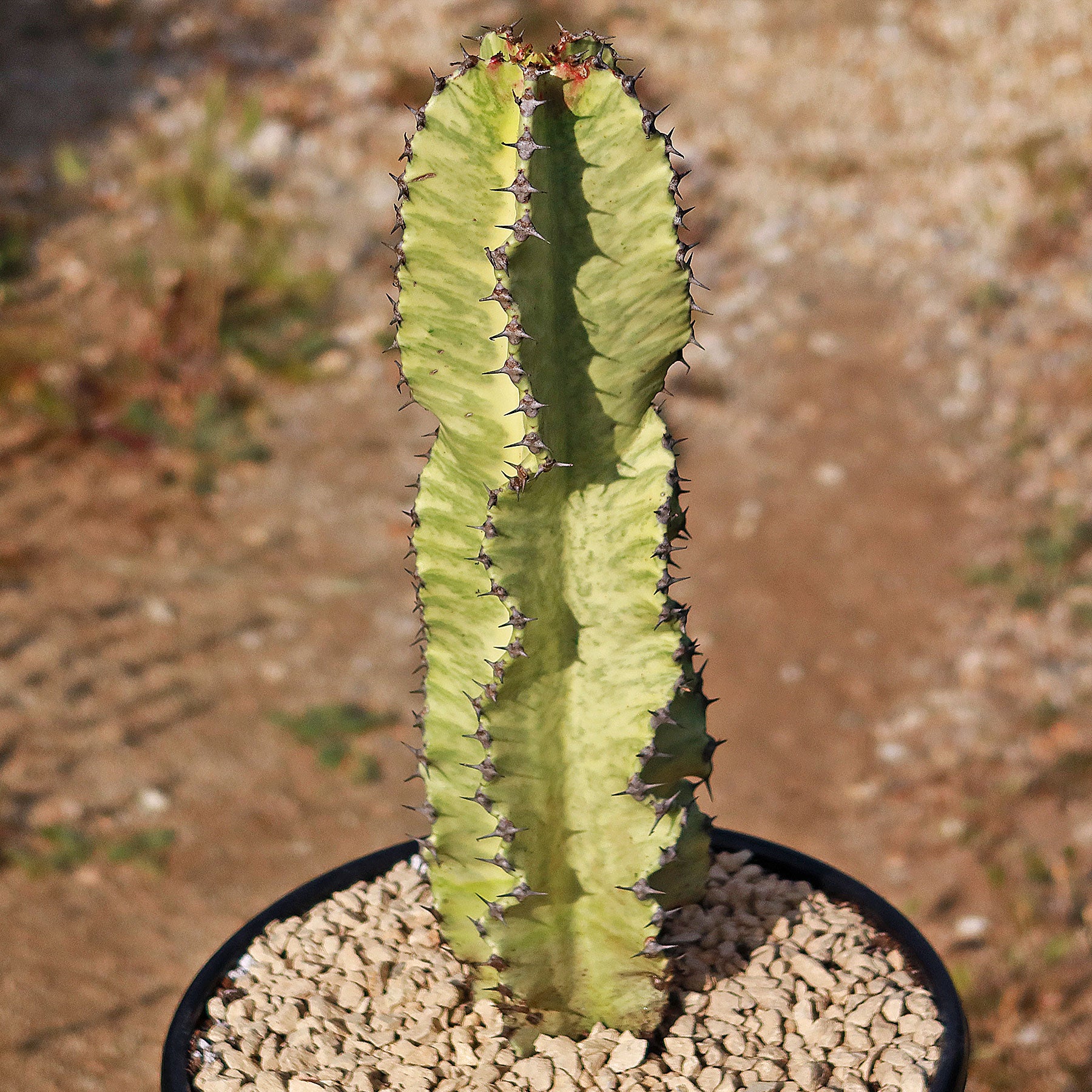
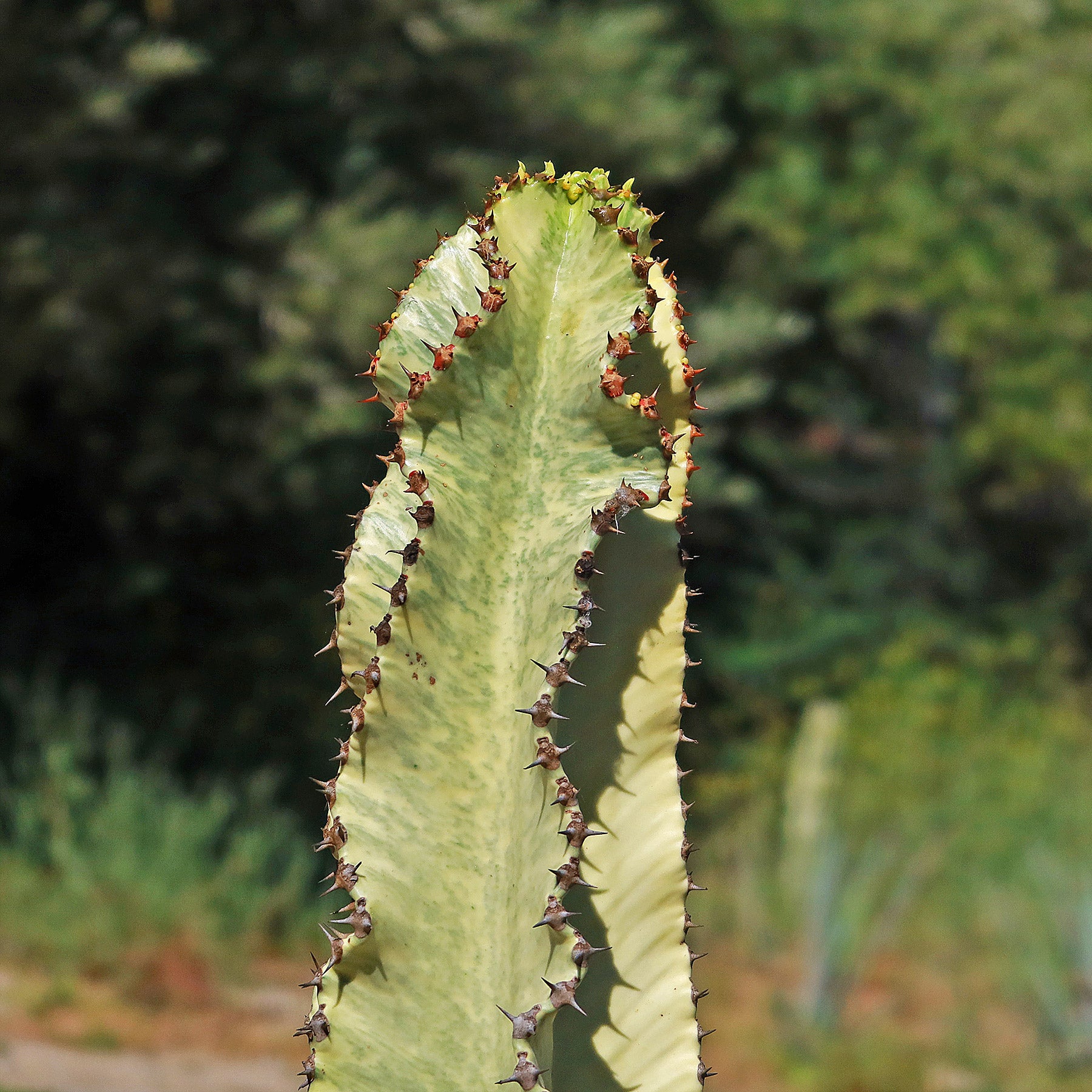
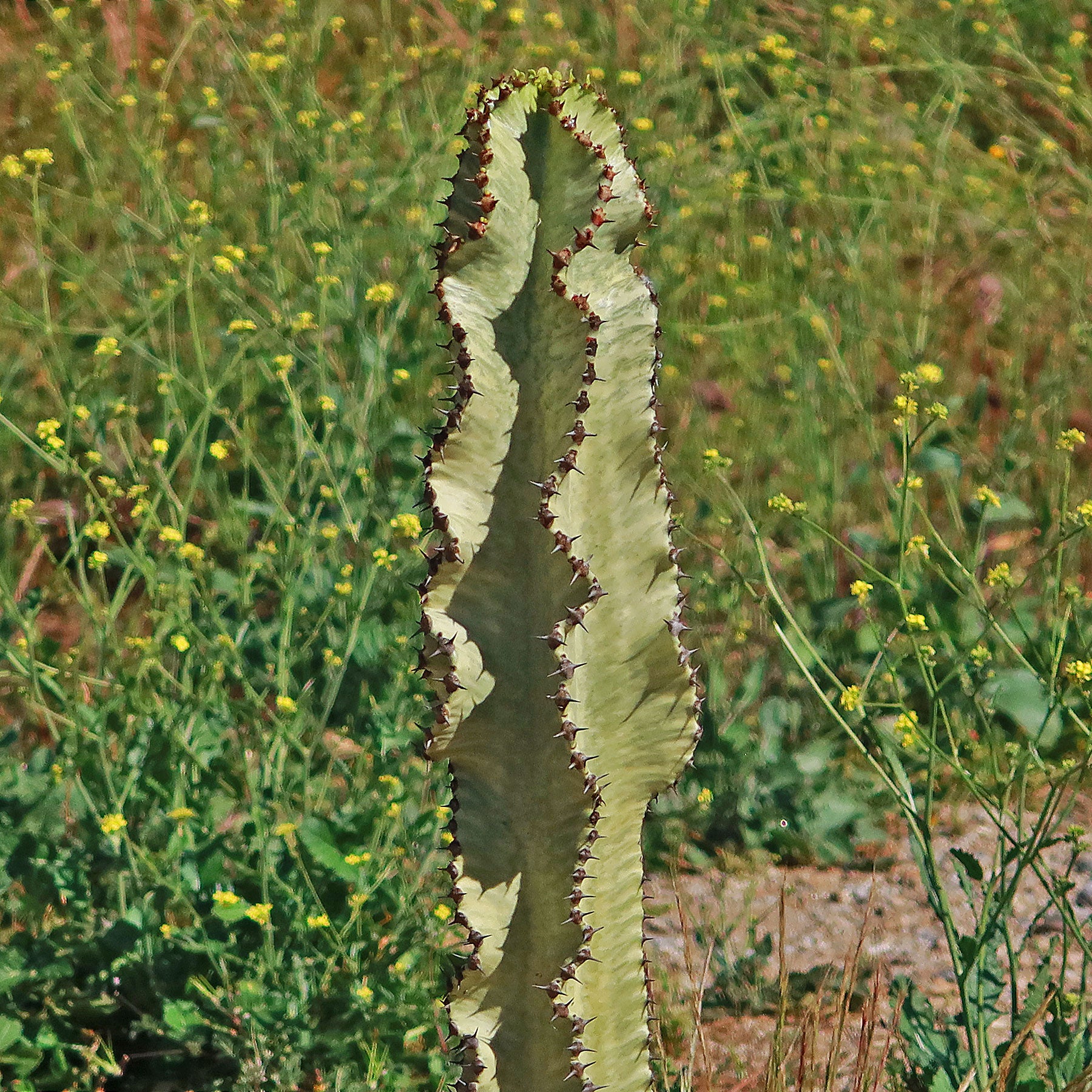
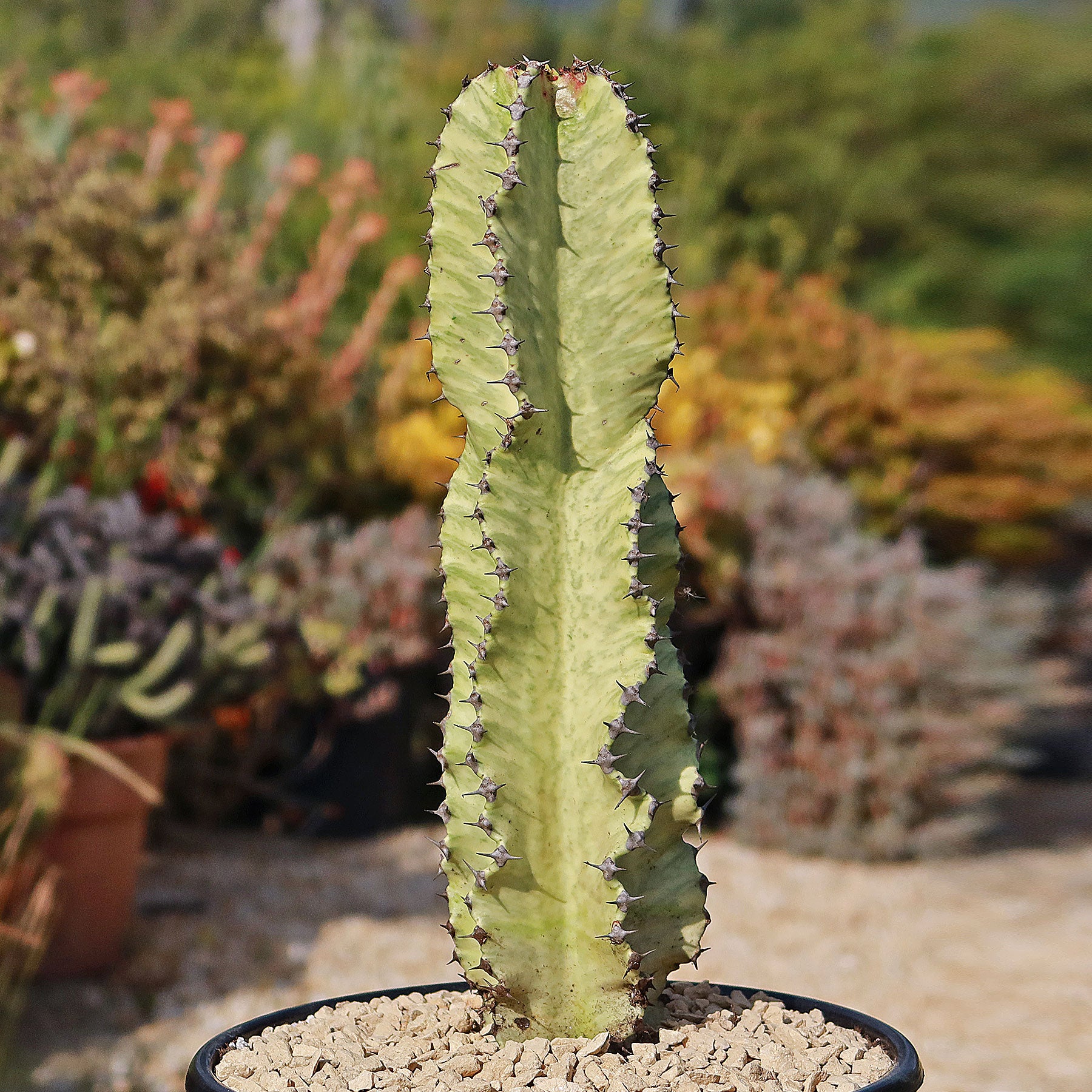
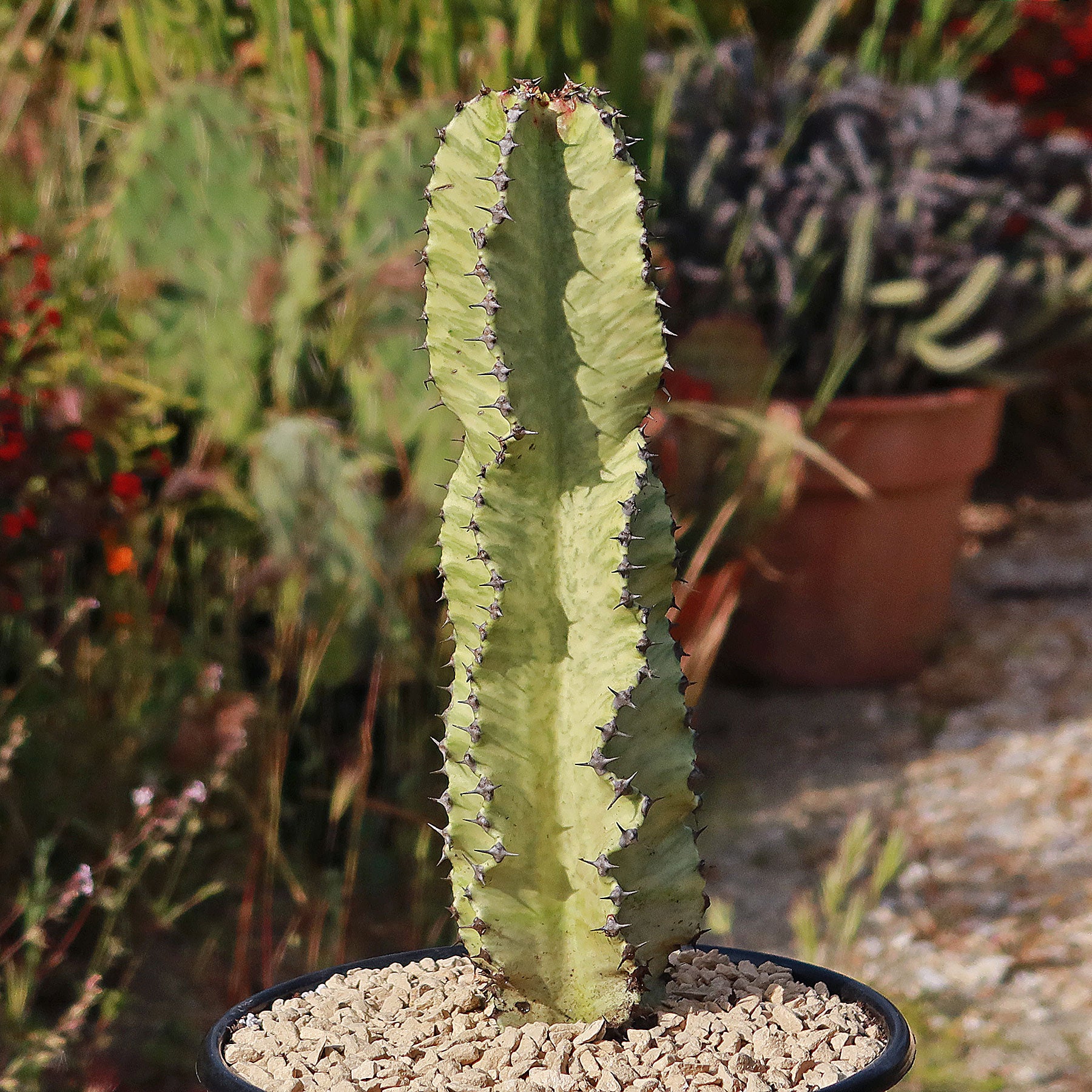
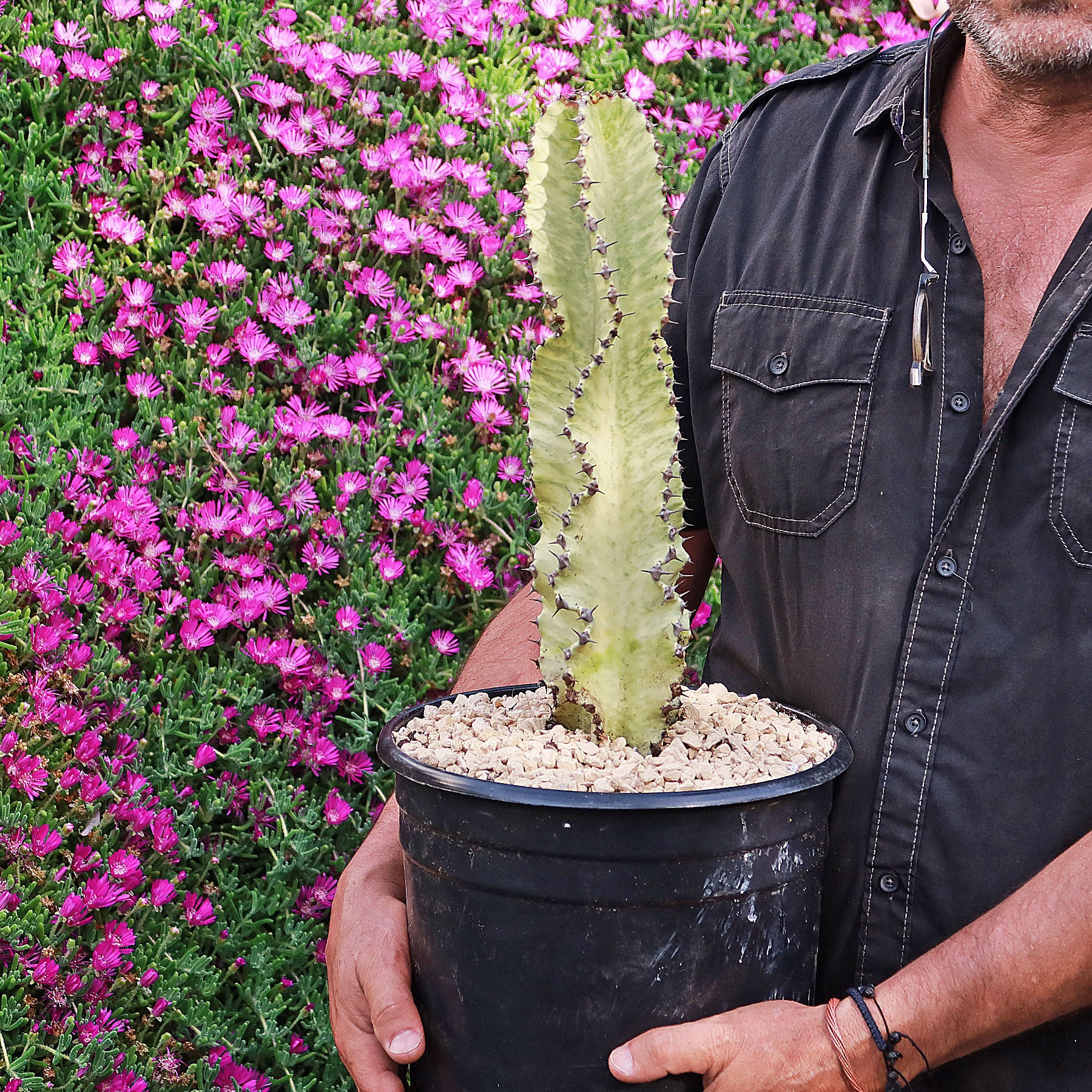
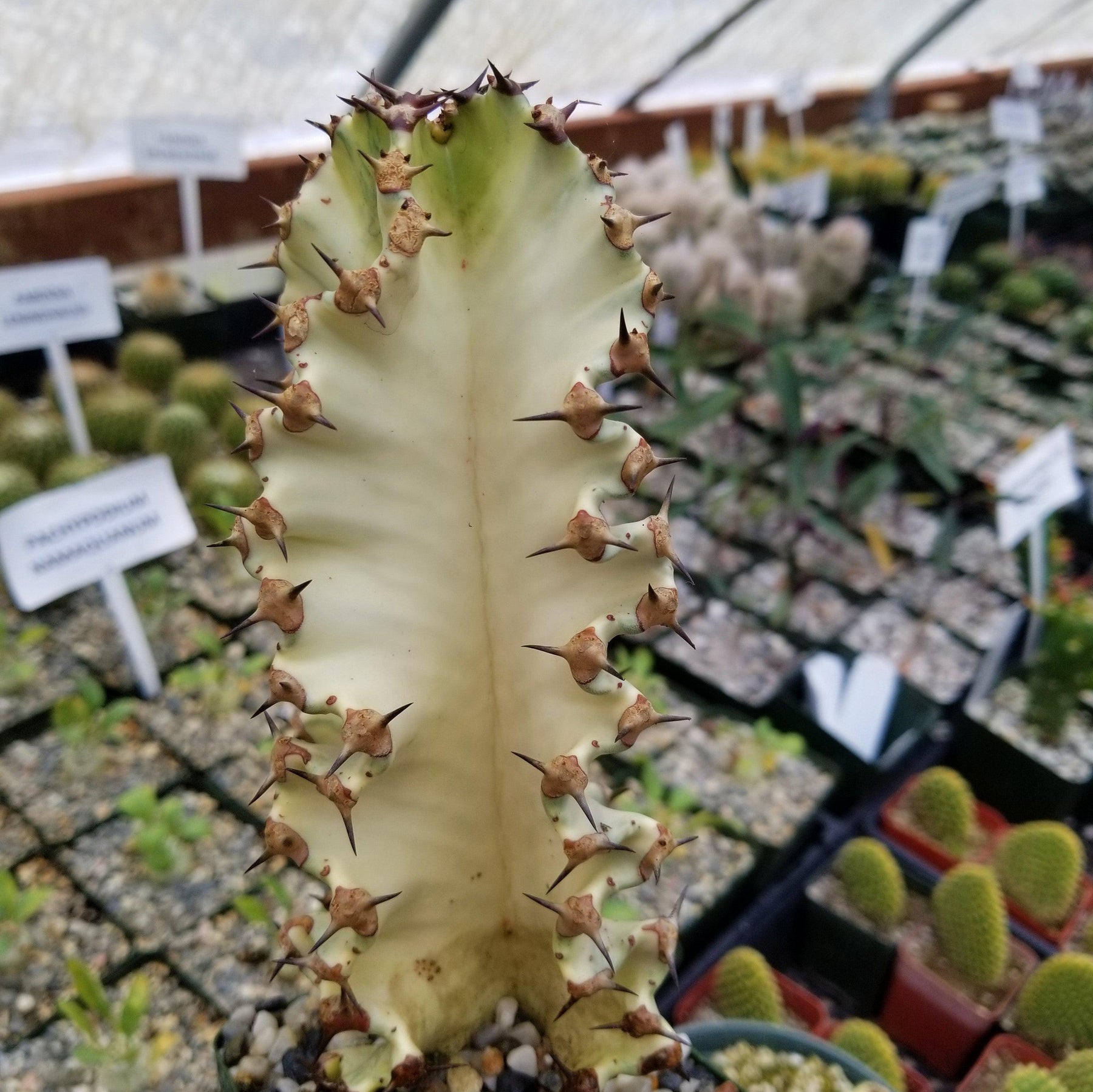
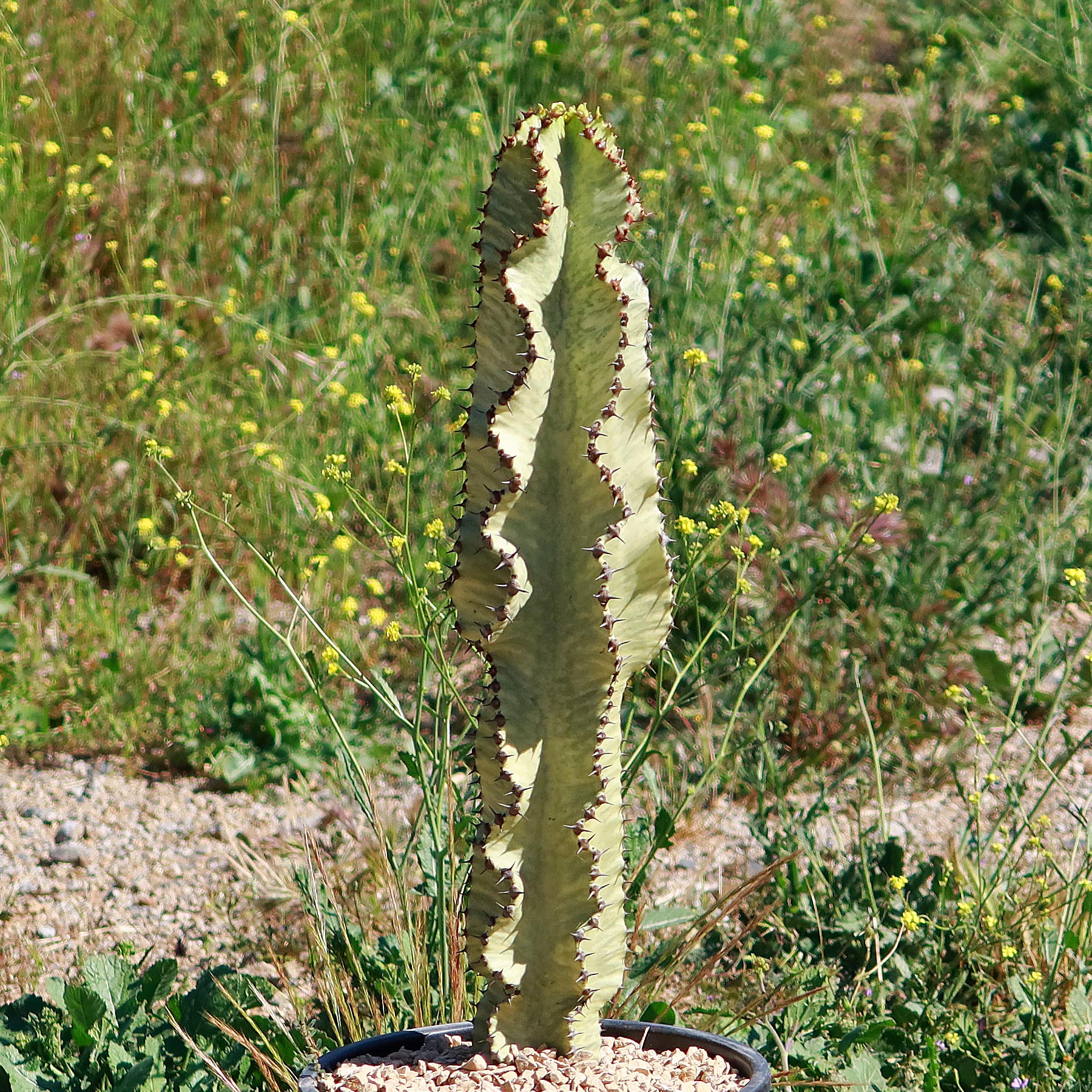
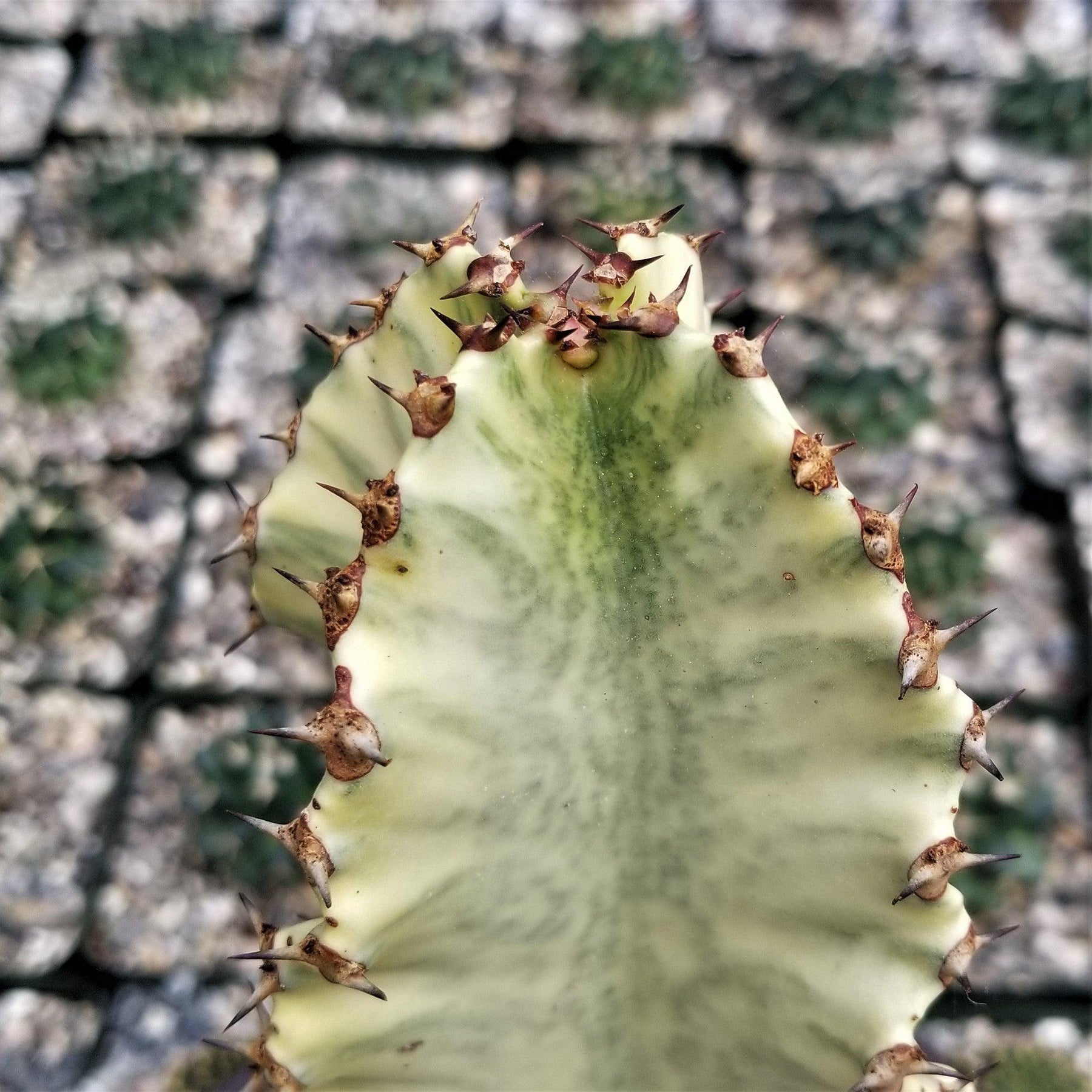
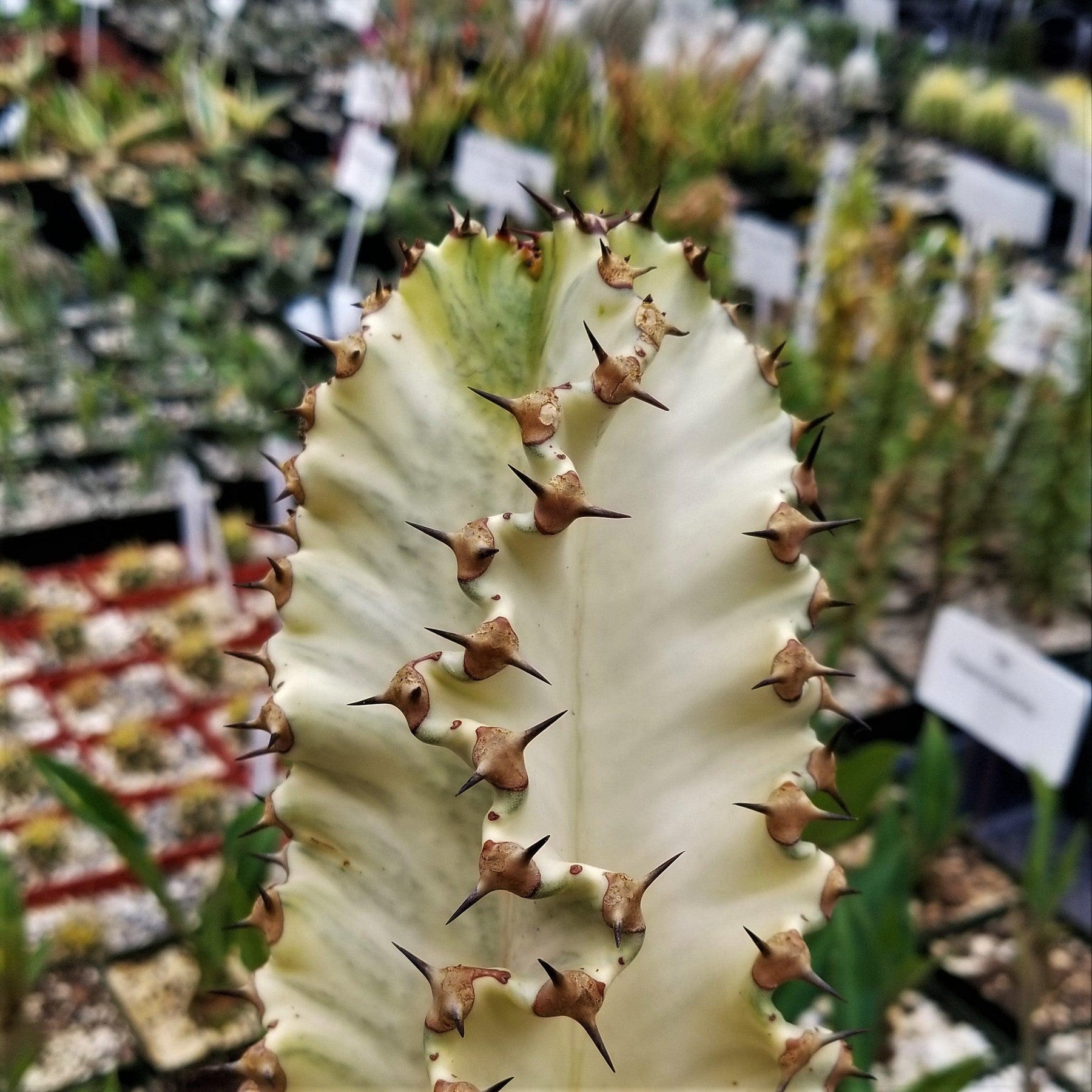
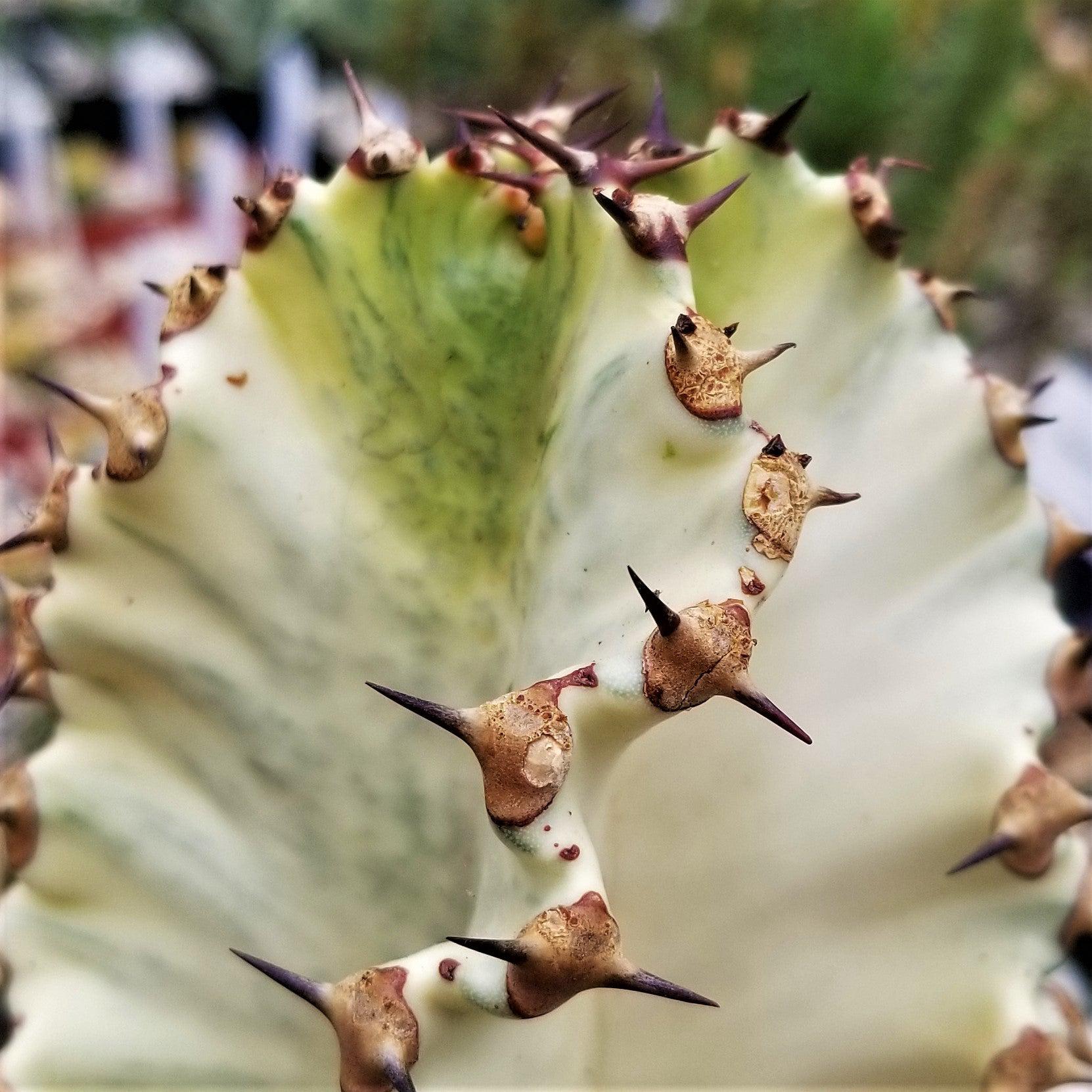
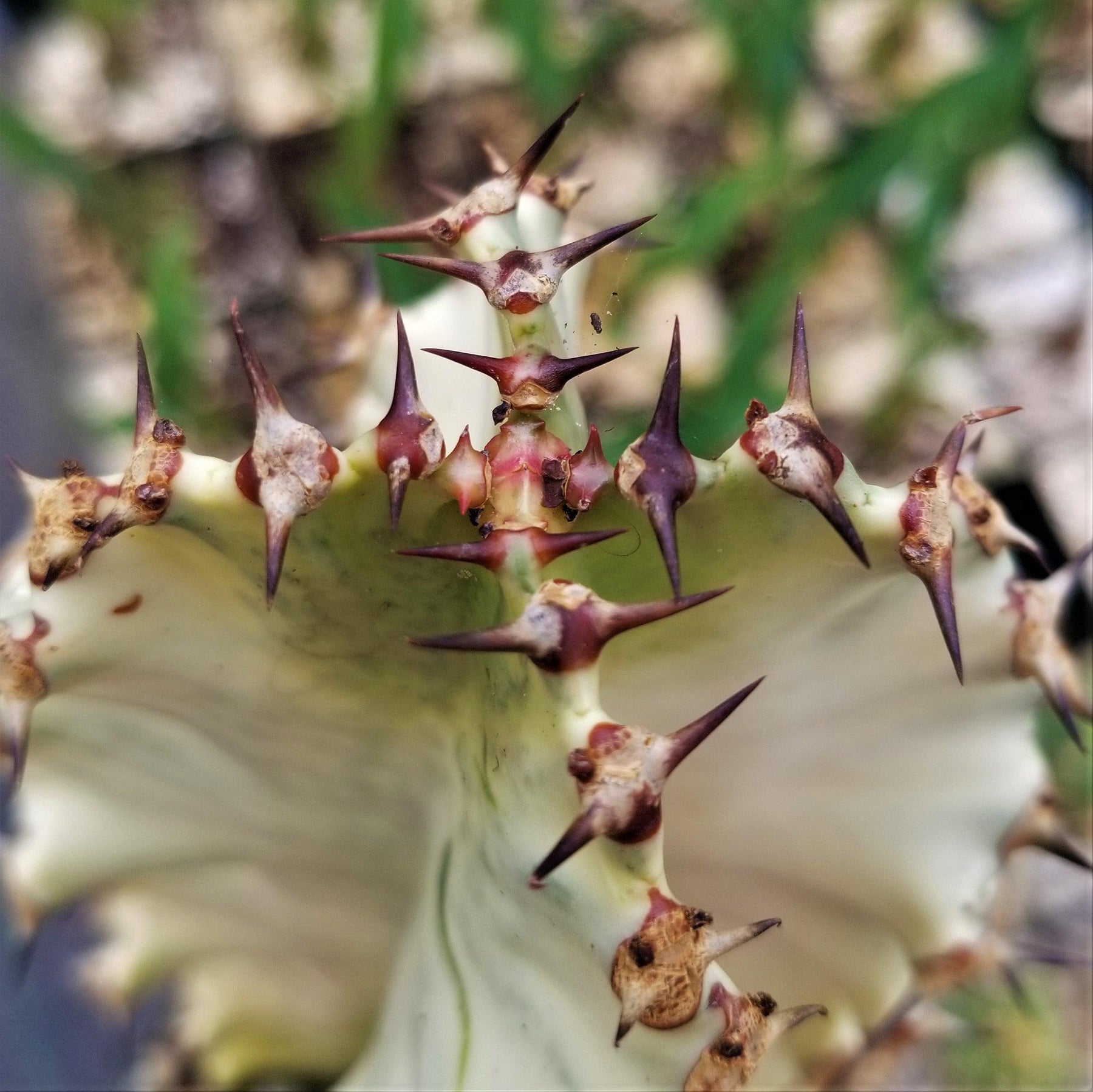
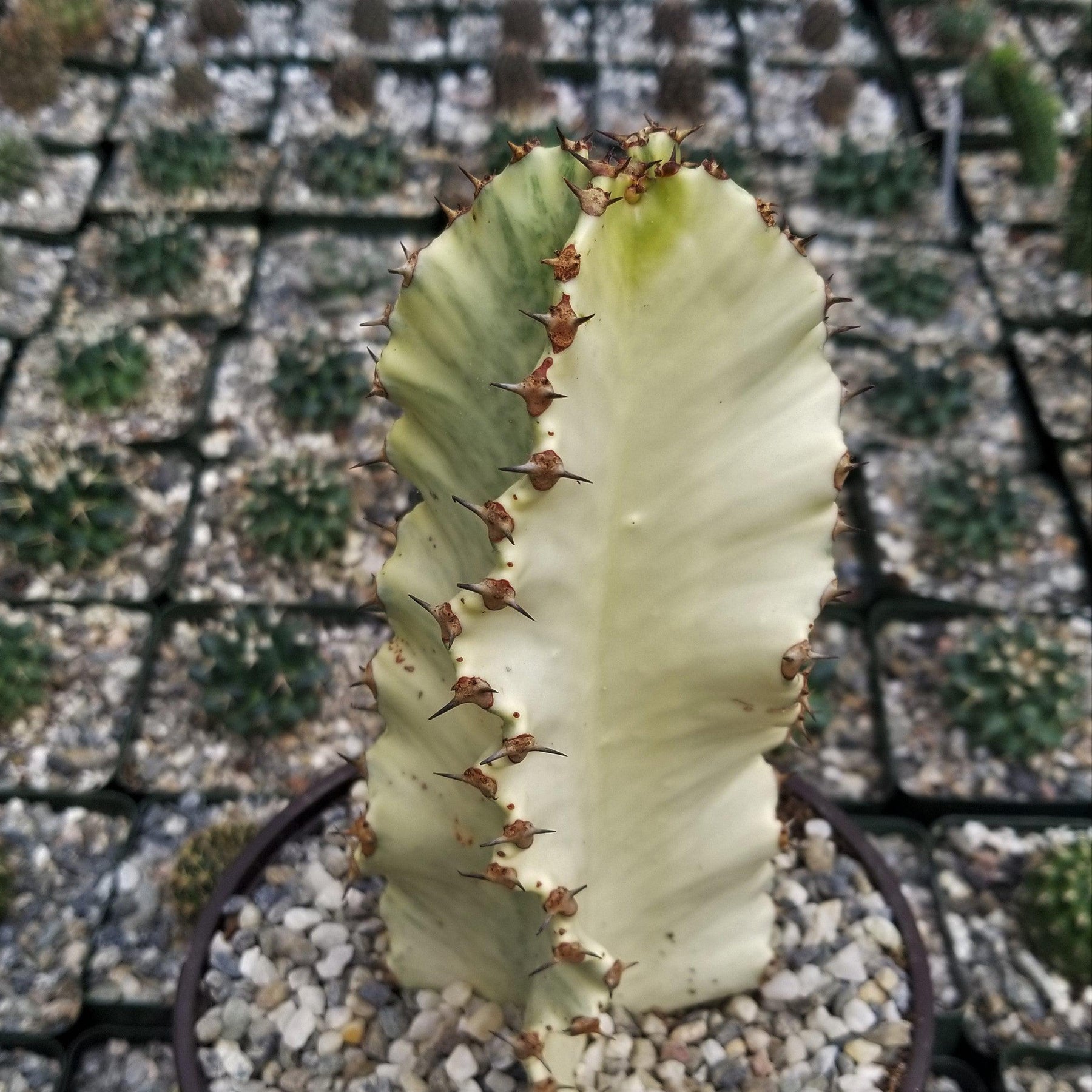
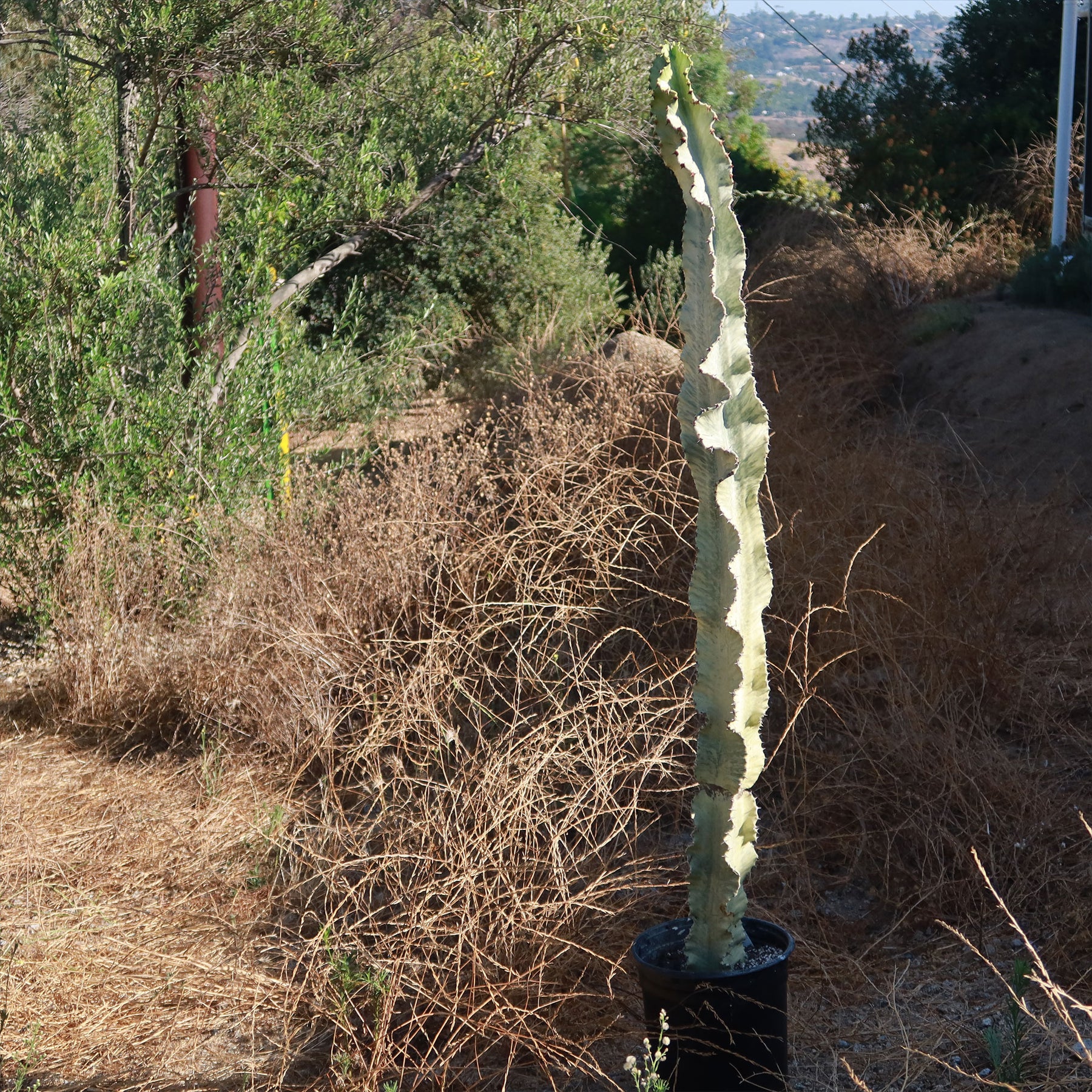
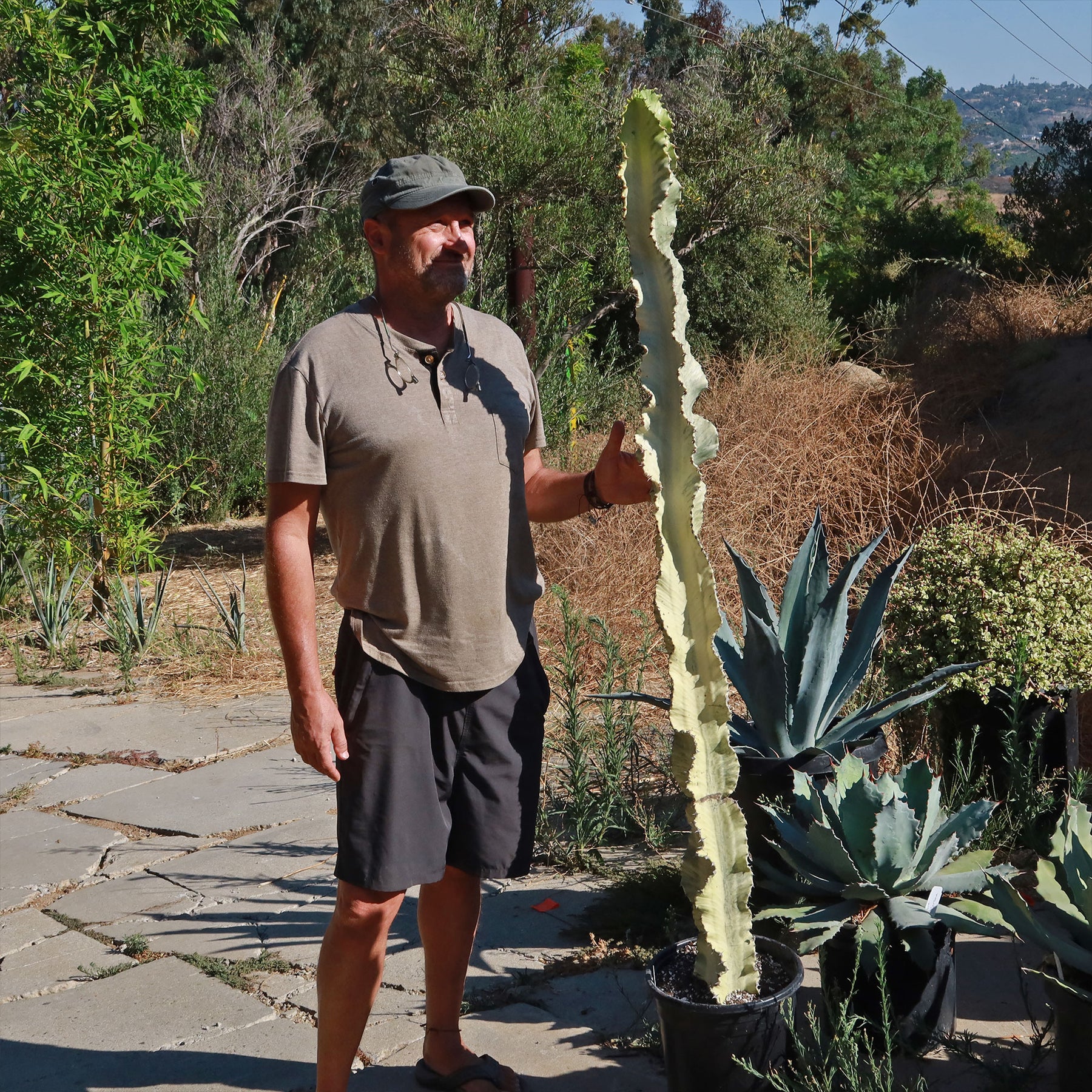
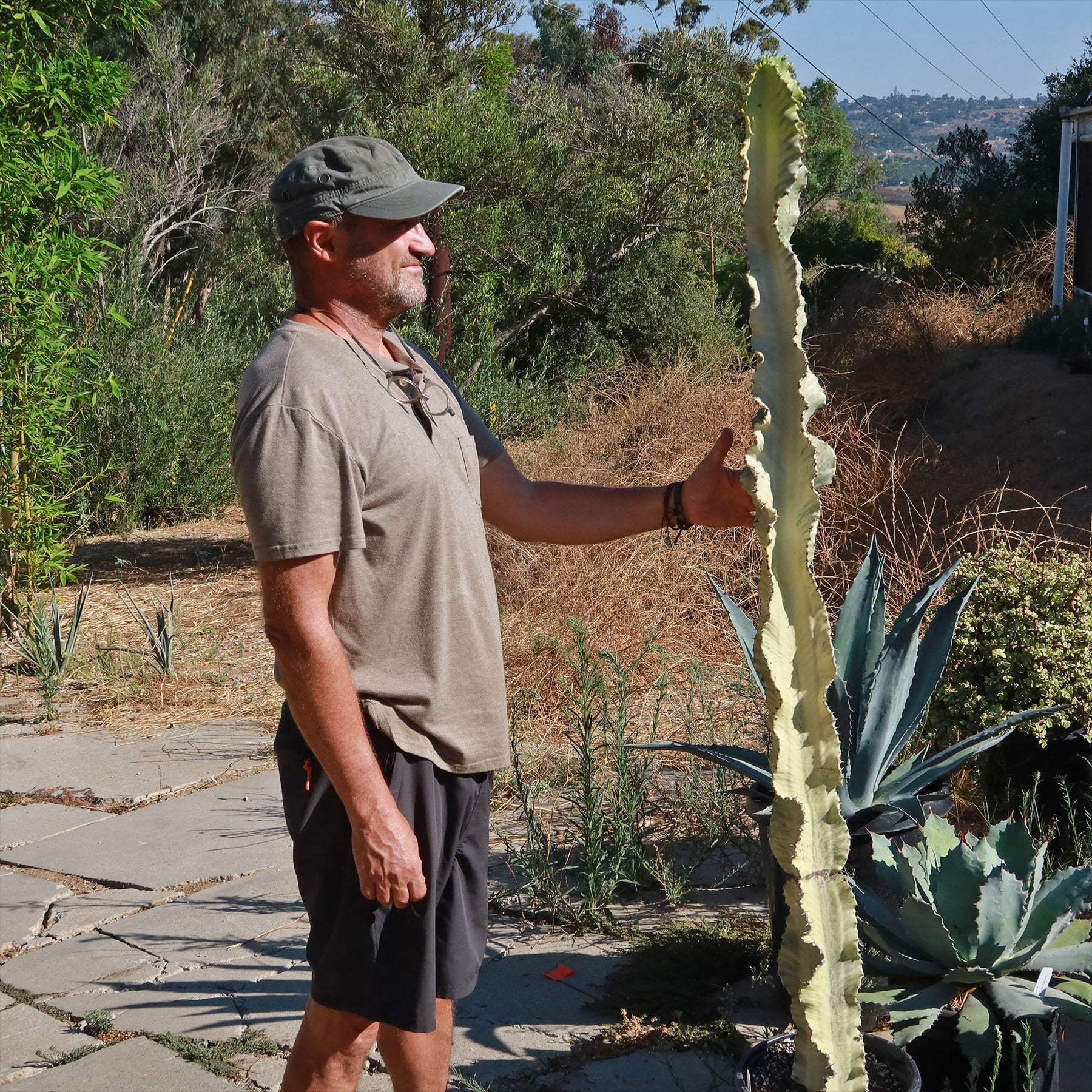
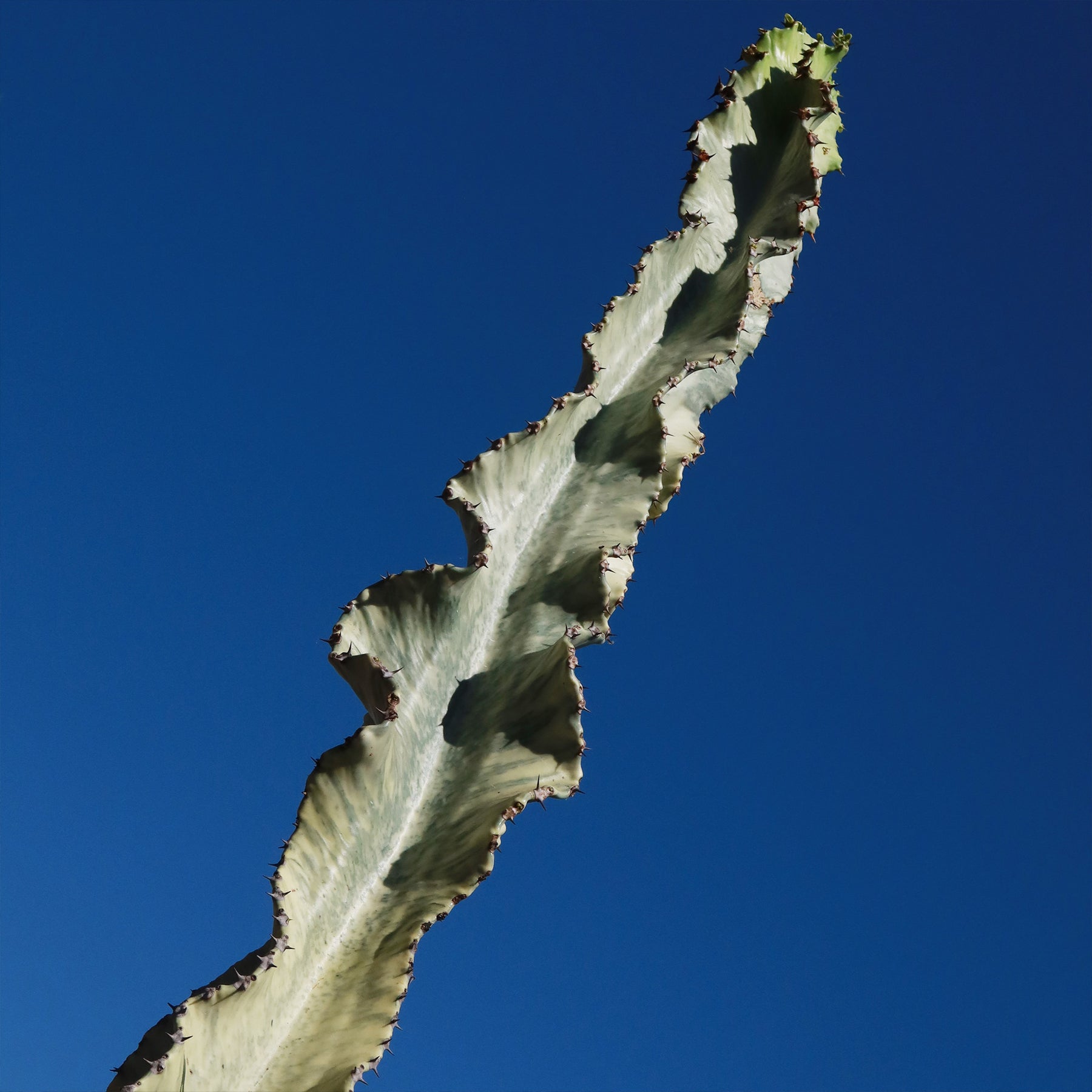
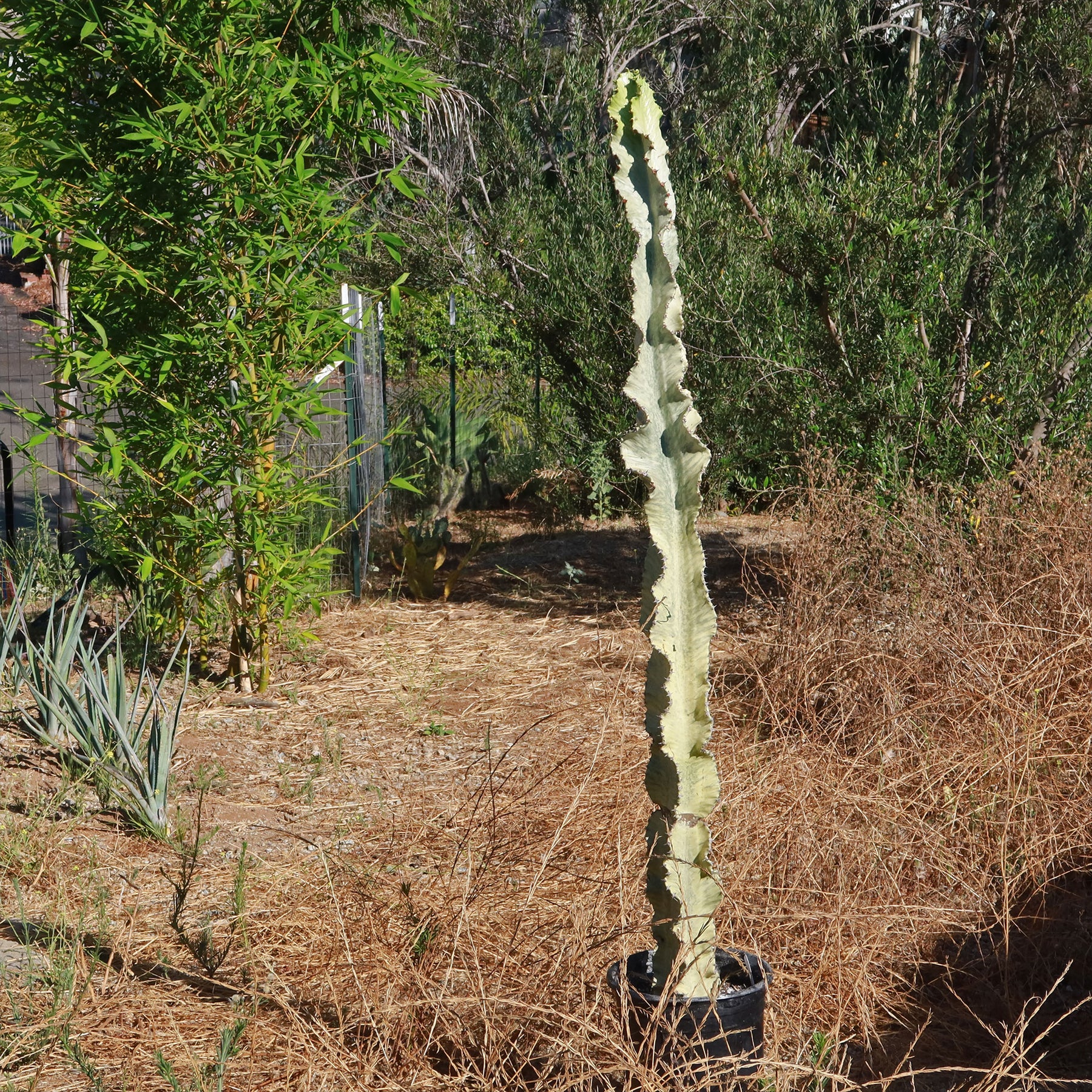
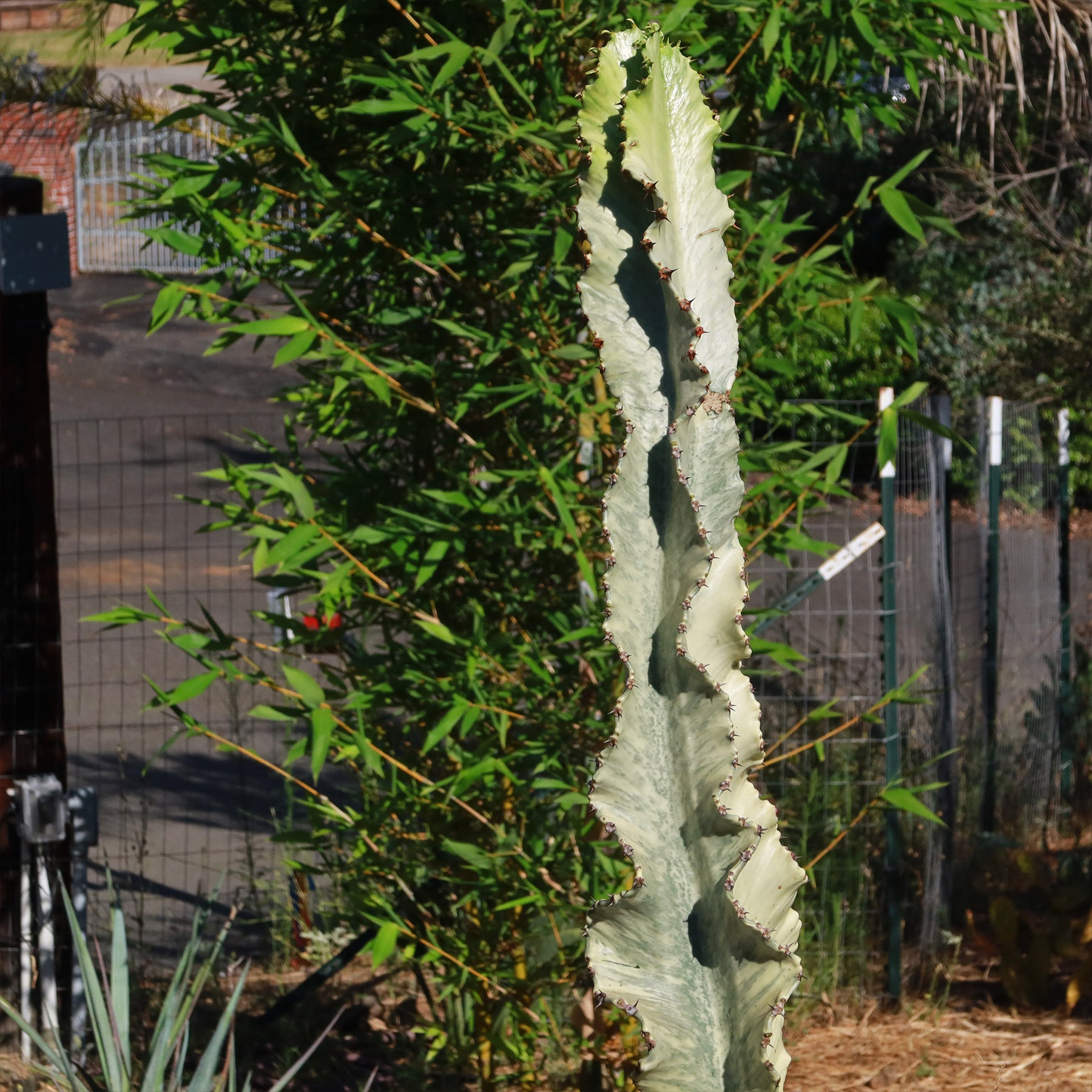
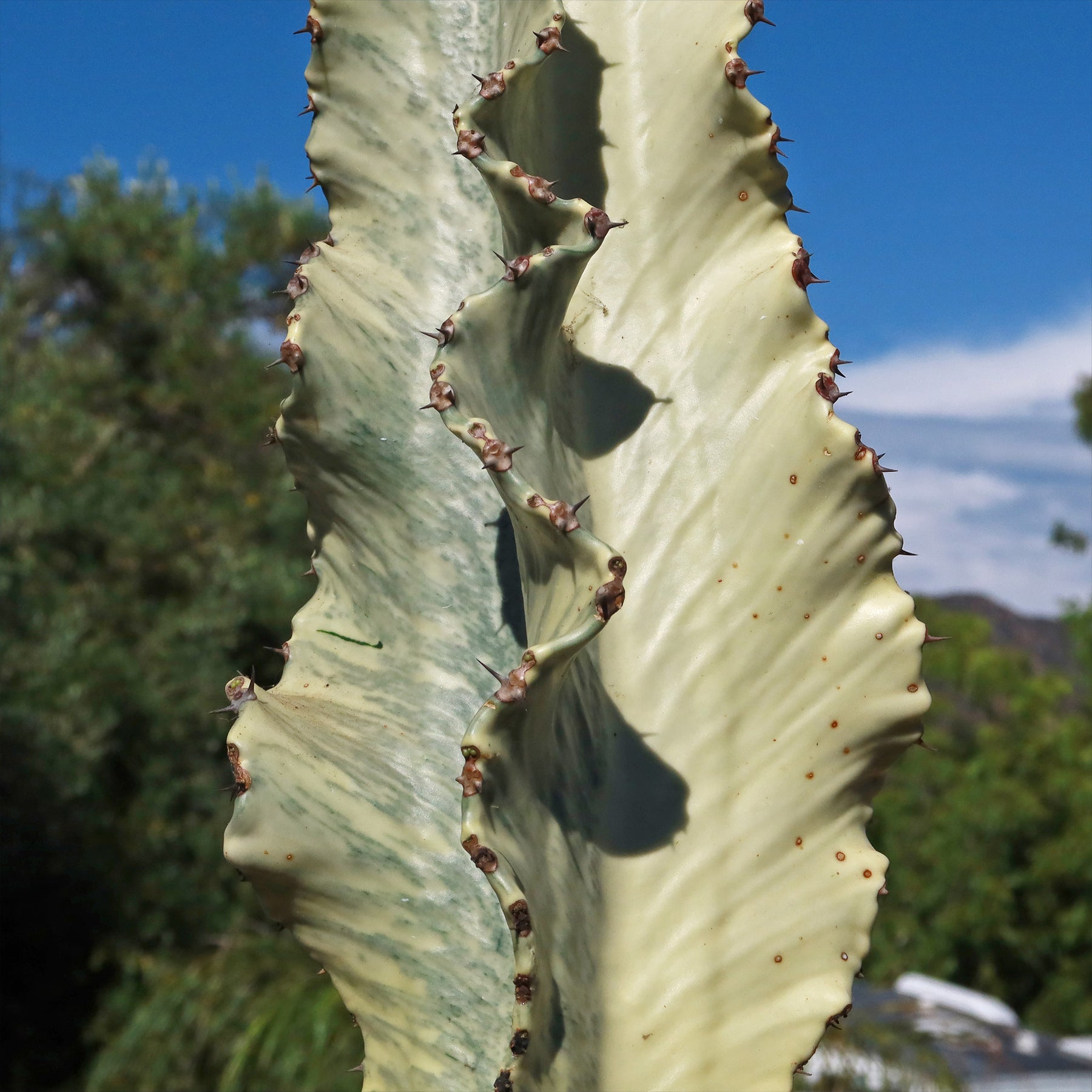
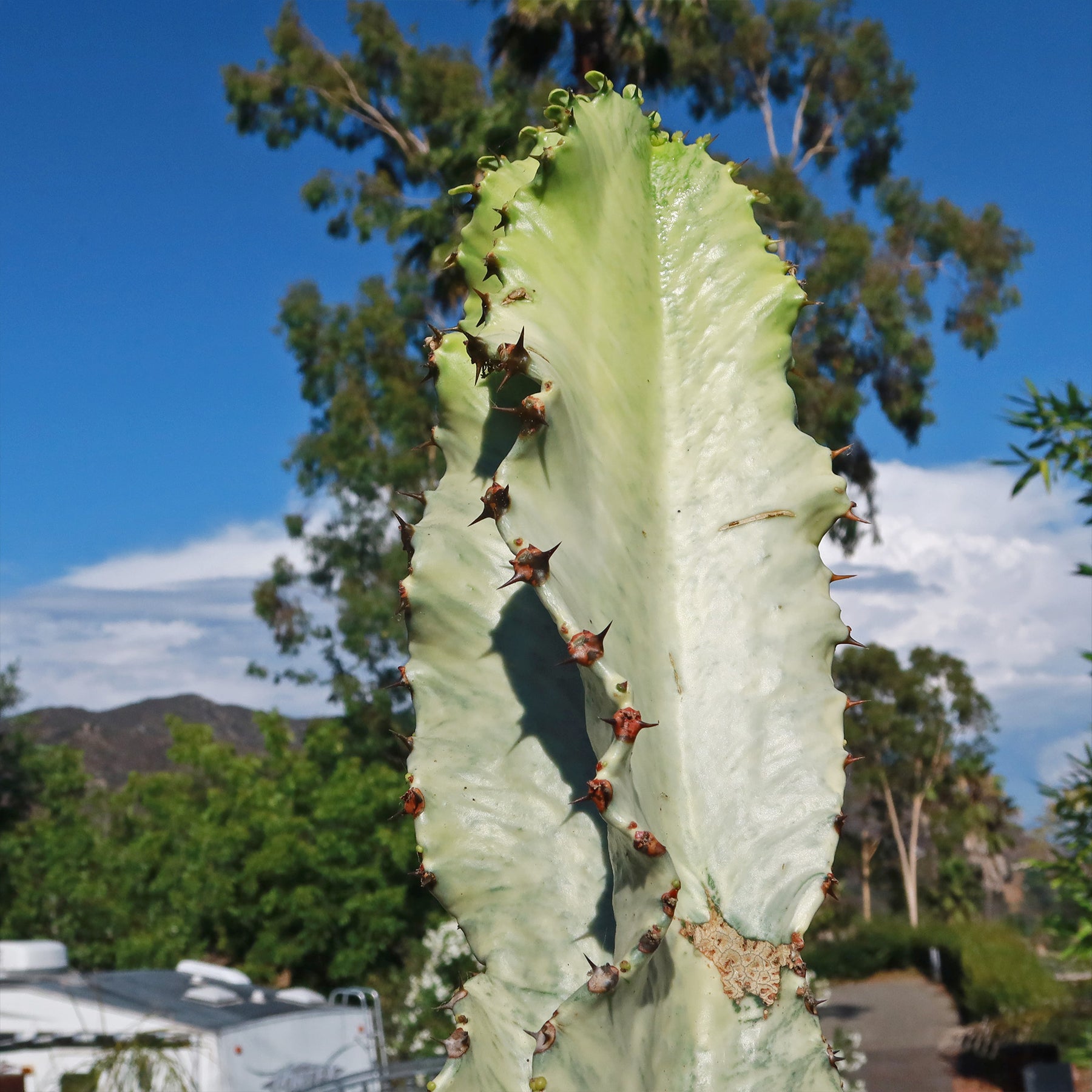
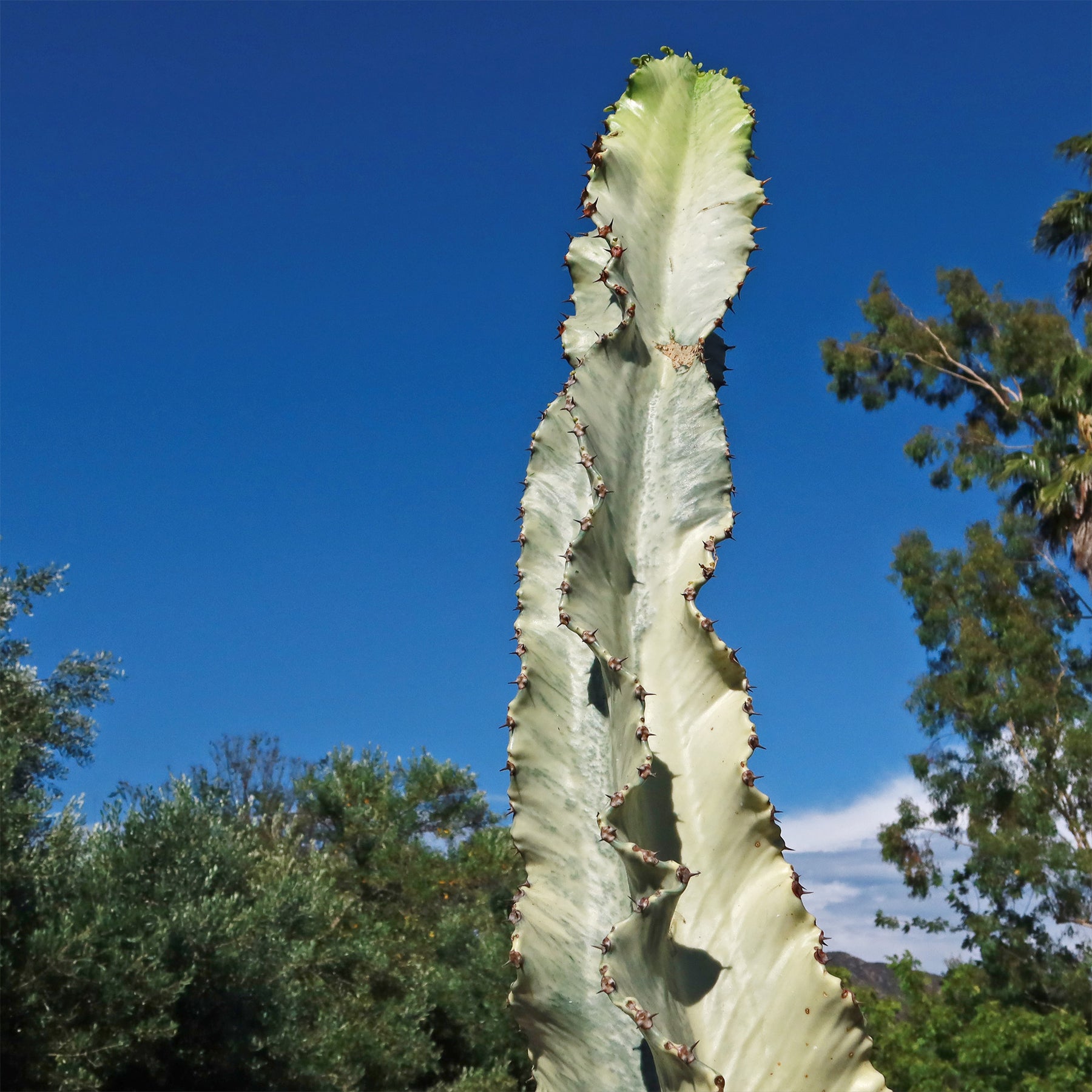
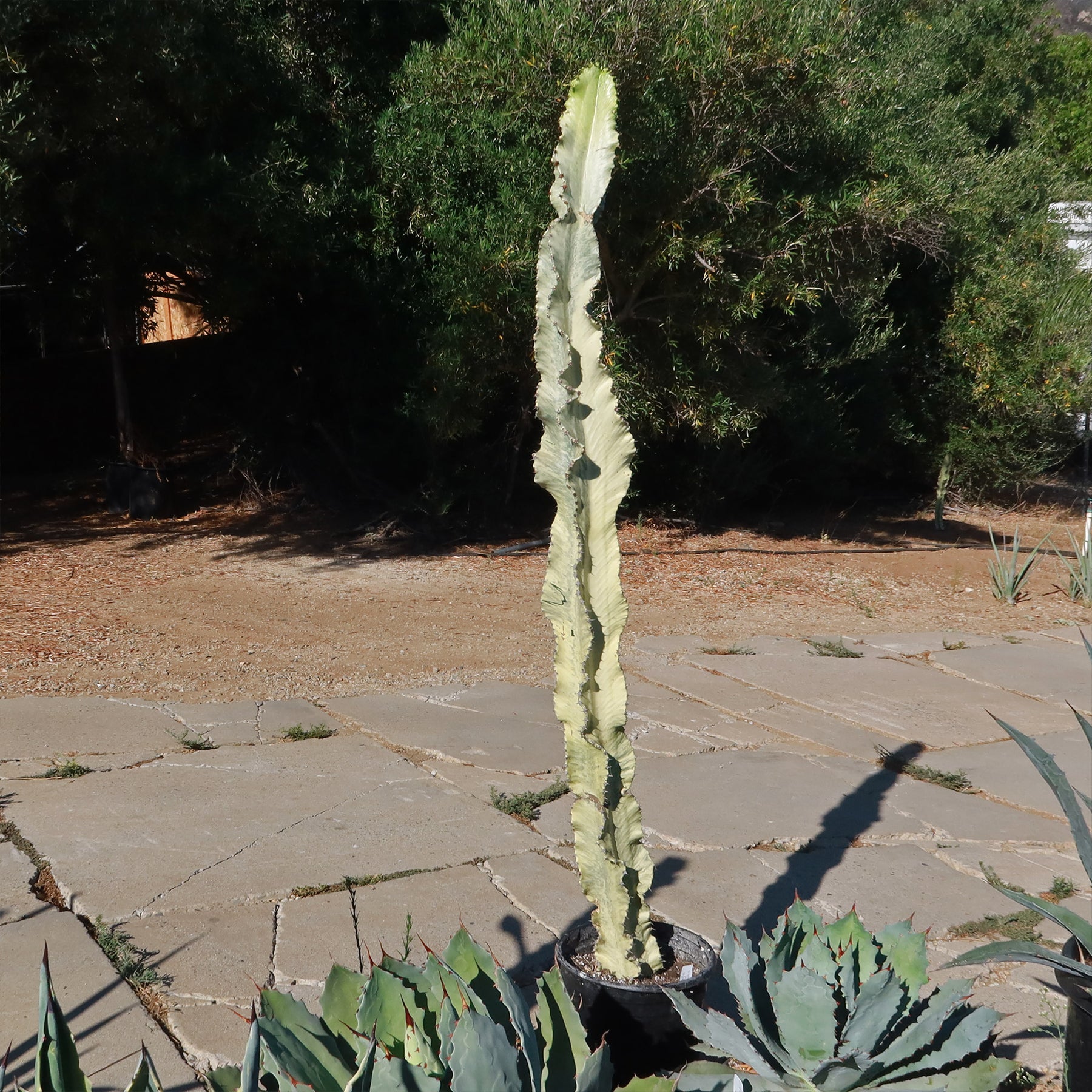
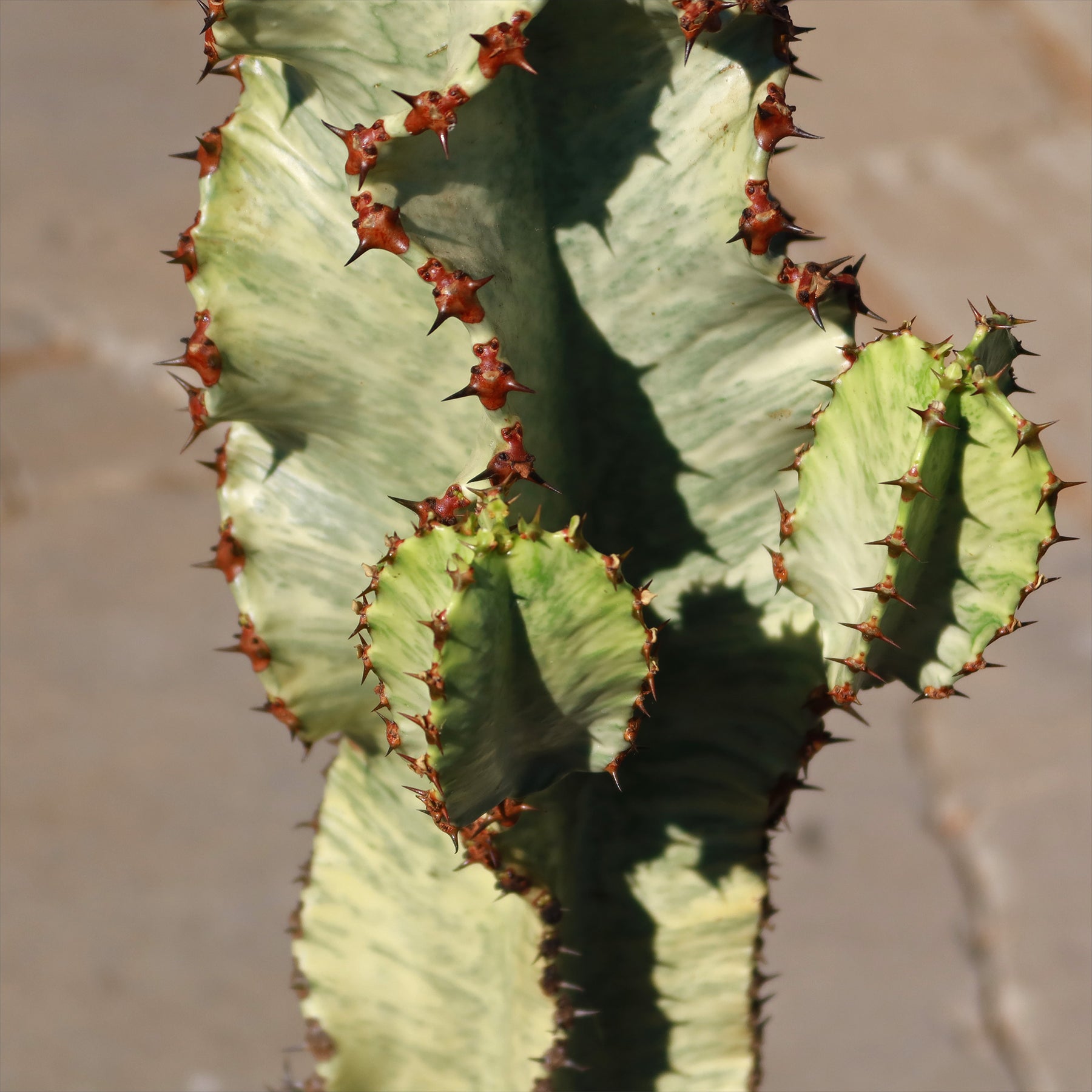
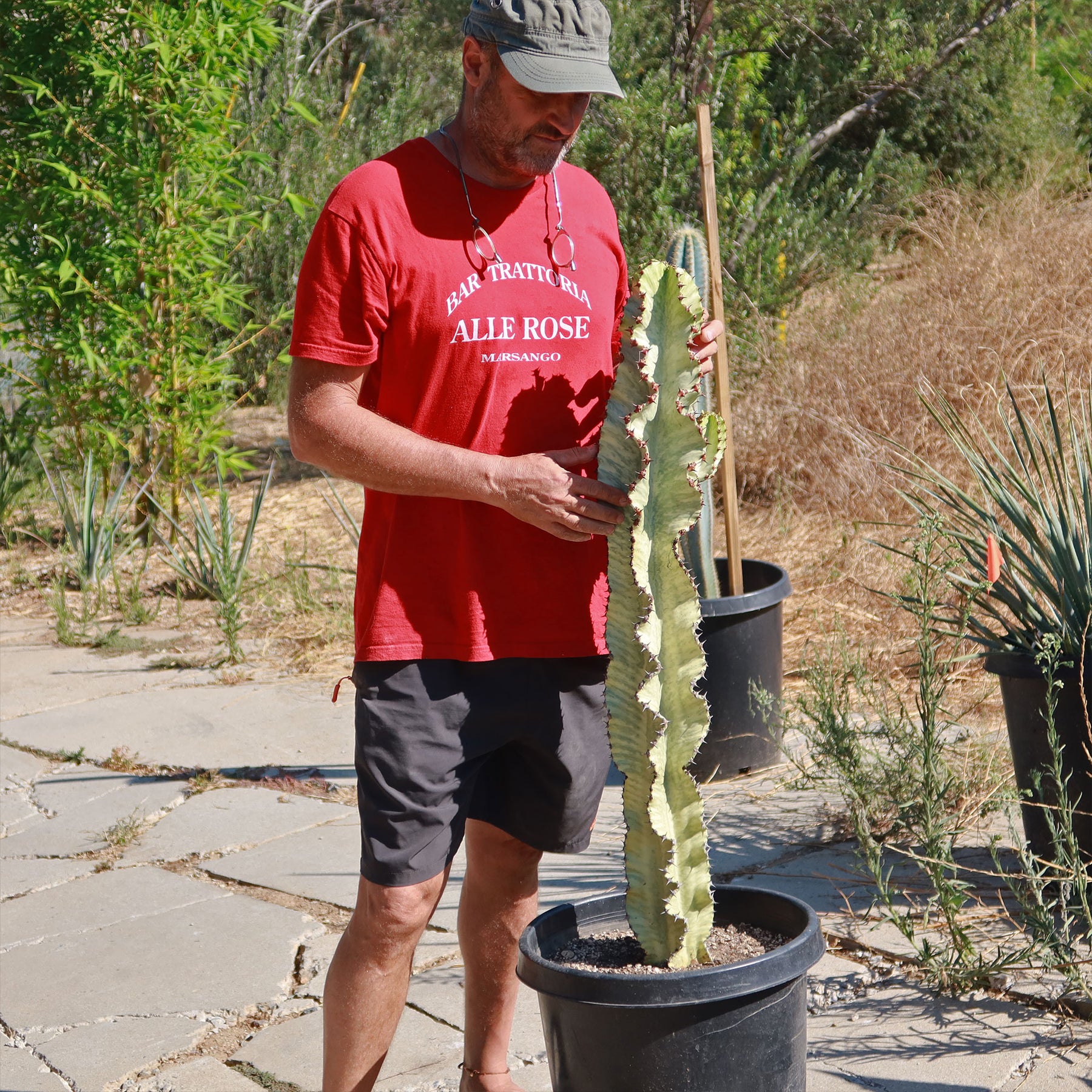
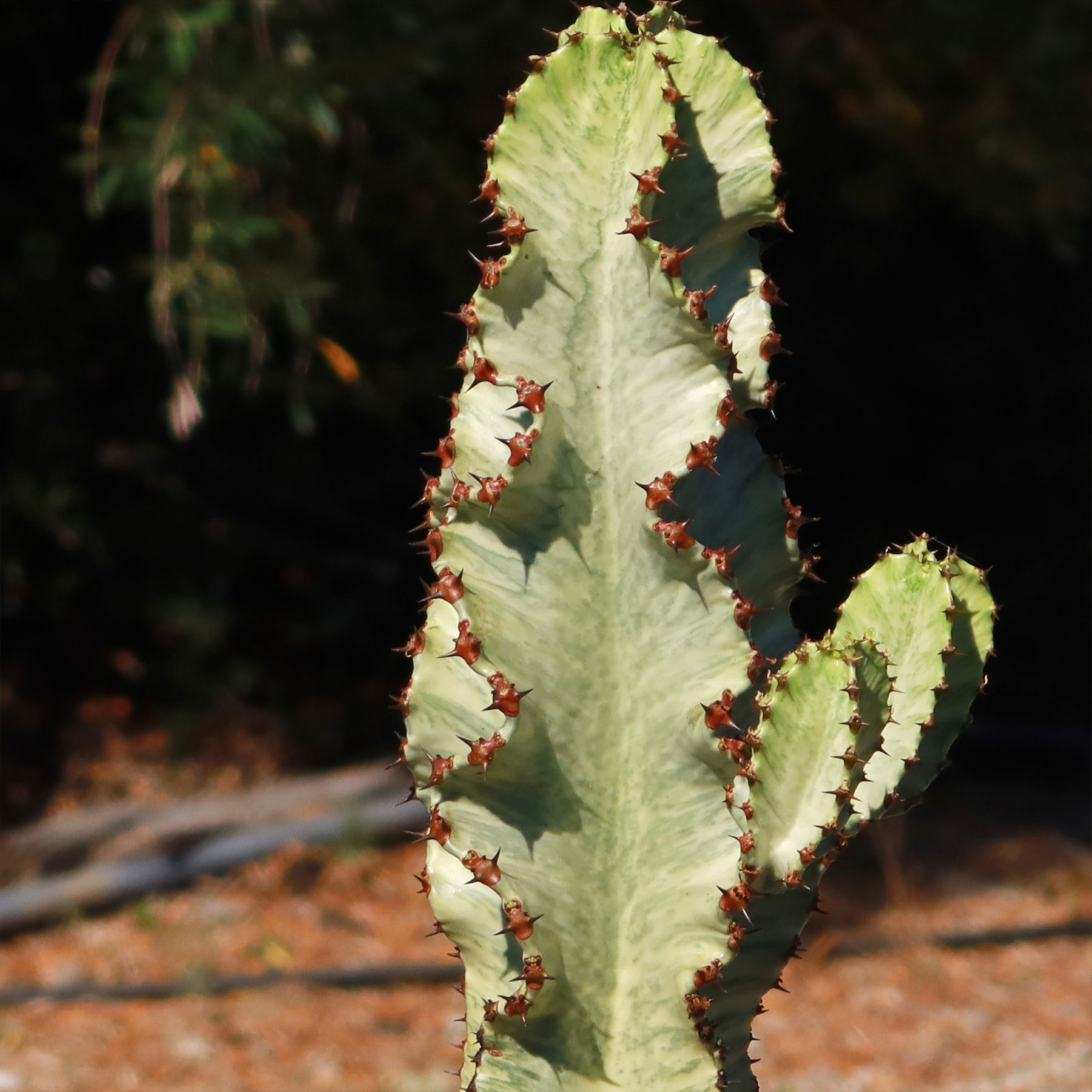
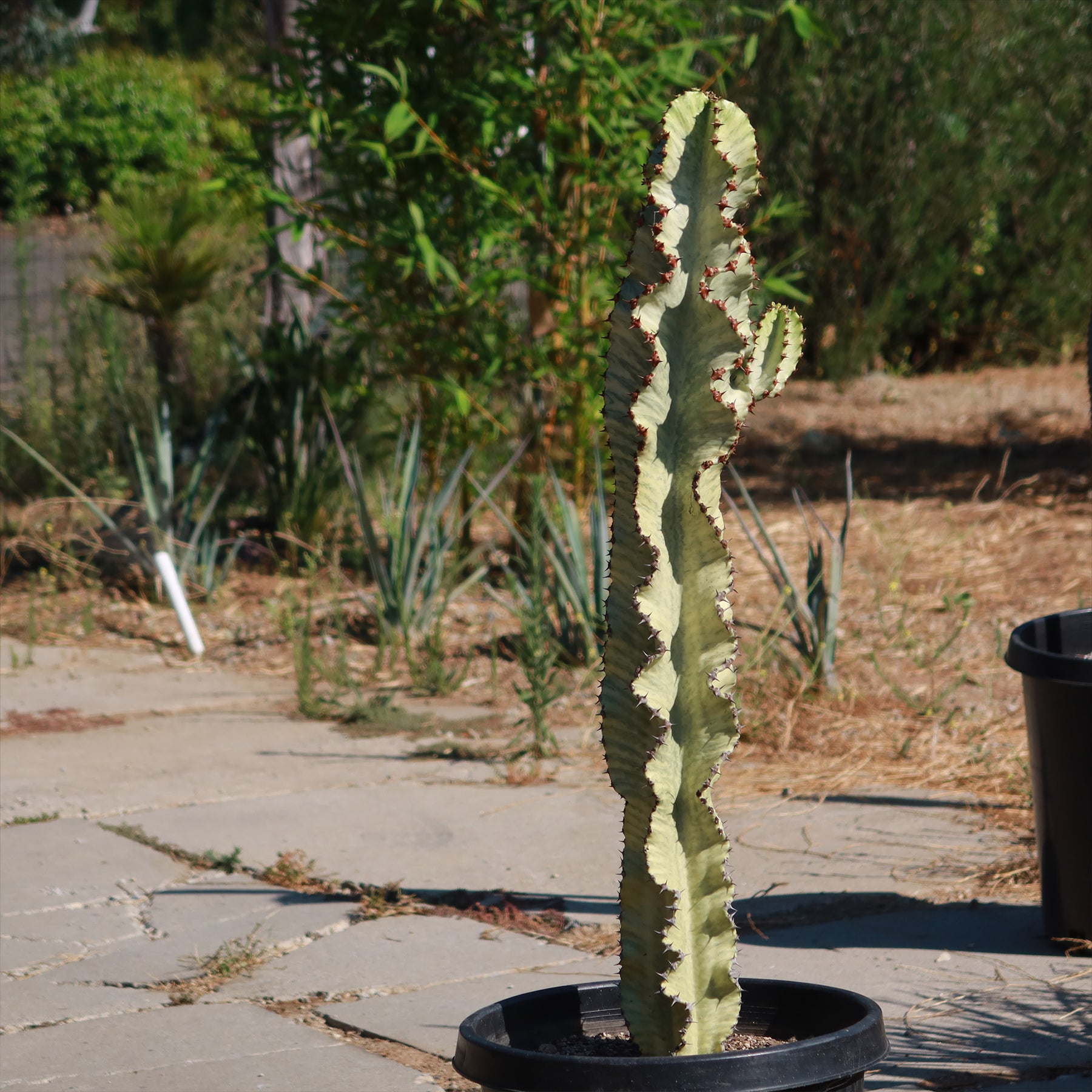
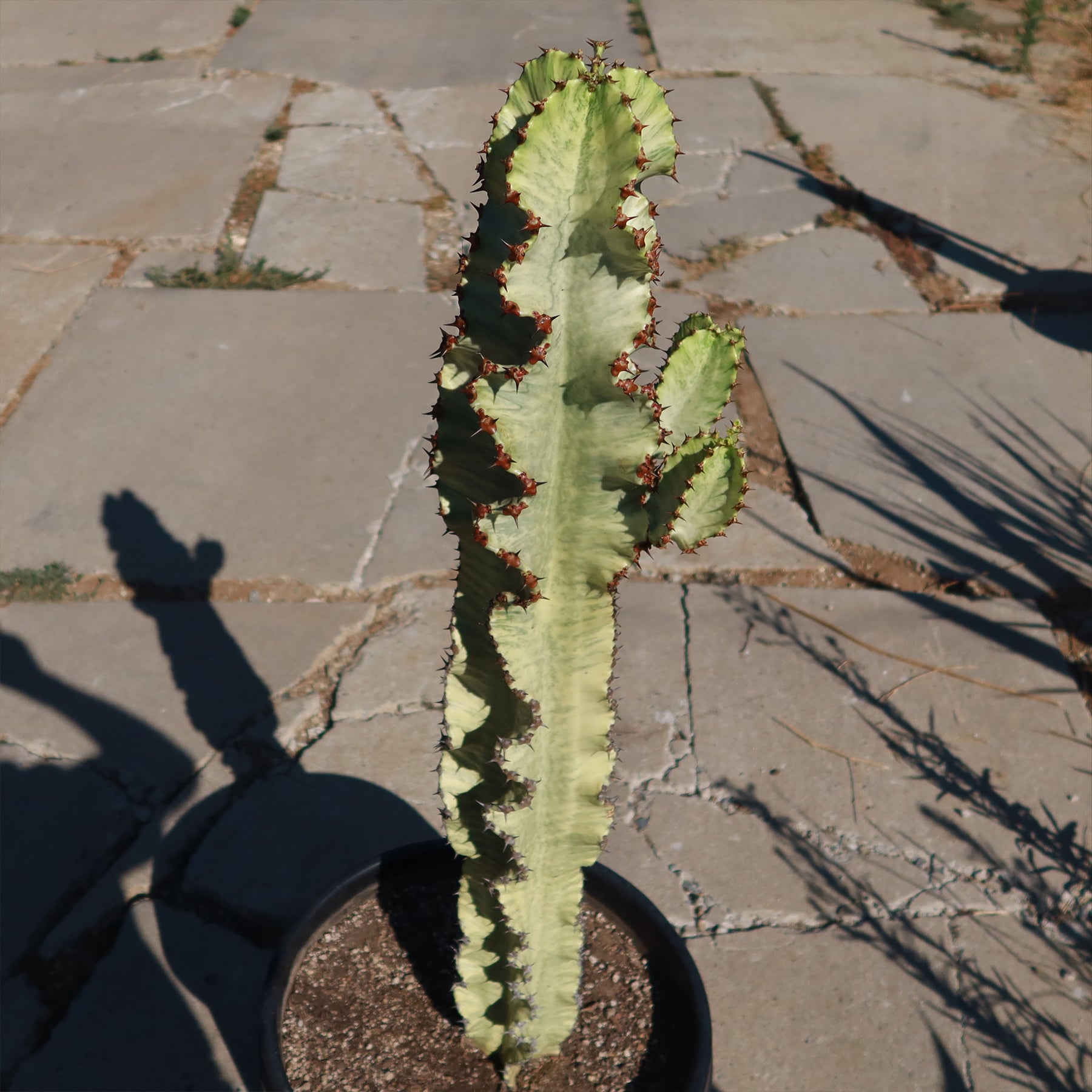
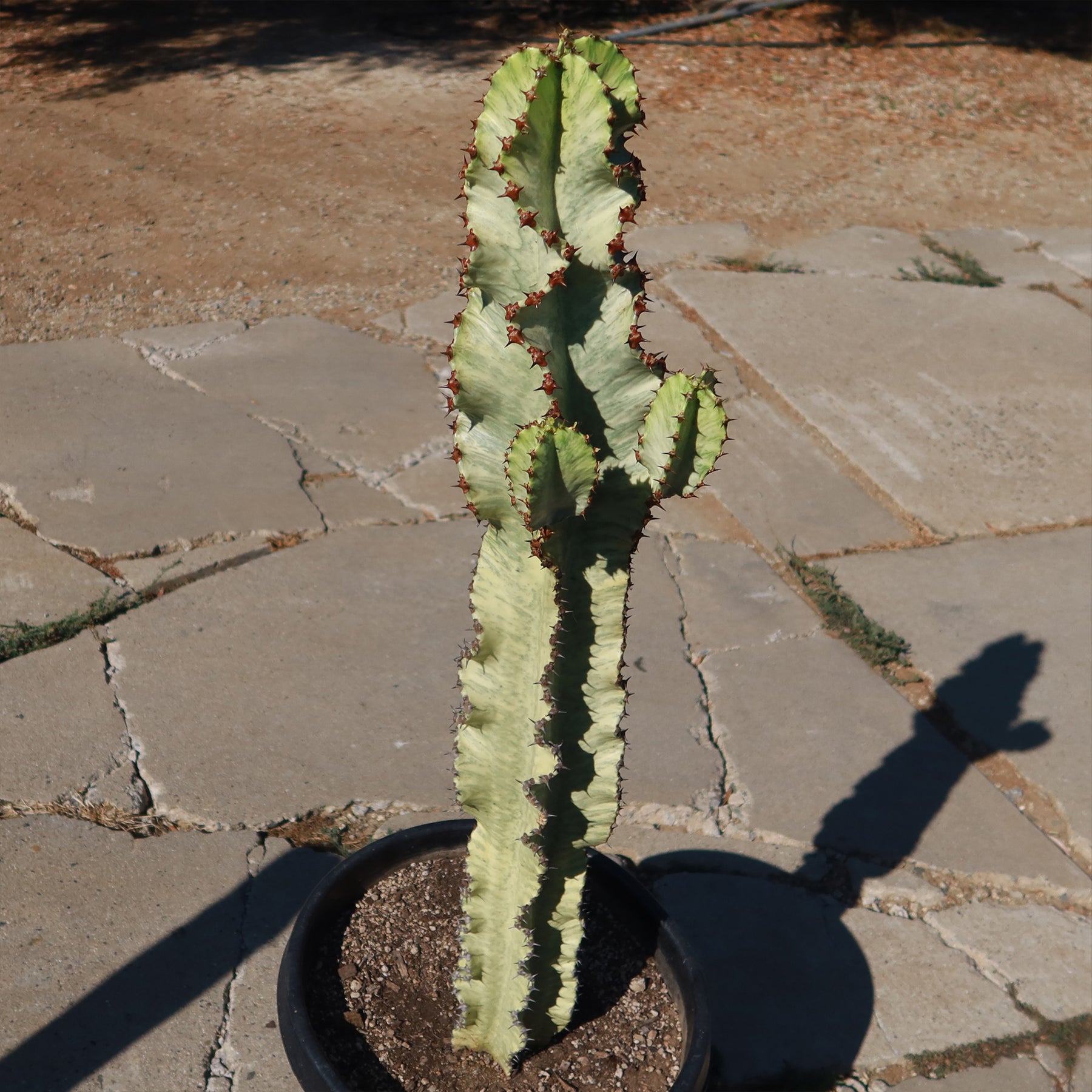
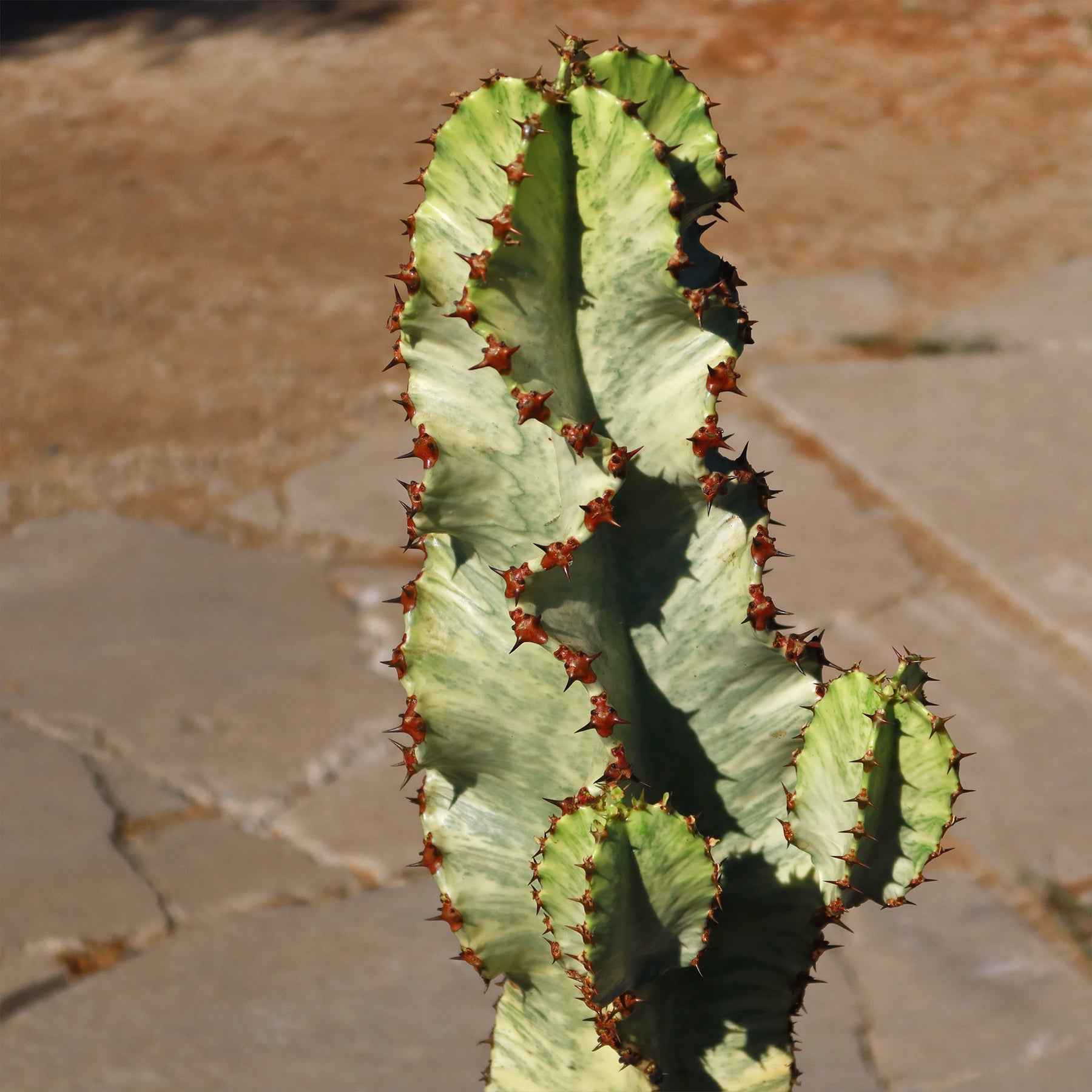
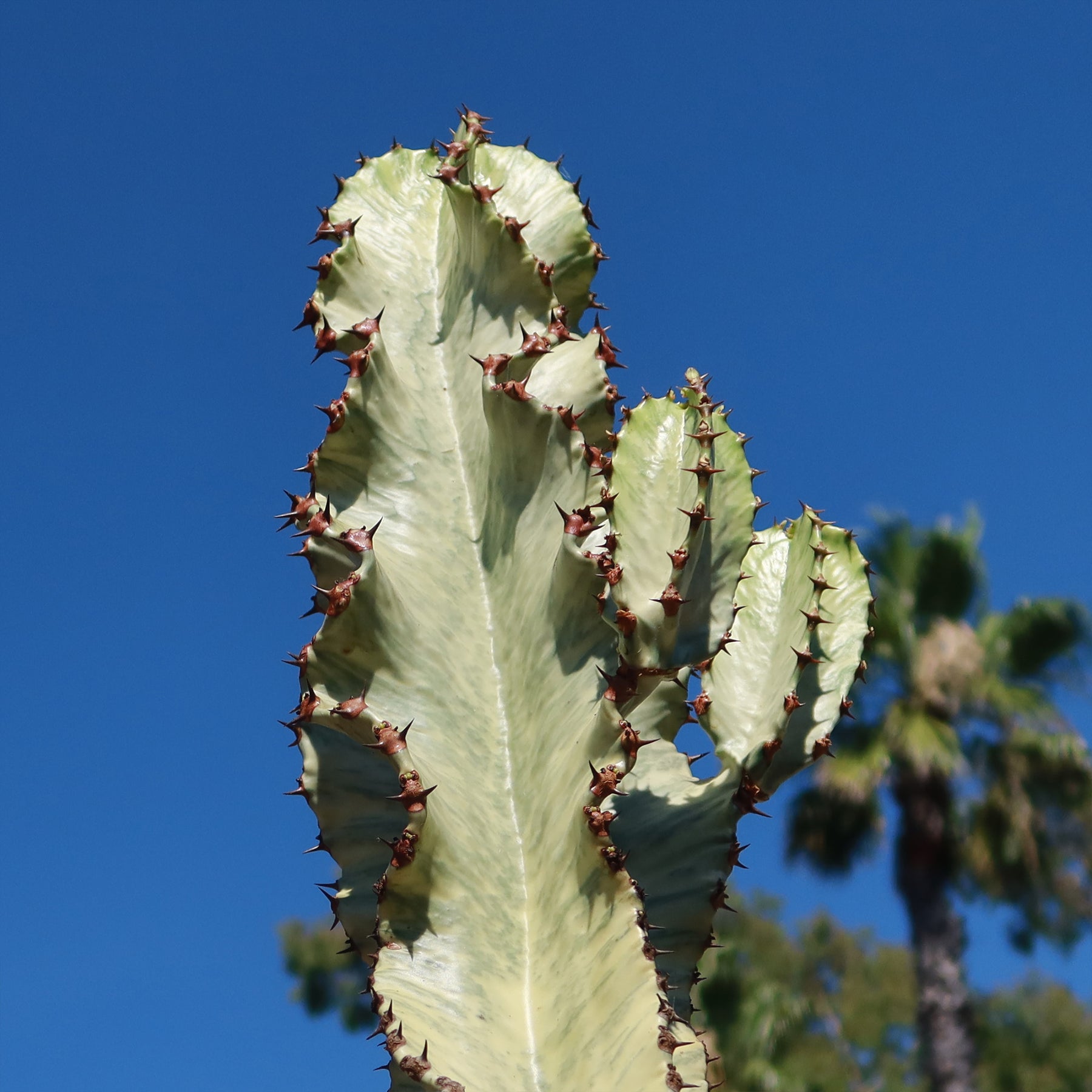
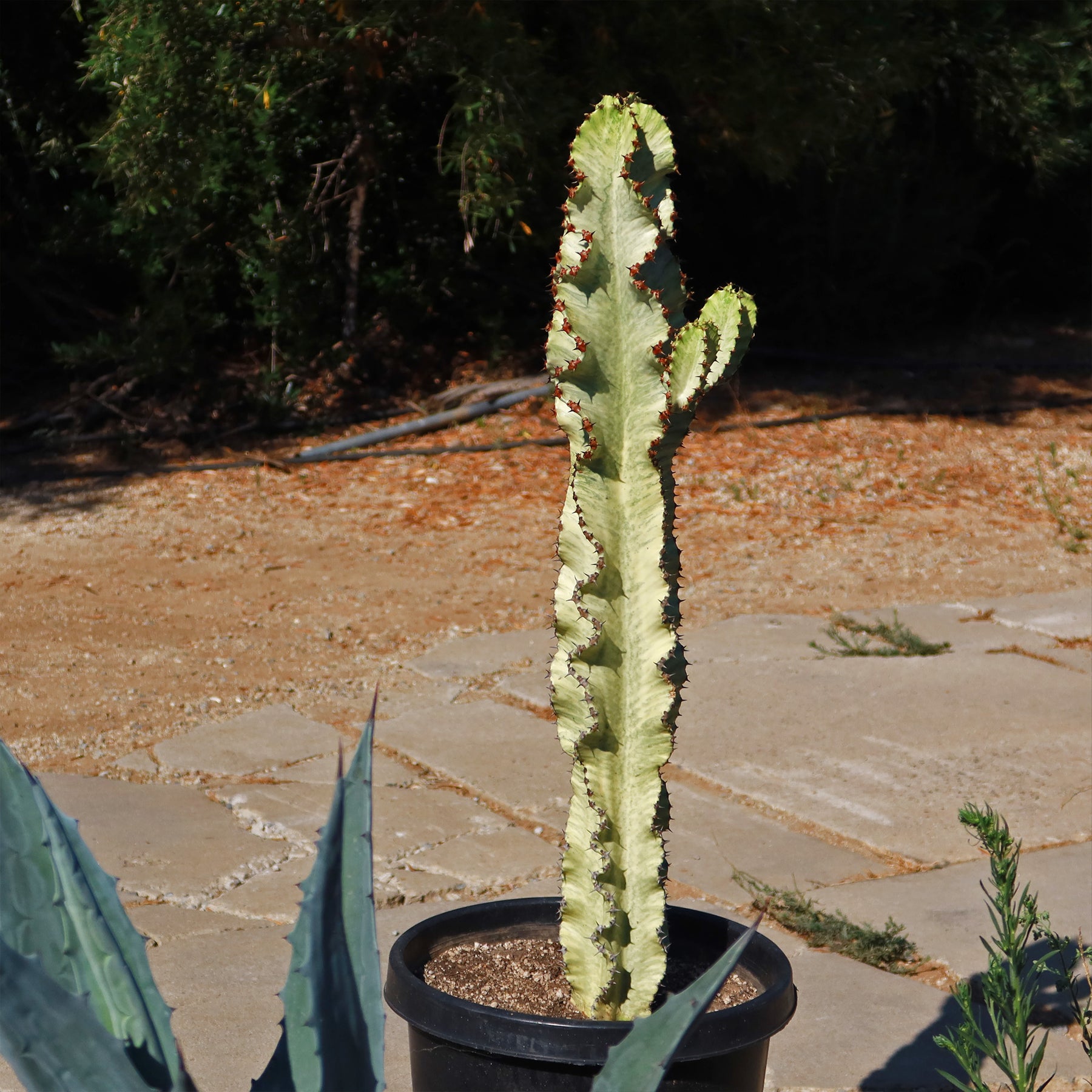
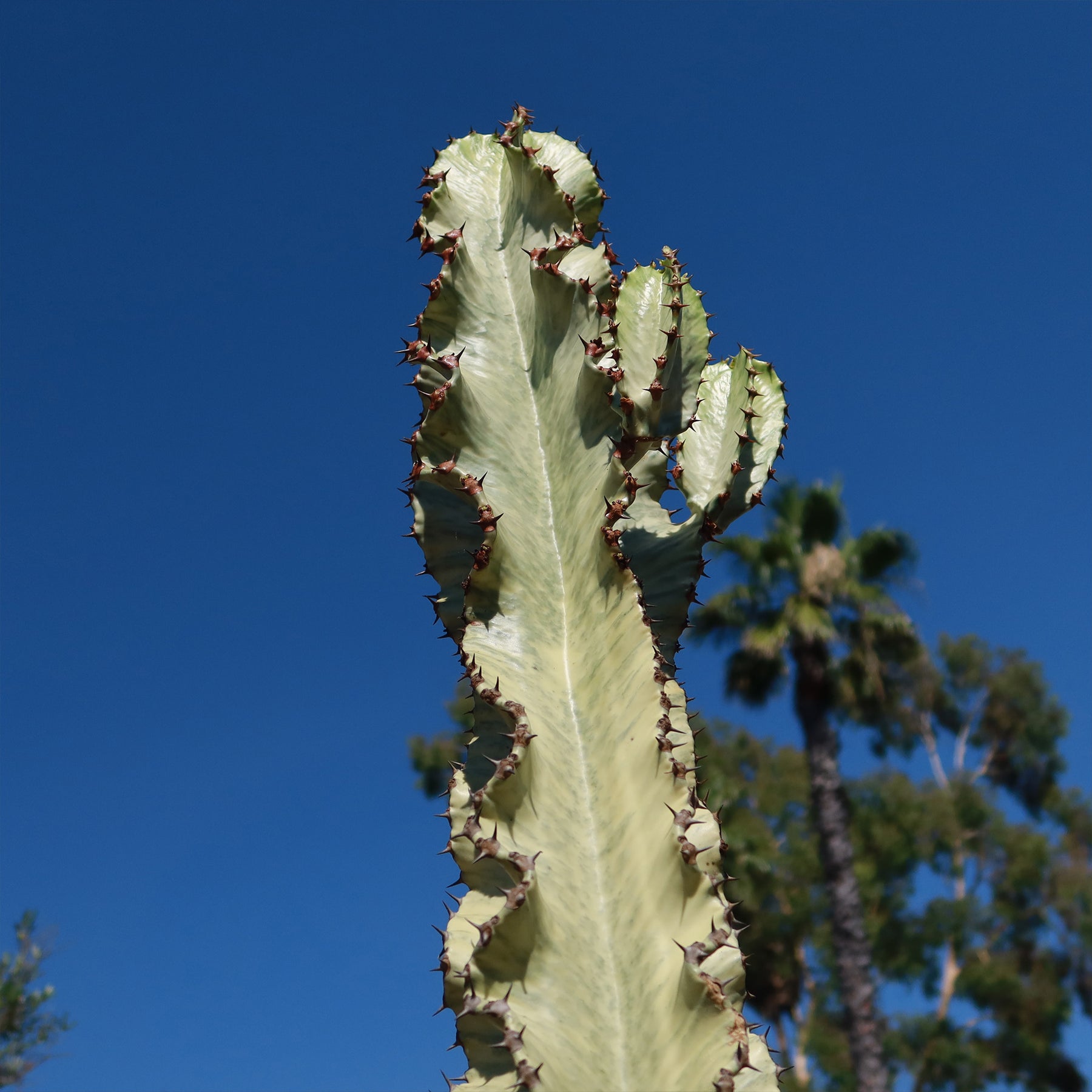
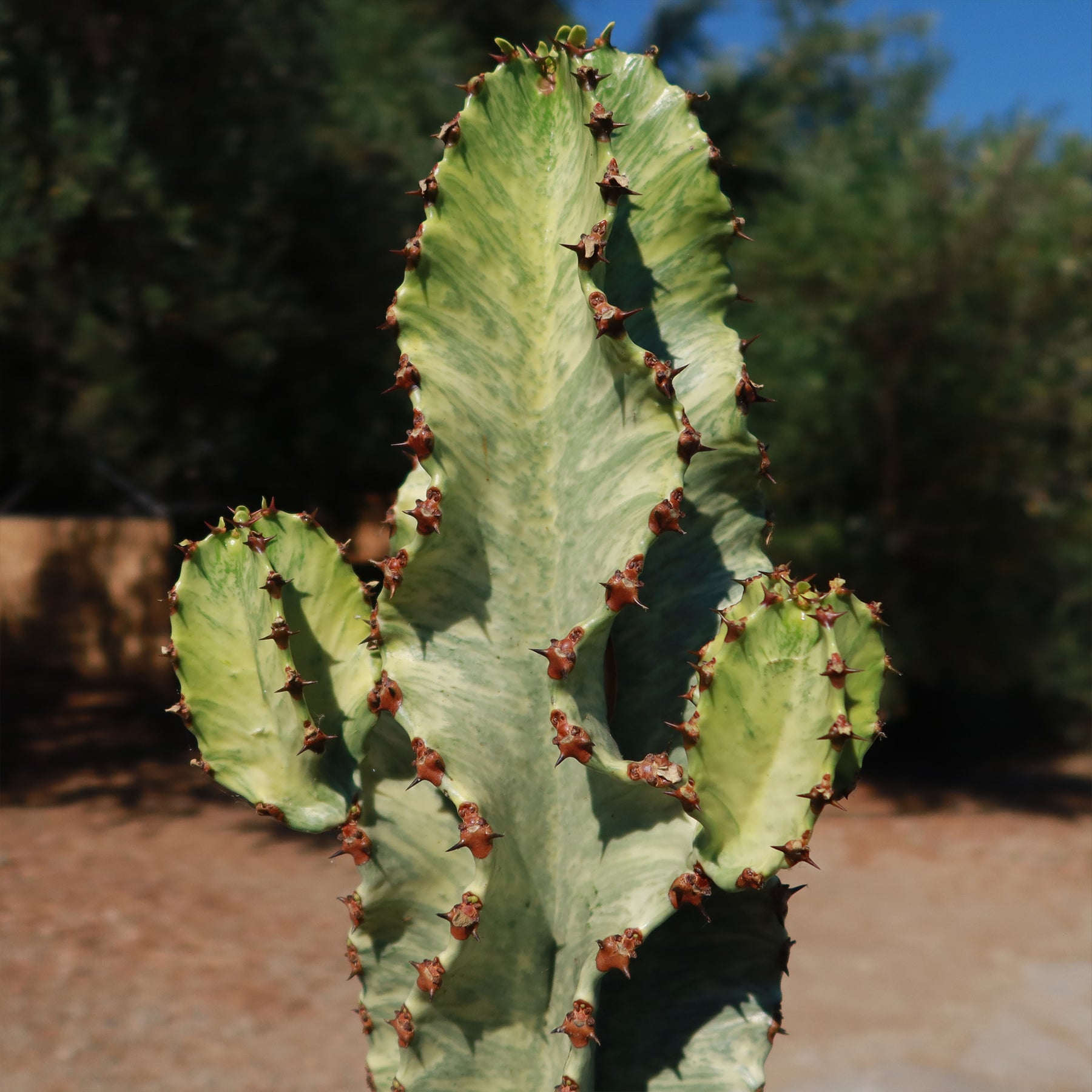
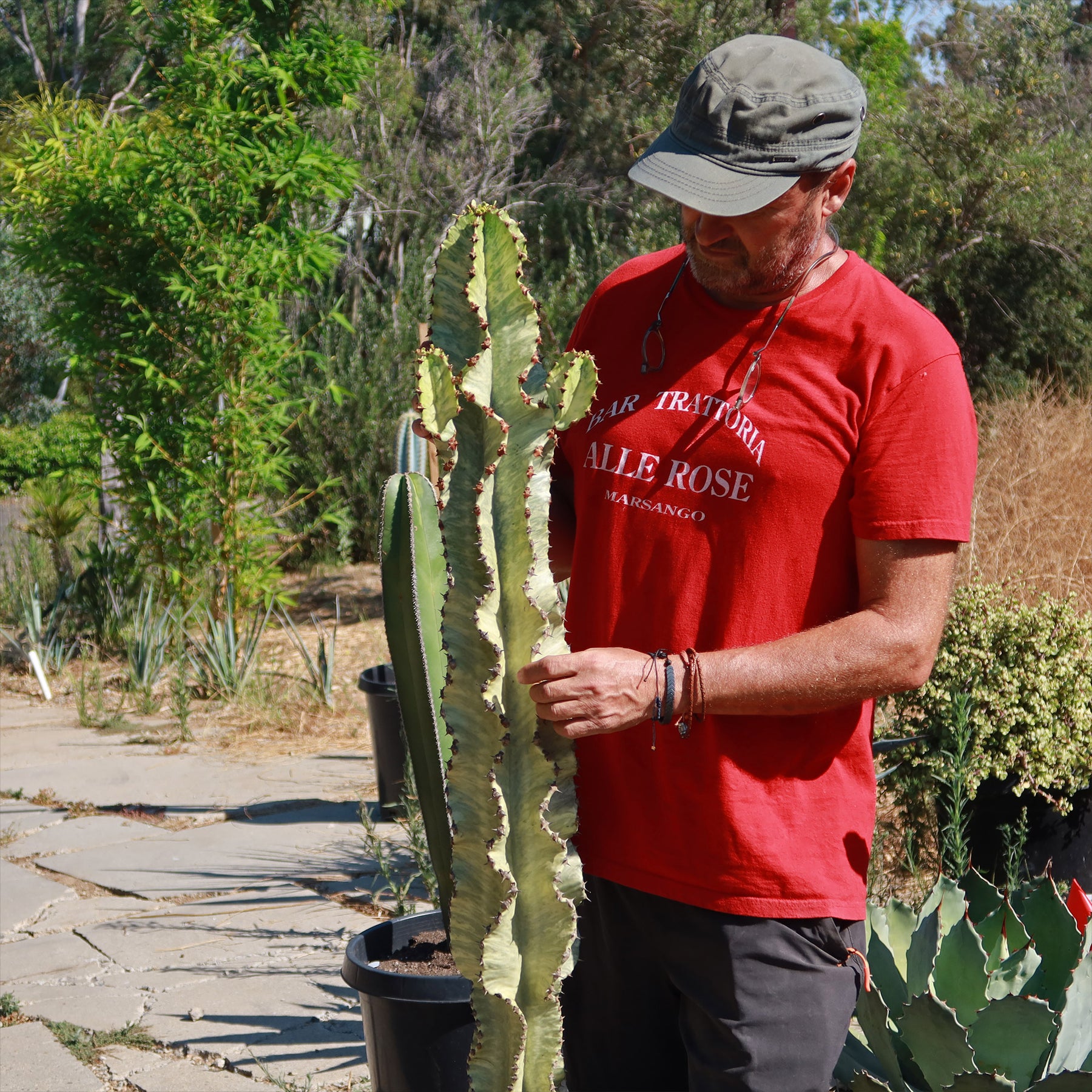
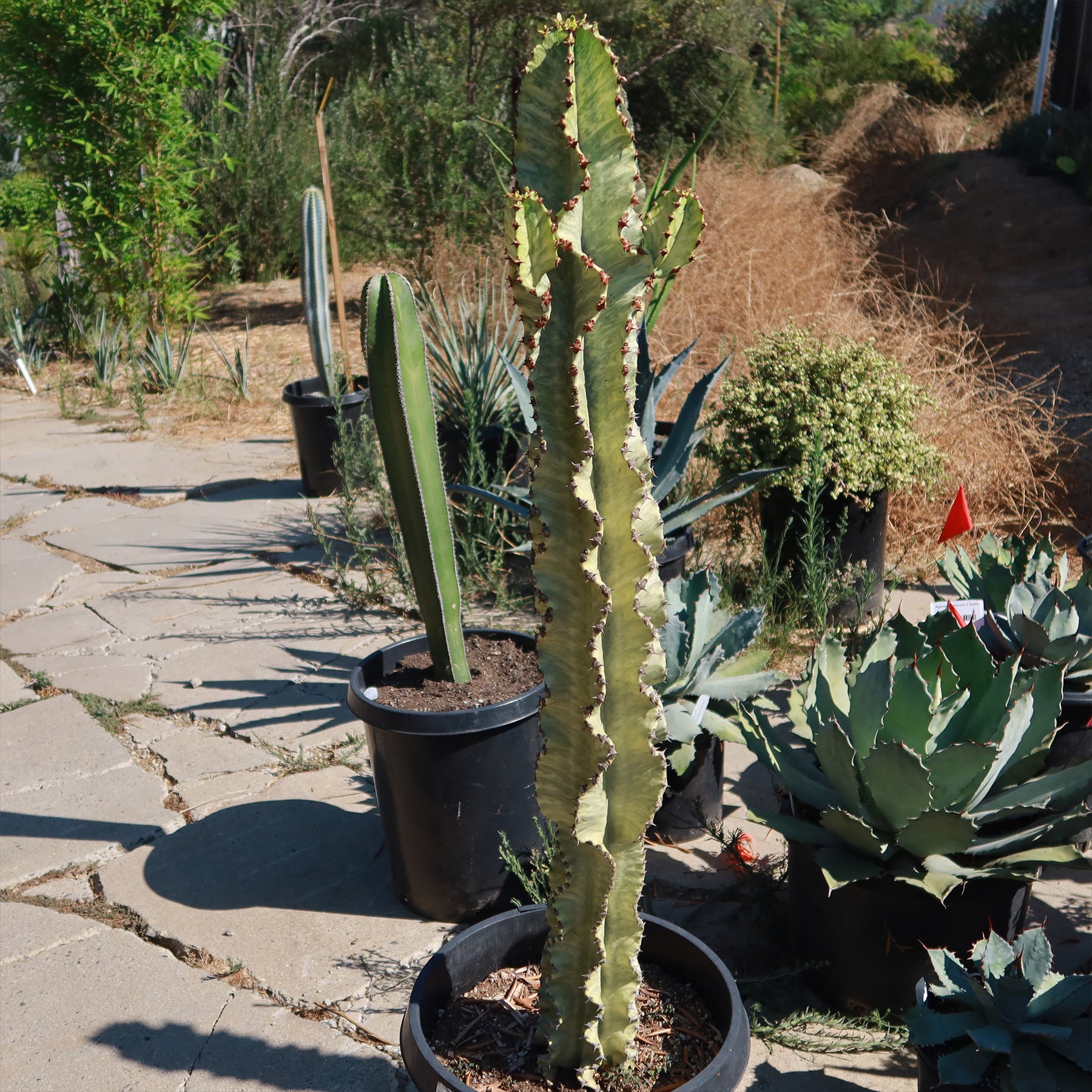
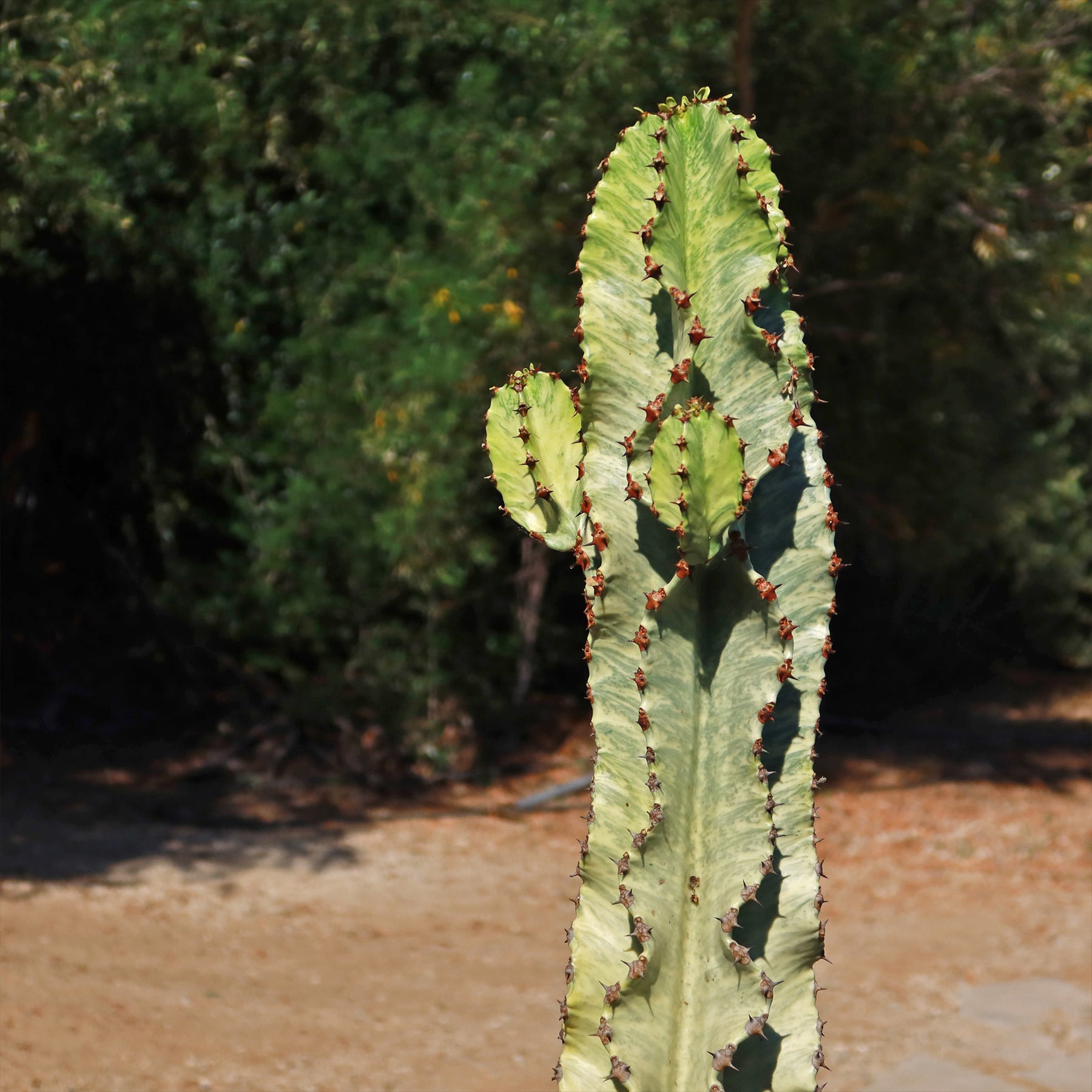
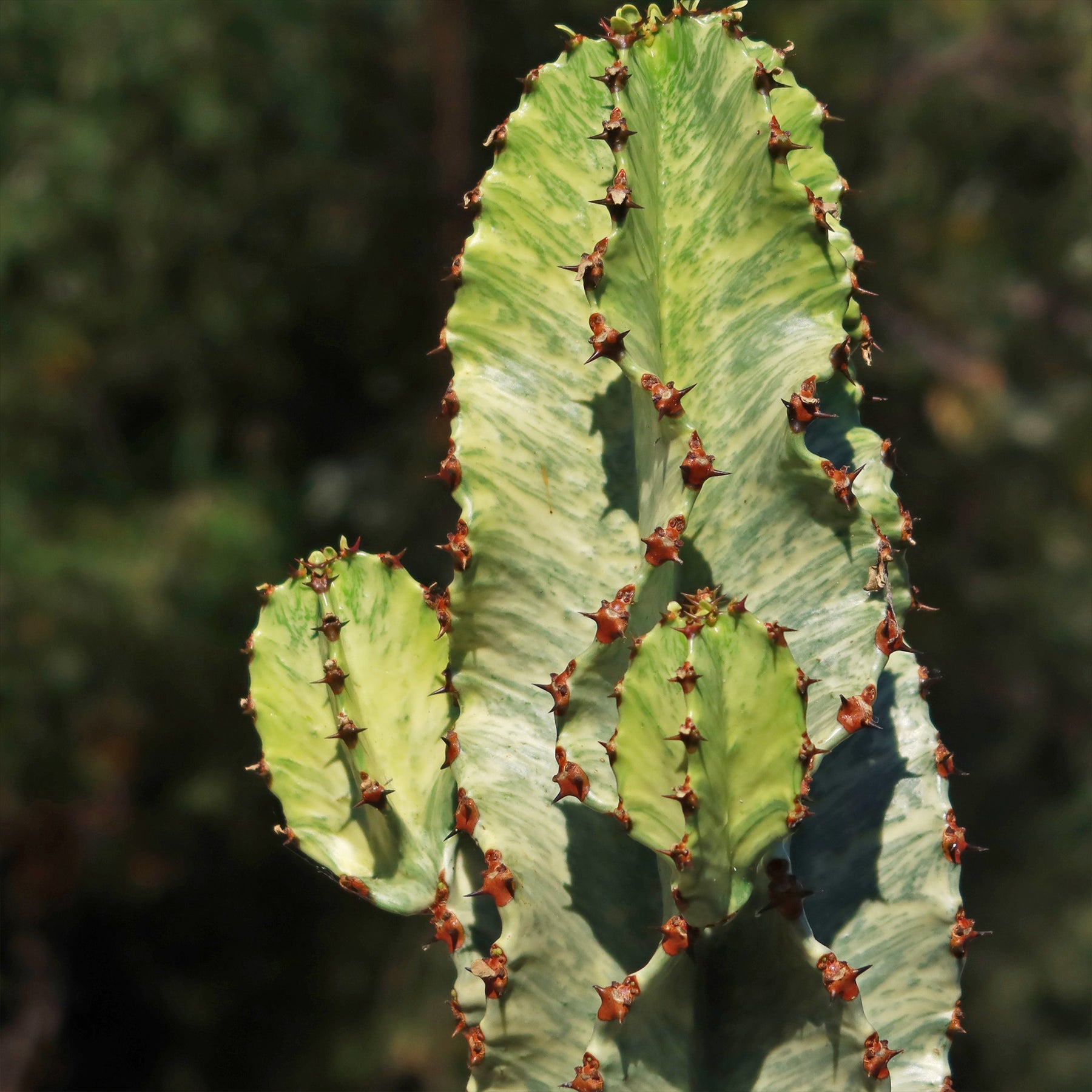
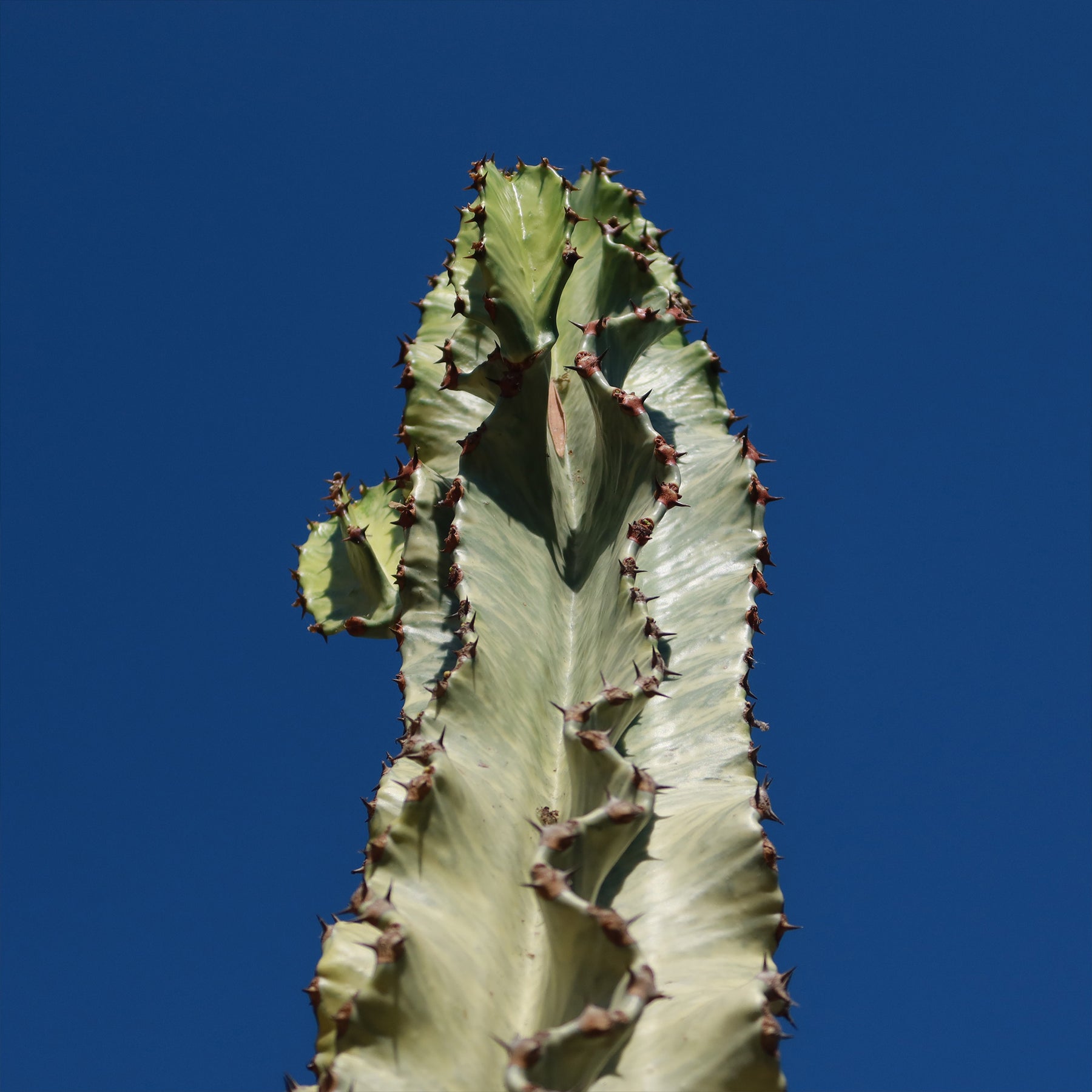
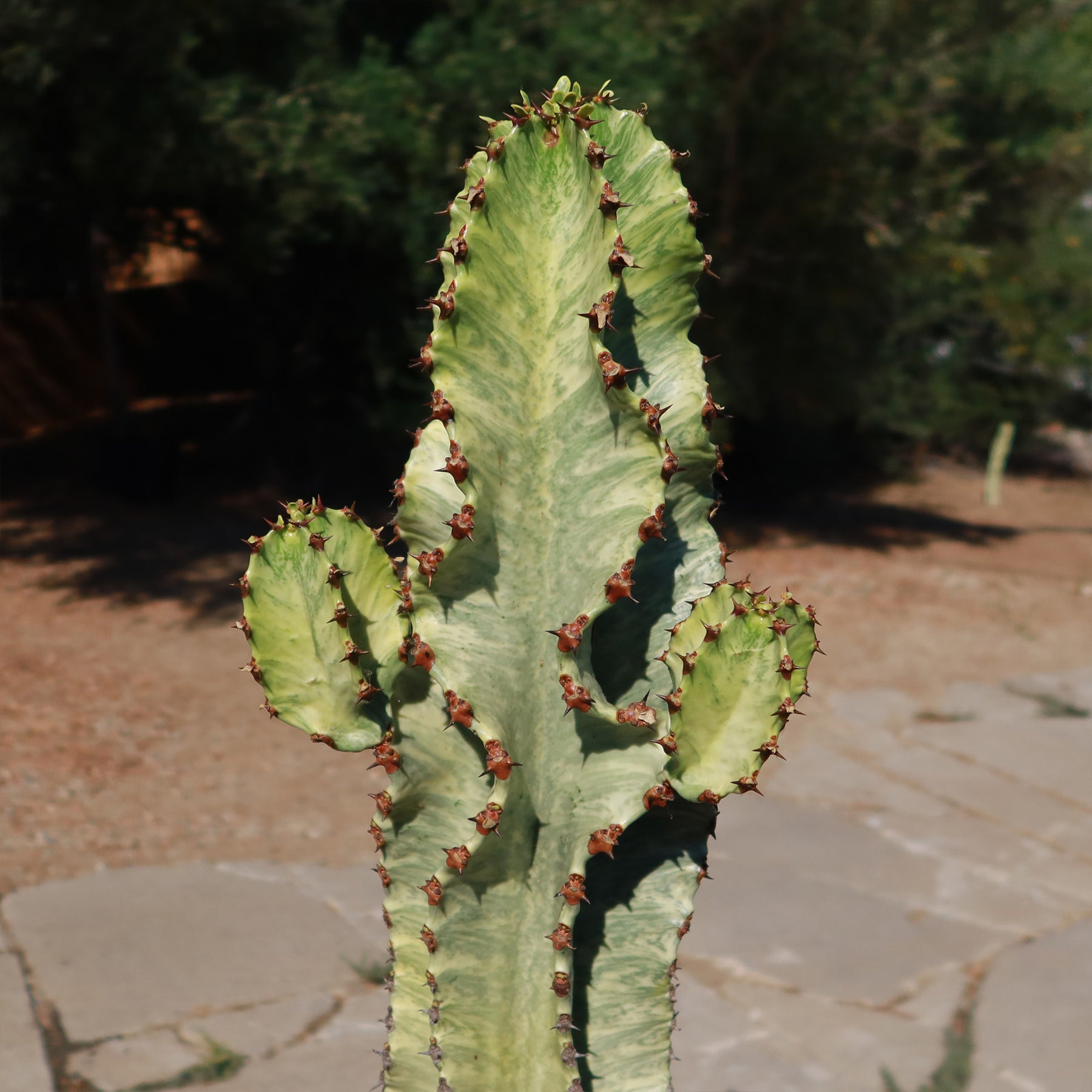
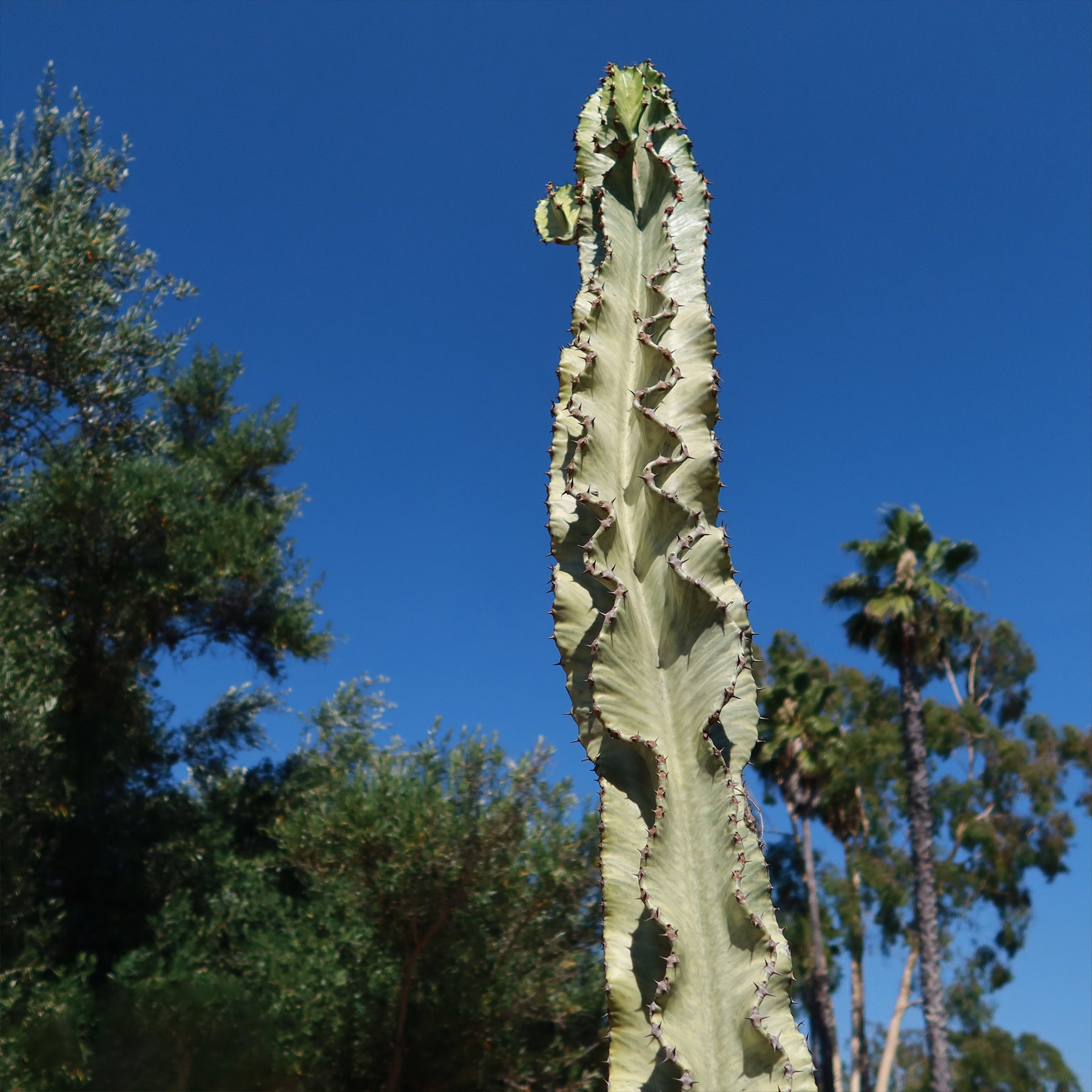
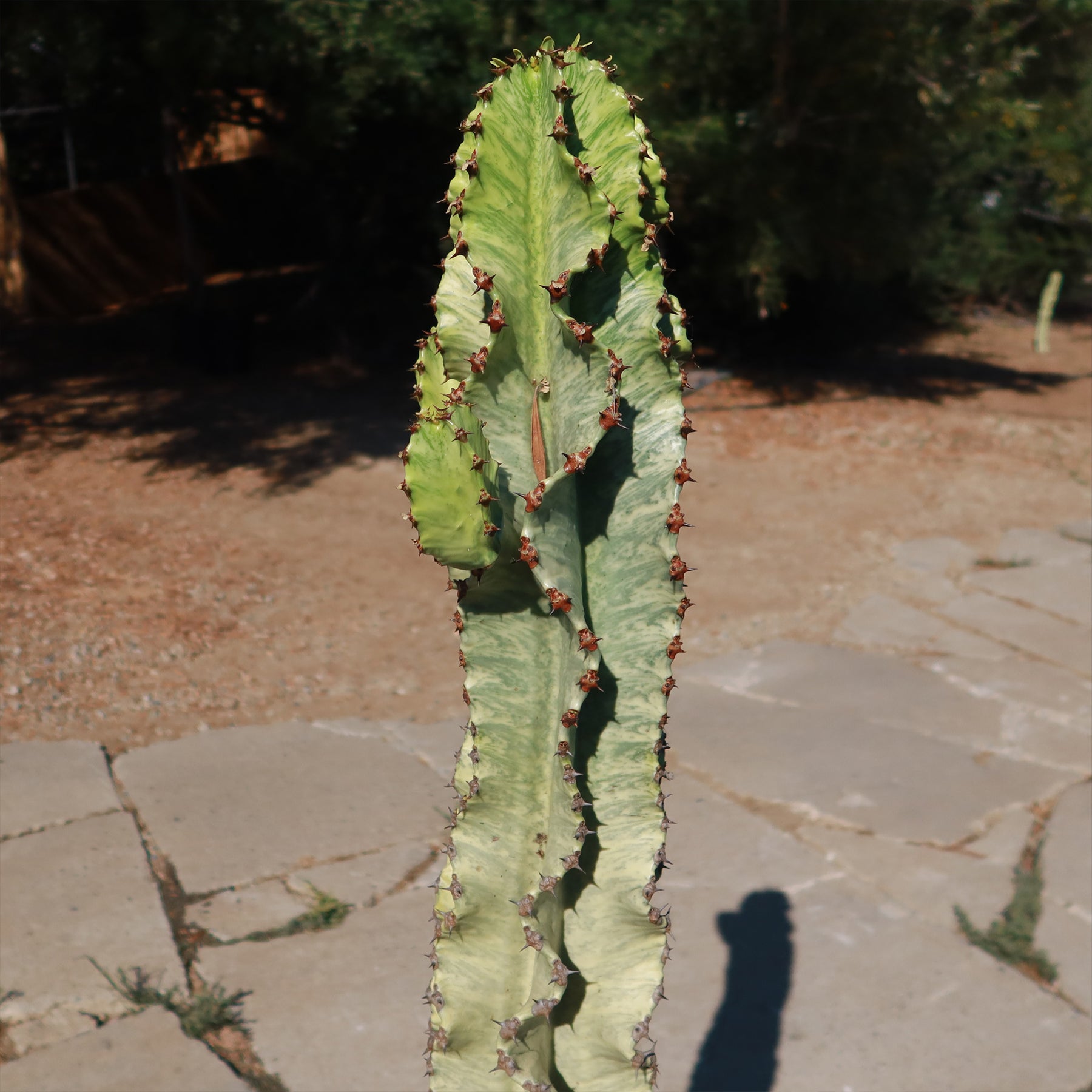
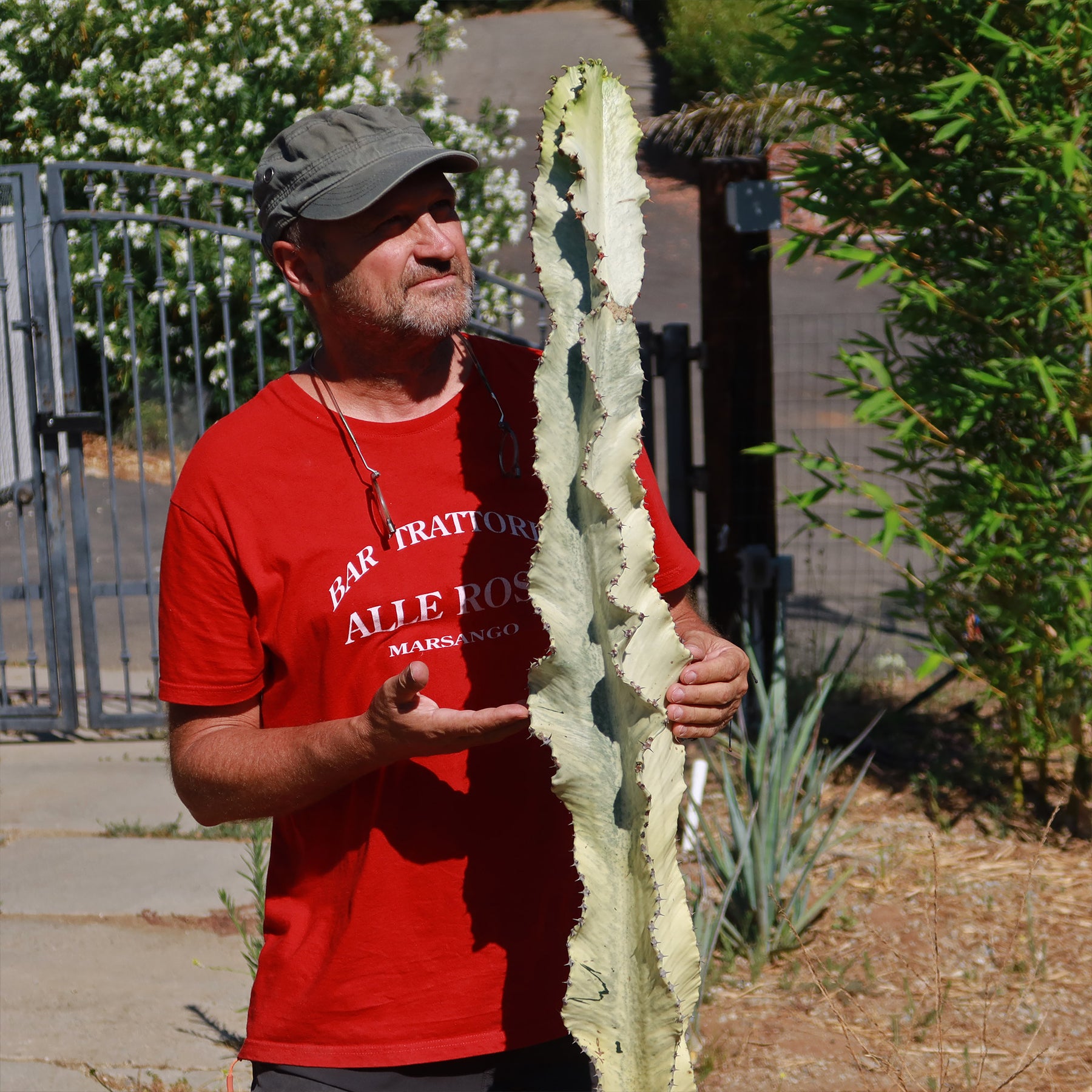
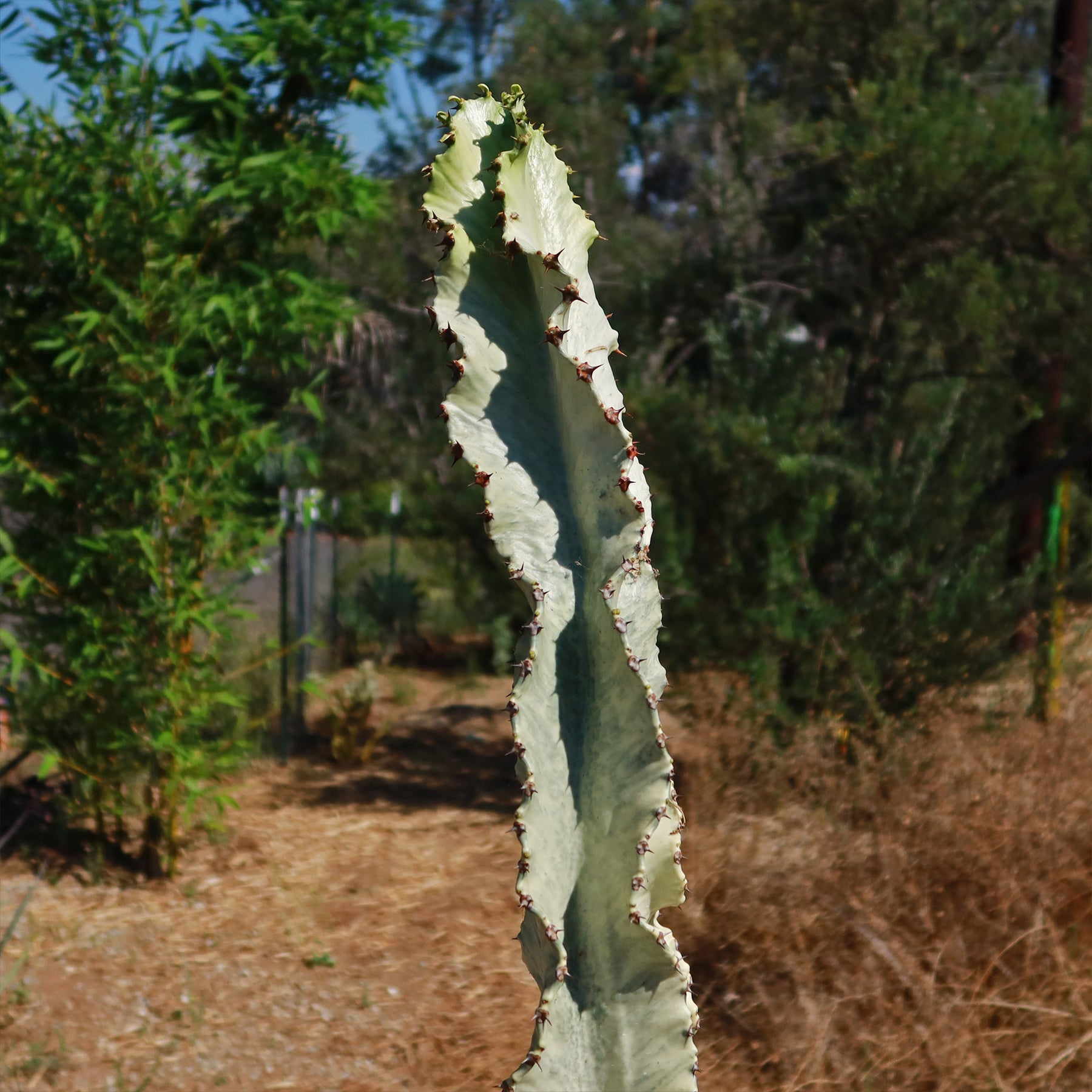
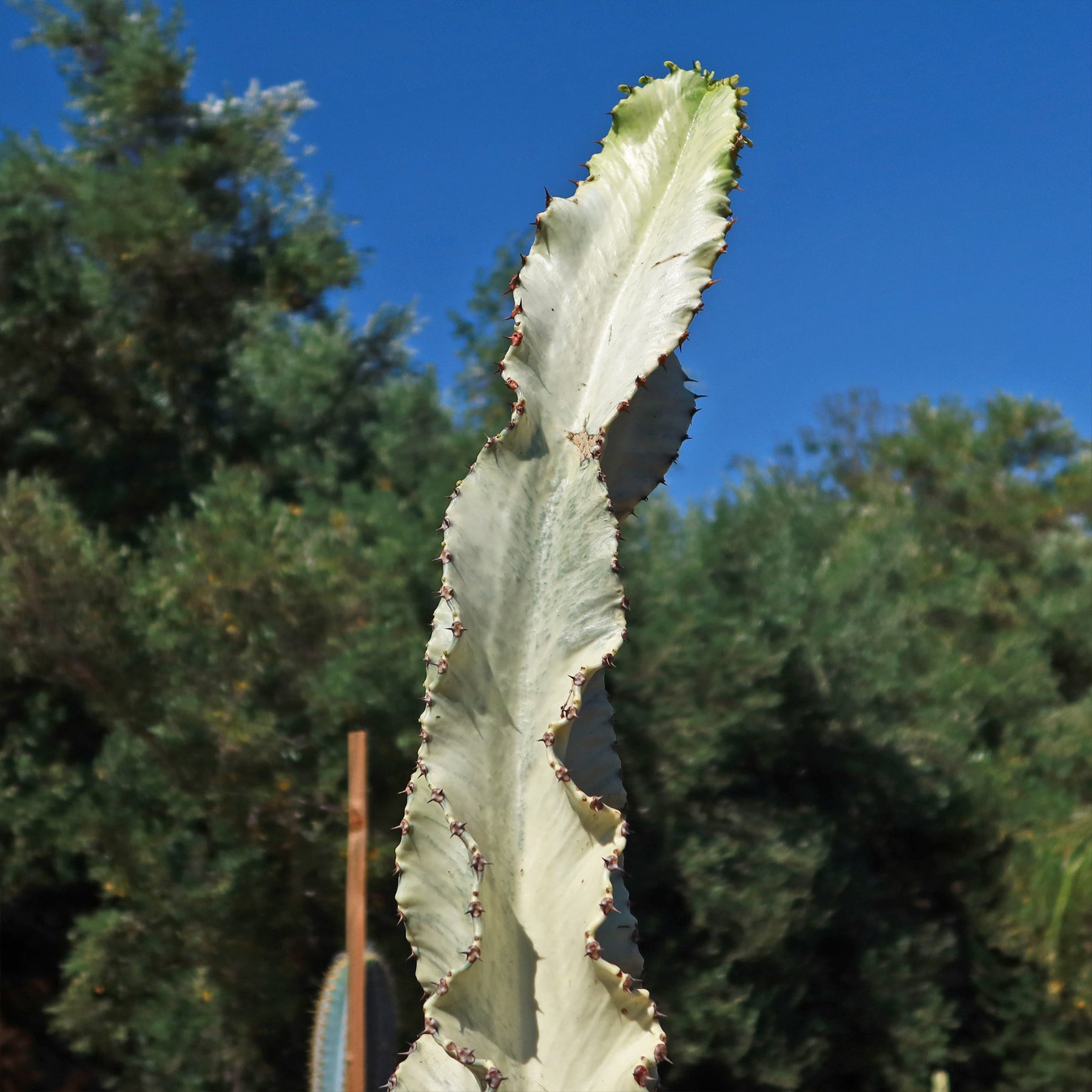
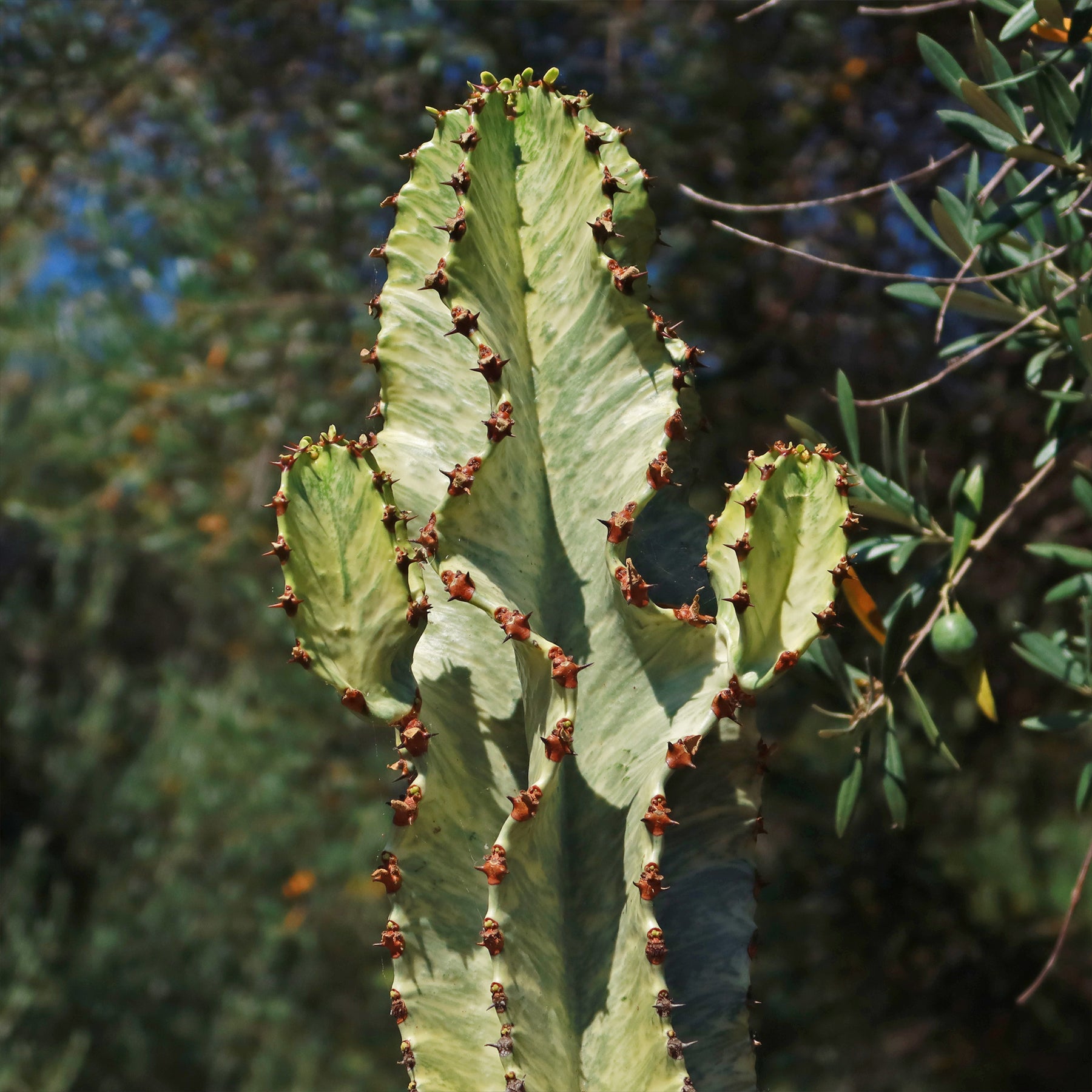
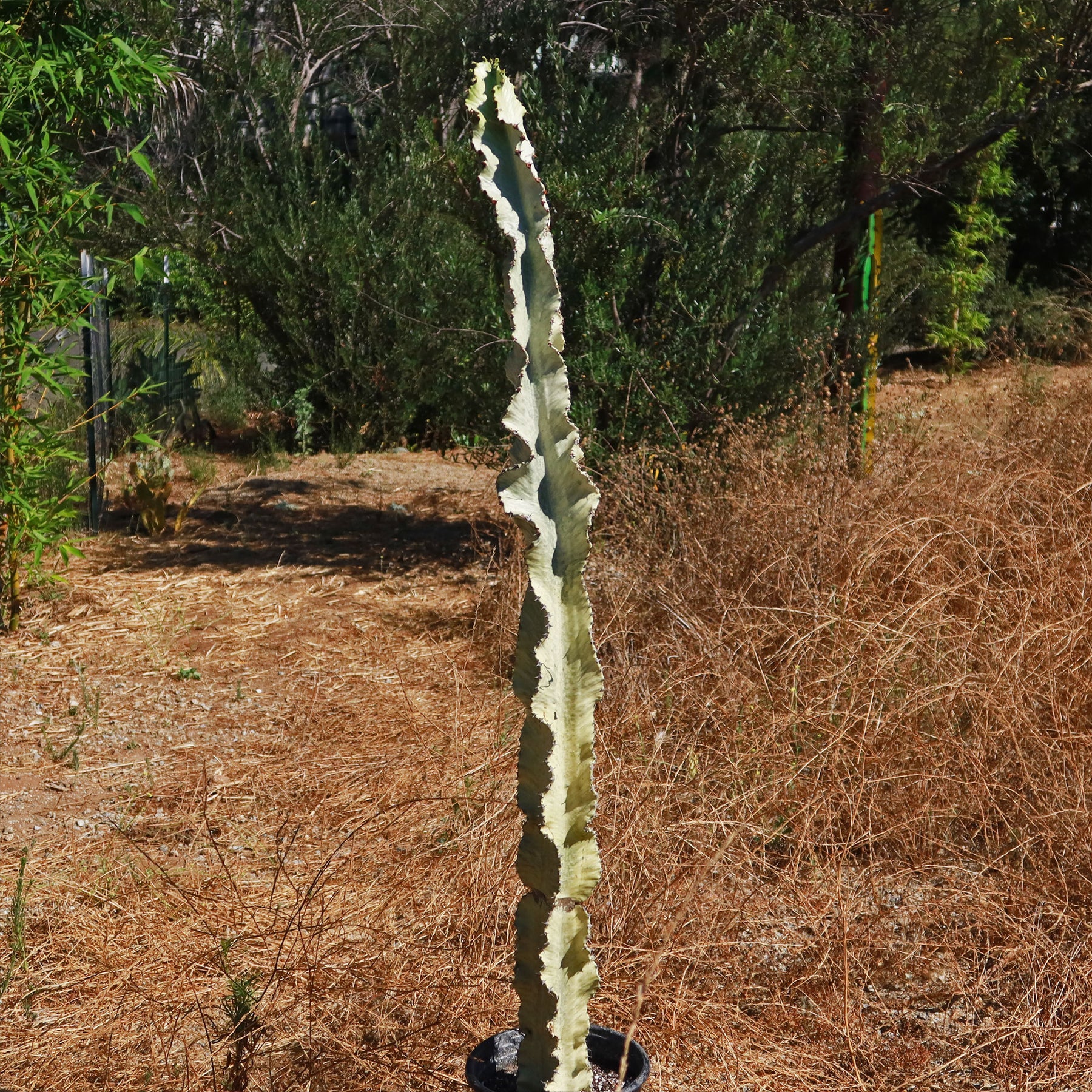
 The image features a variegated African Candelabra known for its upright, branching stems resembling a candelabra and its distinctive variegation.
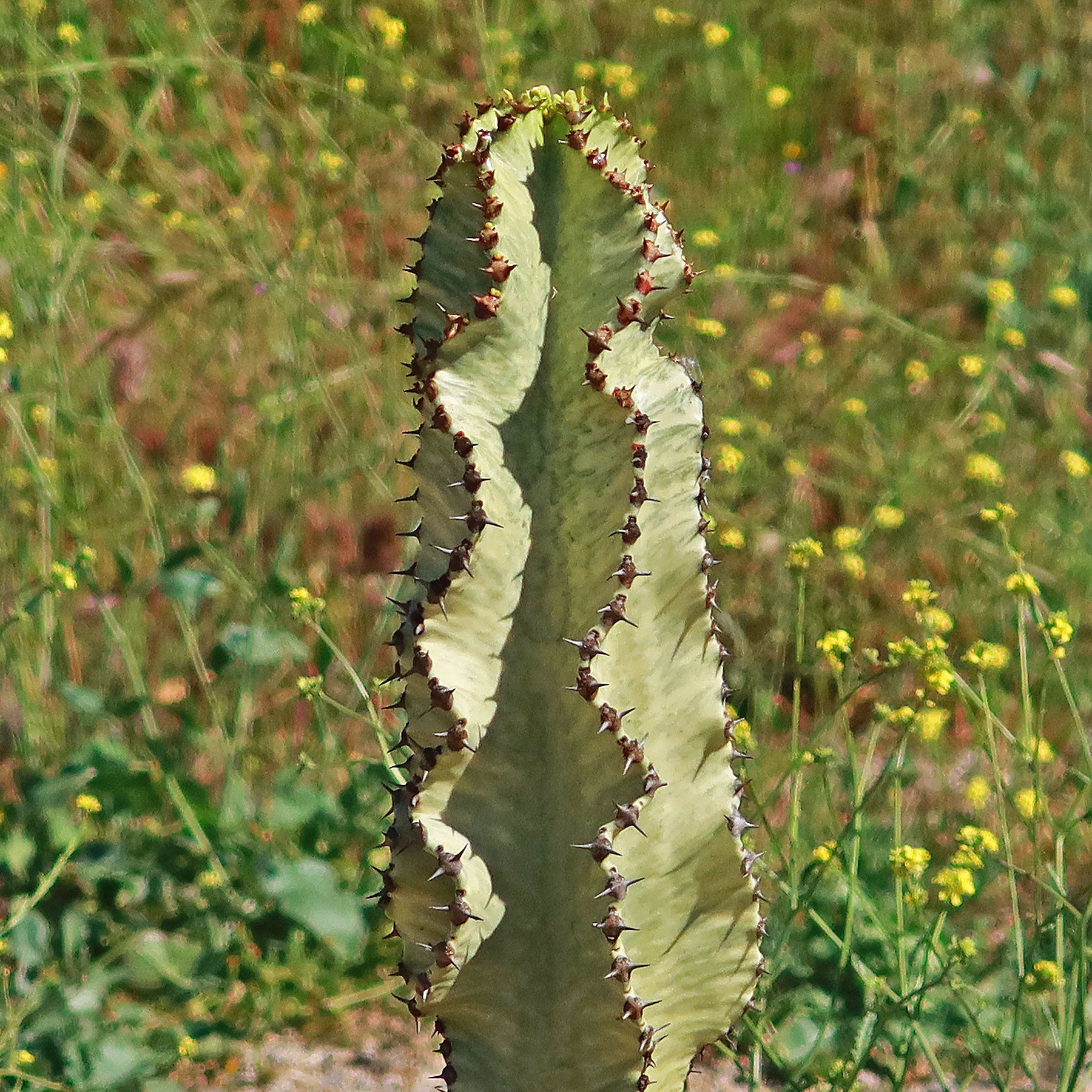
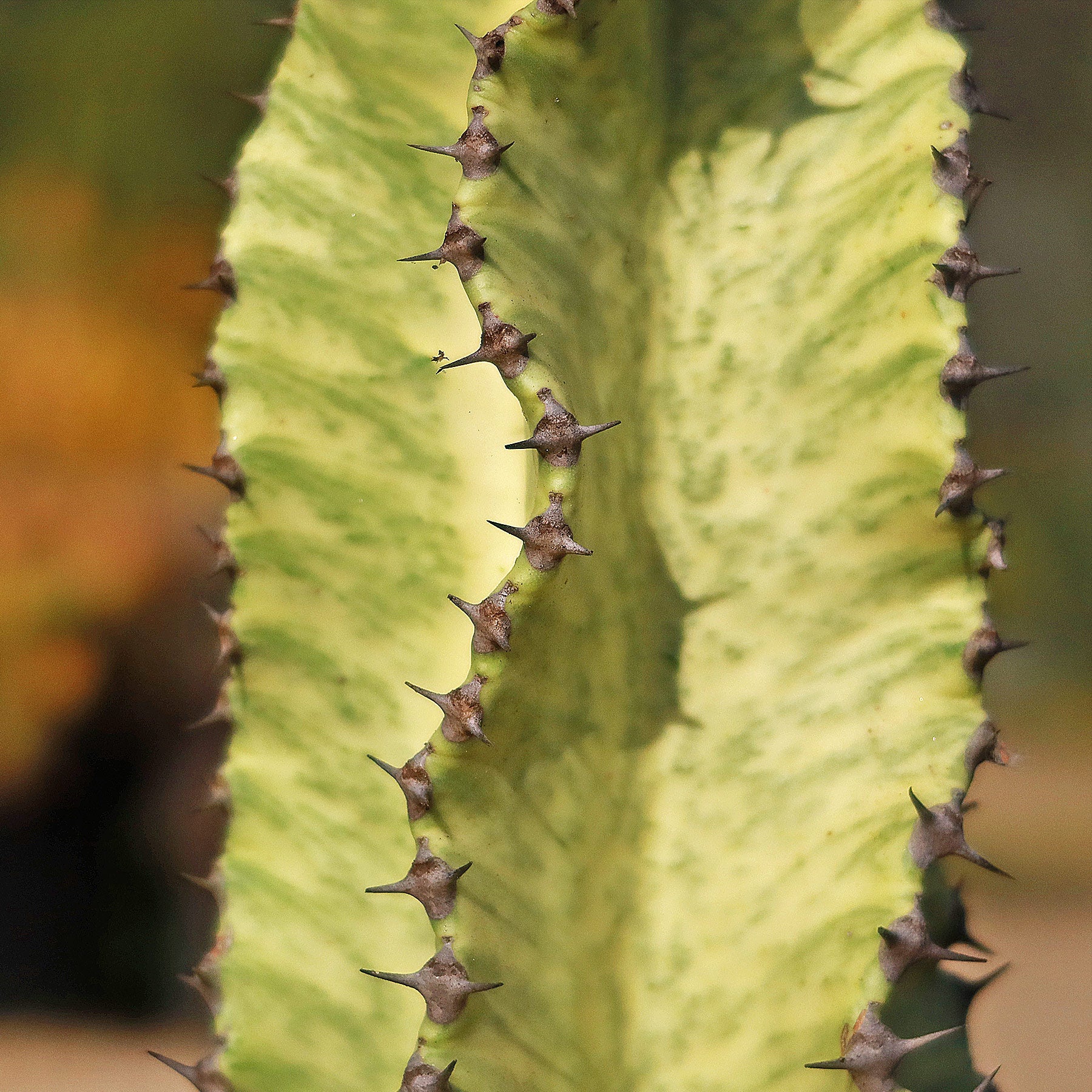
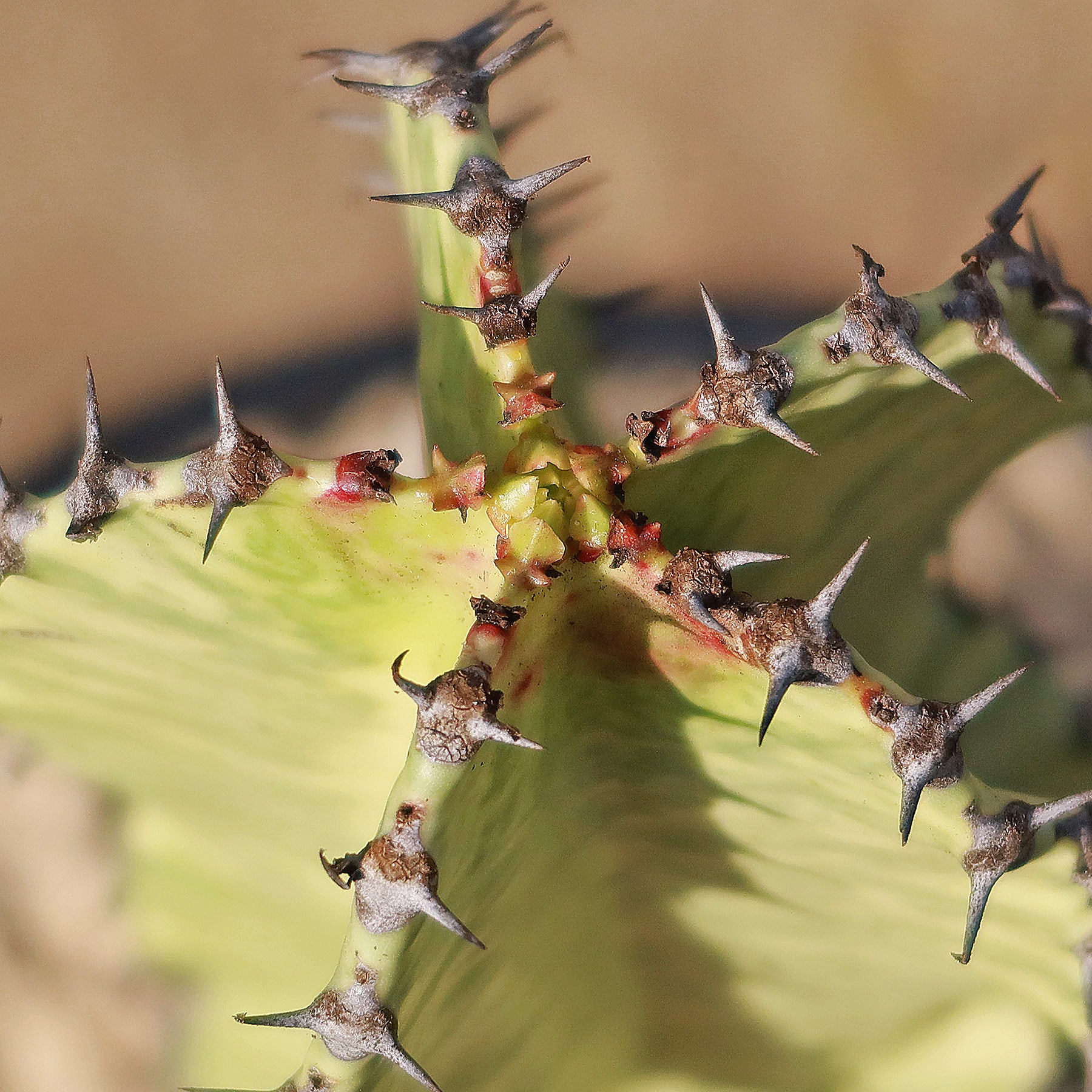
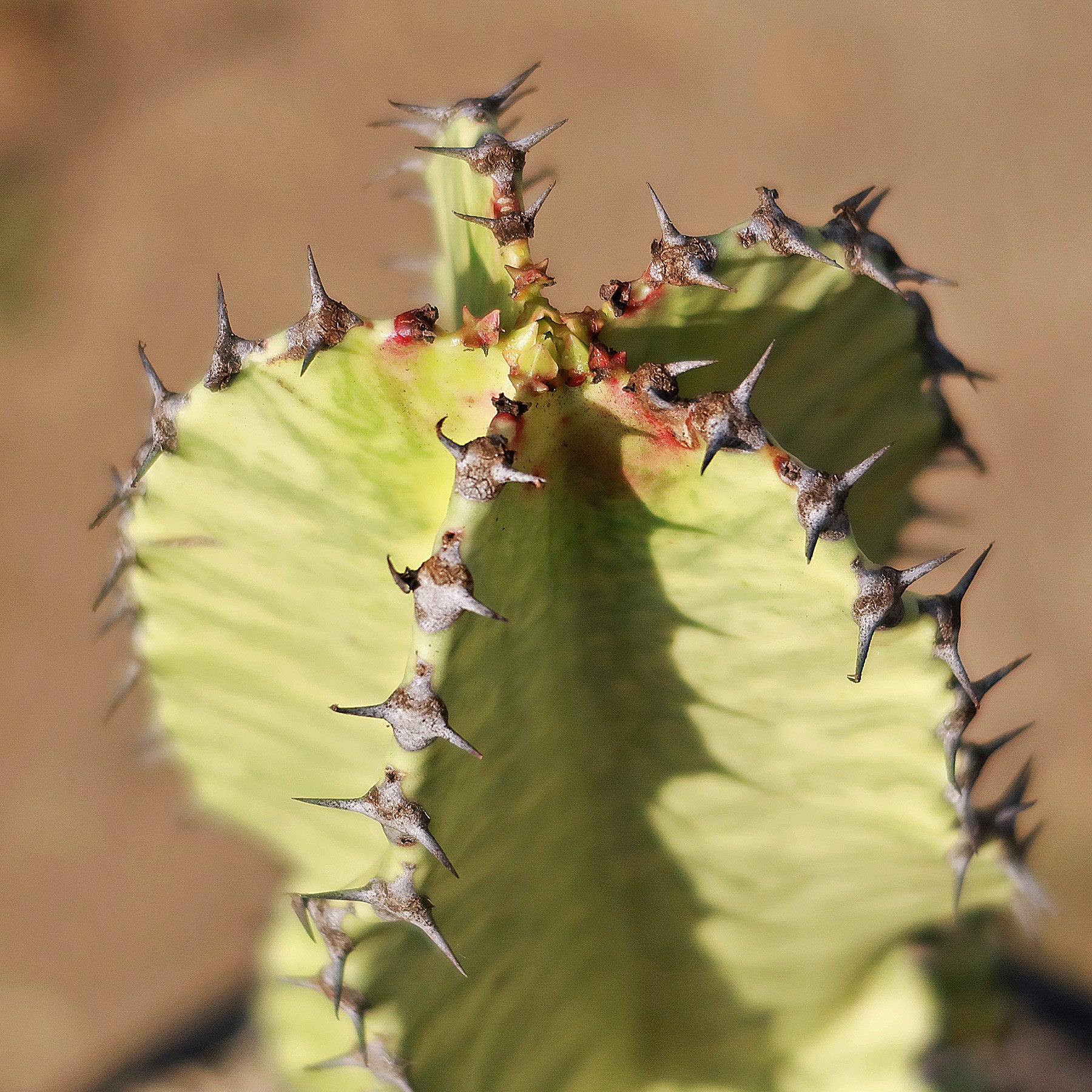
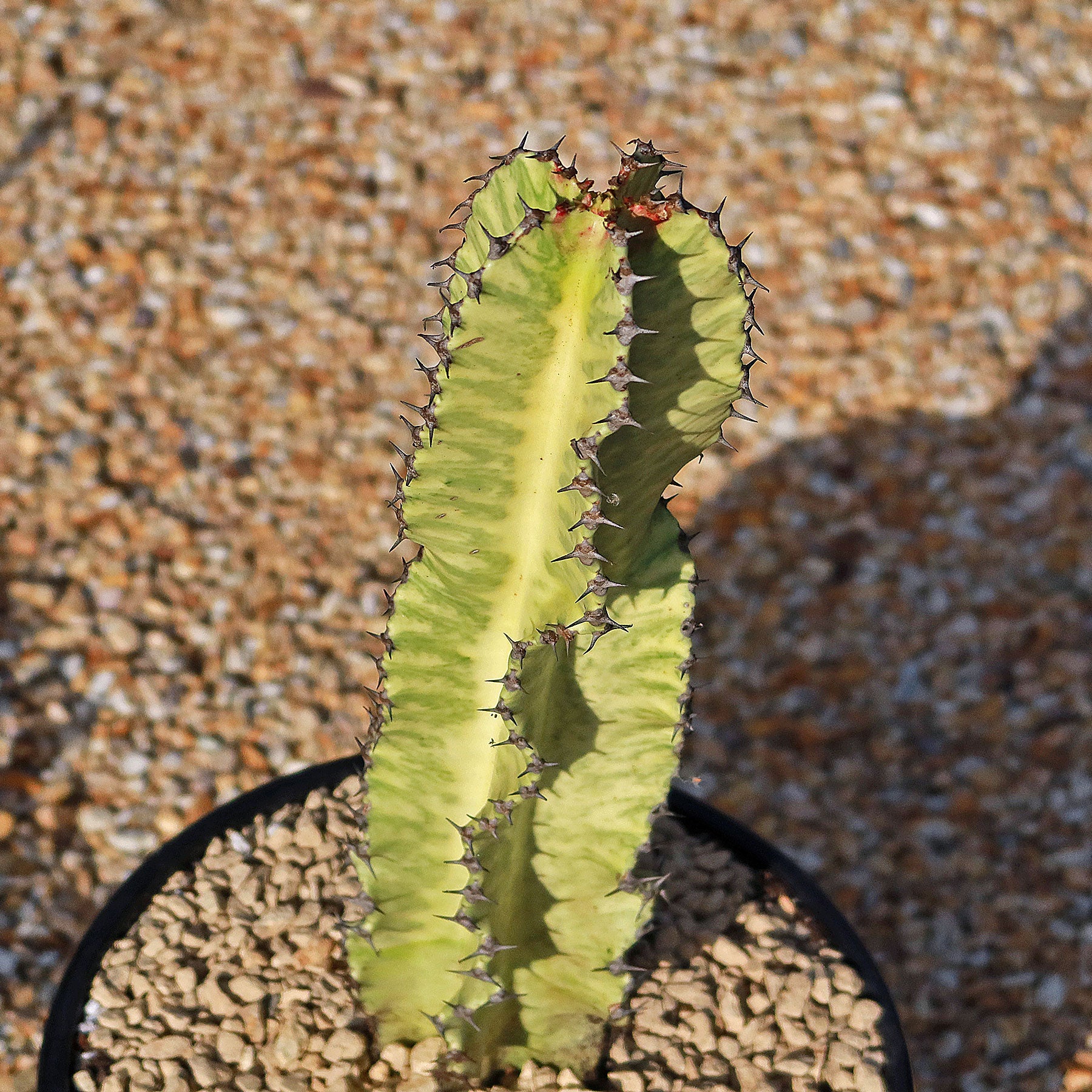
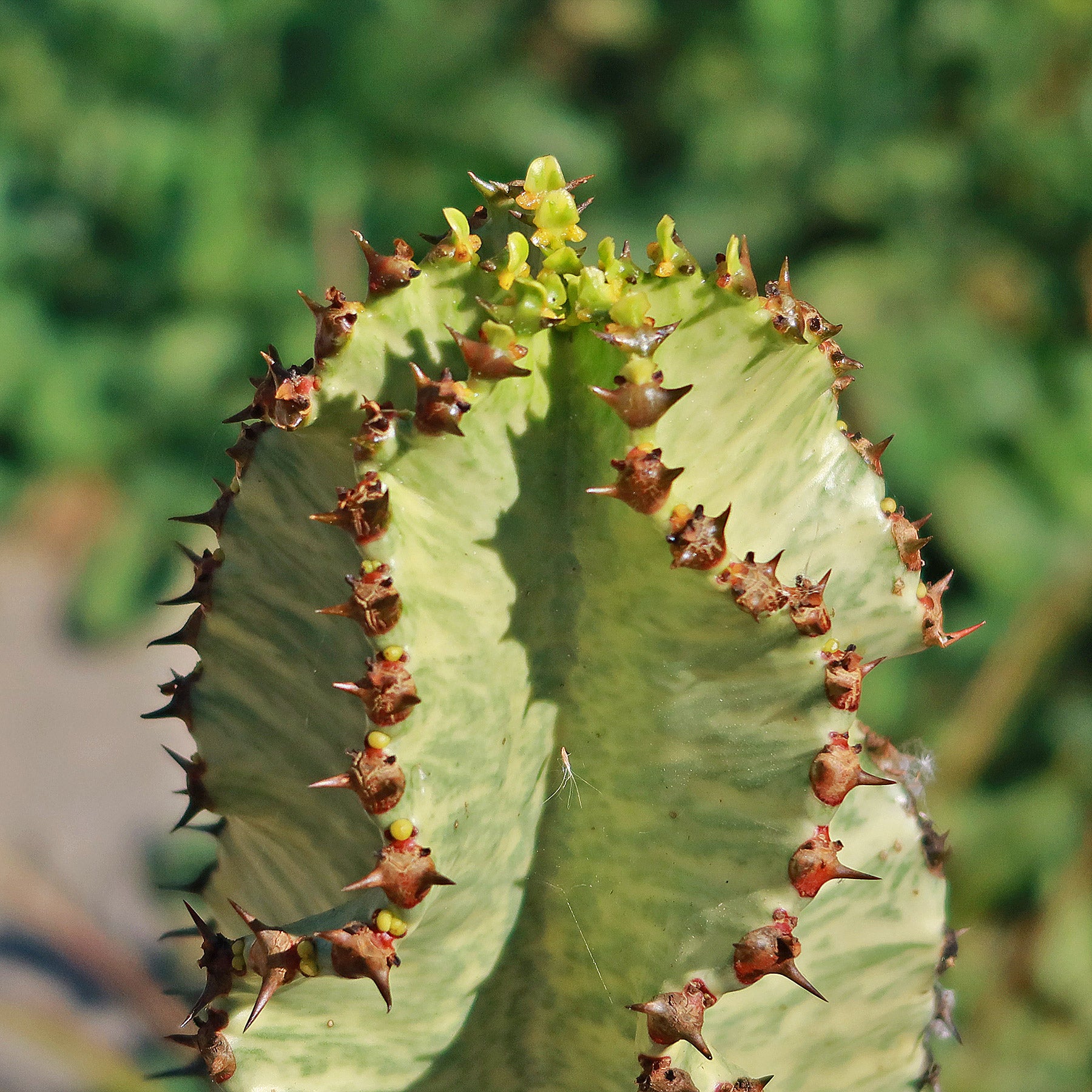
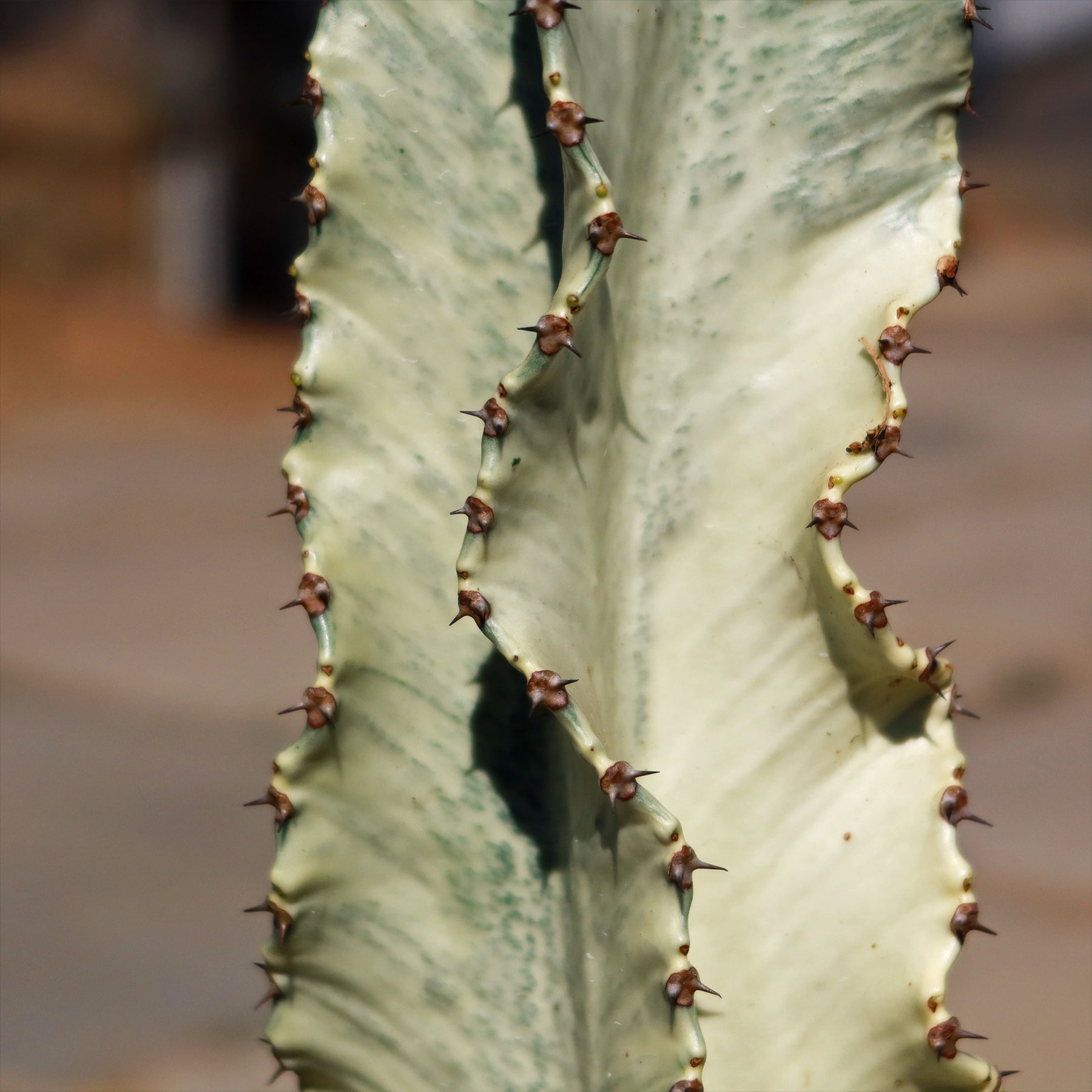
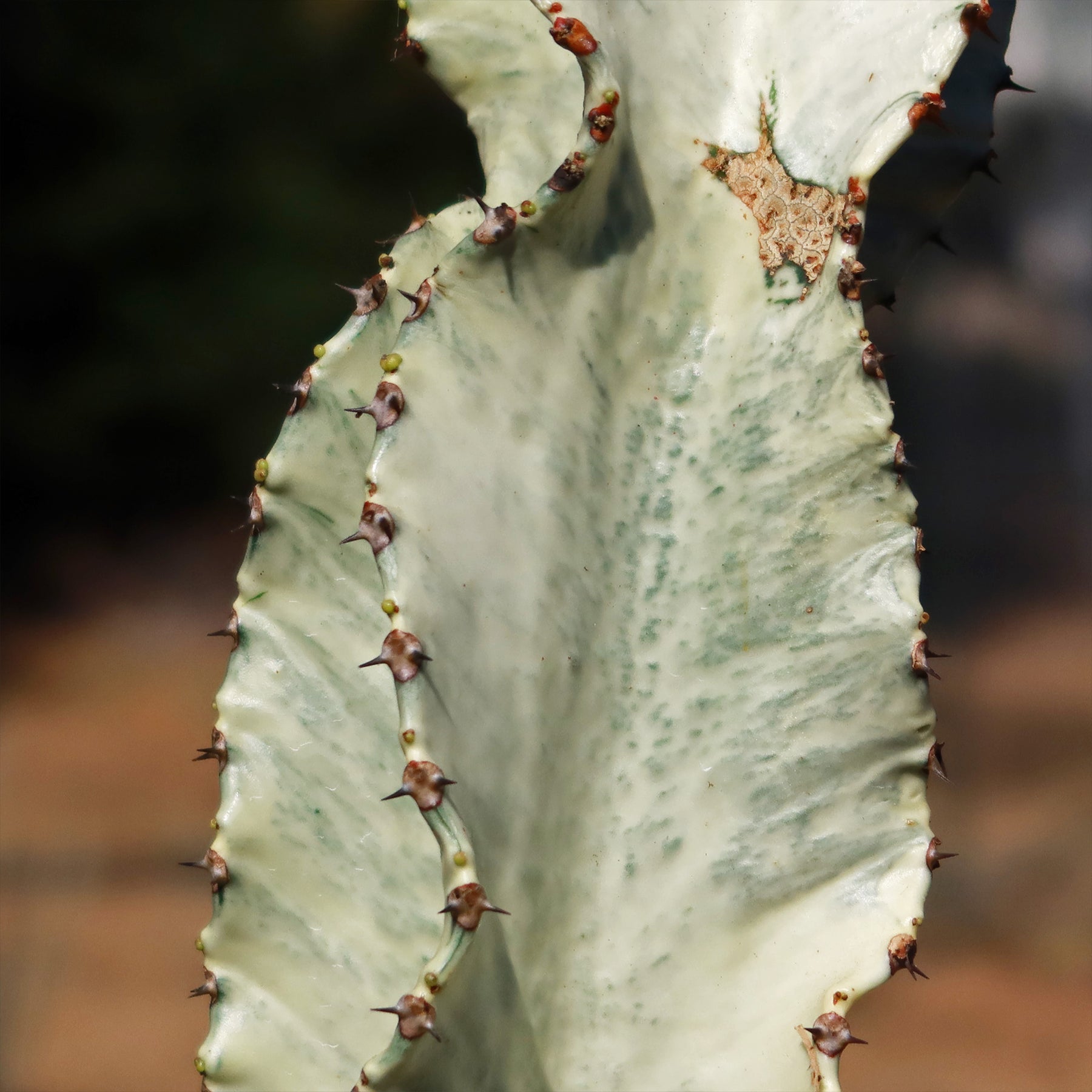
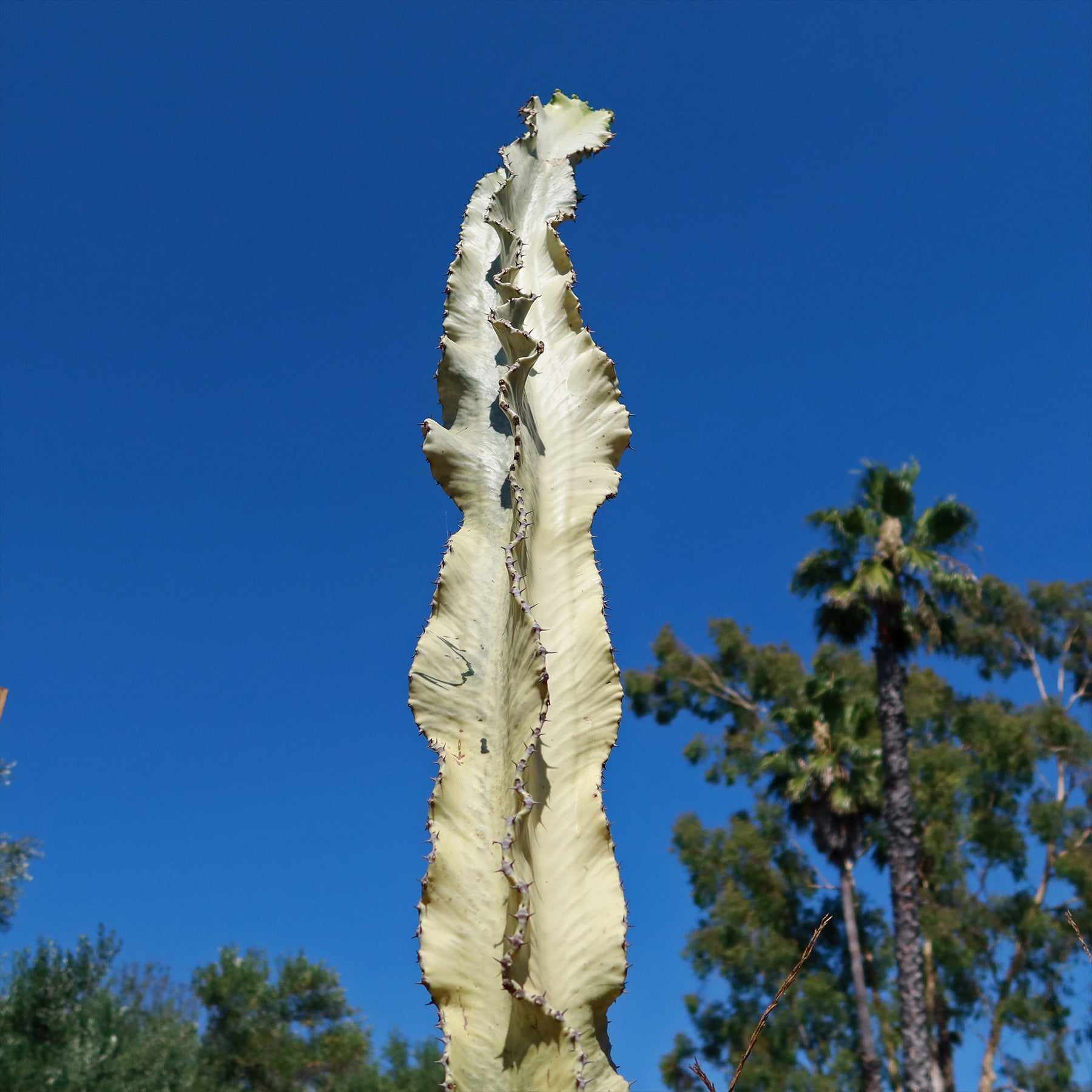
The Euphorbia ammak variegata has tall, columnar, four-winged stems with beautiful, variegated patterns of green and cream.
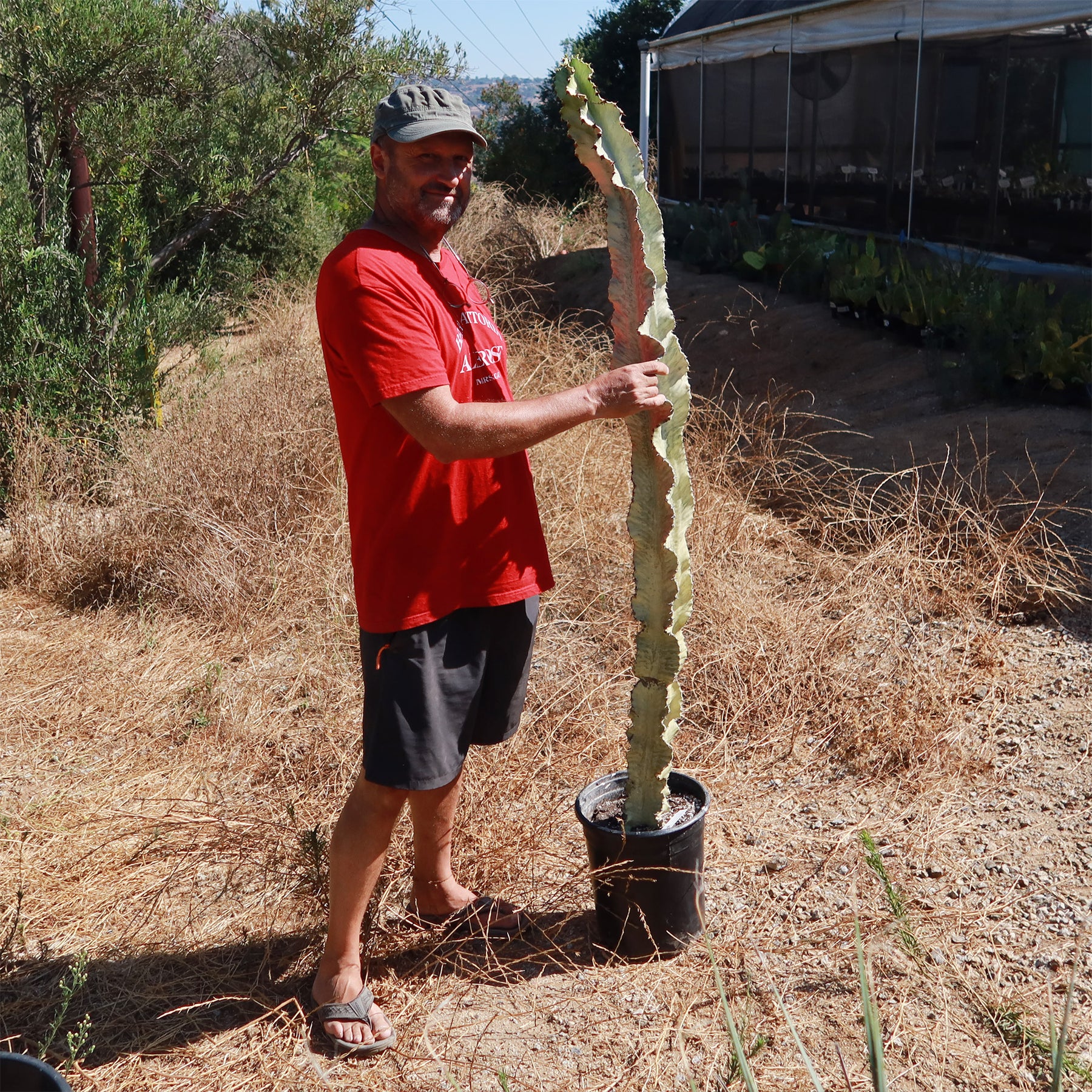
Native to the Saudi Arabia peninsula and Yemen, this moderately fast-growing Euphorbia succulent can reach heights of up to 15-20 feet, making it a real showstopper in any garden or indoor space.
Belonging to the Euphorbiaceae family, Euphorbia ammak has a short trunk and upright branches.
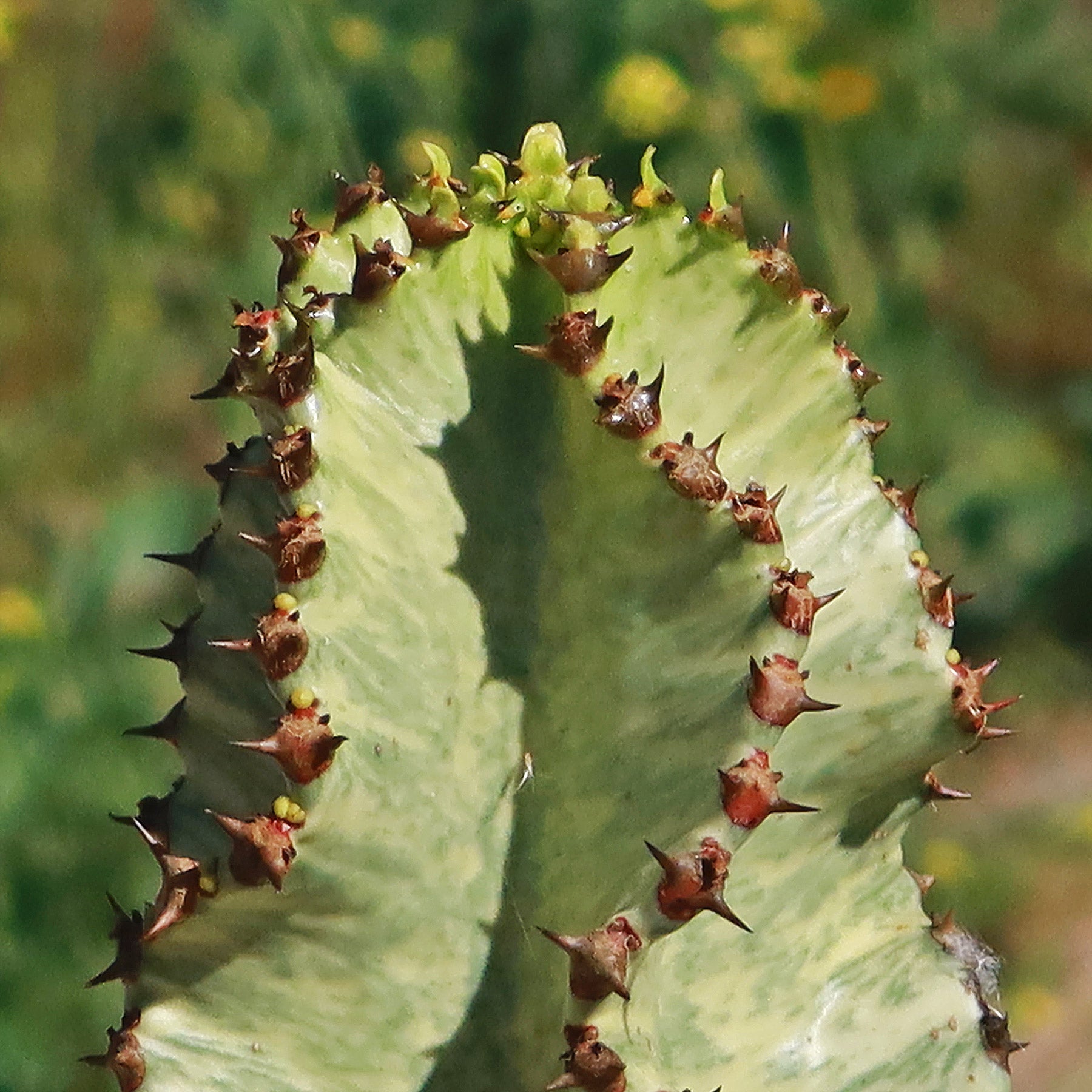
When it comes to flowers, the Euphorbia ammak produces small, greenish-yellow blooms during the summer, which are arranged in clusters at the top of the stems. The Euphorbia flowering can add a touch of color to the plant, but it's not the main attraction.
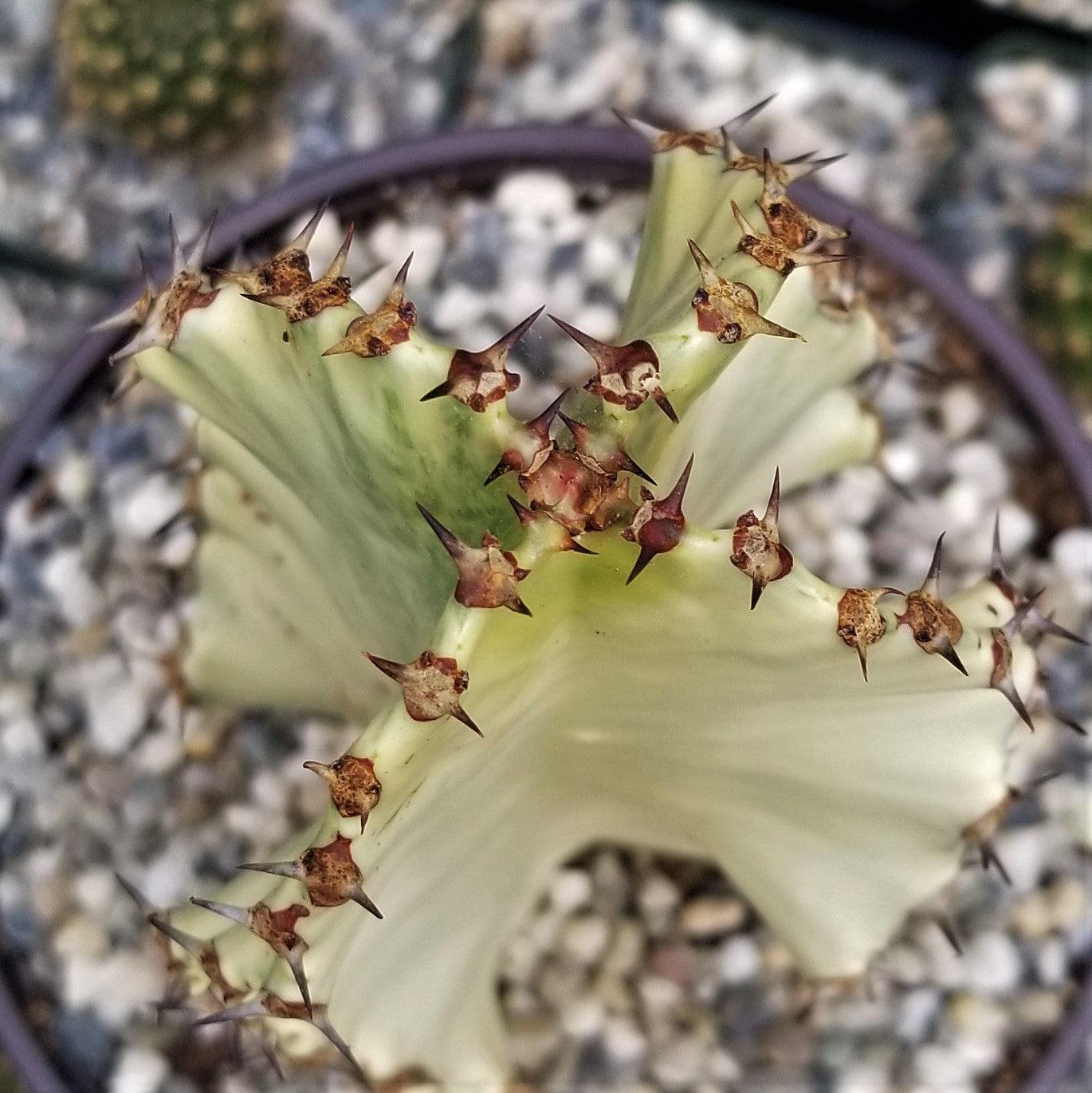
The Euphorbia ammak crest is a stunning green form of Euphorbia ammak African Candelabra, with a distinctive, wavy, and crested growth pattern, often forming fan-like or brain-like shapes, adding visual interest.
When and How to Water Your Variegated African Candelabra
The Variegated African Candelabra (Euphorbia ammak) is highly drought-tolerant, storing water in its thick, sculptural stems to withstand long dry spells. This resilience means it prefers infrequent but deep watering rather than constant moisture. The Variegated African Candelabra should be watered once every 2-3 weeks during the growing season, and once a month during the dormant season.
In the spring and summer, during its active growing season in spring and summer, water thoroughly using the “soak and dry” method, saturate the soil until excess drains out, then allow it to dry completely before the next watering. On average, this may be every 2–3 weeks, but always check soil dryness first.
In the fall and winter, during the cooler months, when the plant enters dormancy, reduce watering dramatically. A light drink once every 4–6 weeks is usually sufficient, just enough to keep the stems from shriveling. Keeping the soil dry during this period helps prevent root rot and supports the plant’s natural seasonal rhythm.
Light Requirements - Where to Place Your Variegated African Candelabra

When grown indoors, the Euphorbia ammak loves bright, indirect light for at least 4-6 hours a day.
Place it near a window where it can receive plenty of filtered sunlight throughout the day. Avoid placing it in direct sunlight as the intense rays can scorch its leaves.
If you notice that the plant starts stretching or leaning toward the light source, it might be an indication that it needs more light.
When grown outdoors, your Euphorbia ammak will thrive in full sun or partial shade for at least 4-6 hours a day. It can handle quite a bit of direct sunlight, but it's always a good idea to acclimate the plant gradually to prevent sunburn. Start by placing it in an area with partial shade and gradually expose it to more sunlight over a few weeks.
Keep in mind that variegated leaves can be more sensitive to intense sunlight, so it's essential to monitor the plant and make adjustments accordingly.
Optimal Soil & Fertilizer Needs
Your Euphorbia ammak prefers well-draining soil that mimics its natural habitat, and should be fertilized once a year in spring. A mix of cactus potting soil and perlite or pumice works great. Planet Desert specializes in succulents and has specialized succulent potting soil that includes an organic substrate with mycorrhizae to help with the growth of a healthy root system to help your succulents thrive.
Euphorbia ammak is not a heavy feeder, so you don't need to fertilize it frequently. In the spring, during the active growing season, you can fertilize it once a year with a balanced (5-10-5), water-soluble NPK fertilizer specifically formulated for succulents.
Remember, it's crucial to thoroughly water the plant before applying fertilizer to prevent root burn and ensure optimal growth.
Hardiness Zone & more

In the United States, this Variegated African Candelabra is mostly an indoor plant, but if you live in southern Florida or Hawaii, then you can cultivate it outdoors in USDA zones 9-11.
If you live in a colder zone, you can still enjoy the beauty of the Euphorbia ammak variegata by growing it as a houseplant or in containers that you can move indoors during the colder months.
As for humidity, this plant is quite adaptable and can tolerate a range of humidity levels. It can handle average indoor humidity levels, but it's always a good idea to provide some extra humidity during dry winter months or if you live in a particularly dry climate. You can achieve this by placing a tray filled with water near the plant or by using a humidifier.
How to Grow the Best Euphorbia ammak Variegata Indoors
When it comes to indoor temperature, the Euphorbia ammak thrives in warm temperatures between 65°F and 85°F. It can tolerate slightly cooler temperatures, but it's best to avoid exposing it to temperatures below 50°F for extended periods. Keep in mind that sudden temperature drops or drafts can stress the plant, so try to maintain a consistent temperature in its surroundings.
How to Propagate Your Variegated African Candelabra
To propagate your variegated African candelabra, you can use stem cuttings taken from the plant during the growing season. Make sure to cut just below a leaf node and remove any lower leaves before placing the cutting in a well-draining soil mix. Keep the cutting in a warm, humid environment with indirect sunlight until roots develop, then gradually acclimate it to its new growing conditions.
Key Takeaways
- The creamy-yellow and green marbling on its ribs is a natural mutation that makes each plant’s pattern unique, and no two are exactly alike.
- Despite its cactus-like form, it’s more closely related to poinsettias and produces tiny flowers typical of euphorbias.
- In ideal conditions, mature specimens can exceed 20 feet in height, but they often take many years to flower, making blooms a rare sight in cultivation.
- The tall, upright “candelabra” arms are designed to reduce direct sun exposure on any one rib, helping the plant conserve moisture in intense desert heat.
Final Thoughts
Overall, the Euphorbia ammak variegata (variegated African Candelabra) is a stunning succulent plant that adds a touch of elegance to any garden or indoor space. With its tall, columnar form and creamy-white variegation, it is a true eye-catcher. While its flowers may be small and inconspicuous, the plant's unique candelabra-like growth pattern and striking appearance make it a standout feature. The plant thrives in bright indirect light and well-draining soil, requiring minimal care and sparing watering to prevent root rot and allow soil to dry out between waterings. Be sure to add Euphorbia ammak variegata African candelabra to your collection today and elevate the beauty of your home or garden, with this stunning looking plant.
Bloom Season
Flower Color
Growth Rate
Hardiness Zone
Mature Size
Plant Type
Resistance
Sun Exposure
Watering Needs
| Attribute | Value |
|---|---|
| Bloom Season | Summer |
| Botanical Name | Euphorbia ammak 'Variegata' |
| Common Name | Variegated African candelabra, Ammak cactus |
| Dormancy | Winter |
| Family | Euphorbiaceae |
| Flower Color | Yellow, Green |
| Genus | Euphorbia |
| Growth Habit | Columnar |
| Growth Rate | Fast |
| Hardiness Zone | 9, 10, 11 |
| Mature Size | 20 ft. tall, 8 ft. wide |
| Native Area | Saudi Arabia , Yemen |
| Plant Type | Evergreen Succulent |
| Propagation | By cuttings |
| Resistance | Extremely drought-tolerant, heat tolerant, pest resistant |
| Soil PH | 6.5, Acidic, Neutral |
| Soil Type | well-draining soil mix |
| Special Features | Easy to grow |
| Sun Exposure | Full sun (6+ hrs.), Partial shade (3–6 hrs. sun) |
| Toxicity | Mildly toxic for humans, mildly toxic for pets |
| Watering Needs | Low |
Growers Quick Reference Guide - Key Features
| Attribute | Value |
|---|---|
| Bloom Season | Summer |
| Botanical Name | Euphorbia ammak 'Variegata' |
| Common Name | Variegated African candelabra, Ammak cactus |
| Dormancy | Winter |
| Family | Euphorbiaceae |
| Flower Color | Yellow, Green |
| Genus | Euphorbia |
| Growth Habit | Columnar |
| Growth Rate | Fast |
| Hardiness Zone | 9, 10, 11 |
| Mature Size | 20 ft. tall, 8 ft. wide |
| Native Area | Saudi Arabia , Yemen |
| Plant Type | Evergreen Succulent |
| Propagation | By cuttings |
| Resistance | Extremely drought-tolerant, heat tolerant, pest resistant |
| Soil PH | 6.5, Acidic, Neutral |
| Soil Type | well-draining soil mix |
| Special Features | Easy to grow |
| Sun Exposure | Full sun (6+ hrs.), Partial shade (3–6 hrs. sun) |
| Toxicity | Mildly toxic for humans, mildly toxic for pets |
| Watering Needs | Low |
- Description
- Key Plant Features
Introducing the Euphorbia ammak variegata, a variety of the African candelabra (Euphorbia ammak). Apart from the Variegated African candelabra, this desert cactus has several other common names, such as the Variegated Euphorbia, Candelabra Cactus, ghost euphorbia, variegated candelabra spurge, and African Milk Tree. These names reflect its distinctive candelabra-like growth pattern and milky white sap.
The image features a variegated African Candelabra known for its upright, branching stems resembling a candelabra and its distinctive variegation.
The Euphorbia ammak variegata has tall, columnar, four-winged stems with beautiful, variegated patterns of green and cream.
Native to the Saudi Arabia peninsula and Yemen, this moderately fast-growing Euphorbia succulent can reach heights of up to 15-20 feet, making it a real showstopper in any garden or indoor space.
Belonging to the Euphorbiaceae family, Euphorbia ammak has a short trunk and upright branches.
When it comes to flowers, the Euphorbia ammak produces small, greenish-yellow blooms during the summer, which are arranged in clusters at the top of the stems. The Euphorbia flowering can add a touch of color to the plant, but it's not the main attraction.
The Euphorbia ammak crest is a stunning green form of Euphorbia ammak African Candelabra, with a distinctive, wavy, and crested growth pattern, often forming fan-like or brain-like shapes, adding visual interest.
When and How to Water Your Variegated African Candelabra
The Variegated African Candelabra (Euphorbia ammak) is highly drought-tolerant, storing water in its thick, sculptural stems to withstand long dry spells. This resilience means it prefers infrequent but deep watering rather than constant moisture. The Variegated African Candelabra should be watered once every 2-3 weeks during the growing season, and once a month during the dormant season.
In the spring and summer, during its active growing season in spring and summer, water thoroughly using the “soak and dry” method, saturate the soil until excess drains out, then allow it to dry completely before the next watering. On average, this may be every 2–3 weeks, but always check soil dryness first.
In the fall and winter, during the cooler months, when the plant enters dormancy, reduce watering dramatically. A light drink once every 4–6 weeks is usually sufficient, just enough to keep the stems from shriveling. Keeping the soil dry during this period helps prevent root rot and supports the plant’s natural seasonal rhythm.
Light Requirements - Where to Place Your Variegated African Candelabra
When grown indoors, the Euphorbia ammak loves bright, indirect light for at least 4-6 hours a day.
Place it near a window where it can receive plenty of filtered sunlight throughout the day. Avoid placing it in direct sunlight as the intense rays can scorch its leaves.
If you notice that the plant starts stretching or leaning toward the light source, it might be an indication that it needs more light.
When grown outdoors, your Euphorbia ammak will thrive in full sun or partial shade for at least 4-6 hours a day. It can handle quite a bit of direct sunlight, but it's always a good idea to acclimate the plant gradually to prevent sunburn. Start by placing it in an area with partial shade and gradually expose it to more sunlight over a few weeks.
Keep in mind that variegated leaves can be more sensitive to intense sunlight, so it's essential to monitor the plant and make adjustments accordingly.
Optimal Soil & Fertilizer Needs
Your Euphorbia ammak prefers well-draining soil that mimics its natural habitat, and should be fertilized once a year in spring. A mix of cactus potting soil and perlite or pumice works great. Planet Desert specializes in succulents and has specialized succulent potting soil that includes an organic substrate with mycorrhizae to help with the growth of a healthy root system to help your succulents thrive.
Euphorbia ammak is not a heavy feeder, so you don't need to fertilize it frequently. In the spring, during the active growing season, you can fertilize it once a year with a balanced (5-10-5), water-soluble NPK fertilizer specifically formulated for succulents.
Remember, it's crucial to thoroughly water the plant before applying fertilizer to prevent root burn and ensure optimal growth.
Hardiness Zone & more
In the United States, this Variegated African Candelabra is mostly an indoor plant, but if you live in southern Florida or Hawaii, then you can cultivate it outdoors in USDA zones 9-11.
If you live in a colder zone, you can still enjoy the beauty of the Euphorbia ammak variegata by growing it as a houseplant or in containers that you can move indoors during the colder months.
As for humidity, this plant is quite adaptable and can tolerate a range of humidity levels. It can handle average indoor humidity levels, but it's always a good idea to provide some extra humidity during dry winter months or if you live in a particularly dry climate. You can achieve this by placing a tray filled with water near the plant or by using a humidifier.
How to Grow the Best Euphorbia ammak Variegata Indoors
When it comes to indoor temperature, the Euphorbia ammak thrives in warm temperatures between 65°F and 85°F. It can tolerate slightly cooler temperatures, but it's best to avoid exposing it to temperatures below 50°F for extended periods. Keep in mind that sudden temperature drops or drafts can stress the plant, so try to maintain a consistent temperature in its surroundings.
How to Propagate Your Variegated African Candelabra
To propagate your variegated African candelabra, you can use stem cuttings taken from the plant during the growing season. Make sure to cut just below a leaf node and remove any lower leaves before placing the cutting in a well-draining soil mix. Keep the cutting in a warm, humid environment with indirect sunlight until roots develop, then gradually acclimate it to its new growing conditions.
Key Takeaways
- The creamy-yellow and green marbling on its ribs is a natural mutation that makes each plant’s pattern unique, and no two are exactly alike.
- Despite its cactus-like form, it’s more closely related to poinsettias and produces tiny flowers typical of euphorbias.
- In ideal conditions, mature specimens can exceed 20 feet in height, but they often take many years to flower, making blooms a rare sight in cultivation.
- The tall, upright “candelabra” arms are designed to reduce direct sun exposure on any one rib, helping the plant conserve moisture in intense desert heat.
Final Thoughts
Overall, the Euphorbia ammak variegata (variegated African Candelabra) is a stunning succulent plant that adds a touch of elegance to any garden or indoor space. With its tall, columnar form and creamy-white variegation, it is a true eye-catcher. While its flowers may be small and inconspicuous, the plant's unique candelabra-like growth pattern and striking appearance make it a standout feature. The plant thrives in bright indirect light and well-draining soil, requiring minimal care and sparing watering to prevent root rot and allow soil to dry out between waterings. Be sure to add Euphorbia ammak variegata African candelabra to your collection today and elevate the beauty of your home or garden, with this stunning looking plant.
Bloom Season
Flower Color
Growth Rate
Hardiness Zone
Mature Size
Plant Type
Resistance
Sun Exposure
Watering Needs
| Attribute | Value |
|---|---|
| Bloom Season | Summer |
| Botanical Name | Euphorbia ammak 'Variegata' |
| Common Name | Variegated African candelabra, Ammak cactus |
| Dormancy | Winter |
| Family | Euphorbiaceae |
| Flower Color | Yellow, Green |
| Genus | Euphorbia |
| Growth Habit | Columnar |
| Growth Rate | Fast |
| Hardiness Zone | 9, 10, 11 |
| Mature Size | 20 ft. tall, 8 ft. wide |
| Native Area | Saudi Arabia , Yemen |
| Plant Type | Evergreen Succulent |
| Propagation | By cuttings |
| Resistance | Extremely drought-tolerant, heat tolerant, pest resistant |
| Soil PH | 6.5, Acidic, Neutral |
| Soil Type | well-draining soil mix |
| Special Features | Easy to grow |
| Sun Exposure | Full sun (6+ hrs.), Partial shade (3–6 hrs. sun) |
| Toxicity | Mildly toxic for humans, mildly toxic for pets |
| Watering Needs | Low |
Growers Quick Reference Guide - Key Features
| Attribute | Value |
|---|---|
| Bloom Season | Summer |
| Botanical Name | Euphorbia ammak 'Variegata' |
| Common Name | Variegated African candelabra, Ammak cactus |
| Dormancy | Winter |
| Family | Euphorbiaceae |
| Flower Color | Yellow, Green |
| Genus | Euphorbia |
| Growth Habit | Columnar |
| Growth Rate | Fast |
| Hardiness Zone | 9, 10, 11 |
| Mature Size | 20 ft. tall, 8 ft. wide |
| Native Area | Saudi Arabia , Yemen |
| Plant Type | Evergreen Succulent |
| Propagation | By cuttings |
| Resistance | Extremely drought-tolerant, heat tolerant, pest resistant |
| Soil PH | 6.5, Acidic, Neutral |
| Soil Type | well-draining soil mix |
| Special Features | Easy to grow |
| Sun Exposure | Full sun (6+ hrs.), Partial shade (3–6 hrs. sun) |
| Toxicity | Mildly toxic for humans, mildly toxic for pets |
| Watering Needs | Low |