


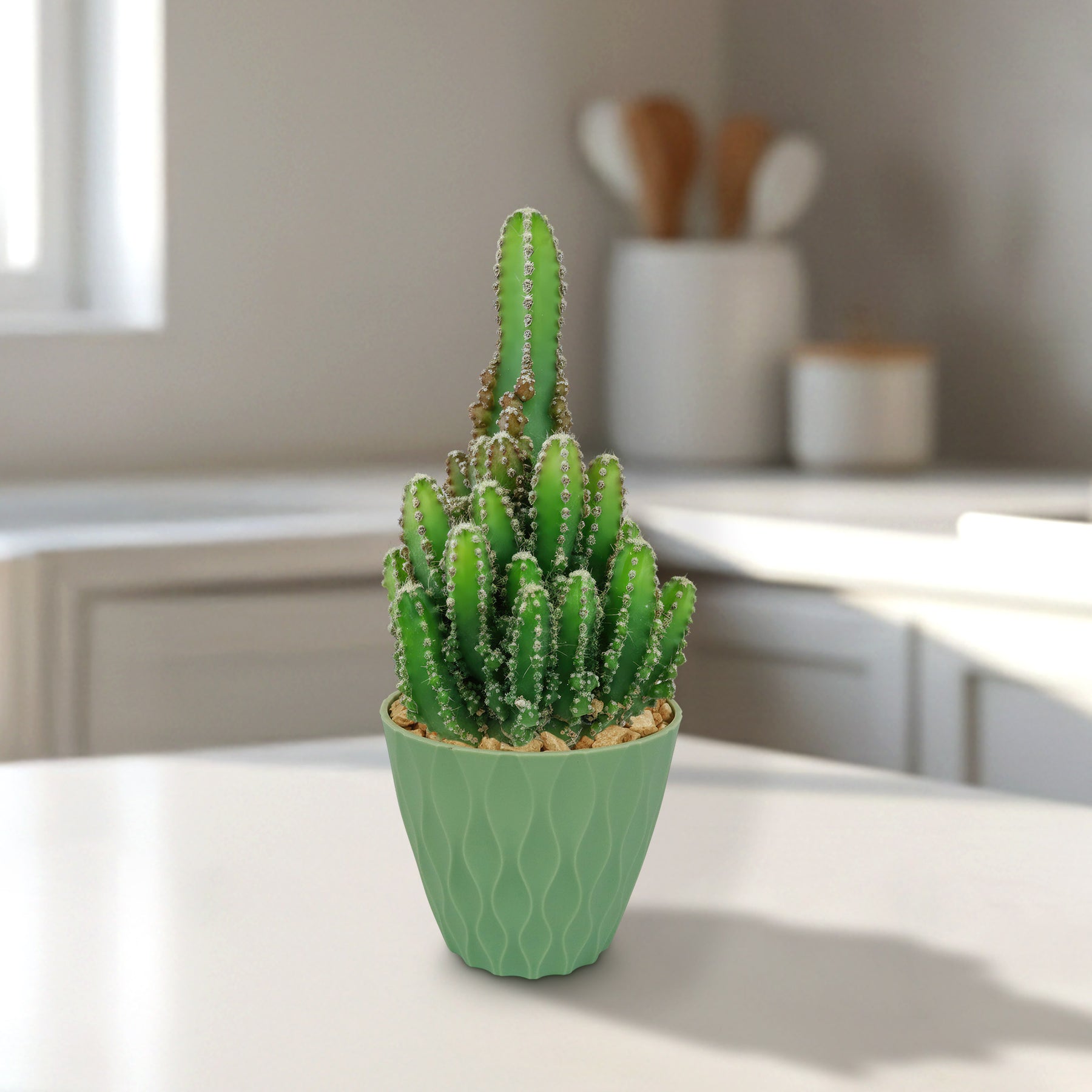


The fairy castle cactus, known as Acanthocereus tetragonus 'Monstrose', is a unique cactus loved for its unusual, castle-like shape. The term “monstrose” refers to its irregular growth pattern, which makes it different from the standard Acanthocereus tetragonus.
This eye catching cactus grows in clusters of tall, branching columns and is also known by several other names, including barbed wire cactus, triangle cactus, fairytale castle cactus, and green finger cactus.

Native to Central, North, and South America, this fairy castle cactus has a fascinating appearance with its densely packed branches and bright green ribbed stems that grow upright.
Its unique branching structure, resembling a castle or fortress, makes it a popular choice for adding visual interest to indoor and outdoor gardens.
This fairy cactus is a very slow-growing plant but can grow up to 6 feet tall when grown in ideal outdoor conditions.
This cactus produces large white fairy castle cactus flowers open up in the evening and close by morning, creating a magical display under the moonlight during the summer months.
The flowers usually feature pale greenish white outer petals with bright white inner petals surrounding a creamy center. Some blooms may also show soft pink tones and warm reddish orange coloring near the middle. These rare flowers create a beautiful display when they appear.
Indoor, it rarely flower unless they are fully mature and grown under ideal conditions with plenty of sunlight and proper care. In many cases, it can take 10 years or more, before a mature plant produces blooms.
When and How to Water Your Fairy Castle Cactus
The Fairy Castle cactus prefers infrequent watering, similar to the dry conditions of its native desert habitat. It grows best when watered using the “soak and dry” method, where the soil is thoroughly soaked and then allowed to dry out completely before watering again.
The fairy castle plant should be watered every 2 to 3 weeks during the active growing season, and reduce watering to about once a month or less during the dormant season.
In spring and summer, water deeply enough to evenly moisten the soil, but never leave it soggy or waterlogged. Always make sure the pot has proper drainage, as excess moisture can quickly lead to root rot. Allow the soil to dry fully between waterings to keep the cactus healthy and compact.
In fall and winter, it requires very little water since its growth naturally slows down. Watch for signs such as wrinkling, thinning stems, or slight softness, which may indicate the plant needs watering.
Related Article
Light Requirements - Where to Place Your Fairy Castle Plant

When growing indoors, place your fairy castle plant near a south facing or west facing window where it can receive at least 4 to 6 hours of bright sunlight each day.
Bright, indirect light also works well, especially in very hot areas where intense afternoon sun may scorch the plant.
If your home does not get enough natural light, you can use a full spectrum grow light for about 12 to 14 hours daily to help maintain healthy growth.
Without enough light, the Fairy Castle cactus may become stretched, weak, or pale in color.
When growing outdoors, this cactus thrives best in a sunny location with at least 6 hours of direct sunlight per day. Gradually increasing sun exposure will help the plant adjust while keeping its unique castle-like shape healthy and compact.
Optimal Soil & Fertilizer Needs
The fairy castle thrives in well-draining soil to prevent waterlogged roots. A mix of cactus potting soil and perlite or pumice in an unglazed clay pot works well to ensure good drainage. This type of soil allows excess water to flow out quickly, preventing the roots from sitting in damp conditions.
Ideally you can use our specialized cactus potting mix that includes 5 natural substrates with organic mycorrhizae – perfect for promoting healthy roots and happy plants.
When it comes to fertilizing, the fairy castle cactus doesn't require a lot of nutrients. You can use a diluted, low nitrogen fertilizer or a balanced cactus fertilizer with an equal mix of NPK (5-10-5). However, it's important not to over-fertilize, as this can lead to nutrient burn or other issues.
Hardiness Zone & More

In the United States, the fairy castle plant is mostly an indoor plant, but if you live in southern Florida or Hawaii, then you can cultivate it outdoors in USDA zones 9 to 11.
It prefers warm temperatures ranging from 65°F to 80°F. It's important to protect the cactus from temperatures below 50°F as it can be sensitive to cold drafts.
In terms of humidity, the Fairy cactus is adapted to arid conditions and can tolerate low humidity levels.
It's important to provide adequate air circulation to prevent excessive moisture around the cactus, which can lead to fungal issues. Remember to keep your Fairy Castle plant in a warm and dry environment to ensure its optimal growth and health. Providing the right temperature and humidity conditions will help your cactus thrive.
How to Grow as an Indoor Houseplant
You can grow your Acanthocereus tetragonus 'Monstrose' indoors by giving it at least 4 to 6 hours of bright sunlight each day. A south or west facing window works best. If your home does not get enough natural light, you can use a grow light to help keep the cactus healthy and compact.
Keep the plant in a warm area with temperatures between 65°F and 80°F, and protect it from cold drafts or temperatures below 50°F. The Fairy Castle cactus prefers low humidity and dry conditions, so normal indoor air usually works perfectly.
Wildlife – Fairy Castle Flowers Attract the Following Friendly Pollinators
The flowers of the fairy castle cactus attract a variety of friendly pollinators, including moths, bees, butterflies, and even bats in some warm regions. These helpful creatures play an important role in pollination, helping support the healthy growth and reproduction of this unique night blooming cactus.
 Butterflies
 Bees
Bees
 Hummingbirds
 Lady Bugs
 Multi Pollinators
 Other Birds
According to ASPCA, Acanthocereus Tetragonus Monstrose is considered non toxic to both humans and pets. However, it is wise to keep the plant out of reach of curious pets and small children, as its tiny spines can still cause irritation, scratches, or discomfort if touched.
How to Propagate Your Fairy Castle Cactus
To propagate your fairy castle plant, you can do it by stem cuttings. The best time to propagate is during spring or summer when the plant is actively growing.
Plant the cutting in well draining cactus soil and place it in bright, indirect light. Wait about a week before lightly watering the soil. After a few weeks, the cutting should begin developing roots and can then be cared for like a mature Fairy Castle cactus.
Key Takeaways
- Fairy Castle Cactus is loved for its unique castle like shape, making it a popular decorative cactus for homes and offices.
- This slow growing cactus thrives in bright sunlight and prefers dry conditions with infrequent watering.
- Mature Fairy Castle cacti can produce large white night blooming flowers that attract helpful pollinators.
- It is considered non toxic to pets and humans, making it perfect for indoors.
- Well draining soil and proper drainage are essential to prevent root rot and keep the cactus healthy long term.
Final Thoughts
Overall, the Fairy Castle cactus (Acanthocereus tetragonus 'Monstrose') is a unique and low maintenance cactus that adds charm and character to any indoor or outdoor space. With its castle like shape, bright green stems, and easy care needs, it is a great choice for both beginner and experienced plant owners.
Bloom Season
Flower Color
Growth Rate
Hardiness Zone
Mature Size
Plant Type
Resistance
Sun Exposure
Watering Needs
| Name | Value |
|---|---|
| Bloom Season | Summer (blooms at night) |
| Botanical Name | Acanthocereus tetragonus |
| Common Name | Fairy castle cactus, night blooming cactus, triangle cactus, barbed wire cactus, sword cactus |
| Dormancy | Winter |
| Family | Cactaceae |
| Flower Color | White |
| Genus | Acanthocereus |
| Growth Habit | Columnar cactus |
| Growth Rate | Slow |
| Hardiness Zone | 9, 10, 11 |
| Mature Size | Up to 6 ft. tall |
| Native Area | Mexico, Central America, Northern South America |
| Plant Type | Perennial cactus |
| Propagation | By stem cuttings |
| Resistance | Extremely drought-tolerant, linear polarization resistance, heat tolerant, pest resistant |
| Soil PH | 6.5, Acidic, Neutral |
| Soil Type | Cactus potting mix soil |
| Special Features | Dark green stem with 5 angles |
| Sun Exposure | Partial shade (3–6 hrs. sun) |
| Toxicity | Mildly toxic to humans, mildly toxic to pets (Keep away from children) |
| Watering Needs | Low |
Growers Quick Reference Guide - Key Features
| Name | Value |
|---|---|
| Bloom Season | Summer (blooms at night) |
| Botanical Name | Acanthocereus tetragonus |
| Common Name | Fairy castle cactus, night blooming cactus, triangle cactus, barbed wire cactus, sword cactus |
| Dormancy | Winter |
| Family | Cactaceae |
| Flower Color | White |
| Genus | Acanthocereus |
| Growth Habit | Columnar cactus |
| Growth Rate | Slow |
| Hardiness Zone | 9, 10, 11 |
| Mature Size | Up to 6 ft. tall |
| Native Area | Mexico, Central America, Northern South America |
| Plant Type | Perennial cactus |
| Propagation | By stem cuttings |
| Resistance | Extremely drought-tolerant, linear polarization resistance, heat tolerant, pest resistant |
| Soil PH | 6.5, Acidic, Neutral |
| Soil Type | Cactus potting mix soil |
| Special Features | Dark green stem with 5 angles |
| Sun Exposure | Partial shade (3–6 hrs. sun) |
| Toxicity | Mildly toxic to humans, mildly toxic to pets (Keep away from children) |
| Watering Needs | Low |
- Description
- Key Plant Features
The fairy castle cactus, known as Acanthocereus tetragonus 'Monstrose', is a unique cactus loved for its unusual, castle-like shape. The term “monstrose” refers to its irregular growth pattern, which makes it different from the standard Acanthocereus tetragonus.
This eye catching cactus grows in clusters of tall, branching columns and is also known by several other names, including barbed wire cactus, triangle cactus, fairytale castle cactus, and green finger cactus.
Native to Central, North, and South America, this fairy castle cactus has a fascinating appearance with its densely packed branches and bright green ribbed stems that grow upright.
Its unique branching structure, resembling a castle or fortress, makes it a popular choice for adding visual interest to indoor and outdoor gardens.
This fairy cactus is a very slow-growing plant but can grow up to 6 feet tall when grown in ideal outdoor conditions.
This cactus produces large white fairy castle cactus flowers open up in the evening and close by morning, creating a magical display under the moonlight during the summer months.
The flowers usually feature pale greenish white outer petals with bright white inner petals surrounding a creamy center. Some blooms may also show soft pink tones and warm reddish orange coloring near the middle. These rare flowers create a beautiful display when they appear.
Indoor, it rarely flower unless they are fully mature and grown under ideal conditions with plenty of sunlight and proper care. In many cases, it can take 10 years or more, before a mature plant produces blooms.
When and How to Water Your Fairy Castle Cactus
The Fairy Castle cactus prefers infrequent watering, similar to the dry conditions of its native desert habitat. It grows best when watered using the “soak and dry” method, where the soil is thoroughly soaked and then allowed to dry out completely before watering again.
The fairy castle plant should be watered every 2 to 3 weeks during the active growing season, and reduce watering to about once a month or less during the dormant season.
In spring and summer, water deeply enough to evenly moisten the soil, but never leave it soggy or waterlogged. Always make sure the pot has proper drainage, as excess moisture can quickly lead to root rot. Allow the soil to dry fully between waterings to keep the cactus healthy and compact.
In fall and winter, it requires very little water since its growth naturally slows down. Watch for signs such as wrinkling, thinning stems, or slight softness, which may indicate the plant needs watering.
Related Article
Light Requirements - Where to Place Your Fairy Castle Plant
When growing indoors, place your fairy castle plant near a south facing or west facing window where it can receive at least 4 to 6 hours of bright sunlight each day.
Bright, indirect light also works well, especially in very hot areas where intense afternoon sun may scorch the plant.
If your home does not get enough natural light, you can use a full spectrum grow light for about 12 to 14 hours daily to help maintain healthy growth.
Without enough light, the Fairy Castle cactus may become stretched, weak, or pale in color.
When growing outdoors, this cactus thrives best in a sunny location with at least 6 hours of direct sunlight per day. Gradually increasing sun exposure will help the plant adjust while keeping its unique castle-like shape healthy and compact.
Optimal Soil & Fertilizer Needs
The fairy castle thrives in well-draining soil to prevent waterlogged roots. A mix of cactus potting soil and perlite or pumice in an unglazed clay pot works well to ensure good drainage. This type of soil allows excess water to flow out quickly, preventing the roots from sitting in damp conditions.
Ideally you can use our specialized cactus potting mix that includes 5 natural substrates with organic mycorrhizae – perfect for promoting healthy roots and happy plants.
When it comes to fertilizing, the fairy castle cactus doesn't require a lot of nutrients. You can use a diluted, low nitrogen fertilizer or a balanced cactus fertilizer with an equal mix of NPK (5-10-5). However, it's important not to over-fertilize, as this can lead to nutrient burn or other issues.
Hardiness Zone & More
In the United States, the fairy castle plant is mostly an indoor plant, but if you live in southern Florida or Hawaii, then you can cultivate it outdoors in USDA zones 9 to 11.
It prefers warm temperatures ranging from 65°F to 80°F. It's important to protect the cactus from temperatures below 50°F as it can be sensitive to cold drafts.
In terms of humidity, the Fairy cactus is adapted to arid conditions and can tolerate low humidity levels.
It's important to provide adequate air circulation to prevent excessive moisture around the cactus, which can lead to fungal issues. Remember to keep your Fairy Castle plant in a warm and dry environment to ensure its optimal growth and health. Providing the right temperature and humidity conditions will help your cactus thrive.
How to Grow as an Indoor Houseplant
You can grow your Acanthocereus tetragonus 'Monstrose' indoors by giving it at least 4 to 6 hours of bright sunlight each day. A south or west facing window works best. If your home does not get enough natural light, you can use a grow light to help keep the cactus healthy and compact.
Keep the plant in a warm area with temperatures between 65°F and 80°F, and protect it from cold drafts or temperatures below 50°F. The Fairy Castle cactus prefers low humidity and dry conditions, so normal indoor air usually works perfectly.
Wildlife – Fairy Castle Flowers Attract the Following Friendly Pollinators
The flowers of the fairy castle cactus attract a variety of friendly pollinators, including moths, bees, butterflies, and even bats in some warm regions. These helpful creatures play an important role in pollination, helping support the healthy growth and reproduction of this unique night blooming cactus.
Butterflies
Bees
Hummingbirds
Lady Bugs
Multi Pollinators
Other Birds
According to ASPCA, Acanthocereus Tetragonus Monstrose is considered non toxic to both humans and pets. However, it is wise to keep the plant out of reach of curious pets and small children, as its tiny spines can still cause irritation, scratches, or discomfort if touched.
How to Propagate Your Fairy Castle Cactus
To propagate your fairy castle plant, you can do it by stem cuttings. The best time to propagate is during spring or summer when the plant is actively growing.
Plant the cutting in well draining cactus soil and place it in bright, indirect light. Wait about a week before lightly watering the soil. After a few weeks, the cutting should begin developing roots and can then be cared for like a mature Fairy Castle cactus.
Key Takeaways
- Fairy Castle Cactus is loved for its unique castle like shape, making it a popular decorative cactus for homes and offices.
- This slow growing cactus thrives in bright sunlight and prefers dry conditions with infrequent watering.
- Mature Fairy Castle cacti can produce large white night blooming flowers that attract helpful pollinators.
- It is considered non toxic to pets and humans, making it perfect for indoors.
- Well draining soil and proper drainage are essential to prevent root rot and keep the cactus healthy long term.
Final Thoughts
Overall, the Fairy Castle cactus (Acanthocereus tetragonus 'Monstrose') is a unique and low maintenance cactus that adds charm and character to any indoor or outdoor space. With its castle like shape, bright green stems, and easy care needs, it is a great choice for both beginner and experienced plant owners.
Bloom Season
Flower Color
Growth Rate
Hardiness Zone
Mature Size
Plant Type
Resistance
Sun Exposure
Watering Needs
| Attribute | Value |
|---|---|
| Bloom Season | Summer (blooms at night) |
| Botanical Name | Acanthocereus tetragonus |
| Common Name | Fairy castle cactus, night blooming cactus, triangle cactus, barbed wire cactus, sword cactus |
| Dormancy | Winter |
| Family | Cactaceae |
| Flower Color | White |
| Genus | Acanthocereus |
| Growth Habit | Columnar cactus |
| Growth Rate | Slow |
| Hardiness Zone | 9, 10, 11 |
| Mature Size | Up to 6 ft. tall |
| Native Area | Mexico, Central America, Northern South America |
| Plant Type | Perennial cactus |
| Propagation | By stem cuttings |
| Resistance | Extremely drought-tolerant, linear polarization resistance, heat tolerant, pest resistant |
| Soil PH | 6.5, Acidic, Neutral |
| Soil Type | Cactus potting mix soil |
| Special Features | Dark green stem with 5 angles |
| Sun Exposure | Partial shade (3–6 hrs. sun) |
| Toxicity | Mildly toxic to humans, mildly toxic to pets (Keep away from children) |
| Watering Needs | Low |
Growers Quick Reference Guide - Key Features
| Name | Value |
|---|---|
| Bloom Season | Summer (blooms at night) |
| Botanical Name | Acanthocereus tetragonus |
| Common Name | Fairy castle cactus, night blooming cactus, triangle cactus, barbed wire cactus, sword cactus |
| Dormancy | Winter |
| Family | Cactaceae |
| Flower Color | White |
| Genus | Acanthocereus |
| Growth Habit | Columnar cactus |
| Growth Rate | Slow |
| Hardiness Zone | 9, 10, 11 |
| Mature Size | Up to 6 ft. tall |
| Native Area | Mexico, Central America, Northern South America |
| Plant Type | Perennial cactus |
| Propagation | By stem cuttings |
| Resistance | Extremely drought-tolerant, linear polarization resistance, heat tolerant, pest resistant |
| Soil PH | 6.5, Acidic, Neutral |
| Soil Type | Cactus potting mix soil |
| Special Features | Dark green stem with 5 angles |
| Sun Exposure | Partial shade (3–6 hrs. sun) |
| Toxicity | Mildly toxic to humans, mildly toxic to pets (Keep away from children) |
| Watering Needs | Low |


