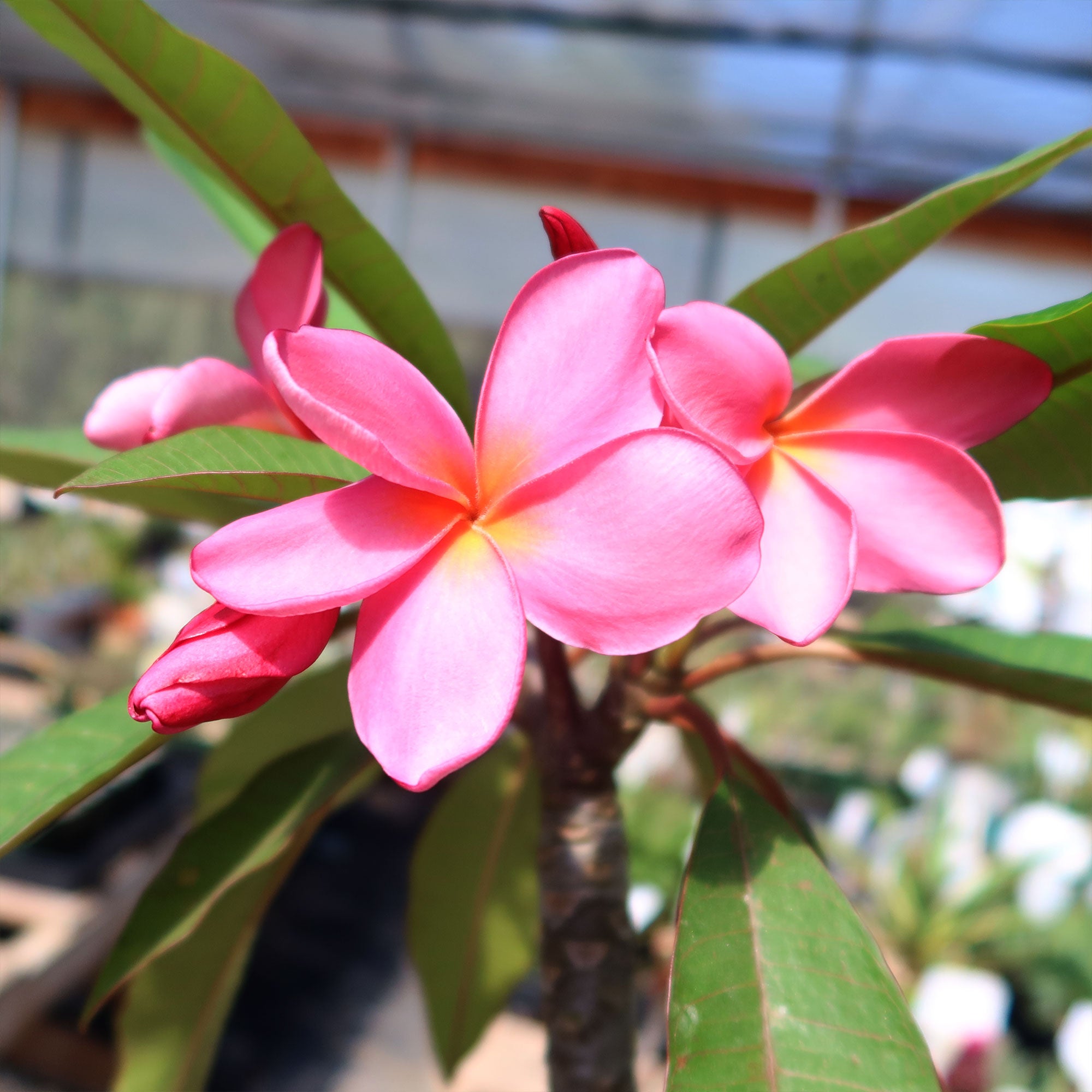



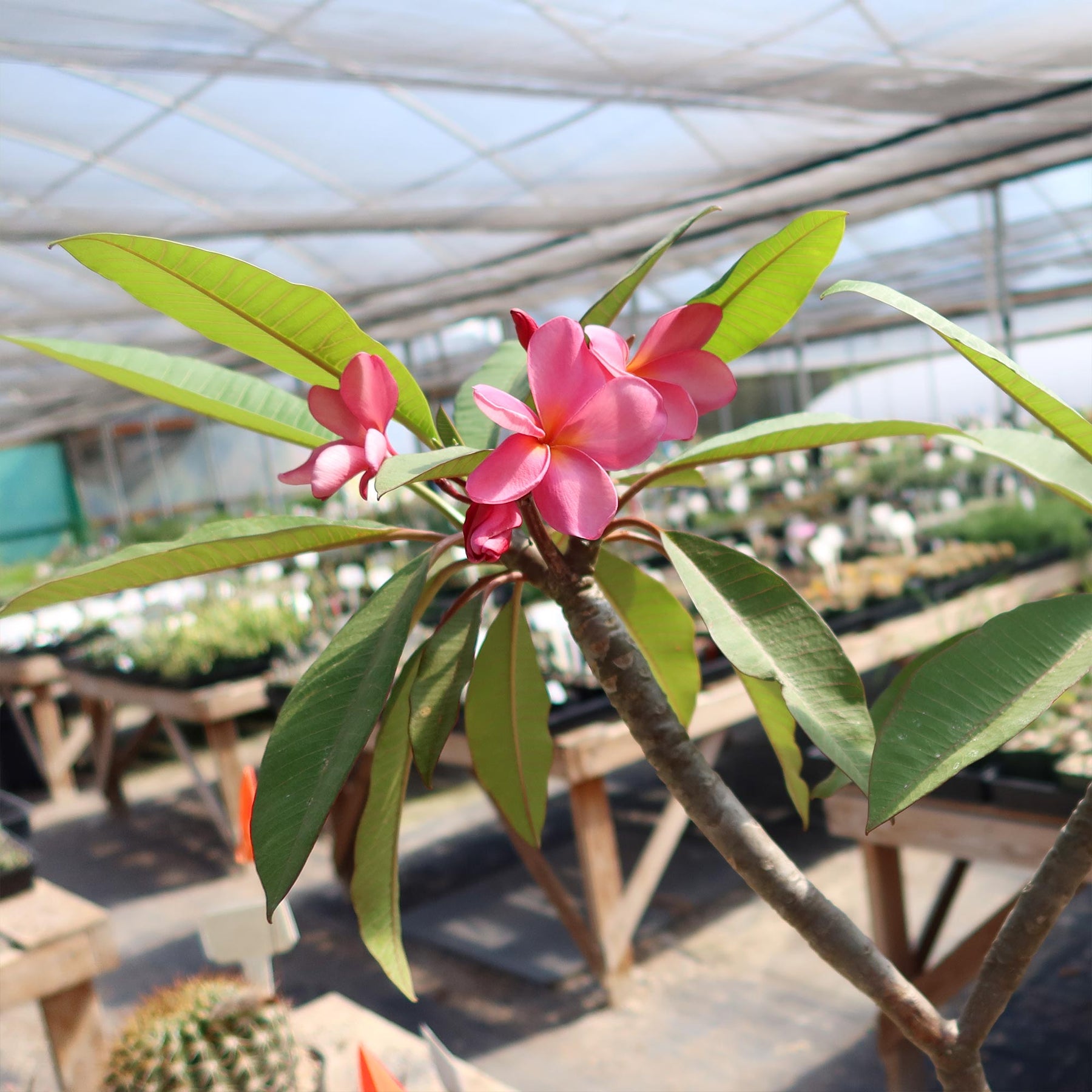
The Pink Frangipani, known as Plumeria rubra, is one of the most iconic tropical flowering trees, loved for its vibrant blooms and exotic fragrance. This plant has gained worldwide popularity as a symbol of paradise, often associated with tropical resorts, beaches, and exotic gardens. Its ability to thrive in warm climates and produce long-lasting flowers makes it a favorite in landscapes, courtyards, and as a striking container plant. Beyond beauty, the tree has deep cultural importance in various regions, symbolizing immortality, love, and spirituality.
This Plumeria plant, also known as Frangipani, Temple Tree, or simply Plumeria, has various cultural names. In Hawaii, the blossoms are popularly used to make leis, while in India and Southeast Asia, the flowers are considered sacred and are often planted near temples. Its wide range of cultural associations adds to its appeal, making it more than just a garden plant; it’s a living tradition.

At maturity, the Pink Frangipani typically reaches 25 feet tall, with a spread of 20 feet.
Its moderate growth habit and spreading canopy make it suitable as both a focal specimen tree and a shade provider in gardens and landscapes.
It can also be pruned and trained for smaller spaces or grown in large containers for patios.
The flowers are undoubtedly its most striking feature. Blooming in shades of pink, sometimes with yellow or white centers, the five-petaled flowers exude a sweet, exotic fragrance.
They typically appear from spring through fall, lasting for months, and are well-loved by pollinators. The flowers are waxy in texture, giving them durability even after being picked, which is why they are popular in leis and floral arrangements.
A unique aspect of the Pink Frangipani is its symbolic and practical uses. In Hawaiian culture, the way a Plumeria flower is worn in the hair signifies relationship status: on the left ear for being taken and on the right for being available. In addition, the tree is drought-tolerant, thriving in arid conditions once established, which makes it both beautiful and resilient. Its combination of ornamental charm, cultural symbolism, and adaptability ensures it remains one of the most cherished tropical plants worldwide.
When and How to Water Your Pink Plumeria
Pink Plumeria Frangipani need regular watering during their active growing season, especially when in bloom. The Pink Plumeria prefers watering once every 7-10 days, needs very little water of about every 3–4 weeks, in its dormant season.
From spring through summer, during the growing season, the Pink Plumeria needs a deep soak every 7–10 days, allowing the top 2–3 inches of soil to dry out between waterings. This keeps the roots hydrated enough to support active leaf growth and stunning flowers while preventing root rot. Consistent but not excessive watering will encourage healthy blooms and lush foliage.
From fall through winter, in the dormant season, Pink Plumeria rubra requires only a light watering every 3–4 weeks, or not at all if grown outdoors in rainy climates. The plant naturally slows down growth and conserves energy, so overwatering during this time can harm the roots. Less is always better during dormancy.
Light Requirements – Where to Place Your Frangipani Pink

When growing indoors, Pink Plumeria rubra should be placed in the sunniest window available, ideally south-facing, where it can receive 6–8 hours of direct light.
If natural light is limited, supplement with a strong grow light to keep growth healthy and prevent legginess.
When grown outdoors, Pink Plumeria rubra thrives in full sun with 6–8 hours of direct light daily, making patios, gardens, and open yards the perfect spots.
Partial shade is tolerated in very hot climates, but full sun ensures the strongest blooms and most vibrant growth.
Optimal Soil & Fertilizer Needs
The Pink Plumeria rubra grows best in well-draining soil, enriched with nutrients, and benefits from balanced fertilizer once a year in spring. Planting them in ordinary soil will result in compacted roots, stunted growth, and most likely root rot. Instead, make or buy a well-draining potting mix, or ideally, use our specialized potting mix that contains 5 natural substrates and mycorrhizae to promote the development of a strong root system that helps your pink Frangipani to thrive.
For fertilizer, Pink Plumeria rubra benefits from a balanced NPK fertilizer once a year during the active growing season. Fertilizers high in phosphorus (middle number) support abundant flowering, while nitrogen-heavy blends should be avoided to prevent excess leafy growth.
Hardiness Zones & More

Pink Plumeria can be grown outdoors year-round in USDA zones 10-11, where winters are frost-free.
In colder regions (most of the US), they are typically grown in containers and brought indoors during the winter.
It thrives in full sun and dry climates but can tolerate humidity as long as soil drainage is excellent.
In colder regions, plumerias should be moved indoors during the winter months when temperatures drop below 40°F.
How to Grow the Best Plumeria Pink Indoors
When growing indoors, the plant thrives in temperatures between 65–80°F with moderate humidity. Position it near a south- or west-facing window where it can receive at least 6 or more hours of direct sunlight daily, as insufficient light will limit flowering.
If natural light is lacking, supplement with a grow light to encourage strong growth and vibrant blooms. Ensure there is good airflow around the plant, which helps prevent fungal issues and keeps the foliage healthy.
During the growing season, regular watering with the soak-and-dry method and balanced fertilization will support lush foliage and abundant flowers, while slightly reducing care in the dormant months allows the plant to rest. With the right balance of light, warmth, and care, Plumeria Pink can flourish indoors just as beautifully as it does outdoors.
Wildlife – Pink Plumeria Flowers Attract the Following Friendly Pollinators
The Pink Plumeria rubra flowers attract pollinators like butterflies, bees, and even hummingbirds, adding life and movement to your garden. Their sweet fragrance and bright colors are a natural magnet for these visitors.
 Butterflies
 Bees
Bees
 Hummingbirds
 Lady Bugs
 Multi Pollinators
 Other Birds
According to the ASPCA, Pink Plumeria rubra is mildly toxic to pets if ingested. However, it is safe to touch and handle, making it a popular choice as a houseplant.
How to Propagate Your Frangipani Pink
Pink Plumeria rubra is most commonly propagated through cuttings, which root easily in warm, well-draining soil. To propagate, cut a healthy stem 18 inches long in spring or early summer, allow the cut end to dry and callus for several days, then plant it in a sandy soil mix. Keep the soil lightly moist but not wet until roots establish, usually within 4–6 weeks. Once rooted, the cutting will begin to push out new leaves and eventually flower.
Key Takeaways
- Pink Plumeria rubra is highly drought-tolerant, making it a low-maintenance choice for warm gardens.
- It produces fragrant, tropical flowers in shades of pink, red, and yellow that attract butterflies and hummingbirds.
- The plant can be grown both indoors and outdoors, adapting well as a sun-loving houseplant or garden centerpiece.
- It is a long-lived and resilient plant, tolerating dry conditions and poor soil once established.
- Propagation by cuttings is easy, allowing gardeners to expand their collection or share plants with others.
The Bottom Line
Overall, the Pink Frangipani (Plumeria rubra) is more than a flowering tree—it’s a plant steeped in culture, beauty, and symbolism. With its vibrant pink blossoms, intoxicating fragrance, and adaptability to warm climates, it has earned a lasting place in gardens across the globe. Whether admired for its ornamental value, its use in traditions, or simply for the sense of paradise it evokes, this plant continues to enchant garden enthusiasts and travelers alike.
Bloom Season
Flower Color
Growth Rate
Hardiness Zone
Mature Size
Plant Type
Resistance
Sun Exposure
Watering Needs
| Bloom Season | Late spring to fall, mid-summer to fall |
|---|---|
| Botanical Name | Plumeria rubra ' Pink' |
| Common Name | Pink Frangipani |
| Dormancy | Winter |
| Family | Apocynaceae |
| Flower Color | Pink |
| Genus | Plumeria |
| Growth Habit | Spreading |
| Growth Rate | Slow |
| Hardiness Zone | 10, 11 |
| Mature Size | 20 ft. tall, 25 ft. wide |
| Native Area | Mexico, Central America, Colombia, Venezuela |
| Plant Type | Succulent |
| Propagation | By cuttings |
| Resistance | Extremely drought-tolerant, heat tolerant, pest resistance |
| Soil PH | 6.5, Acidic, Neutral |
| Soil Type | Succulents potting mix soil |
| Special Features | Easy to maintain, easy to grow |
| Sun Exposure | Full sun (6+ hrs.), Partial shade (3–6 hrs. sun) |
| Toxicity | Mildly toxic for humans, mildly toxic for pets |
| Watering Needs | Low |
Growers Quick Reference Guide - Key Features
| Bloom Season | Late spring to fall, mid-summer to fall |
|---|---|
| Botanical Name | Plumeria rubra ' Pink' |
| Common Name | Pink Frangipani |
| Dormancy | Winter |
| Family | Apocynaceae |
| Flower Color | Pink |
| Genus | Plumeria |
| Growth Habit | Spreading |
| Growth Rate | Slow |
| Hardiness Zone | 10, 11 |
| Mature Size | 20 ft. tall, 25 ft. wide |
| Native Area | Mexico, Central America, Colombia, Venezuela |
| Plant Type | Succulent |
| Propagation | By cuttings |
| Resistance | Extremely drought-tolerant, heat tolerant, pest resistance |
| Soil PH | 6.5, Acidic, Neutral |
| Soil Type | Succulents potting mix soil |
| Special Features | Easy to maintain, easy to grow |
| Sun Exposure | Full sun (6+ hrs.), Partial shade (3–6 hrs. sun) |
| Toxicity | Mildly toxic for humans, mildly toxic for pets |
| Watering Needs | Low |
- Description
- Key Plant Features
The Pink Frangipani, known as Plumeria rubra, is one of the most iconic tropical flowering trees, loved for its vibrant blooms and exotic fragrance. This plant has gained worldwide popularity as a symbol of paradise, often associated with tropical resorts, beaches, and exotic gardens. Its ability to thrive in warm climates and produce long-lasting flowers makes it a favorite in landscapes, courtyards, and as a striking container plant. Beyond beauty, the tree has deep cultural importance in various regions, symbolizing immortality, love, and spirituality.
This Plumeria plant, also known as Frangipani, Temple Tree, or simply Plumeria, has various cultural names. In Hawaii, the blossoms are popularly used to make leis, while in India and Southeast Asia, the flowers are considered sacred and are often planted near temples. Its wide range of cultural associations adds to its appeal, making it more than just a garden plant; it’s a living tradition.
At maturity, the Pink Frangipani typically reaches 25 feet tall, with a spread of 20 feet.
Its moderate growth habit and spreading canopy make it suitable as both a focal specimen tree and a shade provider in gardens and landscapes.
It can also be pruned and trained for smaller spaces or grown in large containers for patios.
The flowers are undoubtedly its most striking feature. Blooming in shades of pink, sometimes with yellow or white centers, the five-petaled flowers exude a sweet, exotic fragrance.
They typically appear from spring through fall, lasting for months, and are well-loved by pollinators. The flowers are waxy in texture, giving them durability even after being picked, which is why they are popular in leis and floral arrangements.
A unique aspect of the Pink Frangipani is its symbolic and practical uses. In Hawaiian culture, the way a Plumeria flower is worn in the hair signifies relationship status: on the left ear for being taken and on the right for being available. In addition, the tree is drought-tolerant, thriving in arid conditions once established, which makes it both beautiful and resilient. Its combination of ornamental charm, cultural symbolism, and adaptability ensures it remains one of the most cherished tropical plants worldwide.
When and How to Water Your Pink Plumeria
Pink Plumeria Frangipani need regular watering during their active growing season, especially when in bloom. The Pink Plumeria prefers watering once every 7-10 days, needs very little water of about every 3–4 weeks, in its dormant season.
From spring through summer, during the growing season, the Pink Plumeria needs a deep soak every 7–10 days, allowing the top 2–3 inches of soil to dry out between waterings. This keeps the roots hydrated enough to support active leaf growth and stunning flowers while preventing root rot. Consistent but not excessive watering will encourage healthy blooms and lush foliage.
From fall through winter, in the dormant season, Pink Plumeria rubra requires only a light watering every 3–4 weeks, or not at all if grown outdoors in rainy climates. The plant naturally slows down growth and conserves energy, so overwatering during this time can harm the roots. Less is always better during dormancy.
Light Requirements – Where to Place Your Frangipani Pink
When growing indoors, Pink Plumeria rubra should be placed in the sunniest window available, ideally south-facing, where it can receive 6–8 hours of direct light.
If natural light is limited, supplement with a strong grow light to keep growth healthy and prevent legginess.
When grown outdoors, Pink Plumeria rubra thrives in full sun with 6–8 hours of direct light daily, making patios, gardens, and open yards the perfect spots.
Partial shade is tolerated in very hot climates, but full sun ensures the strongest blooms and most vibrant growth.
Optimal Soil & Fertilizer Needs
The Pink Plumeria rubra grows best in well-draining soil, enriched with nutrients, and benefits from balanced fertilizer once a year in spring. Planting them in ordinary soil will result in compacted roots, stunted growth, and most likely root rot. Instead, make or buy a well-draining potting mix, or ideally, use our specialized potting mix that contains 5 natural substrates and mycorrhizae to promote the development of a strong root system that helps your pink Frangipani to thrive.
For fertilizer, Pink Plumeria rubra benefits from a balanced NPK fertilizer once a year during the active growing season. Fertilizers high in phosphorus (middle number) support abundant flowering, while nitrogen-heavy blends should be avoided to prevent excess leafy growth.
Hardiness Zones & More
Pink Plumeria can be grown outdoors year-round in USDA zones 10-11, where winters are frost-free.
In colder regions (most of the US), they are typically grown in containers and brought indoors during the winter.
It thrives in full sun and dry climates but can tolerate humidity as long as soil drainage is excellent.
In colder regions, plumerias should be moved indoors during the winter months when temperatures drop below 40°F.
How to Grow the Best Plumeria Pink Indoors
When growing indoors, the plant thrives in temperatures between 65–80°F with moderate humidity. Position it near a south- or west-facing window where it can receive at least 6 or more hours of direct sunlight daily, as insufficient light will limit flowering.
If natural light is lacking, supplement with a grow light to encourage strong growth and vibrant blooms. Ensure there is good airflow around the plant, which helps prevent fungal issues and keeps the foliage healthy.
During the growing season, regular watering with the soak-and-dry method and balanced fertilization will support lush foliage and abundant flowers, while slightly reducing care in the dormant months allows the plant to rest. With the right balance of light, warmth, and care, Plumeria Pink can flourish indoors just as beautifully as it does outdoors.
Wildlife – Pink Plumeria Flowers Attract the Following Friendly Pollinators
The Pink Plumeria rubra flowers attract pollinators like butterflies, bees, and even hummingbirds, adding life and movement to your garden. Their sweet fragrance and bright colors are a natural magnet for these visitors.
Butterflies
Bees
Hummingbirds
Lady Bugs
Multi Pollinators
Other Birds
According to the ASPCA, Pink Plumeria rubra is mildly toxic to pets if ingested. However, it is safe to touch and handle, making it a popular choice as a houseplant.
How to Propagate Your Frangipani Pink
Pink Plumeria rubra is most commonly propagated through cuttings, which root easily in warm, well-draining soil. To propagate, cut a healthy stem 18 inches long in spring or early summer, allow the cut end to dry and callus for several days, then plant it in a sandy soil mix. Keep the soil lightly moist but not wet until roots establish, usually within 4–6 weeks. Once rooted, the cutting will begin to push out new leaves and eventually flower.
Key Takeaways
- Pink Plumeria rubra is highly drought-tolerant, making it a low-maintenance choice for warm gardens.
- It produces fragrant, tropical flowers in shades of pink, red, and yellow that attract butterflies and hummingbirds.
- The plant can be grown both indoors and outdoors, adapting well as a sun-loving houseplant or garden centerpiece.
- It is a long-lived and resilient plant, tolerating dry conditions and poor soil once established.
- Propagation by cuttings is easy, allowing gardeners to expand their collection or share plants with others.
The Bottom Line
Overall, the Pink Frangipani (Plumeria rubra) is more than a flowering tree—it’s a plant steeped in culture, beauty, and symbolism. With its vibrant pink blossoms, intoxicating fragrance, and adaptability to warm climates, it has earned a lasting place in gardens across the globe. Whether admired for its ornamental value, its use in traditions, or simply for the sense of paradise it evokes, this plant continues to enchant garden enthusiasts and travelers alike.
Bloom Season
Flower Color
Growth Rate
Hardiness Zone
Mature Size
Plant Type
Resistance
Sun Exposure
Watering Needs
| Bloom Season | Late spring to fall, mid-summer to fall |
|---|---|
| Botanical Name | Plumeria rubra ' Pink' |
| Common Name | Pink Frangipani |
| Dormancy | Winter |
| Family | Apocynaceae |
| Flower Color | Pink |
| Genus | Plumeria |
| Growth Habit | Spreading |
| Growth Rate | Slow |
| Hardiness Zone | 10, 11 |
| Mature Size | 20 ft. tall, 25 ft. wide |
| Native Area | Mexico, Central America, Colombia, Venezuela |
| Plant Type | Succulent |
| Propagation | By cuttings |
| Resistance | Extremely drought-tolerant, heat tolerant, pest resistance |
| Soil PH | 6.5, Acidic, Neutral |
| Soil Type | Succulents potting mix soil |
| Special Features | Easy to maintain, easy to grow |
| Sun Exposure | Full sun (6+ hrs.), Partial shade (3–6 hrs. sun) |
| Toxicity | Mildly toxic for humans, mildly toxic for pets |
| Watering Needs | Low |
Growers Quick Reference Guide - Key Features
| Bloom Season | Late spring to fall, mid-summer to fall |
|---|---|
| Botanical Name | Plumeria rubra ' Pink' |
| Common Name | Pink Frangipani |
| Dormancy | Winter |
| Family | Apocynaceae |
| Flower Color | Pink |
| Genus | Plumeria |
| Growth Habit | Spreading |
| Growth Rate | Slow |
| Hardiness Zone | 10, 11 |
| Mature Size | 20 ft. tall, 25 ft. wide |
| Native Area | Mexico, Central America, Colombia, Venezuela |
| Plant Type | Succulent |
| Propagation | By cuttings |
| Resistance | Extremely drought-tolerant, heat tolerant, pest resistance |
| Soil PH | 6.5, Acidic, Neutral |
| Soil Type | Succulents potting mix soil |
| Special Features | Easy to maintain, easy to grow |
| Sun Exposure | Full sun (6+ hrs.), Partial shade (3–6 hrs. sun) |
| Toxicity | Mildly toxic for humans, mildly toxic for pets |
| Watering Needs | Low |