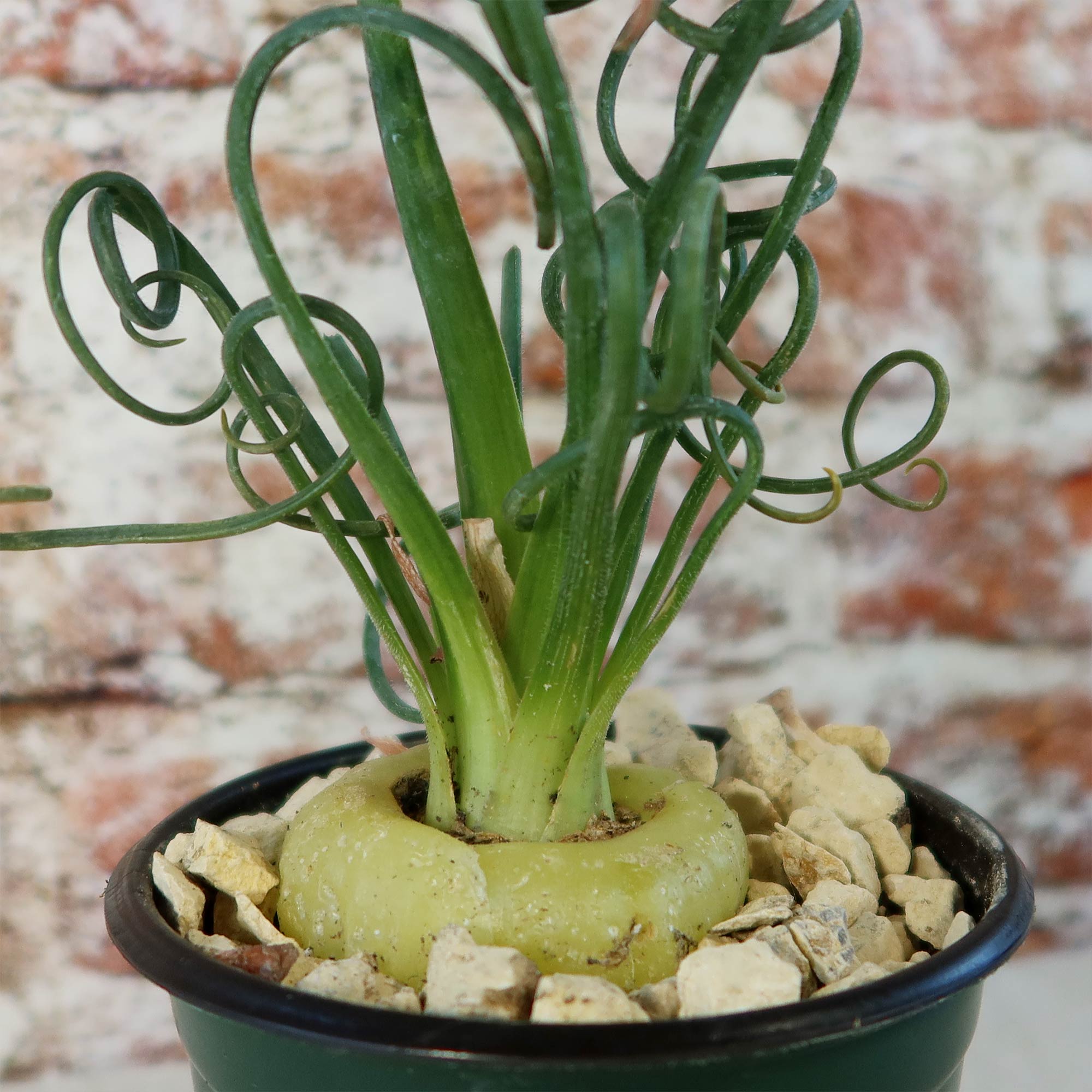



T he stunning Frizzle Sizzle plant, which is known as Albuca spiralis. Because of its distinctive spiral-shaped leaves, the Frizzle Sizzle plant is also known as Corkscrew Albuca, Curly Albuca, Helicopter Plant, or Slime Lily.
 The image features the slender, cylindrical leaves that curl into tight spirals.
Native to South Africa, the bulb succulent Frizzle Sizzle plant has long, narrow corkscrew leaves that are bright green in color.
Each leaf has glandular hairs that make it feel a little sticky when touched. The leaves grow in a rosette formation, radiating from the center of the frizzle sizzle plant.
As the Albuca spiralis matures, it can grow up to 12 inches tall.
The spiral shape of the leaves adds an interesting texture and dimension to the frizzle sizzle plant, making it a standout addition to any indoor or outdoor garden.
The flowers of the frizzle sizzle plants typically bloom from late winter to spring and are yellow or greenish-yellow in color, with a pleasant vanilla fragrance that emerges on each flower stalk. Remember, the tips of flower buds often turn brown during growth, and there can be ten or twenty blooms on each flower stalk.
When and How to Water Your Frizzle Sizzle Plant
Frizzle Sizzle is a drought-tolerant succulent bulb that stores water in its base, making it well-adapted to dry conditions and low-frequency watering. However, its watering needs change dramatically between active growth and dormancy. Your Frizzle Sizzle plant prefers watering once a week in the growing season, and once every 2-3 weeks in the dormant season.
In winter and early spring, during its growing season, Albuca spiralis needs more regular moisture to support its curly foliage and flower production. Water once a week, or when the top inch of soil feels dry. Keep the soil lightly moist but never soggy to prevent rot. Always use well-draining soil and a pot with drainage holes.
From late spring through summer, as the plant enters dormancy, reduce watering significantly. The leaves will begin to yellow and die back; this is normal. Water only once every 2–3 weeks, or when the soil is completely dry. Do not overwater during dormancy, as the bulb is resting and prone to rot if kept too wet.
Inspect Frizzle Sizzle leaves for overwatering and underwatering. Overwatering can cause yellow, floppy, soft, wilting, or basal collapse. Underwatering can cause dry tips, droop, or stunted growth.
Light Requirements - Where to Place Your Frizzle Sizzle Plant

When growing indoors, the Frizzle Sizzle plant thrives in a spot near a window where it can receive plenty of bright sunlight for at least 4-6 hours a day.
However, be cautious of placing it in direct sunlight for extended periods, especially during the hottest parts of the day, as it can scorch the leaves.
The leaves will not curl if there is insufficient light; instead, they will just grow long and wavy.
If you don't have a bright spot indoors, you can also grow the Frizzle Sizzle plant under fluorescent lights or grow lights. Just make sure to provide your Albuca spiralis with around 12-14 hours of light per day to simulate natural daylight.
When growing your Frizzle Sizzle plant outdoors, it prefers a location with full sun to partial shade, where it gets 5-7 hours of direct morning or late afternoon sunlight but prefers some protection from intense midday sun.
If you live in a region with hot, direct sunlight, it's best to provide some shade during the hottest part of the day to prevent leaf burns. You can achieve this by placing your frizzle sizzle plant under a shade cloth or in a location with dappled sunlight.
Optimal Soil & Fertilizer Needs
The Frizzle Sizzle plant prefers well-draining soil and should be fertilized once a year in the spring. A mixture of equal parts potting soil, perlite, and coarse sand works well. This combination allows too much moisture to drain away and prevents the roots from sitting in soggy soil, which can lead to bulb rot. Ideally, you want to use our specialized succulent potting mix that contains 5 natural substrates and organic mycorrhizae to promote the development of a strong root system that helps your Albuca frizzle sizzles to thrive.
The Frizzle Sizzle plant doesn't require heavy feeding, but it can benefit from a balanced NPK (5-10-5), water-soluble liquid fertilizer during the growing season. You can use a general-purpose houseplant fertilizer diluted to half the recommended strength and apply it once a year.
During the summer dormancy, it's best to reduce or stop fertilizing altogether. This allows your frizzle sizzle plant to rest and prepare for its next growth phase.
Remember, a bulb succulent with distinctive corkscrew foliage that can be planted high in the soil with some of the bulb exposed.
Hardiness Zones & More

In the United States, this is mostly an indoor plant, but if you live in southern Florida or Hawaii, then you can cultivate it outdoors in USDA zones 9-11.
It can tolerate higher temperatures, but it's important to provide some shade during scorching summer days to prevent leaf burn.
If you live in a region with colder winters, you can still enjoy the plant outdoors during the warmer months and bring it indoors when temperatures drop.
Remember, these are general guidelines, and the Frizzle Sizzle plant's specific requirements may vary depending on your location and climate. It's always a good idea to monitor the plant's response and make adjustments accordingly.
How to Grow the Best Frizzle Sizzle Plant Indoors
When it comes to indoor growing, the Frizzle Sizzle plant generally thrives in temperatures between 65°F to 80°F. It's important to avoid exposing your Albuca spiralis to cold drafts or extreme temperature fluctuations, as it can negatively impact its health. Frizzle Sizzle plant appreciates moderate to high humidity levels. Aim for a humidity range of 50% to 70% to create a comfortable environment for your succulent. You can increase humidity by using a humidifier, placing the Frizzle sizzle on a tray with water and pebbles, or misting its leaves with water.
Wildlife - Frizzle Sizzle Plant Attracts the Following Friendly Pollinators
The Frizzle Sizzle plant is known to attract a variety of friendly pollinators such as bees, butterflies, and hummingbirds. These pollinators play a crucial role in the ecosystem by helping to fertilize plants and promote biodiversity.
 Butterflies
 Bees
Bees
 Hummingbirds
 Lady Bugs
 Multi Pollinators
 Other Birds
According to ASPCA, the Albuca spiralis succulent is considered to be mildly toxic to humans and pets, particularly cats and dogs, if consumed in large amounts. However, it is safe to touch and handle, as the toxic compounds are only released when ingested.
How to Propagate Your Frizzle Sizzle Plant
The Frizzle Sizzle plants can be propagated through bulb division or by planting Albuca spiralis seeds. It produces small bulbs that can be separated and replanted to create new plants. Additionally, you can collect the seeds from the mature flowers and sow them in well-draining soil to grow new Frizzle Sizzle plants.
Key Takeaways
- The iconic "frizzle" comes from its slender green leaves that twist into tight, whimsical curls, especially in bright light.
- Unlike most succulents, Albuca spiralis enters active growth in cool seasons and goes dormant in warm months, often surprising new growers.
- In late winter to early spring, it sends up a tall flower stalk with nodding, vanilla-scented yellow blooms that contrast beautifully with its spiral foliage.
- This Frizzle Sizzle plant stores moisture in its underground bulb, helping it withstand dry spells and infrequent watering.
The Bottom Line
Overall, the Frizzle Sizzle plant (Albuca spiralis) is a fascinating and visually captivating succulent plant. Its spiral-shaped leaves give it another unique common name, such as Corkscrew Albuca. The plant features long, narrow, succulent leaves that grow in a rosette formation, creating a beautiful corkscrew pattern. While the flowers of the Frizzle Sizzle plant are small and not the main attraction, they add a lovely touch with their yellow or greenish-yellow color and pleasant fragrance. Propagation can be done through bulb division or planting seeds. However, it's important to note that the Frizzle Sizzle plant is mildly toxic to pets, so it's best to keep it out of their reach. Overall, the Frizzle Sizzle plant is a captivating addition to any garden, thanks to its unique appearance and interesting growth pattern.
Bloom Season
Flower Color
Growth Rate
Hardiness Zone
Mature Size
Plant Type
Resistance
Sun Exposure
Watering Needs
| Bloom Season | Late winter, Spring |
|---|---|
| Botanical Name | Albuca spiralis |
| Common Name | Frizzle sizzle plant, Corkscrew albuca |
| Dormancy | Summer |
| Family | Asparagaceae |
| Flower Color | Pale Yellow, yellow Green |
| Genus | Albuca |
| Growth Habit | Spiral |
| Growth Rate | Slow |
| Hardiness Zone | 9, 10, 11 |
| Mature Size | Upto 8 in. tall |
| Native Area | South Africa |
| Plant Type | Bulb succulent |
| Propagation | By offsets, cuttings |
| Resistance | Extremely drought-tolerant, mildfrost resistant |
| Soil PH | 6.5, Acidic, Neutral |
| Soil Type | Succulent potting mix soil |
| Special Features | Easy to maintain |
| Sun Exposure | Full sun (6+ hrs.), Partial shade (3–6 hrs. sun) |
| Toxicity | Safe for humans, friendly to dogs, friendly to cats |
| Watering Needs | Moderate |
Growers Quick Reference Guide - Key Features
| Bloom Season | Late winter, Spring |
|---|---|
| Botanical Name | Albuca spiralis |
| Common Name | Frizzle sizzle plant, Corkscrew albuca |
| Dormancy | Summer |
| Family | Asparagaceae |
| Flower Color | Pale Yellow, yellow Green |
| Genus | Albuca |
| Growth Habit | Spiral |
| Growth Rate | Slow |
| Hardiness Zone | 9, 10, 11 |
| Mature Size | Upto 8 in. tall |
| Native Area | South Africa |
| Plant Type | Bulb succulent |
| Propagation | By offsets, cuttings |
| Resistance | Extremely drought-tolerant, mildfrost resistant |
| Soil PH | 6.5, Acidic, Neutral |
| Soil Type | Succulent potting mix soil |
| Special Features | Easy to maintain |
| Sun Exposure | Full sun (6+ hrs.), Partial shade (3–6 hrs. sun) |
| Toxicity | Safe for humans, friendly to dogs, friendly to cats |
| Watering Needs | Moderate |
- Description
- Key Plant Features
T he stunning Frizzle Sizzle plant, which is known as Albuca spiralis. Because of its distinctive spiral-shaped leaves, the Frizzle Sizzle plant is also known as Corkscrew Albuca, Curly Albuca, Helicopter Plant, or Slime Lily.
The image features the slender, cylindrical leaves that curl into tight spirals.
Native to South Africa, the bulb succulent Frizzle Sizzle plant has long, narrow corkscrew leaves that are bright green in color.
Each leaf has glandular hairs that make it feel a little sticky when touched. The leaves grow in a rosette formation, radiating from the center of the frizzle sizzle plant.
As the Albuca spiralis matures, it can grow up to 12 inches tall.
The spiral shape of the leaves adds an interesting texture and dimension to the frizzle sizzle plant, making it a standout addition to any indoor or outdoor garden.
The flowers of the frizzle sizzle plants typically bloom from late winter to spring and are yellow or greenish-yellow in color, with a pleasant vanilla fragrance that emerges on each flower stalk. Remember, the tips of flower buds often turn brown during growth, and there can be ten or twenty blooms on each flower stalk.
When and How to Water Your Frizzle Sizzle Plant
Frizzle Sizzle is a drought-tolerant succulent bulb that stores water in its base, making it well-adapted to dry conditions and low-frequency watering. However, its watering needs change dramatically between active growth and dormancy. Your Frizzle Sizzle plant prefers watering once a week in the growing season, and once every 2-3 weeks in the dormant season.
In winter and early spring, during its growing season, Albuca spiralis needs more regular moisture to support its curly foliage and flower production. Water once a week, or when the top inch of soil feels dry. Keep the soil lightly moist but never soggy to prevent rot. Always use well-draining soil and a pot with drainage holes.
From late spring through summer, as the plant enters dormancy, reduce watering significantly. The leaves will begin to yellow and die back; this is normal. Water only once every 2–3 weeks, or when the soil is completely dry. Do not overwater during dormancy, as the bulb is resting and prone to rot if kept too wet.
Inspect Frizzle Sizzle leaves for overwatering and underwatering. Overwatering can cause yellow, floppy, soft, wilting, or basal collapse. Underwatering can cause dry tips, droop, or stunted growth.
Light Requirements - Where to Place Your Frizzle Sizzle Plant
When growing indoors, the Frizzle Sizzle plant thrives in a spot near a window where it can receive plenty of bright sunlight for at least 4-6 hours a day.
However, be cautious of placing it in direct sunlight for extended periods, especially during the hottest parts of the day, as it can scorch the leaves.
The leaves will not curl if there is insufficient light; instead, they will just grow long and wavy.
If you don't have a bright spot indoors, you can also grow the Frizzle Sizzle plant under fluorescent lights or grow lights. Just make sure to provide your Albuca spiralis with around 12-14 hours of light per day to simulate natural daylight.
When growing your Frizzle Sizzle plant outdoors, it prefers a location with full sun to partial shade, where it gets 5-7 hours of direct morning or late afternoon sunlight but prefers some protection from intense midday sun.
If you live in a region with hot, direct sunlight, it's best to provide some shade during the hottest part of the day to prevent leaf burns. You can achieve this by placing your frizzle sizzle plant under a shade cloth or in a location with dappled sunlight.
Optimal Soil & Fertilizer Needs
The Frizzle Sizzle plant prefers well-draining soil and should be fertilized once a year in the spring. A mixture of equal parts potting soil, perlite, and coarse sand works well. This combination allows too much moisture to drain away and prevents the roots from sitting in soggy soil, which can lead to bulb rot. Ideally, you want to use our specialized succulent potting mix that contains 5 natural substrates and organic mycorrhizae to promote the development of a strong root system that helps your Albuca frizzle sizzles to thrive.
The Frizzle Sizzle plant doesn't require heavy feeding, but it can benefit from a balanced NPK (5-10-5), water-soluble liquid fertilizer during the growing season. You can use a general-purpose houseplant fertilizer diluted to half the recommended strength and apply it once a year.
During the summer dormancy, it's best to reduce or stop fertilizing altogether. This allows your frizzle sizzle plant to rest and prepare for its next growth phase.
Remember, a bulb succulent with distinctive corkscrew foliage that can be planted high in the soil with some of the bulb exposed.
Hardiness Zones & More
In the United States, this is mostly an indoor plant, but if you live in southern Florida or Hawaii, then you can cultivate it outdoors in USDA zones 9-11.
It can tolerate higher temperatures, but it's important to provide some shade during scorching summer days to prevent leaf burn.
If you live in a region with colder winters, you can still enjoy the plant outdoors during the warmer months and bring it indoors when temperatures drop.
Remember, these are general guidelines, and the Frizzle Sizzle plant's specific requirements may vary depending on your location and climate. It's always a good idea to monitor the plant's response and make adjustments accordingly.
How to Grow the Best Frizzle Sizzle Plant Indoors
When it comes to indoor growing, the Frizzle Sizzle plant generally thrives in temperatures between 65°F to 80°F. It's important to avoid exposing your Albuca spiralis to cold drafts or extreme temperature fluctuations, as it can negatively impact its health. Frizzle Sizzle plant appreciates moderate to high humidity levels. Aim for a humidity range of 50% to 70% to create a comfortable environment for your succulent. You can increase humidity by using a humidifier, placing the Frizzle sizzle on a tray with water and pebbles, or misting its leaves with water.
Wildlife - Frizzle Sizzle Plant Attracts the Following Friendly Pollinators
The Frizzle Sizzle plant is known to attract a variety of friendly pollinators such as bees, butterflies, and hummingbirds. These pollinators play a crucial role in the ecosystem by helping to fertilize plants and promote biodiversity.
Butterflies
Bees
Hummingbirds
Lady Bugs
Multi Pollinators
Other Birds
According to ASPCA, the Albuca spiralis succulent is considered to be mildly toxic to humans and pets, particularly cats and dogs, if consumed in large amounts. However, it is safe to touch and handle, as the toxic compounds are only released when ingested.
How to Propagate Your Frizzle Sizzle Plant
The Frizzle Sizzle plants can be propagated through bulb division or by planting Albuca spiralis seeds. It produces small bulbs that can be separated and replanted to create new plants. Additionally, you can collect the seeds from the mature flowers and sow them in well-draining soil to grow new Frizzle Sizzle plants.
Key Takeaways
- The iconic "frizzle" comes from its slender green leaves that twist into tight, whimsical curls, especially in bright light.
- Unlike most succulents, Albuca spiralis enters active growth in cool seasons and goes dormant in warm months, often surprising new growers.
- In late winter to early spring, it sends up a tall flower stalk with nodding, vanilla-scented yellow blooms that contrast beautifully with its spiral foliage.
- This Frizzle Sizzle plant stores moisture in its underground bulb, helping it withstand dry spells and infrequent watering.
The Bottom Line
Overall, the Frizzle Sizzle plant (Albuca spiralis) is a fascinating and visually captivating succulent plant. Its spiral-shaped leaves give it another unique common name, such as Corkscrew Albuca. The plant features long, narrow, succulent leaves that grow in a rosette formation, creating a beautiful corkscrew pattern. While the flowers of the Frizzle Sizzle plant are small and not the main attraction, they add a lovely touch with their yellow or greenish-yellow color and pleasant fragrance. Propagation can be done through bulb division or planting seeds. However, it's important to note that the Frizzle Sizzle plant is mildly toxic to pets, so it's best to keep it out of their reach. Overall, the Frizzle Sizzle plant is a captivating addition to any garden, thanks to its unique appearance and interesting growth pattern.
Bloom Season
Flower Color
Growth Rate
Hardiness Zone
Mature Size
Plant Type
Resistance
Sun Exposure
Watering Needs
| Bloom Season | Late winter, Spring |
|---|---|
| Botanical Name | Albuca spiralis |
| Common Name | Frizzle sizzle plant, Corkscrew albuca |
| Dormancy | Summer |
| Family | Asparagaceae |
| Flower Color | Pale Yellow, yellow Green |
| Genus | Albuca |
| Growth Habit | Spiral |
| Growth Rate | Slow |
| Hardiness Zone | 9, 10, 11 |
| Mature Size | Upto 8 in. tall |
| Native Area | South Africa |
| Plant Type | Bulb succulent |
| Propagation | By offsets, cuttings |
| Resistance | Extremely drought-tolerant, mildfrost resistant |
| Soil PH | 6.5, Acidic, Neutral |
| Soil Type | Succulent potting mix soil |
| Special Features | Easy to maintain |
| Sun Exposure | Full sun (6+ hrs.), Partial shade (3–6 hrs. sun) |
| Toxicity | Safe for humans, friendly to dogs, friendly to cats |
| Watering Needs | Moderate |
Growers Quick Reference Guide - Key Features
| Bloom Season | Late winter, Spring |
|---|---|
| Botanical Name | Albuca spiralis |
| Common Name | Frizzle sizzle plant, Corkscrew albuca |
| Dormancy | Summer |
| Family | Asparagaceae |
| Flower Color | Pale Yellow, yellow Green |
| Genus | Albuca |
| Growth Habit | Spiral |
| Growth Rate | Slow |
| Hardiness Zone | 9, 10, 11 |
| Mature Size | Upto 8 in. tall |
| Native Area | South Africa |
| Plant Type | Bulb succulent |
| Propagation | By offsets, cuttings |
| Resistance | Extremely drought-tolerant, mildfrost resistant |
| Soil PH | 6.5, Acidic, Neutral |
| Soil Type | Succulent potting mix soil |
| Special Features | Easy to maintain |
| Sun Exposure | Full sun (6+ hrs.), Partial shade (3–6 hrs. sun) |
| Toxicity | Safe for humans, friendly to dogs, friendly to cats |
| Watering Needs | Moderate |