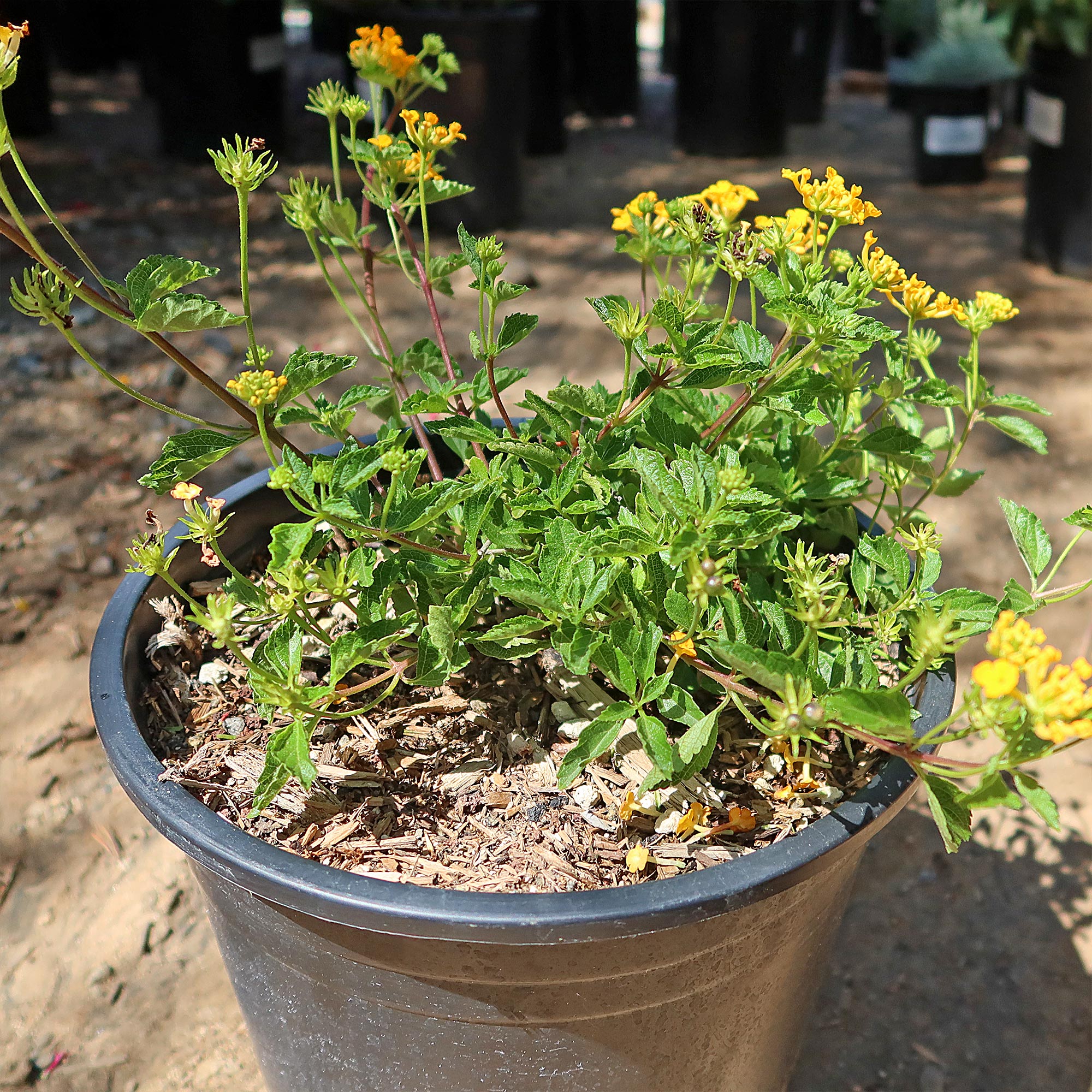



Lantana ‘Gold Mound’ is a vibrant and compact shrub admired for its profuse golden-yellow blooms and its ability to thrive in challenging conditions. With its cheerful flowers and lush foliage, it provides year-round interest and attracts a variety of pollinators, making it both an ornamental and ecological asset.
Lantana ‘Gold Mound’ is commonly referred to as “Yellow Lantana” or simply “Gold Mound” due to its mound-like growth habit and bright yellow blooms. It is also sometimes called “Shrub Verbena,” a nod to its connection to the Verbenaceae family.

The Lantana gold mound is valued for its rounded, bushy habit and vibrant color. The leaves are green, egg-shaped, and lightly textured, releasing a citrus-like scent when crushed.
Its most notable feature is its profusion of golden-yellow flowers, which appear in dense clusters.
The plant is drought-tolerant, heat-resistant, and thrives in poor soil conditions, making it a favorite in xeriscapes and low-maintenance gardens.
It typically grows up to 2 feet tall and 3 feet wide. Its compact size makes it ideal for small garden spaces, ground covers, or container gardening.
The showy, tubular flowers of Lantana ‘Gold Mound’ are arranged in tight, spherical clusters that bloom continuously throughout the growing season.
The blooms start as bright yellow and may take on a slight orange hue as they age, adding a dynamic color effect. These flowers are particularly resilient, thriving in intense sunlight and resisting fading even in hot climates.
 Butterflies
 Bees
Bees
 Hummingbirds
 Lady Bugs
 Multi Pollinators
 Other Birds
Lantana ‘Gold Mound’ is a magnet for pollinators, attracting butterflies, bees, and hummingbirds with its nectar-rich blooms. It is particularly effective in pollinator gardens, helping to sustain local ecosystems. Its long flowering season ensures a consistent food source for these beneficial creatures.
Lantana ‘Gold Mound’ is an easy-to-care-for plant that thrives in various conditions. It requires full sun, with at least 6 hours of direct sunlight daily to support healthy growth and prolific flowering. This drought-tolerant plant requires minimal watering once established. During the growing season, water every 7–10 days, ensuring the soil dries out between waterings. It prefers well-drained soil but adapts well to sandy or rocky types.

When grown indoors, it thrives in temperatures ranging from 60–85°F.
For outdoor cultivation, it is ideal for USDA Zones 9 to 11, where it can grow as perennial; in cooler zones, it is often treated as an annual.
Pruning is recommended to maintain its compact shape and encourage new blooms.
Deadheading spent flowers can enhance its appearance and prolong the blooming period.
The Gold mound Lantana can be propagated through stem cuttings or by collecting seeds from mature plants. Stem cuttings taken in spring or early summer tend to root quickly in moist, well-draining soil under warm conditions.
According to the ASPCA, Lantana species, including ‘Gold Mound,’ are mildly toxic to dogs, cats, and horses. Ingestion in a large amount can cause symptoms such as vomiting, diarrhea, and lethargy due to the presence of lantadene toxins. Therefore, it is advisable to plant it in areas inaccessible to pets or livestock.
Overall, Lantana ‘Gold Mound’ is a standout in any garden, offering brilliant golden-yellow flowers, a compact growth habit, and exceptional resilience. Perfect for sunny borders, rock gardens, or pollinator-friendly landscapes, it combines beauty with ecological benefits. Its ease of care and striking appearance make it a favorite for gardeners seeking low-maintenance yet visually striking plants.
Growers Quick Reference Guide - Key Features
- Description
- Key Plant Features
Lantana ‘Gold Mound’ is a vibrant and compact shrub admired for its profuse golden-yellow blooms and its ability to thrive in challenging conditions. With its cheerful flowers and lush foliage, it provides year-round interest and attracts a variety of pollinators, making it both an ornamental and ecological asset.
Lantana ‘Gold Mound’ is commonly referred to as “Yellow Lantana” or simply “Gold Mound” due to its mound-like growth habit and bright yellow blooms. It is also sometimes called “Shrub Verbena,” a nod to its connection to the Verbenaceae family.
The Lantana gold mound is valued for its rounded, bushy habit and vibrant color. The leaves are green, egg-shaped, and lightly textured, releasing a citrus-like scent when crushed.
Its most notable feature is its profusion of golden-yellow flowers, which appear in dense clusters.
The plant is drought-tolerant, heat-resistant, and thrives in poor soil conditions, making it a favorite in xeriscapes and low-maintenance gardens.
It typically grows up to 2 feet tall and 3 feet wide. Its compact size makes it ideal for small garden spaces, ground covers, or container gardening.
The showy, tubular flowers of Lantana ‘Gold Mound’ are arranged in tight, spherical clusters that bloom continuously throughout the growing season.
The blooms start as bright yellow and may take on a slight orange hue as they age, adding a dynamic color effect. These flowers are particularly resilient, thriving in intense sunlight and resisting fading even in hot climates.
Butterflies
Bees
Hummingbirds
Lady Bugs
Multi Pollinators
Other Birds
Lantana ‘Gold Mound’ is a magnet for pollinators, attracting butterflies, bees, and hummingbirds with its nectar-rich blooms. It is particularly effective in pollinator gardens, helping to sustain local ecosystems. Its long flowering season ensures a consistent food source for these beneficial creatures.
Lantana ‘Gold Mound’ is an easy-to-care-for plant that thrives in various conditions. It requires full sun, with at least 6 hours of direct sunlight daily to support healthy growth and prolific flowering. This drought-tolerant plant requires minimal watering once established. During the growing season, water every 7–10 days, ensuring the soil dries out between waterings. It prefers well-drained soil but adapts well to sandy or rocky types.
When grown indoors, it thrives in temperatures ranging from 60–85°F.
For outdoor cultivation, it is ideal for USDA Zones 9 to 11, where it can grow as perennial; in cooler zones, it is often treated as an annual.
Pruning is recommended to maintain its compact shape and encourage new blooms.
Deadheading spent flowers can enhance its appearance and prolong the blooming period.
The Gold mound Lantana can be propagated through stem cuttings or by collecting seeds from mature plants. Stem cuttings taken in spring or early summer tend to root quickly in moist, well-draining soil under warm conditions.
According to the ASPCA, Lantana species, including ‘Gold Mound,’ are mildly toxic to dogs, cats, and horses. Ingestion in a large amount can cause symptoms such as vomiting, diarrhea, and lethargy due to the presence of lantadene toxins. Therefore, it is advisable to plant it in areas inaccessible to pets or livestock.
Overall, Lantana ‘Gold Mound’ is a standout in any garden, offering brilliant golden-yellow flowers, a compact growth habit, and exceptional resilience. Perfect for sunny borders, rock gardens, or pollinator-friendly landscapes, it combines beauty with ecological benefits. Its ease of care and striking appearance make it a favorite for gardeners seeking low-maintenance yet visually striking plants.