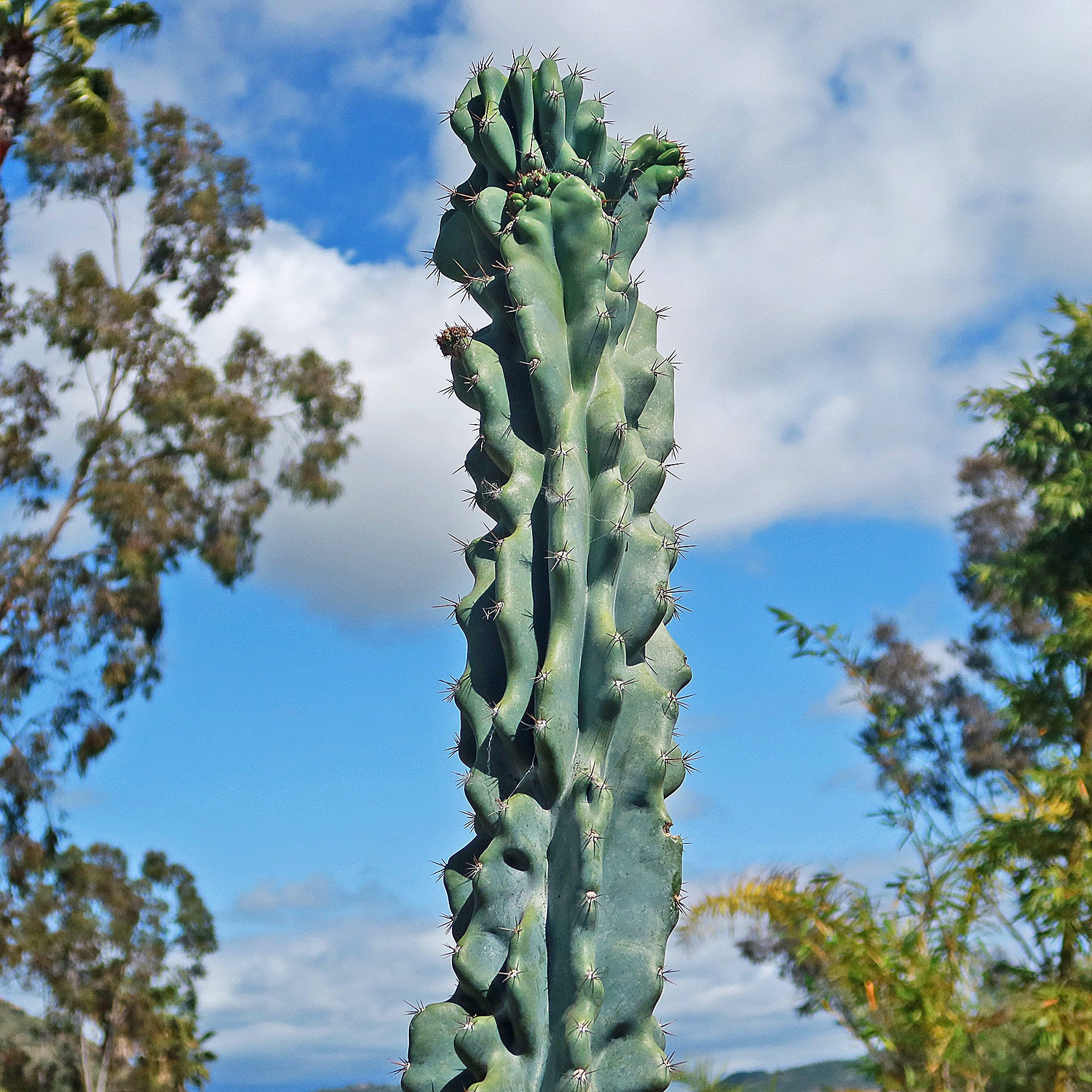
Get ready to smarten up your cactus collection with a unique and eye-catching addition, the Monstrose apple cactus, also known as Cereus peruvianus monstrose. It is a crested form of the regular Cereus peruvianus- Apple cactus, which gives it its distinct appearance. This monstrose cactus has a whimsical and otherworldly look, with its twisted, contorted stems and unusual growth pattern. It is also known as hedge cactus and Andes organ pipe.
The monstrose apple cactus has thick, fleshy, bumpy stem ribs that grow in a zigzag or spiral shape, creating a mesmerizing and sculptural effect. The stems are typically gray-green and can grow to be quite tall, reaching heights of up to 10 feet or more, making it a stunning focal point in any garden or indoor space.
The flowers of Cereus peruvianus monstrose typically bloom at night with large, white flowers that have a beautiful fragrance. The blooms are relatively short-lived, open in the evening, and remain open to the next day, but they are truly a sight to behold. If pollinated, edible orange fruits with white flesh are produced; they resemble dragon fruit.
To propagate the Cereus peruvianus monstrose, you can use cuttings. Growing the species as a living fence involves taking stem cuttings and planting them in a row. With time and proper care, the cutting should develop roots and grow into a new Cereus plant. Like other cacti, seed propagation is also effective for this Cereus, but it's more time-consuming than propagation by cutting.
This friendly Cereus peruvianus monstrose is considered to be non-toxic to humans and pets. It's generally safe to have around your home, but it's always a good idea to keep plants out of reach of curious pets or children.
Whether grown indoors or outdoors, this slow-growing monstrose cactus is sure to be a conversation starter and a stunning addition to any space.
Watering Needs
This monstrose cactus is adapted to survive in arid conditions, so it prefers dry soil and is highly tolerant of drought. Avoid overwatering, as this can result in root rot and other problems.
To water the monstrose apple cactus, it's best to follow a "soak and dry" approach. This means thoroughly watering your cereus plant and then allowing the soil to dry out completely before watering again. During the active growing season, which is typically spring and summer, you can water your cactus once every two to three weeks. However, during the dormant period in fall and winter, you can reduce watering to once a month or even less frequently.
When watering, make sure to water sparingly and avoid getting water on the stems or leaves, as this can lead to rot. Use room temperature water and pour it slowly and evenly around the base of the cactus. Allow any excess water to drain away, and never leave the plant in standing water.
Light Requirements
The Cereus peruvianus monstrose prefers full sun to partial shade. It enjoys being in a spot that receives six to eight hours of sunlight each day. However, it's important to protect it from intense, direct sunlight, especially during the hottest parts of the day. Too much direct sunlight can cause sunburn and damage the plant.
To provide the right amount of light for your monstrose apple cactus, place it near a sunny window with filtered or indirect sunlight. You can also consider using a sheer curtain or shade cloth to diffuse the light if it's too intense. If you're growing the cactus indoors, you can use artificial grow lights to supplement the natural light and ensure it receives adequate brightness.
Remember to periodically rotate the monstrose cactus to ensure even light exposure on all sides. This will prevent your cereus plant from leaning or growing unevenly toward the light source. By providing the right amount of bright, indirect light, you'll help your monstrose apple cactus grow healthy and maintain its unique appearance.
Optimal Soil & Fertilizer Needs
When it comes to choosing the right soil and fertilizers for your adorable monstrose cacti, you need to be extra cautious and need to use the right kind of soil. Moisture can be a real killer, leading to root and stem rot in no time flat. But fear not, my fellow green thumbs! Planet Desert has got your back with our specialized cactus potting mix that includes 5 natural substrates with organic mycorrhizae – perfect for promoting healthy roots and happy Cereus plants.
When it comes to fertilizing your Cereus peruvianus monstrose, a balanced cactus fertilizer can be applied during the growing season, typically from spring. Natural NPK fertilizer of 5-10-5 recommended strength and applied once a year. Be cautious not to over-fertilize, as this can lead to nutrient burn or damage to the plant. During the dormant period in winter, it's best to avoid fertilizing altogether.
Remember, it's always a good idea to follow the specific instructions provided with your chosen soil succulents or cactus mix and fertilizer. This will ensure that you're meeting the specific needs of your Cereus peruvianus monstrose and promoting healthy growth.
Hardiness Zone & More
Native to rocky outcroppings, Brazil, South America, and Rio de Janeiro, the Cereus peruvianus monstrose thrives in warm temperatures ranging from 60°F to 85°F outdoors in USDA zones 9-11. They can withstand chilly temperatures down to 35 F, but once nighttime lows regularly drop below 50 F, it is best to bring them inside.
In terms of humidity, the monstrose apple cactus is adaptable and can tolerate a range of humidity levels. This monstrose can thrive in both dry and moderately humid environments. However, it's important to ensure proper air circulation around the plant to prevent excessive moisture buildup, which can lead to fungal diseases. Good ventilation and avoiding overwatering can help maintain a healthy humidity level for your monstrose apple cactus.
Remember, while the Cereus peruvianus monstrose is quite resilient, it's always a good idea to monitor the temperature and humidity conditions in your specific location and make adjustments accordingly to provide the best care for your cactus.
Be sure to add Cereus peruvianus monstrose to your collection today and elevate the beauty of your home or garden with this stunning-looking plant.
Bloom Season
Flower Color
Growth Rate
Hardiness Zone
Mature Size
Plant Type
Resistance
Sun Exposure
Watering Needs
| Name | Value |
|---|---|
| Bloom Season | Summer |
| Botanical Name | Cereus peruvianus monstrose |
| Common Name | Monstrose apple cactus, hedge cactus, Andes organ pipe |
| Dormancy | Winter |
| Family | Cactaceae |
| Flower Color | White, pink |
| Genus | Cereus |
| Growth Habit | Crested |
| Growth Rate | Slow |
| Hardiness Zone | 9, 10, 11 |
| Mature Size | Up to 10 ft. |
| Native Area | South America, Brazil |
| Plant Type | Perennial cactus |
| Propagation | By stem cuttings |
| Resistance | Extremely drought-tolerant, heat resistant, pest resistant, deer resistant |
| Soil PH | 6.5, Acidic, Neutral |
| Soil Type | specialized cactus potting mix |
| Special Features | Crested foliage |
| Sun Exposure | Full sun (6+ hrs.), Partial shade (3–6 hrs. sun) |
| Toxicity | Safe for humans, friendly to dogs, friendly to cats |
| Watering Needs | Low |
Growers Quick Reference Guide - Key Features
| Name | Value |
|---|---|
| Bloom Season | Summer |
| Botanical Name | Cereus peruvianus monstrose |
| Common Name | Monstrose apple cactus, hedge cactus, Andes organ pipe |
| Dormancy | Winter |
| Family | Cactaceae |
| Flower Color | White, pink |
| Genus | Cereus |
| Growth Habit | Crested |
| Growth Rate | Slow |
| Hardiness Zone | 9, 10, 11 |
| Mature Size | Up to 10 ft. |
| Native Area | South America, Brazil |
| Plant Type | Perennial cactus |
| Propagation | By stem cuttings |
| Resistance | Extremely drought-tolerant, heat resistant, pest resistant, deer resistant |
| Soil PH | 6.5, Acidic, Neutral |
| Soil Type | specialized cactus potting mix |
| Special Features | Crested foliage |
| Sun Exposure | Full sun (6+ hrs.), Partial shade (3–6 hrs. sun) |
| Toxicity | Safe for humans, friendly to dogs, friendly to cats |
| Watering Needs | Low |
- Description
- Key Plant Features
Get ready to smarten up your cactus collection with a unique and eye-catching addition, the Monstrose apple cactus, also known as Cereus peruvianus monstrose. It is a crested form of the regular Cereus peruvianus- Apple cactus, which gives it its distinct appearance. This monstrose cactus has a whimsical and otherworldly look, with its twisted, contorted stems and unusual growth pattern. It is also known as hedge cactus and Andes organ pipe.
The monstrose apple cactus has thick, fleshy, bumpy stem ribs that grow in a zigzag or spiral shape, creating a mesmerizing and sculptural effect. The stems are typically gray-green and can grow to be quite tall, reaching heights of up to 10 feet or more, making it a stunning focal point in any garden or indoor space.
The flowers of Cereus peruvianus monstrose typically bloom at night with large, white flowers that have a beautiful fragrance. The blooms are relatively short-lived, open in the evening, and remain open to the next day, but they are truly a sight to behold. If pollinated, edible orange fruits with white flesh are produced; they resemble dragon fruit.
To propagate the Cereus peruvianus monstrose, you can use cuttings. Growing the species as a living fence involves taking stem cuttings and planting them in a row. With time and proper care, the cutting should develop roots and grow into a new Cereus plant. Like other cacti, seed propagation is also effective for this Cereus, but it's more time-consuming than propagation by cutting.
This friendly Cereus peruvianus monstrose is considered to be non-toxic to humans and pets. It's generally safe to have around your home, but it's always a good idea to keep plants out of reach of curious pets or children.
Whether grown indoors or outdoors, this slow-growing monstrose cactus is sure to be a conversation starter and a stunning addition to any space.
Watering Needs
This monstrose cactus is adapted to survive in arid conditions, so it prefers dry soil and is highly tolerant of drought. Avoid overwatering, as this can result in root rot and other problems.
To water the monstrose apple cactus, it's best to follow a "soak and dry" approach. This means thoroughly watering your cereus plant and then allowing the soil to dry out completely before watering again. During the active growing season, which is typically spring and summer, you can water your cactus once every two to three weeks. However, during the dormant period in fall and winter, you can reduce watering to once a month or even less frequently.
When watering, make sure to water sparingly and avoid getting water on the stems or leaves, as this can lead to rot. Use room temperature water and pour it slowly and evenly around the base of the cactus. Allow any excess water to drain away, and never leave the plant in standing water.
Light Requirements
The Cereus peruvianus monstrose prefers full sun to partial shade. It enjoys being in a spot that receives six to eight hours of sunlight each day. However, it's important to protect it from intense, direct sunlight, especially during the hottest parts of the day. Too much direct sunlight can cause sunburn and damage the plant.
To provide the right amount of light for your monstrose apple cactus, place it near a sunny window with filtered or indirect sunlight. You can also consider using a sheer curtain or shade cloth to diffuse the light if it's too intense. If you're growing the cactus indoors, you can use artificial grow lights to supplement the natural light and ensure it receives adequate brightness.
Remember to periodically rotate the monstrose cactus to ensure even light exposure on all sides. This will prevent your cereus plant from leaning or growing unevenly toward the light source. By providing the right amount of bright, indirect light, you'll help your monstrose apple cactus grow healthy and maintain its unique appearance.
Optimal Soil & Fertilizer Needs
When it comes to choosing the right soil and fertilizers for your adorable monstrose cacti, you need to be extra cautious and need to use the right kind of soil. Moisture can be a real killer, leading to root and stem rot in no time flat. But fear not, my fellow green thumbs! Planet Desert has got your back with our specialized cactus potting mix that includes 5 natural substrates with organic mycorrhizae – perfect for promoting healthy roots and happy Cereus plants.
When it comes to fertilizing your Cereus peruvianus monstrose, a balanced cactus fertilizer can be applied during the growing season, typically from spring. Natural NPK fertilizer of 5-10-5 recommended strength and applied once a year. Be cautious not to over-fertilize, as this can lead to nutrient burn or damage to the plant. During the dormant period in winter, it's best to avoid fertilizing altogether.
Remember, it's always a good idea to follow the specific instructions provided with your chosen soil succulents or cactus mix and fertilizer. This will ensure that you're meeting the specific needs of your Cereus peruvianus monstrose and promoting healthy growth.
Hardiness Zone & More
Native to rocky outcroppings, Brazil, South America, and Rio de Janeiro, the Cereus peruvianus monstrose thrives in warm temperatures ranging from 60°F to 85°F outdoors in USDA zones 9-11. They can withstand chilly temperatures down to 35 F, but once nighttime lows regularly drop below 50 F, it is best to bring them inside.
In terms of humidity, the monstrose apple cactus is adaptable and can tolerate a range of humidity levels. This monstrose can thrive in both dry and moderately humid environments. However, it's important to ensure proper air circulation around the plant to prevent excessive moisture buildup, which can lead to fungal diseases. Good ventilation and avoiding overwatering can help maintain a healthy humidity level for your monstrose apple cactus.
Remember, while the Cereus peruvianus monstrose is quite resilient, it's always a good idea to monitor the temperature and humidity conditions in your specific location and make adjustments accordingly to provide the best care for your cactus.
Be sure to add Cereus peruvianus monstrose to your collection today and elevate the beauty of your home or garden with this stunning-looking plant.
Bloom Season
Flower Color
Growth Rate
Hardiness Zone
Mature Size
Plant Type
Resistance
Sun Exposure
Watering Needs
| Attribute | Value |
|---|---|
| Bloom Season | Summer |
| Botanical Name | Cereus peruvianus monstrose |
| Common Name | Monstrose apple cactus, hedge cactus, Andes organ pipe |
| Dormancy | Winter |
| Family | Cactaceae |
| Flower Color | White, pink |
| Genus | Cereus |
| Growth Habit | Crested |
| Growth Rate | Slow |
| Hardiness Zone | 9, 10, 11 |
| Mature Size | Up to 10 ft. |
| Native Area | South America, Brazil |
| Plant Type | Perennial cactus |
| Propagation | By stem cuttings |
| Resistance | Extremely drought-tolerant, heat resistant, pest resistant, deer resistant |
| Soil PH | 6.5, Acidic, Neutral |
| Soil Type | specialized cactus potting mix |
| Special Features | Crested foliage |
| Sun Exposure | Full sun (6+ hrs.), Partial shade (3–6 hrs. sun) |
| Toxicity | Safe for humans, friendly to dogs, friendly to cats |
| Watering Needs | Low |
Growers Quick Reference Guide - Key Features
| Name | Value |
|---|---|
| Bloom Season | Summer |
| Botanical Name | Cereus peruvianus monstrose |
| Common Name | Monstrose apple cactus, hedge cactus, Andes organ pipe |
| Dormancy | Winter |
| Family | Cactaceae |
| Flower Color | White, pink |
| Genus | Cereus |
| Growth Habit | Crested |
| Growth Rate | Slow |
| Hardiness Zone | 9, 10, 11 |
| Mature Size | Up to 10 ft. |
| Native Area | South America, Brazil |
| Plant Type | Perennial cactus |
| Propagation | By stem cuttings |
| Resistance | Extremely drought-tolerant, heat resistant, pest resistant, deer resistant |
| Soil PH | 6.5, Acidic, Neutral |
| Soil Type | specialized cactus potting mix |
| Special Features | Crested foliage |
| Sun Exposure | Full sun (6+ hrs.), Partial shade (3–6 hrs. sun) |
| Toxicity | Safe for humans, friendly to dogs, friendly to cats |
| Watering Needs | Low |