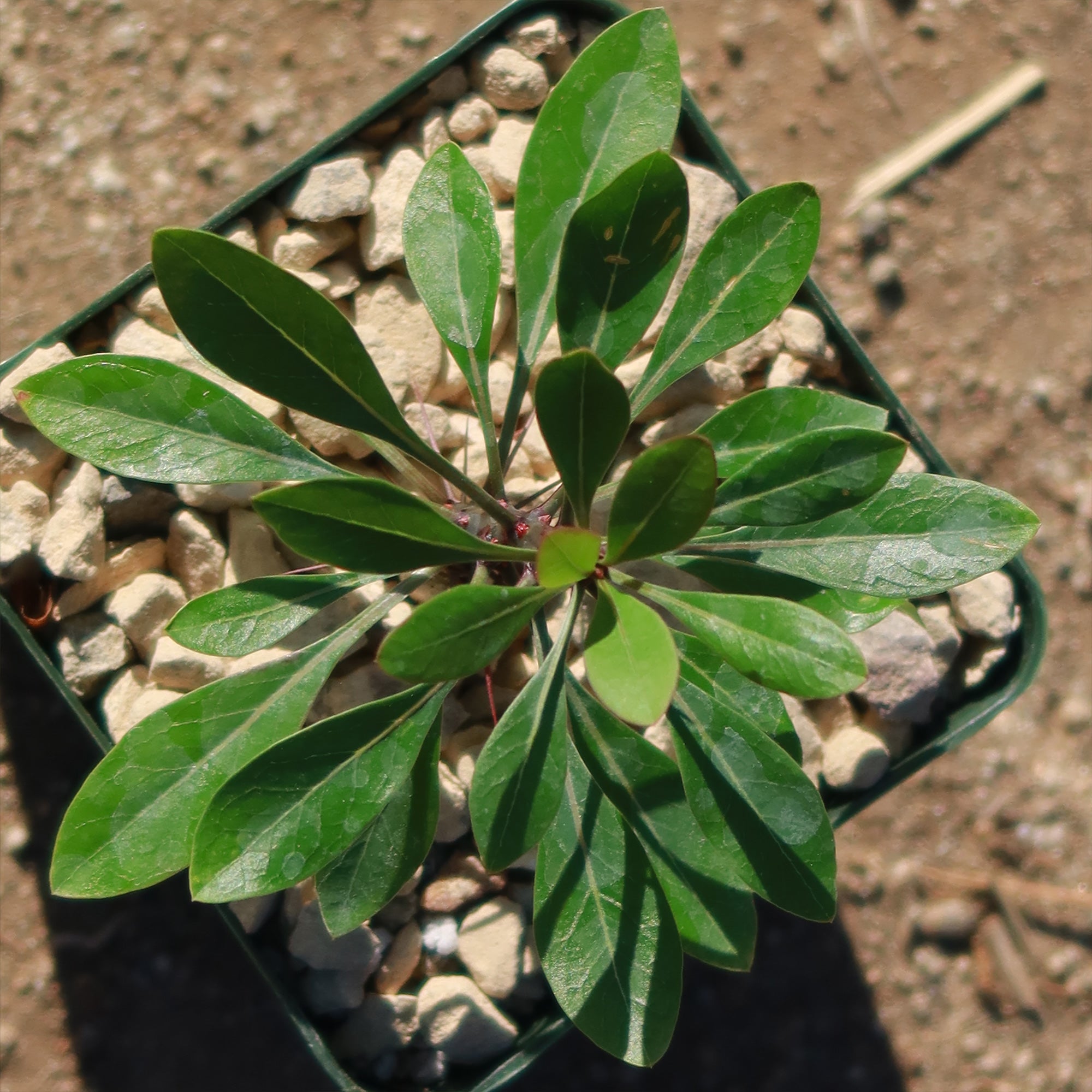



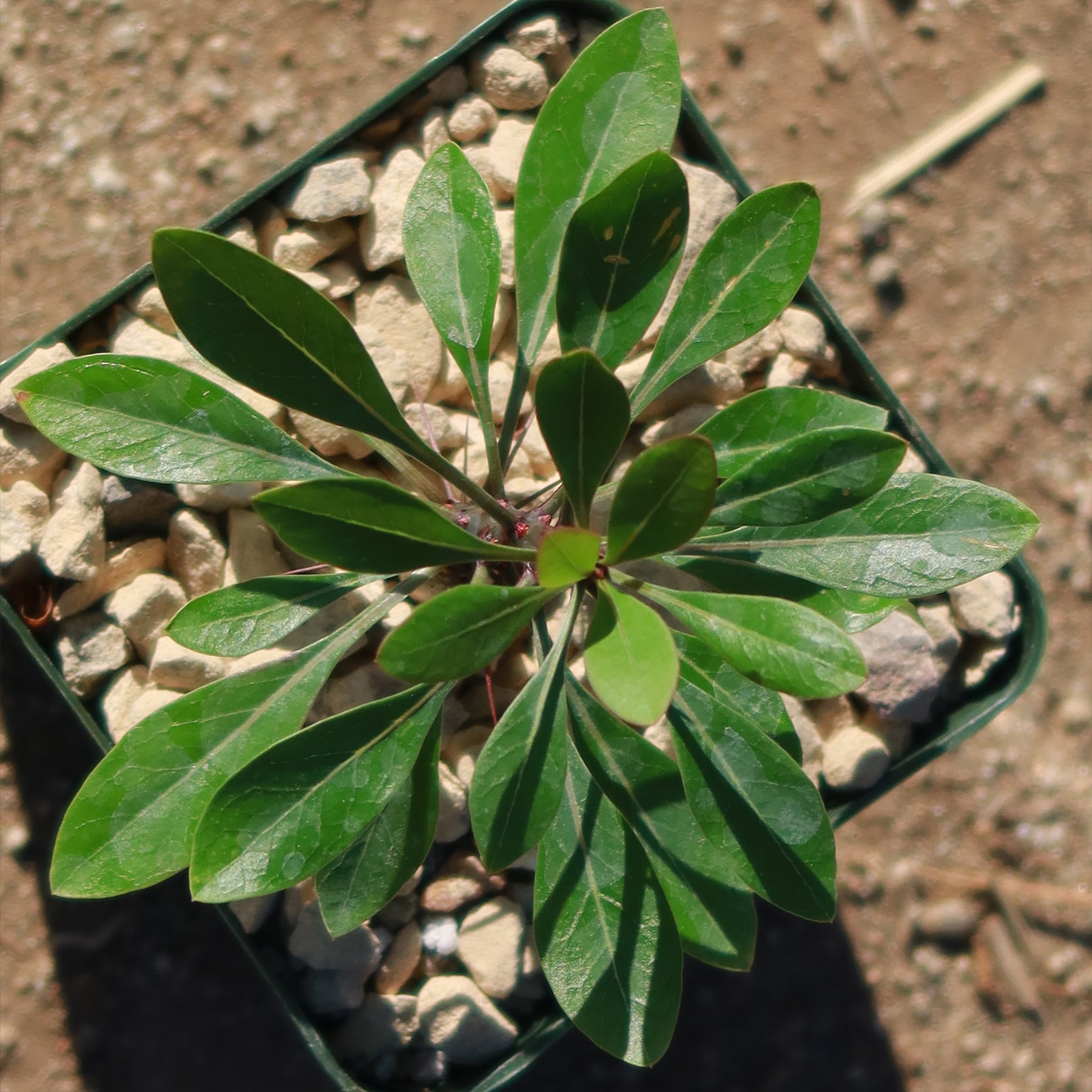
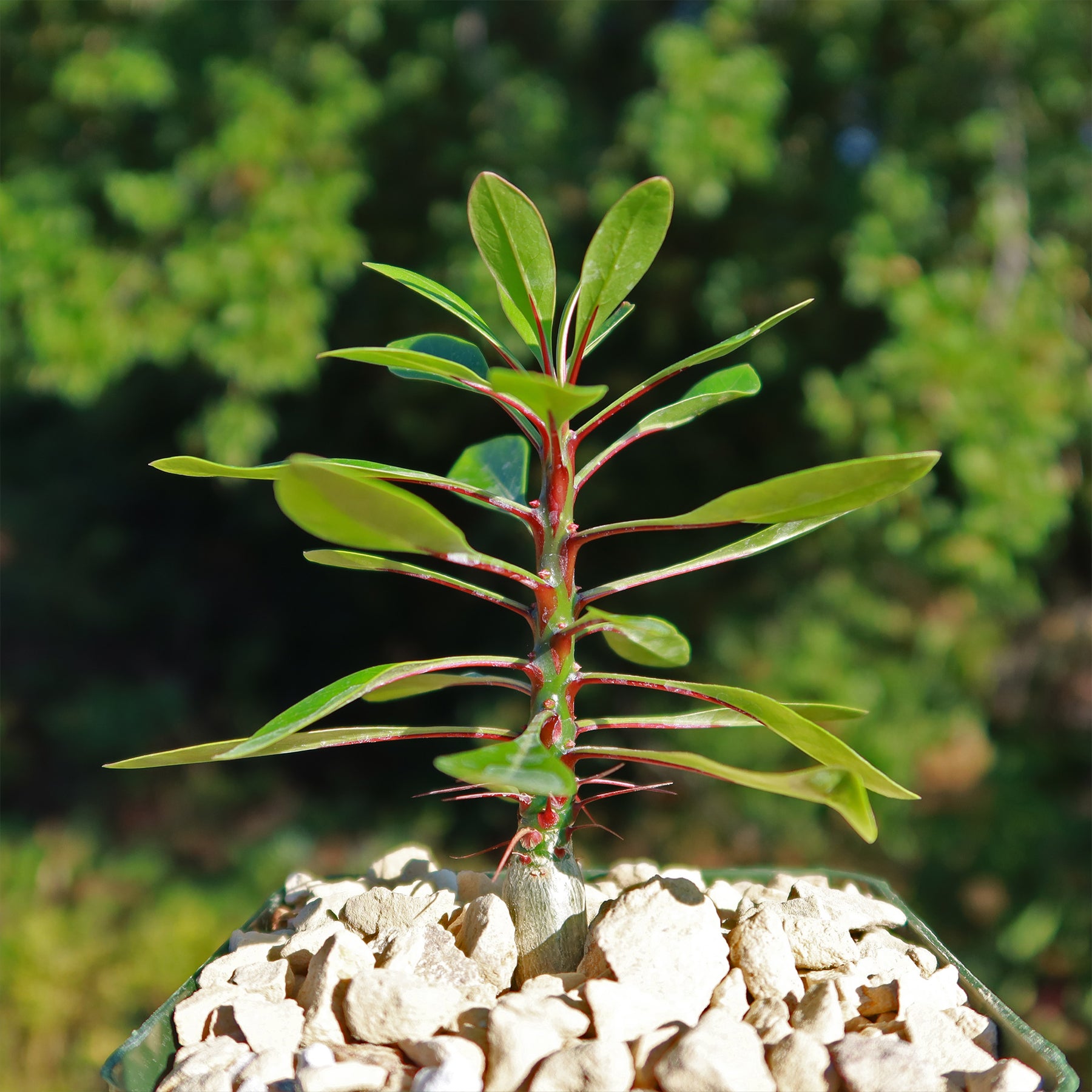
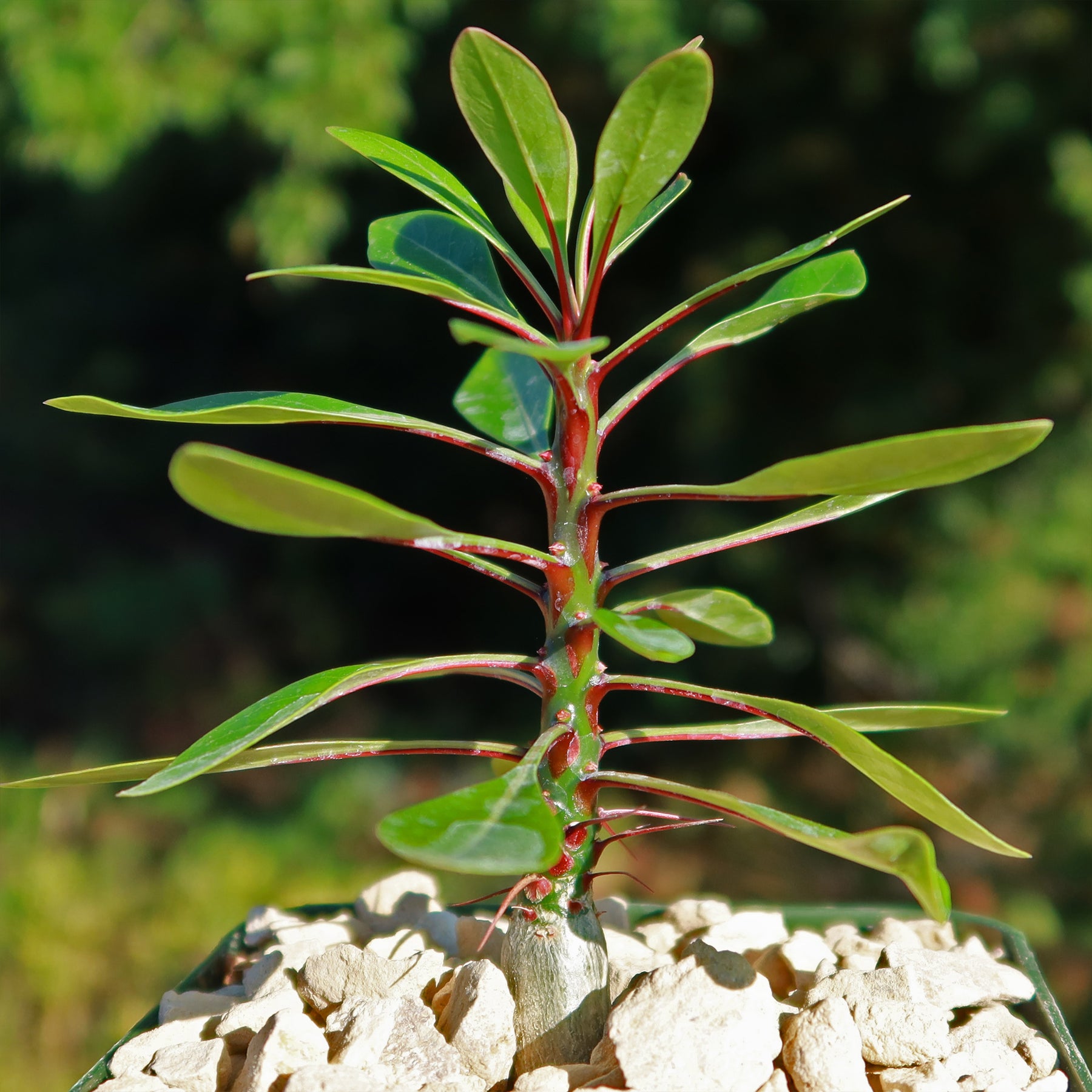
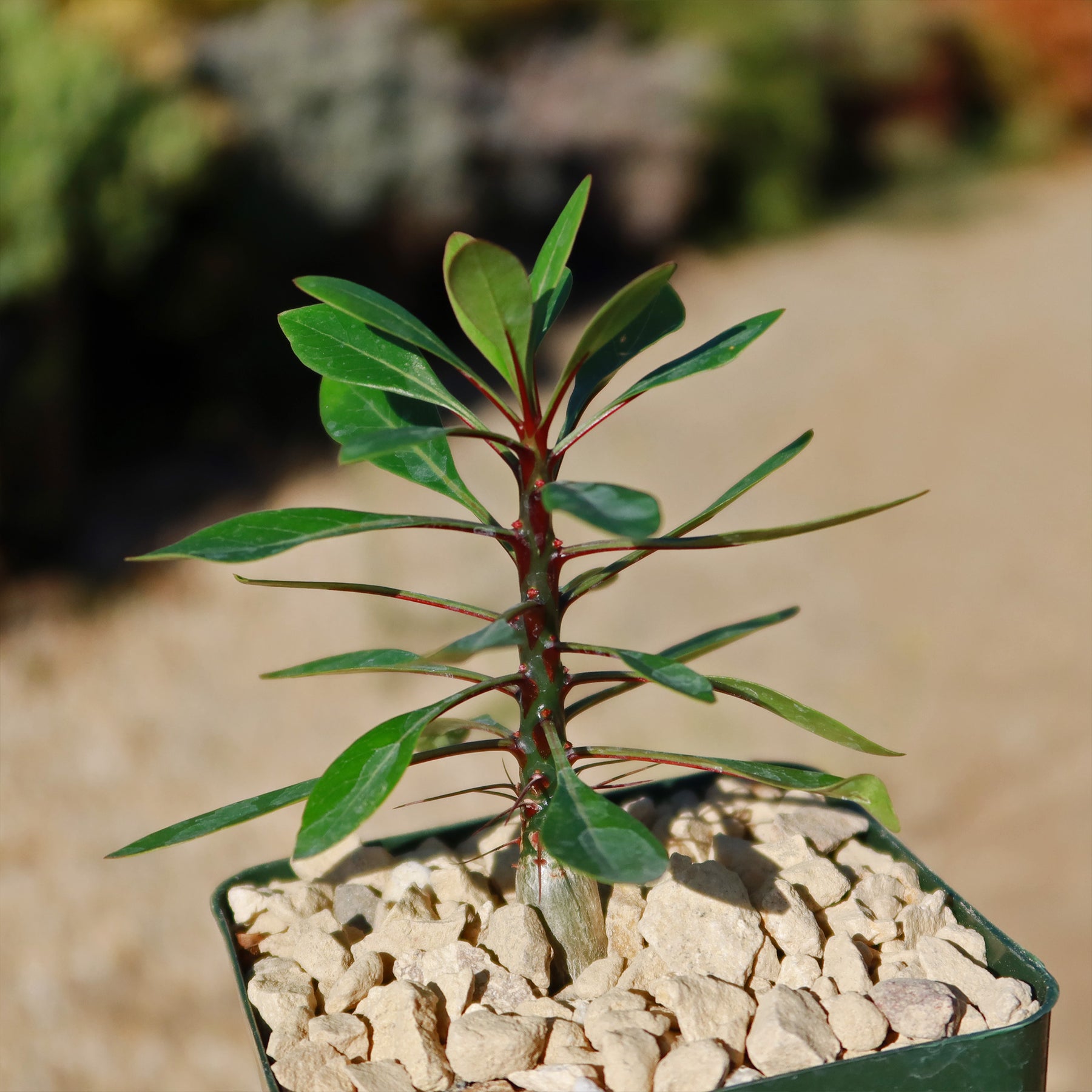
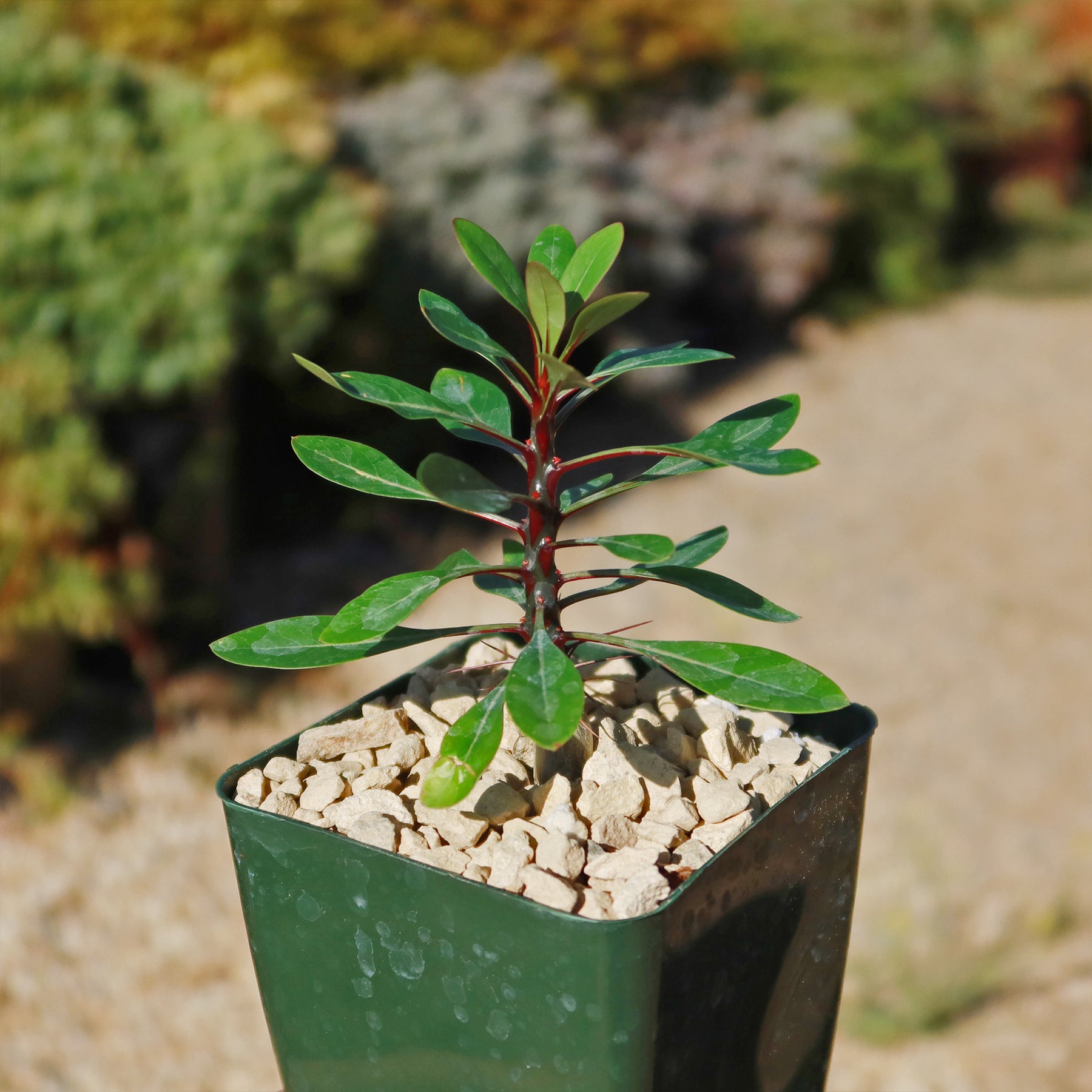
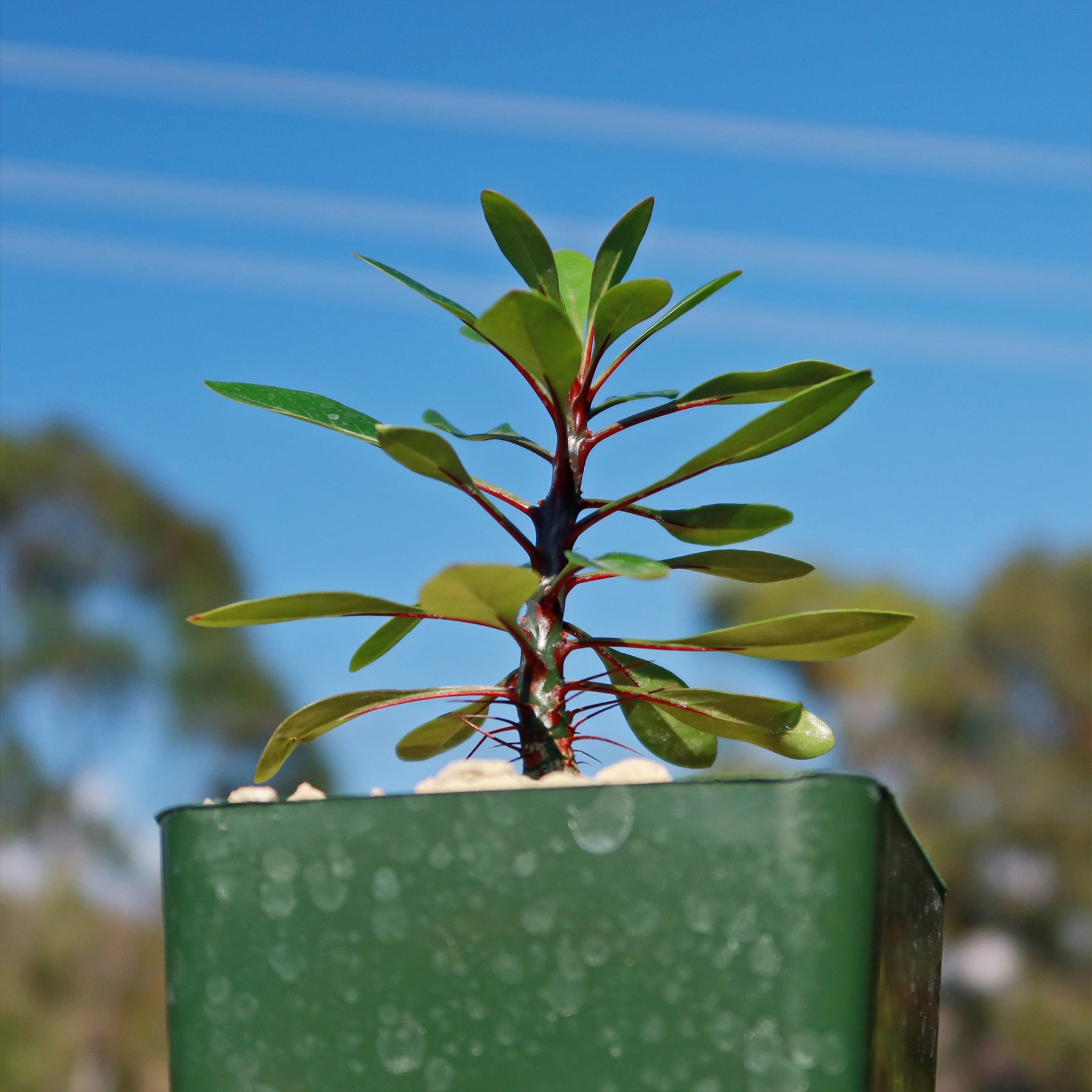
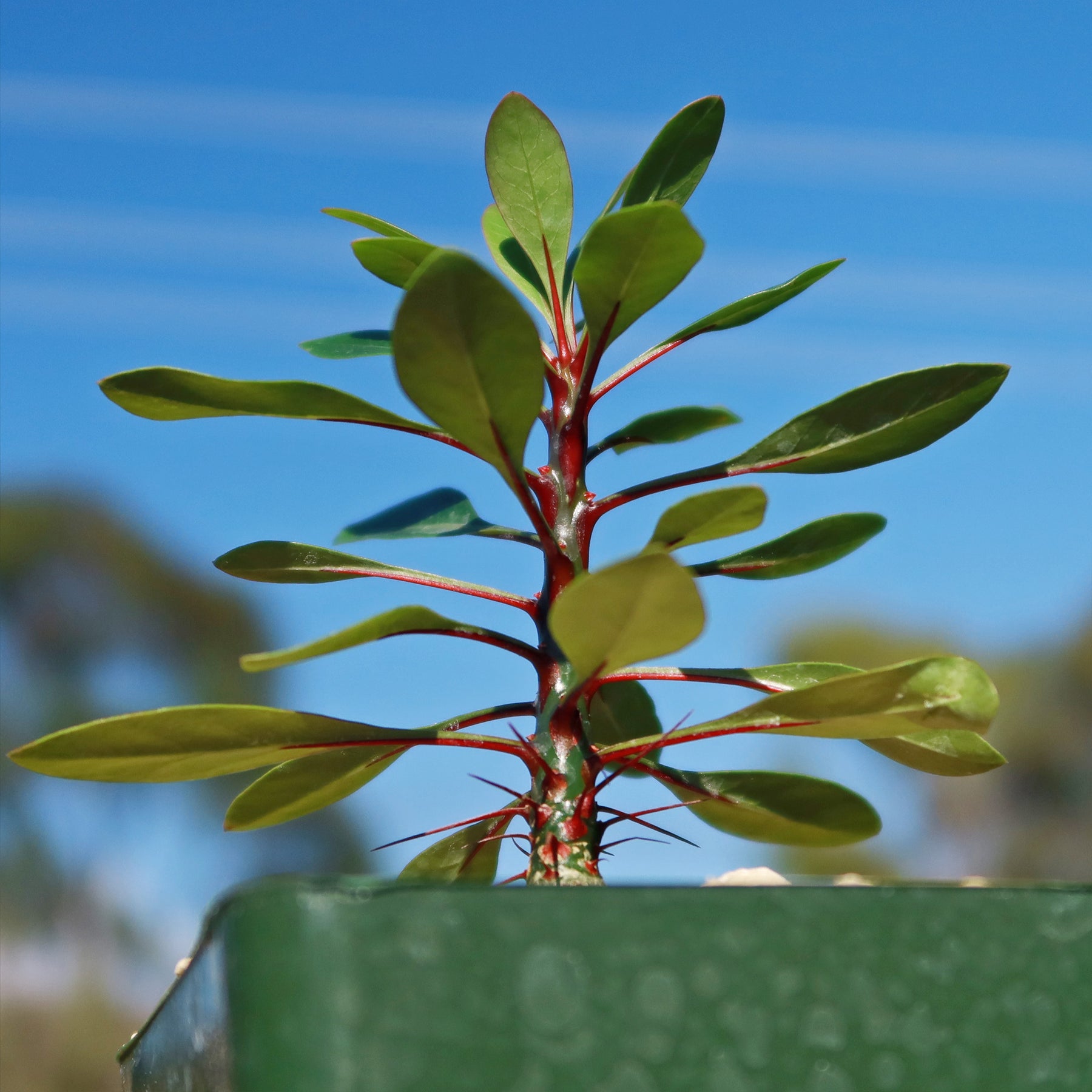
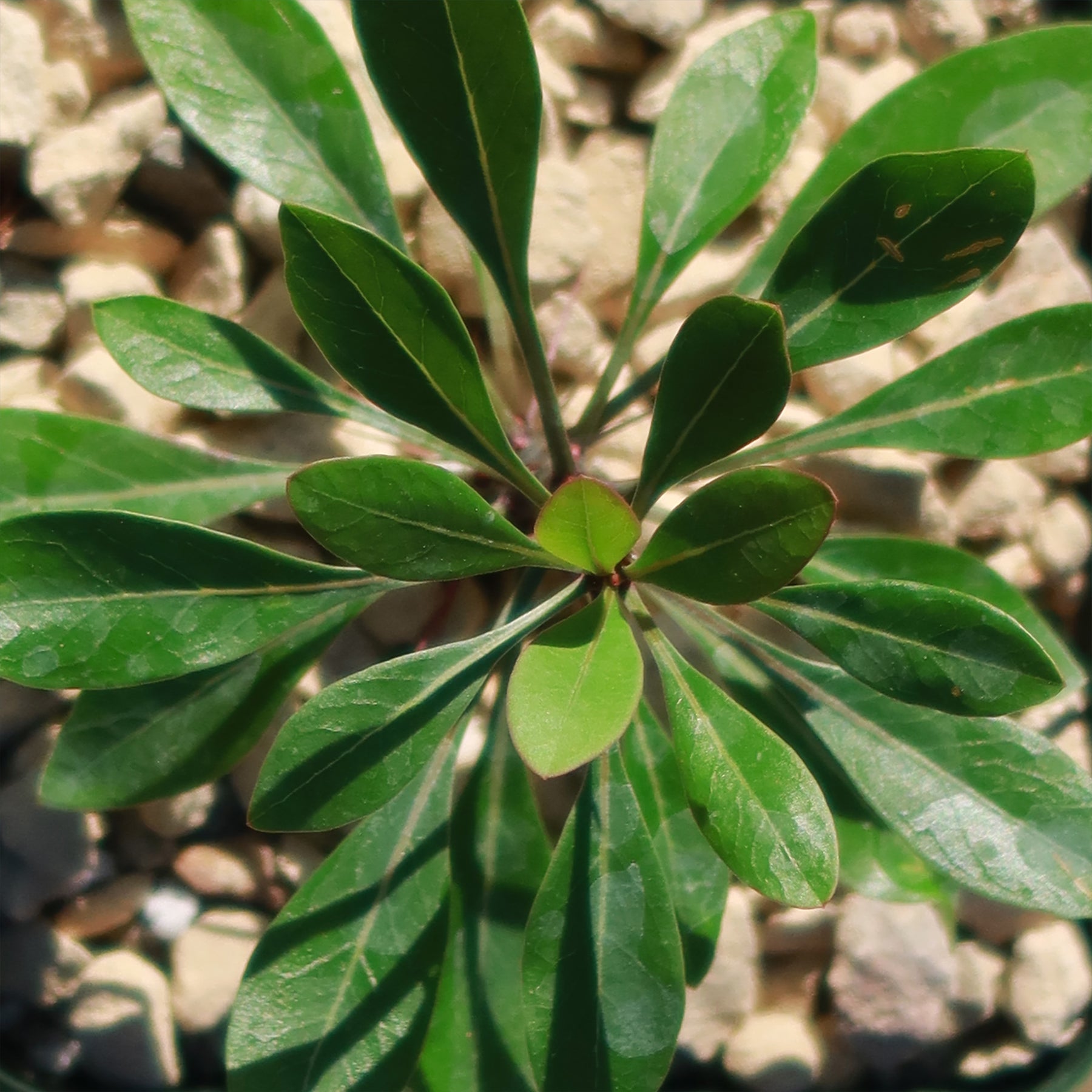

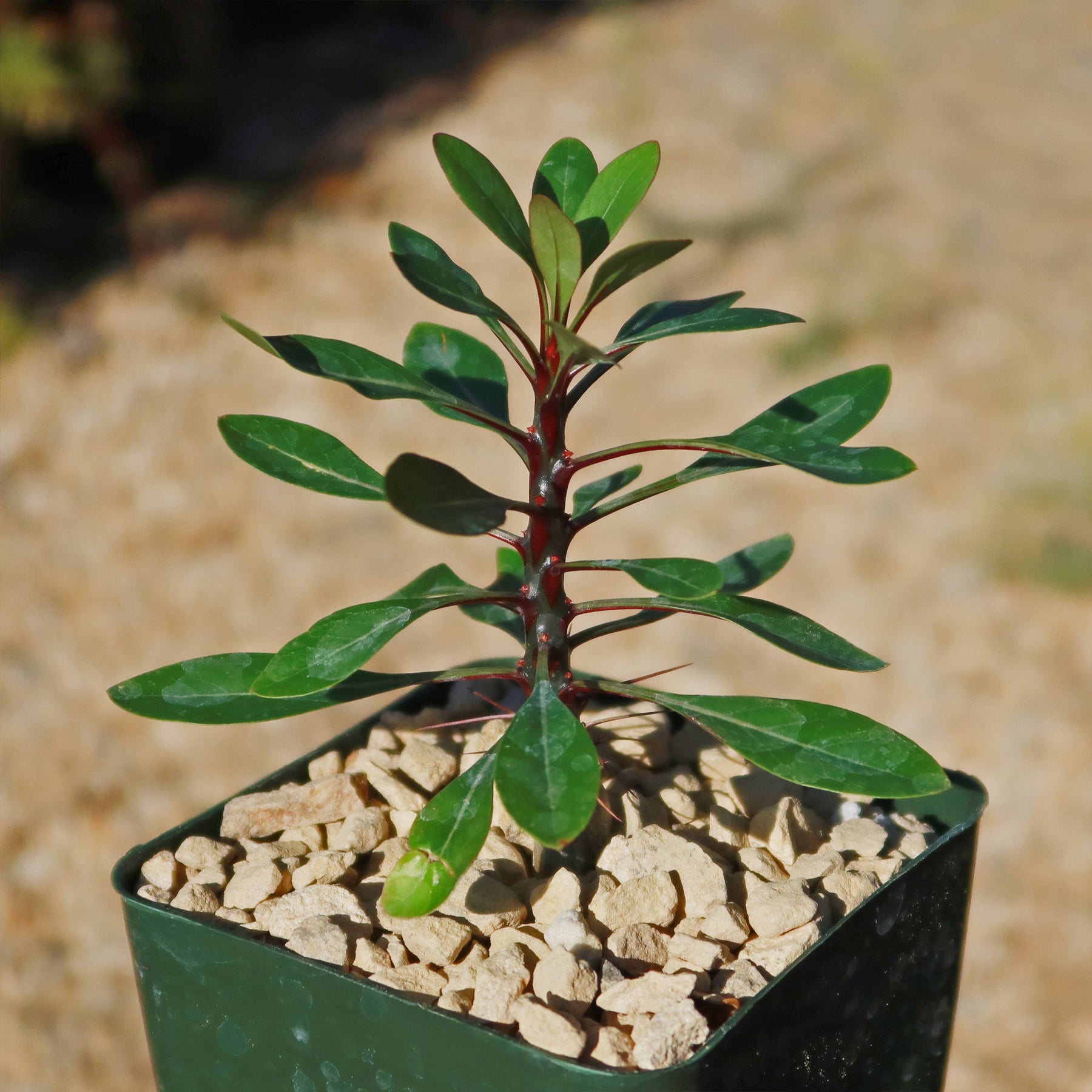
Introducing the Fouquieria fasciculata, which is a fascinating desert-dwelling caudiciform bush. It is one of the most prized "ocotillo cactus" because of its dwarf size and large, fat, swollen base. It is one of the ocotillo plants that is most similar to a geophyte.
Native to the Sonoran and Chihuahuan deserts, this unique and endangered ocotillo tree is well known for its swollen caudex, which can grow up to 23 inches in diameter. From the caudex, cylindrical woody branches can grow upward to 15 feet tall and wide.
The stems of the Ocotillo plant are covered in sharp, thorny red spines that serve as a defense mechanism against herbivores. These spines also help to reduce water loss by providing shade and reducing the surface area exposed to the sun.

These Fouquieria stems are dark green or partly green and leafless for most of the year, but after rainfall, they can quickly sprout small, ovate leaves.
These Fouquieria stems are green and leafless for most of the year, but after rainfall, they can quickly sprout small, ovate leaves.
These green stems contain chlorophyll, allowing them to carry out photosynthesis and produce energy for the plant during short periods of rain.
The Ocotillo flowers bloom during the summer with pale yellow or white tubular flowers at the tips of the stems, attracting pollinators such as hummingbirds and bees.
During winter months, the Ocotillo plant appears dormant, with its stems appearing shriveled and lifeless. However, when the desert receives rainfall, the plant quickly comes to life. The stems absorb water, causing them to swell and become plump.
The Fouquieria fasciculata is native to the arid regions of the southwestern United States and northern Mexico, where it is frequently used as a hedge plant (for boundaries & shelter). The Ocotillo plant is not only a beautiful sight in the desert landscape but also an important part of the ecosystem, providing nectar for pollinators and shelter for small desert animals.
The Fouquieria fasciculata ocotillo propagation can be done through both seeds and stem cuttings. Seeds should be sown in well-draining soil and kept moist until germination occurs, while stem cuttings should be taken from healthy, mature plants and rooted in a moist, sandy medium.
Watering Needs
The Fouquieria fasciculata, doesn't require frequent watering. It is well-adapted to survive in harsh desert conditions, with its ability to store water in its stems and its ability to respond quickly to rainfall. It can survive in arid desert conditions, so it's important not to overwater it. The ocotillo tree is adapted to store water in its stems, allowing it to withstand long periods of drought.
When it comes to watering, it's best to follow a "soak and dry" method. This means watering your ocotillos deeply but infrequently. Give it a good soaking, allowing the water to penetrate the soil deeply, and then let the soil dry out before watering again. This mimics the natural rainfall patterns in its native habitat.
Water more when your tropical ocotillo plant is producing leaves in the spring, and keep it dry when it becomes dormant (no leaves) in the winter.
Pro Tip
During dry periods, monitor the plant closely for signs of dehydration, such as wilting or shriveling of the stems. If you notice these signs, it's an indication that the plant needs water. However, after rainfall, the plant will quickly absorb water through its stems stored in its caudex, so additional watering may not be necessary.
Light Requirements
If you are growing your plant indoors, it is essential to place it near a bright, south-facing window or under grow lights that provide sufficient light intensity. Just make sure to monitor the plant for any signs of sunburn, such as yellowing or browning of the leaves, and provide some shade during the hottest part of the day if necessary.
When growing outdoors, Ocotillo Fouquieria fasciculata prefers at least 6 to 8 hours of direct sunlight daily. This helps stimulate healthy growth and encourages the plant to produce vibrant red flowers. Insufficient sunlight can result in leggy, weak growth, and a lack of flowering.
This tropical ocotillo tree thrives in full sun and requires plenty of direct sunlight to grow and flourish. It is a sun-loving plant that is well-adapted to intense desert sunlight. In fact, it is often found growing in open, exposed areas where it can receive maximum sunlight throughout the day.
Optimal Soil & Fertilizer Needs
This Fouquieria fasciculata prefers well-draining soil that mimics the sandy or gravelly conditions of its native desert habitat. A mix of sandy soil, perlite, and gravel can help create a well-draining environment for the Ocotillo plant. Avoid heavy clay soils that can retain too much moisture and lead to root rot. Here at Planet Desert, we have a specialty-formulated succulent potting mix that contains 5 natural substrates and organic mycorrhizae to promote the development of a strong root system that helps your succulent to thrive.
When it comes to fertilizing, your Fouquieria don't require heavy feeding. They are adapted to survive in nutrient-poor desert soils. However, a light application of a balanced, slow-release fertilizer in the spring can help promote healthy growth and flowering.
Look for fertilizer with lower amounts of nitrogen (e.g., 5-10-5). Remember, it's important not to over-fertilize the Ocotillo tree, as excessive nutrients can lead to leggy growth or burn the roots. Always err on the side of caution and use fertilizers sparingly.
Hardiness Zone & More
When growing indoors, the ocotillo plant prefers temperatures between 65°F and 75°F. It's important to keep the humidity levels moderate, around 40% to 60%. You can achieve this by misting the leaves occasionally or placing a tray with water near the plant.
For outdoor cultivation, Ocotillo plants are native to arid regions and are best suited for hardiness zones 9 to 11. These zones generally have mild winters with temperatures that rarely dip below freezing. It can tolerate a wide range of temperatures, from hot summer days exceeding 100°F to cooler winter nights dropping to around 40°F. However, they may experience some leaf drops during colder winter months.
As for humidity, Ocotillo plants are adapted to low-humidity environments and can tolerate dry air. They are well-suited to arid or semi-arid regions where humidity levels are typically lower. However, they may struggle in areas with consistently high humidity, as this can increase the risk of fungal diseases.
Final Thoughts
Overall, the Fouquieria fasciculata Ocotillo is a stunning plant that can be grown both indoors and outdoors. With its unique, tall, and branching stems adorned with vibrant green leaves, it adds a touch of desert beauty to any space. To care for your Ocotillo, make sure it gets plenty of bright, indirect light indoors or full sun exposure outdoors. Keep the temperature between 50°F and 90°F and the humidity moderate. Water it sparingly, allowing the soil to dry out between waterings. With a little love and attention, your Ocotillo will thrive and bring a touch of desert magic to your surroundings!
With the help of the Fouquieria fasciculata - Tropical Ocotillo plant, you'll start to spend less time maintaining your garden and more time taking in its beauty!
Bloom Season
Flower Color
Growth Rate
Hardiness Zone
Mature Size
Plant Type
Resistance
Sun Exposure
Watering Needs
| Bloom Season | Summer |
|---|---|
| Botanical Name | Fouquieria fasciculata |
| Common Name | Ocotillo plant |
| Dormancy | Winter |
| Family | Fouquieriaceae |
| Flower Color | Pale yellow, white |
| Genus | Fouquieria |
| Growth Habit | Caudiciform |
| Growth Rate | Slow |
| Hardiness Zone | 9, 10, 11 |
| Mature Size | Up to 15 ft. tall, 15 ft. wide |
| Native Area | Southwestern United States, Northern Mexico |
| Plant Type | Semi succulent bush |
| Propagation | By cuttings |
| Resistance | Extremely drought-tolerant, heat resistant, pest resistant, deer resistant |
| Soil PH | 6.5, Acidic, Neutral |
| Soil Type | specialty-formulated succulent potting mix |
| Special Features | Easy to maintain |
| Sun Exposure | Full sun (6+ hrs.), Partial shade (3–6 hrs. sun) |
| Toxicity | Mild toxic for humans, mild toxic for pets |
| Watering Needs | Low |
Growers Quick Reference Guide - Key Features
| Bloom Season | Summer |
|---|---|
| Botanical Name | Fouquieria fasciculata |
| Common Name | Ocotillo plant |
| Dormancy | Winter |
| Family | Fouquieriaceae |
| Flower Color | Pale yellow, white |
| Genus | Fouquieria |
| Growth Habit | Caudiciform |
| Growth Rate | Slow |
| Hardiness Zone | 9, 10, 11 |
| Mature Size | Up to 15 ft. tall, 15 ft. wide |
| Native Area | Southwestern United States, Northern Mexico |
| Plant Type | Semi succulent bush |
| Propagation | By cuttings |
| Resistance | Extremely drought-tolerant, heat resistant, pest resistant, deer resistant |
| Soil PH | 6.5, Acidic, Neutral |
| Soil Type | specialty-formulated succulent potting mix |
| Special Features | Easy to maintain |
| Sun Exposure | Full sun (6+ hrs.), Partial shade (3–6 hrs. sun) |
| Toxicity | Mild toxic for humans, mild toxic for pets |
| Watering Needs | Low |
- Description
- Key Plant Features
Introducing the Fouquieria fasciculata, which is a fascinating desert-dwelling caudiciform bush. It is one of the most prized "ocotillo cactus" because of its dwarf size and large, fat, swollen base. It is one of the ocotillo plants that is most similar to a geophyte.
Native to the Sonoran and Chihuahuan deserts, this unique and endangered ocotillo tree is well known for its swollen caudex, which can grow up to 23 inches in diameter. From the caudex, cylindrical woody branches can grow upward to 15 feet tall and wide.
The stems of the Ocotillo plant are covered in sharp, thorny red spines that serve as a defense mechanism against herbivores. These spines also help to reduce water loss by providing shade and reducing the surface area exposed to the sun.
These Fouquieria stems are dark green or partly green and leafless for most of the year, but after rainfall, they can quickly sprout small, ovate leaves.
These Fouquieria stems are green and leafless for most of the year, but after rainfall, they can quickly sprout small, ovate leaves.
These green stems contain chlorophyll, allowing them to carry out photosynthesis and produce energy for the plant during short periods of rain.
The Ocotillo flowers bloom during the summer with pale yellow or white tubular flowers at the tips of the stems, attracting pollinators such as hummingbirds and bees.
During winter months, the Ocotillo plant appears dormant, with its stems appearing shriveled and lifeless. However, when the desert receives rainfall, the plant quickly comes to life. The stems absorb water, causing them to swell and become plump.
The Fouquieria fasciculata is native to the arid regions of the southwestern United States and northern Mexico, where it is frequently used as a hedge plant (for boundaries & shelter). The Ocotillo plant is not only a beautiful sight in the desert landscape but also an important part of the ecosystem, providing nectar for pollinators and shelter for small desert animals.
The Fouquieria fasciculata ocotillo propagation can be done through both seeds and stem cuttings. Seeds should be sown in well-draining soil and kept moist until germination occurs, while stem cuttings should be taken from healthy, mature plants and rooted in a moist, sandy medium.
Watering Needs
The Fouquieria fasciculata, doesn't require frequent watering. It is well-adapted to survive in harsh desert conditions, with its ability to store water in its stems and its ability to respond quickly to rainfall. It can survive in arid desert conditions, so it's important not to overwater it. The ocotillo tree is adapted to store water in its stems, allowing it to withstand long periods of drought.
When it comes to watering, it's best to follow a "soak and dry" method. This means watering your ocotillos deeply but infrequently. Give it a good soaking, allowing the water to penetrate the soil deeply, and then let the soil dry out before watering again. This mimics the natural rainfall patterns in its native habitat.
Water more when your tropical ocotillo plant is producing leaves in the spring, and keep it dry when it becomes dormant (no leaves) in the winter.
Pro Tip
During dry periods, monitor the plant closely for signs of dehydration, such as wilting or shriveling of the stems. If you notice these signs, it's an indication that the plant needs water. However, after rainfall, the plant will quickly absorb water through its stems stored in its caudex, so additional watering may not be necessary.
Light Requirements
If you are growing your plant indoors, it is essential to place it near a bright, south-facing window or under grow lights that provide sufficient light intensity. Just make sure to monitor the plant for any signs of sunburn, such as yellowing or browning of the leaves, and provide some shade during the hottest part of the day if necessary.
When growing outdoors, Ocotillo Fouquieria fasciculata prefers at least 6 to 8 hours of direct sunlight daily. This helps stimulate healthy growth and encourages the plant to produce vibrant red flowers. Insufficient sunlight can result in leggy, weak growth, and a lack of flowering.
This tropical ocotillo tree thrives in full sun and requires plenty of direct sunlight to grow and flourish. It is a sun-loving plant that is well-adapted to intense desert sunlight. In fact, it is often found growing in open, exposed areas where it can receive maximum sunlight throughout the day.
Optimal Soil & Fertilizer Needs
This Fouquieria fasciculata prefers well-draining soil that mimics the sandy or gravelly conditions of its native desert habitat. A mix of sandy soil, perlite, and gravel can help create a well-draining environment for the Ocotillo plant. Avoid heavy clay soils that can retain too much moisture and lead to root rot. Here at Planet Desert, we have a specialty-formulated succulent potting mix that contains 5 natural substrates and organic mycorrhizae to promote the development of a strong root system that helps your succulent to thrive.
When it comes to fertilizing, your Fouquieria don't require heavy feeding. They are adapted to survive in nutrient-poor desert soils. However, a light application of a balanced, slow-release fertilizer in the spring can help promote healthy growth and flowering.
Look for fertilizer with lower amounts of nitrogen (e.g., 5-10-5). Remember, it's important not to over-fertilize the Ocotillo tree, as excessive nutrients can lead to leggy growth or burn the roots. Always err on the side of caution and use fertilizers sparingly.
Hardiness Zone & More
When growing indoors, the ocotillo plant prefers temperatures between 65°F and 75°F. It's important to keep the humidity levels moderate, around 40% to 60%. You can achieve this by misting the leaves occasionally or placing a tray with water near the plant.
For outdoor cultivation, Ocotillo plants are native to arid regions and are best suited for hardiness zones 9 to 11. These zones generally have mild winters with temperatures that rarely dip below freezing. It can tolerate a wide range of temperatures, from hot summer days exceeding 100°F to cooler winter nights dropping to around 40°F. However, they may experience some leaf drops during colder winter months.
As for humidity, Ocotillo plants are adapted to low-humidity environments and can tolerate dry air. They are well-suited to arid or semi-arid regions where humidity levels are typically lower. However, they may struggle in areas with consistently high humidity, as this can increase the risk of fungal diseases.
Final Thoughts
Overall, the Fouquieria fasciculata Ocotillo is a stunning plant that can be grown both indoors and outdoors. With its unique, tall, and branching stems adorned with vibrant green leaves, it adds a touch of desert beauty to any space. To care for your Ocotillo, make sure it gets plenty of bright, indirect light indoors or full sun exposure outdoors. Keep the temperature between 50°F and 90°F and the humidity moderate. Water it sparingly, allowing the soil to dry out between waterings. With a little love and attention, your Ocotillo will thrive and bring a touch of desert magic to your surroundings!
With the help of the Fouquieria fasciculata - Tropical Ocotillo plant, you'll start to spend less time maintaining your garden and more time taking in its beauty!
Bloom Season
Flower Color
Growth Rate
Hardiness Zone
Mature Size
Plant Type
Resistance
Sun Exposure
Watering Needs
| Bloom Season | Summer |
|---|---|
| Botanical Name | Fouquieria fasciculata |
| Common Name | Ocotillo plant |
| Dormancy | Winter |
| Family | Fouquieriaceae |
| Flower Color | Pale yellow, white |
| Genus | Fouquieria |
| Growth Habit | Caudiciform |
| Growth Rate | Slow |
| Hardiness Zone | 9, 10, 11 |
| Mature Size | Up to 15 ft. tall, 15 ft. wide |
| Native Area | Southwestern United States, Northern Mexico |
| Plant Type | Semi succulent bush |
| Propagation | By cuttings |
| Resistance | Extremely drought-tolerant, heat resistant, pest resistant, deer resistant |
| Soil PH | 6.5, Acidic, Neutral |
| Soil Type | specialty-formulated succulent potting mix |
| Special Features | Easy to maintain |
| Sun Exposure | Full sun (6+ hrs.), Partial shade (3–6 hrs. sun) |
| Toxicity | Mild toxic for humans, mild toxic for pets |
| Watering Needs | Low |
Growers Quick Reference Guide - Key Features
| Bloom Season | Summer |
|---|---|
| Botanical Name | Fouquieria fasciculata |
| Common Name | Ocotillo plant |
| Dormancy | Winter |
| Family | Fouquieriaceae |
| Flower Color | Pale yellow, white |
| Genus | Fouquieria |
| Growth Habit | Caudiciform |
| Growth Rate | Slow |
| Hardiness Zone | 9, 10, 11 |
| Mature Size | Up to 15 ft. tall, 15 ft. wide |
| Native Area | Southwestern United States, Northern Mexico |
| Plant Type | Semi succulent bush |
| Propagation | By cuttings |
| Resistance | Extremely drought-tolerant, heat resistant, pest resistant, deer resistant |
| Soil PH | 6.5, Acidic, Neutral |
| Soil Type | specialty-formulated succulent potting mix |
| Special Features | Easy to maintain |
| Sun Exposure | Full sun (6+ hrs.), Partial shade (3–6 hrs. sun) |
| Toxicity | Mild toxic for humans, mild toxic for pets |
| Watering Needs | Low |