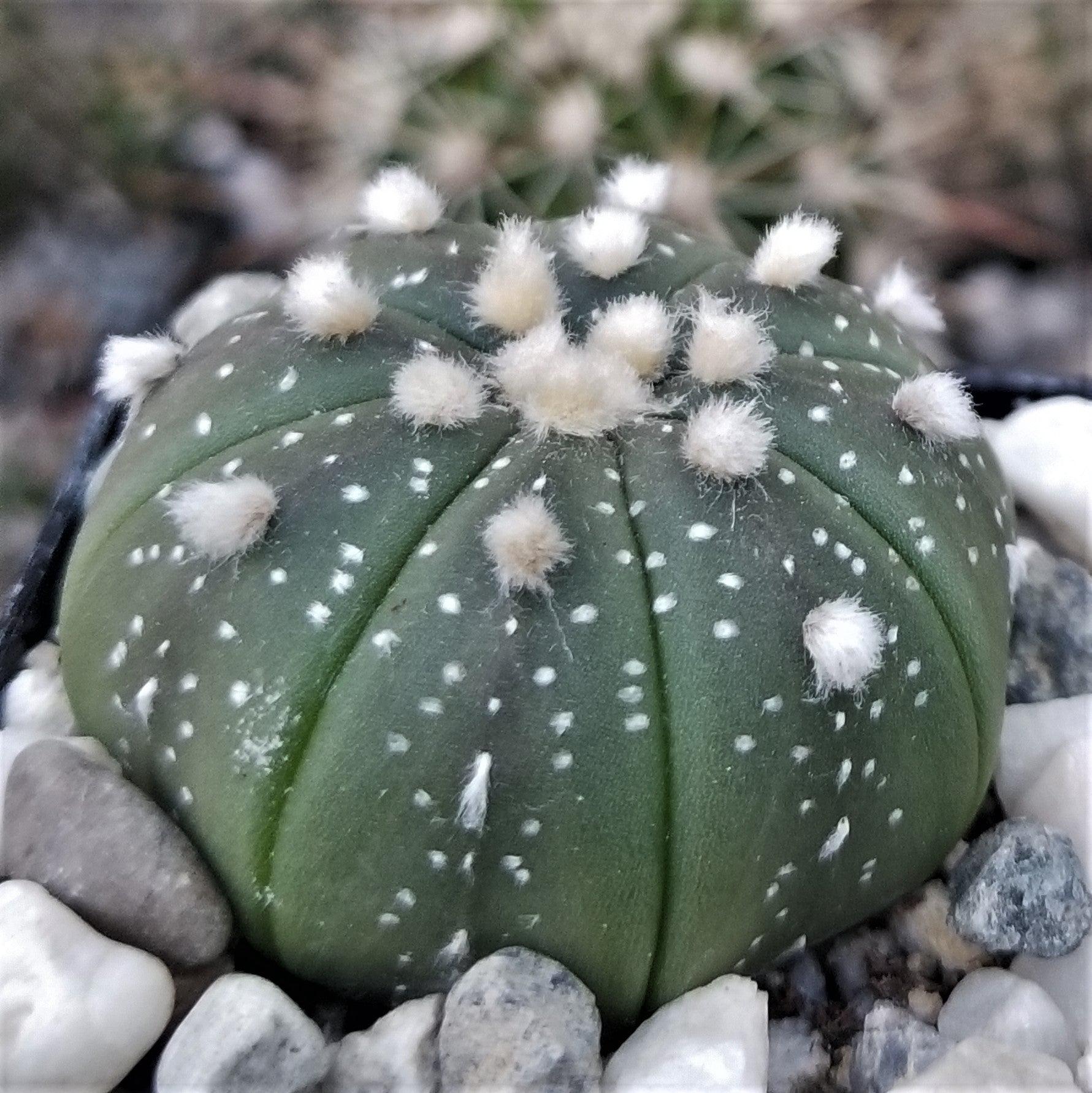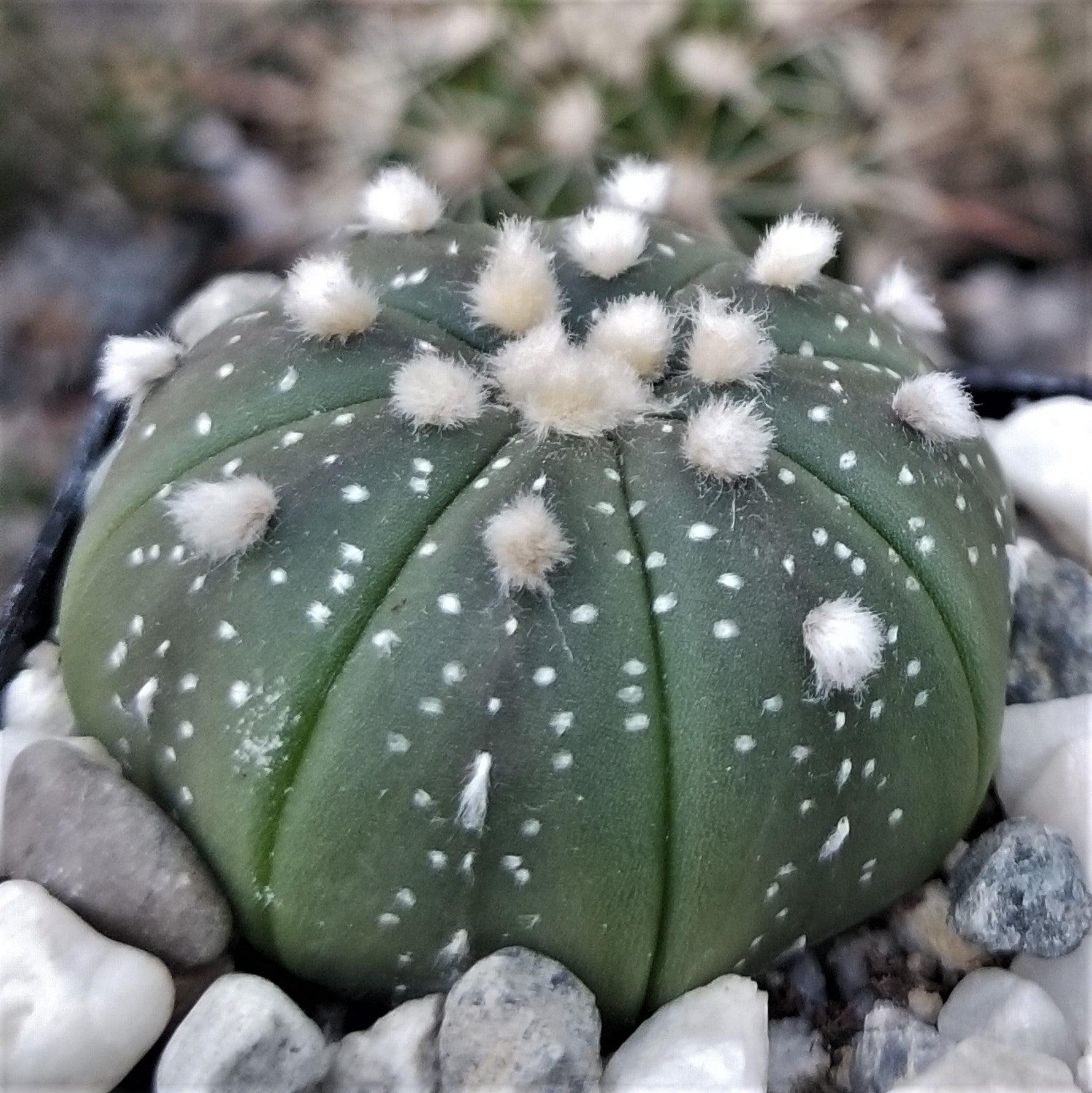
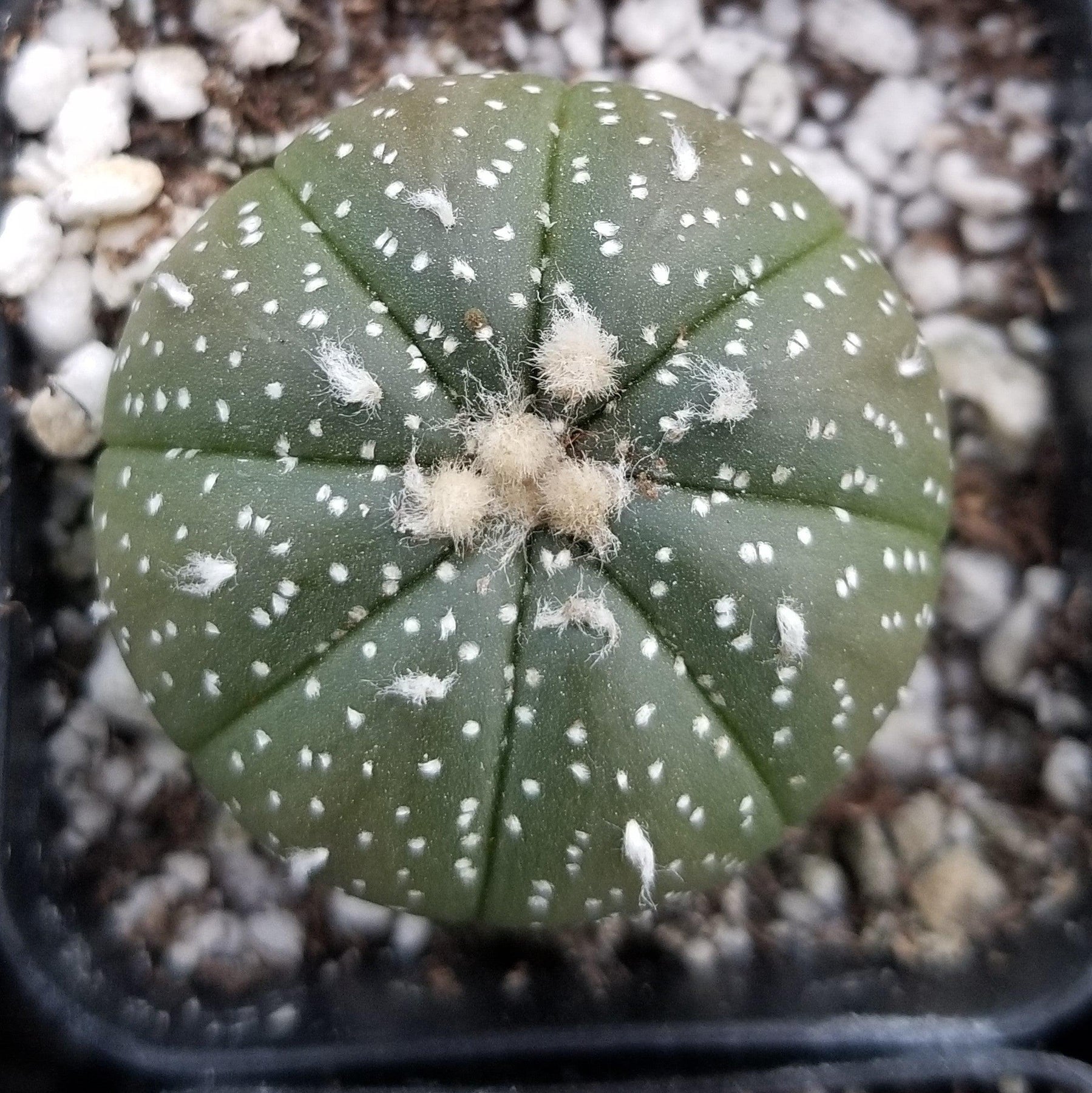
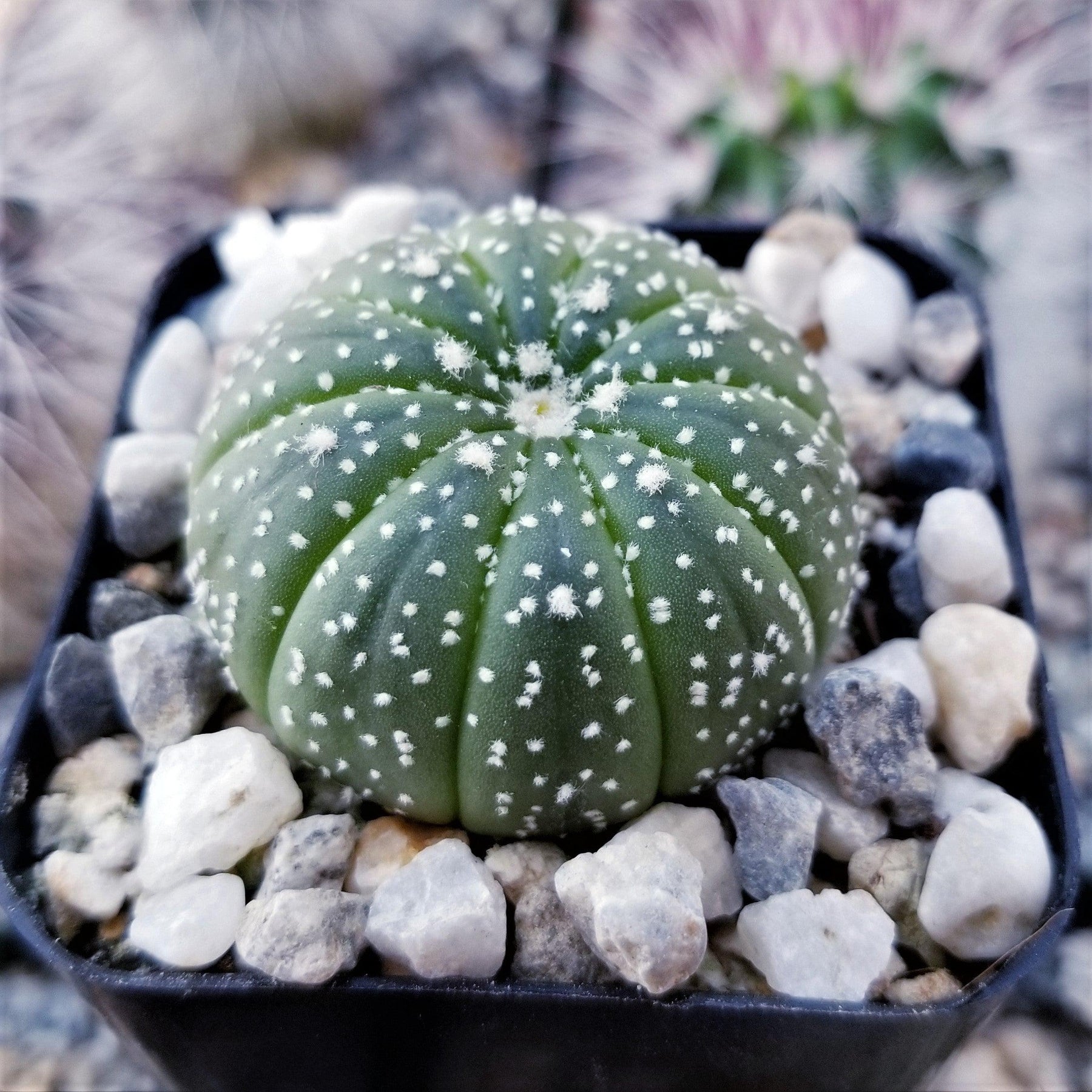
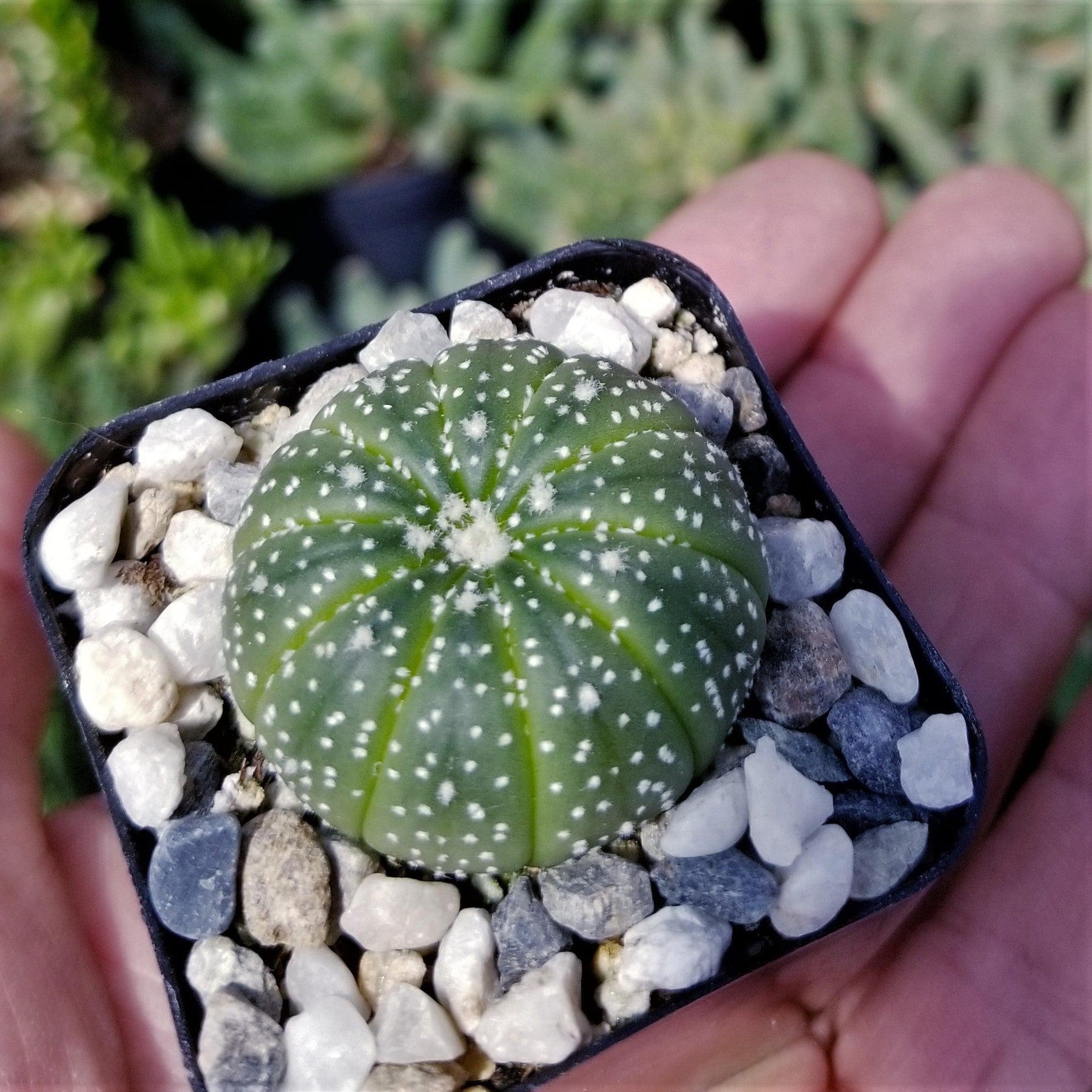
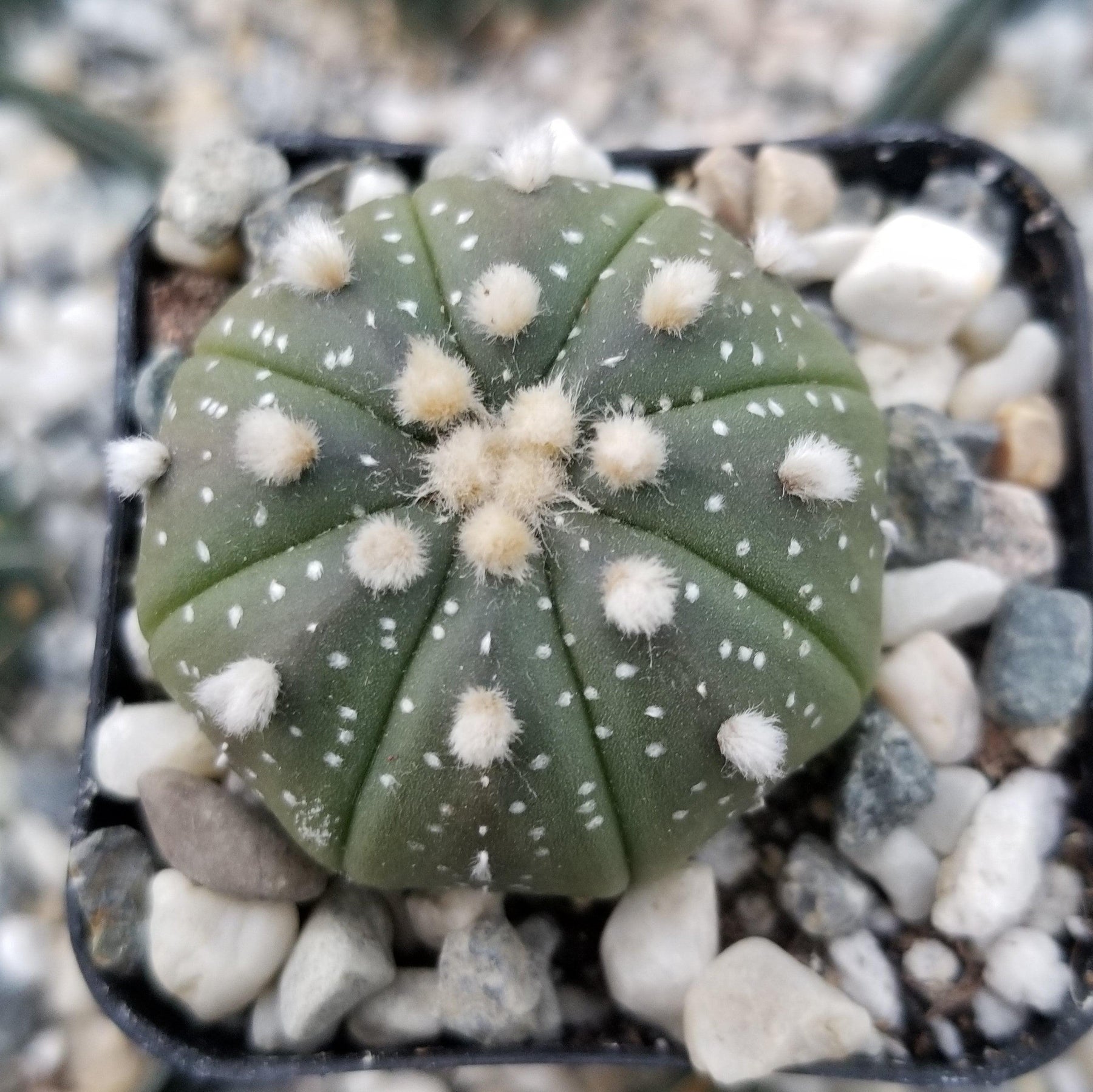
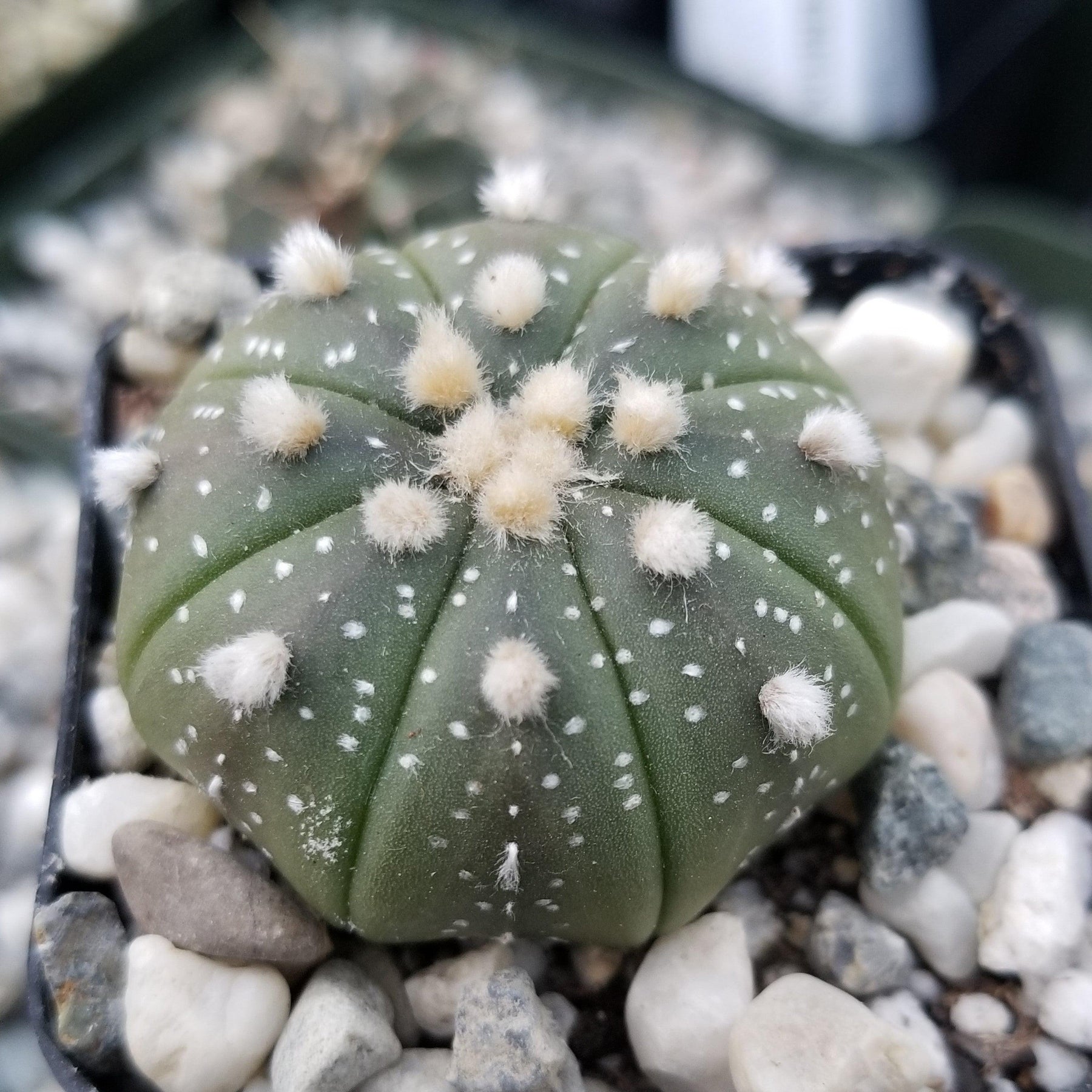
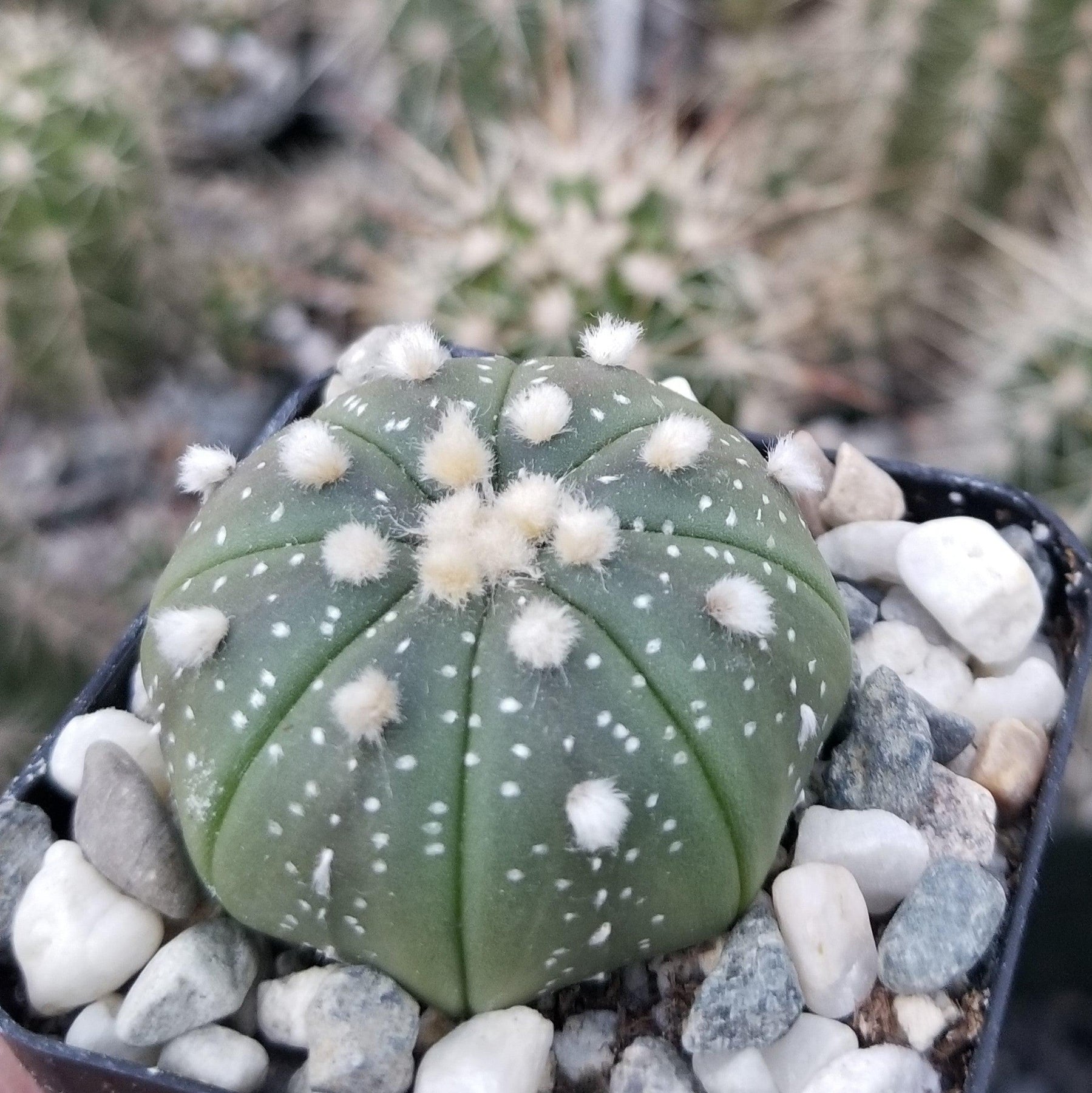
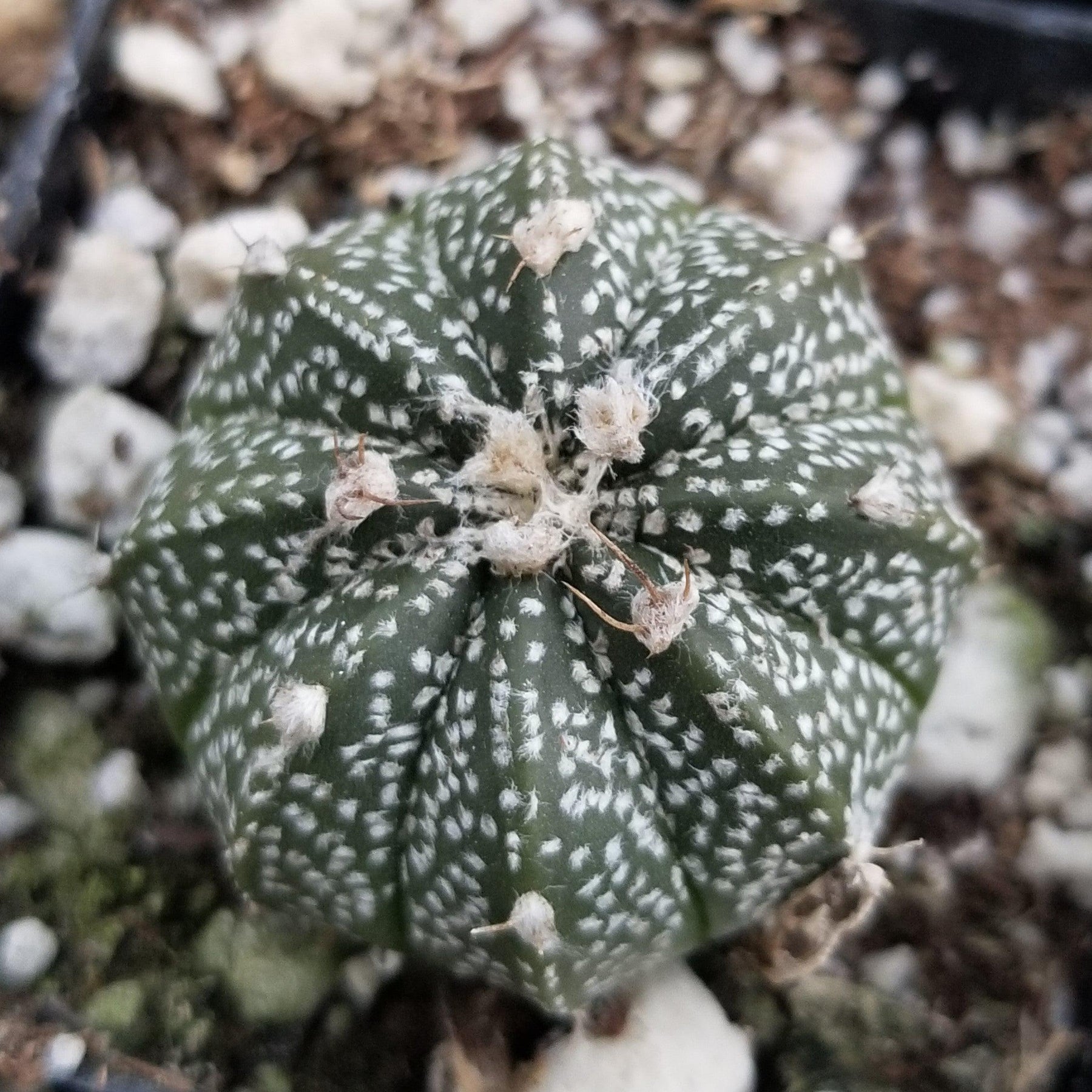
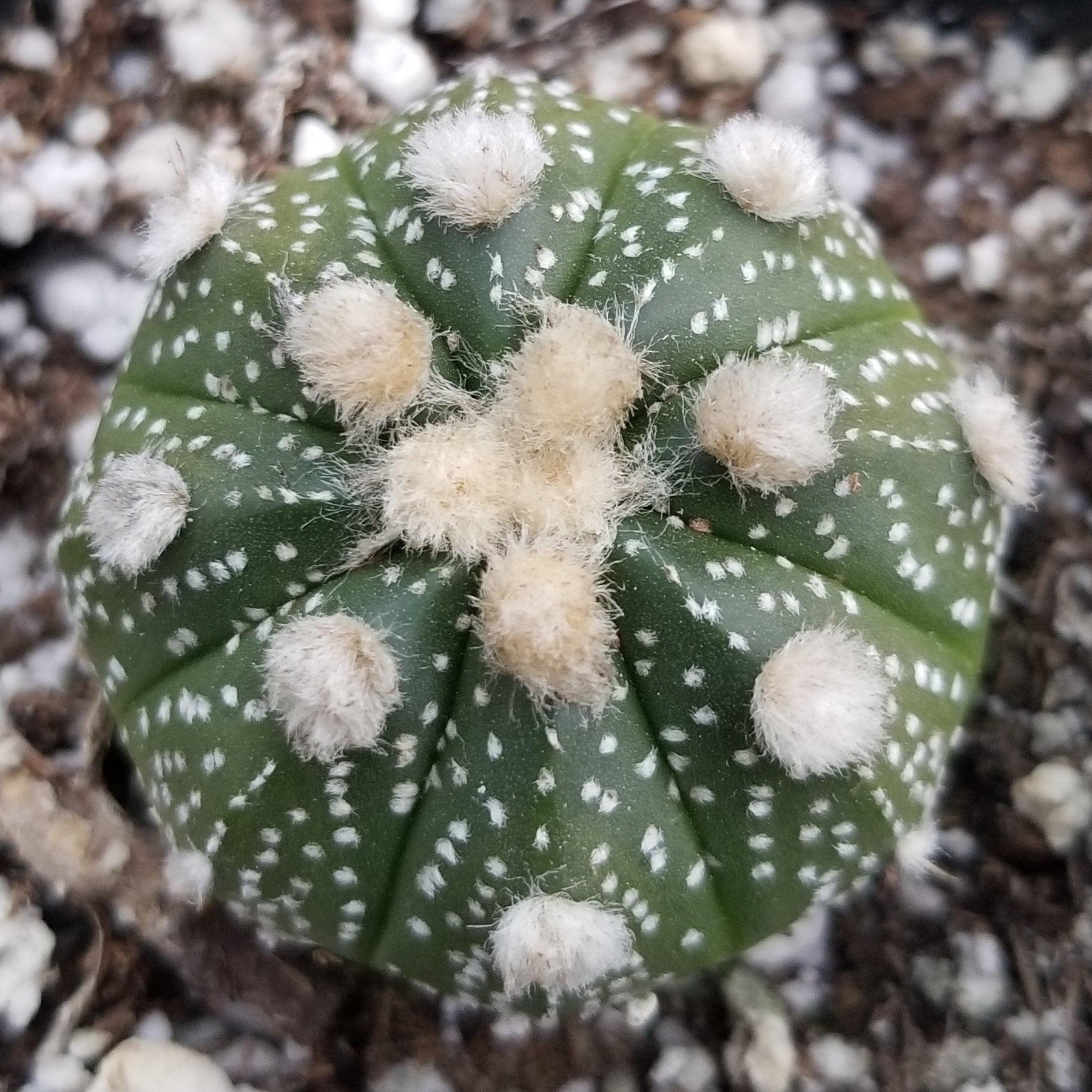
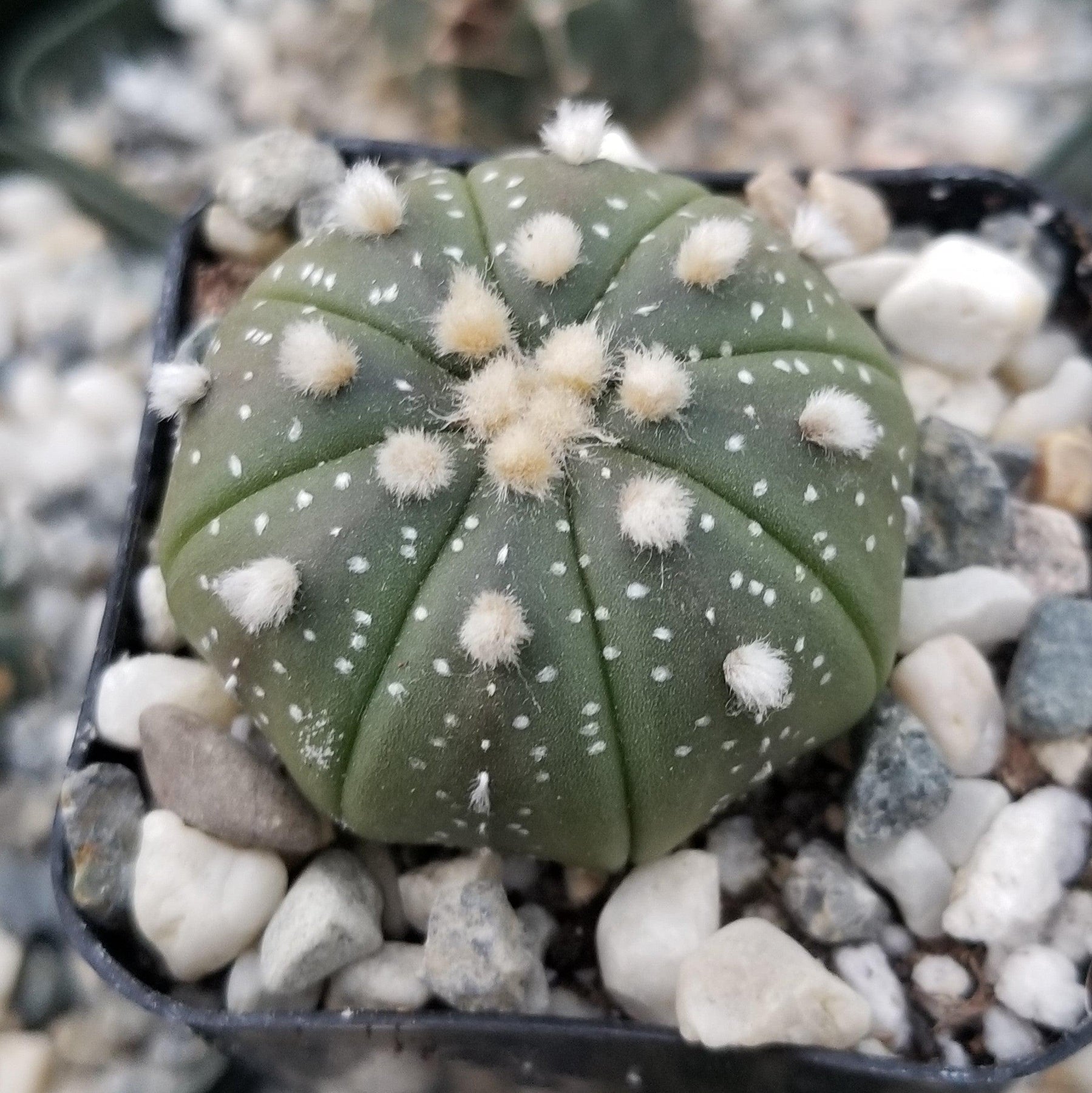
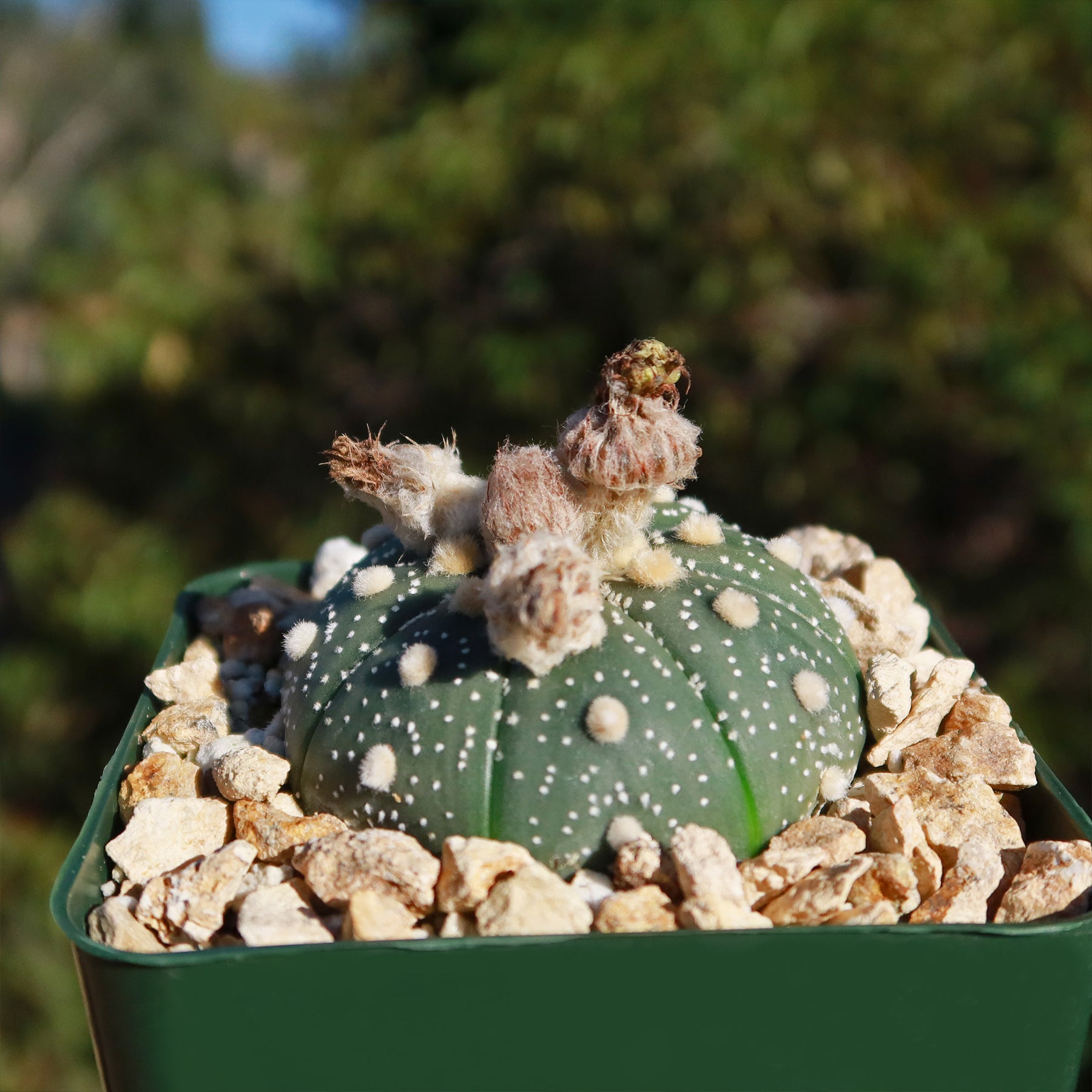
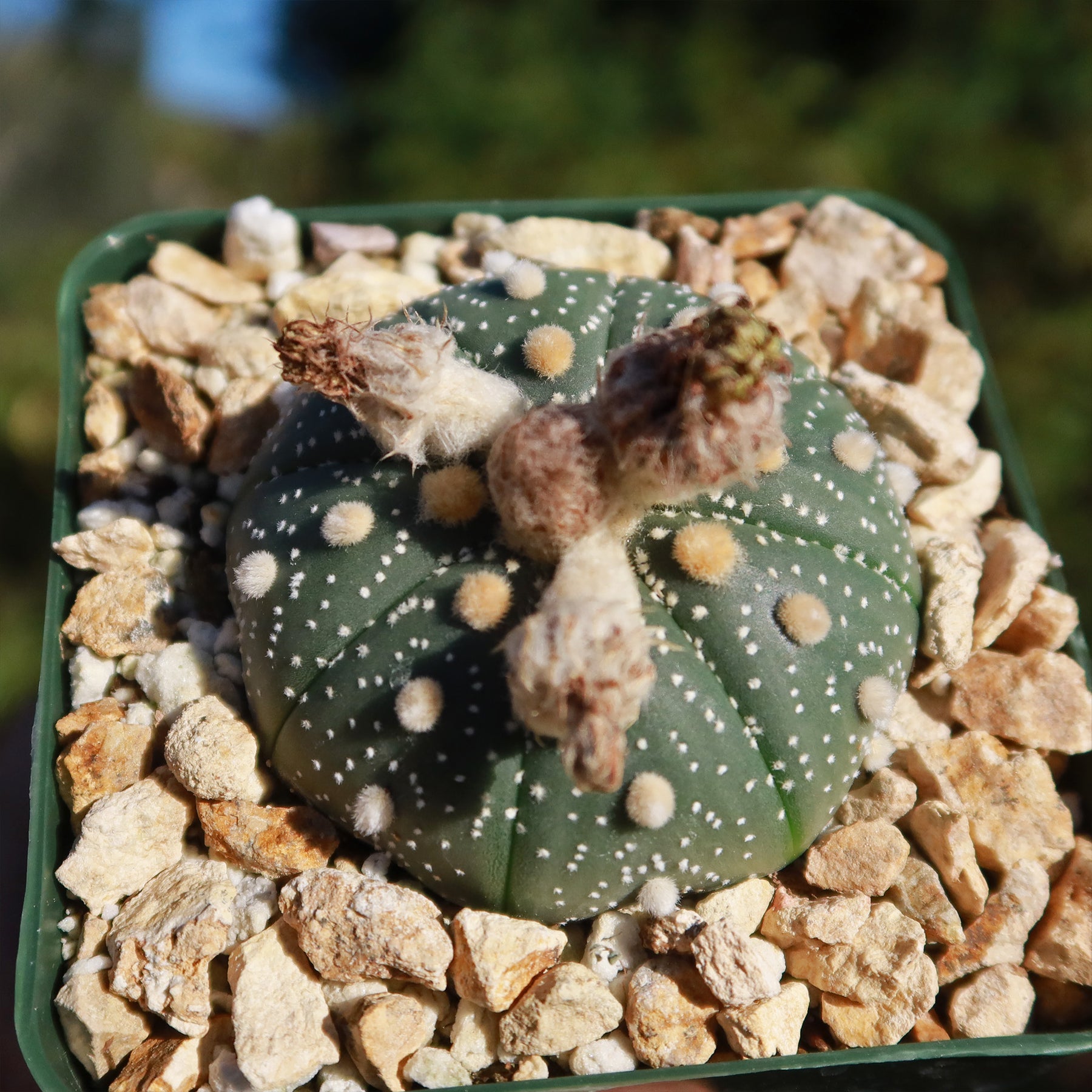
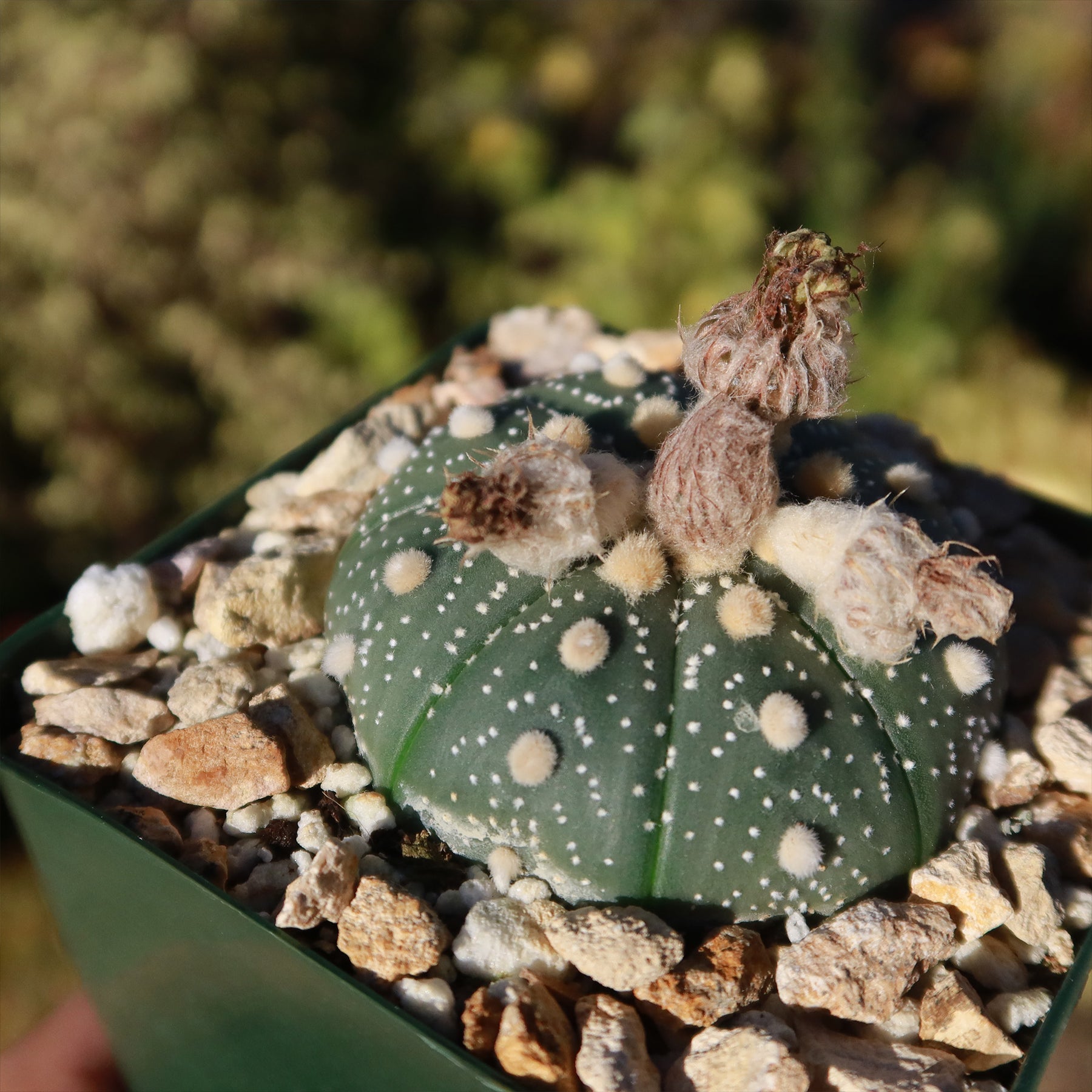
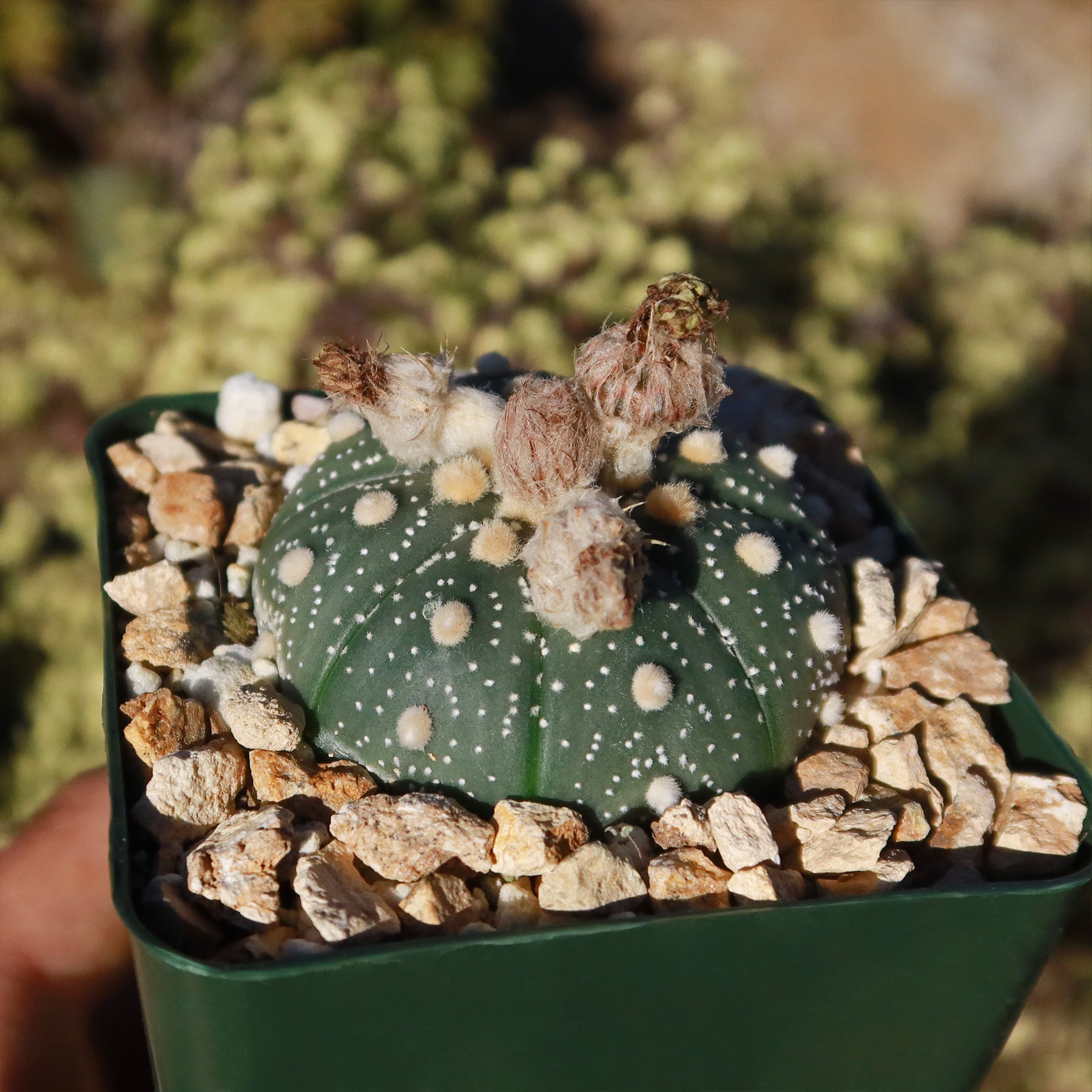
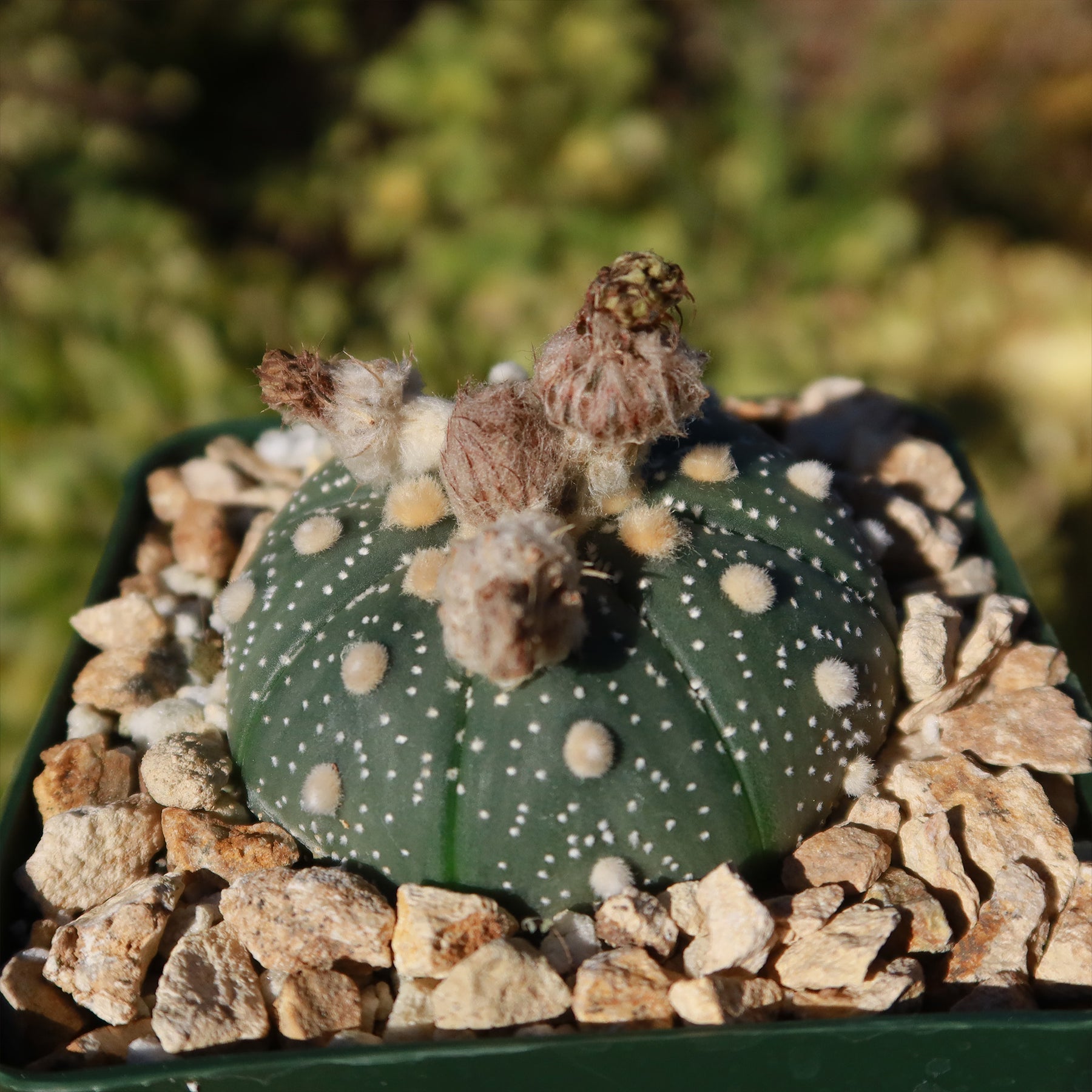
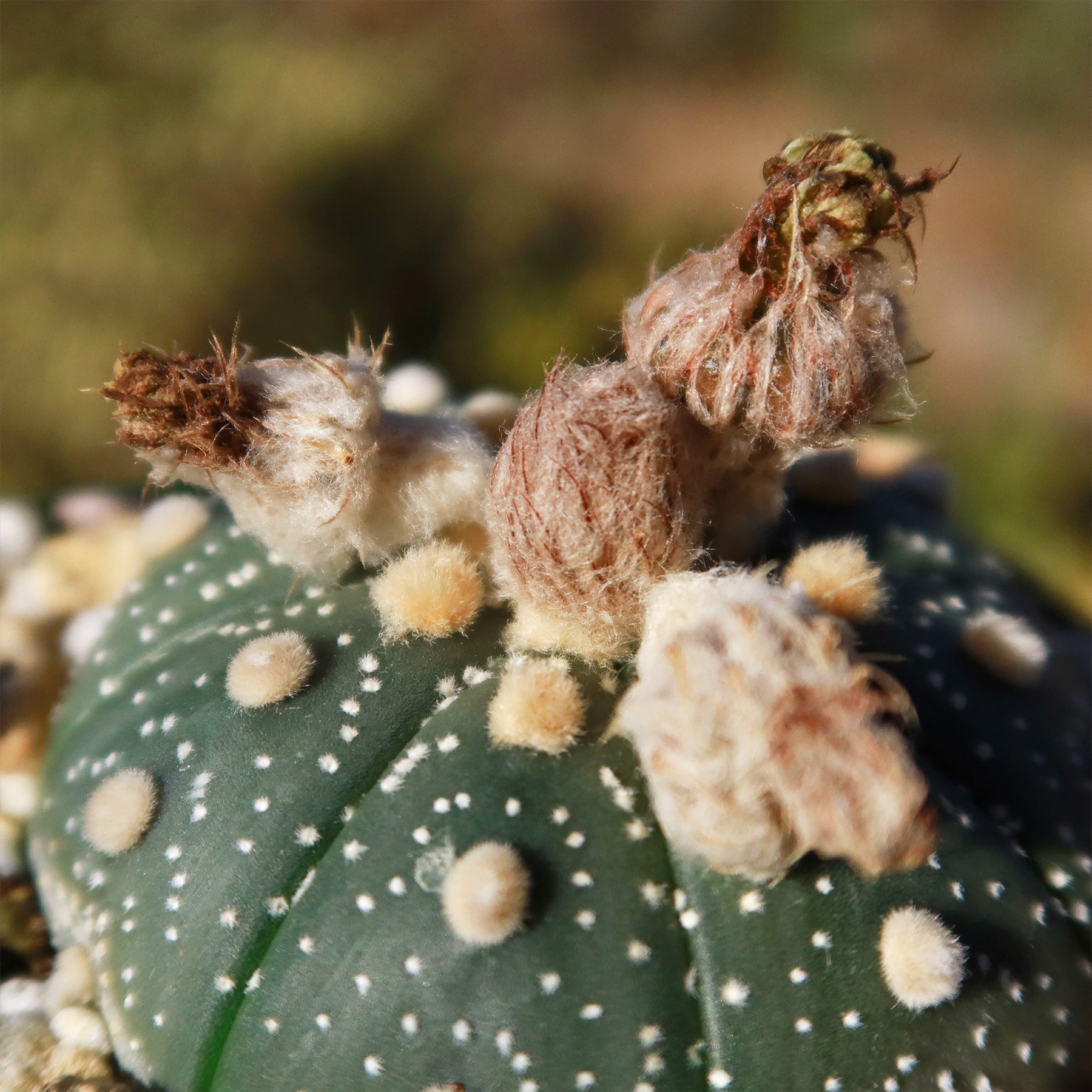
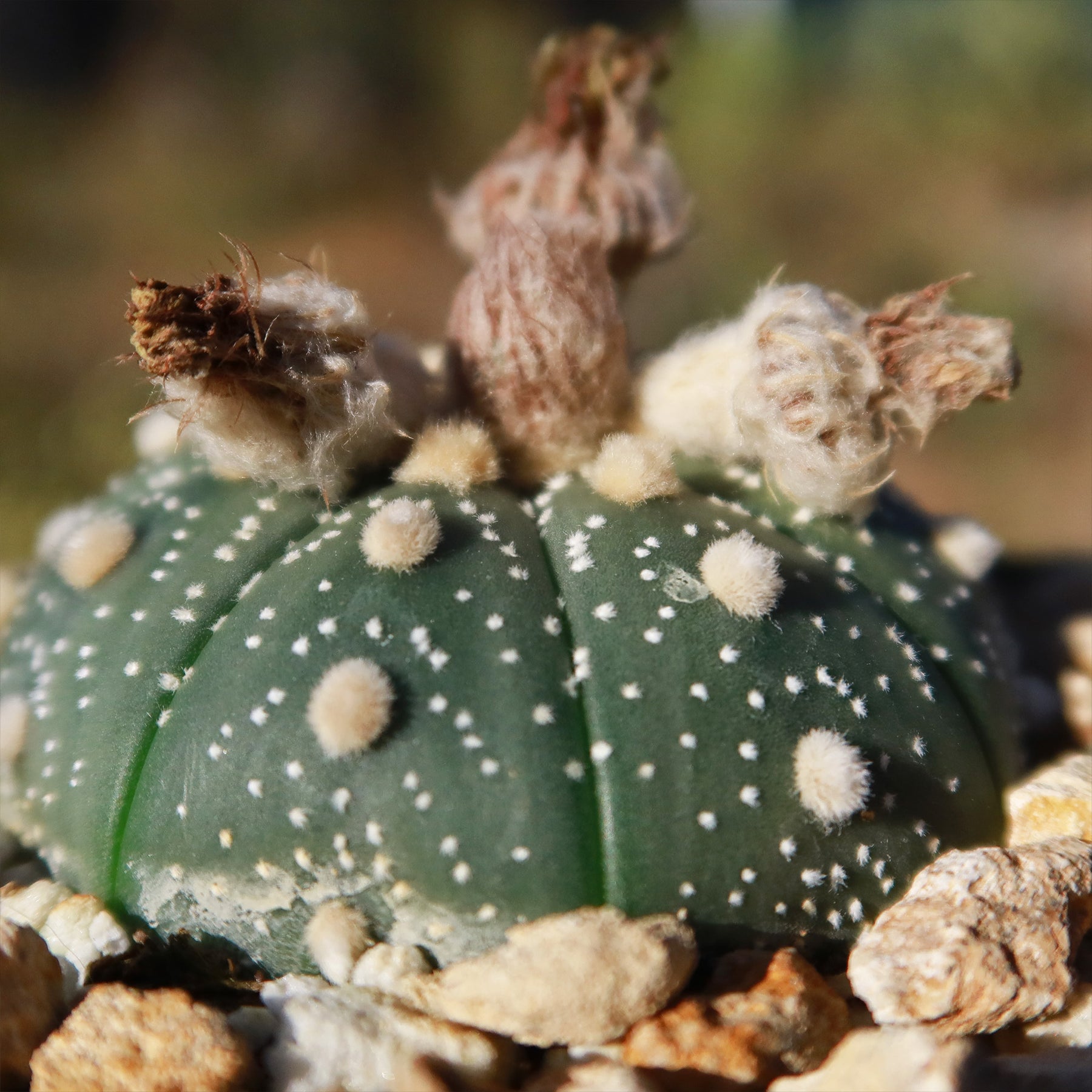
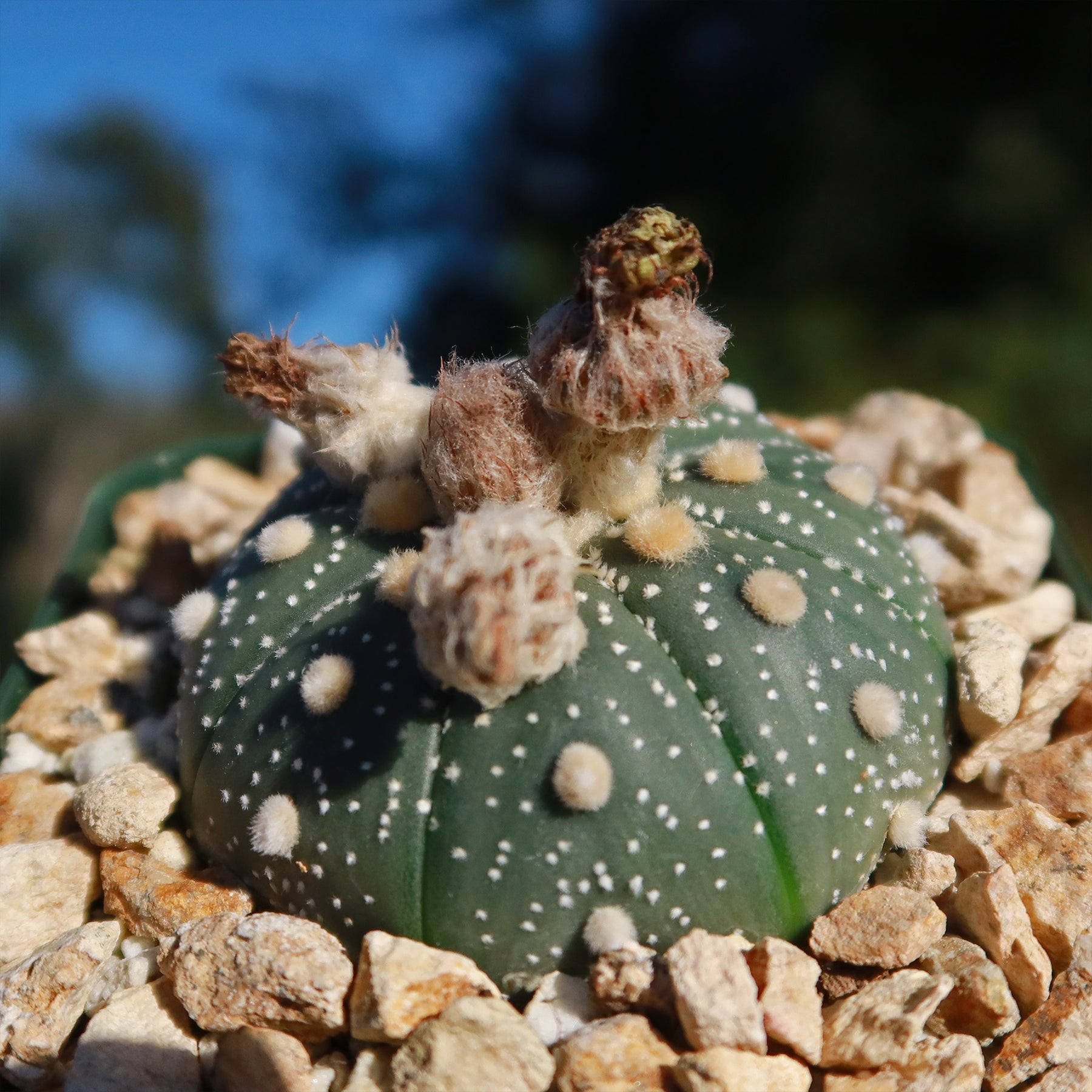
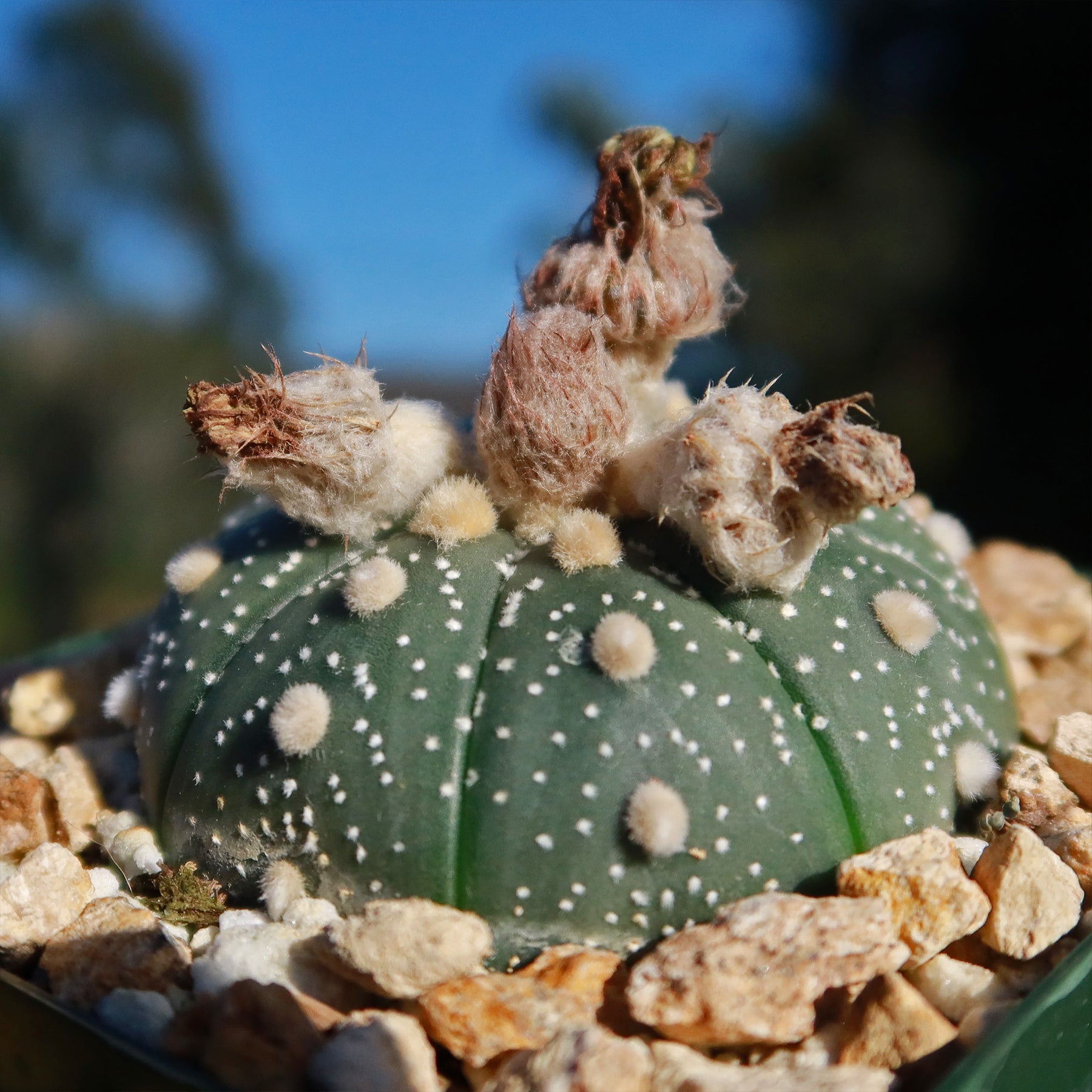
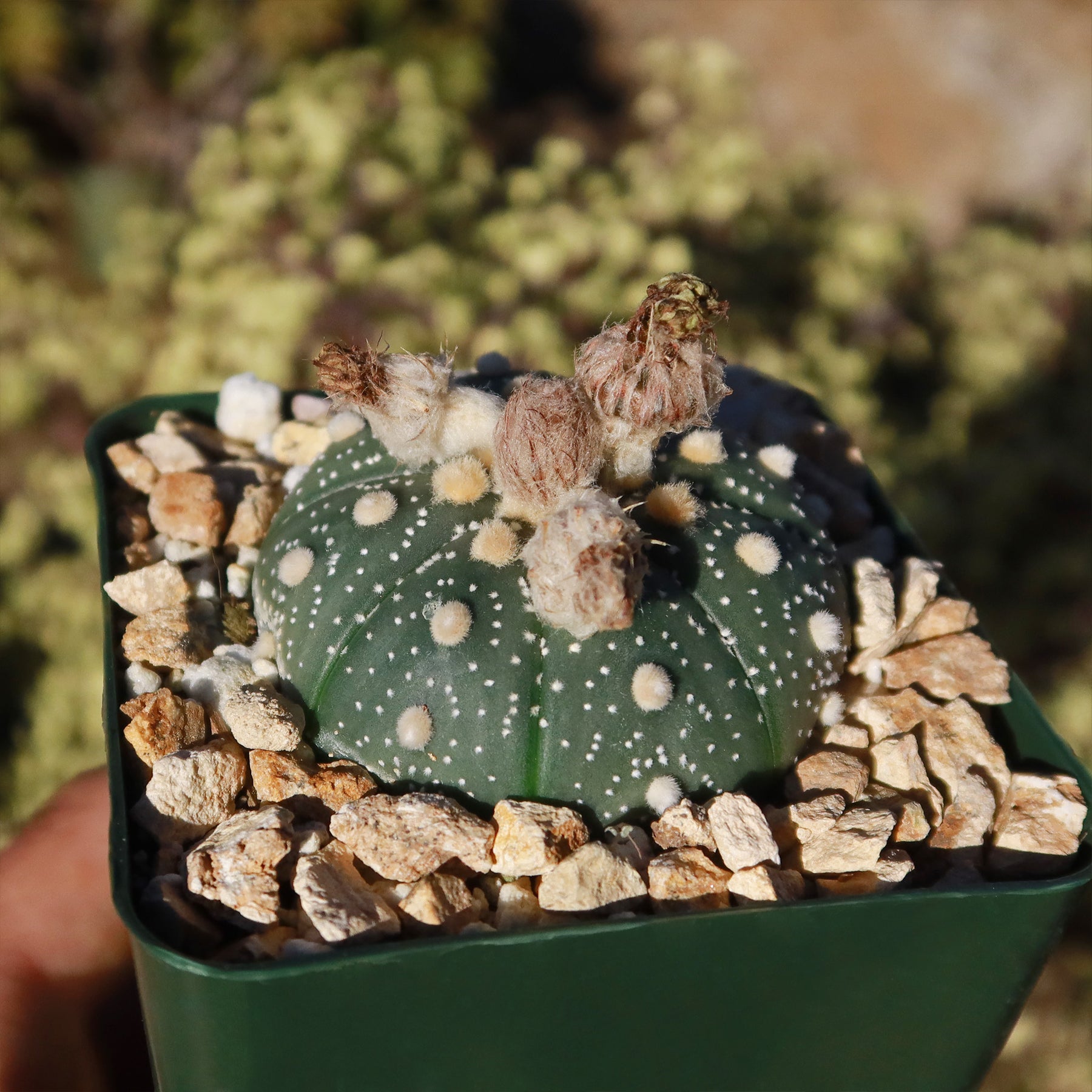
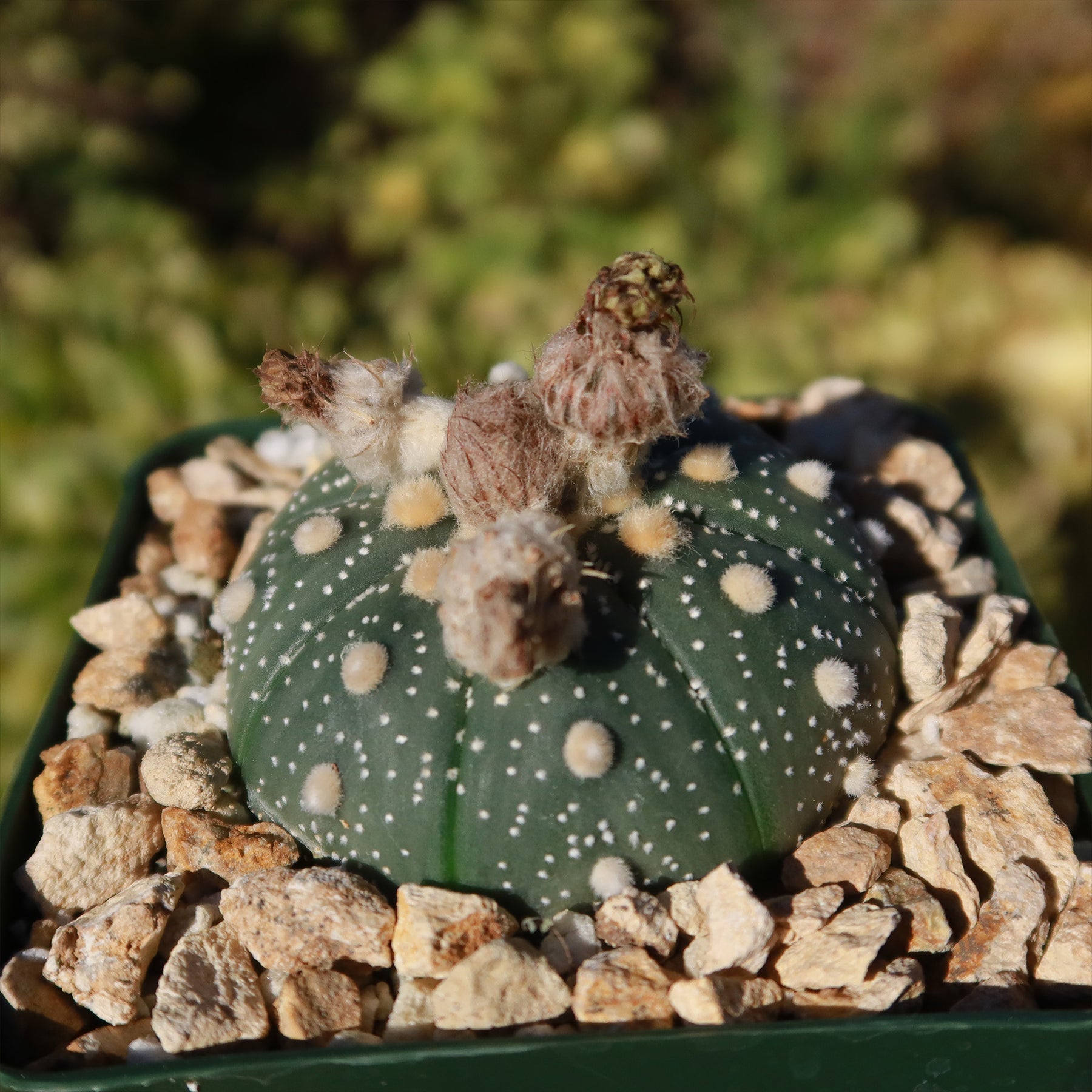
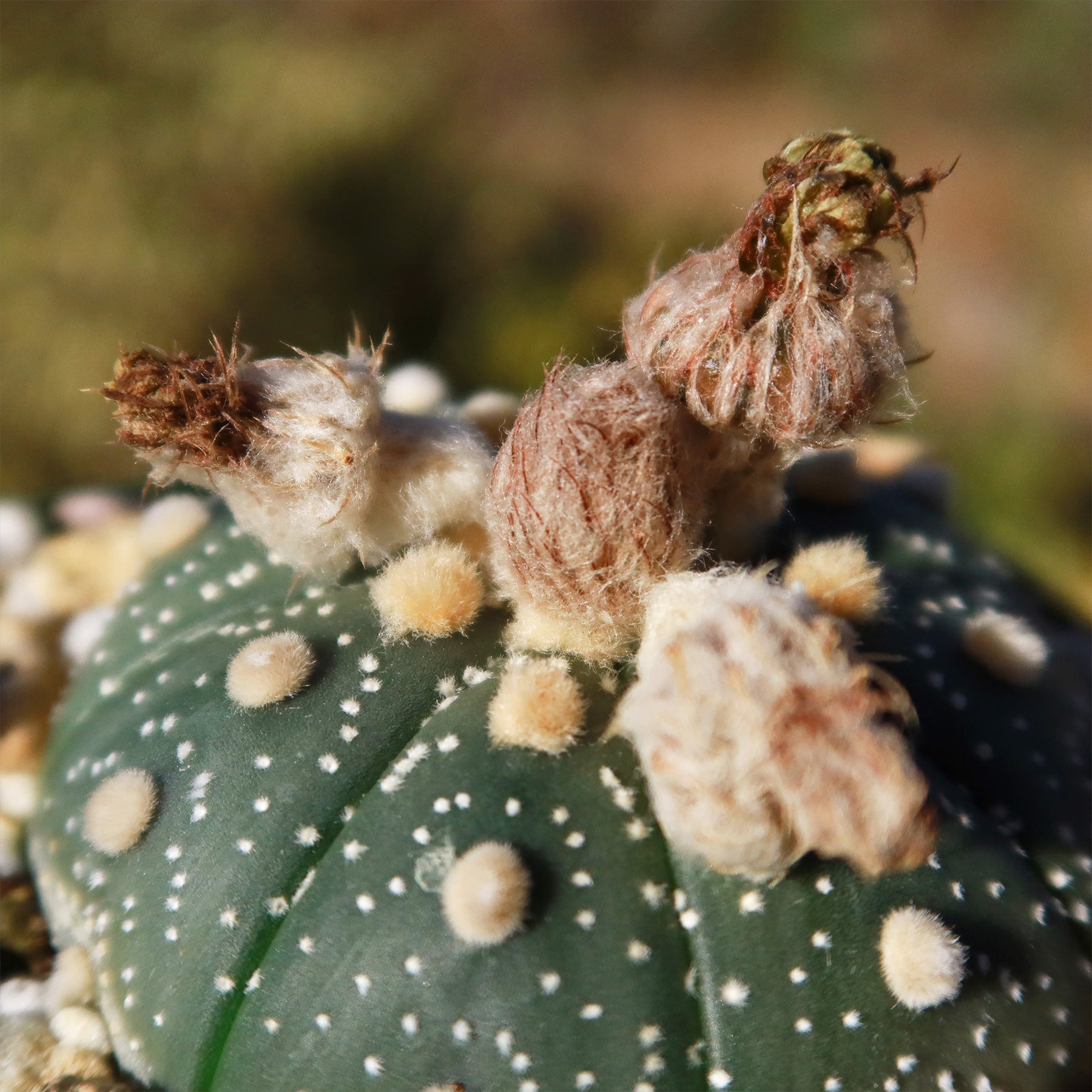
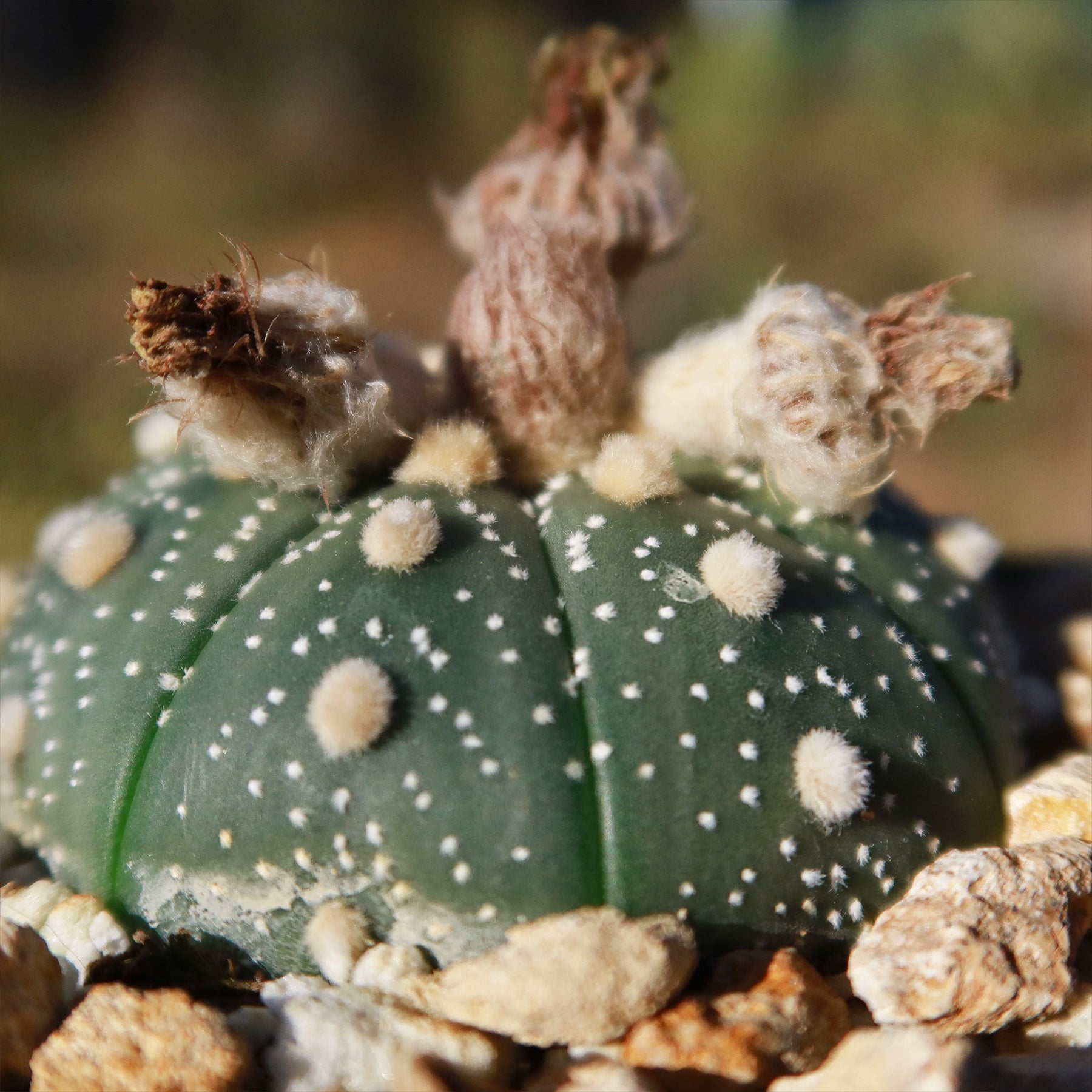


Introducing the Sand Dollar Cactus, known scientifically as Astrophytum asterias, a standout member of the Astrophytum genus native to Texas and Mexico.
It belongs to the Cactaceae family and gets its common name from the distinctive markings on its surface, which closely resemble the pattern of a sand dollar. You may also hear it called the star cactus or sea urchin cactus, both nods to its one-of-a-kind appearance.

This spinless Mexican cactus boasts a solitary spherical dark green stem with woolly areoles, making it a real showstopper in any landscape.
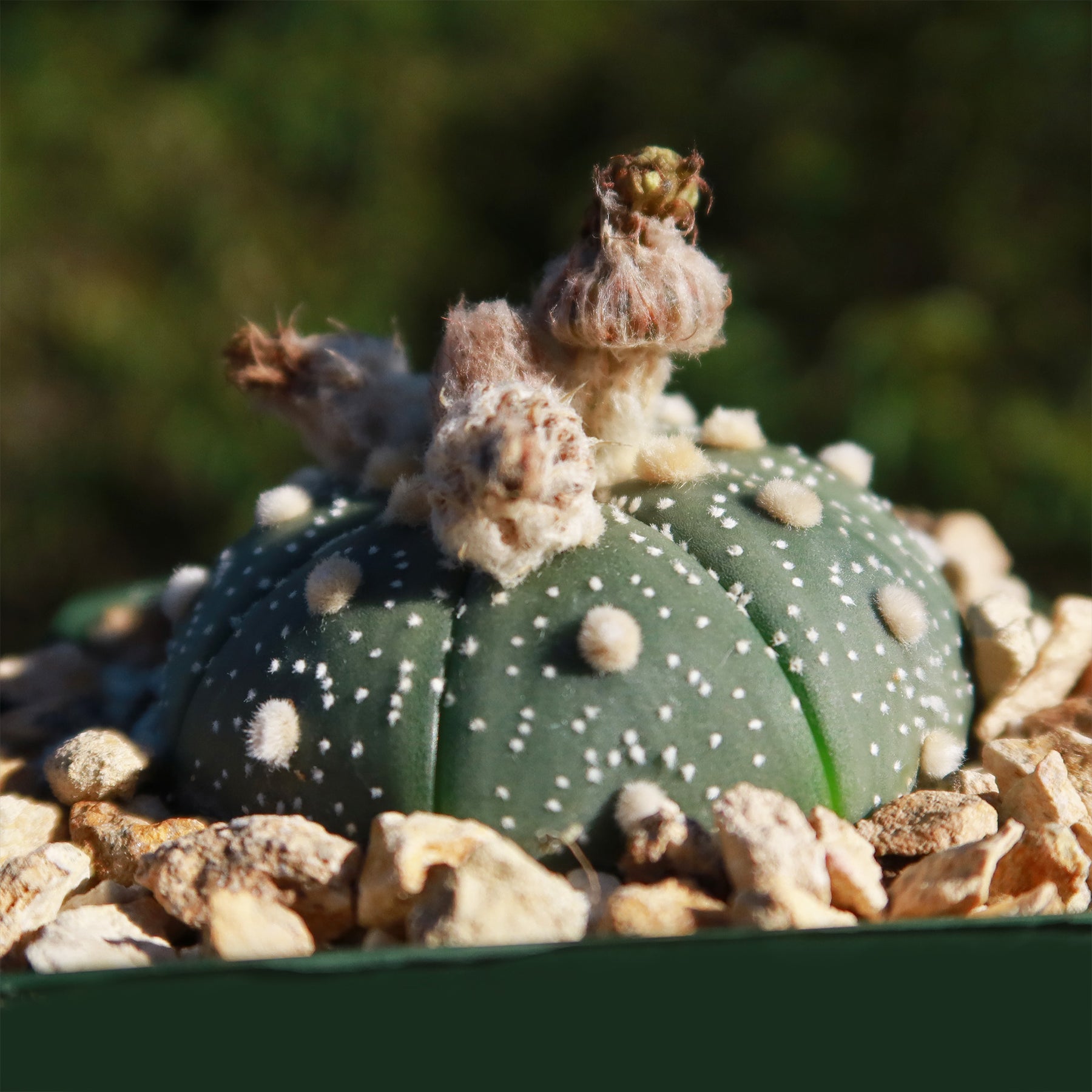
It produces flowers that are often larger than the plant itself, blooming in soft yellow with warm orange-red centers.
When in bloom, the sand dollar cactus becomes even more eye catching with its stunning flowers in soft yellow shades and rich orange red centers.
The vibrant blooms create a beautiful contrast against the cactus’ dark green body, making the entire plant look almost like a living piece of art.
After flowering, it produces small fruits in shades of green, pink, and grayish red, adding even more color and visual interest to this remarkable cactus.
This winter-dormant plant can reach up to a height of 6-12 inches, with a main tuber or tubers of tap root that are thick and turnip-like, and is relatively easy to grow.
Unlike many other cacti, the sand dollar cactus grows without prominent spines, allowing its detailed patterns and soft woolly textures to stand out even more. This cactus is also compact making it an excellent choice for small containers, sunny windowsills, and indoor succulent displays.
When and How to Water Your Sand Dollar Cactus
Like most succulents, it thrives to arid environments and does not require frequent watering. In fact, overwatering can be harmful to the sand dollar and can lead to issues with root rot and other fungal diseases.
Water your Sand Dollar Cactus once every 2 to 4 weeks during the growing season, and cut back to once every 4 to 6 weeks during dormancy.
In the spring and summer, water only when the soil has dried out completely. Always check the soil before watering. If the top inch still feels damp, wait a few more days. Use a pot with drainage holes and fast-draining cactus soil to keep excess moisture from collecting around the roots.
In the fall and winter, the plant enters a rest period and needs very little water. Reduce watering significantly and allow the soil to stay dry for longer stretches. Overwatering during this time is the quickest way to trigger root rot, so err on the side of dry.
You can water it if the body starts to look slightly deflated or the skin appears faintly wrinkled. This is the plant drawing on its internal moisture reserves. Once watered, the body will firm up and return to its rounded shape within a day or two.
Light Requirements - Where to Place Your Sand Dollar Plant

When growing indoors, the sand dollar plant requires bright, direct sunlight (full sun) to thrive. You can place it in a location where it will receive at least 6 hours of direct sunlight each day.
If it is not receiving enough light, it may become elongated or "stretched out" as it tries to reach for more light. You may use a full-spectrum grow light for 12 to 14 hours a day.
When growing outdoors, it does best with morning sun for at least 4-6 hours a day. A location with bright, indirect light (partial sun) during the hottest part of the day is ideal.
Avoid placing a young or recently repotted plant in full sun right away. Gradually increase its sun exposure over one to two weeks to prevent sunburn. In hot climates, protection from intense midday rays is especially important, as too much direct sun can cause scorching.
Optimal Soil & fertilizer Needs
The sand dollar likes very airy, porous, nutrient-rich soil with a pH of 6.5- 7.5. It requires fast-draining soil that dries completely between waterings. Soggy wet soil can damage your cactus and contribute to bacterial and fungal rot. In addition, because of a lack of oxygen, soggy soil substitutes air pockets with water, resulting in an anaerobic environment that can kill your plant.
Ideally, you want to use our specialized potting mix that contains 5 natural substrates and organic mycorrhizae to promote the development of a strong root system that helps your cactus to thrive.
When fertilizing your sand dollar cactus, use a light hand and feed only during the active growing season. A balanced fertilizer with an NPK ratio such as 5-10-5 works well to support healthy growth and flowering.
Avoid overfertilizing, as too much fertilizer can lead to weak growth or root problems. With proper feeding and plenty of sunlight, this cactus can stay healthy and produce beautiful blooms during the growing season.
Hardiness Zones & More

In the United States, the san dollar plant is mostly an indoor plant, but if you live in southern Florida or Hawaii, then you can cultivate it outdoors in USDA zones 9-11.
It prefers temperatures between 65°F and 80°F. Keep it away from cold, drafty windows and air vents, as sudden temperature shifts can stress the plant.
As for humidity, this cactus is native to arid regions and adapts easily to typical indoor conditions, tolerating average household humidity levels between 40% and 60% without any extra effort.
How to Grow as a Houseplant
You can grow it by giving it at least 6 hours of bright, indirect sunlight each day. A south-facing window works best. If natural light is limited, a full-spectrum grow light running for 12 to 14 hours a day will keep it healthy.
Keep the plant in a warm spot between 65°F and 80°F. It can withstand cooler temperatures down to 50°F in winter, but should be kept away from cold drafts and air vents.
It does not require high humidity and adapts well to typical indoor humidity levels, so no extra effort is needed there. With the right balance of light, warmth, and careful watering, it grows steadily and can reward you with its beautiful yellow blooms in spring and summer.
Wildlife – Sand Dollar Flowers Attract the Following Friendly Pollinators
The sand dollar flowers attract a variety of friendly pollinators, including bees, butterflies, ladybugs and hummingbirds. Its bright, colorful flowers are also appealing to other beneficial insects that help with pollination.
 Butterflies
 Bees
Bees
 Hummingbirds
 Lady Bugs
 Multi Pollinators
 Other Birds
According to ASPCA, the 'Astrophytum asterias' is considered non toxic to humans and pets. However, it can still cause injuries, skin irritation, or discomfort if touched or chewed. It is best to place the cactus in an area where children and pets are less likely to accidentally brush against it.
How to Propagate Your Sand Dollar Cactus
You can propagate it in two ways: through seeds or offsets. Start by spreading the seeds on a tray and covering the container with a plastic wrap to help maintain moisture and warmth, and to keep pests away.
Wait for small offsets to appear around the base of the mature plant, then gently separate them and pot them individually. Allow the offset to callous over for a few days before potting it in a well-draining cactus mix, and water sparingly at first, increasing frequency as the plant settles in.
Key Takeaways
- The Sand Dollar Cactus is one of the most visually striking cacti you can grow, with its flat, disc-like body, star-patterned markings, and stunning yellow flowers with orange-red centers that bloom in spring and summer.
- It's spineless, making it safe and easy to handle unlike most cacti, and non-toxic to humans and pets.
- It thrives both indoors and outdoors, making it a versatile addition to any space, from a sunny windowsill to a desert garden.
- It's low maintenance and highly drought tolerant, perfect for busy plant owners or those just getting started with cacti.
- With the right care, it can live for many years, making it a lasting and rewarding plant to grow.
Final Thoughts
Overall, the sand dollar cactus (Astrophytum asterias) is a unique and fascinating plant. It features a distinctive star-shaped pattern on its stem, which gives it a truly eye-catching appearance. This cactus is relatively low-maintenance and can thrive both indoors and outdoors, perfect for beginners and busy plant owners.
Bloom Season
Flower Color
Growth Rate
Hardiness Zone
Mature Size
Plant Type
Resistance
Sun Exposure
Watering Needs
| Name | Value |
|---|---|
| Bloom Season | Late spring, Early summer |
| Botanical Name | Astrophytum asterias |
| Common Name | Sand dollar cactus, sea urchin cactus, star cactus |
| Dormancy | Winter |
| Family | Cactaceae |
| Flower Color | Dark pinkishred, Orangered, purple winered |
| Genus | Astrophytum |
| Growth Habit | Spherical, cylindrical stem |
| Growth Rate | Slow |
| Hardiness Zone | 9, 10, 11 |
| Mature Size | 12 in. tall, 12 in. wide |
| Native Area | Texas, Mexico |
| Plant Type | Perennial succulent, cactus |
| Propagation | By seeds, cuttings |
| Resistance | Extremely drought-tolerant, Deer resistance, heat resistant |
| Soil PH | 6.5, Acidic, Neutral |
| Soil Type | Cactus potting mix soil |
| Special Features | Star shaped apperance |
| Sun Exposure | Full sun (6+ hrs.), Partial shade (3–6 hrs. sun) |
| Toxicity | Safe for humans, friendly to dogs, friendly to cats |
| Watering Needs | Low |
Growers Quick Reference Guide - Key Features
| Name | Value |
|---|---|
| Bloom Season | Late spring, Early summer |
| Botanical Name | Astrophytum asterias |
| Common Name | Sand dollar cactus, sea urchin cactus, star cactus |
| Dormancy | Winter |
| Family | Cactaceae |
| Flower Color | Dark pinkishred, Orangered, purple winered |
| Genus | Astrophytum |
| Growth Habit | Spherical, cylindrical stem |
| Growth Rate | Slow |
| Hardiness Zone | 9, 10, 11 |
| Mature Size | 12 in. tall, 12 in. wide |
| Native Area | Texas, Mexico |
| Plant Type | Perennial succulent, cactus |
| Propagation | By seeds, cuttings |
| Resistance | Extremely drought-tolerant, Deer resistance, heat resistant |
| Soil PH | 6.5, Acidic, Neutral |
| Soil Type | Cactus potting mix soil |
| Special Features | Star shaped apperance |
| Sun Exposure | Full sun (6+ hrs.), Partial shade (3–6 hrs. sun) |
| Toxicity | Safe for humans, friendly to dogs, friendly to cats |
| Watering Needs | Low |
- Description
- Key Plant Features
Introducing the Sand Dollar Cactus, known scientifically as Astrophytum asterias, a standout member of the Astrophytum genus native to Texas and Mexico.
It belongs to the Cactaceae family and gets its common name from the distinctive markings on its surface, which closely resemble the pattern of a sand dollar. You may also hear it called the star cactus or sea urchin cactus, both nods to its one-of-a-kind appearance.
This spinless Mexican cactus boasts a solitary spherical dark green stem with woolly areoles, making it a real showstopper in any landscape.
It produces flowers that are often larger than the plant itself, blooming in soft yellow with warm orange-red centers.
When in bloom, the sand dollar cactus becomes even more eye catching with its stunning flowers in soft yellow shades and rich orange red centers.
The vibrant blooms create a beautiful contrast against the cactus’ dark green body, making the entire plant look almost like a living piece of art.
After flowering, it produces small fruits in shades of green, pink, and grayish red, adding even more color and visual interest to this remarkable cactus.
This winter-dormant plant can reach up to a height of 6-12 inches, with a main tuber or tubers of tap root that are thick and turnip-like, and is relatively easy to grow.
Unlike many other cacti, the sand dollar cactus grows without prominent spines, allowing its detailed patterns and soft woolly textures to stand out even more. This cactus is also compact making it an excellent choice for small containers, sunny windowsills, and indoor succulent displays.
When and How to Water Your Sand Dollar Cactus
Like most succulents, it thrives to arid environments and does not require frequent watering. In fact, overwatering can be harmful to the sand dollar and can lead to issues with root rot and other fungal diseases.
Water your Sand Dollar Cactus once every 2 to 4 weeks during the growing season, and cut back to once every 4 to 6 weeks during dormancy.
In the spring and summer, water only when the soil has dried out completely. Always check the soil before watering. If the top inch still feels damp, wait a few more days. Use a pot with drainage holes and fast-draining cactus soil to keep excess moisture from collecting around the roots.
In the fall and winter, the plant enters a rest period and needs very little water. Reduce watering significantly and allow the soil to stay dry for longer stretches. Overwatering during this time is the quickest way to trigger root rot, so err on the side of dry.
You can water it if the body starts to look slightly deflated or the skin appears faintly wrinkled. This is the plant drawing on its internal moisture reserves. Once watered, the body will firm up and return to its rounded shape within a day or two.
Light Requirements - Where to Place Your Sand Dollar Plant
When growing indoors, the sand dollar plant requires bright, direct sunlight (full sun) to thrive. You can place it in a location where it will receive at least 6 hours of direct sunlight each day.
If it is not receiving enough light, it may become elongated or "stretched out" as it tries to reach for more light. You may use a full-spectrum grow light for 12 to 14 hours a day.
When growing outdoors, it does best with morning sun for at least 4-6 hours a day. A location with bright, indirect light (partial sun) during the hottest part of the day is ideal.
Avoid placing a young or recently repotted plant in full sun right away. Gradually increase its sun exposure over one to two weeks to prevent sunburn. In hot climates, protection from intense midday rays is especially important, as too much direct sun can cause scorching.
Optimal Soil & fertilizer Needs
The sand dollar likes very airy, porous, nutrient-rich soil with a pH of 6.5- 7.5. It requires fast-draining soil that dries completely between waterings. Soggy wet soil can damage your cactus and contribute to bacterial and fungal rot. In addition, because of a lack of oxygen, soggy soil substitutes air pockets with water, resulting in an anaerobic environment that can kill your plant.
Ideally, you want to use our specialized potting mix that contains 5 natural substrates and organic mycorrhizae to promote the development of a strong root system that helps your cactus to thrive.
When fertilizing your sand dollar cactus, use a light hand and feed only during the active growing season. A balanced fertilizer with an NPK ratio such as 5-10-5 works well to support healthy growth and flowering.
Avoid overfertilizing, as too much fertilizer can lead to weak growth or root problems. With proper feeding and plenty of sunlight, this cactus can stay healthy and produce beautiful blooms during the growing season.
Hardiness Zones & More
In the United States, the san dollar plant is mostly an indoor plant, but if you live in southern Florida or Hawaii, then you can cultivate it outdoors in USDA zones 9-11.
It prefers temperatures between 65°F and 80°F. Keep it away from cold, drafty windows and air vents, as sudden temperature shifts can stress the plant.
As for humidity, this cactus is native to arid regions and adapts easily to typical indoor conditions, tolerating average household humidity levels between 40% and 60% without any extra effort.
How to Grow as a Houseplant
You can grow it by giving it at least 6 hours of bright, indirect sunlight each day. A south-facing window works best. If natural light is limited, a full-spectrum grow light running for 12 to 14 hours a day will keep it healthy.
Keep the plant in a warm spot between 65°F and 80°F. It can withstand cooler temperatures down to 50°F in winter, but should be kept away from cold drafts and air vents.
It does not require high humidity and adapts well to typical indoor humidity levels, so no extra effort is needed there. With the right balance of light, warmth, and careful watering, it grows steadily and can reward you with its beautiful yellow blooms in spring and summer.
Wildlife – Sand Dollar Flowers Attract the Following Friendly Pollinators
The sand dollar flowers attract a variety of friendly pollinators, including bees, butterflies, ladybugs and hummingbirds. Its bright, colorful flowers are also appealing to other beneficial insects that help with pollination.
Butterflies
Bees
Hummingbirds
Lady Bugs
Multi Pollinators
Other Birds
According to ASPCA, the 'Astrophytum asterias' is considered non toxic to humans and pets. However, it can still cause injuries, skin irritation, or discomfort if touched or chewed. It is best to place the cactus in an area where children and pets are less likely to accidentally brush against it.
How to Propagate Your Sand Dollar Cactus
You can propagate it in two ways: through seeds or offsets. Start by spreading the seeds on a tray and covering the container with a plastic wrap to help maintain moisture and warmth, and to keep pests away.
Wait for small offsets to appear around the base of the mature plant, then gently separate them and pot them individually. Allow the offset to callous over for a few days before potting it in a well-draining cactus mix, and water sparingly at first, increasing frequency as the plant settles in.
Key Takeaways
- The Sand Dollar Cactus is one of the most visually striking cacti you can grow, with its flat, disc-like body, star-patterned markings, and stunning yellow flowers with orange-red centers that bloom in spring and summer.
- It's spineless, making it safe and easy to handle unlike most cacti, and non-toxic to humans and pets.
- It thrives both indoors and outdoors, making it a versatile addition to any space, from a sunny windowsill to a desert garden.
- It's low maintenance and highly drought tolerant, perfect for busy plant owners or those just getting started with cacti.
- With the right care, it can live for many years, making it a lasting and rewarding plant to grow.
Final Thoughts
Overall, the sand dollar cactus (Astrophytum asterias) is a unique and fascinating plant. It features a distinctive star-shaped pattern on its stem, which gives it a truly eye-catching appearance. This cactus is relatively low-maintenance and can thrive both indoors and outdoors, perfect for beginners and busy plant owners.
Bloom Season
Flower Color
Growth Rate
Hardiness Zone
Mature Size
Plant Type
Resistance
Sun Exposure
Watering Needs
| Attribute | Value |
|---|---|
| Bloom Season | Late spring, Early summer |
| Botanical Name | Astrophytum asterias |
| Common Name | Sand dollar cactus, sea urchin cactus, star cactus |
| Dormancy | Winter |
| Family | Cactaceae |
| Flower Color | Dark pinkishred, Orangered, purple winered |
| Genus | Astrophytum |
| Growth Habit | Spherical, cylindrical stem |
| Growth Rate | Slow |
| Hardiness Zone | 9, 10, 11 |
| Mature Size | 12 in. tall, 12 in. wide |
| Native Area | Texas, Mexico |
| Plant Type | Perennial succulent, cactus |
| Propagation | By seeds, cuttings |
| Resistance | Extremely drought-tolerant, Deer resistance, heat resistant |
| Soil PH | 6.5, Acidic, Neutral |
| Soil Type | Cactus potting mix soil |
| Special Features | Star shaped apperance |
| Sun Exposure | Full sun (6+ hrs.), Partial shade (3–6 hrs. sun) |
| Toxicity | Safe for humans, friendly to dogs, friendly to cats |
| Watering Needs | Low |
Growers Quick Reference Guide - Key Features
| Name | Value |
|---|---|
| Bloom Season | Late spring, Early summer |
| Botanical Name | Astrophytum asterias |
| Common Name | Sand dollar cactus, sea urchin cactus, star cactus |
| Dormancy | Winter |
| Family | Cactaceae |
| Flower Color | Dark pinkishred, Orangered, purple winered |
| Genus | Astrophytum |
| Growth Habit | Spherical, cylindrical stem |
| Growth Rate | Slow |
| Hardiness Zone | 9, 10, 11 |
| Mature Size | 12 in. tall, 12 in. wide |
| Native Area | Texas, Mexico |
| Plant Type | Perennial succulent, cactus |
| Propagation | By seeds, cuttings |
| Resistance | Extremely drought-tolerant, Deer resistance, heat resistant |
| Soil PH | 6.5, Acidic, Neutral |
| Soil Type | Cactus potting mix soil |
| Special Features | Star shaped apperance |
| Sun Exposure | Full sun (6+ hrs.), Partial shade (3–6 hrs. sun) |
| Toxicity | Safe for humans, friendly to dogs, friendly to cats |
| Watering Needs | Low |