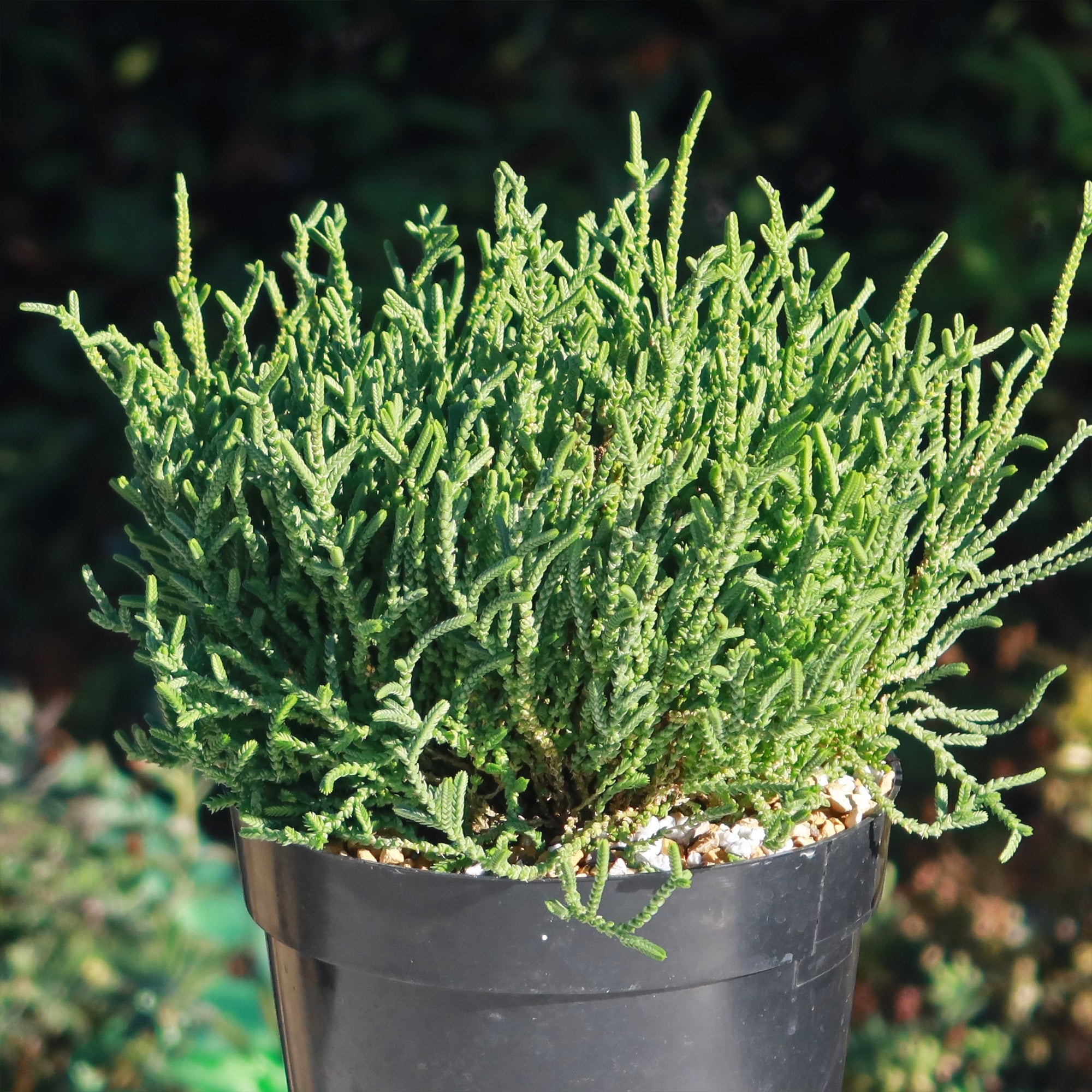
The Watch chain succulent, also known as 'Crassula muscosa lycopodioides' belongs to the family of Crassulaceae (succulents jade plants). The specific epithet "muscosa" is Latin for "mossy," which perfectly describes this plant's moss-like look. It grows in delicate, chain-like stems made up of tiny, tightly packed segments that resemble miniature pine branches or zipper-like strands.

Native to South Africa and Namibia, this Crassula muscosa is an absolute stunner, growing up to 16 inches tall with a spreading habit of branching stems tightly packed with narrow, light green leaves that completely hide the stems.
The stems of Crassula muscosa start upright, then gradually cascade as they fill out, creating a soft, trailing effect that adds movement and texture to any space.
Its tightly stacked, chain like leaves give it a dense, almost mossy appearance that stands out without feeling bulky.
When it matures, it typically grows up to 12 inches tall, with stems that can spread and drape beautifully over time.
When it blooms in spring, it produces small, pale yellow to greenish flowers that grow along the stems, adding a subtle but charming detail.
As it grows, the Watch Chain works both as a vertical accent and a trailing feature. It adds height and structure when young, then naturally shifts into a gentle spiller, making it a great fit for hanging baskets, mixed succulent arrangements, or even rock gardens.
When and How to Water Your Watch Chain Succulent
Like many succulents, when it comes to crassula muscosa watch chain care, they prefer the "soak and dry" technique. This involves giving your watch chain succulents a generous watering followed by allowing them to completely dry out before watering again.
Water your Watch Chain plant once every 7 to 10 days during the growing season with a thorough soak, then reduce watering to every 2 to 3 weeks during its slower, dormant period, keeping moisture light.
In the spring and summer, allow the soil to fully dry out before watering again. This soak and dry method helps prevent root rot and keeps the plant growing steadily.
In the fall and winter, it needs even less water. With cooler temperatures and reduced growth, light and infrequent watering is enough to keep it healthy.
Make sure that you are also using porous sandy soil and make sure it is well-drained soil and is in a pot, then make sure there are drainage holes to avoid overwatering. In rainy seasons or cold weather, it's best to withhold watering your outdoor succulents.
Light Requirements - Where to Place Your Watch Chain Plant

When growing indoors, it thrives in bright, indirect light for about 4 to 6 hours a day.
Place your plant near a window that gets steady sunlight, such as a south facing or west facing window.
This gives it enough brightness without exposing it to harsh direct sun that can dry out or scorch the delicate stems.
When growing outdoors, it can handle more light and does well with around 6 to 8 hours of sunlight daily.
Gradually increase its exposure to morning and afternoon sun to prevent leaf burn from intense rays.
A spot with gentle morning sunlight and filtered shade later in the day works best, helping the plant maintain its dense, textured appearance without becoming leggy.
Avoid keeping it in low light for extended periods, as this can weaken its growth. During winter or in spaces with limited natural light, placing it outdoors occasionally can help keep it compact and healthy.
Optimal Soil & Fertilizer Needs
The watch chain plant, prefers a fast draining soil that keeps moisture from lingering around the roots. You need to be extra cautious and need to use the right kind of soil with a pH of 5.6- 6.5. It is best to use specialized succulent potting mix or well-draining soil that includes 5 natural substrates with organic mycorrhizae – perfect for promoting healthy roots and happy plants.
When it comes to fertilizing, it is best to use a natural fertilizers with an equal mixture of 5-10-5 (NPK) once a year during spring. It is the best choice as they last longer and keep your soil alive by adding other beneficial compounds and microbes to the soil mix. Keep it light, as too much fertilizer can cause weak, overly soft growth.
In fall and winter, you can skip fertilizing as the plant naturally slows down during this time, and does not require additional nutrients.
Hardiness Zones & More

In the United States, it is mostly grown as an indoor plant, but if you live in southern Florida or Hawaii, you can grow it outdoors in USDA zones 9-10.
It prefers a temperature range between 65°F to 85°F and should be kept 50°F, as colder conditions can cause the stems to become weak, mushy, or discolored.
It does well in average indoor humidity levels and does not require any extra moisture.
It prefers a slightly dry environment, so avoid placing it in overly humid areas or near constantly damp conditions. With the right balance of warmth, stable temperatures, and moderate humidity, this plant stays compact, healthy, and easy to manage whether grown indoors or outdoors.
How to Grow as a Houseplant
Put your Watch Chain Plant indoors in bright, indirect light for 4 - 6 hours a day, where it can keep its compact, chain like shape. It prefers warm temperatures between 18°F and 29°F and does well in normal indoor conditions without needing extra humidity.
Water only when the soil is completely dry, since it is sensitive to overwatering, and always use a well draining succulent mix to keep the roots healthy. With the right balance of light, minimal watering, and good drainage, it stays neat, full, and easy to manage indoors.
Wildlife - Watch Chain Flowers Attract the Following Friendly Pollinators
The watch chain flowers attract a variety of friendly pollinators, including bees, butterflies, and hummingbirds. These beautiful creatures play a crucial role in the pollination process, helping to ensure the continued growth and reproduction of these stunning flowers.
 Butterflies
 Bees
Bees
 Hummingbirds
 Lady Bugs
 Multi Pollinators
 Other Birds
According to ASPCA, the Crassula muscosa lycopodioides is mildly toxic to both humans and pets if ingested in large amounts. However, it is safe to touch, which makes it a popular choice for indoor and outdoor decoration.
How to Propagate Your Watch Chain Succulent
To propagate your Watch Chain Succulent, you can do it by stem cuttings. Start by choosing a healthy stem and trimming a few inches using clean scissors. Let the cutting sit in a dry place for a day or two so the cut end can callus, which helps prevent rot once planted.
After that, place the cutting on top of a well draining succulent soil mix. Water it only when the soil feels dry. Keep the cutting in bright, indirect light while it develops roots. When you see new growth, it means the roots have started forming. Continue normal succulent care by spacing out watering and keeping it in a bright spot.
Key Takeaways
- Watch Chain 'Crassula muscosa lycopodioides' is a trailing succulent known for its unique stacked leaves that resemble tiny chains or zippers.
- This low maintenance plant thrives in bright light and needs very little watering to stay healthy.
- Its compact and textured growth makes it a great choice for hanging baskets and small pots.
- Watch Chain can produce small yellow green flowers in spring under the right growing conditions.
- It grows comfortably in normal room temperatures and average humidity, so there is no need for extra equipment or adjustments.
The Bottom Line
Overall, the watch chain plant (Crassula muscosa lycopodioides) is a low-maintenance plant that adapts easily to indoor conditions. It is a beginner friendly choice that adds instant texture to any space. Its unique, chain like texture adds depth to any space, whether you keep it indoors on a shelf or let it trail outdoors in a pot. With simple care like bright light, well draining soil, and occasional watering, it stays compact, healthy, and visually interesting year round.
Bloom Season
Flower Color
Growth Rate
Hardiness Zone
Mature Size
Plant Type
Resistance
Sun Exposure
Watering Needs
| Bloom Season | Late fall/early winter |
|---|---|
| Bloom Season | Spring, mid summer |
| Botanical Name | Crassula lycopodioides |
| Botanical Name | Crassula muscosa |
| Common Name | Watch chain |
| Common Name | Watch chain, Rattail crassula, Princess Pine, Clubmoss Crassula, Zipper Plant |
| Dormancy | Summer |
| Dormancy | Winter |
| Family | Crassulaceae |
| Flower Color | Bright yellow |
| Flower Color | Bright yellow, green |
| Genus | Crassula |
| Growth Habit | Trailing, hanging |
| Growth Rate | Slow |
| Growth Rate | Slow growth |
| Hardiness Zone | 9, 10 |
| Hardiness Zone | 9a to 10b |
| Mature Size | 612 in |
| Mature Size | Up to 16 in. tall |
| Native Area | Southern africa |
| Native Area | Southern Africa, Namibia |
| Plant Type | Perennial succuleent |
| Propagation | By cuttings, seeds, offsets |
| Resistance | 6.7°c |
| Resistance | Extremely drought-tolerant, heat resistance, pest resistance, disease resistance |
| Soil PH | 6.5, Acidic, Neutral |
| Soil Type | Succulent potting mix soil |
| Special Features | Densely branched |
| Sun Exposure | Full sun (6+ hrs.) |
| Sun Exposure | Full sun (6+ hrs.), Partial shade (3–6 hrs. sun) |
| Toxicity | Safe for humans, safe for pets |
| Watering Needs | Low |
Growers Quick Reference Guide - Key Features
| Bloom Season | Late fall/early winter |
|---|---|
| Bloom Season | Spring, mid summer |
| Botanical Name | Crassula lycopodioides |
| Botanical Name | Crassula muscosa |
| Common Name | Watch chain |
| Common Name | Watch chain, Rattail crassula, Princess Pine, Clubmoss Crassula, Zipper Plant |
| Dormancy | Summer |
| Dormancy | Winter |
| Family | Crassulaceae |
| Flower Color | Bright yellow |
| Flower Color | Bright yellow, green |
| Genus | Crassula |
| Growth Habit | Trailing, hanging |
| Growth Rate | Slow |
| Growth Rate | Slow growth |
| Hardiness Zone | 9, 10 |
| Hardiness Zone | 9a to 10b |
| Mature Size | 612 in |
| Mature Size | Up to 16 in. tall |
| Native Area | Southern africa |
| Native Area | Southern Africa, Namibia |
| Plant Type | Perennial succuleent |
| Propagation | By cuttings, seeds, offsets |
| Resistance | 6.7°c |
| Resistance | Extremely drought-tolerant, heat resistance, pest resistance, disease resistance |
| Soil PH | 6.5, Acidic, Neutral |
| Soil Type | Succulent potting mix soil |
| Special Features | Densely branched |
| Sun Exposure | Full sun (6+ hrs.) |
| Sun Exposure | Full sun (6+ hrs.), Partial shade (3–6 hrs. sun) |
| Toxicity | Safe for humans, safe for pets |
| Watering Needs | Low |
- Description
- Key Plant Features
The Watch chain succulent, also known as 'Crassula muscosa lycopodioides' belongs to the family of Crassulaceae (succulents jade plants). The specific epithet "muscosa" is Latin for "mossy," which perfectly describes this plant's moss-like look. It grows in delicate, chain-like stems made up of tiny, tightly packed segments that resemble miniature pine branches or zipper-like strands.
Native to South Africa and Namibia, this Crassula muscosa is an absolute stunner, growing up to 16 inches tall with a spreading habit of branching stems tightly packed with narrow, light green leaves that completely hide the stems.
The stems of Crassula muscosa start upright, then gradually cascade as they fill out, creating a soft, trailing effect that adds movement and texture to any space.
Its tightly stacked, chain like leaves give it a dense, almost mossy appearance that stands out without feeling bulky.
When it matures, it typically grows up to 12 inches tall, with stems that can spread and drape beautifully over time.
When it blooms in spring, it produces small, pale yellow to greenish flowers that grow along the stems, adding a subtle but charming detail.
As it grows, the Watch Chain works both as a vertical accent and a trailing feature. It adds height and structure when young, then naturally shifts into a gentle spiller, making it a great fit for hanging baskets, mixed succulent arrangements, or even rock gardens.
When and How to Water Your Watch Chain Succulent
Like many succulents, when it comes to crassula muscosa watch chain care, they prefer the "soak and dry" technique. This involves giving your watch chain succulents a generous watering followed by allowing them to completely dry out before watering again.
Water your Watch Chain plant once every 7 to 10 days during the growing season with a thorough soak, then reduce watering to every 2 to 3 weeks during its slower, dormant period, keeping moisture light.
In the spring and summer, allow the soil to fully dry out before watering again. This soak and dry method helps prevent root rot and keeps the plant growing steadily.
In the fall and winter, it needs even less water. With cooler temperatures and reduced growth, light and infrequent watering is enough to keep it healthy.
Make sure that you are also using porous sandy soil and make sure it is well-drained soil and is in a pot, then make sure there are drainage holes to avoid overwatering. In rainy seasons or cold weather, it's best to withhold watering your outdoor succulents.
Light Requirements - Where to Place Your Watch Chain Plant
When growing indoors, it thrives in bright, indirect light for about 4 to 6 hours a day.
Place your plant near a window that gets steady sunlight, such as a south facing or west facing window.
This gives it enough brightness without exposing it to harsh direct sun that can dry out or scorch the delicate stems.
When growing outdoors, it can handle more light and does well with around 6 to 8 hours of sunlight daily.
Gradually increase its exposure to morning and afternoon sun to prevent leaf burn from intense rays.
A spot with gentle morning sunlight and filtered shade later in the day works best, helping the plant maintain its dense, textured appearance without becoming leggy.
Avoid keeping it in low light for extended periods, as this can weaken its growth. During winter or in spaces with limited natural light, placing it outdoors occasionally can help keep it compact and healthy.
Optimal Soil & Fertilizer Needs
The watch chain plant, prefers a fast draining soil that keeps moisture from lingering around the roots. You need to be extra cautious and need to use the right kind of soil with a pH of 5.6- 6.5. It is best to use specialized succulent potting mix or well-draining soil that includes 5 natural substrates with organic mycorrhizae – perfect for promoting healthy roots and happy plants.
When it comes to fertilizing, it is best to use a natural fertilizers with an equal mixture of 5-10-5 (NPK) once a year during spring. It is the best choice as they last longer and keep your soil alive by adding other beneficial compounds and microbes to the soil mix. Keep it light, as too much fertilizer can cause weak, overly soft growth.
In fall and winter, you can skip fertilizing as the plant naturally slows down during this time, and does not require additional nutrients.
Hardiness Zones & More
In the United States, it is mostly grown as an indoor plant, but if you live in southern Florida or Hawaii, you can grow it outdoors in USDA zones 9-10.
It prefers a temperature range between 65°F to 85°F and should be kept 50°F, as colder conditions can cause the stems to become weak, mushy, or discolored.
It does well in average indoor humidity levels and does not require any extra moisture.
It prefers a slightly dry environment, so avoid placing it in overly humid areas or near constantly damp conditions. With the right balance of warmth, stable temperatures, and moderate humidity, this plant stays compact, healthy, and easy to manage whether grown indoors or outdoors.
How to Grow as a Houseplant
Put your Watch Chain Plant indoors in bright, indirect light for 4 - 6 hours a day, where it can keep its compact, chain like shape. It prefers warm temperatures between 18°F and 29°F and does well in normal indoor conditions without needing extra humidity.
Water only when the soil is completely dry, since it is sensitive to overwatering, and always use a well draining succulent mix to keep the roots healthy. With the right balance of light, minimal watering, and good drainage, it stays neat, full, and easy to manage indoors.
Wildlife - Watch Chain Flowers Attract the Following Friendly Pollinators
The watch chain flowers attract a variety of friendly pollinators, including bees, butterflies, and hummingbirds. These beautiful creatures play a crucial role in the pollination process, helping to ensure the continued growth and reproduction of these stunning flowers.
Butterflies
Bees
Hummingbirds
Lady Bugs
Multi Pollinators
Other Birds
According to ASPCA, the Crassula muscosa lycopodioides is mildly toxic to both humans and pets if ingested in large amounts. However, it is safe to touch, which makes it a popular choice for indoor and outdoor decoration.
How to Propagate Your Watch Chain Succulent
To propagate your Watch Chain Succulent, you can do it by stem cuttings. Start by choosing a healthy stem and trimming a few inches using clean scissors. Let the cutting sit in a dry place for a day or two so the cut end can callus, which helps prevent rot once planted.
After that, place the cutting on top of a well draining succulent soil mix. Water it only when the soil feels dry. Keep the cutting in bright, indirect light while it develops roots. When you see new growth, it means the roots have started forming. Continue normal succulent care by spacing out watering and keeping it in a bright spot.
Key Takeaways
- Watch Chain 'Crassula muscosa lycopodioides' is a trailing succulent known for its unique stacked leaves that resemble tiny chains or zippers.
- This low maintenance plant thrives in bright light and needs very little watering to stay healthy.
- Its compact and textured growth makes it a great choice for hanging baskets and small pots.
- Watch Chain can produce small yellow green flowers in spring under the right growing conditions.
- It grows comfortably in normal room temperatures and average humidity, so there is no need for extra equipment or adjustments.
The Bottom Line
Overall, the watch chain plant (Crassula muscosa lycopodioides) is a low-maintenance plant that adapts easily to indoor conditions. It is a beginner friendly choice that adds instant texture to any space. Its unique, chain like texture adds depth to any space, whether you keep it indoors on a shelf or let it trail outdoors in a pot. With simple care like bright light, well draining soil, and occasional watering, it stays compact, healthy, and visually interesting year round.
Bloom Season
Flower Color
Growth Rate
Hardiness Zone
Mature Size
Plant Type
Resistance
Sun Exposure
Watering Needs
| Bloom Season | Late fall/early winter |
|---|---|
| Bloom Season | Spring, mid summer |
| Botanical Name | Crassula lycopodioides |
| Botanical Name | Crassula muscosa |
| Common Name | Watch chain |
| Common Name | Watch chain, Rattail crassula, Princess Pine, Clubmoss Crassula, Zipper Plant |
| Dormancy | Summer |
| Dormancy | Winter |
| Family | Crassulaceae |
| Flower Color | Bright yellow |
| Flower Color | Bright yellow, green |
| Genus | Crassula |
| Growth Habit | Trailing, hanging |
| Growth Rate | Slow |
| Growth Rate | Slow growth |
| Hardiness Zone | 9, 10 |
| Hardiness Zone | 9a to 10b |
| Mature Size | 612 in |
| Mature Size | Up to 16 in. tall |
| Native Area | Southern africa |
| Native Area | Southern Africa, Namibia |
| Plant Type | Perennial succuleent |
| Propagation | By cuttings, seeds, offsets |
| Resistance | 6.7°c |
| Resistance | Extremely drought-tolerant, heat resistance, pest resistance, disease resistance |
| Soil PH | 6.5, Acidic, Neutral |
| Soil Type | Succulent potting mix soil |
| Special Features | Densely branched |
| Sun Exposure | Full sun (6+ hrs.) |
| Sun Exposure | Full sun (6+ hrs.), Partial shade (3–6 hrs. sun) |
| Toxicity | Safe for humans, safe for pets |
| Watering Needs | Low |
Growers Quick Reference Guide - Key Features
| Bloom Season | Late fall/early winter |
|---|---|
| Bloom Season | Spring, mid summer |
| Botanical Name | Crassula lycopodioides |
| Botanical Name | Crassula muscosa |
| Common Name | Watch chain |
| Common Name | Watch chain, Rattail crassula, Princess Pine, Clubmoss Crassula, Zipper Plant |
| Dormancy | Summer |
| Dormancy | Winter |
| Family | Crassulaceae |
| Flower Color | Bright yellow |
| Flower Color | Bright yellow, green |
| Genus | Crassula |
| Growth Habit | Trailing, hanging |
| Growth Rate | Slow |
| Growth Rate | Slow growth |
| Hardiness Zone | 9, 10 |
| Hardiness Zone | 9a to 10b |
| Mature Size | 612 in |
| Mature Size | Up to 16 in. tall |
| Native Area | Southern africa |
| Native Area | Southern Africa, Namibia |
| Plant Type | Perennial succuleent |
| Propagation | By cuttings, seeds, offsets |
| Resistance | 6.7°c |
| Resistance | Extremely drought-tolerant, heat resistance, pest resistance, disease resistance |
| Soil PH | 6.5, Acidic, Neutral |
| Soil Type | Succulent potting mix soil |
| Special Features | Densely branched |
| Sun Exposure | Full sun (6+ hrs.) |
| Sun Exposure | Full sun (6+ hrs.), Partial shade (3–6 hrs. sun) |
| Toxicity | Safe for humans, safe for pets |
| Watering Needs | Low |