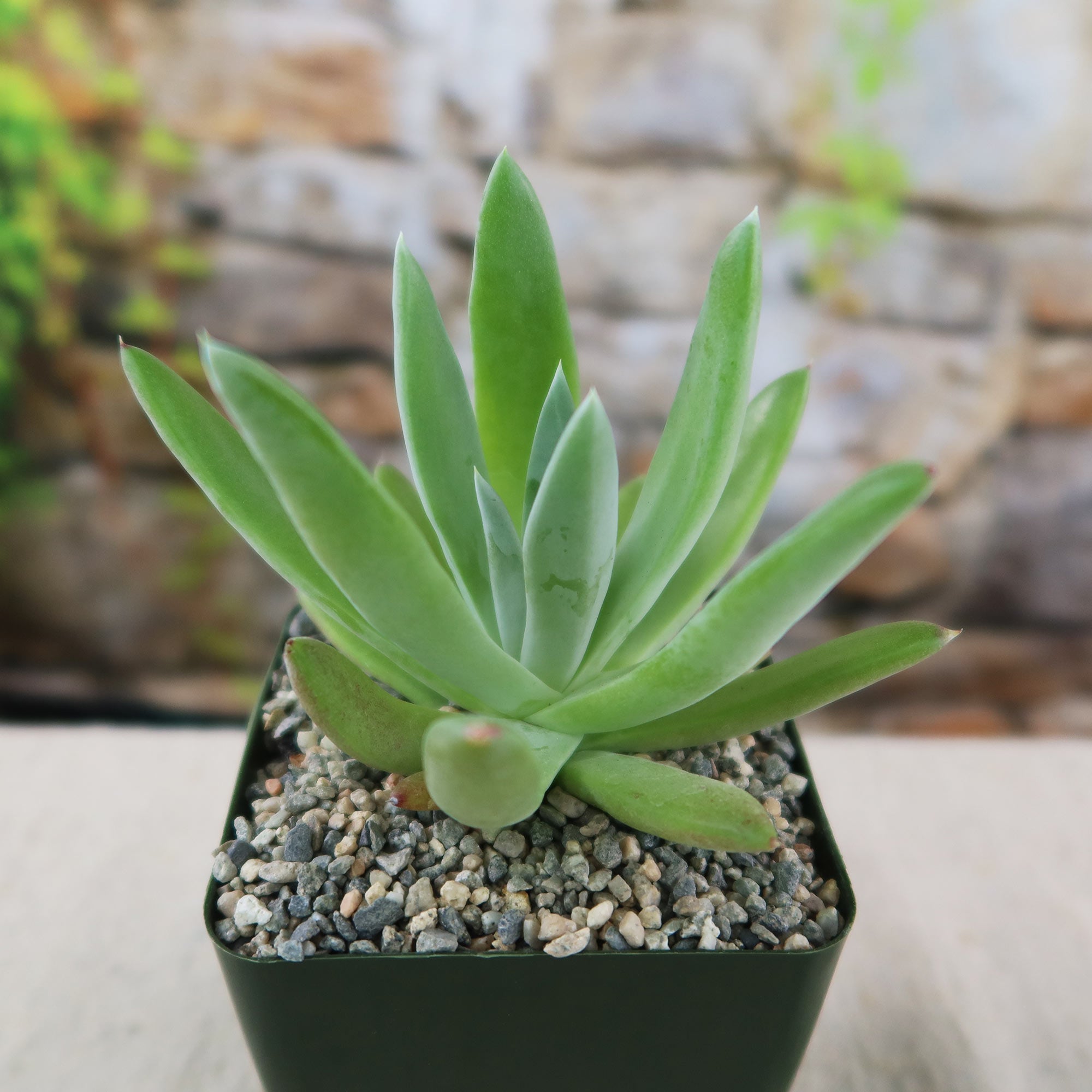
D udleya candida is an attractive succulent plant valued for its sculptural rosette form and pale, chalky foliage. Its powdery white coating, known as farina, gives the plant a soft, frosted look that makes it especially striking in succulent collections and rock gardens.

Native to Baja California, Mexico, it naturally grows on rocky slopes and coastal cliffs. In cooler regions, it can also be grown in pots and protected from heavy frost.
Dudleya candida typically forms compact rosettes of thick, fleshy leaves, each coated with a powdery white or bluish layer.
Mature plants usually reach about 12 inches tall and 12 inches wide, though their flowering stems can extend taller.
The leaves are smooth, spoon-shaped, and arranged symmetrically, giving the plant a tidy, geometric appearance that remains attractive year-round.
During the flowering season, the plant sends up tall, slender flower stalks that can reach 2 feet tall. These stalks bear clusters of small, tubular flowers, usually yellow to pale yellow-green in color.
The flowers add seasonal interest and can attract pollinators such as bees. The contrast between the tall flower stalk and the compact rosette adds a dynamic element to the plant’s overall form.
When it comes to care, your Dudleya candida thrives with well-drained succulent soil, opens in a new tabGo to soil cactus mix blend 1 gal 4 qt cacti succulent dirt compost growing media for healthy growth. Water sparingly, about every 10–14 days during the growing season (fall to spring) and reduce watering every 3–4 weeks in summer dormancy, allowing the soil to dry completely between waterings.

When growing indoors, it prefers bright light for 6–8 hours daily and temperatures between 60–80°F.
When growing outdoors, it grows best in USDA zones 9–11 with full sun to partial shade and protection from intense afternoon heat.
Fertilize lightly once a year in the spring during the active growing season with a diluted, balanced NPK fertilizer, as excessive feeding can harm this slow-growing plant.
One of the most unique aspects of Dudleya candida is its powdery white coating, which helps protect the plant from intense sunlight and water loss in its dry native habitat. This feature also gives the plant its distinctive chalky appearance.
Final Thoughts
Overall, this drought-tolerant Dudleya candida succulent is a beautiful and low-maintenance addition to arid gardens and succulent collections, offering both architectural form and seasonal blooms.
Bloom Season
Flower Color
Growth Rate
Hardiness Zone
Mature Size
Plant Type
Resistance
Sun Exposure
Watering Needs
| Attribute | Value |
|---|---|
| Bloom Season | Late spring, early summer |
| Botanical Name | Dudleya candida |
| Dormancy | Winter |
| Family | Crassulaceae |
| Flower Color | Yellow, pale yellow to green |
| Genus | Dudleya |
| Growth Habit | Rosette |
| Growth Rate | Slow |
| Hardiness Zone | 9, 10, 11 |
| Mature Size | 12 in. tall, 12 in. wide |
| Native Area | Mexico |
| Plant Type | Succulent |
| Propagation | By stem cuttings, division, offsets |
| Resistance | Extremely drought-tolerant, heat tolerant, pests resistant, deer resistant |
| Soil PH | 6.5, Acidic, Neutral |
| Soil Type | specialized succulent potting mix |
| Special Features | Easy to maintain, Easy to grow |
| Sun Exposure | Full sun (6+ hrs.), Partial shade (3–6 hrs. sun) |
| Toxicity | Safe for humans, friendly to dogs, friendly to cats |
| Watering Needs | Low |
Growers Quick Reference Guide - Key Features
| Attribute | Value |
|---|---|
| Bloom Season | Late spring, early summer |
| Botanical Name | Dudleya candida |
| Dormancy | Winter |
| Family | Crassulaceae |
| Flower Color | Yellow, pale yellow to green |
| Genus | Dudleya |
| Growth Habit | Rosette |
| Growth Rate | Slow |
| Hardiness Zone | 9, 10, 11 |
| Mature Size | 12 in. tall, 12 in. wide |
| Native Area | Mexico |
| Plant Type | Succulent |
| Propagation | By stem cuttings, division, offsets |
| Resistance | Extremely drought-tolerant, heat tolerant, pests resistant, deer resistant |
| Soil PH | 6.5, Acidic, Neutral |
| Soil Type | specialized succulent potting mix |
| Special Features | Easy to maintain, Easy to grow |
| Sun Exposure | Full sun (6+ hrs.), Partial shade (3–6 hrs. sun) |
| Toxicity | Safe for humans, friendly to dogs, friendly to cats |
| Watering Needs | Low |
- Description
- Key Plant Features
D udleya candida is an attractive succulent plant valued for its sculptural rosette form and pale, chalky foliage. Its powdery white coating, known as farina, gives the plant a soft, frosted look that makes it especially striking in succulent collections and rock gardens.
Native to Baja California, Mexico, it naturally grows on rocky slopes and coastal cliffs. In cooler regions, it can also be grown in pots and protected from heavy frost.
Dudleya candida typically forms compact rosettes of thick, fleshy leaves, each coated with a powdery white or bluish layer.
Mature plants usually reach about 12 inches tall and 12 inches wide, though their flowering stems can extend taller.
The leaves are smooth, spoon-shaped, and arranged symmetrically, giving the plant a tidy, geometric appearance that remains attractive year-round.
During the flowering season, the plant sends up tall, slender flower stalks that can reach 2 feet tall. These stalks bear clusters of small, tubular flowers, usually yellow to pale yellow-green in color.
The flowers add seasonal interest and can attract pollinators such as bees. The contrast between the tall flower stalk and the compact rosette adds a dynamic element to the plant’s overall form.
When it comes to care, your Dudleya candida thrives with well-drained succulent soil, opens in a new tabGo to soil cactus mix blend 1 gal 4 qt cacti succulent dirt compost growing media for healthy growth. Water sparingly, about every 10–14 days during the growing season (fall to spring) and reduce watering every 3–4 weeks in summer dormancy, allowing the soil to dry completely between waterings.
When growing indoors, it prefers bright light for 6–8 hours daily and temperatures between 60–80°F.
When growing outdoors, it grows best in USDA zones 9–11 with full sun to partial shade and protection from intense afternoon heat.
Fertilize lightly once a year in the spring during the active growing season with a diluted, balanced NPK fertilizer, as excessive feeding can harm this slow-growing plant.
One of the most unique aspects of Dudleya candida is its powdery white coating, which helps protect the plant from intense sunlight and water loss in its dry native habitat. This feature also gives the plant its distinctive chalky appearance.
Final Thoughts
Overall, this drought-tolerant Dudleya candida succulent is a beautiful and low-maintenance addition to arid gardens and succulent collections, offering both architectural form and seasonal blooms.
Bloom Season
Flower Color
Growth Rate
Hardiness Zone
Mature Size
Plant Type
Resistance
Sun Exposure
Watering Needs
| Attribute | Value |
|---|---|
| Bloom Season | Late spring, early summer |
| Botanical Name | Dudleya candida |
| Dormancy | Winter |
| Family | Crassulaceae |
| Flower Color | Yellow, pale yellow to green |
| Genus | Dudleya |
| Growth Habit | Rosette |
| Growth Rate | Slow |
| Hardiness Zone | 9, 10, 11 |
| Mature Size | 12 in. tall, 12 in. wide |
| Native Area | Mexico |
| Plant Type | Succulent |
| Propagation | By stem cuttings, division, offsets |
| Resistance | Extremely drought-tolerant, heat tolerant, pests resistant, deer resistant |
| Soil PH | 6.5, Acidic, Neutral |
| Soil Type | specialized succulent potting mix |
| Special Features | Easy to maintain, Easy to grow |
| Sun Exposure | Full sun (6+ hrs.), Partial shade (3–6 hrs. sun) |
| Toxicity | Safe for humans, friendly to dogs, friendly to cats |
| Watering Needs | Low |
Growers Quick Reference Guide - Key Features
| Attribute | Value |
|---|---|
| Bloom Season | Late spring, early summer |
| Botanical Name | Dudleya candida |
| Dormancy | Winter |
| Family | Crassulaceae |
| Flower Color | Yellow, pale yellow to green |
| Genus | Dudleya |
| Growth Habit | Rosette |
| Growth Rate | Slow |
| Hardiness Zone | 9, 10, 11 |
| Mature Size | 12 in. tall, 12 in. wide |
| Native Area | Mexico |
| Plant Type | Succulent |
| Propagation | By stem cuttings, division, offsets |
| Resistance | Extremely drought-tolerant, heat tolerant, pests resistant, deer resistant |
| Soil PH | 6.5, Acidic, Neutral |
| Soil Type | specialized succulent potting mix |
| Special Features | Easy to maintain, Easy to grow |
| Sun Exposure | Full sun (6+ hrs.), Partial shade (3–6 hrs. sun) |
| Toxicity | Safe for humans, friendly to dogs, friendly to cats |
| Watering Needs | Low |