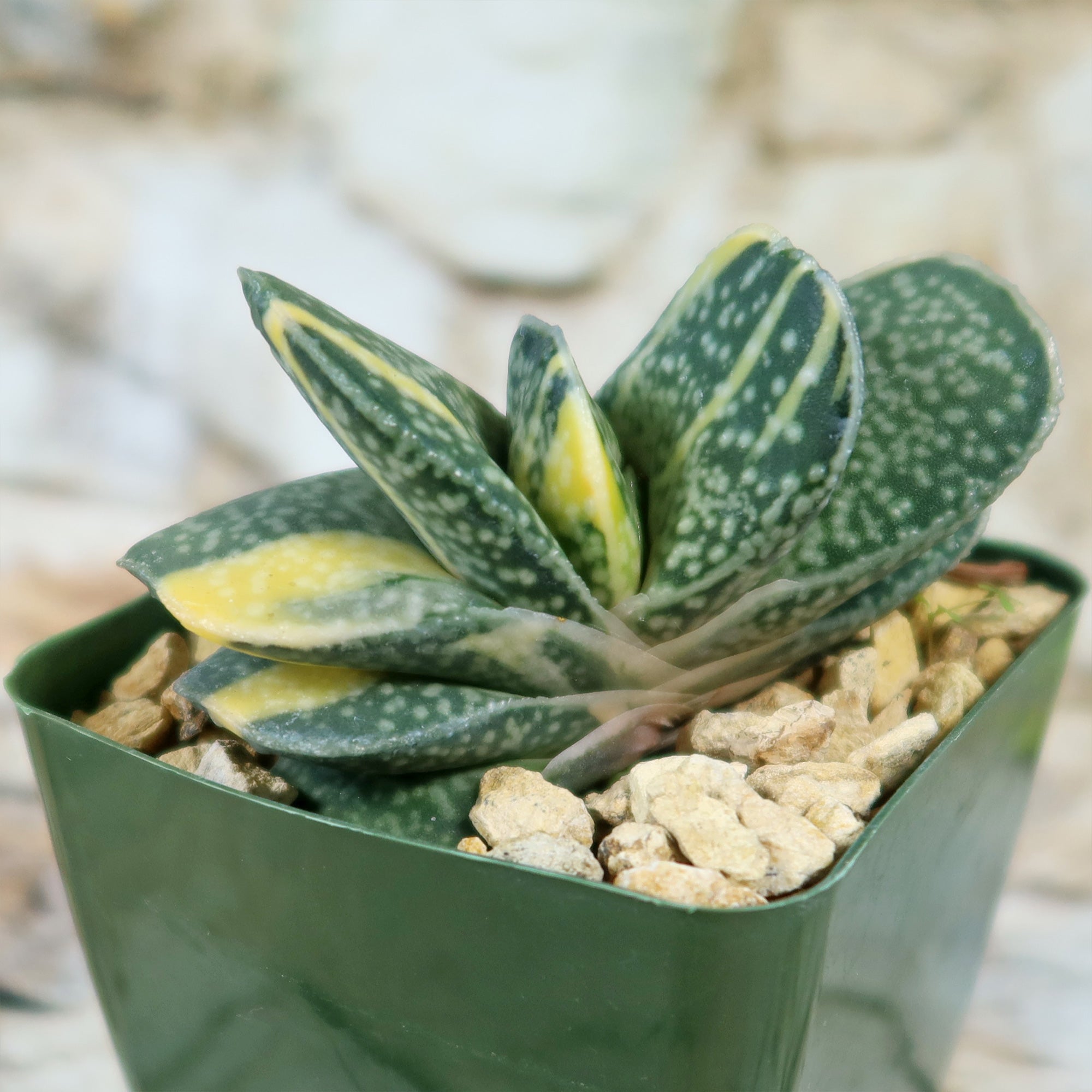
The Gasteria gracilis variegata is a striking variegated succulent prized for its architectural form and marbled leaf patterns. It is an easy-to-grow houseplant and thrives equally well in outdoor container gardens in the right climate. Thanks to its slow growth and modest size, it's ideal for windowsills, desktops, and small spaces.

Native to South Africa, the Gasteria gracilis variegata can grow up to 6 inches tall and 8 inches wide, making it a compact and tidy addition to succulent arrangements or individual pots.
A succulent mini-rosette of dark green, tongue-shaped, recurving leaves with many whitish dots, rough on the underside and keeled, with white lining and margins.
The flowers of this plant appear on slender arching stalks and are quite charming, though small.
The tubular blooms are pink to coral with a green tip, often resembling tiny bells or bird beaks.
While not heavily fragrant or showy, these flowers can attract pollinators when the plant is grown outdoors in USDA Zones 9 to 11. Indoors, they add a delightful seasonal accent, typically appearing in late winter or early spring.
When it comes to care, the Gasteria gracilis variegata prefers bright, indirect light indoors or filtered shade outdoors, especially in hot climates.
Direct sun can scorch its variegated leaves. It thrives in well-drained succulent soilGo to soil cactus mix blend 1 gal 4 qt cacti succulent dirt compost growing media, and like most succulents, it benefits from deep but infrequent watering.

Allow the soil to dry out completely between waterings to prevent root rot. Indoors, maintain temperatures between 60–80°F.
Outdoors, it should be protected from frost, as it is not frost-hardy and best suited to USDA Zones 9–11.
Apply a diluted NPK fertilizer once a year to the plant during the growing season. Pruning is usually unnecessary except to remove old flower stalks or damaged leaves.
The plant is relatively pest-resistant but can occasionally attract mealybugs or scale if overwatered or kept in poor airflow. Good air circulation and careful watering are usually enough to prevent issues.
One of its most unique aspects is its toughness and tolerance for neglect; this plant can bounce back from occasional drought and thrive on minimal attention. The variegation also makes every specimen unique, as no two plants develop the exact same pattern. According to ASPCA, the Gasteria species are generally considered non-toxic to pets, making them a safer choice for homes with cats and dogs.
Final Thoughts
Overall, the Gasteria gracilis variegata is a rewarding and visually appealing succulent that blends hardiness with ornamental charm. Whether grown indoors as a desk plant or as part of an outdoor succulent display in mild climates, it adds elegant texture and color contrast. Its manageable size, resilience, and low-maintenance nature make it a fantastic choice for both beginner and experienced plant lovers.
Bloom Season
Flower Color
Growth Rate
Hardiness Zone
Mature Size
Plant Type
Resistance
Sun Exposure
Watering Needs
| Attribute | Value |
|---|---|
| Bloom Season | Late winter, early spring |
| Botanical Name | Gasteria gracilis variegata |
| Dormancy | Winter |
| Family | Asphodelaceae |
| Flower Color | Pink |
| Genus | Gasteria |
| Growth Habit | Rosette |
| Growth Rate | Slow |
| Hardiness Zone | 9, 10, 11 |
| Mature Size | 6 in. tall, 8 in. wide |
| Native Area | South Africa |
| Plant Type | Succulent |
| Propagation | By cutings |
| Resistance | Extremely drought-tolerant, heat tolerant, pest resistance |
| Soil PH | 6.5, Acidic, Neutral |
| Soil Type | Succulents potting mix soil |
| Special Features | Easy to maintain, easy to grow |
| Sun Exposure | Full sun (6+ hrs.), Partial shade (3–6 hrs. sun) |
| Toxicity | Mildly toxic for humans, mildly toxic for pets |
| Watering Needs | Low |
Growers Quick Reference Guide - Key Features
| Attribute | Value |
|---|---|
| Bloom Season | Late winter, early spring |
| Botanical Name | Gasteria gracilis variegata |
| Dormancy | Winter |
| Family | Asphodelaceae |
| Flower Color | Pink |
| Genus | Gasteria |
| Growth Habit | Rosette |
| Growth Rate | Slow |
| Hardiness Zone | 9, 10, 11 |
| Mature Size | 6 in. tall, 8 in. wide |
| Native Area | South Africa |
| Plant Type | Succulent |
| Propagation | By cutings |
| Resistance | Extremely drought-tolerant, heat tolerant, pest resistance |
| Soil PH | 6.5, Acidic, Neutral |
| Soil Type | Succulents potting mix soil |
| Special Features | Easy to maintain, easy to grow |
| Sun Exposure | Full sun (6+ hrs.), Partial shade (3–6 hrs. sun) |
| Toxicity | Mildly toxic for humans, mildly toxic for pets |
| Watering Needs | Low |
- Description
- Key Plant Features
The Gasteria gracilis variegata is a striking variegated succulent prized for its architectural form and marbled leaf patterns. It is an easy-to-grow houseplant and thrives equally well in outdoor container gardens in the right climate. Thanks to its slow growth and modest size, it's ideal for windowsills, desktops, and small spaces.
Native to South Africa, the Gasteria gracilis variegata can grow up to 6 inches tall and 8 inches wide, making it a compact and tidy addition to succulent arrangements or individual pots.
A succulent mini-rosette of dark green, tongue-shaped, recurving leaves with many whitish dots, rough on the underside and keeled, with white lining and margins.
The flowers of this plant appear on slender arching stalks and are quite charming, though small.
The tubular blooms are pink to coral with a green tip, often resembling tiny bells or bird beaks.
While not heavily fragrant or showy, these flowers can attract pollinators when the plant is grown outdoors in USDA Zones 9 to 11. Indoors, they add a delightful seasonal accent, typically appearing in late winter or early spring.
When it comes to care, the Gasteria gracilis variegata prefers bright, indirect light indoors or filtered shade outdoors, especially in hot climates.
Direct sun can scorch its variegated leaves. It thrives in well-drained succulent soilGo to soil cactus mix blend 1 gal 4 qt cacti succulent dirt compost growing media, and like most succulents, it benefits from deep but infrequent watering.
Allow the soil to dry out completely between waterings to prevent root rot. Indoors, maintain temperatures between 60–80°F.
Outdoors, it should be protected from frost, as it is not frost-hardy and best suited to USDA Zones 9–11.
Apply a diluted NPK fertilizer once a year to the plant during the growing season. Pruning is usually unnecessary except to remove old flower stalks or damaged leaves.
The plant is relatively pest-resistant but can occasionally attract mealybugs or scale if overwatered or kept in poor airflow. Good air circulation and careful watering are usually enough to prevent issues.
One of its most unique aspects is its toughness and tolerance for neglect; this plant can bounce back from occasional drought and thrive on minimal attention. The variegation also makes every specimen unique, as no two plants develop the exact same pattern. According to ASPCA, the Gasteria species are generally considered non-toxic to pets, making them a safer choice for homes with cats and dogs.
Final Thoughts
Overall, the Gasteria gracilis variegata is a rewarding and visually appealing succulent that blends hardiness with ornamental charm. Whether grown indoors as a desk plant or as part of an outdoor succulent display in mild climates, it adds elegant texture and color contrast. Its manageable size, resilience, and low-maintenance nature make it a fantastic choice for both beginner and experienced plant lovers.
Bloom Season
Flower Color
Growth Rate
Hardiness Zone
Mature Size
Plant Type
Resistance
Sun Exposure
Watering Needs
| Attribute | Value |
|---|---|
| Bloom Season | Late winter, early spring |
| Botanical Name | Gasteria gracilis variegata |
| Dormancy | Winter |
| Family | Asphodelaceae |
| Flower Color | Pink |
| Genus | Gasteria |
| Growth Habit | Rosette |
| Growth Rate | Slow |
| Hardiness Zone | 9, 10, 11 |
| Mature Size | 6 in. tall, 8 in. wide |
| Native Area | South Africa |
| Plant Type | Succulent |
| Propagation | By cutings |
| Resistance | Extremely drought-tolerant, heat tolerant, pest resistance |
| Soil PH | 6.5, Acidic, Neutral |
| Soil Type | Succulents potting mix soil |
| Special Features | Easy to maintain, easy to grow |
| Sun Exposure | Full sun (6+ hrs.), Partial shade (3–6 hrs. sun) |
| Toxicity | Mildly toxic for humans, mildly toxic for pets |
| Watering Needs | Low |
Growers Quick Reference Guide - Key Features
| Attribute | Value |
|---|---|
| Bloom Season | Late winter, early spring |
| Botanical Name | Gasteria gracilis variegata |
| Dormancy | Winter |
| Family | Asphodelaceae |
| Flower Color | Pink |
| Genus | Gasteria |
| Growth Habit | Rosette |
| Growth Rate | Slow |
| Hardiness Zone | 9, 10, 11 |
| Mature Size | 6 in. tall, 8 in. wide |
| Native Area | South Africa |
| Plant Type | Succulent |
| Propagation | By cutings |
| Resistance | Extremely drought-tolerant, heat tolerant, pest resistance |
| Soil PH | 6.5, Acidic, Neutral |
| Soil Type | Succulents potting mix soil |
| Special Features | Easy to maintain, easy to grow |
| Sun Exposure | Full sun (6+ hrs.), Partial shade (3–6 hrs. sun) |
| Toxicity | Mildly toxic for humans, mildly toxic for pets |
| Watering Needs | Low |