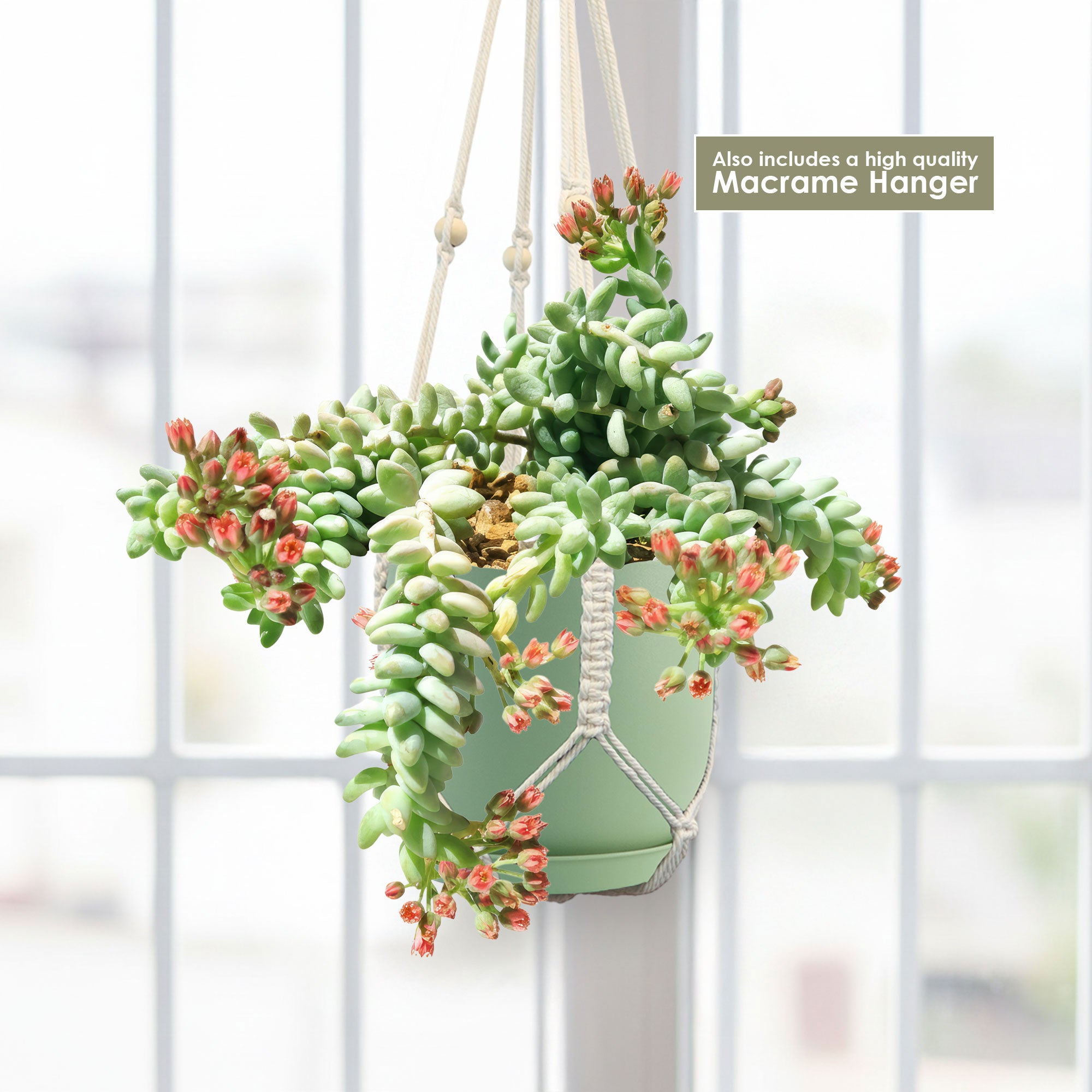
Introducing the burro's tail succulent, known as Sedum morganianum ‘Burrito’ (or Sedum burrito), which is a perfect choice among gardeners.
Native to Southern Mexico, this Sedum burrito plant is like a superstar hanging from your ceiling, with its mesmerizing trailing stems. While it may resemble a donkey tail plant at first glance, this gorgeous burrito sedum has shorter stems and smaller, more rounded leaves than the donkey tail succulent.

This burro's tail succulent gets its scientific name, Sedum 'Burrito', from its long, oval- or teardrop-shaped leaves that grow down the stem and look like the tail of a burro.
When mature, these large burro's tail plants' trailing stems reach 3–4 feet long.
The stems of this plant are covered in small, fleshy, blue-green leaves that grow in a spiral pattern along the length of the stem.
Each leaf is coated with a powdery, wax-like layer called farina, which helps protect the plant from intense sunlight and water loss. The leaves are about 1 inch long and are arranged in pairs along the stem.
The flowers of this succulent bloom in spring with little star-shaped pink or red burro’s tail flowers that will burst into bloom with bright yellow stamens. These nectar-rich blooms attract beneficial pollinators such as bees and butterflies, adding even more appeal to this eye-catching succulent.
Related Product

Its single fallen leaf can root and grow into an entirely new plant, making propagation incredibly easy. The burro's tail care is less fragile overall, making it a great choice if you're new to growing succulents in hanging baskets.
When and How to Water Your Burro's Tail Plant
One of the coolest features of this plant is the way it stores excess water in its leaves. That means you don't have to water this succulent plant as frequently as you might think; just make sure the topsoil is completely dry before giving it another drink to help its roots develop properly. This helps avoid overwatering and keeps your plant healthy and happy.
Water your burro's tail succulent typically 2-4 weeks during growing season and reduce watering to 4 to 6 weeks during dormancy.
In the spring and summer, this drought-tolerant Sedum burrito should be watered about once a week, especially when the soil has dried out completely, and its plump, tear-shaped leaves begin to show slight wrinkling. Use the “soak and dry” method by watering thoroughly until excess water drains out, then wait until the soil is completely dry before watering again.
In the fall and winter, the sedum plant can be watered less frequently, about once every 2 weeks. It's important to make sure the soil is well-draining, as it is susceptible to root rot if it sits in water for too long, which affects root growth. Remember, keep the soil moist but not soggy by misting it frequently whenever you notice the surface of the soil drying out.
Light Requirements - Where to Place Your Burro's Tail Succulent

When growing indoors, a bright windowsill or a location near a sunny window is a great place for the burro's tail succulent.
It should be placed about 12 inches away from the grow light and should receive about at least 6 hours of light per day.
If the burro tail doesn't receive enough bright light, it can become leggy, and the leaves may fall off.
It can also be grown under artificial light, such as a grow light. This is a great option for people who live in areas with insufficient light or who want to grow succulents indoors.
When growing outdoors, it prefers a sunny spot in a location where it can receive 4 to 6 hours of morning sunlight or bright light with partial sun.
Protect it from intense afternoon sunlight, especially in hot climates, as prolonged exposure can scorch the leaves, causing discoloration or sunburn. If temperatures are particularly high, providing light shade during the hottest part of the day will help keep the plant looking its best.
Optimal Soil & Fertilizer Needs
The Burro's tail prefers well-draining potting soil that is rich in organic matter. A succulent soil mix is a great choice for the burro's tail succulent, as it provides the drainage that succulents need. The soil should be allowed to dry out completely between waterings, as the plant is susceptible to root rot if it sits in water for too long.
Ideally, you want to use our specialized succulent potting mix that contains 5 natural substrates and organic mycorrhizae to promote the development of a strong root system that helps your burro tail succulent thrive.
When fertilizing your sedum burrito, a balanced, natural fertilizer with an equal mix of NPK 5-10-5 is a good choice. It's important to avoid over-fertilizing the burro tail, as this can cause the leaves to become soft and weak.
How to Grow Indoors as a Houseplant
As one of the most popular hanging succulents, Burro’s Tail is prized for its cascading stems and low-maintenance nature. To keep this eye-catching plant healthy, vibrant, and thriving indoors year-round, follow these simple care tips:
- Place your Burro’s Tail near a south- or west-facing window where it can receive several hours of bright light each day.
- Plant it in a specialized succulent soil to prevent excess moisture from lingering around the roots.
- Proper drainage is essential for preventing root rot and keeping the roots healthy.
- Maintain indoor temperatures between 60°F-75°F, and protect the plant from cold drafts and temperatures below 40°F.
- Allow the soil to dry out completely between waterings and reduce watering frequency during winter.
- Feed with a dilute NPK fertilizer once a year in spring to support healthy growth without encouraging weak, leggy stems.
- The leaves detach easily when touched, so place the plant in a location where it won't be bumped or moved frequently.
Hardiness Zone & More

In the United States, the Burro’s Tail plant is mostly an indoor plant, but if you live in southern Florida or Hawaii, then you can cultivate it outdoors in USDA zones 10-11.
It thrives in temperatures between 60°F-75°F, although established plants can tolerate short periods of warmer weather when protected from intense afternoon sun.
Temperatures below 40°F can damage the foliage, and frost exposure may be fatal. It prefers low to average humidity and adapts well to typical household conditions. High humidity is generally unnecessary and can increase the risk of rot if combined with overly moist soil.
Wildlife – Burro’s Tail Flowers Attract the Following Friendly Pollinators
The flowers of this succulent attract beneficial pollinators such as bees, ladybugs, butterflies, and hummingbirds. It also attracts beneficial insects like hoverflies and green lacewings. Its small pink to red, nectar-rich flowers provide a valuable food source when the plant blooms.
 Butterflies
 Bees
Bees
 Hummingbirds
 Lady Bugs
 Multi Pollinators
 Other Birds
According to ASPCA, Sedum morganianum ‘Burrito’ is considered non-toxic to humans, and pets. However, it is best to discourage pets and children from chewing on the plant, as ingesting any plant material may cause minor digestive discomfort.
How to propagate Your Burro's Tail Plant
To propagate Sedum burrito, it is best to take stem cuttings or leaf cuttings during the spring or summer months when the plant is actively growing. Place the cuttings in a well-draining soil mix and keep them in a bright, indirect light location to encourage root development. Over time, a new plantlet will develop as the original leaf naturally shrivels away.
Key Takeaways
- Burro’s Tail is one of the most popular hanging houseplant, prized for its cascading stems that create a lush waterfall effect in hanging baskets, shelves, and elevated planters.
- This drought-tolerant succulent thrives with minimal watering and attention, making it ideal for busy plant owners.
- A single fallen leaf can grow into a brand-new plant, allowing you to expand your collection for free.
- Mature plants reward growers with charming pink to red flowers that attract beneficial pollinators and add extra visual appeal.
- Whether displayed alone or mixed with other succulents, it brings a soft, elegant touch to any space.
- Unlike many houseplants, Burro’s Tail is non-toxic to cats, dogs, and horses, offering peace of mind for pet owners.
Final Thoughts
Overall, the burro's tail succulent (Sedum burrito), with its cascading stems and plump, trailing leaves, adds a distinct and eye-catching element to any space. This succulent is not only visually appealing but also easy to care for. Its ability to store water in its leaves allows it to withstand periods of drought, making it a low-maintenance choice for plant enthusiasts. Whether you choose to hang it on a macramé hanger or let it spill over the edges of a pot, the burro's tail succulent is sure to bring a touch of natural beauty and charm to your home or rock garden.
Bloom Season
Flower Color
Growth Rate
Hardiness Zone
Mature Size
Plant Type
Resistance
Sun Exposure
Watering Needs
| Attribute | Value |
|---|---|
| Bloom Season | Mid springmid summer |
| Botanical Name | Sedum morganianum ‘Burrito’ |
| Common Name | Burro's Tail |
| Dormancy | Winter |
| Family | Crassulaceae |
| Flower Color | Pink, deep red, purple |
| Genus | Sedum |
| Growth Habit | Trailing stem |
| Growth Rate | Slow |
| Hardiness Zone | 10 11(USDA) |
| Mature Size | 3 4 ft. tall |
| Native Area | Mexico |
| Plant Type | Perennial succulent |
| Propagation | By divisions, cuttings |
| Resistance | Extremely drought-tolerant, pest resistant, deer resistant, mild frost hardy |
| Soil PH | 6.5, Acidic, Neutral |
| Soil Type | Succulents potting mix soil |
| Special Features | Tear drop leaves, fleshy |
| Sun Exposure | Full sun (6+ hrs.), Partial shade (3–6 hrs. sun) |
| Toxicity | Safe for humans, safe for pets |
| Watering Needs | Low |
Growers Quick Reference Guide - Key Features
| Attribute | Value |
|---|---|
| Bloom Season | Mid springmid summer |
| Botanical Name | Sedum morganianum ‘Burrito’ |
| Common Name | Burro's Tail |
| Dormancy | Winter |
| Family | Crassulaceae |
| Flower Color | Pink, deep red, purple |
| Genus | Sedum |
| Growth Habit | Trailing stem |
| Growth Rate | Slow |
| Hardiness Zone | 10 11(USDA) |
| Mature Size | 3 4 ft. tall |
| Native Area | Mexico |
| Plant Type | Perennial succulent |
| Propagation | By divisions, cuttings |
| Resistance | Extremely drought-tolerant, pest resistant, deer resistant, mild frost hardy |
| Soil PH | 6.5, Acidic, Neutral |
| Soil Type | Succulents potting mix soil |
| Special Features | Tear drop leaves, fleshy |
| Sun Exposure | Full sun (6+ hrs.), Partial shade (3–6 hrs. sun) |
| Toxicity | Safe for humans, safe for pets |
| Watering Needs | Low |
- Description
- Key Plant Features
Introducing the burro's tail succulent, known as Sedum morganianum ‘Burrito’ (or Sedum burrito), which is a perfect choice among gardeners.
Native to Southern Mexico, this Sedum burrito plant is like a superstar hanging from your ceiling, with its mesmerizing trailing stems. While it may resemble a donkey tail plant at first glance, this gorgeous burrito sedum has shorter stems and smaller, more rounded leaves than the donkey tail succulent.
This burro's tail succulent gets its scientific name, Sedum 'Burrito', from its long, oval- or teardrop-shaped leaves that grow down the stem and look like the tail of a burro.
When mature, these large burro's tail plants' trailing stems reach 3–4 feet long.
The stems of this plant are covered in small, fleshy, blue-green leaves that grow in a spiral pattern along the length of the stem.
Each leaf is coated with a powdery, wax-like layer called farina, which helps protect the plant from intense sunlight and water loss. The leaves are about 1 inch long and are arranged in pairs along the stem.
The flowers of this succulent bloom in spring with little star-shaped pink or red burro’s tail flowers that will burst into bloom with bright yellow stamens. These nectar-rich blooms attract beneficial pollinators such as bees and butterflies, adding even more appeal to this eye-catching succulent.
Related Product
Its single fallen leaf can root and grow into an entirely new plant, making propagation incredibly easy. The burro's tail care is less fragile overall, making it a great choice if you're new to growing succulents in hanging baskets.
When and How to Water Your Burro's Tail Plant
One of the coolest features of this plant is the way it stores excess water in its leaves. That means you don't have to water this succulent plant as frequently as you might think; just make sure the topsoil is completely dry before giving it another drink to help its roots develop properly. This helps avoid overwatering and keeps your plant healthy and happy.
Water your burro's tail succulent typically 2-4 weeks during growing season and reduce watering to 4 to 6 weeks during dormancy.
In the spring and summer, this drought-tolerant Sedum burrito should be watered about once a week, especially when the soil has dried out completely, and its plump, tear-shaped leaves begin to show slight wrinkling. Use the “soak and dry” method by watering thoroughly until excess water drains out, then wait until the soil is completely dry before watering again.
In the fall and winter, the sedum plant can be watered less frequently, about once every 2 weeks. It's important to make sure the soil is well-draining, as it is susceptible to root rot if it sits in water for too long, which affects root growth. Remember, keep the soil moist but not soggy by misting it frequently whenever you notice the surface of the soil drying out.
Light Requirements - Where to Place Your Burro's Tail Succulent
When growing indoors, a bright windowsill or a location near a sunny window is a great place for the burro's tail succulent.
It should be placed about 12 inches away from the grow light and should receive about at least 6 hours of light per day.
If the burro tail doesn't receive enough bright light, it can become leggy, and the leaves may fall off.
It can also be grown under artificial light, such as a grow light. This is a great option for people who live in areas with insufficient light or who want to grow succulents indoors.
When growing outdoors, it prefers a sunny spot in a location where it can receive 4 to 6 hours of morning sunlight or bright light with partial sun.
Protect it from intense afternoon sunlight, especially in hot climates, as prolonged exposure can scorch the leaves, causing discoloration or sunburn. If temperatures are particularly high, providing light shade during the hottest part of the day will help keep the plant looking its best.
Optimal Soil & Fertilizer Needs
The Burro's tail prefers well-draining potting soil that is rich in organic matter. A succulent soil mix is a great choice for the burro's tail succulent, as it provides the drainage that succulents need. The soil should be allowed to dry out completely between waterings, as the plant is susceptible to root rot if it sits in water for too long.
Ideally, you want to use our specialized succulent potting mix that contains 5 natural substrates and organic mycorrhizae to promote the development of a strong root system that helps your burro tail succulent thrive.
When fertilizing your sedum burrito, a balanced, natural fertilizer with an equal mix of NPK 5-10-5 is a good choice. It's important to avoid over-fertilizing the burro tail, as this can cause the leaves to become soft and weak.
How to Grow Indoors as a Houseplant
As one of the most popular hanging succulents, Burro’s Tail is prized for its cascading stems and low-maintenance nature. To keep this eye-catching plant healthy, vibrant, and thriving indoors year-round, follow these simple care tips:
- Place your Burro’s Tail near a south- or west-facing window where it can receive several hours of bright light each day.
- Plant it in a specialized succulent soil to prevent excess moisture from lingering around the roots.
- Proper drainage is essential for preventing root rot and keeping the roots healthy.
- Maintain indoor temperatures between 60°F-75°F, and protect the plant from cold drafts and temperatures below 40°F.
- Allow the soil to dry out completely between waterings and reduce watering frequency during winter.
- Feed with a dilute NPK fertilizer once a year in spring to support healthy growth without encouraging weak, leggy stems.
- The leaves detach easily when touched, so place the plant in a location where it won't be bumped or moved frequently.
Hardiness Zone & More
In the United States, the Burro’s Tail plant is mostly an indoor plant, but if you live in southern Florida or Hawaii, then you can cultivate it outdoors in USDA zones 10-11.
It thrives in temperatures between 60°F-75°F, although established plants can tolerate short periods of warmer weather when protected from intense afternoon sun.
Temperatures below 40°F can damage the foliage, and frost exposure may be fatal. It prefers low to average humidity and adapts well to typical household conditions. High humidity is generally unnecessary and can increase the risk of rot if combined with overly moist soil.
Wildlife – Burro’s Tail Flowers Attract the Following Friendly Pollinators
The flowers of this succulent attract beneficial pollinators such as bees, ladybugs, butterflies, and hummingbirds. It also attracts beneficial insects like hoverflies and green lacewings. Its small pink to red, nectar-rich flowers provide a valuable food source when the plant blooms.
Butterflies
Bees
Hummingbirds
Lady Bugs
Multi Pollinators
Other Birds
According to ASPCA, Sedum morganianum ‘Burrito’ is considered non-toxic to humans, and pets. However, it is best to discourage pets and children from chewing on the plant, as ingesting any plant material may cause minor digestive discomfort.
How to propagate Your Burro's Tail Plant
To propagate Sedum burrito, it is best to take stem cuttings or leaf cuttings during the spring or summer months when the plant is actively growing. Place the cuttings in a well-draining soil mix and keep them in a bright, indirect light location to encourage root development. Over time, a new plantlet will develop as the original leaf naturally shrivels away.
Key Takeaways
- Burro’s Tail is one of the most popular hanging houseplant, prized for its cascading stems that create a lush waterfall effect in hanging baskets, shelves, and elevated planters.
- This drought-tolerant succulent thrives with minimal watering and attention, making it ideal for busy plant owners.
- A single fallen leaf can grow into a brand-new plant, allowing you to expand your collection for free.
- Mature plants reward growers with charming pink to red flowers that attract beneficial pollinators and add extra visual appeal.
- Whether displayed alone or mixed with other succulents, it brings a soft, elegant touch to any space.
- Unlike many houseplants, Burro’s Tail is non-toxic to cats, dogs, and horses, offering peace of mind for pet owners.
Final Thoughts
Overall, the burro's tail succulent (Sedum burrito), with its cascading stems and plump, trailing leaves, adds a distinct and eye-catching element to any space. This succulent is not only visually appealing but also easy to care for. Its ability to store water in its leaves allows it to withstand periods of drought, making it a low-maintenance choice for plant enthusiasts. Whether you choose to hang it on a macramé hanger or let it spill over the edges of a pot, the burro's tail succulent is sure to bring a touch of natural beauty and charm to your home or rock garden.
Bloom Season
Flower Color
Growth Rate
Hardiness Zone
Mature Size
Plant Type
Resistance
Sun Exposure
Watering Needs
| Attribute | Value |
|---|---|
| Bloom Season | Mid springmid summer |
| Botanical Name | Sedum morganianum ‘Burrito’ |
| Common Name | Burro's Tail |
| Dormancy | Winter |
| Family | Crassulaceae |
| Flower Color | Pink, deep red, purple |
| Genus | Sedum |
| Growth Habit | Trailing stem |
| Growth Rate | Slow |
| Hardiness Zone | 10 11(USDA) |
| Mature Size | 3 4 ft. tall |
| Native Area | Mexico |
| Plant Type | Perennial succulent |
| Propagation | By divisions, cuttings |
| Resistance | Extremely drought-tolerant, pest resistant, deer resistant, mild frost hardy |
| Soil PH | 6.5, Acidic, Neutral |
| Soil Type | Succulents potting mix soil |
| Special Features | Tear drop leaves, fleshy |
| Sun Exposure | Full sun (6+ hrs.), Partial shade (3–6 hrs. sun) |
| Toxicity | Safe for humans, safe for pets |
| Watering Needs | Low |
Growers Quick Reference Guide - Key Features
| Attribute | Value |
|---|---|
| Bloom Season | Mid springmid summer |
| Botanical Name | Sedum morganianum ‘Burrito’ |
| Common Name | Burro's Tail |
| Dormancy | Winter |
| Family | Crassulaceae |
| Flower Color | Pink, deep red, purple |
| Genus | Sedum |
| Growth Habit | Trailing stem |
| Growth Rate | Slow |
| Hardiness Zone | 10 11(USDA) |
| Mature Size | 3 4 ft. tall |
| Native Area | Mexico |
| Plant Type | Perennial succulent |
| Propagation | By divisions, cuttings |
| Resistance | Extremely drought-tolerant, pest resistant, deer resistant, mild frost hardy |
| Soil PH | 6.5, Acidic, Neutral |
| Soil Type | Succulents potting mix soil |
| Special Features | Tear drop leaves, fleshy |
| Sun Exposure | Full sun (6+ hrs.), Partial shade (3–6 hrs. sun) |
| Toxicity | Safe for humans, safe for pets |
| Watering Needs | Low |