



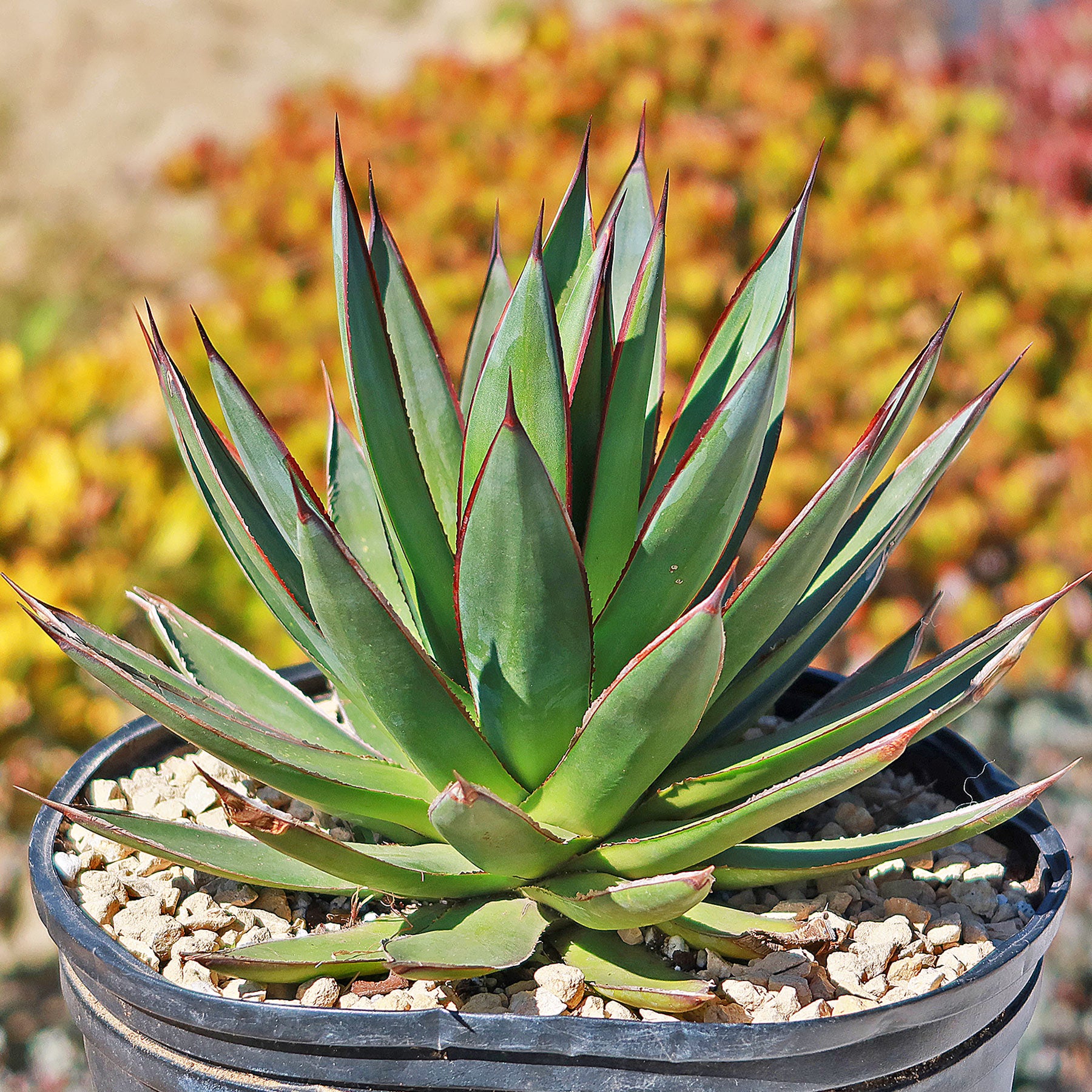
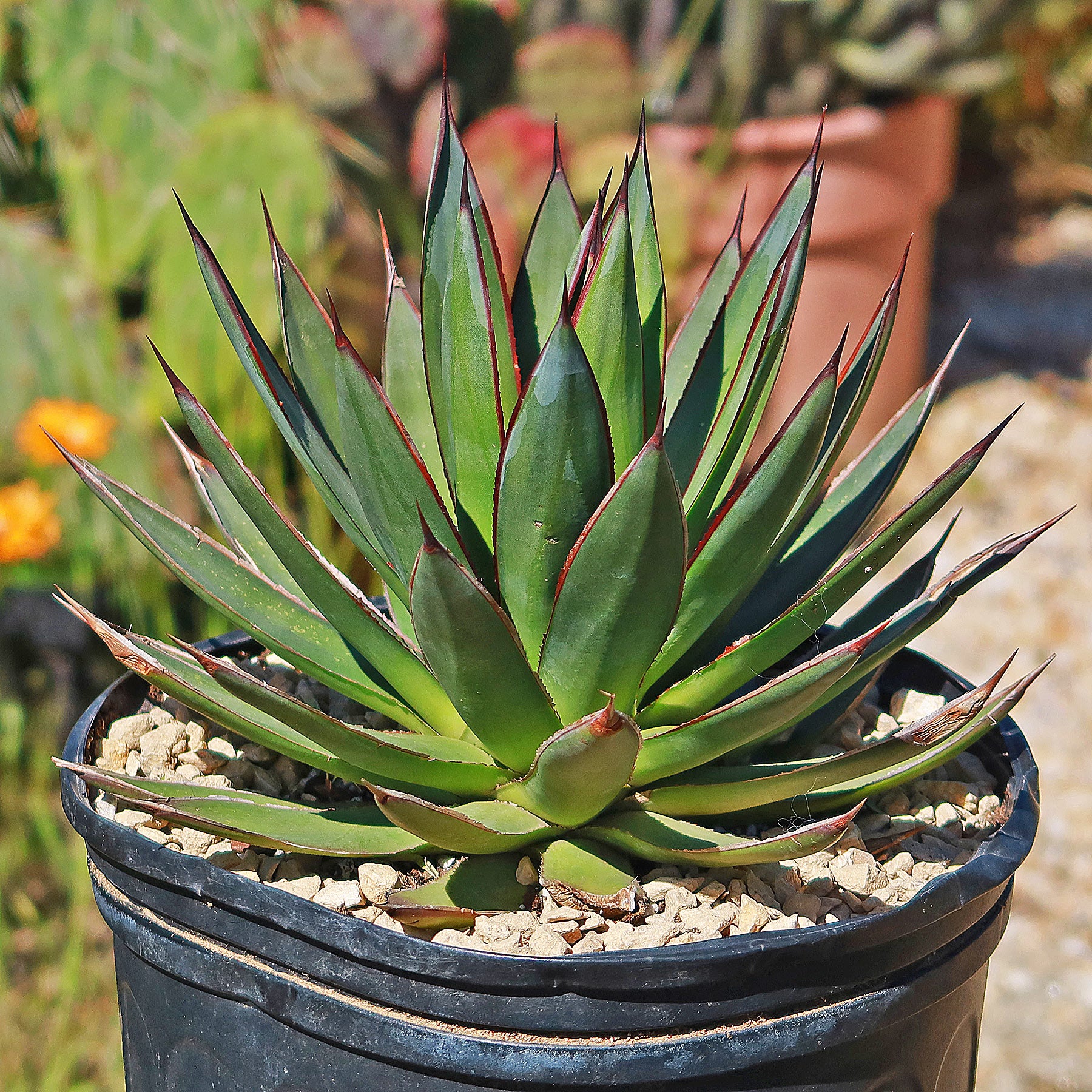
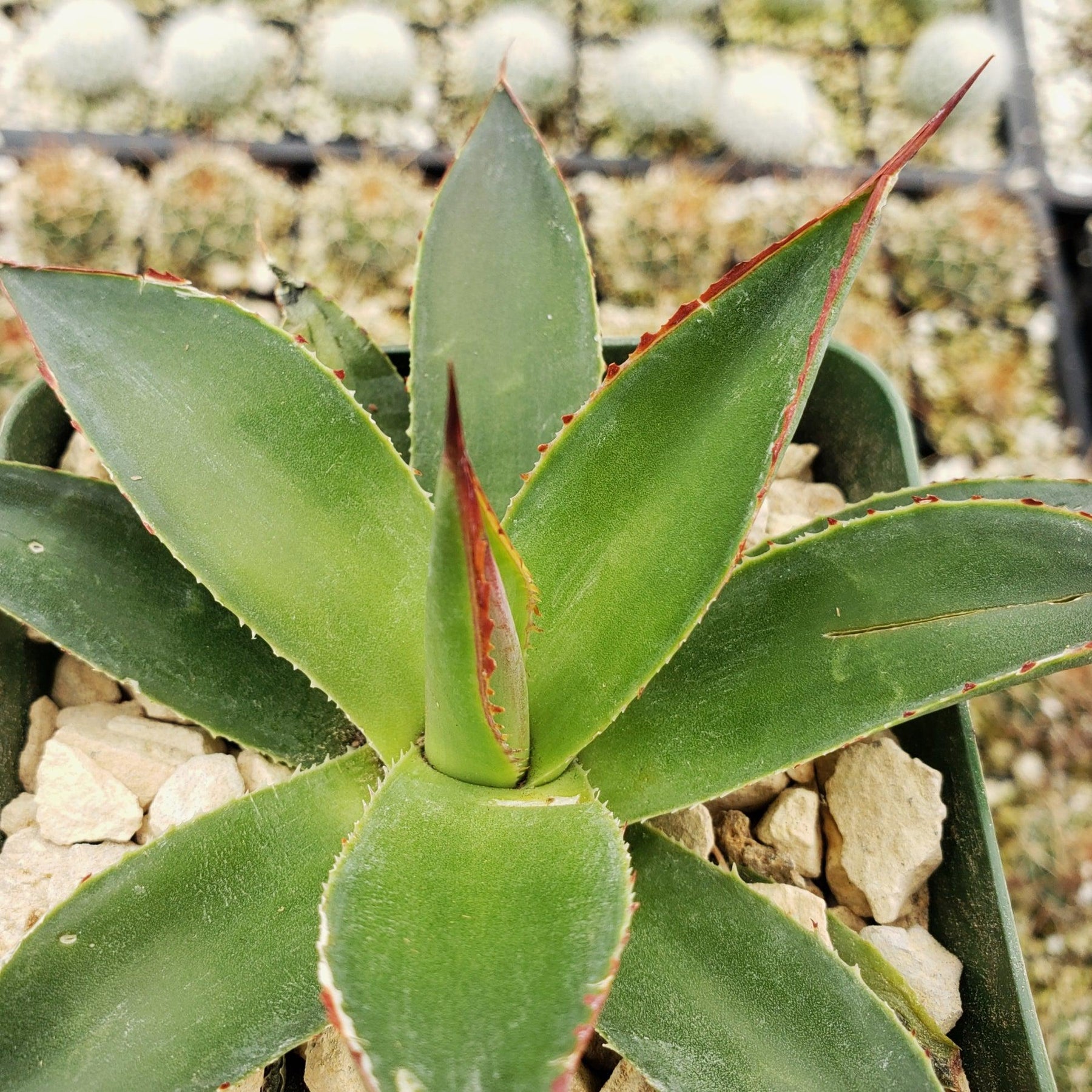
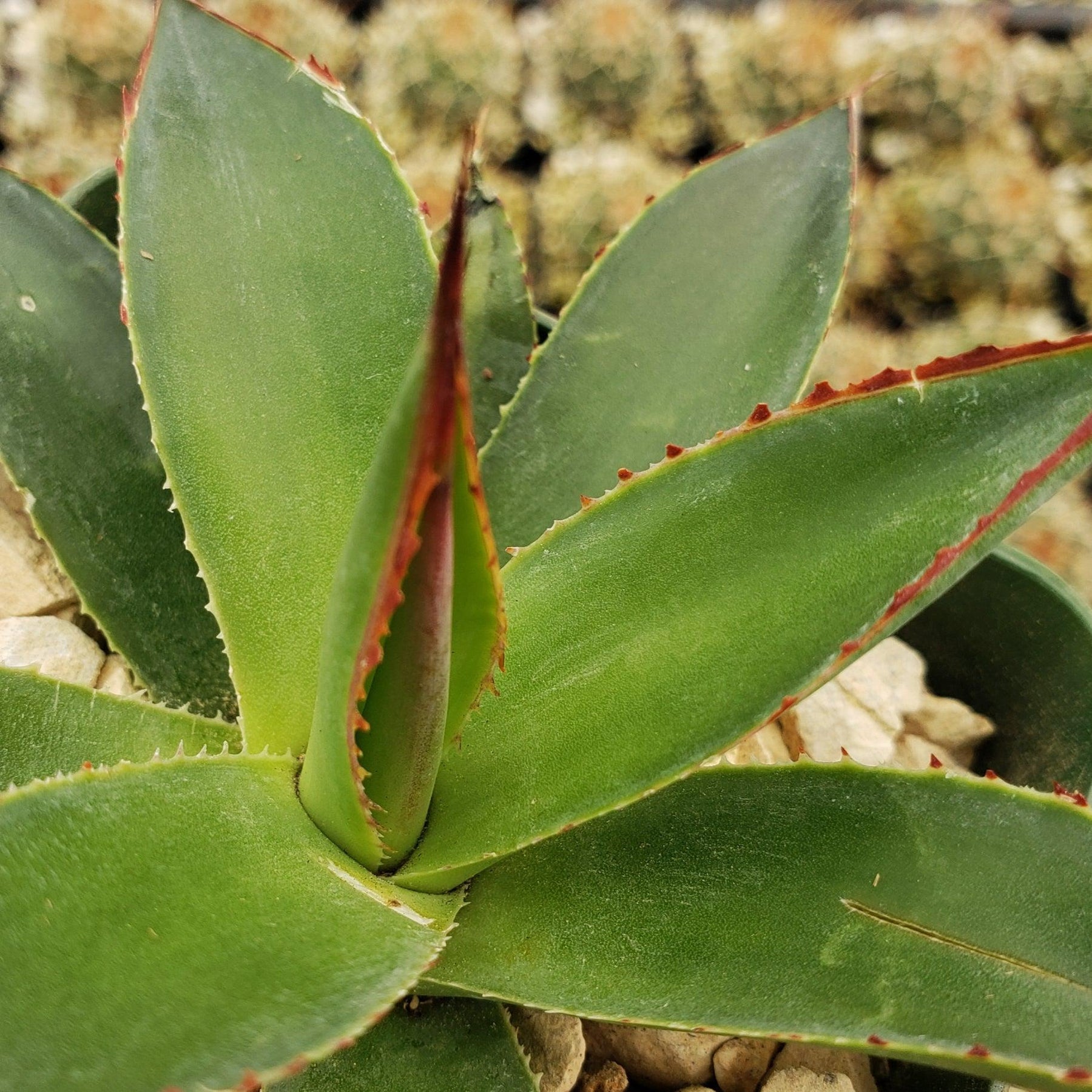
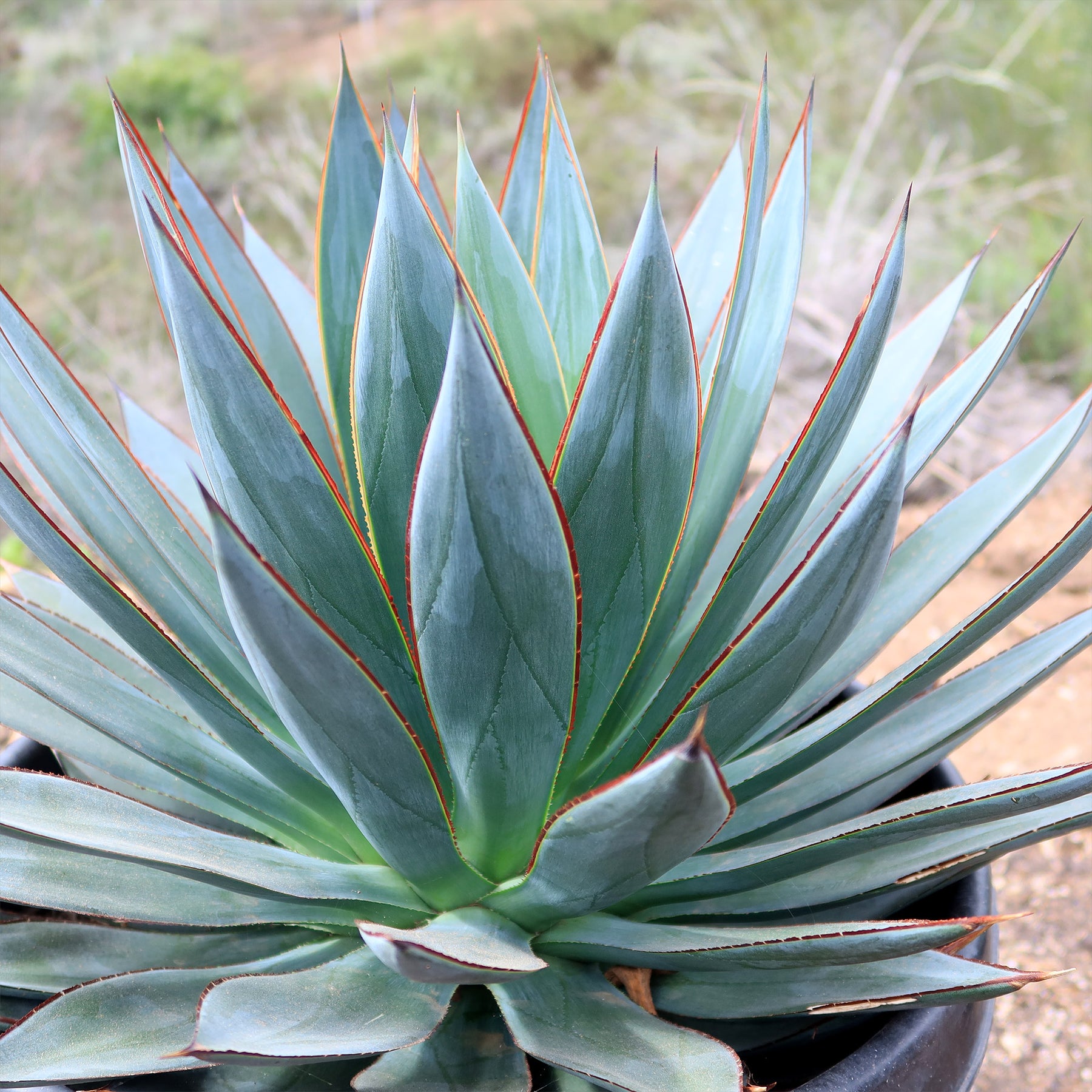
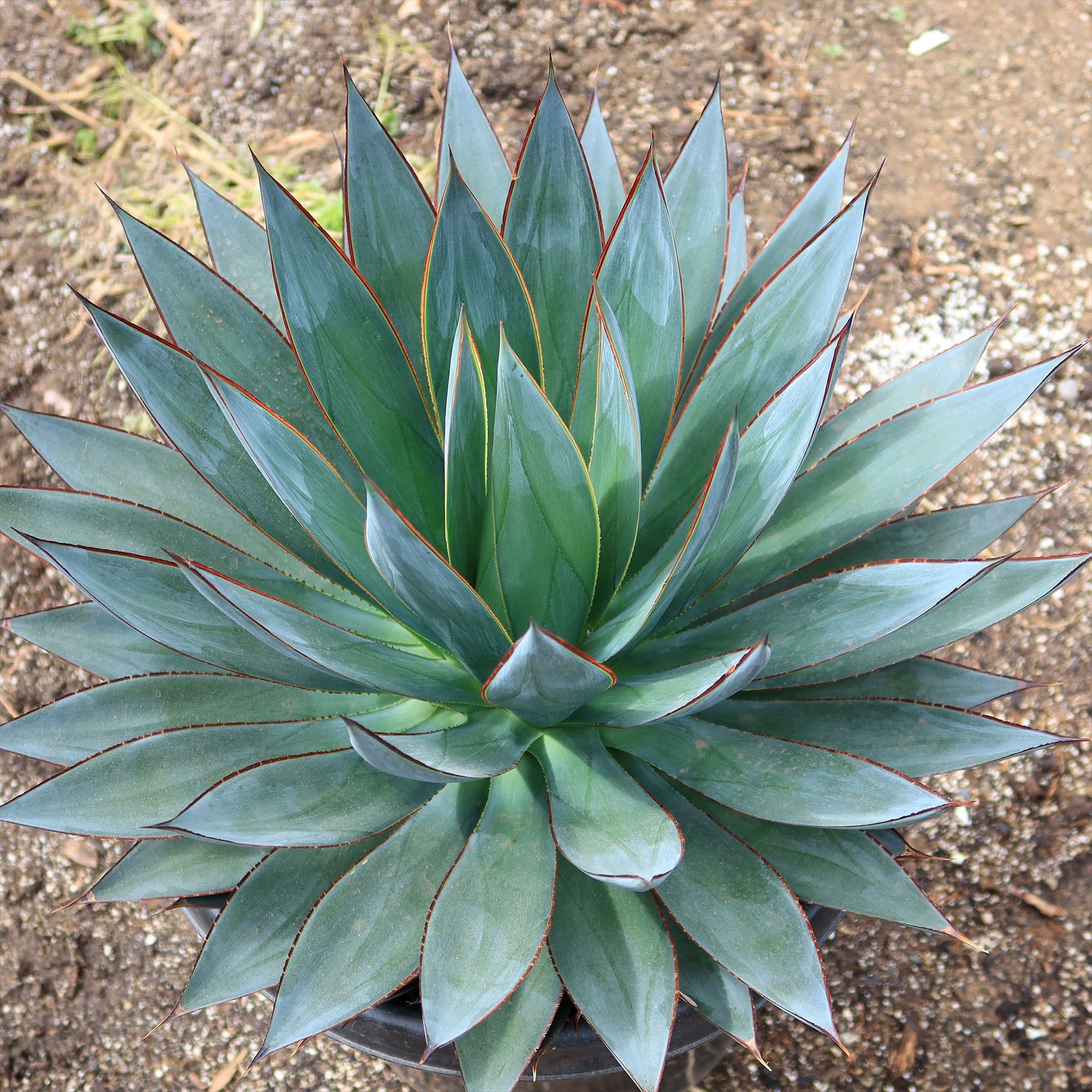
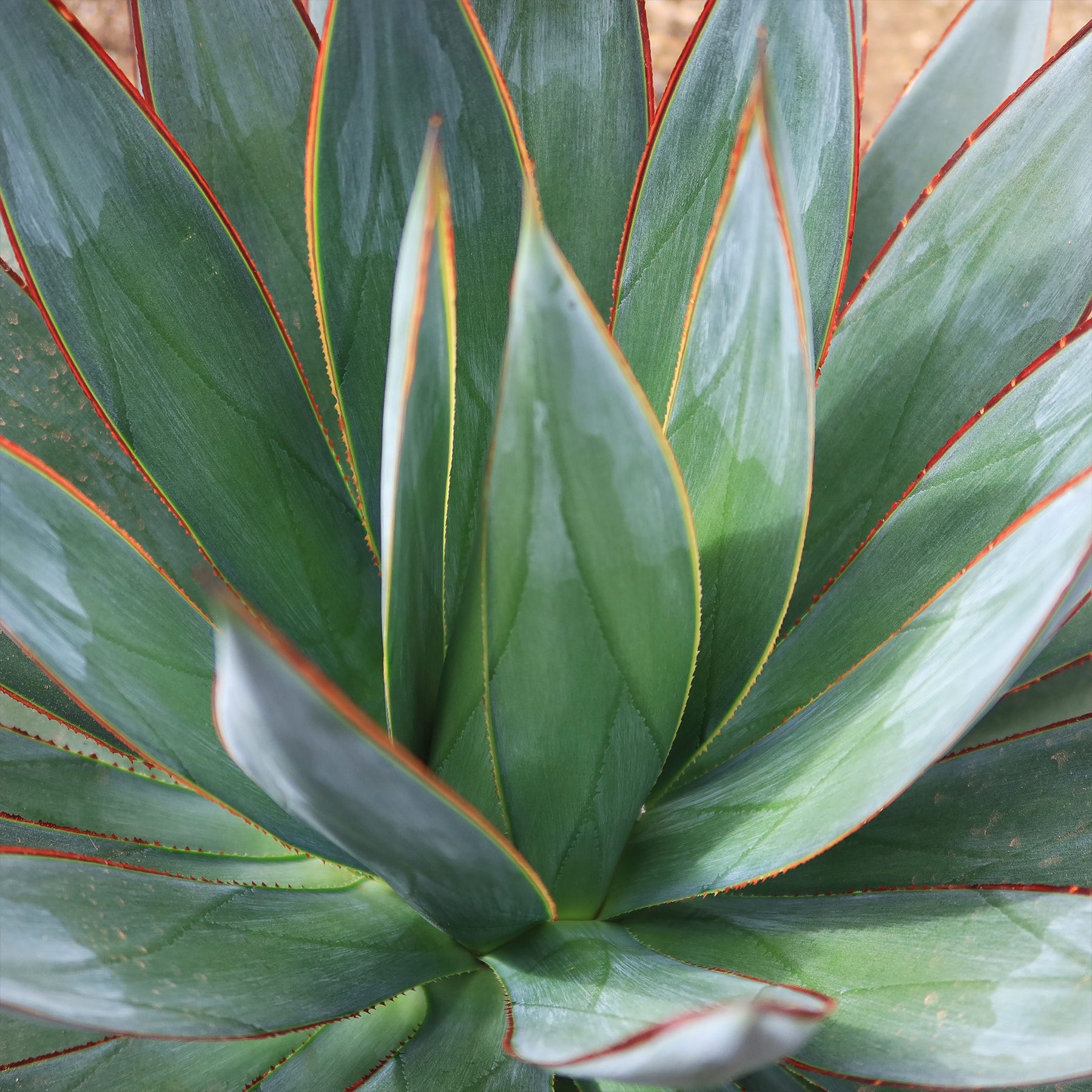
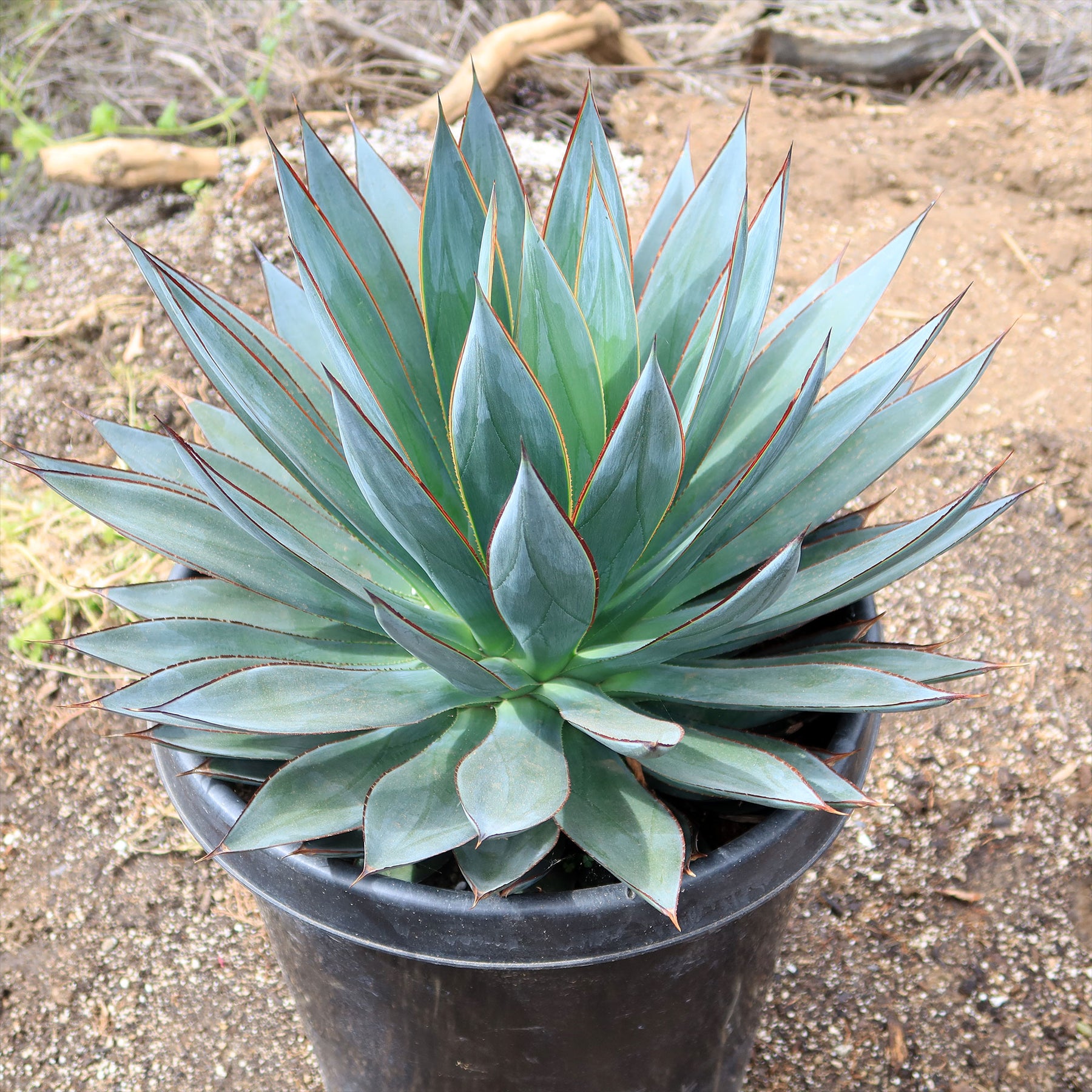
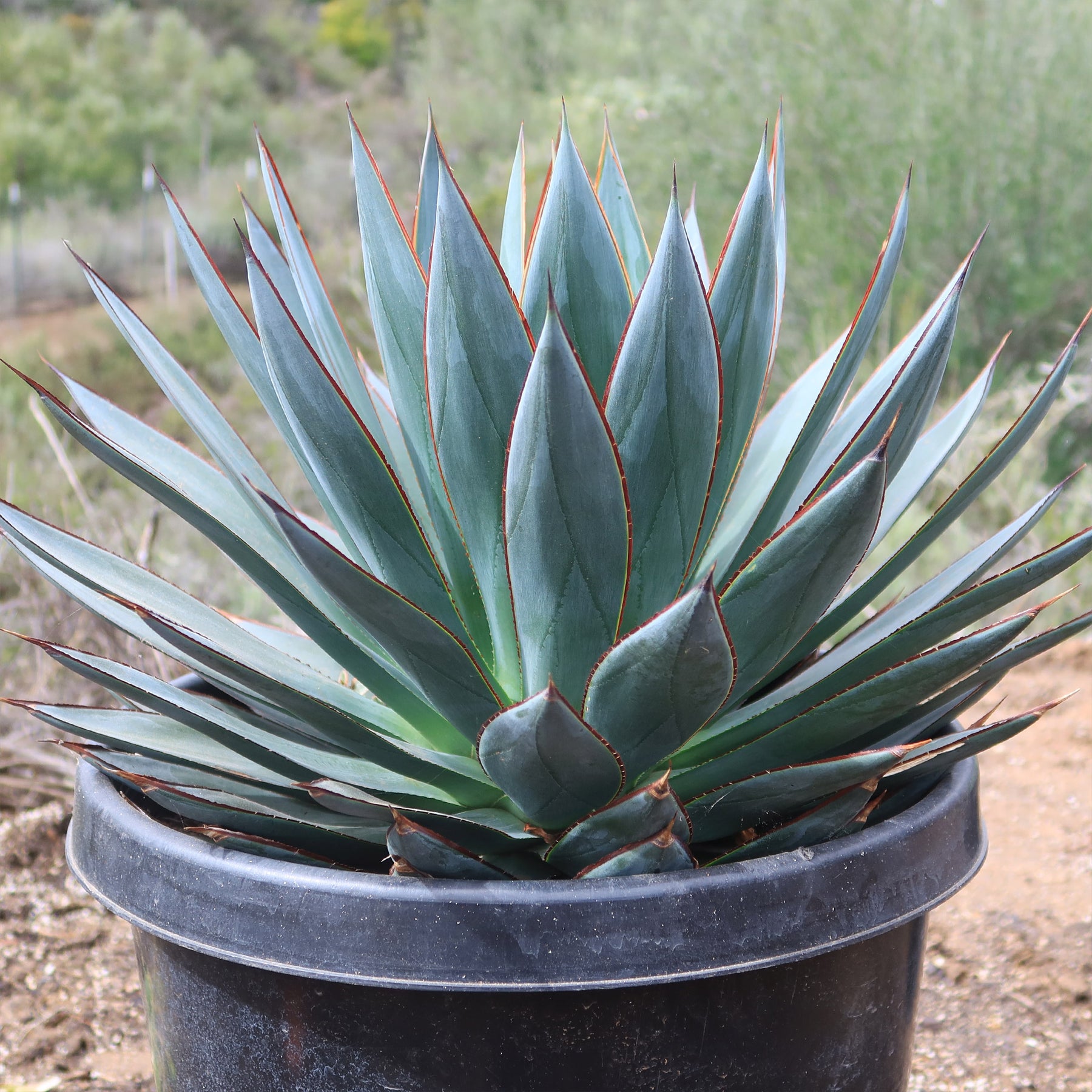
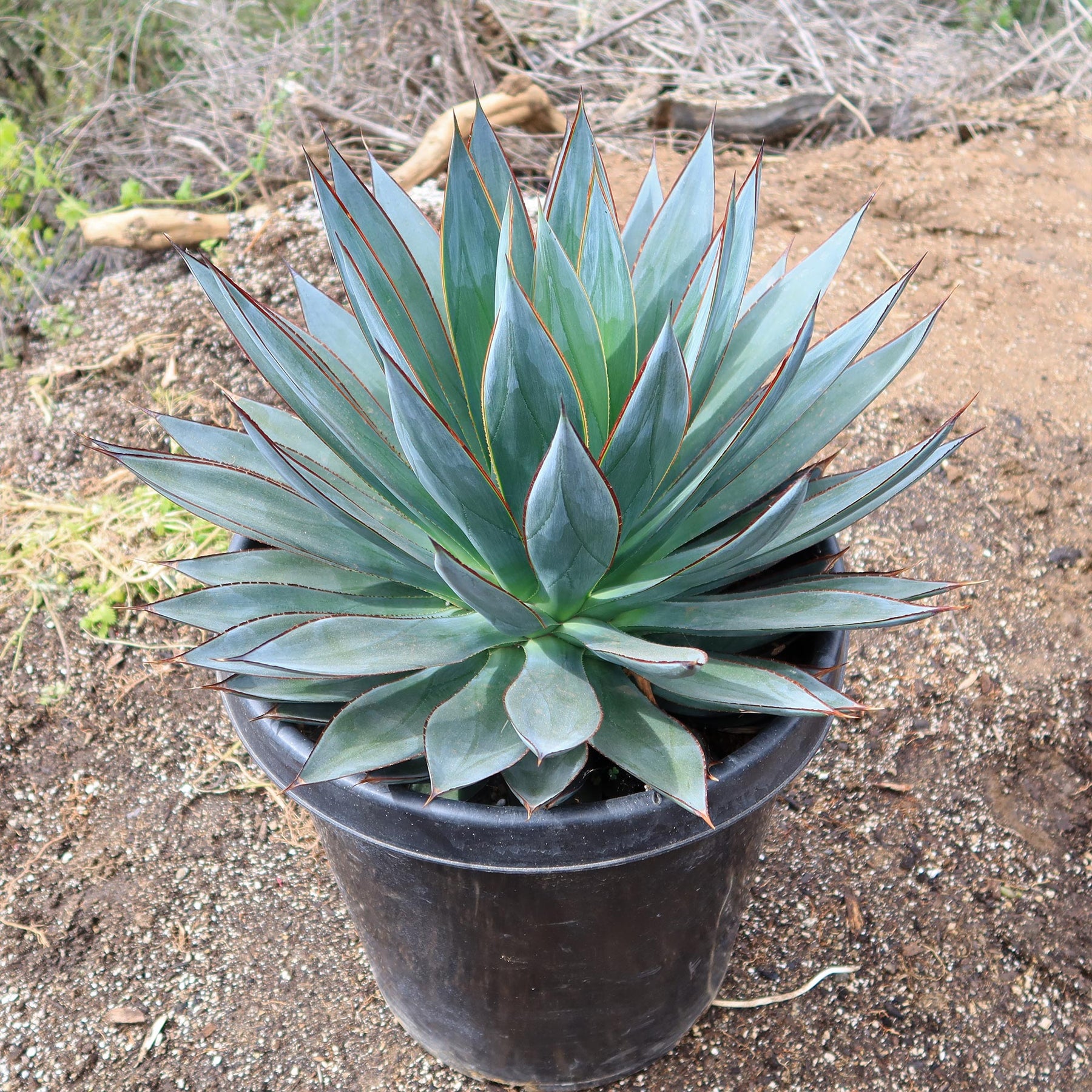
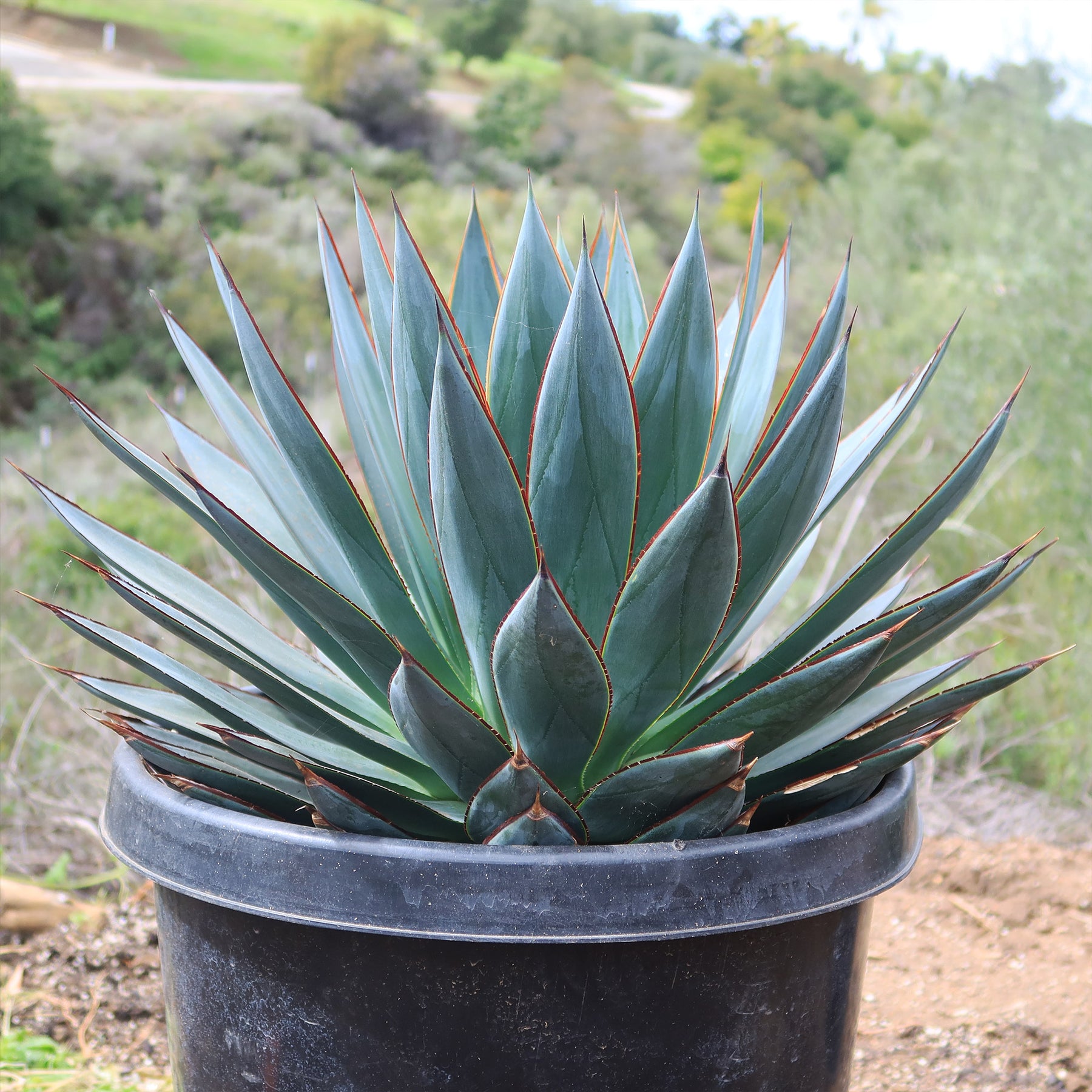
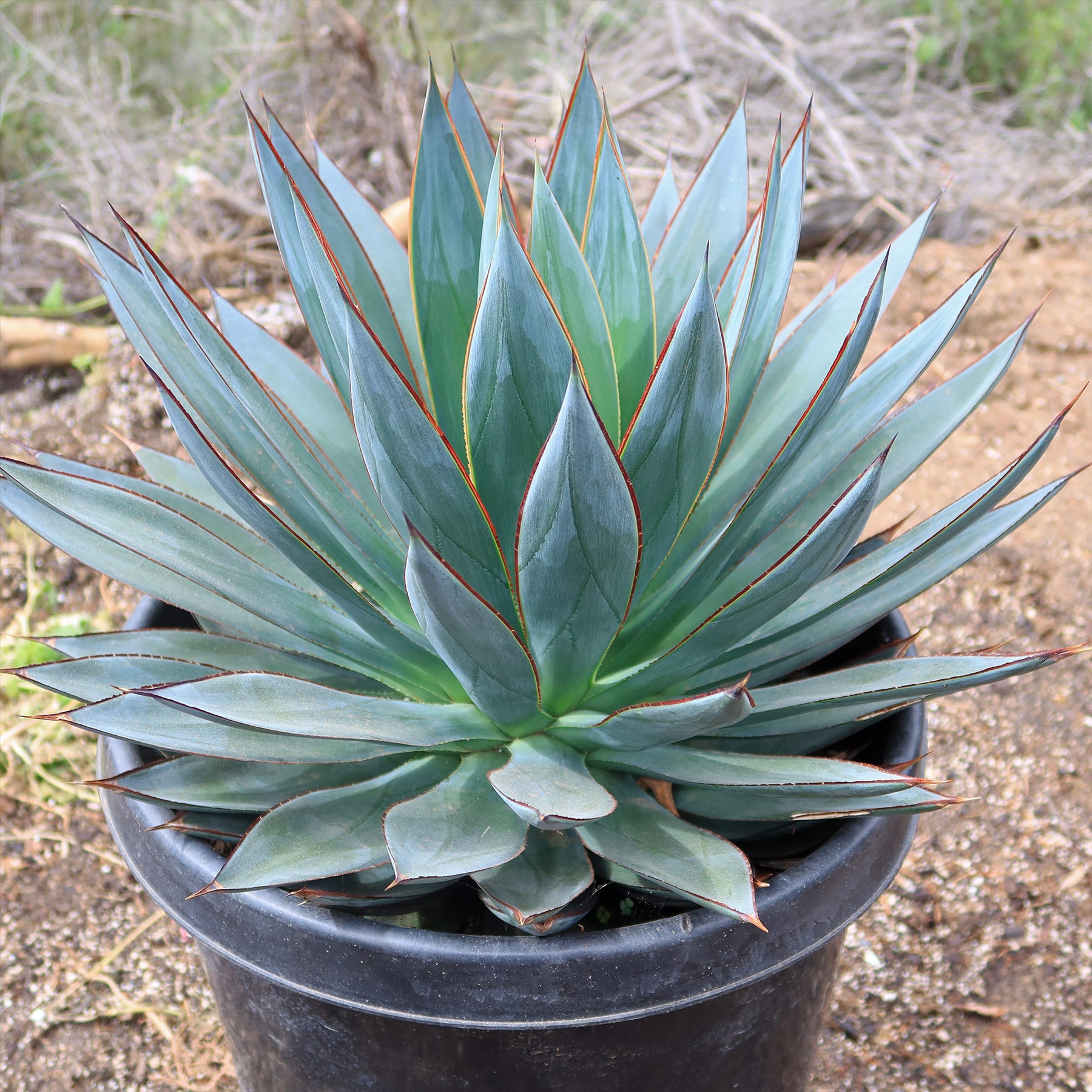
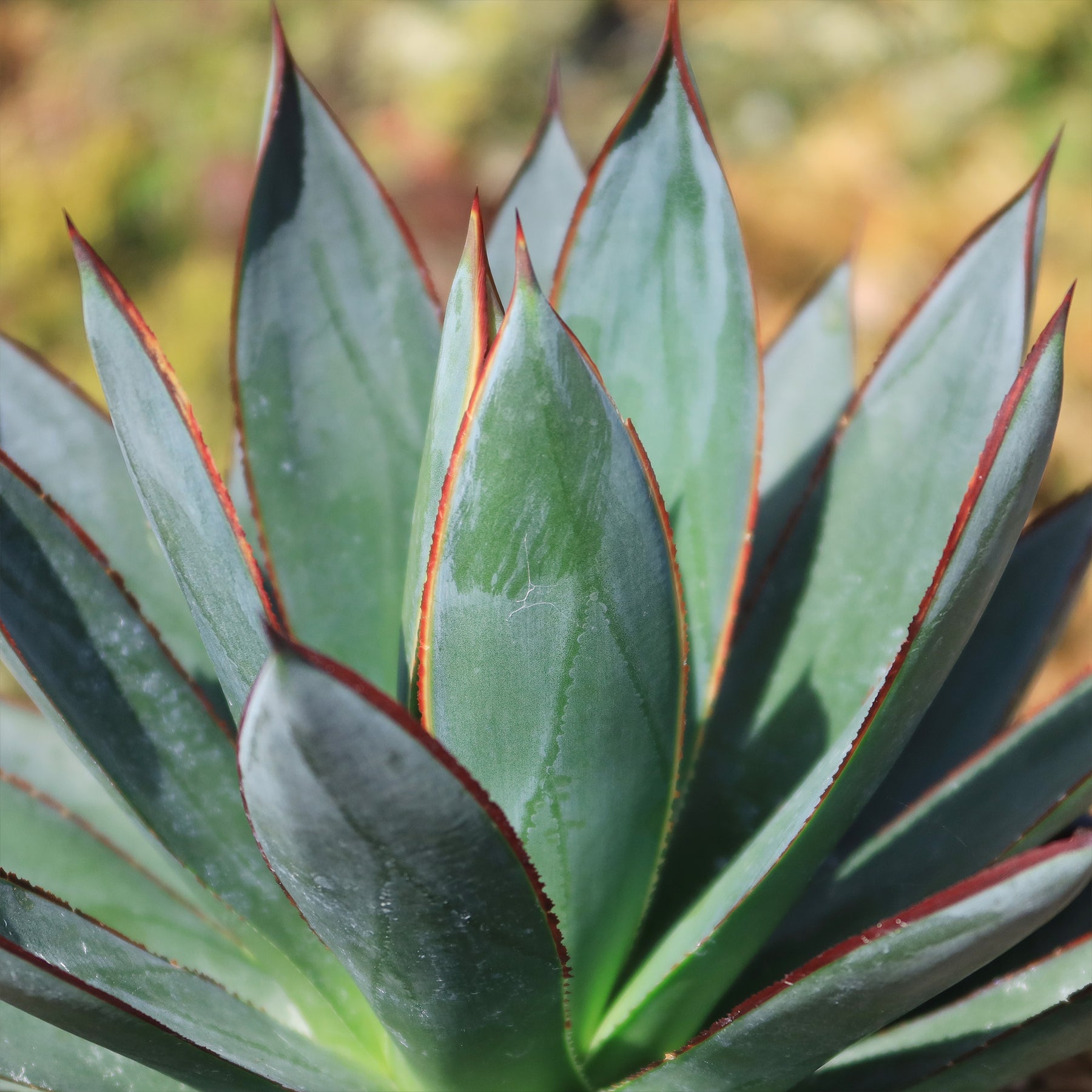


Introducing the Agave Blue Glow, a stunning succulent century plant that belongs to the Agave genus. This blue agave is a hybrid created by crossing two different agave century plant species, Agave attenuata and Agave ocahui. This unique hybrid combines the best traits of its parent plants, resulting in a visually striking and resilient blue agave plant.

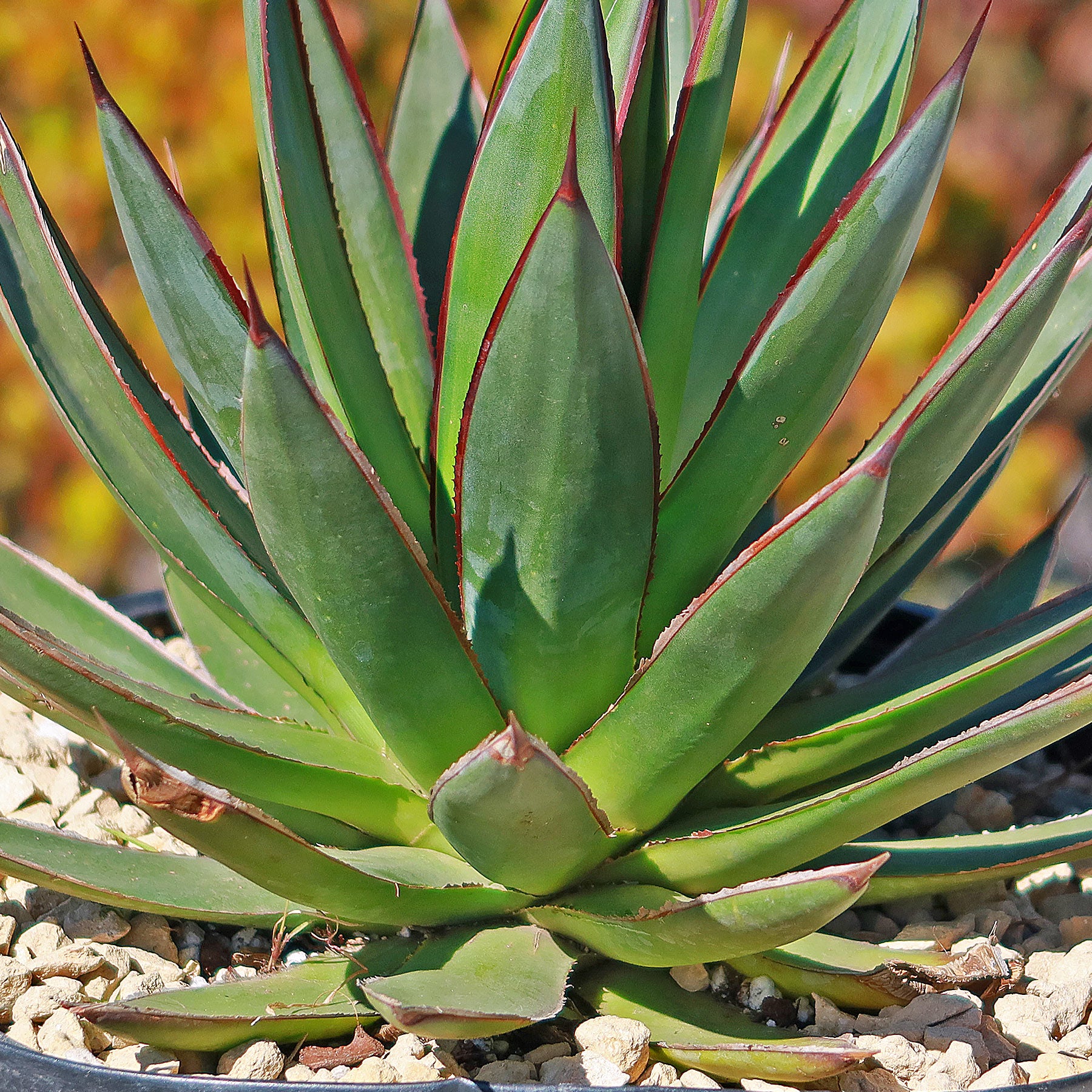
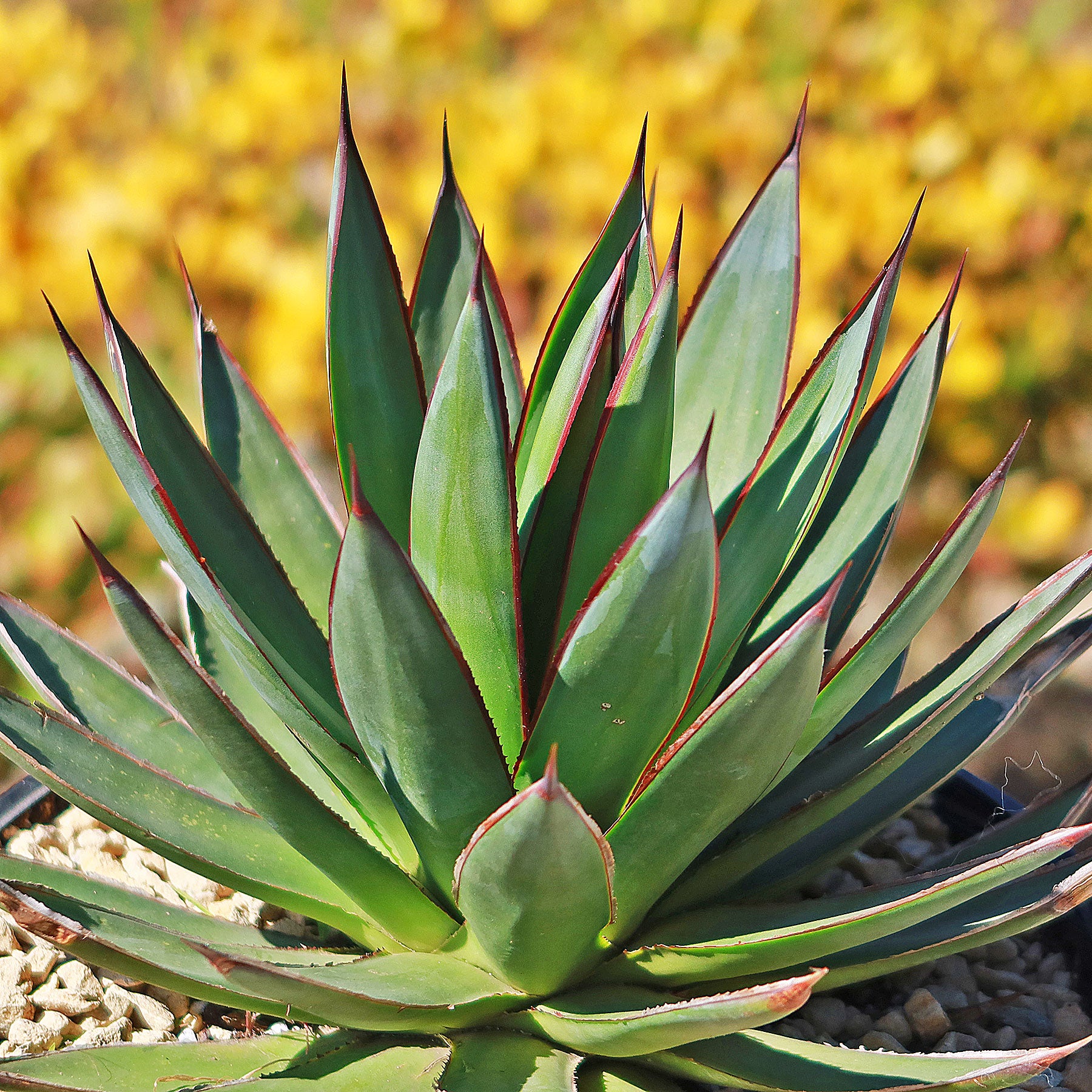
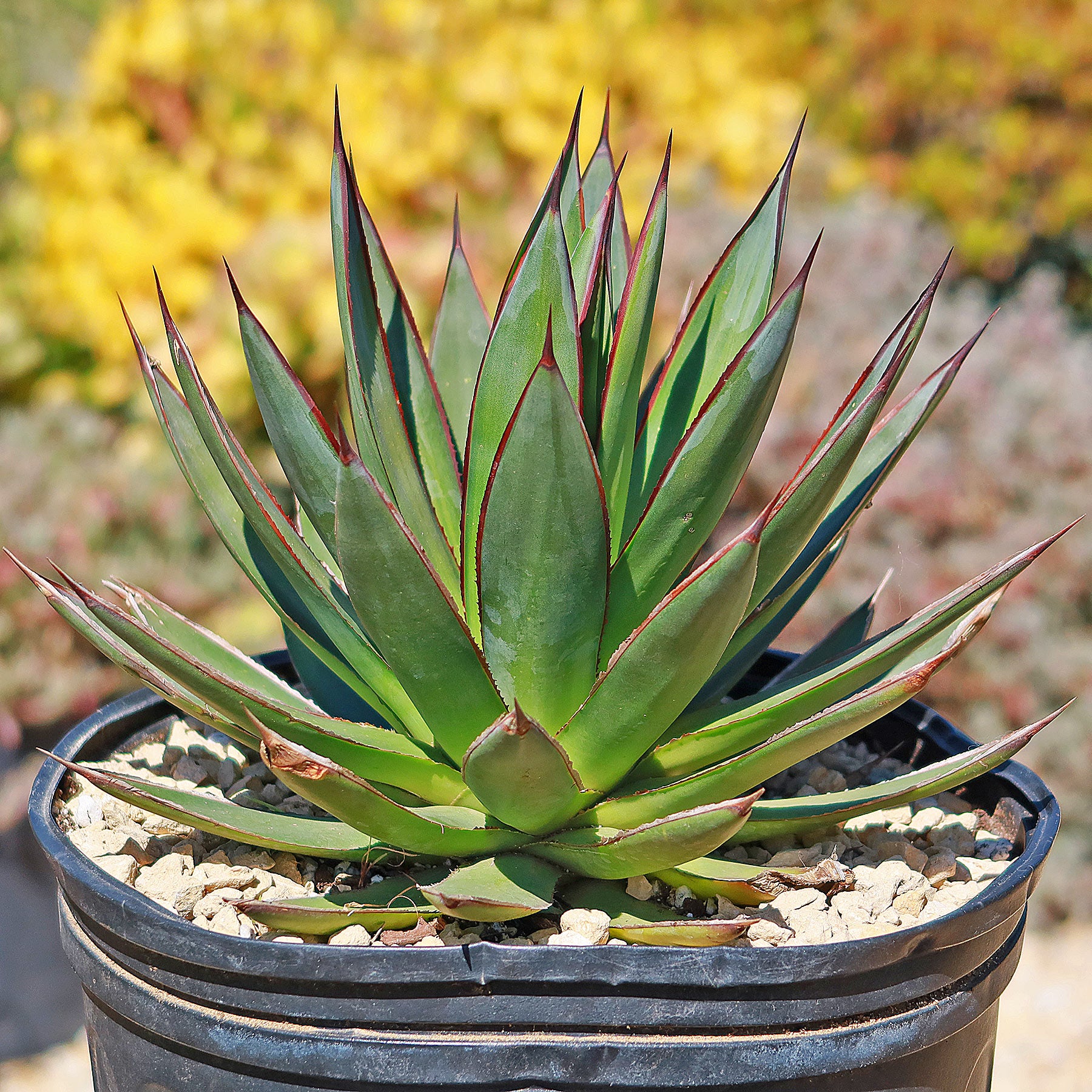
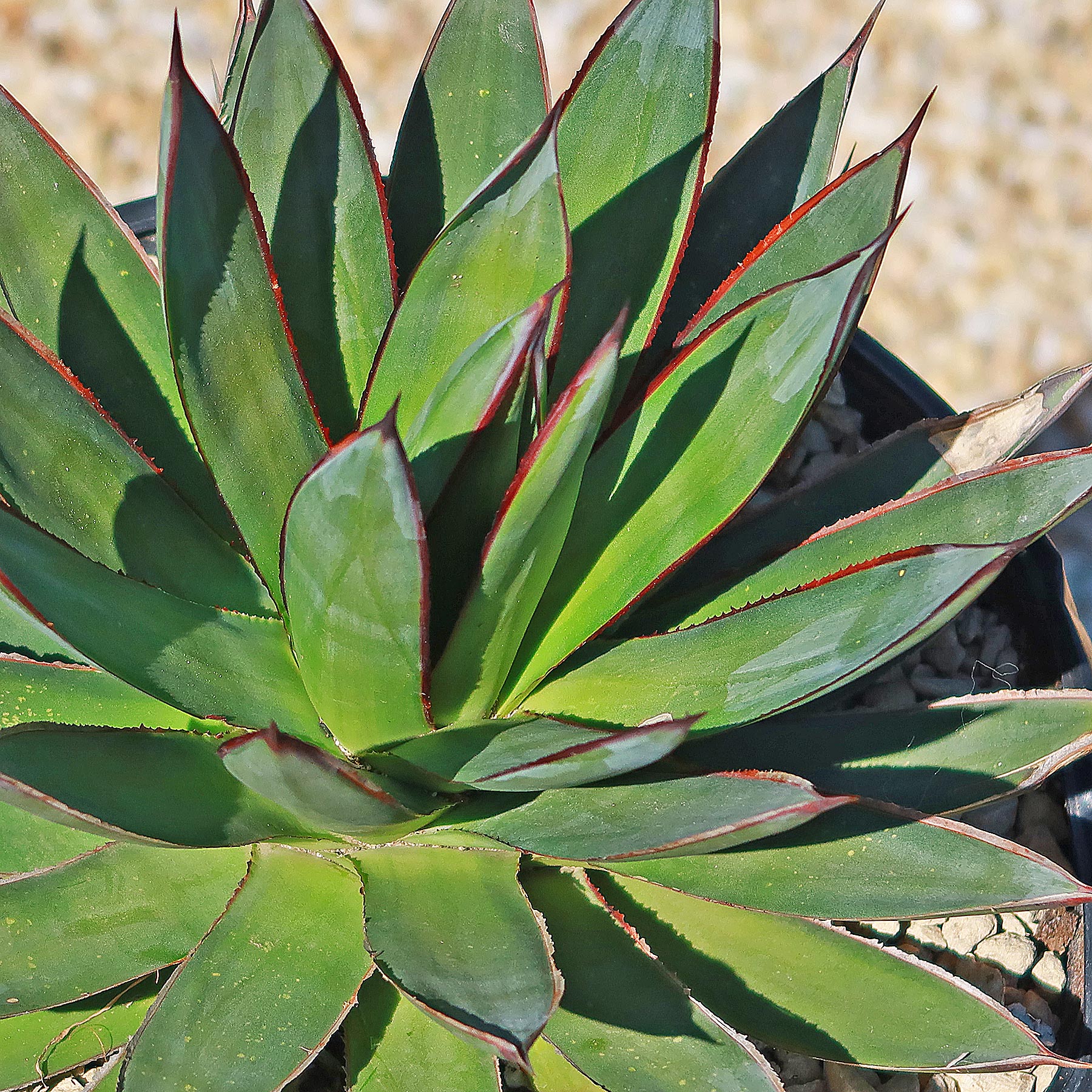
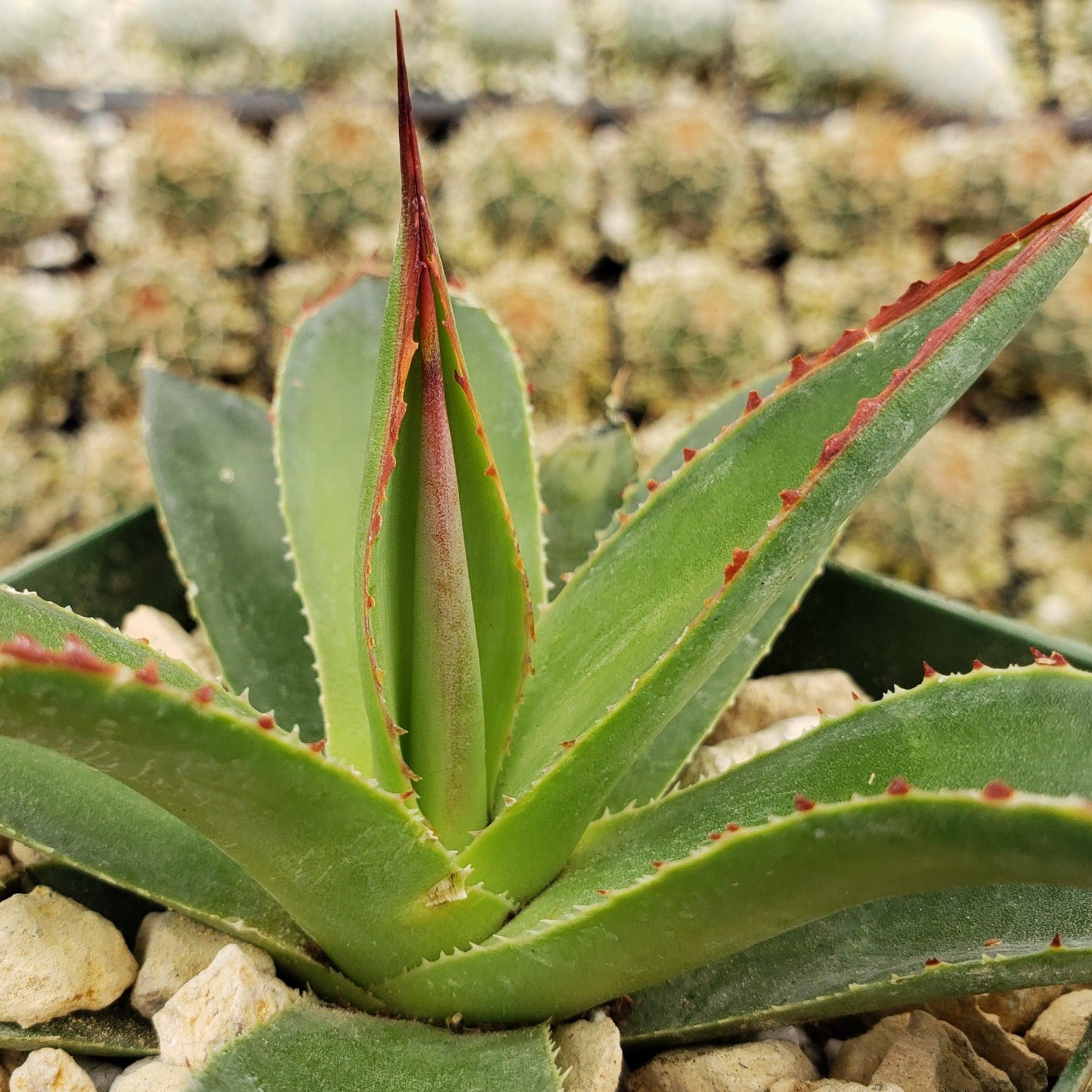
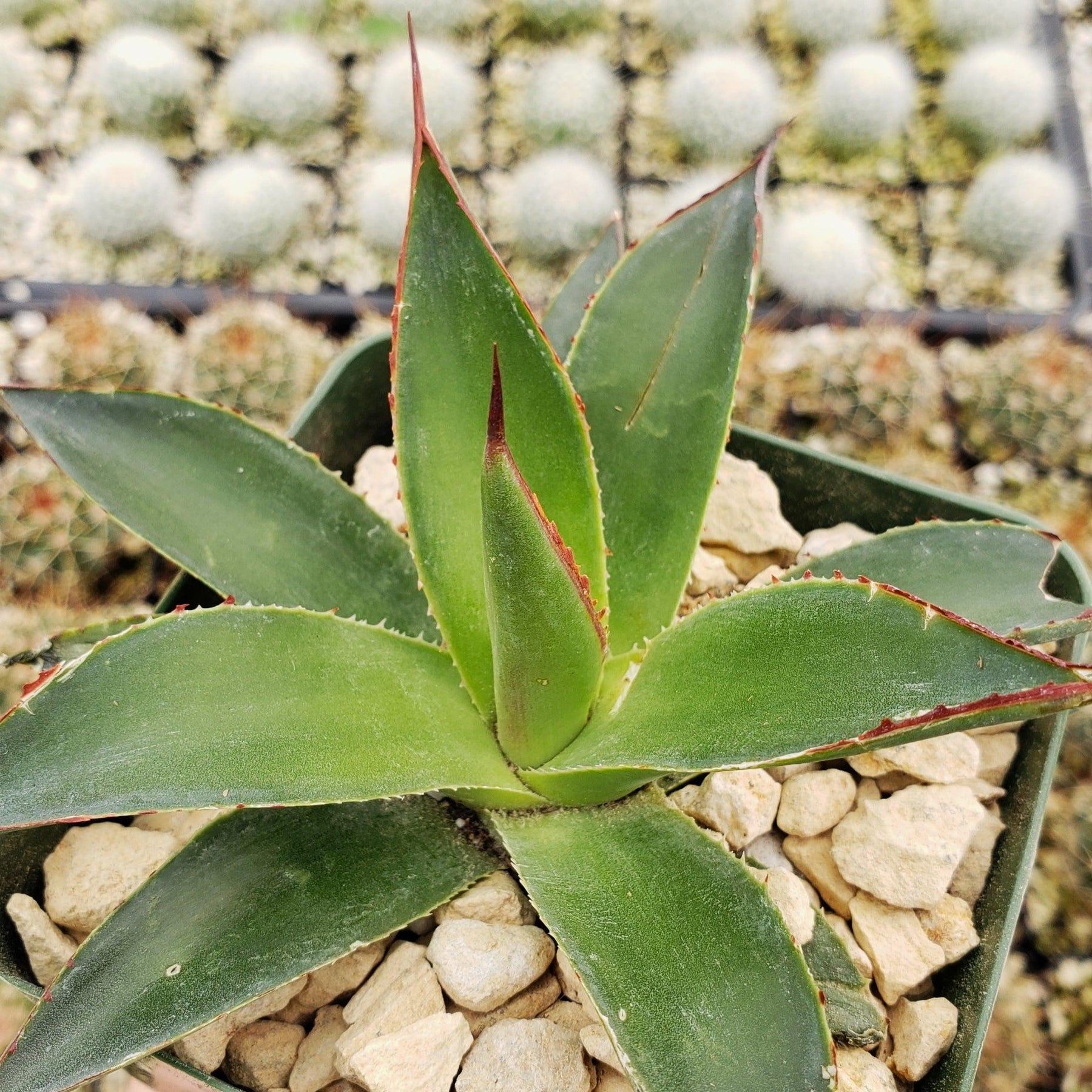
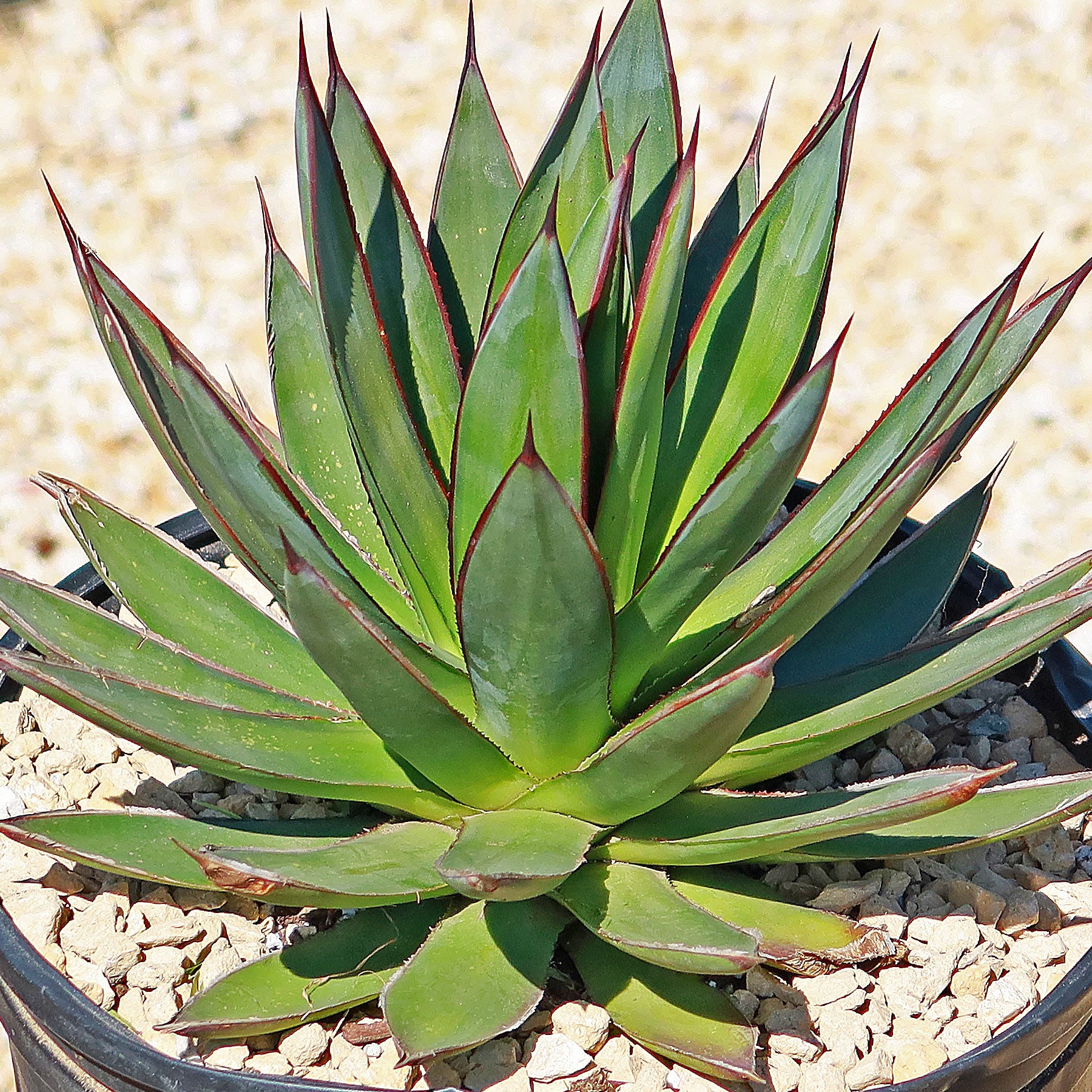
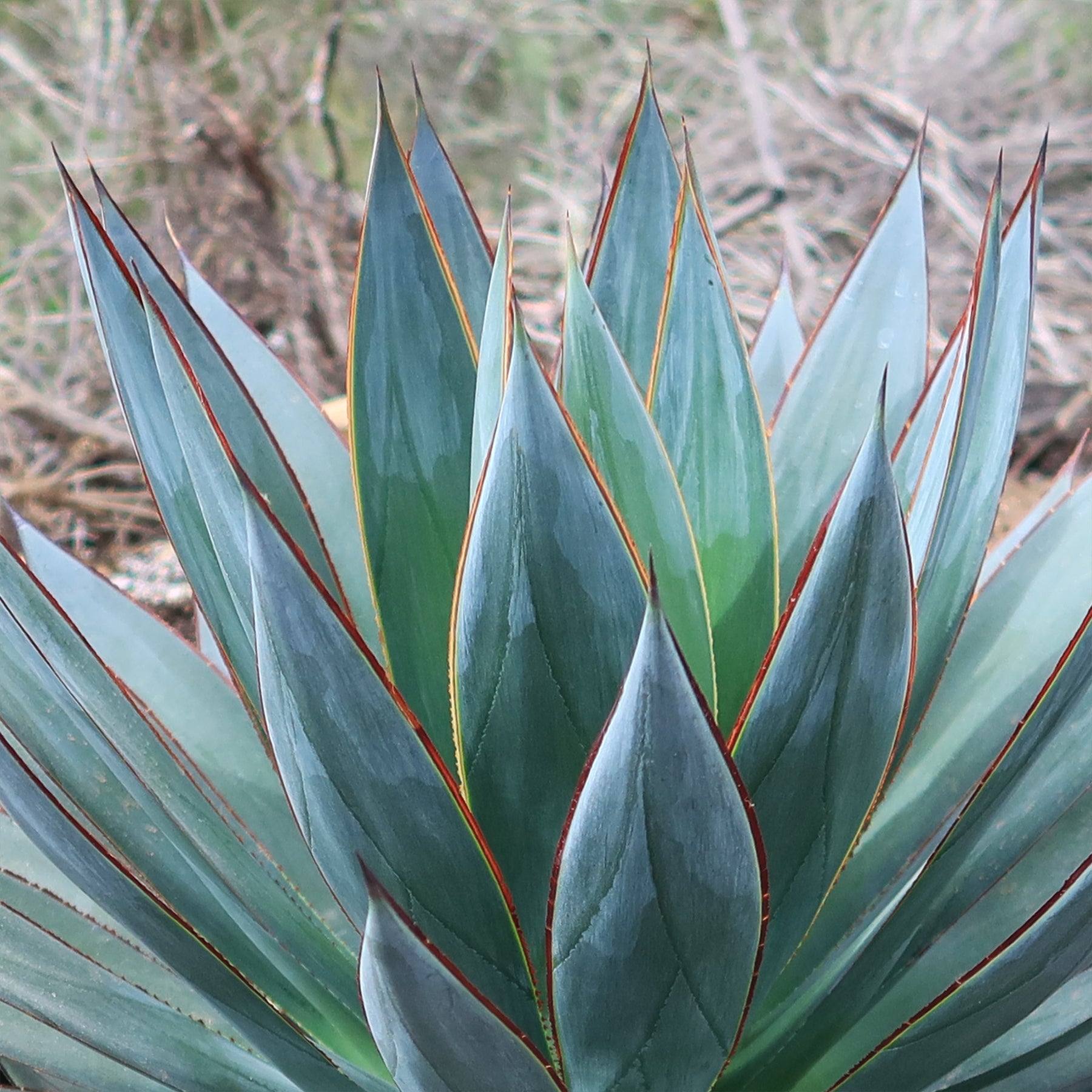
The Agave Blue Glow is known for its captivating rosette shape and distinctive blue-green leaves.
The chalky leaves are thick, fleshy, and triangular, with smooth edges and a pointed tip with golden or red margins.
Blue Glow Agave is an attractive and slow-growing, with perfect symmetry that "glows" when backlit by sunlight.
The agave blue glow itself can grow up to 2 feet tall and 3 feet wide, creating an impressive focal point.
The Agave 'Blue Glow', because of its impressive size, is ideal for planting near walkways or containers. Its symmetry adds harmony to minimalist, mid-century modern, or contemporary garden designs, making it perfect for geometrical gardens and stunning in succulent gardens or xeric landscapes.
When the Agave Blue Glow reaches maturity after 10–15 years, it produces a tall flower stalk that can reach up to 8 feet in height. The flower stalk emerges from the center of the rosette and is adorned with vibrant yellow flowers in the early spring. These flowers attract pollinators such as bees and butterflies, adding an extra touch of beauty to the plant. After the flowers fade, the blue glow plant will gradually produce offsets, or "pups," around its base, allowing for easy propagation.
When and How to Water Your Agave Blue Glow
Agave ‘Blue Glow’ is a drought-tolerant succulent that is more likely to suffer from overwatering than underwatering. Always prioritize drainage and soil dryness before rewatering to avoid root rot. The Agave blue glow should be watered every 2–3 weeks during its growing season and reduced to once a month or less during dormancy, always allowing the soil to dry out completely in between.
From March through September, during the growing season, water Agave ‘Blue Glow’ deeply every 14–21 days, allowing the soil to dry fully between waterings. This is when the plant is actively producing new leaves and expanding its rosette, so it benefits from periodic hydration. Use the soak-and-dry method and ensure the container or ground has excellent drainage to prevent water accumulation around the roots.
From October through February, during the dormant season, reduce watering to once every 4–6 weeks, or even less in cool, shaded areas. The plant enters a rest phase during these months and requires very little moisture to survive. Only water if the leaves begin to wrinkle slightly, and always confirm that the soil is bone-dry before adding any water.
Light Requirements - Where to Place Your Agave Blue Glow
Agave ‘Blue Glow’ thrives best indoors when placed in a location with bright, indirect light for at least 6–8 hours a day, ideally near a south- or west-facing window. While it can adapt to slightly lower light conditions, insufficient light can lead to stretching, pale foliage, and weak growth. Avoid placing it directly against hot window glass, as intense midday sun magnified through glass can scorch the leaves. If natural light is limited, supplement with a grow light to maintain its compact shape and vibrant coloring.
When grown outdoors, Agave ‘Blue Glow’ prefers full sun to partial shade, with a minimum of 4–6 hours of direct sunlight per day to retain its glowing red and yellow leaf margins. It performs best in morning sun and can handle high temperatures, but in extremely hot climates, some afternoon shade can help prevent sunburn or leaf stress. For container-grown plants, consider rotating the pot occasionally to ensure even sun exposure and balanced growth.
Optimal Soil & Fertilizer Needs
The blue Agave prefers slightly acidic, well-drained soil that mimics its native arid conditions and should be fertilized once a year in spring. Planting them in ordinary soil will result in compacted roots, stunted growth, and most likely root rot. Instead, make or buy a well-draining potting mix, or ideally use our specialized succulent potting mix that contains 5 natural substrates and mycorrhizae to promote the development of a strong root system that helps your blue Agave succulent to thrive.
As for fertilizer, the Agave Blue Glow doesn't require a lot of feeding. In fact, it's best to go easy on the fertilizer to prevent overgrowth and maintain its compact form. During the growing season in spring, you can use a balanced (5-10-5), water-soluble NPK fertilizer specifically formulated for succulents. In fall and winter, you can skip the fertilizer altogether since the blue glow is in its dormant phase.
Remember, less is more when it comes to fertilizing the Agave Blue Glow. It's better to under-fertilize than over-fertilize, as excessive nutrients can cause the plant to become leggy or lose its vibrant color.
Hardiness Zone & More

In the United States, this is mostly an indoor plant, but if you live in southern Florida or Hawaii, then you can cultivate it outdoors in USDA zones 9-11.
In terms of humidity, the blue glow agave is quite resilient and can adapt to a variety of humidity levels.
It can tolerate both dry and moderately humid conditions, making it a great choice for many different climates.
How to Grow Agave Blue Glow Best Indoors
When growing indoors, the Agave Blue Glow thrives in average room temperatures between 60°F and 75°F. It can tolerate slightly cooler temperatures during winter, but it's important to keep it away from drafts and cold windowsills. As for humidity, this plant is well-suited to average indoor humidity levels, so no additional humidity is usually necessary.
Wildlife - Agave Blue Glow Attracts the Following Friendly Pollinators
The Agave Blue Glow flowers are known to attract a variety of friendly pollinators, including bees, butterflies, and hummingbirds. These pollinators play a crucial role in the ecosystem by helping to facilitate the reproduction of plants and ensuring biodiversity.
 Butterflies
 Bees
Bees
 Hummingbirds
 Lady Bugs
 Multi Pollinators
 Other Birds
According to ASPCA, the Agave Blue Glow can be mildly toxic to humans and pets if consumed. It's important to keep this plant out of the reach of children and pets to avoid any potential harm. The sap can cause skin irritation, so it's advisable to wear gloves when handling this blue glow plant.
How to Propagate Your Agave Blue Glow
To propagate your Agave Blue Glow, you can either separate the offsets or pups that grow at the base of the plant and replant them in well-draining soil. Another method is to remove and replant the offsets that grow on the flower stalks. Both methods require patience and care to ensure the successful propagation of your Agave Blue Glow plant.
Key Takeaways
- Agave ‘Blue Glow’ forms a perfectly symmetrical rosette of blue-green leaves edged with red and gold, creating a glowing effect in sunlight or backlighting.
- This variety stays compact, typically 1 to 2 feet tall and wide, making it ideal for containers, small gardens, or tight modern landscapes.
- Its smooth, spineless leaf margins make it safe to plant along walkways or near patios, unlike many other agaves with sharp teeth.
- Agave ‘Blue Glow’ is highly drought-tolerant, thriving in hot, dry conditions with minimal water once established.
- It’s a solitary-growing agave, meaning it doesn't offset aggressively perfect for gardeners who prefer a clean, sculptural look without constant thinning.
The Bottom Line
Overall, the Agave Blue Glow is a unique and visually appealing succulent plant that combines beauty, resilience, and ease of care. Its striking blue-green leaves, impressive size, and captivating flower stalk add elegance to any garden or indoor space. As a hybrid of two Agave species, it is even more unique. The blue glow agave plant thrives in well-draining soil and prefers bright sunlight, making it ideal for sunny spots in gardens or near windows. To maintain its health, water it sparingly and provide occasional fertilization during the growing season. The Agave Blue Glow is a standout addition to any plant collection, bringing joy and beauty to any space.
Bloom Season
Flower Color
Growth Rate
Hardiness Zone
Mature Size
Plant Type
Resistance
Sun Exposure
Watering Needs
| Bloom Season | Spring, early summer (Rarely flowers) |
|---|---|
| Botanical Name | Agave ' Blue Glow' |
| Common Name | Blue Glow agave |
| Dormancy | Winter |
| Family | Asparagaceae |
| Flower Color | Greenish, Yellow |
| Genus | Agave |
| Growth Habit | Rosette |
| Growth Rate | Slow |
| Hardiness Zone | 9, 10, 11 |
| Mature Size | 2 ft. tall, 3 ft. wide |
| Native Area | California, Mexico |
| Plant Type | Evergreen succulent |
| Propagation | By pups, offsets |
| Resistance | Extremely drought-tolerant, heat tolerant, pest resistance |
| Soil PH | 6.5, Acidic, Neutral |
| Soil Type | Succulent potting mix soil |
| Special Features | Easy to grow |
| Sun Exposure | Full sun (6+ hrs.), Partial shade (3–6 hrs. sun) |
| Toxicity | Mildly toxic for humans, mildly toxic for pets(Keep away from children) |
| Watering Needs | Low |
Growers Quick Reference Guide - Key Features
| Bloom Season | Spring, early summer (Rarely flowers) |
|---|---|
| Botanical Name | Agave ' Blue Glow' |
| Common Name | Blue Glow agave |
| Dormancy | Winter |
| Family | Asparagaceae |
| Flower Color | Greenish, Yellow |
| Genus | Agave |
| Growth Habit | Rosette |
| Growth Rate | Slow |
| Hardiness Zone | 9, 10, 11 |
| Mature Size | 2 ft. tall, 3 ft. wide |
| Native Area | California, Mexico |
| Plant Type | Evergreen succulent |
| Propagation | By pups, offsets |
| Resistance | Extremely drought-tolerant, heat tolerant, pest resistance |
| Soil PH | 6.5, Acidic, Neutral |
| Soil Type | Succulent potting mix soil |
| Special Features | Easy to grow |
| Sun Exposure | Full sun (6+ hrs.), Partial shade (3–6 hrs. sun) |
| Toxicity | Mildly toxic for humans, mildly toxic for pets(Keep away from children) |
| Watering Needs | Low |
- Description
- Key Plant Features
Introducing the Agave Blue Glow, a stunning succulent century plant that belongs to the Agave genus. This blue agave is a hybrid created by crossing two different agave century plant species, Agave attenuata and Agave ocahui. This unique hybrid combines the best traits of its parent plants, resulting in a visually striking and resilient blue agave plant.
The Agave Blue Glow is known for its captivating rosette shape and distinctive blue-green leaves.
The chalky leaves are thick, fleshy, and triangular, with smooth edges and a pointed tip with golden or red margins.
Blue Glow Agave is an attractive and slow-growing, with perfect symmetry that "glows" when backlit by sunlight.
The agave blue glow itself can grow up to 2 feet tall and 3 feet wide, creating an impressive focal point.
The Agave 'Blue Glow', because of its impressive size, is ideal for planting near walkways or containers. Its symmetry adds harmony to minimalist, mid-century modern, or contemporary garden designs, making it perfect for geometrical gardens and stunning in succulent gardens or xeric landscapes.
When the Agave Blue Glow reaches maturity after 10–15 years, it produces a tall flower stalk that can reach up to 8 feet in height. The flower stalk emerges from the center of the rosette and is adorned with vibrant yellow flowers in the early spring. These flowers attract pollinators such as bees and butterflies, adding an extra touch of beauty to the plant. After the flowers fade, the blue glow plant will gradually produce offsets, or "pups," around its base, allowing for easy propagation.
When and How to Water Your Agave Blue Glow
Agave ‘Blue Glow’ is a drought-tolerant succulent that is more likely to suffer from overwatering than underwatering. Always prioritize drainage and soil dryness before rewatering to avoid root rot. The Agave blue glow should be watered every 2–3 weeks during its growing season and reduced to once a month or less during dormancy, always allowing the soil to dry out completely in between.
From March through September, during the growing season, water Agave ‘Blue Glow’ deeply every 14–21 days, allowing the soil to dry fully between waterings. This is when the plant is actively producing new leaves and expanding its rosette, so it benefits from periodic hydration. Use the soak-and-dry method and ensure the container or ground has excellent drainage to prevent water accumulation around the roots.
From October through February, during the dormant season, reduce watering to once every 4–6 weeks, or even less in cool, shaded areas. The plant enters a rest phase during these months and requires very little moisture to survive. Only water if the leaves begin to wrinkle slightly, and always confirm that the soil is bone-dry before adding any water.
Light Requirements - Where to Place Your Agave Blue Glow
Agave ‘Blue Glow’ thrives best indoors when placed in a location with bright, indirect light for at least 6–8 hours a day, ideally near a south- or west-facing window. While it can adapt to slightly lower light conditions, insufficient light can lead to stretching, pale foliage, and weak growth. Avoid placing it directly against hot window glass, as intense midday sun magnified through glass can scorch the leaves. If natural light is limited, supplement with a grow light to maintain its compact shape and vibrant coloring.
When grown outdoors, Agave ‘Blue Glow’ prefers full sun to partial shade, with a minimum of 4–6 hours of direct sunlight per day to retain its glowing red and yellow leaf margins. It performs best in morning sun and can handle high temperatures, but in extremely hot climates, some afternoon shade can help prevent sunburn or leaf stress. For container-grown plants, consider rotating the pot occasionally to ensure even sun exposure and balanced growth.
Optimal Soil & Fertilizer Needs
The blue Agave prefers slightly acidic, well-drained soil that mimics its native arid conditions and should be fertilized once a year in spring. Planting them in ordinary soil will result in compacted roots, stunted growth, and most likely root rot. Instead, make or buy a well-draining potting mix, or ideally use our specialized succulent potting mix that contains 5 natural substrates and mycorrhizae to promote the development of a strong root system that helps your blue Agave succulent to thrive.
As for fertilizer, the Agave Blue Glow doesn't require a lot of feeding. In fact, it's best to go easy on the fertilizer to prevent overgrowth and maintain its compact form. During the growing season in spring, you can use a balanced (5-10-5), water-soluble NPK fertilizer specifically formulated for succulents. In fall and winter, you can skip the fertilizer altogether since the blue glow is in its dormant phase.
Remember, less is more when it comes to fertilizing the Agave Blue Glow. It's better to under-fertilize than over-fertilize, as excessive nutrients can cause the plant to become leggy or lose its vibrant color.
Hardiness Zone & More
In the United States, this is mostly an indoor plant, but if you live in southern Florida or Hawaii, then you can cultivate it outdoors in USDA zones 9-11.
In terms of humidity, the blue glow agave is quite resilient and can adapt to a variety of humidity levels.
It can tolerate both dry and moderately humid conditions, making it a great choice for many different climates.
How to Grow Agave Blue Glow Best Indoors
When growing indoors, the Agave Blue Glow thrives in average room temperatures between 60°F and 75°F. It can tolerate slightly cooler temperatures during winter, but it's important to keep it away from drafts and cold windowsills. As for humidity, this plant is well-suited to average indoor humidity levels, so no additional humidity is usually necessary.
Wildlife - Agave Blue Glow Attracts the Following Friendly Pollinators
The Agave Blue Glow flowers are known to attract a variety of friendly pollinators, including bees, butterflies, and hummingbirds. These pollinators play a crucial role in the ecosystem by helping to facilitate the reproduction of plants and ensuring biodiversity.
Butterflies
Bees
Hummingbirds
Lady Bugs
Multi Pollinators
Other Birds
According to ASPCA, the Agave Blue Glow can be mildly toxic to humans and pets if consumed. It's important to keep this plant out of the reach of children and pets to avoid any potential harm. The sap can cause skin irritation, so it's advisable to wear gloves when handling this blue glow plant.
How to Propagate Your Agave Blue Glow
To propagate your Agave Blue Glow, you can either separate the offsets or pups that grow at the base of the plant and replant them in well-draining soil. Another method is to remove and replant the offsets that grow on the flower stalks. Both methods require patience and care to ensure the successful propagation of your Agave Blue Glow plant.
Key Takeaways
- Agave ‘Blue Glow’ forms a perfectly symmetrical rosette of blue-green leaves edged with red and gold, creating a glowing effect in sunlight or backlighting.
- This variety stays compact, typically 1 to 2 feet tall and wide, making it ideal for containers, small gardens, or tight modern landscapes.
- Its smooth, spineless leaf margins make it safe to plant along walkways or near patios, unlike many other agaves with sharp teeth.
- Agave ‘Blue Glow’ is highly drought-tolerant, thriving in hot, dry conditions with minimal water once established.
- It’s a solitary-growing agave, meaning it doesn't offset aggressively perfect for gardeners who prefer a clean, sculptural look without constant thinning.
The Bottom Line
Overall, the Agave Blue Glow is a unique and visually appealing succulent plant that combines beauty, resilience, and ease of care. Its striking blue-green leaves, impressive size, and captivating flower stalk add elegance to any garden or indoor space. As a hybrid of two Agave species, it is even more unique. The blue glow agave plant thrives in well-draining soil and prefers bright sunlight, making it ideal for sunny spots in gardens or near windows. To maintain its health, water it sparingly and provide occasional fertilization during the growing season. The Agave Blue Glow is a standout addition to any plant collection, bringing joy and beauty to any space.
Bloom Season
Flower Color
Growth Rate
Hardiness Zone
Mature Size
Plant Type
Resistance
Sun Exposure
Watering Needs
| Bloom Season | Spring, early summer (Rarely flowers) |
|---|---|
| Botanical Name | Agave ' Blue Glow' |
| Common Name | Blue Glow agave |
| Dormancy | Winter |
| Family | Asparagaceae |
| Flower Color | Greenish, Yellow |
| Genus | Agave |
| Growth Habit | Rosette |
| Growth Rate | Slow |
| Hardiness Zone | 9, 10, 11 |
| Mature Size | 2 ft. tall, 3 ft. wide |
| Native Area | California, Mexico |
| Plant Type | Evergreen succulent |
| Propagation | By pups, offsets |
| Resistance | Extremely drought-tolerant, heat tolerant, pest resistance |
| Soil PH | 6.5, Acidic, Neutral |
| Soil Type | Succulent potting mix soil |
| Special Features | Easy to grow |
| Sun Exposure | Full sun (6+ hrs.), Partial shade (3–6 hrs. sun) |
| Toxicity | Mildly toxic for humans, mildly toxic for pets(Keep away from children) |
| Watering Needs | Low |
Growers Quick Reference Guide - Key Features
| Bloom Season | Spring, early summer (Rarely flowers) |
|---|---|
| Botanical Name | Agave ' Blue Glow' |
| Common Name | Blue Glow agave |
| Dormancy | Winter |
| Family | Asparagaceae |
| Flower Color | Greenish, Yellow |
| Genus | Agave |
| Growth Habit | Rosette |
| Growth Rate | Slow |
| Hardiness Zone | 9, 10, 11 |
| Mature Size | 2 ft. tall, 3 ft. wide |
| Native Area | California, Mexico |
| Plant Type | Evergreen succulent |
| Propagation | By pups, offsets |
| Resistance | Extremely drought-tolerant, heat tolerant, pest resistance |
| Soil PH | 6.5, Acidic, Neutral |
| Soil Type | Succulent potting mix soil |
| Special Features | Easy to grow |
| Sun Exposure | Full sun (6+ hrs.), Partial shade (3–6 hrs. sun) |
| Toxicity | Mildly toxic for humans, mildly toxic for pets(Keep away from children) |
| Watering Needs | Low |


