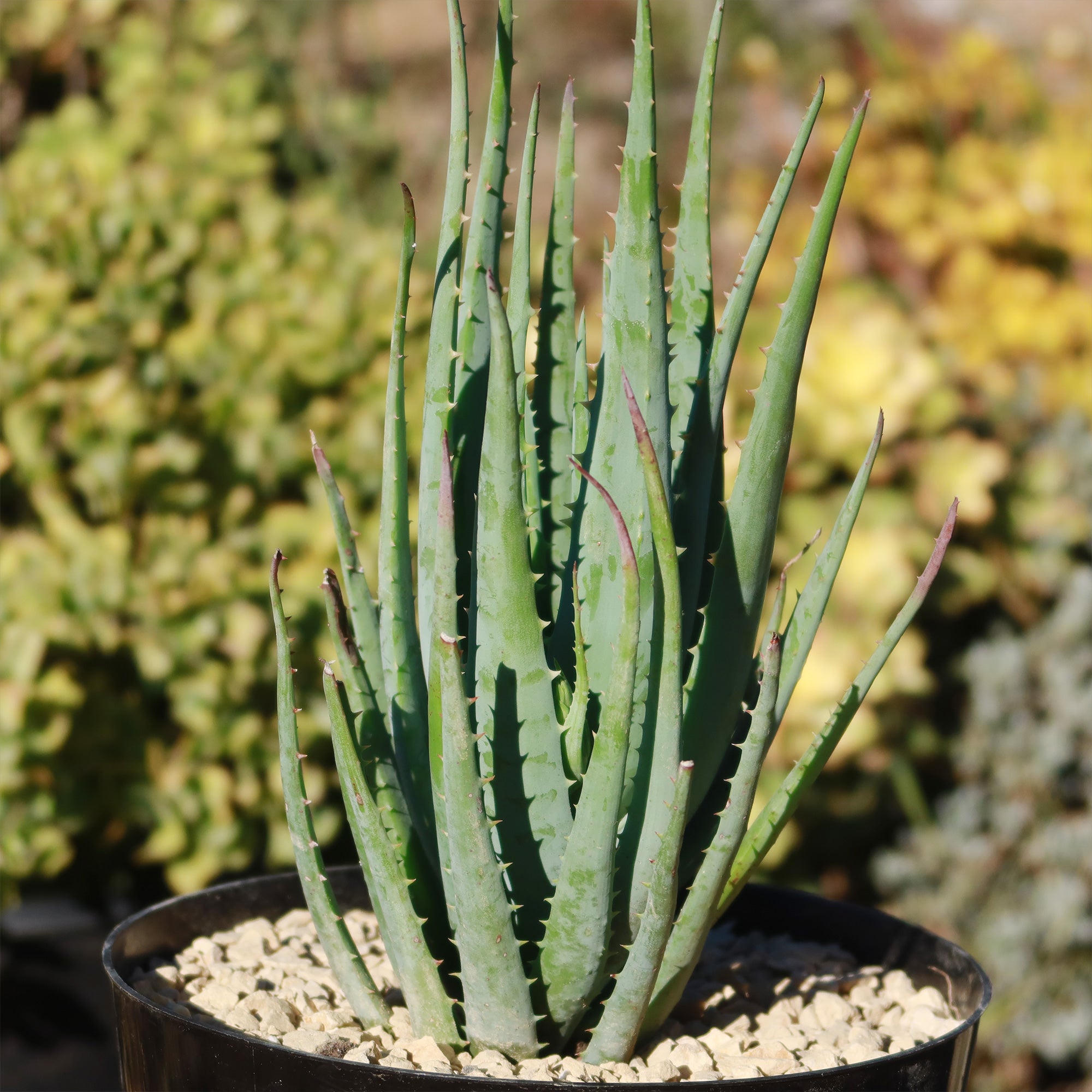
A loe Blue Elf is a compact, eye-catching succulent admired for its soft blue-green foliage and low-maintenance. It fits beautifully on bright windowsills, desks, shelves, and small plant stands where space is limited. Its tidy growth habit and muted color palette make it especially appealing in minimalist, contemporary, or boho-style interiors.

Native to Southern Africa, the Blue Elf Aloe forms attractive rosettes of thick, fleshy leaves with smooth edges and subtle speckling.
The leaves have a powdery blue-green tone that can deepen in color when exposed to bright light, adding visual interest throughout the year.
At maturity, Aloe Blue Elf typically reaches about 18 inches tall and spreads about 24 inches wide, maintaining a compact and symmetrical shape.
In late winter through early summer, Aloe Blue Elf can send up tall flower stalks adorned with tubular blooms in warm shades of coral, orange, and red when grown outdoors.
What truly sets Aloe Blue Elf apart are its unique qualities: excellent drought tolerance, slow and controlled growth, and strong ornamental appeal without demanding frequent attention. It’s also well-suited for mixed succulent arrangements or as a standalone accent plant.
Aloe Blue Elf is a versatile, stylish, and low-maintenance succulent that brings texture and calm beauty to indoor and outdoor spaces alike. With its compact size, striking foliage, and simple care needs, it’s an excellent choice for anyone looking to add a reliable yet distinctive plant to their collection.
When and How to Water Your Aloe Blue Elf
Aloe Blue Elf is a drought-tolerant succulent that stores water in its thick leaves, so it prefers dry soil between waterings and suffers quickly from overwatering. Always check that the top 2–3 inches of soil are completely dry before watering again, and never let the pot sit in standing water, as this can cause root rot. This Aloe blue elf needs infrequent watering overall, with deeper but less frequent watering during its growing season and very minimal water during the dormant season.
Water your Blue Elf Aloe plant during the active growing season, and allow the soil to dry out completely before watering again. Reduce watering during the cooler months, as the plant’s growth slows and it requires less moisture.
In spring and summer, water every 10–14 days by thoroughly soaking the soil with approximately ½–1 cup of water for a small pot (6–8 inches), adjusting slightly for heat and container size. This deeper watering encourages healthy root growth and supports leaf development, especially in warmer months when evaporation is higher.
In fall and winter, water sparingly every 3–4 weeks using about ¼–½ cup of water, just enough to prevent excessive shriveling. Growth slows significantly in cooler months, so excess moisture can easily lead to fungal issues or root rot.
Light Requirements – Where to Place Your Blue Elf Aloe

When growing indoors, Aloe Blue Elf grows best in bright indirect light or gentle direct sun for 4–6 hours per day, ideally near a south‑ or west‑facing window.
Too little light can cause stretching and pale leaves, while sudden intense sun through glass may scorch the foliage.
When growing outdoors, Aloe Blue Elf prefers 6–8 hours of sunlight daily, with morning sun and light afternoon shade in very hot climates.
Gradually acclimate the plant to outdoor sun to avoid sunburn, especially if moving it from an indoor environment.
Optimal Soil & Fertilizer Needs
Aloe Blue Elf requires fast-draining succulent soil and minimal NPK fertilizer (5-10-5) once a year in spring to maintain healthy roots and steady, compact growth. Planet Desert specializes in succulents and has specialized succulent potting soil that includes an organic substrate with mycorrhizae to help with the growth of a healthy root system to help your succulents thrive. Poor drainage is the most common cause of decline in Aloe plants.
Fertilize Aloe Blue Elf lightly during the growing season with a diluted NPK succulent fertilizer in the spring at a ratio of about (5-10-5), and avoid feeding completely during dormancy. Over-fertilization can lead to weak, soft growth and salt buildup in the soil.
Hardiness Zones & More

In the United States, this Aloe blue elf is mostly an indoor plant, but if you live in southern Florida or Hawaii, then you can cultivate it outdoors in USDA zones 9-11, where temperatures remain above freezing.
It prefers low to moderate humidity, excellent air circulation, and bright light to full sun.
In cooler regions, it should be grown in containers and brought indoors before temperatures drop below 40°F, as frost can permanently damage the leaves.
It generally prefers a drier environment with lower humidity. It's important to provide good air circulation around the plant to prevent any issues with excess moisture or humidity-related diseases.
Wildlife – Aloe Blue Elf Flower Attracts the Following Friendly Pollinators
Aloe Blue Elf produces tubular flowers that attract beneficial pollinators when grown outdoors, especially during its blooming period. These flowers are particularly appealing to bees, butterflies, and hummingbirds, making the plant a valuable addition to pollinator-friendly gardens.
 Butterflies
 Bees
Bees
 Hummingbirds
 Lady Bugs
 Multi Pollinators
 Other Birds
According to the ASPCA, Aloe species are considered mildly toxic to cats and dogs if ingested, potentially causing vomiting or diarrhea. The plant's milky latex sap is a skin irritant and can be fatal if ingested in large amounts.
How to Propagate Your Aloe Blue Elf
The Blue Elf Aloe is most easily propagated through offsets, also known as pups, that grow at the base of mature plants.
- Wait until the offsets are at least one-third of the size of the parent plant before removing them.
- Gently remove the plant from its pot, separate the pup using a clean, sharp knife if necessary, and allow the cut surface to dry and callous for 24–48 hours. This step helps prevent rot once planted.
- Plant the offset in dry, well-draining soil and wait 5–7 days before watering lightly.
- Gradually, normal watering resumes as roots establish over the next few weeks.
Key Takeaways
- Aloe 'Blue Elf' is a compact, clumping aloe that features striking silvery blue-gray leaves that form neat, symmetrical rosettes.
- In late winter to early spring, it produces vibrant orange-red flower spikes that create bold seasonal color.
- Its nectar-rich blooms attract hummingbirds, bees, and other pollinators.
- The Blue Elf Aloe thrives in full sun to partial shade and is highly drought-tolerant once established.
- Its manageable size and tidy growth habit make it ideal for containers, rock gardens, and small-space landscapes.
Final Thoughts
Overall, the Aloe Blue Elf is a visually striking, low-maintenance succulent that rewards growers with architectural foliage, seasonal blooms, and excellent drought tolerance. With proper light, infrequent watering, and fast-draining soil, it thrives both indoors and outdoors, making it an excellent choice for busy plant owners, beginners, and collectors alike.
Bloom Season
Flower Color
Growth Rate
Hardiness Zone
Mature Size
Plant Type
Resistance
Sun Exposure
| Attribute | Value |
|---|---|
| Bloom Season | Late winter, early spring |
| Botanical Name | Aloe Blue elf |
| Dormancy | Summer |
| Family | Asphodelaceae |
| Flower Color | Coral, Orange, red |
| Genus | Aloe |
| Growth Habit | Clumping |
| Growth Rate | Fast |
| Hardiness Zone | 9, 10, 11 |
| Mature Size | 18 in. tall, 24 in. wide |
| Native Area | Southern Africa |
| Plant Type | Succulent |
| Propagation | By cuttings, offsets |
| Resistance | Extremely drought-tolerant, pest resistant, rabbit resistance |
| Soil PH | 6.5, Acidic, Neutral |
| Soil Type | Succulents potting mix soil |
| Special Features | Easy to grow |
| Sun Exposure | Full sun (6+ hrs.), Partial shade (3–6 hrs. sun) |
| Toxicity | Mild toxic to humans, mildly toxic for pets |
Growers Quick Reference Guide - Key Features
| Attribute | Value |
|---|---|
| Bloom Season | Late winter, early spring |
| Botanical Name | Aloe Blue elf |
| Dormancy | Summer |
| Family | Asphodelaceae |
| Flower Color | Coral, Orange, red |
| Genus | Aloe |
| Growth Habit | Clumping |
| Growth Rate | Fast |
| Hardiness Zone | 9, 10, 11 |
| Mature Size | 18 in. tall, 24 in. wide |
| Native Area | Southern Africa |
| Plant Type | Succulent |
| Propagation | By cuttings, offsets |
| Resistance | Extremely drought-tolerant, pest resistant, rabbit resistance |
| Soil PH | 6.5, Acidic, Neutral |
| Soil Type | Succulents potting mix soil |
| Special Features | Easy to grow |
| Sun Exposure | Full sun (6+ hrs.), Partial shade (3–6 hrs. sun) |
| Toxicity | Mild toxic to humans, mildly toxic for pets |
- Description
- Key Plant Features
A loe Blue Elf is a compact, eye-catching succulent admired for its soft blue-green foliage and low-maintenance. It fits beautifully on bright windowsills, desks, shelves, and small plant stands where space is limited. Its tidy growth habit and muted color palette make it especially appealing in minimalist, contemporary, or boho-style interiors.
Native to Southern Africa, the Blue Elf Aloe forms attractive rosettes of thick, fleshy leaves with smooth edges and subtle speckling.
The leaves have a powdery blue-green tone that can deepen in color when exposed to bright light, adding visual interest throughout the year.
At maturity, Aloe Blue Elf typically reaches about 18 inches tall and spreads about 24 inches wide, maintaining a compact and symmetrical shape.
In late winter through early summer, Aloe Blue Elf can send up tall flower stalks adorned with tubular blooms in warm shades of coral, orange, and red when grown outdoors.
What truly sets Aloe Blue Elf apart are its unique qualities: excellent drought tolerance, slow and controlled growth, and strong ornamental appeal without demanding frequent attention. It’s also well-suited for mixed succulent arrangements or as a standalone accent plant.
Aloe Blue Elf is a versatile, stylish, and low-maintenance succulent that brings texture and calm beauty to indoor and outdoor spaces alike. With its compact size, striking foliage, and simple care needs, it’s an excellent choice for anyone looking to add a reliable yet distinctive plant to their collection.
When and How to Water Your Aloe Blue Elf
Aloe Blue Elf is a drought-tolerant succulent that stores water in its thick leaves, so it prefers dry soil between waterings and suffers quickly from overwatering. Always check that the top 2–3 inches of soil are completely dry before watering again, and never let the pot sit in standing water, as this can cause root rot. This Aloe blue elf needs infrequent watering overall, with deeper but less frequent watering during its growing season and very minimal water during the dormant season.
Water your Blue Elf Aloe plant during the active growing season, and allow the soil to dry out completely before watering again. Reduce watering during the cooler months, as the plant’s growth slows and it requires less moisture.
In spring and summer, water every 10–14 days by thoroughly soaking the soil with approximately ½–1 cup of water for a small pot (6–8 inches), adjusting slightly for heat and container size. This deeper watering encourages healthy root growth and supports leaf development, especially in warmer months when evaporation is higher.
In fall and winter, water sparingly every 3–4 weeks using about ¼–½ cup of water, just enough to prevent excessive shriveling. Growth slows significantly in cooler months, so excess moisture can easily lead to fungal issues or root rot.
Light Requirements – Where to Place Your Blue Elf Aloe
When growing indoors, Aloe Blue Elf grows best in bright indirect light or gentle direct sun for 4–6 hours per day, ideally near a south‑ or west‑facing window.
Too little light can cause stretching and pale leaves, while sudden intense sun through glass may scorch the foliage.
When growing outdoors, Aloe Blue Elf prefers 6–8 hours of sunlight daily, with morning sun and light afternoon shade in very hot climates.
Gradually acclimate the plant to outdoor sun to avoid sunburn, especially if moving it from an indoor environment.
Optimal Soil & Fertilizer Needs
Aloe Blue Elf requires fast-draining succulent soil and minimal NPK fertilizer (5-10-5) once a year in spring to maintain healthy roots and steady, compact growth. Planet Desert specializes in succulents and has specialized succulent potting soil that includes an organic substrate with mycorrhizae to help with the growth of a healthy root system to help your succulents thrive. Poor drainage is the most common cause of decline in Aloe plants.
Fertilize Aloe Blue Elf lightly during the growing season with a diluted NPK succulent fertilizer in the spring at a ratio of about (5-10-5), and avoid feeding completely during dormancy. Over-fertilization can lead to weak, soft growth and salt buildup in the soil.
Hardiness Zones & More
In the United States, this Aloe blue elf is mostly an indoor plant, but if you live in southern Florida or Hawaii, then you can cultivate it outdoors in USDA zones 9-11, where temperatures remain above freezing.
It prefers low to moderate humidity, excellent air circulation, and bright light to full sun.
In cooler regions, it should be grown in containers and brought indoors before temperatures drop below 40°F, as frost can permanently damage the leaves.
It generally prefers a drier environment with lower humidity. It's important to provide good air circulation around the plant to prevent any issues with excess moisture or humidity-related diseases.
Wildlife – Aloe Blue Elf Flower Attracts the Following Friendly Pollinators
Aloe Blue Elf produces tubular flowers that attract beneficial pollinators when grown outdoors, especially during its blooming period. These flowers are particularly appealing to bees, butterflies, and hummingbirds, making the plant a valuable addition to pollinator-friendly gardens.
Butterflies
Bees
Hummingbirds
Lady Bugs
Multi Pollinators
Other Birds
According to the ASPCA, Aloe species are considered mildly toxic to cats and dogs if ingested, potentially causing vomiting or diarrhea. The plant's milky latex sap is a skin irritant and can be fatal if ingested in large amounts.
How to Propagate Your Aloe Blue Elf
The Blue Elf Aloe is most easily propagated through offsets, also known as pups, that grow at the base of mature plants.
- Wait until the offsets are at least one-third of the size of the parent plant before removing them.
- Gently remove the plant from its pot, separate the pup using a clean, sharp knife if necessary, and allow the cut surface to dry and callous for 24–48 hours. This step helps prevent rot once planted.
- Plant the offset in dry, well-draining soil and wait 5–7 days before watering lightly.
- Gradually, normal watering resumes as roots establish over the next few weeks.
Key Takeaways
- Aloe 'Blue Elf' is a compact, clumping aloe that features striking silvery blue-gray leaves that form neat, symmetrical rosettes.
- In late winter to early spring, it produces vibrant orange-red flower spikes that create bold seasonal color.
- Its nectar-rich blooms attract hummingbirds, bees, and other pollinators.
- The Blue Elf Aloe thrives in full sun to partial shade and is highly drought-tolerant once established.
- Its manageable size and tidy growth habit make it ideal for containers, rock gardens, and small-space landscapes.
Final Thoughts
Overall, the Aloe Blue Elf is a visually striking, low-maintenance succulent that rewards growers with architectural foliage, seasonal blooms, and excellent drought tolerance. With proper light, infrequent watering, and fast-draining soil, it thrives both indoors and outdoors, making it an excellent choice for busy plant owners, beginners, and collectors alike.
Bloom Season
Flower Color
Growth Rate
Hardiness Zone
Mature Size
Plant Type
Resistance
Sun Exposure
| Attribute | Value |
|---|---|
| Bloom Season | Late winter, early spring |
| Botanical Name | Aloe Blue elf |
| Dormancy | Summer |
| Family | Asphodelaceae |
| Flower Color | Coral, Orange, red |
| Genus | Aloe |
| Growth Habit | Clumping |
| Growth Rate | Fast |
| Hardiness Zone | 9, 10, 11 |
| Mature Size | 18 in. tall, 24 in. wide |
| Native Area | Southern Africa |
| Plant Type | Succulent |
| Propagation | By cuttings, offsets |
| Resistance | Extremely drought-tolerant, pest resistant, rabbit resistance |
| Soil PH | 6.5, Acidic, Neutral |
| Soil Type | Succulents potting mix soil |
| Special Features | Easy to grow |
| Sun Exposure | Full sun (6+ hrs.), Partial shade (3–6 hrs. sun) |
| Toxicity | Mild toxic to humans, mildly toxic for pets |
Growers Quick Reference Guide - Key Features
| Attribute | Value |
|---|---|
| Bloom Season | Late winter, early spring |
| Botanical Name | Aloe Blue elf |
| Dormancy | Summer |
| Family | Asphodelaceae |
| Flower Color | Coral, Orange, red |
| Genus | Aloe |
| Growth Habit | Clumping |
| Growth Rate | Fast |
| Hardiness Zone | 9, 10, 11 |
| Mature Size | 18 in. tall, 24 in. wide |
| Native Area | Southern Africa |
| Plant Type | Succulent |
| Propagation | By cuttings, offsets |
| Resistance | Extremely drought-tolerant, pest resistant, rabbit resistance |
| Soil PH | 6.5, Acidic, Neutral |
| Soil Type | Succulents potting mix soil |
| Special Features | Easy to grow |
| Sun Exposure | Full sun (6+ hrs.), Partial shade (3–6 hrs. sun) |
| Toxicity | Mild toxic to humans, mildly toxic for pets |