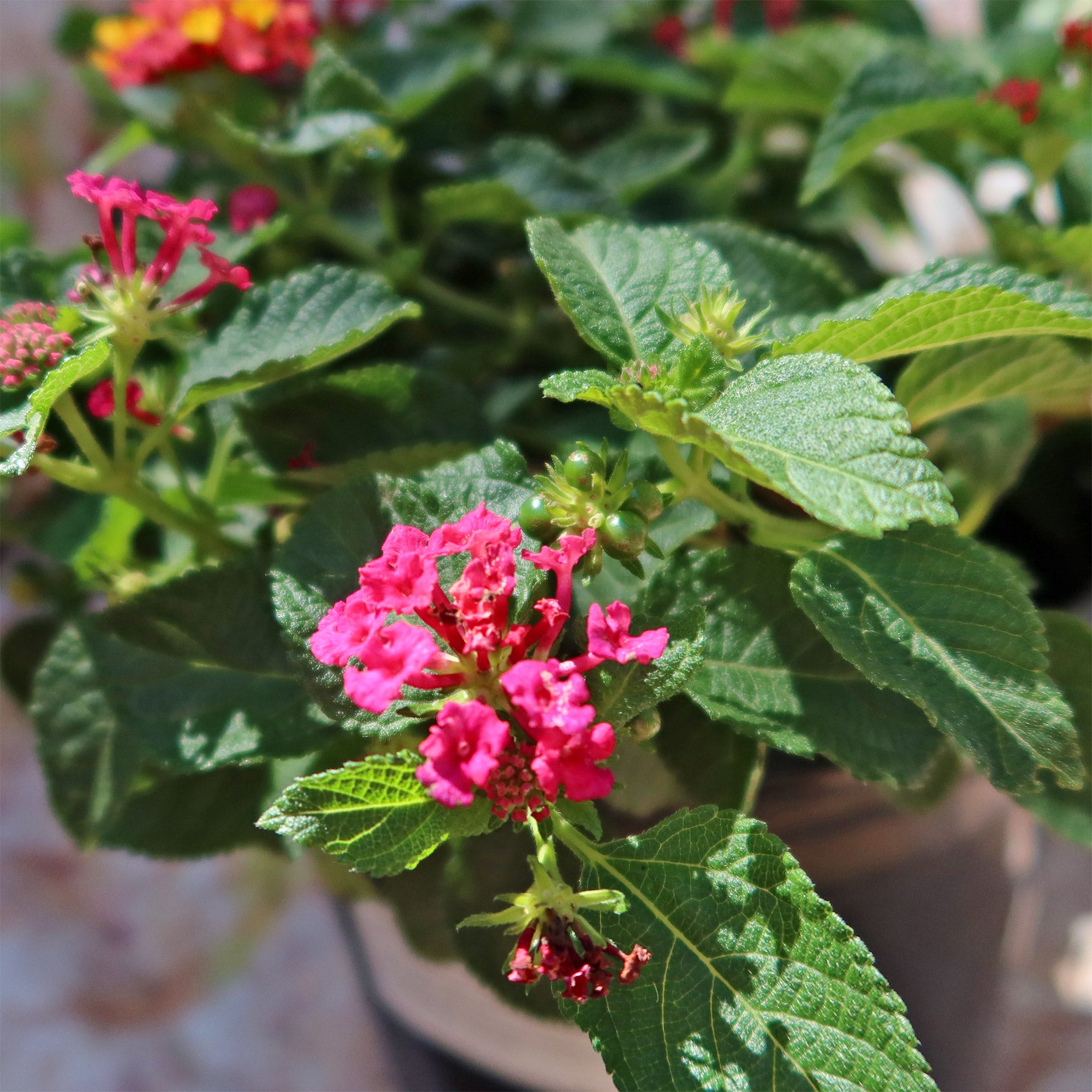
Lantana 'Carnival' is a stunning variety of lantana known for its colorful and profuse blooms that create a carnival-like display in gardens and landscapes. This hardy and adaptable plant thrives in sunny locations and offers gardeners an easy-to-grow option for adding vibrant hues to their spaces. Its low-maintenance requirements and resistance to challenging conditions make it an excellent choice for both beginner and experienced gardeners.
Native to Central and South America, the Lantana 'Carnival' is a perennial shrub featuring a mounding or sprawling growth habit. Its dense clusters of blooms display a mix of colors—typically shades of pink, orange, yellow, and red—that change over time, adding dynamic beauty to the plant. The foliage consists of coarse, ovate leaves with a slightly rough texture and a strong, distinctive scent when crushed.

In addition to its visual appeal, this plant is drought-tolerant and deer-resistant, further enhancing its desirability.
At maturity, Carnival Lantana typically grows up to 5 feet tall and 5 feet wide, depending on growing conditions.
Its compact size makes it an excellent choice for garden borders, containers, and ground cover.
The blooms of Lantana 'Carnival' are its standout feature, appearing in rounded clusters known as umbels.
These flowers are not only vibrant but also long-lasting, typically blooming from spring through fall in warmer climates.
Each cluster contains a blend of hues that change as the flowers age, creating a dynamic and ever-changing display.
 Butterflies
 Bees
Bees
 Hummingbirds
 Lady Bugs
 Multi Pollinators
 Other Birds
It is a magnet for pollinators, including butterflies, bees, and hummingbirds. The nectar-rich flowers provide an essential food source, making this plant an excellent choice for gardeners looking to support local pollinator populations.
When it comes to care, it thrives in full sun to partial shade, requiring at least six hours of direct sunlight daily to produce its best blooms. While drought-tolerant, minimal watering is beneficial during growth period. Once mature, water sparingly, allowing the soil to dry out between waterings. This lantana prefers well-draining soil and is tolerant of sandy or slightly rocky substrates.

When grown indoors, maintain a temperature of 60–75°F and place it in a bright, sunny window.
For outdoor cultivation, it is suitable for USDA zones 9–11 as a perennial; in cooler zones, it can be grown as an annual.
Prune spent blooms and leggy growth regularly to encourage bushier growth and prolonged blooming.
Perform a hard prune in early spring if needed. The Carnival Lantana can be propagated through cuttings or seeds.
When taken in the spring or early summer, cutting root quickly in a warm, moist environment. Seeds can be harvested from the plant's berries, although the process may take longer for germination.
According to the ASPCA, lantanas are mildly toxic to cats, dogs, and horses. Ingestion of the leaves or unripe berries can cause gastrointestinal upset, weakness, or more severe symptoms in pets. It's advisable to plant lantana where pets cannot easily access it.
Overall, the Lantana 'Carnival' is a vibrant, low-maintenance plant that brings dynamic color and life to any garden. Its adaptability, pollinator-friendly multicolor flowers, and resilience make it a versatile choice for various landscaping needs. With proper care and placement, this eye-catching lantana can be a lasting source of joy for gardeners and wildlife alike.
Growers Quick Reference Guide - Key Features
- Description
- Key Plant Features
Lantana 'Carnival' is a stunning variety of lantana known for its colorful and profuse blooms that create a carnival-like display in gardens and landscapes. This hardy and adaptable plant thrives in sunny locations and offers gardeners an easy-to-grow option for adding vibrant hues to their spaces. Its low-maintenance requirements and resistance to challenging conditions make it an excellent choice for both beginner and experienced gardeners.
Native to Central and South America, the Lantana 'Carnival' is a perennial shrub featuring a mounding or sprawling growth habit. Its dense clusters of blooms display a mix of colors—typically shades of pink, orange, yellow, and red—that change over time, adding dynamic beauty to the plant. The foliage consists of coarse, ovate leaves with a slightly rough texture and a strong, distinctive scent when crushed.
In addition to its visual appeal, this plant is drought-tolerant and deer-resistant, further enhancing its desirability.
At maturity, Carnival Lantana typically grows up to 5 feet tall and 5 feet wide, depending on growing conditions.
Its compact size makes it an excellent choice for garden borders, containers, and ground cover.
The blooms of Lantana 'Carnival' are its standout feature, appearing in rounded clusters known as umbels.
These flowers are not only vibrant but also long-lasting, typically blooming from spring through fall in warmer climates.
Each cluster contains a blend of hues that change as the flowers age, creating a dynamic and ever-changing display.
Butterflies
Bees
Hummingbirds
Lady Bugs
Multi Pollinators
Other Birds
It is a magnet for pollinators, including butterflies, bees, and hummingbirds. The nectar-rich flowers provide an essential food source, making this plant an excellent choice for gardeners looking to support local pollinator populations.
When it comes to care, it thrives in full sun to partial shade, requiring at least six hours of direct sunlight daily to produce its best blooms. While drought-tolerant, minimal watering is beneficial during growth period. Once mature, water sparingly, allowing the soil to dry out between waterings. This lantana prefers well-draining soil and is tolerant of sandy or slightly rocky substrates.
When grown indoors, maintain a temperature of 60–75°F and place it in a bright, sunny window.
For outdoor cultivation, it is suitable for USDA zones 9–11 as a perennial; in cooler zones, it can be grown as an annual.
Prune spent blooms and leggy growth regularly to encourage bushier growth and prolonged blooming.
Perform a hard prune in early spring if needed. The Carnival Lantana can be propagated through cuttings or seeds.
When taken in the spring or early summer, cutting root quickly in a warm, moist environment. Seeds can be harvested from the plant's berries, although the process may take longer for germination.
According to the ASPCA, lantanas are mildly toxic to cats, dogs, and horses. Ingestion of the leaves or unripe berries can cause gastrointestinal upset, weakness, or more severe symptoms in pets. It's advisable to plant lantana where pets cannot easily access it.
Overall, the Lantana 'Carnival' is a vibrant, low-maintenance plant that brings dynamic color and life to any garden. Its adaptability, pollinator-friendly multicolor flowers, and resilience make it a versatile choice for various landscaping needs. With proper care and placement, this eye-catching lantana can be a lasting source of joy for gardeners and wildlife alike.