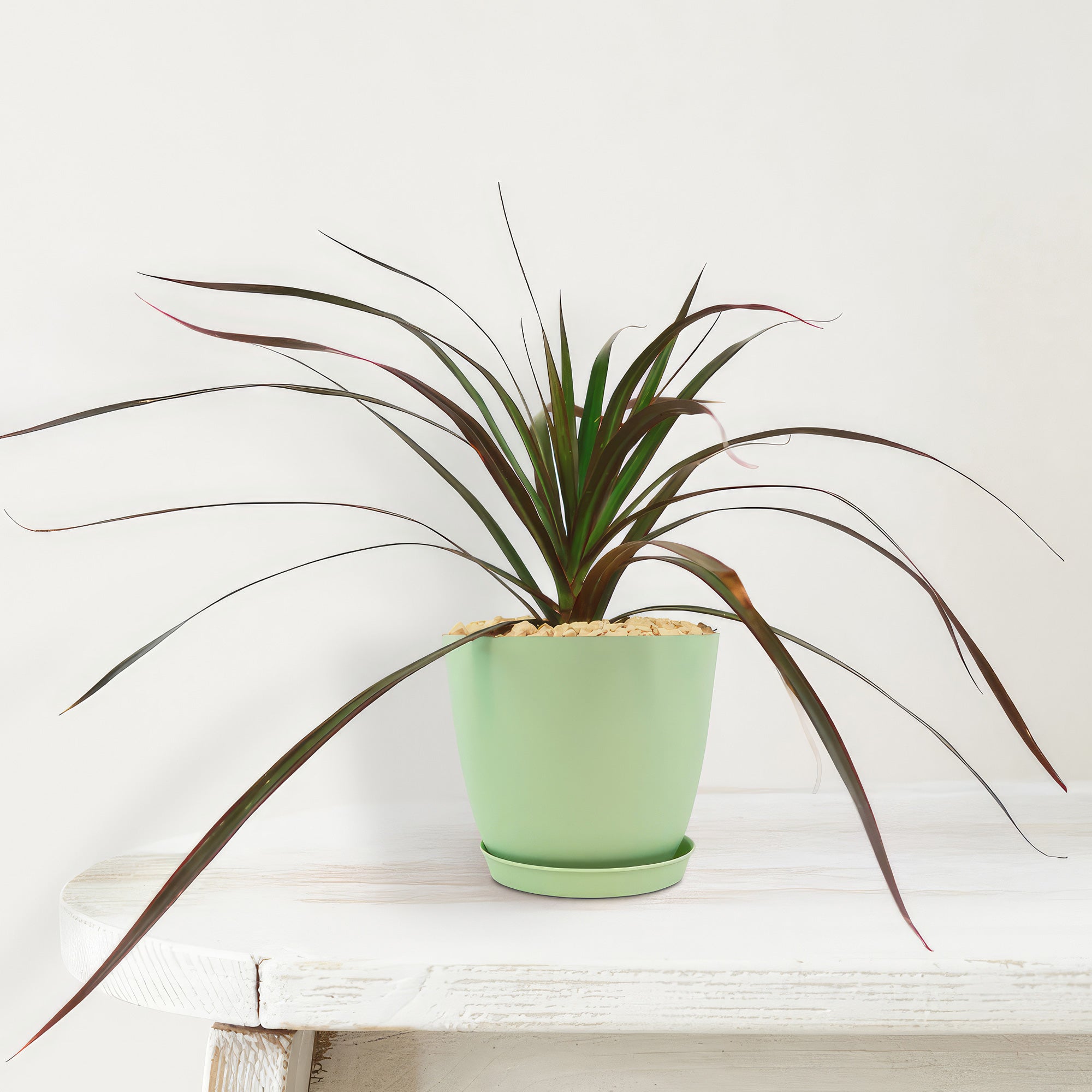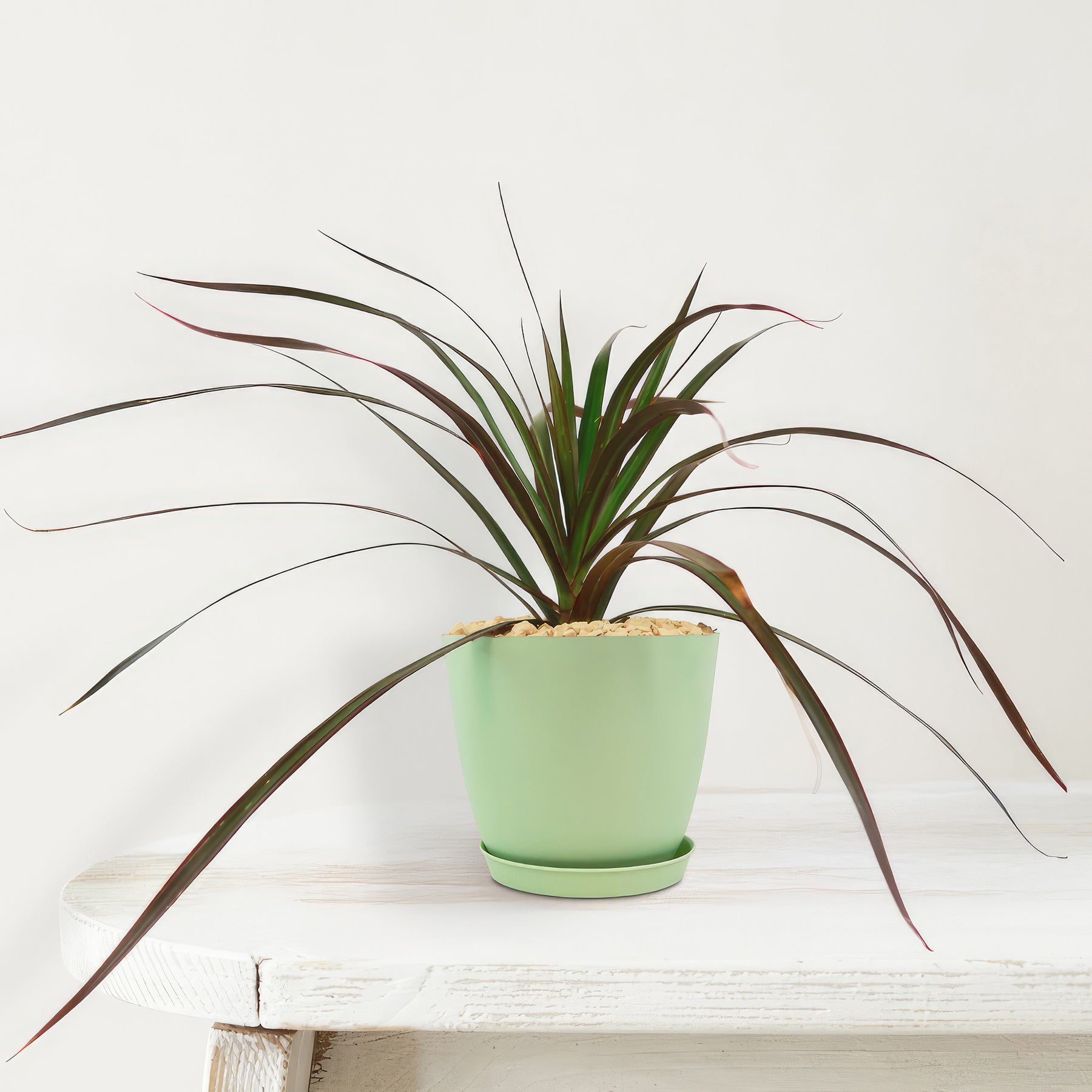


The Madagascar dragon tree, known as Dracaena marginata ‘Magenta’, is a low-maintenance, upright houseplant with bold, magenta-edged sword-like leaves. Its sculptural form and air-purifying qualities further enhance its appeal for decor enthusiasts and plant lovers alike.
Native to Madagascar, the "Dragon Tree" name comes from the Dracaena genus, known for species that produce red sap resembling "dragon’s blood", a nod to ancient beliefs and its tree-like form with dramatic, spiky leaves. The ‘Magenta’ cultivar is especially prized for the bold pink-to-magenta hue along the leaf margins.

At maturity, the popular houseplant Dracaena marginata ‘Magenta’ can grow up to 6 feet tall, though it grows slowly and is easy to maintain at a more compact size through pruning.
Outdoors in tropical zones, it may grow even taller to about 20 feet. Its narrow footprint makes it ideal for tight corners, entryways, or flanking furniture pieces.
This vertical growth habit, combined with vivid leaf coloration, gives the plant a strong architectural presence in any space.
The Madagascar dragon tree blooms in spring with small, fragrant white or pale pink flowers.
These star-like flowers typically appear on long panicles, but flowering is uncommon and often limited to outdoor-grown plants in ideal tropical conditions.
Most indoor growers appreciate this plant for its foliage alone, as the colorful leaves are its main ornamental draw.
A unique aspect of the Madagascar Dragon Tree ‘Magenta’ is its exceptional tolerance to drought and low light, making it one of the most forgiving houseplants. It is also known for its air-purifying abilities, having been studied by NASA as one of the top indoor plants for removing toxins such as benzene, formaldehyde, and trichloroethylene from the air. Its durability and ability to bounce back from neglect make it a favorite for both beginners and experienced plant keepers.
When and How to Water Your Madagascar Dragon Tree
The drought-tolerant plant stores moisture well and prefers infrequent but thorough watering. Allow the top 1–2 inches of soil to dry out completely before rewatering. Overwatering can lead to root rot, while underwatering is rarely fatal due to its hardy nature. Water your Madagascar Dragon Tree deeply every 10–14 days during the growing season and reduce to every 3–4 weeks during dormancy, ensuring the soil dries out between waterings.
From March through September, during the growing season, water every 10 to 14 days with about 1/4 to 1/2 gallon, depending on pot size and indoor conditions. Ensure water drains freely and avoid leaving the pot in standing water. Humidity can slightly increase watering needs, especially in bright indoor spots.
From October through February, during the dormant period, reduce watering to every 3 to 4 weeks, using around 1/4 gallon or less. Monitor the soil's dryness before each watering. Lower temperatures and light levels slow growth, so the plant uses significantly less water.
Light Requirements – Where to Place Your Dracaena marginata

When grown indoors, place your Madagascar Dragon Tree in bright, indirect light for 6–8 hours daily to maintain vibrant foliage and prevent leggy growth.
Bright east or west-facing windows are ideal, but avoid direct harsh sunlight, which may scorch its leaves.
In lower light, it can survive, but growth may slow, and foliage may dull. Artificial grow lights can supplement natural light in darker rooms.
When grown outdoors, provide dappled sunlight or partial shade with 4–6 hours of morning or filtered sun daily.
Protect it from intense afternoon rays to prevent leaf burning.
A shaded patio or under taller plants can work well for outdoor potted plants during warmer months. Too much sun or too little light will affect appearance and growth. Yellowing leaves may signal excess light, while drooping or sparse foliage indicates insufficient light. Rotate the plant regularly indoors to encourage balanced growth.
Optimal Soil & Fertilizer Needs
The Dragon tree prefers a well-drained, loamy or sandy soil with good aeration, and should be fertilized once a year in spring. A high-quality potting mix blended with perlite, bark, or pumice improves drainage and root oxygenation. Instead, make or buy a well-draining potting mix, or ideally use our specialized potting mix, opens in a new tab that contains 5 natural substrates and mycorrhizae to promote the development of a strong root system that helps your dragon plant to thrive.
To fertilize your Madagascar Dragon Tree, use a balanced, water-soluble liquid houseplant fertilizer (such as a 10-10-10 ratio) diluted to half-strength. Feed the plant every 4 to 6 weeks during the active growing season in spring and summer to supply essential nutrients for robust foliage growth. Stop fertilizing entirely during fall and winter when the plant's growth naturally slows.
Avoid over-fertilizing, as Dracaenas are sensitive to excess mineral and salt build-up in the soil, which can burn the roots and cause unsightly brown leaf tips. When repotting, refresh the soil mix without compacting it too tightly around the root ball, and always choose a pot with drainage holes to protect root health.
How to Grow Best Indoors as a Houseplant
The Madagascar Dragon Tree is an architectural, upright houseplant celebrated for its slender cane stems and crown of narrow, ribbon-like leaves edged in deep plum and magenta. Its sleek, vertical silhouette makes it an ideal accent plant for modern interiors, tight corners, or bright office spaces.
- The plant should be kept in warm indoor temperatures between 65°F and 80°F for steady, healthy growth.
- It prefers medium to bright indirect light; adequate light maintains its rich magenta leaf margins, though it can tolerate lower light levels where growth will simply slow down.
- The plant should be watered when the top half of the soil dries out completely, as its root system is sensitive to overwatering and standing in soggy soil.
- It adapts effortlessly to standard indoor household humidity, making it an extremely forgiving, low-maintenance choice for dry indoor air.
- The plant should be strictly protected from cold window drafts, direct winter breezes, and sudden temperature dips below 55°F to prevent leaf dropping and cold stress.
Hardiness Zones & More

In the United States, this is mostly an indoor plant, but if you live in southern Florida or Hawaii, then you can cultivate it outdoors in USDA zones 10-12.
In these climates, it can be grown as a landscape feature in shaded patios, protected courtyards, or under tall trees that provide dappled sunlight.
The plant cannot tolerate frost or extended cold, so if you're growing it outdoors in cooler zones, it should be moved indoors or into a greenhouse before temperatures drop below 50°F.
In drier climates, provide extra humidity or misting. Excessive dryness or exposure to the full sun can cause the leaf edges to brown or the color to fade. Regular watering, especially during hot spells, and occasional feeding during the growing season will help maintain its vibrant magenta-striped foliage.
Wildlife – Dragon Tree Flowers Attract the Following Friendly Pollinators
While not a heavy nectar-producing plant, it can occasionally attract small pollinators like gnats or house flies in humid indoor spaces. Though not a major attractor of wildlife, its presence can complement pollinator-friendly plant groupings in outdoor settings. It typically does not serve as a primary pollinator source.
According to the ASPCA, Dracaena marginata is mildly toxic to cats and dogs. If ingested in large amounts, it can cause vomiting, drooling, and lethargy. It’s best to keep the plant out of reach of pets, particularly curious kittens or puppies. It is not known to be toxic to birds.
How to Propagate Your Dracaena marginata
You can propagate your Madagascar Dragon tree through stem cuttings. Choose a healthy stem, and using sterilized scissors, cut a 4–6-inch segment just below a leaf node. Allow it to dry for a day to prevent rot, then plant the cutting in moist, well-draining soil. Keep it in a warm, bright location with indirect sunlight. Water sparingly until roots develop in about 4–6 weeks. Alternatively, you can root the cutting in water before transplanting it to the soil.
Key Takeaways
- The Madagascar Dragon Tree ‘Magenta’ is a popular houseplant known for its magenta-edged, sword-shaped leaves and architectural appeal.
- The plant is highly drought-tolerant, thriving with minimal watering and making it ideal for low-maintenance indoor care.
- The growth habit is tall and slender, allowing it to reach 6 feet indoors while taking up very little horizontal space.
- The Madagascar Dragon Tree helps purify indoor air, removing harmful toxins like formaldehyde and benzene from your environment.
- The plant can be pruned and shaped easily, whether you prefer a bushy form or a single-stemmed, tree-like silhouette.
The Bottom Line
Overall, the Madagascar Dragon Tree ‘Magenta’ is an easy-care, drought-tolerant plant perfect for beginners and plant lovers alike. With its striking, red-edged foliage and upright growth habit, it makes a bold statement in indoor spaces. It requires only moderate light, infrequent watering, and occasional fertilizing, thriving in warm temperatures and moderate humidity. Ideal for homes and offices, this low-maintenance beauty offers both visual appeal and versatility in containers or grouped arrangements.
Bloom Season
Flower Color
Growth Rate
Hardiness Zone
Mature Size
Plant Type
Resistance
Sun Exposure
Watering Needs
| Attribute | Value |
|---|---|
| Bloom Season | Spring, early summer |
| Botanical Name | Dracaena marginata ‘Magenta’ |
| Common Name | Madagascar Dragon Tree |
| Dormancy | Winter |
| Family | Asparagaceae |
| Flower Color | White, greenish-white |
| Genus | Dracaena |
| Growth Habit | Palm like |
| Growth Rate | Slow |
| Hardiness Zone | 10, 11, 12 |
| Mature Size | 6 ft. tall (indoor), 20 ft. tall (outdoor) |
| Native Area | Madagascar |
| Plant Type | Houseplant |
| Propagation | By stem cuttings |
| Resistance | Extremely drought-tolerant, heat tolerant, pests resistant, deer resistant |
| Soil PH | 6.5, Acidic, Neutral |
| Soil Type | well-draining soil mix |
| Special Features | Palm like foliage, easy to maintain |
| Sun Exposure | Partial shade (3–6 hrs. sun) |
| Toxicity | Mildly toxic for humans, mildly toxic for pets |
| Watering Needs | Low |
Growers Quick Reference Guide - Key Features
| Attribute | Value |
|---|---|
| Bloom Season | Spring, early summer |
| Botanical Name | Dracaena marginata ‘Magenta’ |
| Common Name | Madagascar Dragon Tree |
| Dormancy | Winter |
| Family | Asparagaceae |
| Flower Color | White, greenish-white |
| Genus | Dracaena |
| Growth Habit | Palm like |
| Growth Rate | Slow |
| Hardiness Zone | 10, 11, 12 |
| Mature Size | 6 ft. tall (indoor), 20 ft. tall (outdoor) |
| Native Area | Madagascar |
| Plant Type | Houseplant |
| Propagation | By stem cuttings |
| Resistance | Extremely drought-tolerant, heat tolerant, pests resistant, deer resistant |
| Soil PH | 6.5, Acidic, Neutral |
| Soil Type | well-draining soil mix |
| Special Features | Palm like foliage, easy to maintain |
| Sun Exposure | Partial shade (3–6 hrs. sun) |
| Toxicity | Mildly toxic for humans, mildly toxic for pets |
| Watering Needs | Low |
- Description
- Key Plant Features
The Madagascar dragon tree, known as Dracaena marginata ‘Magenta’, is a low-maintenance, upright houseplant with bold, magenta-edged sword-like leaves. Its sculptural form and air-purifying qualities further enhance its appeal for decor enthusiasts and plant lovers alike.
Native to Madagascar, the "Dragon Tree" name comes from the Dracaena genus, known for species that produce red sap resembling "dragon’s blood", a nod to ancient beliefs and its tree-like form with dramatic, spiky leaves. The ‘Magenta’ cultivar is especially prized for the bold pink-to-magenta hue along the leaf margins.
At maturity, the popular houseplant Dracaena marginata ‘Magenta’ can grow up to 6 feet tall, though it grows slowly and is easy to maintain at a more compact size through pruning.
Outdoors in tropical zones, it may grow even taller to about 20 feet. Its narrow footprint makes it ideal for tight corners, entryways, or flanking furniture pieces.
This vertical growth habit, combined with vivid leaf coloration, gives the plant a strong architectural presence in any space.
The Madagascar dragon tree blooms in spring with small, fragrant white or pale pink flowers.
These star-like flowers typically appear on long panicles, but flowering is uncommon and often limited to outdoor-grown plants in ideal tropical conditions.
Most indoor growers appreciate this plant for its foliage alone, as the colorful leaves are its main ornamental draw.
A unique aspect of the Madagascar Dragon Tree ‘Magenta’ is its exceptional tolerance to drought and low light, making it one of the most forgiving houseplants. It is also known for its air-purifying abilities, having been studied by NASA as one of the top indoor plants for removing toxins such as benzene, formaldehyde, and trichloroethylene from the air. Its durability and ability to bounce back from neglect make it a favorite for both beginners and experienced plant keepers.
When and How to Water Your Madagascar Dragon Tree
The drought-tolerant plant stores moisture well and prefers infrequent but thorough watering. Allow the top 1–2 inches of soil to dry out completely before rewatering. Overwatering can lead to root rot, while underwatering is rarely fatal due to its hardy nature. Water your Madagascar Dragon Tree deeply every 10–14 days during the growing season and reduce to every 3–4 weeks during dormancy, ensuring the soil dries out between waterings.
From March through September, during the growing season, water every 10 to 14 days with about 1/4 to 1/2 gallon, depending on pot size and indoor conditions. Ensure water drains freely and avoid leaving the pot in standing water. Humidity can slightly increase watering needs, especially in bright indoor spots.
From October through February, during the dormant period, reduce watering to every 3 to 4 weeks, using around 1/4 gallon or less. Monitor the soil's dryness before each watering. Lower temperatures and light levels slow growth, so the plant uses significantly less water.
Light Requirements – Where to Place Your Dracaena marginata
When grown indoors, place your Madagascar Dragon Tree in bright, indirect light for 6–8 hours daily to maintain vibrant foliage and prevent leggy growth.
Bright east or west-facing windows are ideal, but avoid direct harsh sunlight, which may scorch its leaves.
In lower light, it can survive, but growth may slow, and foliage may dull. Artificial grow lights can supplement natural light in darker rooms.
When grown outdoors, provide dappled sunlight or partial shade with 4–6 hours of morning or filtered sun daily.
Protect it from intense afternoon rays to prevent leaf burning.
A shaded patio or under taller plants can work well for outdoor potted plants during warmer months. Too much sun or too little light will affect appearance and growth. Yellowing leaves may signal excess light, while drooping or sparse foliage indicates insufficient light. Rotate the plant regularly indoors to encourage balanced growth.
Optimal Soil & Fertilizer Needs
The Dragon tree prefers a well-drained, loamy or sandy soil with good aeration, and should be fertilized once a year in spring. A high-quality potting mix blended with perlite, bark, or pumice improves drainage and root oxygenation. Instead, make or buy a well-draining potting mix, or ideally use our specialized potting mix, opens in a new tab that contains 5 natural substrates and mycorrhizae to promote the development of a strong root system that helps your dragon plant to thrive.
To fertilize your Madagascar Dragon Tree, use a balanced, water-soluble liquid houseplant fertilizer (such as a 10-10-10 ratio) diluted to half-strength. Feed the plant every 4 to 6 weeks during the active growing season in spring and summer to supply essential nutrients for robust foliage growth. Stop fertilizing entirely during fall and winter when the plant's growth naturally slows.
Avoid over-fertilizing, as Dracaenas are sensitive to excess mineral and salt build-up in the soil, which can burn the roots and cause unsightly brown leaf tips. When repotting, refresh the soil mix without compacting it too tightly around the root ball, and always choose a pot with drainage holes to protect root health.
How to Grow Best Indoors as a Houseplant
The Madagascar Dragon Tree is an architectural, upright houseplant celebrated for its slender cane stems and crown of narrow, ribbon-like leaves edged in deep plum and magenta. Its sleek, vertical silhouette makes it an ideal accent plant for modern interiors, tight corners, or bright office spaces.
- The plant should be kept in warm indoor temperatures between 65°F and 80°F for steady, healthy growth.
- It prefers medium to bright indirect light; adequate light maintains its rich magenta leaf margins, though it can tolerate lower light levels where growth will simply slow down.
- The plant should be watered when the top half of the soil dries out completely, as its root system is sensitive to overwatering and standing in soggy soil.
- It adapts effortlessly to standard indoor household humidity, making it an extremely forgiving, low-maintenance choice for dry indoor air.
- The plant should be strictly protected from cold window drafts, direct winter breezes, and sudden temperature dips below 55°F to prevent leaf dropping and cold stress.
Hardiness Zones & More
In the United States, this is mostly an indoor plant, but if you live in southern Florida or Hawaii, then you can cultivate it outdoors in USDA zones 10-12.
In these climates, it can be grown as a landscape feature in shaded patios, protected courtyards, or under tall trees that provide dappled sunlight.
The plant cannot tolerate frost or extended cold, so if you're growing it outdoors in cooler zones, it should be moved indoors or into a greenhouse before temperatures drop below 50°F.
In drier climates, provide extra humidity or misting. Excessive dryness or exposure to the full sun can cause the leaf edges to brown or the color to fade. Regular watering, especially during hot spells, and occasional feeding during the growing season will help maintain its vibrant magenta-striped foliage.
Wildlife – Dragon Tree Flowers Attract the Following Friendly Pollinators
While not a heavy nectar-producing plant, it can occasionally attract small pollinators like gnats or house flies in humid indoor spaces. Though not a major attractor of wildlife, its presence can complement pollinator-friendly plant groupings in outdoor settings. It typically does not serve as a primary pollinator source.
According to the ASPCA, Dracaena marginata is mildly toxic to cats and dogs. If ingested in large amounts, it can cause vomiting, drooling, and lethargy. It’s best to keep the plant out of reach of pets, particularly curious kittens or puppies. It is not known to be toxic to birds.
How to Propagate Your Dracaena marginata
You can propagate your Madagascar Dragon tree through stem cuttings. Choose a healthy stem, and using sterilized scissors, cut a 4–6-inch segment just below a leaf node. Allow it to dry for a day to prevent rot, then plant the cutting in moist, well-draining soil. Keep it in a warm, bright location with indirect sunlight. Water sparingly until roots develop in about 4–6 weeks. Alternatively, you can root the cutting in water before transplanting it to the soil.
Key Takeaways
- The Madagascar Dragon Tree ‘Magenta’ is a popular houseplant known for its magenta-edged, sword-shaped leaves and architectural appeal.
- The plant is highly drought-tolerant, thriving with minimal watering and making it ideal for low-maintenance indoor care.
- The growth habit is tall and slender, allowing it to reach 6 feet indoors while taking up very little horizontal space.
- The Madagascar Dragon Tree helps purify indoor air, removing harmful toxins like formaldehyde and benzene from your environment.
- The plant can be pruned and shaped easily, whether you prefer a bushy form or a single-stemmed, tree-like silhouette.
The Bottom Line
Overall, the Madagascar Dragon Tree ‘Magenta’ is an easy-care, drought-tolerant plant perfect for beginners and plant lovers alike. With its striking, red-edged foliage and upright growth habit, it makes a bold statement in indoor spaces. It requires only moderate light, infrequent watering, and occasional fertilizing, thriving in warm temperatures and moderate humidity. Ideal for homes and offices, this low-maintenance beauty offers both visual appeal and versatility in containers or grouped arrangements.
Bloom Season
Flower Color
Growth Rate
Hardiness Zone
Mature Size
Plant Type
Resistance
Sun Exposure
Watering Needs
| Attribute | Value |
|---|---|
| Bloom Season | Spring, early summer |
| Botanical Name | Dracaena marginata ‘Magenta’ |
| Common Name | Madagascar Dragon Tree |
| Dormancy | Winter |
| Family | Asparagaceae |
| Flower Color | White, greenish-white |
| Genus | Dracaena |
| Growth Habit | Palm like |
| Growth Rate | Slow |
| Hardiness Zone | 10, 11, 12 |
| Mature Size | 6 ft. tall (indoor), 20 ft. tall (outdoor) |
| Native Area | Madagascar |
| Plant Type | Houseplant |
| Propagation | By stem cuttings |
| Resistance | Extremely drought-tolerant, heat tolerant, pests resistant, deer resistant |
| Soil PH | 6.5, Acidic, Neutral |
| Soil Type | well-draining soil mix |
| Special Features | Palm like foliage, easy to maintain |
| Sun Exposure | Partial shade (3–6 hrs. sun) |
| Toxicity | Mildly toxic for humans, mildly toxic for pets |
| Watering Needs | Low |
Growers Quick Reference Guide - Key Features
| Attribute | Value |
|---|---|
| Bloom Season | Spring, early summer |
| Botanical Name | Dracaena marginata ‘Magenta’ |
| Common Name | Madagascar Dragon Tree |
| Dormancy | Winter |
| Family | Asparagaceae |
| Flower Color | White, greenish-white |
| Genus | Dracaena |
| Growth Habit | Palm like |
| Growth Rate | Slow |
| Hardiness Zone | 10, 11, 12 |
| Mature Size | 6 ft. tall (indoor), 20 ft. tall (outdoor) |
| Native Area | Madagascar |
| Plant Type | Houseplant |
| Propagation | By stem cuttings |
| Resistance | Extremely drought-tolerant, heat tolerant, pests resistant, deer resistant |
| Soil PH | 6.5, Acidic, Neutral |
| Soil Type | well-draining soil mix |
| Special Features | Palm like foliage, easy to maintain |
| Sun Exposure | Partial shade (3–6 hrs. sun) |
| Toxicity | Mildly toxic for humans, mildly toxic for pets |
| Watering Needs | Low |