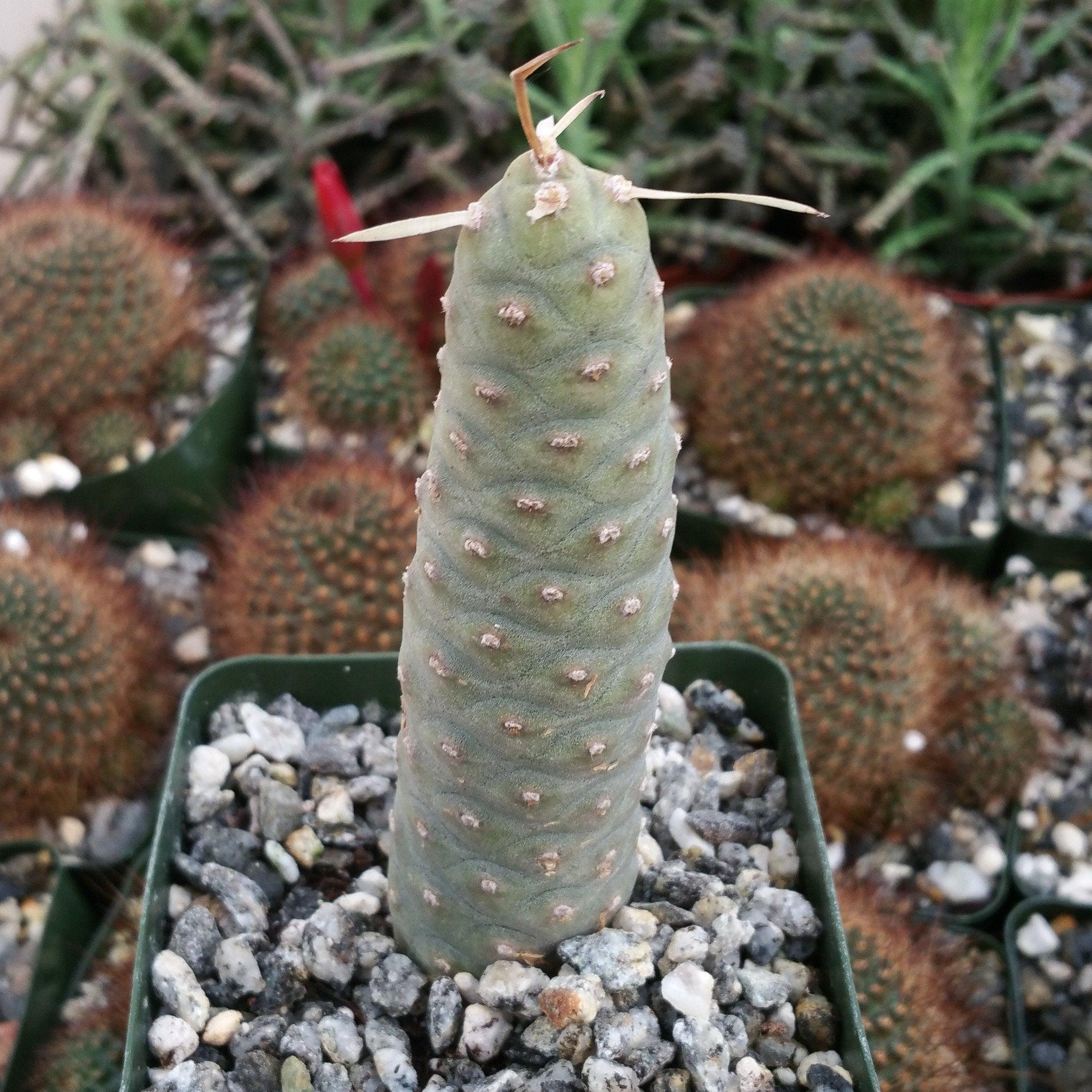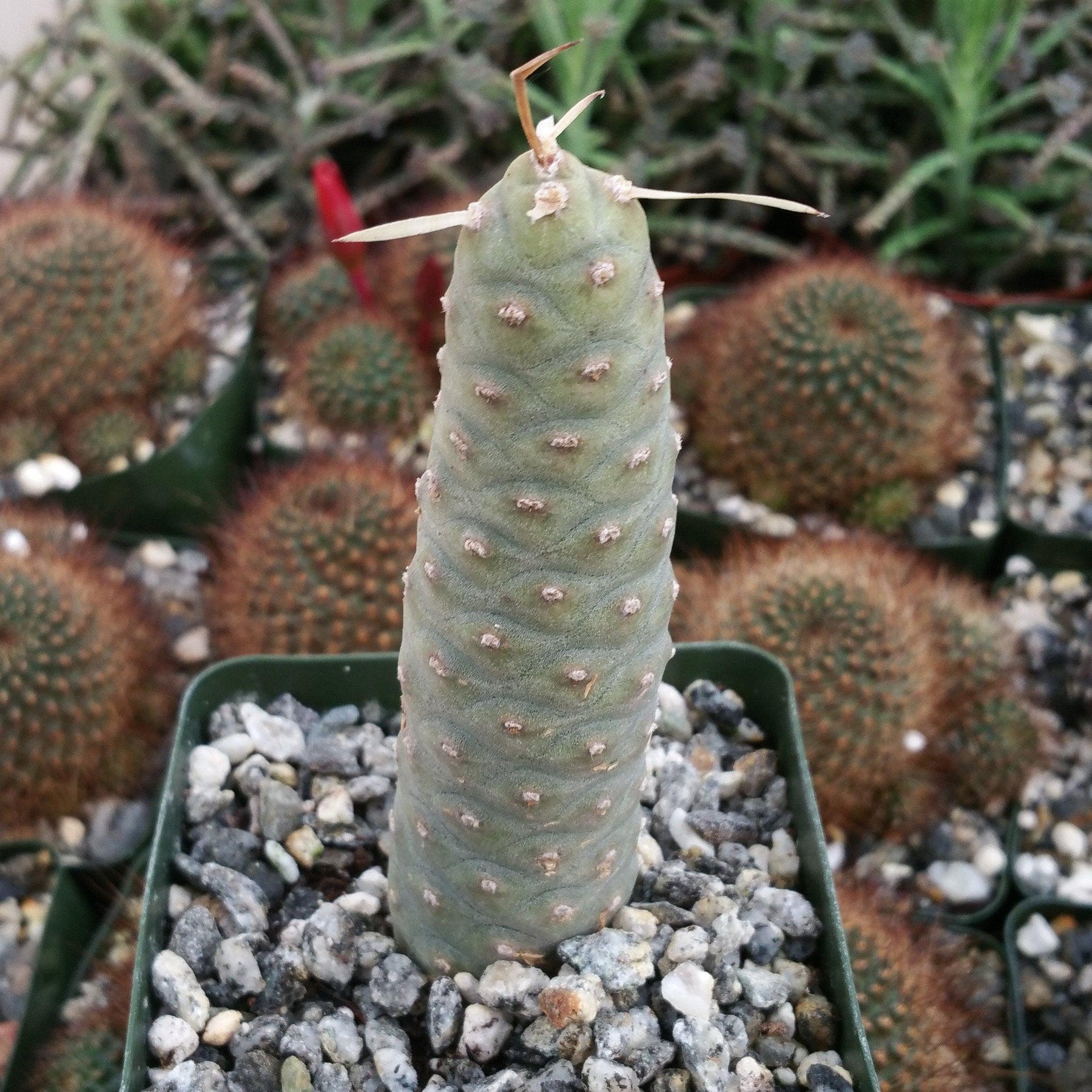
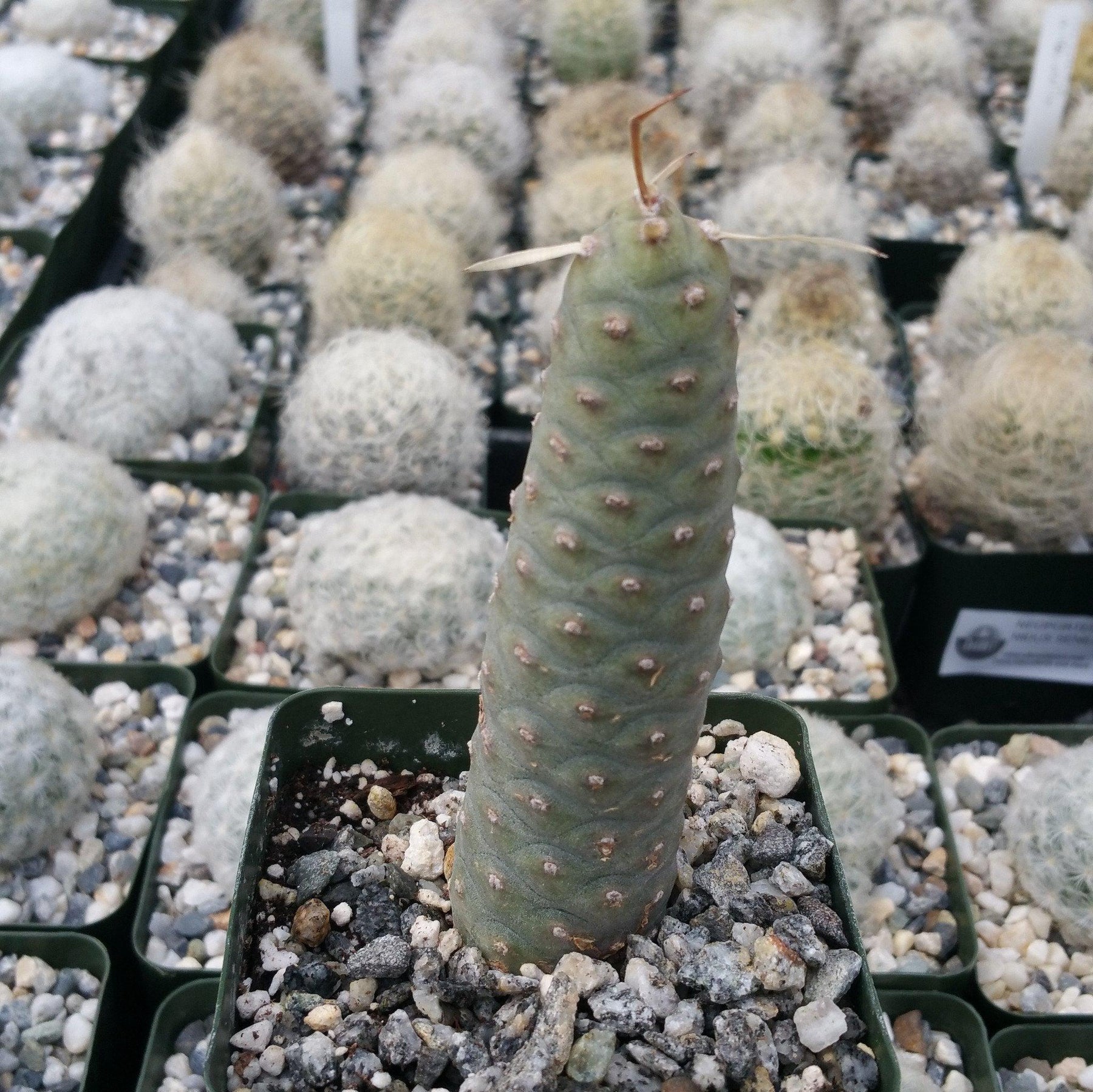
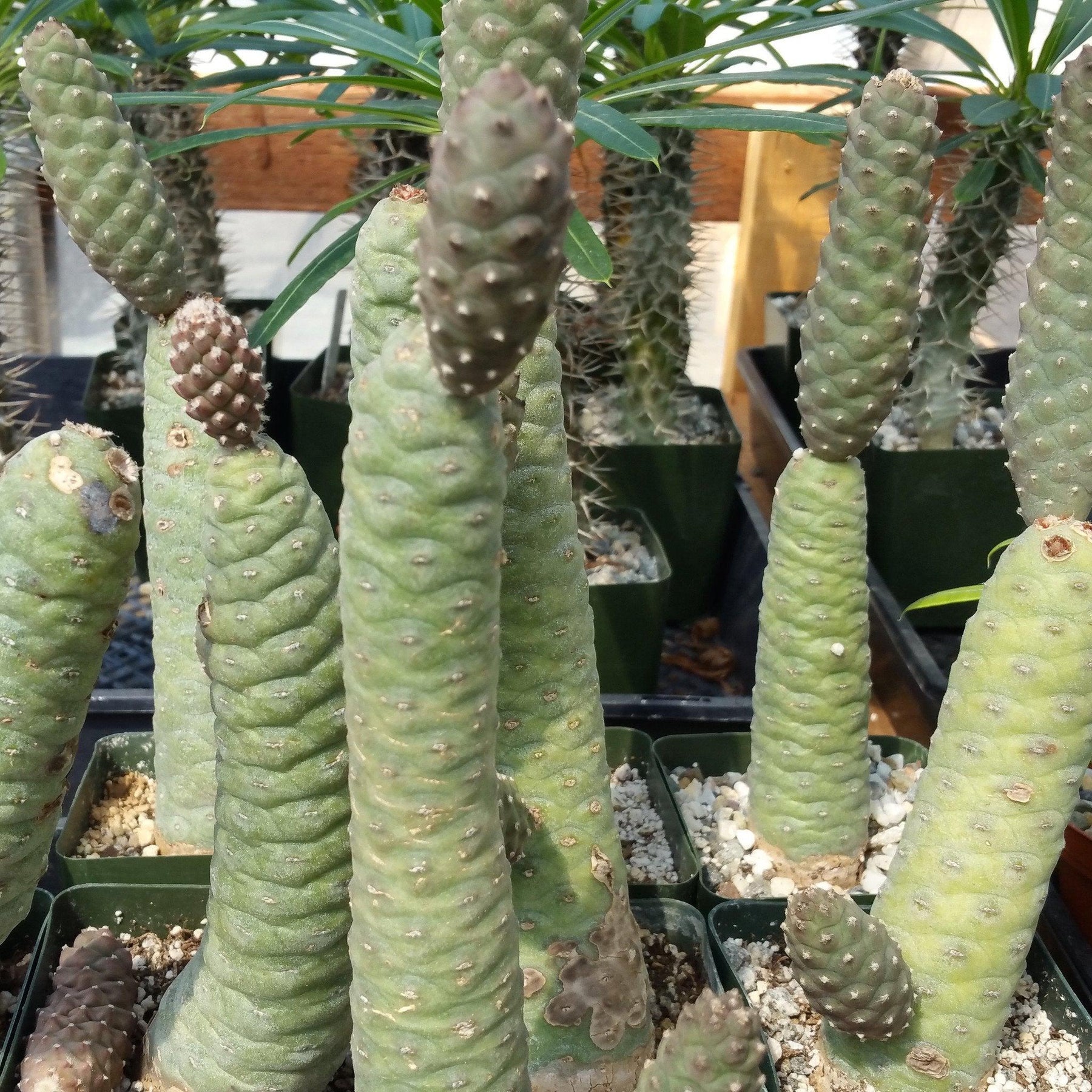
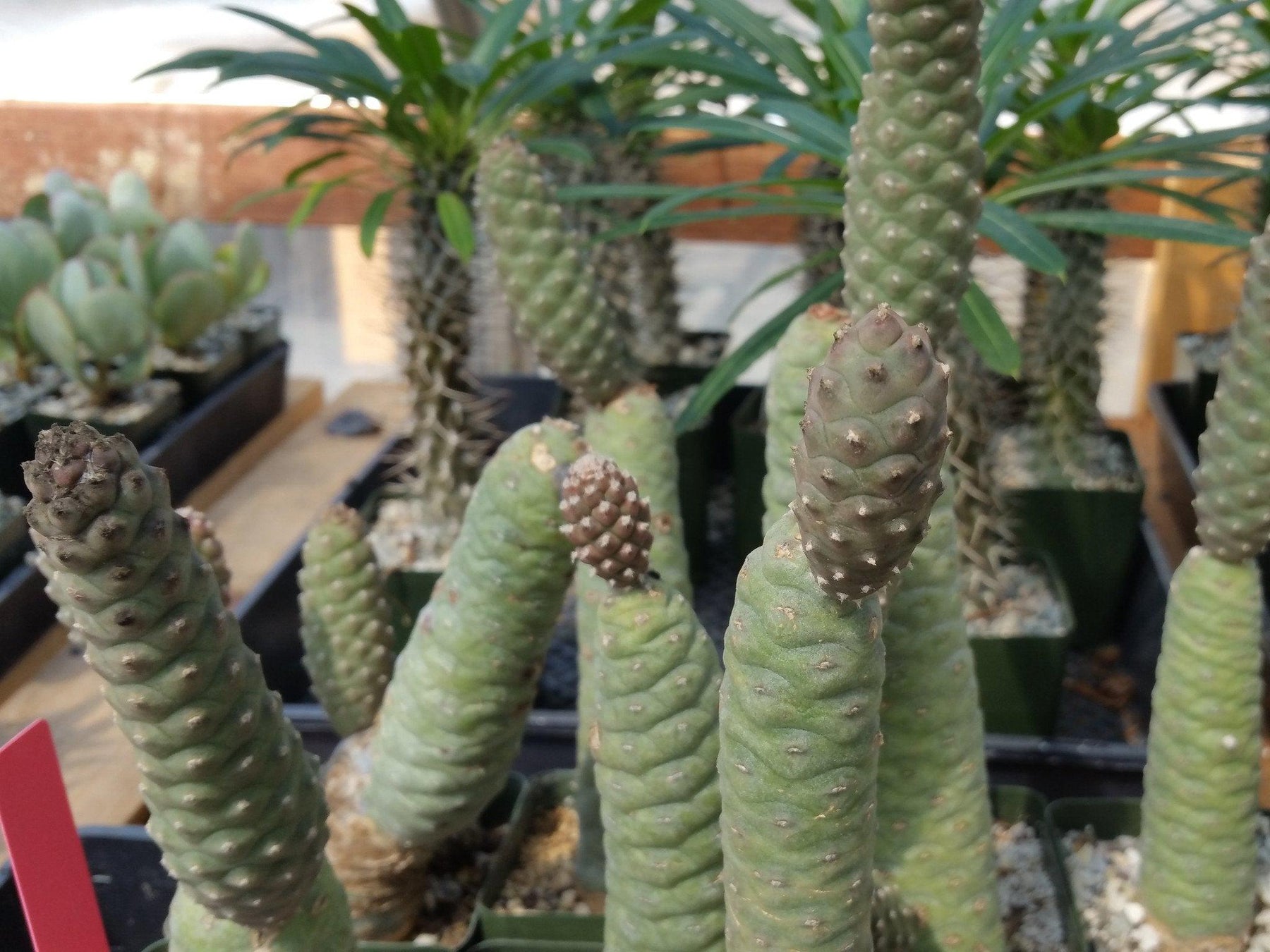
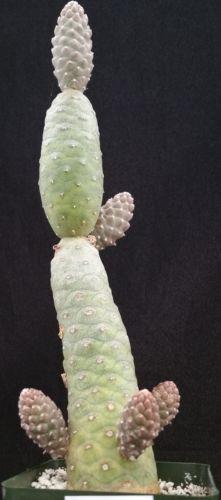
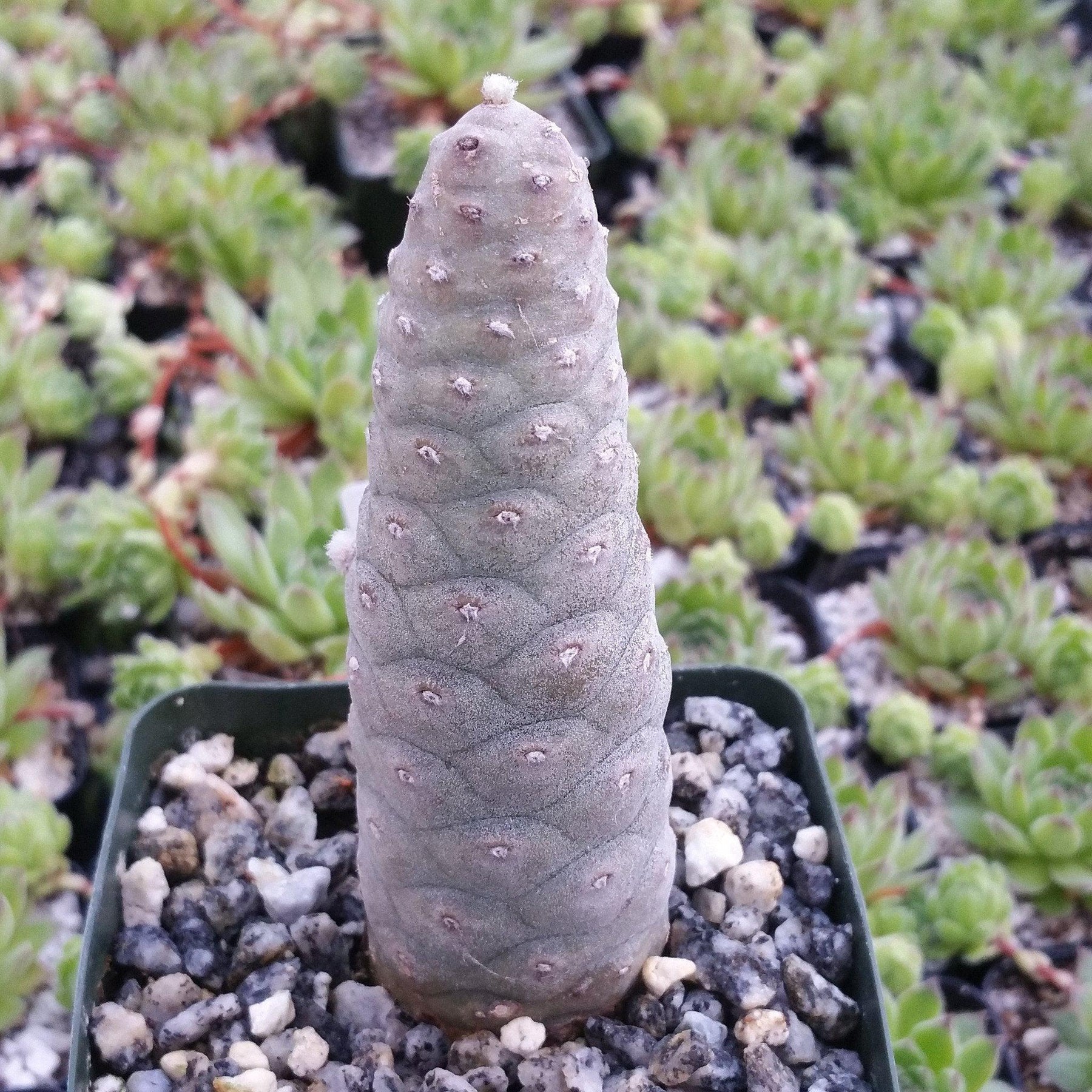
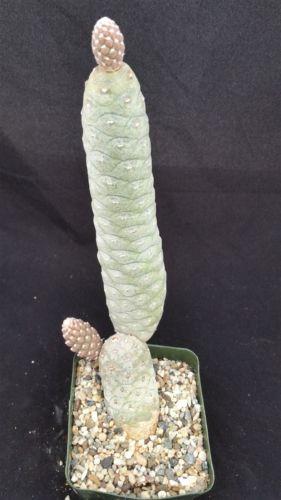
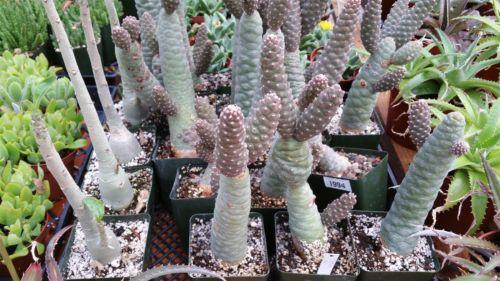
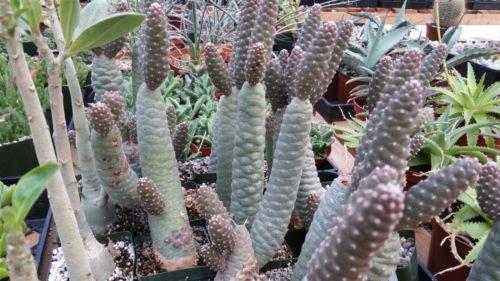
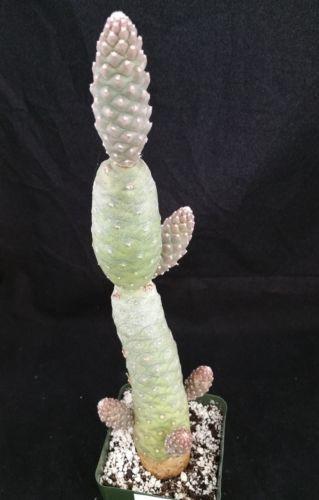
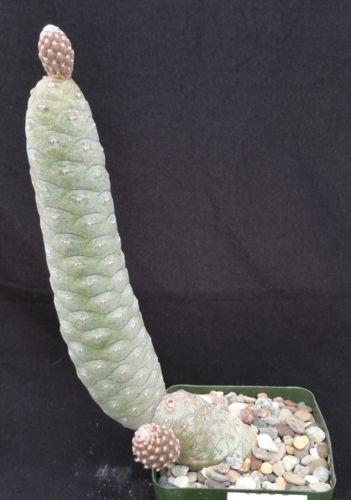
The pinecone cactus, also known as Tephrocactus articulatus, is a wonderful cactus that resembles pinecones. This pine cone plant belongs to the Cactaceae family and is native to Western Argentina. It is also known as Spruce cone cholla and spruce cone cactus.
The pinecone cactus can grow up to 12 inches in height. These winter-dormant plants have knobby stem segments and resemble silvery to powdered blue pinecones! The pinecone-shaped segments are covered in small, white spines that give the plant a fuzzy texture. These spines help protect the cactus from predators and also assist in reducing water loss.
The flowers of the pinecone cactus are surely full of charm and stand out because of their unique bell shape. This Argentinian species produces stunning white flowers with yellow centers from late spring to mid-summer. Pinecone cactus is clump-forming with a slow growth rate.
To propagate this upright unusual cactus Tephrocactus articulatus, stem cuttings or the segment cuttings are the best approach. Pinecone cactus care is manageable.
Being a friendly plant, the pinecone cactus is not considered toxic, it is safe for both humans and pets to have around.
Additionally, the pinecone cactus does have a stunning variety called the paper spine cactus or Tephrocactus articulatus var. papyracanthus.
Watering Needs
When it comes to watering the pinecone plant, it's important to find the right balance. This cactus is native to arid regions, so it's adapted to survive in dry conditions. Water these low-growing cacti deeply. Overwatering can be a common mistake, so it's better to err on the side of underwatering. Make sure to not water them again until the soil is fully dried out. Besides, it is recommended to use containers with holes for drainage.
During the growing season, which is typically spring and summer, you can water the pinecone cactus once every 2-3 weeks. Before watering, make sure the soil has completely dried out from the previous watering. It's important to avoid letting your Tephrocactus articulatus sit in water, as this can lead to root rot.
In the winter months, when the cactus is in its dormant phase, you can reduce the watering frequency to once a month or even less. This allows the pinecone plant to rest and conserve energy during its dormant period.
Light Requirements
The pinecone cactus loves basking in the sunshine! This pinecone plant variety prefers to be kept in full sun to partial shade, so find a spot where it can soak up some rays. Place for 4-6 hours in bright sunlight or near a south-facing window for better results.
Just make sure to avoid exposing it to direct, intense sunlight, as that can lead to sunburn. Remember, the pinecone cactus is like a sun-loving friend, but it still needs some shade to stay happy and healthy.
Optimal Soil & Fertilizer Needs
The pinecone cactus likes very airy, porous, nutrient-rich soil with a pH of 5.6- 6.7. Cacti require well-drained soil that dries completely between waterings. Your soil must have a sandy texture and a low water-holding capacity, just like desert soil. Soggy wet soil can damage your cactus and contribute to bacterial and fungal rot. Ideally, you want to use our succulent soil or specialized cactus potting mix that contains 5 natural substrates and organic mycorrhizae to promote the development of a strong root system that helps your cactus to thrive.
As for fertilizing, the pinecone cactus doesn't require frequent feeding. During the growing season, which is typically spring, you can use a balanced cactus fertilizer with an equal mix of about 5-10-5 (NPK). Apply the fertilizer once a year to provide the necessary nutrients for healthy growth. Just remember, less is more when it comes to fertilizing this pinecone plant!
Hardiness Zone & More
These pinecone plants belong to the hardiness zone of 8 to 10. Protect from extreme cold, as this species is frost sensitive and only hardy to 20°F for brief periods. In terms of temperature, the pinecone cactus prefers a warm and dry climate. It thrives in temperatures between 70°F to 90°F. It's important to protect it from extreme cold or frost, as prolonged exposure to freezing temperatures can damage or even kill the plant.
When it comes to humidity, the pinecone cactus is well-suited to low-humidity environments. It can tolerate dry conditions, making it a great choice for arid regions. However, it's always a good idea to provide some occasional humidity by misting the plant or placing a tray of water nearby to mimic its natural habitat.
Remember, creating a warm and dry environment with proper temperature and humidity levels will help your pinecone cactus thrive!
With the help of Tephrocactus articulatus pinecone cactus, you'll start to spend less time maintaining your garden and more time taking in its beauty!
Bloom Season
Flower Color
Growth Rate
Hardiness Zone
Mature Size
Plant Type
Resistance
Sun Exposure
Watering Needs
| Attribute | Value |
|---|---|
| Bloom Season | Late spring, mid summer |
| Botanical Name | Tephrocactus articulatus |
| Common Name | Pine cone cactus, spruce cholla cactus, spruce cone cactus |
| Dormancy | Winter |
| Family | Cactaceae |
| Flower Color | White (With yellow center) |
| Genus | Tephrocactus |
| Growth Habit | Clump-forming |
| Growth Rate | Slow |
| Hardiness Zone | 8, 9, 10 |
| Mature Size | 12 in. tall |
| Native Area | Argentina |
| Plant Type | Cactus |
| Propagation | By stem cuttings |
| Resistance | Extremely drought-tolerant, mildfrost resistant, pest resistant, deer resistant |
| Soil PH | 6.5, Acidic, Neutral |
| Soil Type | specialized cactus potting mix |
| Special Features | Easy to maintain |
| Sun Exposure | Full sun (6+ hrs.), Partial shade (3–6 hrs. sun) |
| Toxicity | Safe for humans, friendly to dogs, friendly to cats |
| Watering Needs | Low |
Growers Quick Reference Guide - Key Features
| Attribute | Value |
|---|---|
| Bloom Season | Late spring, mid summer |
| Botanical Name | Tephrocactus articulatus |
| Common Name | Pine cone cactus, spruce cholla cactus, spruce cone cactus |
| Dormancy | Winter |
| Family | Cactaceae |
| Flower Color | White (With yellow center) |
| Genus | Tephrocactus |
| Growth Habit | Clump-forming |
| Growth Rate | Slow |
| Hardiness Zone | 8, 9, 10 |
| Mature Size | 12 in. tall |
| Native Area | Argentina |
| Plant Type | Cactus |
| Propagation | By stem cuttings |
| Resistance | Extremely drought-tolerant, mildfrost resistant, pest resistant, deer resistant |
| Soil PH | 6.5, Acidic, Neutral |
| Soil Type | specialized cactus potting mix |
| Special Features | Easy to maintain |
| Sun Exposure | Full sun (6+ hrs.), Partial shade (3–6 hrs. sun) |
| Toxicity | Safe for humans, friendly to dogs, friendly to cats |
| Watering Needs | Low |
- Description
- Key Plant Features
The pinecone cactus, also known as Tephrocactus articulatus, is a wonderful cactus that resembles pinecones. This pine cone plant belongs to the Cactaceae family and is native to Western Argentina. It is also known as Spruce cone cholla and spruce cone cactus.
The pinecone cactus can grow up to 12 inches in height. These winter-dormant plants have knobby stem segments and resemble silvery to powdered blue pinecones! The pinecone-shaped segments are covered in small, white spines that give the plant a fuzzy texture. These spines help protect the cactus from predators and also assist in reducing water loss.
The flowers of the pinecone cactus are surely full of charm and stand out because of their unique bell shape. This Argentinian species produces stunning white flowers with yellow centers from late spring to mid-summer. Pinecone cactus is clump-forming with a slow growth rate.
To propagate this upright unusual cactus Tephrocactus articulatus, stem cuttings or the segment cuttings are the best approach. Pinecone cactus care is manageable.
Being a friendly plant, the pinecone cactus is not considered toxic, it is safe for both humans and pets to have around.
Additionally, the pinecone cactus does have a stunning variety called the paper spine cactus or Tephrocactus articulatus var. papyracanthus.
Watering Needs
When it comes to watering the pinecone plant, it's important to find the right balance. This cactus is native to arid regions, so it's adapted to survive in dry conditions. Water these low-growing cacti deeply. Overwatering can be a common mistake, so it's better to err on the side of underwatering. Make sure to not water them again until the soil is fully dried out. Besides, it is recommended to use containers with holes for drainage.
During the growing season, which is typically spring and summer, you can water the pinecone cactus once every 2-3 weeks. Before watering, make sure the soil has completely dried out from the previous watering. It's important to avoid letting your Tephrocactus articulatus sit in water, as this can lead to root rot.
In the winter months, when the cactus is in its dormant phase, you can reduce the watering frequency to once a month or even less. This allows the pinecone plant to rest and conserve energy during its dormant period.
Light Requirements
The pinecone cactus loves basking in the sunshine! This pinecone plant variety prefers to be kept in full sun to partial shade, so find a spot where it can soak up some rays. Place for 4-6 hours in bright sunlight or near a south-facing window for better results.
Just make sure to avoid exposing it to direct, intense sunlight, as that can lead to sunburn. Remember, the pinecone cactus is like a sun-loving friend, but it still needs some shade to stay happy and healthy.
Optimal Soil & Fertilizer Needs
The pinecone cactus likes very airy, porous, nutrient-rich soil with a pH of 5.6- 6.7. Cacti require well-drained soil that dries completely between waterings. Your soil must have a sandy texture and a low water-holding capacity, just like desert soil. Soggy wet soil can damage your cactus and contribute to bacterial and fungal rot. Ideally, you want to use our succulent soil or specialized cactus potting mix that contains 5 natural substrates and organic mycorrhizae to promote the development of a strong root system that helps your cactus to thrive.
As for fertilizing, the pinecone cactus doesn't require frequent feeding. During the growing season, which is typically spring, you can use a balanced cactus fertilizer with an equal mix of about 5-10-5 (NPK). Apply the fertilizer once a year to provide the necessary nutrients for healthy growth. Just remember, less is more when it comes to fertilizing this pinecone plant!
Hardiness Zone & More
These pinecone plants belong to the hardiness zone of 8 to 10. Protect from extreme cold, as this species is frost sensitive and only hardy to 20°F for brief periods. In terms of temperature, the pinecone cactus prefers a warm and dry climate. It thrives in temperatures between 70°F to 90°F. It's important to protect it from extreme cold or frost, as prolonged exposure to freezing temperatures can damage or even kill the plant.
When it comes to humidity, the pinecone cactus is well-suited to low-humidity environments. It can tolerate dry conditions, making it a great choice for arid regions. However, it's always a good idea to provide some occasional humidity by misting the plant or placing a tray of water nearby to mimic its natural habitat.
Remember, creating a warm and dry environment with proper temperature and humidity levels will help your pinecone cactus thrive!
With the help of Tephrocactus articulatus pinecone cactus, you'll start to spend less time maintaining your garden and more time taking in its beauty!
Bloom Season
Flower Color
Growth Rate
Hardiness Zone
Mature Size
Plant Type
Resistance
Sun Exposure
Watering Needs
| Attribute | Value |
|---|---|
| Bloom Season | Late spring, mid summer |
| Botanical Name | Tephrocactus articulatus |
| Common Name | Pine cone cactus, spruce cholla cactus, spruce cone cactus |
| Dormancy | Winter |
| Family | Cactaceae |
| Flower Color | White (With yellow center) |
| Genus | Tephrocactus |
| Growth Habit | Clump-forming |
| Growth Rate | Slow |
| Hardiness Zone | 8, 9, 10 |
| Mature Size | 12 in. tall |
| Native Area | Argentina |
| Plant Type | Cactus |
| Propagation | By stem cuttings |
| Resistance | Extremely drought-tolerant, mildfrost resistant, pest resistant, deer resistant |
| Soil PH | 6.5, Acidic, Neutral |
| Soil Type | specialized cactus potting mix |
| Special Features | Easy to maintain |
| Sun Exposure | Full sun (6+ hrs.), Partial shade (3–6 hrs. sun) |
| Toxicity | Safe for humans, friendly to dogs, friendly to cats |
| Watering Needs | Low |
Growers Quick Reference Guide - Key Features
| Attribute | Value |
|---|---|
| Bloom Season | Late spring, mid summer |
| Botanical Name | Tephrocactus articulatus |
| Common Name | Pine cone cactus, spruce cholla cactus, spruce cone cactus |
| Dormancy | Winter |
| Family | Cactaceae |
| Flower Color | White (With yellow center) |
| Genus | Tephrocactus |
| Growth Habit | Clump-forming |
| Growth Rate | Slow |
| Hardiness Zone | 8, 9, 10 |
| Mature Size | 12 in. tall |
| Native Area | Argentina |
| Plant Type | Cactus |
| Propagation | By stem cuttings |
| Resistance | Extremely drought-tolerant, mildfrost resistant, pest resistant, deer resistant |
| Soil PH | 6.5, Acidic, Neutral |
| Soil Type | specialized cactus potting mix |
| Special Features | Easy to maintain |
| Sun Exposure | Full sun (6+ hrs.), Partial shade (3–6 hrs. sun) |
| Toxicity | Safe for humans, friendly to dogs, friendly to cats |
| Watering Needs | Low |