


The String of Raindrops, known scientifically as a Curio herreianus hybrid (formerly Senecio herreianus), is an exceptionally charming trailing succulent that captures attention with its plump, teardrop-shaped foliage. Each bead-like leaf tapers into a delicate pointed tip, resembling miniature, crystal-clear raindrops cascading down slender, thread-like stems.

This hybrid fast-growing trailing succulent can produce cascading vines that reach 3 feet in length indoors while maintaining a neat, compact pot display, making it a stellar candidate for hanging baskets, high shelving, and decorative plant stands.
Its trailing habit allows it to make excellent use of vertical space, bringing a lush, cascading effect to rooms without requiring much floor space.
During late summer and early autumn, mature Senecio hybrid raindrop plants frequently produce small, cinnamon-scented, brush-like white blossoms along their trailing stems.
While these sweet-smelling flowers add a delightful seasonal bonus, the plant is treasured primarily for its plump, tear-shaped succulent leaves.
Related Product
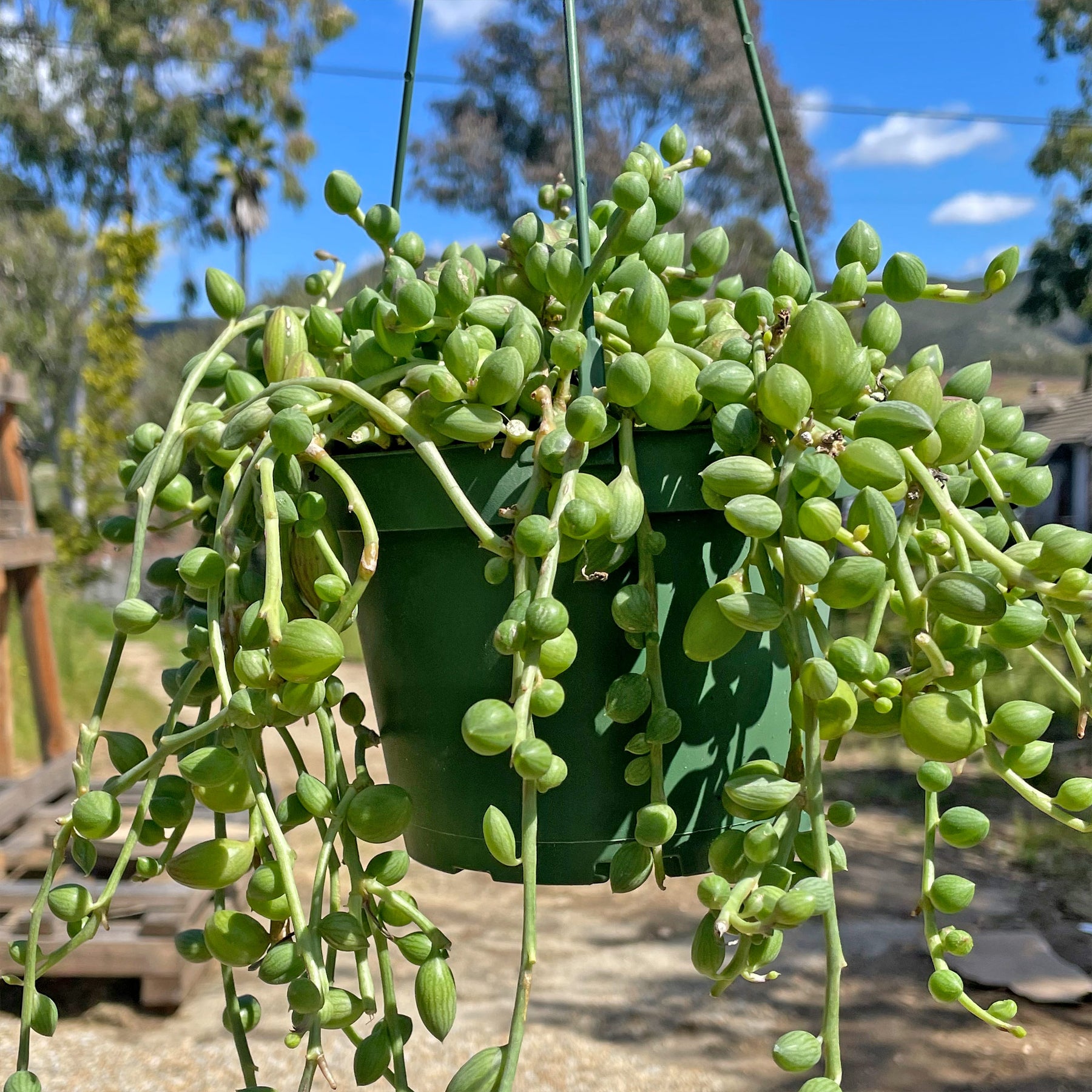
Whether grown in a hanging basket, placed on a high shelf, or showcased on a plant stand, this charming succulent brings a unique cascading accent to any indoor plant collection. With the right bright light, excellent drainage, and careful watering, it can remain an attractive and rewarding plant for years to come.
When and How to Water Your String of Raindrops Succulent
This drought-tolerant succulent stores significant water reserves inside its fleshy, teardrop leaves. Rather than keeping the substrate moist, allow the potting mix to dry out almost completely between waterings. Avoid overwatering or leaving the container sitting in stagnant tray water, as oversaturated soil quickly leads to root rot and causes the plump raindrops to burst or turn mushy.
The String of Raindrops plant typically needs water every 10–14 days during its active spring and summer growth phase (March–September), shifting to every 3–4 weeks during winter dormancy (October–February). Always adjust your routine based on local temperature, pot material, and indoor air humidity.
During spring and summer, check your plant by feeling the soil depth and examining the leaves. When the soil is dry and the raindrops feel slightly soft under gentle pressure, soak the potting mix thoroughly using room-temperature filtered water until it drains freely from the bottom, then empty the saucer completely.
During fall and winter, drastically reduce watering frequency as plant growth slows. Allow the soil mix to dry out completely before offering a light drink to safeguard the shallow root system from excess moisture.
Light Requirements – Where to Place Your String of Raindrops

When cultivated indoors, place your trailing hybrid in bright, indirect light or dappled morning sunshine for 6 to 8 hours daily.
An east-facing window or a spot placed near a south- or west-facing window provides optimal energy for compact leaf spacing and robust trailing growth.
Avoid harsh, unshaded direct afternoon sun, which can scorch the delicate foliage and discolor the green beads.
When grown outdoors, it thrives best in partial shade or morning sun within USDA Hardiness Zones 9–11, where temperatures remain frost-free year-round.
Hang it under a covered patio, shaded porch, or beneath a pergola where it receives indirect light. In cooler climates, grow it as a container plant and transition it indoors before night temperatures drop below 50°F.
Adequate light intensity is essential to prevent long, cascading stems with sparse leaf distribution. If the light level is too low, the trailing vines will stretch awkwardly, and the signature raindrop shape may flatten out. Rotating the planter monthly ensures uniform foliage density around the entire rim.
Optimal Soil & Fertilizer Needs
Your String of Raindrops loves a light, airy soil mix that lets excess water zoom right through while giving its roots plenty of fresh air to breathe! Planting your succulent in heavy, dense garden soil is a big no-no, as it can trap water, smother the roots, and cause the stems to go soft and collapse. Instead, make or buy our specialized succulent potting mix and mix in extra perlite, pumice, or coarse sand. This creates the super quick-draining environment your plant needs to keep its roots happy and dry.
Succulents are low-maintenance, light feeders! A great rule of thumb is to nourish your plant once a year in early spring using a gentle liquid houseplant food (like a 5-10-5 NPK formula) diluted to half-strength. However, if you notice slow growth or pale foliage during the warm season, you can safely switch to 2–3 light feedings spread throughout spring and summer (every 4–6 weeks). Always stop feeding completely during fall and winter to let the plant rest.
How to Best Grow Indoors as a Houseplant
The String of Raindrops makes an effortless, visually rewarding houseplant, adored for its trailing habit and geometric leaf shapes that add modern elegance to bright rooms.
- Hang your plant in a location receiving plentiful bright, indirect light to keep leaf internodes tight and lush.
- Protect the thick foliage from intense, burning afternoon rays to prevent sun-bleaching and leaf scorching.
- Maintain comfortable room temperatures between 65°F and 80°F, guarding against cold drafts.
- Water only after the potting mix has thoroughly dried out from top to bottom.
- Ensure your pot has working drainage openings, so excess water exits immediately after watering.
- Keep the trailing vines away from direct air conditioner blasts or heater vents to avoid leaf drop.
Hardiness Zone & More

In the United States, the String of Raindrops is primarily grown as an indoor houseplant.
Outdoors, it can live year-round in frost-free regions like southern California, Florida, and Hawaii within USDA Hardiness Zones 9–11.
It performs exceptionally well in hanging baskets under shaded arbors and covered patio spaces.
It thrives in warm temperatures between 65°F and 80°F and must be shielded from freezing temperatures or prolonged exposure below 50°F. Unlike lush tropicals, it prefers lower to moderate air humidity, making it naturally well-suited for typical indoor home air without requiring humidifiers.
Wildlife – Senecio Hybrid Raindrops Flowers Attract Friendly Pollinators
The nectar-rich white flowers of this raindrops plant are known for their ability to attract a variety of friendly pollinators, such as butterflies and bees, and beneficial insects looking for late-season nectar. Their vibrant colors and delicate petals make them a beautiful addition to any garden or landscape.
According to the ASPCA, the String of Raindrops is mildly toxic to cats, dogs, and horses if ingested. It contains natural compounds that can cause mild stomach upset or drooling if chewed, which makes elevated styling the perfect win-win. Hanging it high not only keeps curious pets completely safe, but it also lets those gorgeous, bead-like teardrops cascade down at eye level for maximum visual impact in any room!
How to Propagate Your String of Raindrops
You can create your new trailing raindrop plants using stem cuttings taken during spring or early summer.
- Select healthy trailing stems that are 4 to 6 inches long.
- Using clean, sharp shears, cut just below a leaf node.
- Strip off the lower 1 inch of teardrop leaves to expose the nodes, and allow the cut stem to callus in a dry spot for 1 to 2 days.
- Place the calloused stems directly onto a pot of moist succulent soil, pinning the exposed nodes gently to the soil surface.
- Keep the pot in warm, bright indirect light and mist lightly; roots will establish within 2 to 4 weeks.
Key Takeaways
- The String of Raindrops is an easy-care trailing houseplant that creates a beautiful cascading display in hanging planters, elevated shelves, and plant stands.
- Its plump, teardrop-shaped succulent leaves store water, giving the plant good drought tolerance and allowing it to handle occasional missed waterings better than many tropical houseplants.
- Its naturally cascading stems make it ideal for hanging baskets, macrame plant hangers, tall shelves, and other elevated locations where the vines can spill gracefully downward.
- This fast-growing succulent hybrid can develop trailing stems up to about 3 feet long indoors, making it an excellent choice for adding vertical greenery without taking up much floor space.
- Mature plants may produce small, fragrant, brush-like white flowers, while bright light, excellent drainage, and allowing the soil to dry between waterings help maintain healthy, compact growth.
The Bottom Line
Overall, the String of Raindrops succulent stands as one of the most eye-catching, dependable, and aesthetically pleasing trailing plants you can add to your collection. Its unique teardrop foliage, cascading growth habit, and low-maintenance needs bring a sense of modern, botanical art to bright indoor rooms. While it requires bright indirect light and careful watering, its resilient growth makes it a fantastic long-term investment.
Growers Quick Reference Guide - Key Features
- Description
- Key Plant Features
The String of Raindrops, known scientifically as a Curio herreianus hybrid (formerly Senecio herreianus), is an exceptionally charming trailing succulent that captures attention with its plump, teardrop-shaped foliage. Each bead-like leaf tapers into a delicate pointed tip, resembling miniature, crystal-clear raindrops cascading down slender, thread-like stems.
This hybrid fast-growing trailing succulent can produce cascading vines that reach 3 feet in length indoors while maintaining a neat, compact pot display, making it a stellar candidate for hanging baskets, high shelving, and decorative plant stands.
Its trailing habit allows it to make excellent use of vertical space, bringing a lush, cascading effect to rooms without requiring much floor space.
During late summer and early autumn, mature Senecio hybrid raindrop plants frequently produce small, cinnamon-scented, brush-like white blossoms along their trailing stems.
While these sweet-smelling flowers add a delightful seasonal bonus, the plant is treasured primarily for its plump, tear-shaped succulent leaves.
Related Product
Whether grown in a hanging basket, placed on a high shelf, or showcased on a plant stand, this charming succulent brings a unique cascading accent to any indoor plant collection. With the right bright light, excellent drainage, and careful watering, it can remain an attractive and rewarding plant for years to come.
When and How to Water Your String of Raindrops Succulent
This drought-tolerant succulent stores significant water reserves inside its fleshy, teardrop leaves. Rather than keeping the substrate moist, allow the potting mix to dry out almost completely between waterings. Avoid overwatering or leaving the container sitting in stagnant tray water, as oversaturated soil quickly leads to root rot and causes the plump raindrops to burst or turn mushy.
The String of Raindrops plant typically needs water every 10–14 days during its active spring and summer growth phase (March–September), shifting to every 3–4 weeks during winter dormancy (October–February). Always adjust your routine based on local temperature, pot material, and indoor air humidity.
During spring and summer, check your plant by feeling the soil depth and examining the leaves. When the soil is dry and the raindrops feel slightly soft under gentle pressure, soak the potting mix thoroughly using room-temperature filtered water until it drains freely from the bottom, then empty the saucer completely.
During fall and winter, drastically reduce watering frequency as plant growth slows. Allow the soil mix to dry out completely before offering a light drink to safeguard the shallow root system from excess moisture.
Light Requirements – Where to Place Your String of Raindrops
When cultivated indoors, place your trailing hybrid in bright, indirect light or dappled morning sunshine for 6 to 8 hours daily.
An east-facing window or a spot placed near a south- or west-facing window provides optimal energy for compact leaf spacing and robust trailing growth.
Avoid harsh, unshaded direct afternoon sun, which can scorch the delicate foliage and discolor the green beads.
When grown outdoors, it thrives best in partial shade or morning sun within USDA Hardiness Zones 9–11, where temperatures remain frost-free year-round.
Hang it under a covered patio, shaded porch, or beneath a pergola where it receives indirect light. In cooler climates, grow it as a container plant and transition it indoors before night temperatures drop below 50°F.
Adequate light intensity is essential to prevent long, cascading stems with sparse leaf distribution. If the light level is too low, the trailing vines will stretch awkwardly, and the signature raindrop shape may flatten out. Rotating the planter monthly ensures uniform foliage density around the entire rim.
Optimal Soil & Fertilizer Needs
Your String of Raindrops loves a light, airy soil mix that lets excess water zoom right through while giving its roots plenty of fresh air to breathe! Planting your succulent in heavy, dense garden soil is a big no-no, as it can trap water, smother the roots, and cause the stems to go soft and collapse. Instead, make or buy our specialized succulent potting mix and mix in extra perlite, pumice, or coarse sand. This creates the super quick-draining environment your plant needs to keep its roots happy and dry.
Succulents are low-maintenance, light feeders! A great rule of thumb is to nourish your plant once a year in early spring using a gentle liquid houseplant food (like a 5-10-5 NPK formula) diluted to half-strength. However, if you notice slow growth or pale foliage during the warm season, you can safely switch to 2–3 light feedings spread throughout spring and summer (every 4–6 weeks). Always stop feeding completely during fall and winter to let the plant rest.
How to Best Grow Indoors as a Houseplant
The String of Raindrops makes an effortless, visually rewarding houseplant, adored for its trailing habit and geometric leaf shapes that add modern elegance to bright rooms.
- Hang your plant in a location receiving plentiful bright, indirect light to keep leaf internodes tight and lush.
- Protect the thick foliage from intense, burning afternoon rays to prevent sun-bleaching and leaf scorching.
- Maintain comfortable room temperatures between 65°F and 80°F, guarding against cold drafts.
- Water only after the potting mix has thoroughly dried out from top to bottom.
- Ensure your pot has working drainage openings, so excess water exits immediately after watering.
- Keep the trailing vines away from direct air conditioner blasts or heater vents to avoid leaf drop.
Hardiness Zone & More
In the United States, the String of Raindrops is primarily grown as an indoor houseplant.
Outdoors, it can live year-round in frost-free regions like southern California, Florida, and Hawaii within USDA Hardiness Zones 9–11.
It performs exceptionally well in hanging baskets under shaded arbors and covered patio spaces.
It thrives in warm temperatures between 65°F and 80°F and must be shielded from freezing temperatures or prolonged exposure below 50°F. Unlike lush tropicals, it prefers lower to moderate air humidity, making it naturally well-suited for typical indoor home air without requiring humidifiers.
Wildlife – Senecio Hybrid Raindrops Flowers Attract Friendly Pollinators
The nectar-rich white flowers of this raindrops plant are known for their ability to attract a variety of friendly pollinators, such as butterflies and bees, and beneficial insects looking for late-season nectar. Their vibrant colors and delicate petals make them a beautiful addition to any garden or landscape.
According to the ASPCA, the String of Raindrops is mildly toxic to cats, dogs, and horses if ingested. It contains natural compounds that can cause mild stomach upset or drooling if chewed, which makes elevated styling the perfect win-win. Hanging it high not only keeps curious pets completely safe, but it also lets those gorgeous, bead-like teardrops cascade down at eye level for maximum visual impact in any room!
How to Propagate Your String of Raindrops
You can create your new trailing raindrop plants using stem cuttings taken during spring or early summer.
- Select healthy trailing stems that are 4 to 6 inches long.
- Using clean, sharp shears, cut just below a leaf node.
- Strip off the lower 1 inch of teardrop leaves to expose the nodes, and allow the cut stem to callus in a dry spot for 1 to 2 days.
- Place the calloused stems directly onto a pot of moist succulent soil, pinning the exposed nodes gently to the soil surface.
- Keep the pot in warm, bright indirect light and mist lightly; roots will establish within 2 to 4 weeks.
Key Takeaways
- The String of Raindrops is an easy-care trailing houseplant that creates a beautiful cascading display in hanging planters, elevated shelves, and plant stands.
- Its plump, teardrop-shaped succulent leaves store water, giving the plant good drought tolerance and allowing it to handle occasional missed waterings better than many tropical houseplants.
- Its naturally cascading stems make it ideal for hanging baskets, macrame plant hangers, tall shelves, and other elevated locations where the vines can spill gracefully downward.
- This fast-growing succulent hybrid can develop trailing stems up to about 3 feet long indoors, making it an excellent choice for adding vertical greenery without taking up much floor space.
- Mature plants may produce small, fragrant, brush-like white flowers, while bright light, excellent drainage, and allowing the soil to dry between waterings help maintain healthy, compact growth.
The Bottom Line
Overall, the String of Raindrops succulent stands as one of the most eye-catching, dependable, and aesthetically pleasing trailing plants you can add to your collection. Its unique teardrop foliage, cascading growth habit, and low-maintenance needs bring a sense of modern, botanical art to bright indoor rooms. While it requires bright indirect light and careful watering, its resilient growth makes it a fantastic long-term investment.
Growers Quick Reference Guide - Key Features


