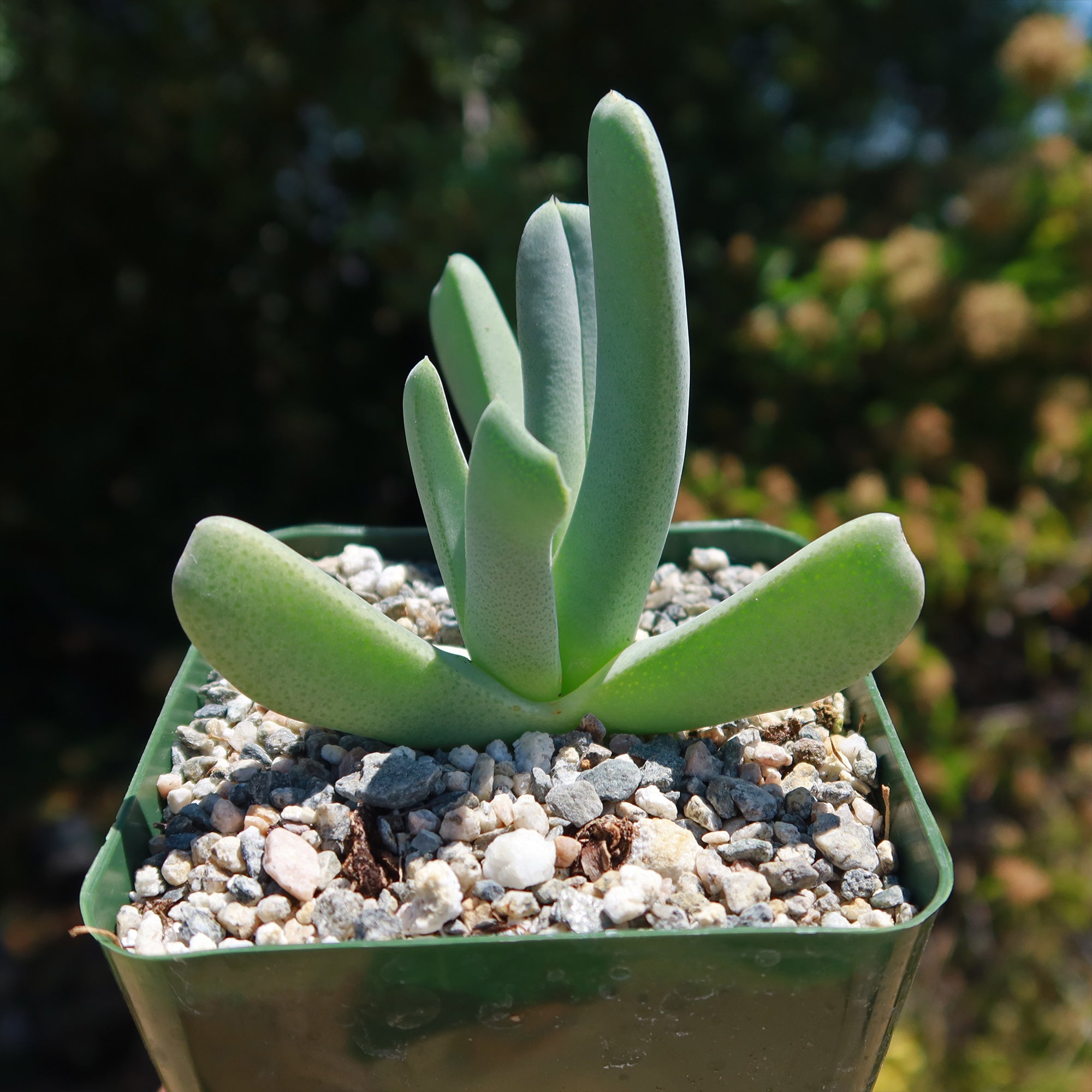



Imagine stumbling upon a miniature wonderland where nature's creativity knows no bounds. Welcome to the world of the Lobster Claw plant - also known as Cheiridopsis candidissima! Because of its dense mat of spiky foliage, it is also mistakenly known as Cheiridopsis denticulata or carpet weed.
This cheiridopsis succulent plant gets its common name, "lobster claws," from the shape of its leaves, which are thick and fleshy with pointed tips that resemble the claws of a lobster and turn reddish-purple under sunlight.
Hailing from South Africa, it’s a member of the Aizoaceae family, which is also known as the ice plant family. It flourishes in sandy soil and dry riverbeds, sporting the most enchanting name derived from the Greek word 'cheiris,' meaning 'sleeve.' This is because when the erect, upright leaves pair begin to dry out in the summer, they resemble a protective sleeve around the succulent. It can grow up to 4 inches tall and up to 12 inches wide.
This lobster plant is active in the winter, so when the temperature begins to fall, lobster claw flowers begin to bloom. The flowers have striking hues that range from yellow to purple. It is simple to grow from cuttings or seeds.
Watering Needs
The lobster claw is a drought-tolerant plant that doesn't need much water to thrive. In fact, overwatering can be detrimental to the lobster claw's plant health. As a general rule, it's best to wait until the soil is completely dry before watering your succulent plant again. This can take anywhere from a few days to a few weeks, depending on the climate and growing conditions.
When you do water your lobster claws, it's important to water it deeply and thoroughly. This will encourage the giant lobster claw to develop a strong root system and will help it withstand periods of drought. Since they are active in the winter, they require more frequent watering when it is cold outside. However, you should avoid getting water on the leaves, as this can cause the powdery coating to rub off and can lead to rot or disease.
Light Requirement
The lobster claws require full sun to partial shade, making it an excellent choice for outdoor gardens or indoor spaces with plenty of natural light. It can tolerate a wide range of temperatures, but it prefers warm, dry conditions and can suffer in humid or wet environments.
When growing Cheiridopsis candidissima indoors, it's important to place the plant in a sunny window or under a grow light to ensure it receives enough light. If this isn't getting enough light, it may become leggy or pale, and its growth may slow down. Conversely, if your lobster claw plant is getting too much direct sunlight, it may become scorched or sunburned.
Optimal Soil & Fertilizer Needs
The lobster claw plant prefers well-draining soil that is rich in nutrients. A sandy or gravelly soil mix is ideal, as it will allow excess water to drain away quickly and prevent the plant from becoming waterlogged. You can also improve drainage by adding perlite or coarse sand to your soil mix. Instead, make or buy a well-draining potting mix, or ideally use our specialized succulent potting mix that contains 5 natural substrates and mycorrhizae to promote the development of a strong root system that helps your succulent to thrive.
When it comes to fertilizing Cheiridopsis candidissima, less is more. This giant lobster claw doesn't require a lot of nutrients to thrive, and over-fertilizing can actually harm its growth. You can use a balanced fertilizer once a year in the spring with an equal mix of NPK (5-10-5).
Hardiness Zone & More
The lobster claws can withstand temperatures as low as 20 degrees Fahrenheit and are well-suited for USDA hardiness zones 8 to 11. It thrives in cold climates because it is active during the winter. If you have mild winters, you can even put it outside.
However, Cheiridopsis candidissima is native to South Africa and is adapted to hot, dry conditions. It can tolerate a wide range of temperatures, but it prefers warm, dry conditions and can suffer in humid or wet environments. If you're growing it indoors, make sure to place it in a spot with plenty of natural light and good air circulation to help prevent the buildup of excess moisture.
Don't miss out on adding the Cheiridopsis candidissima - Lobster Claws to your garden! Order now and enjoy its beauty for years to come.
Bloom Season
Flower Color
Growth Rate
Hardiness Zone
Mature Size
Plant Type
Resistance
Sun Exposure
Watering Needs
| Bloom Season | Winter |
|---|---|
| Botanical Name | Cheiridopsis candidissima |
| Common Name | Lobster claw plant |
| Dormancy | Summer |
| Family | Aizoaceae |
| Flower Color | Yellow, purple |
| Genus | Cheiridopsis |
| Growth Habit | Rosette |
| Growth Rate | Slow |
| Hardiness Zone | 8, 9, 10, 11 |
| Mature Size | 4 in. tall, 12 in. wide |
| Native Area | South Africa |
| Plant Type | Perennial succulent |
| Propagation | By cuttings, seeds |
| Resistance | Extremely drought-tolerant, pest resistant, deer resistance, mild frost tolerant |
| Soil PH | 6.5, Acidic, Neutral |
| Soil Type | specialized succulent potting mix |
| Special Features | Showy flowers |
| Sun Exposure | Full sun (6+ hrs.), Partial shade (3–6 hrs. sun) |
| Watering Needs | Low |
Growers Quick Reference Guide - Key Features
| Bloom Season | Winter |
|---|---|
| Botanical Name | Cheiridopsis candidissima |
| Common Name | Lobster claw plant |
| Dormancy | Summer |
| Family | Aizoaceae |
| Flower Color | Yellow, purple |
| Genus | Cheiridopsis |
| Growth Habit | Rosette |
| Growth Rate | Slow |
| Hardiness Zone | 8, 9, 10, 11 |
| Mature Size | 4 in. tall, 12 in. wide |
| Native Area | South Africa |
| Plant Type | Perennial succulent |
| Propagation | By cuttings, seeds |
| Resistance | Extremely drought-tolerant, pest resistant, deer resistance, mild frost tolerant |
| Soil PH | 6.5, Acidic, Neutral |
| Soil Type | specialized succulent potting mix |
| Special Features | Showy flowers |
| Sun Exposure | Full sun (6+ hrs.), Partial shade (3–6 hrs. sun) |
| Watering Needs | Low |
- Description
- Key Plant Features
Imagine stumbling upon a miniature wonderland where nature's creativity knows no bounds. Welcome to the world of the Lobster Claw plant - also known as Cheiridopsis candidissima! Because of its dense mat of spiky foliage, it is also mistakenly known as Cheiridopsis denticulata or carpet weed.
This cheiridopsis succulent plant gets its common name, "lobster claws," from the shape of its leaves, which are thick and fleshy with pointed tips that resemble the claws of a lobster and turn reddish-purple under sunlight.
Hailing from South Africa, it’s a member of the Aizoaceae family, which is also known as the ice plant family. It flourishes in sandy soil and dry riverbeds, sporting the most enchanting name derived from the Greek word 'cheiris,' meaning 'sleeve.' This is because when the erect, upright leaves pair begin to dry out in the summer, they resemble a protective sleeve around the succulent. It can grow up to 4 inches tall and up to 12 inches wide.
This lobster plant is active in the winter, so when the temperature begins to fall, lobster claw flowers begin to bloom. The flowers have striking hues that range from yellow to purple. It is simple to grow from cuttings or seeds.
Watering Needs
The lobster claw is a drought-tolerant plant that doesn't need much water to thrive. In fact, overwatering can be detrimental to the lobster claw's plant health. As a general rule, it's best to wait until the soil is completely dry before watering your succulent plant again. This can take anywhere from a few days to a few weeks, depending on the climate and growing conditions.
When you do water your lobster claws, it's important to water it deeply and thoroughly. This will encourage the giant lobster claw to develop a strong root system and will help it withstand periods of drought. Since they are active in the winter, they require more frequent watering when it is cold outside. However, you should avoid getting water on the leaves, as this can cause the powdery coating to rub off and can lead to rot or disease.
Light Requirement
The lobster claws require full sun to partial shade, making it an excellent choice for outdoor gardens or indoor spaces with plenty of natural light. It can tolerate a wide range of temperatures, but it prefers warm, dry conditions and can suffer in humid or wet environments.
When growing Cheiridopsis candidissima indoors, it's important to place the plant in a sunny window or under a grow light to ensure it receives enough light. If this isn't getting enough light, it may become leggy or pale, and its growth may slow down. Conversely, if your lobster claw plant is getting too much direct sunlight, it may become scorched or sunburned.
Optimal Soil & Fertilizer Needs
The lobster claw plant prefers well-draining soil that is rich in nutrients. A sandy or gravelly soil mix is ideal, as it will allow excess water to drain away quickly and prevent the plant from becoming waterlogged. You can also improve drainage by adding perlite or coarse sand to your soil mix. Instead, make or buy a well-draining potting mix, or ideally use our specialized succulent potting mix that contains 5 natural substrates and mycorrhizae to promote the development of a strong root system that helps your succulent to thrive.
When it comes to fertilizing Cheiridopsis candidissima, less is more. This giant lobster claw doesn't require a lot of nutrients to thrive, and over-fertilizing can actually harm its growth. You can use a balanced fertilizer once a year in the spring with an equal mix of NPK (5-10-5).
Hardiness Zone & More
The lobster claws can withstand temperatures as low as 20 degrees Fahrenheit and are well-suited for USDA hardiness zones 8 to 11. It thrives in cold climates because it is active during the winter. If you have mild winters, you can even put it outside.
However, Cheiridopsis candidissima is native to South Africa and is adapted to hot, dry conditions. It can tolerate a wide range of temperatures, but it prefers warm, dry conditions and can suffer in humid or wet environments. If you're growing it indoors, make sure to place it in a spot with plenty of natural light and good air circulation to help prevent the buildup of excess moisture.
Don't miss out on adding the Cheiridopsis candidissima - Lobster Claws to your garden! Order now and enjoy its beauty for years to come.
Bloom Season
Flower Color
Growth Rate
Hardiness Zone
Mature Size
Plant Type
Resistance
Sun Exposure
Watering Needs
| Bloom Season | Winter |
|---|---|
| Botanical Name | Cheiridopsis candidissima |
| Common Name | Lobster claw plant |
| Dormancy | Summer |
| Family | Aizoaceae |
| Flower Color | Yellow, purple |
| Genus | Cheiridopsis |
| Growth Habit | Rosette |
| Growth Rate | Slow |
| Hardiness Zone | 8, 9, 10, 11 |
| Mature Size | 4 in. tall, 12 in. wide |
| Native Area | South Africa |
| Plant Type | Perennial succulent |
| Propagation | By cuttings, seeds |
| Resistance | Extremely drought-tolerant, pest resistant, deer resistance, mild frost tolerant |
| Soil PH | 6.5, Acidic, Neutral |
| Soil Type | specialized succulent potting mix |
| Special Features | Showy flowers |
| Sun Exposure | Full sun (6+ hrs.), Partial shade (3–6 hrs. sun) |
| Watering Needs | Low |
Growers Quick Reference Guide - Key Features
| Bloom Season | Winter |
|---|---|
| Botanical Name | Cheiridopsis candidissima |
| Common Name | Lobster claw plant |
| Dormancy | Summer |
| Family | Aizoaceae |
| Flower Color | Yellow, purple |
| Genus | Cheiridopsis |
| Growth Habit | Rosette |
| Growth Rate | Slow |
| Hardiness Zone | 8, 9, 10, 11 |
| Mature Size | 4 in. tall, 12 in. wide |
| Native Area | South Africa |
| Plant Type | Perennial succulent |
| Propagation | By cuttings, seeds |
| Resistance | Extremely drought-tolerant, pest resistant, deer resistance, mild frost tolerant |
| Soil PH | 6.5, Acidic, Neutral |
| Soil Type | specialized succulent potting mix |
| Special Features | Showy flowers |
| Sun Exposure | Full sun (6+ hrs.), Partial shade (3–6 hrs. sun) |
| Watering Needs | Low |